


Despite its great decorative appeal, glazed earthenware calls for careful buying.
6 price criteria
1. Fashion
Glazed earthenware has lost value recently because of a glut of fakes and reproductions.
2. Visual impact and size
A piece’s size and visual impact play a major role. Imposing objects, such as large garden jars or ornamental fountains, are highly sought after for their decorative potential. Conversely, miniature pieces or those with highly unusual forms (zoomorphic gargoulette jugs, elaborate inkwells) appeal to discerning collectors and command high prices. Ordinary, medium-sized utilitarian pieces remain the least valued.

3. Signs of use
It is a good sign when glazed earthenware shows traces of long-standing use, or even lingering odours.
4. The glaze
The depth of the glaze, ideally with a slight touch of abstract art about it, is important. In this respect, the wares of the Pré d’Auge (Normandy) are highly prized.
5. Place of production and workshop
Geographical origin and signature (sometimes a stamped mark or a characteristic decorative style) strongly determine the price. Certain regions or defunct workshops are particularly speculative: besides the Pré d’Auge, wares from Sadirac and Biot (especially jars), as well as the glazed pottery of the Beauvaisis and Savoie, command a substantial rarity premium on the market.
6. Condition
A badly chipped piece of glazed earthenware can lose up to 50% of its value. Tap the body with your fingernail. If the sound is “short”, a crack may be suspected. If it is “longer”, the piece rings true.
7. Age
Most authentic glazed earthenware dates from the period 1850–1950. Pieces made before 1850 are often found in museums, or are more expensive.
Fakes?
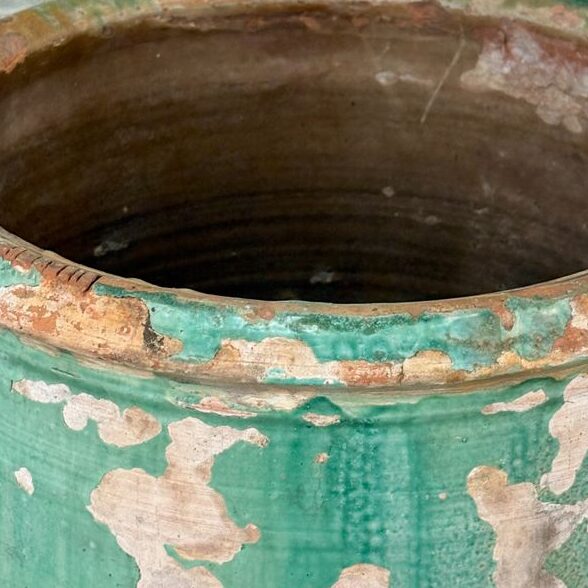
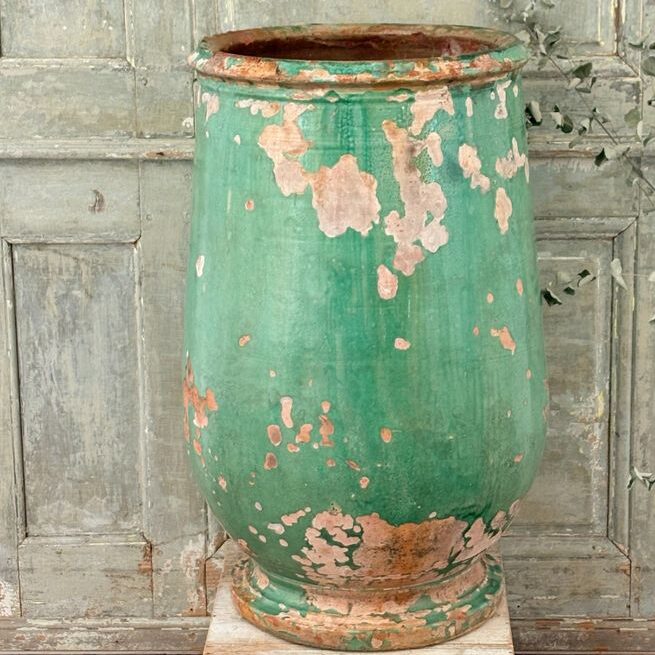
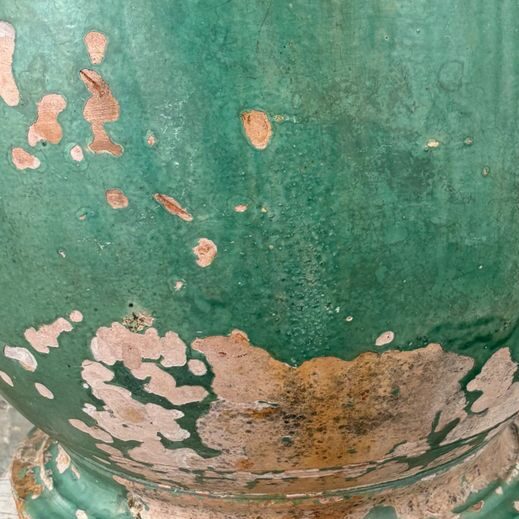
There is little point in reproducing everyday pieces, given how affordable they are. Those made before 1800 are difficult to imitate. Be cautious, however, with decorative jars! Be wary if they look too perfect. An authentic piece has a patina and some loss of glaze, and matches the descriptions found in books and museums. Walnut oil jars, for instance, have a black, pungent crust.
– Daniel Cagnolati