


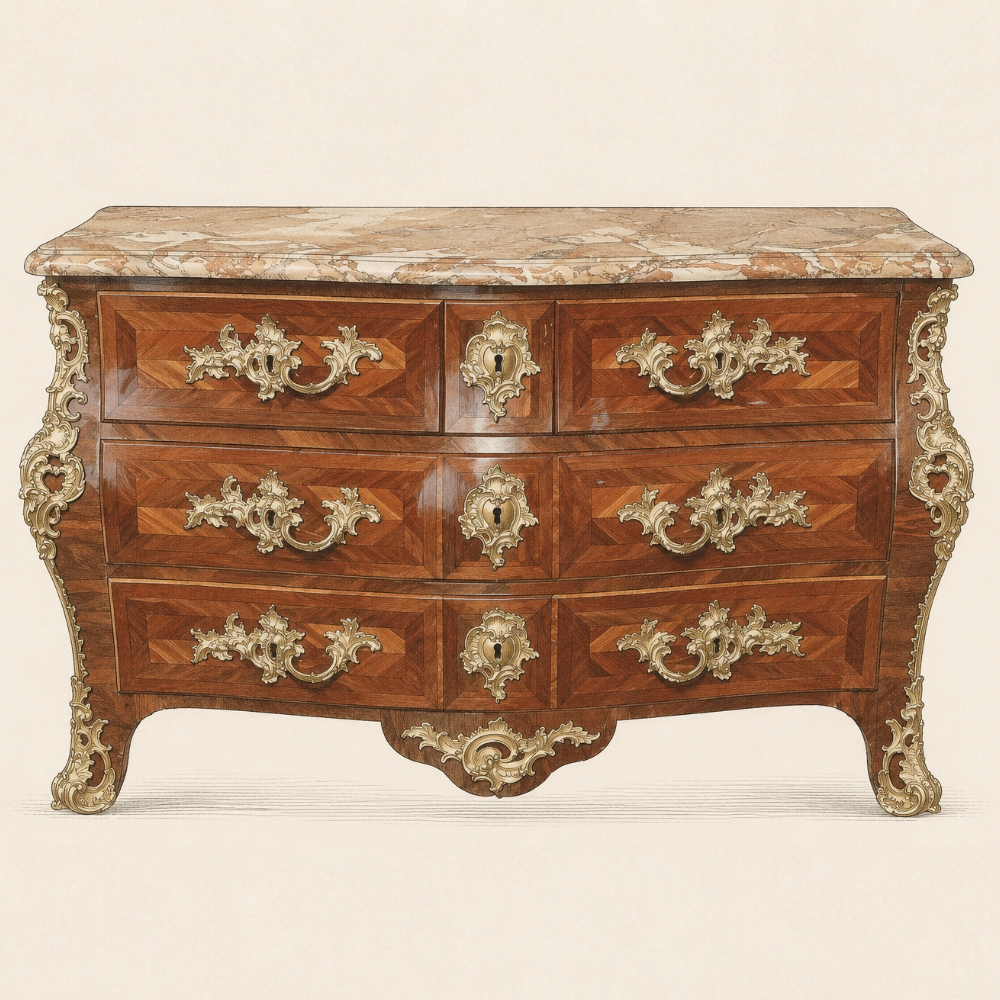
Supple, elegant and driven by a new pursuit of comfort, the Louis XV style is one of the great moments in French furniture. Heir to the Régence style, it takes the softening of forms further still: cabriole legs, bombé fronts and scalloped rails give furniture a sense of movement that rocaille ornament carries on. This evolution goes hand in hand with that of interiors, where intimacy and comfort assume an ever greater role.
The span of the style does not, however, correspond exactly to the reign of Louis XV, from 1715 to 1774. The Château de Versailles places the flowering of rocaille between the 1720s and the 1760s. The style thus reached maturity around the middle of the 18th century, before gradually giving way to the “à la grecque” taste, which heralded the Transition style.
Recognising Louis XV furniture is above all a matter of observing how the curve organises its silhouette. It links legs, uprights, rails and fronts without entirely doing away with straight lines. Shells, foliage and flowers make up a decorative scheme in which gilt bronze mounts, marquetry and lacquer emphasise the fluidity of the forms. More comfortable seating and small specialised pieces, for their part, bear witness to furniture better suited to everyday life.
At a Glance
Period
Circa 1720–1760 for the fully developed style; the reign of Louis XV runs from 1715 to 1774.
Silhouette
Dominance of the curve and the bombé profile; cabriole legs, scalloped rails, swelling or serpentine fronts.
Spirit
Comfort, intimacy, elegance, mobility and the pursuit of continuous movement between the different parts of the piece.
Ornamentation
Rocaille, shells, foliage, flowers, scrolls, cartouches, chinoiseries and skilfully balanced decorative asymmetries.
Materials
Beech and walnut for seating; oak for carcasses; tulipwood, kingwood, purpleheart, rosewood, lacquer, gilt bronze and marble.
Iconic furniture
Bombé commode, cabriolet armchair, à la reine armchair, bergère, bureau plat, slant-front desk, dressing table and small occasional tables.
Names and workshops
Charles Cressent; Bernard II van Risenburgh (BVRB); Jacques Dubois; Mathieu Criaerd; Jean-François Oeben; Nicolas-Quinibert Foliot; Jean-Baptiste Tilliard.
A Style Born of a New Way of Living
The Louis XV style accompanied a transformation in the interiors of the court and the urban elite. At Versailles, the king had more personal private apartments fitted out: his private bedchamber was installed as early as 1728, and his cabinets became places of work and daily life. In Paris, hôtels particuliers and salons fostered the same quest for intimacy.
This development had a direct impact on furniture. Seats became lower and more enveloping; some left the walls to be moved about as conversation dictated. Writing tables, dressing tables, slant-front desks and mechanical furniture multiplied. Louis XV furniture thus responded as much to use as to taste.
The change was artistic too. Ornamental designers drew on rocks, shells, waves, plants and flowers for a vocabulary freed from classical rigour. Chinoiserie, fuelled by imports of Asian porcelain and lacquer, provided another source of fantasy. In the 1730s–1750s this rocaille culture reached its full flowering, before a renewed interest in Antiquity began, around 1760, to straighten lines and pave the way for the Transition.
The Louis XV Line: Curve, Movement and Suppleness
The first reflex when identifying a piece of Louis XV furniture is to follow its lines. The curve is no longer confined to the cabriole leg alone: it spreads to the rails, the uprights, the fronts and sometimes the sides. On a commode, the front may swell and the sides curve; on a desk, the corners soften; on a seat, the back, arms and legs seem to share in the same movement.
It would be an overstatement to say that Louis XV did away with straight lines. A bureau plat retains a rectangular top, and many pieces remain built around a clear axis. The novelty lies in the way breaks are concealed: mouldings, bronze mounts and bombé profiles create the impression of a continuous silhouette.

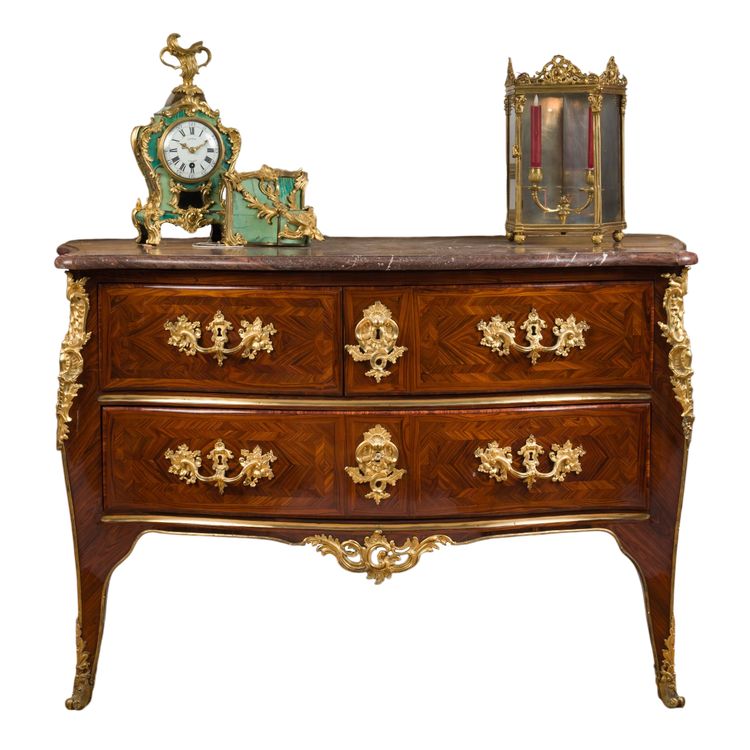
Louis XV commodes offer the finest example: a bombé carcass, curved sides and cabriole legs that extend the uprights. The marble top follows the profile of the piece and, on refined examples, corner mounts, sabots and bronze surrounds accompany the bombé curve rather than interrupting it.
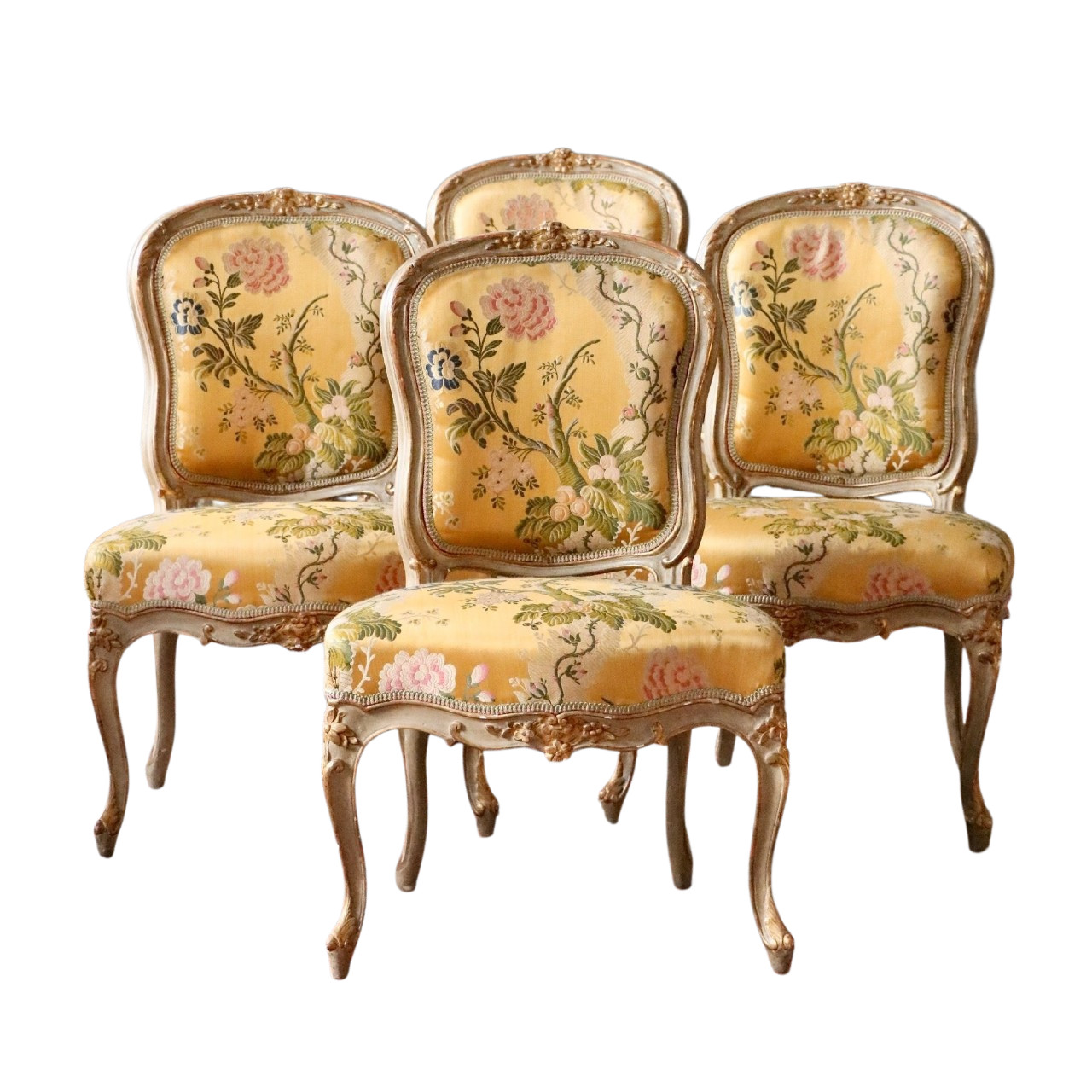
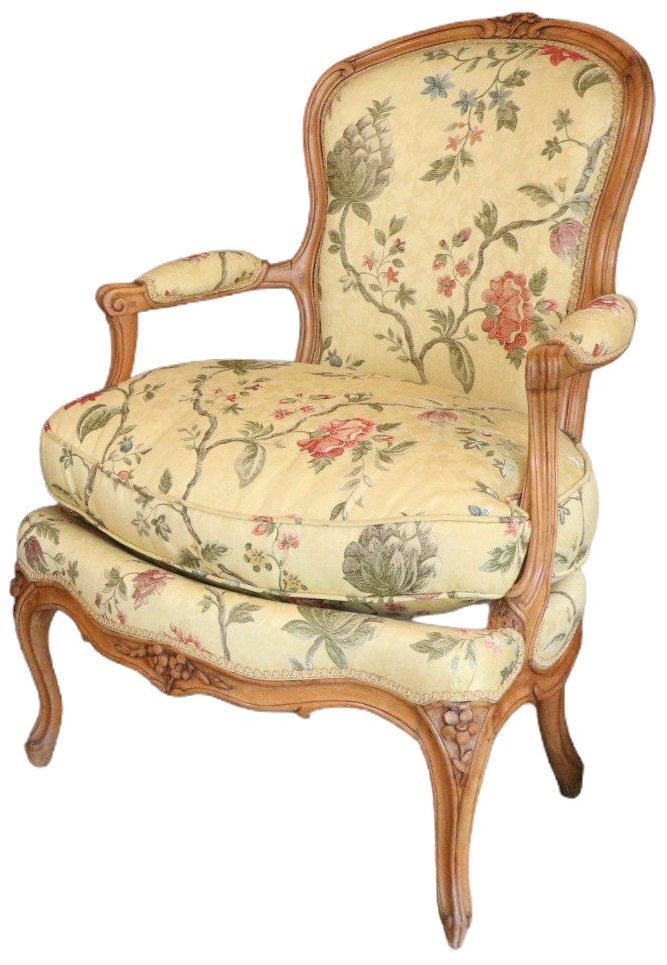
Seating takes the pursuit of comfort further still. The à la reine armchair retains a flat back, suited to a more formal arrangement against the wall, while the cabriolet armchair adopts a concave back that envelops the body more closely and allows it to be placed in the centre of the room. The arms are set back and the legs cabriole; the bergère closes the space between arm and seat with padded upholstery.
A fine piece of Louis XV furniture should therefore be viewed from several angles. Its movement is not limited to a spectacular front: it continues along the sides, in the profile of the marble, in the springing of the legs or in the junction of an arm. This continuity distinguishes full-blown rocaille from the Régence, where the curve merely softens a more clearly architectural structure.
Ornament: Rocaille, Nature and Asymmetry
The Louis XV style favours a naturalistic, flowing vocabulary (shells, scrolls, foliage, flowers, sprays). Its great innovation lies in abandoning strict symmetry in favour of a freer, more dynamic composition.


Decorative techniques vary according to the type of furniture:
- Wood carving: Mainly found on seating, console tables and panelling.
- Gilt bronze: Applied to emphasise the lines of commodes and veneered cabinet furniture.
- Marquetry: Dominated by floral and plant motifs.
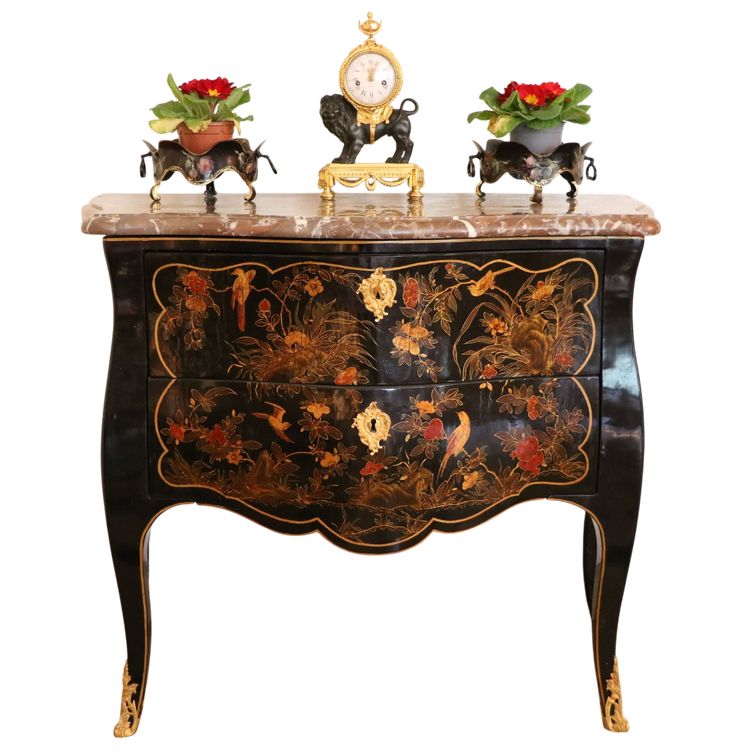
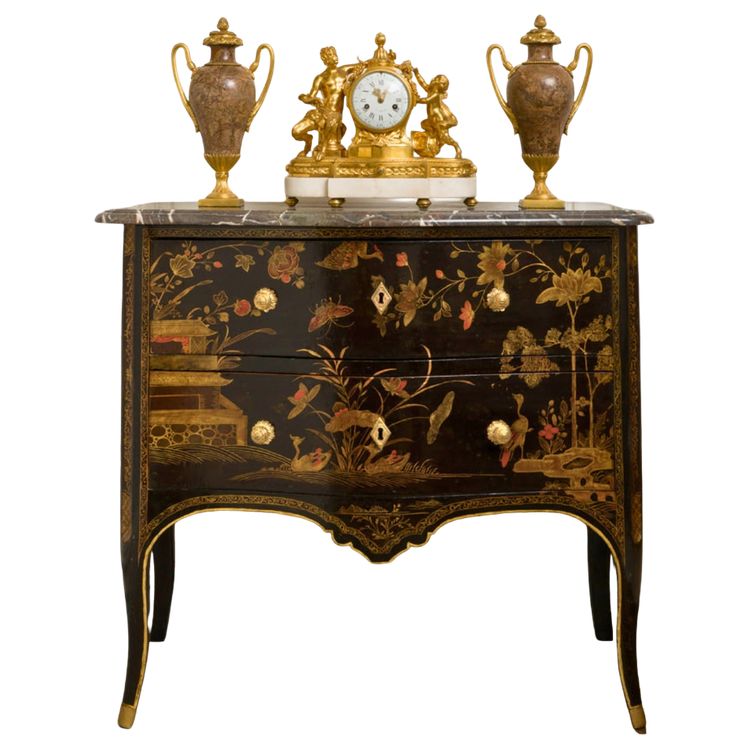
- Prestige finishes: Use of varnishes, lacquers and Oriental-inspired decoration for pieces of the highest quality.
Style note: Rocaille asymmetry is not synonymous with chaos. In furniture of the highest calibre, the fantasy of the curves is always held in check by the rigour of the design.
Materials and Craftsmanship
The Louis XV style comes in a wide variety of registers. A distinction can thus be drawn between court and Parisian workshop furniture, steeped in refinement and virtuosity, and a more restrained regional furniture, often sturdier, in which purity of line takes precedence over richness of materials.


In the provinces, furniture favoured solid wood and discreet ornamentation, while seating used local species such as beech or walnut, sometimes painted or gilded. By contrast, Parisian luxury cabinetmaking turned commodes, secretaires and desks into true masterpieces of technical skill. Craftsmen deployed interplays of veneer, marquetry cartouches and chased bronze mounts (corner mounts, escutcheons, sabots, handles).
Hallmarks of Parisian luxury: The use of precious and exotic woods (tulipwood, kingwood, purpleheart, rosewood), recourse to floral marquetry, the ubiquity of gilt bronze and marble tops, and the application of vernis Martin and European or Oriental lacquers for exceptional pieces.
Some Key Names
Charles Cressent belongs chiefly to the turning point between Régence and Louis XV. Trained as a sculptor, he gave bronze mounts an exceptional presence and helped erase the separation between uprights, decoration and carcass. His works show how the still powerful vocabulary of the 1720s led towards a more supple rocaille.
Bernard II van Risenburgh, who stamped his work B.V.R.B., embodies the full flowering of Louis XV cabinetmaking. His bureaux plats, commodes and lacquer-decorated pieces combine controlled curves, refined veneers and bronze mounts tailored to the forms. Jacques Dubois and Mathieu Criaerd likewise represent this high-luxury Parisian production.


Jean-François Oeben belongs to the final decades of the style. Cabinetmaker-mechanic to the King, he became famous for his ingenious tables and floral marquetry, including several pieces made for Madame de Pompadour. His works of the 1750s–1760s sometimes remain fully rocaille in their cabriole legs and bombé outlines, while certain compositions already herald the geometry of the Transition.
In chair-making, Nicolas-Quinibert Foliot and the Tilliard family rank among the great names of the reign. Their Louis XV armchairs and suites of seat furniture combine precise construction, virtuoso carving and the pursuit of comfort. As always in the 18th century, these creations were the result of collective work bringing together joiner, carver, painter-gilder and upholsterer.
Emblematic Pieces
The Louis XV Commode

The commode is undoubtedly the most eloquent piece for grasping the Louis XV spirit: it alone concentrates the taste for the bombé curve, mastery of bronze and the art of decoration in motion. Leaving behind the massive proportions of the reign of Louis XIV, it adopts a decidedly more supple silhouette. Its bombé front and cabriole legs are surmounted by a marble top that follows its contours. Depending on its origin and quality, it is adorned with rich marquetry or relies on the elegant restraint of natural wood, always highlighted by gilt bronze handles and escutcheons.
Louis XV Seating
Louis XV seating perfectly illustrates the shift from rigid, theatrical ceremonial furniture to furniture that is more intimate and attentive to the body. This was the era when the pursuit of comfort became a priority. Silhouettes softened, with cabriole legs and set-back arms designed to accommodate panniered gowns. Whether a cabriolet armchair with a shaped back, an enveloping bergère or a chair with a violin-shaped back, each piece stands out for the delicacy of its floral or rocaille carving.
Small Occasional Furniture
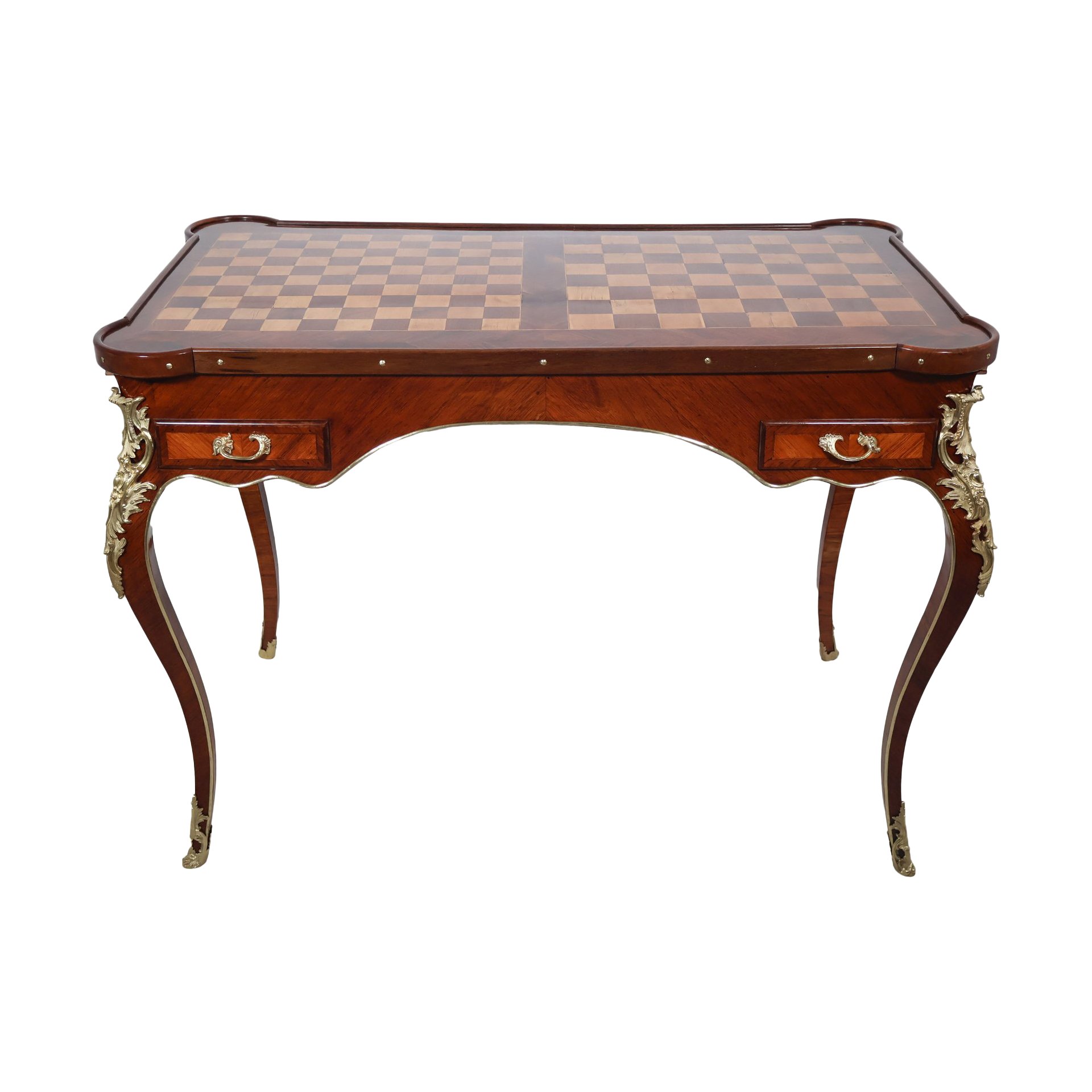
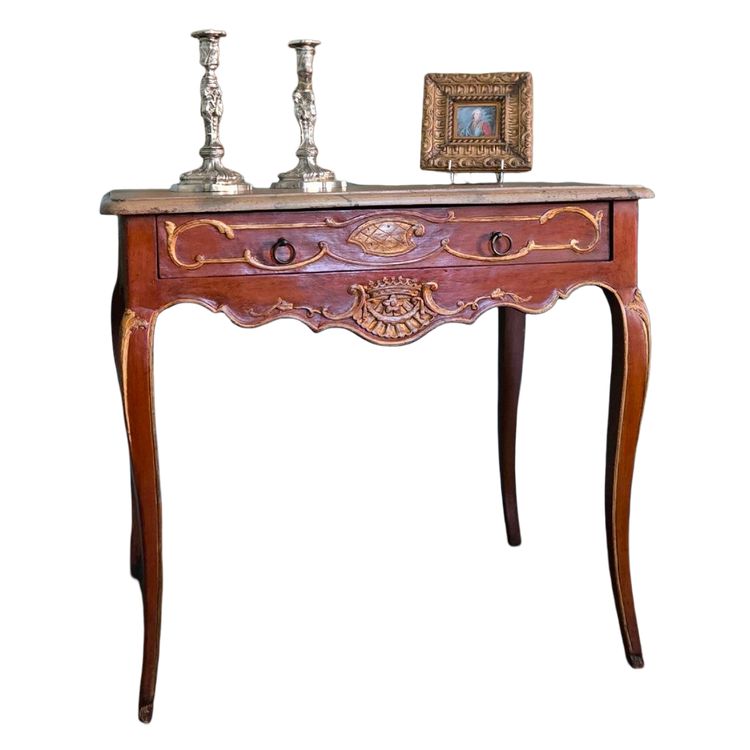
The meteoric success of small furniture under Louis XV reflects a profound social change: salons became more intimate, rooms more specialised, and furniture adapted to the new gestures of daily life. A multitude of light, movable pieces thus flourished: slant-front secretaires for correspondence, writing tables, work tables, dressing tables, salon tables, as well as encoignures to make the most of space and charming wall-mounted consoles.
Style Pointers
To tell a Louis XV piece from a Louis XVI one, simply begin by looking at its line: the former embraces curve and movement, while the latter restores axis, symmetry and the reference to Antiquity. To avoid any hesitation between the different styles of the 18th century, here are the essential visual keys:

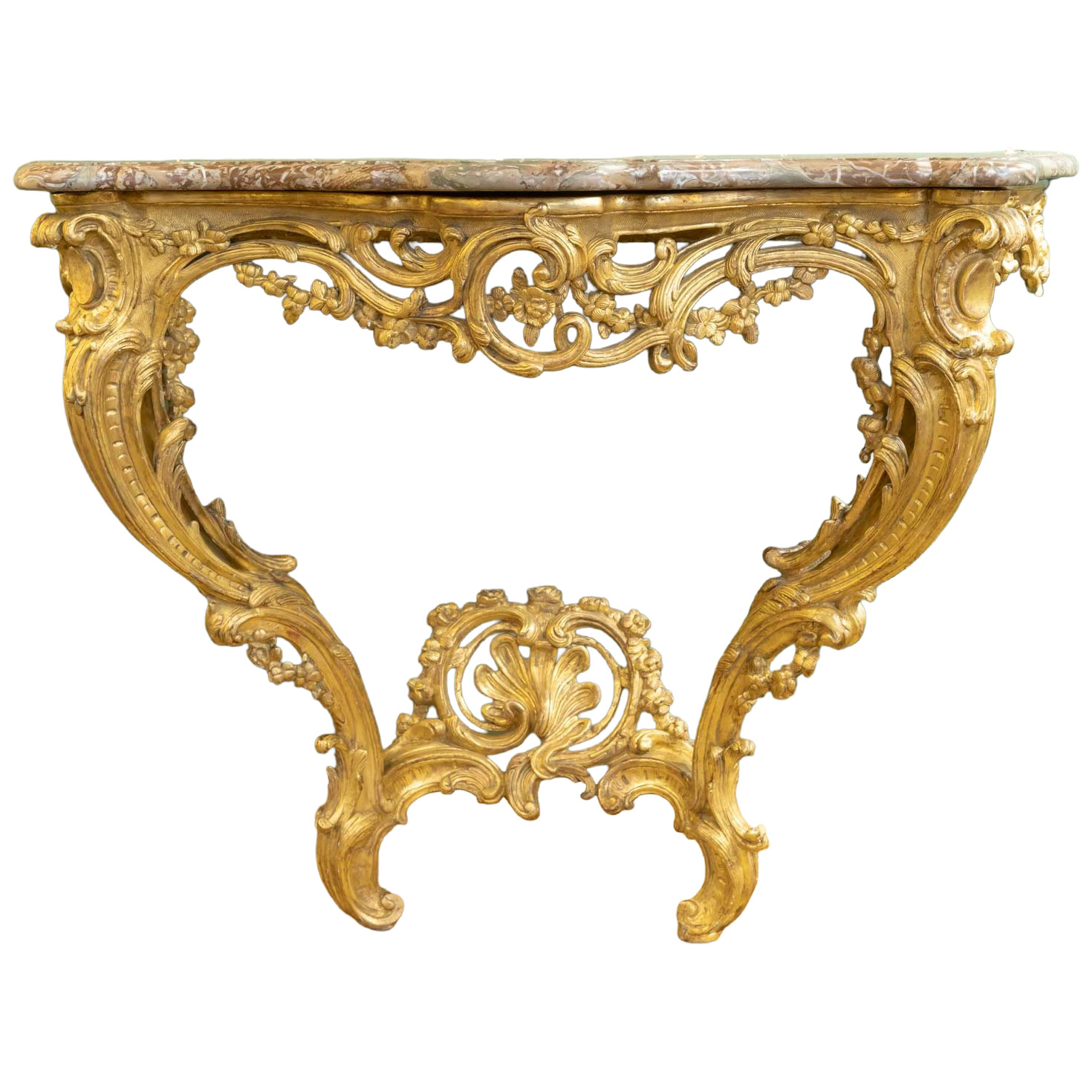
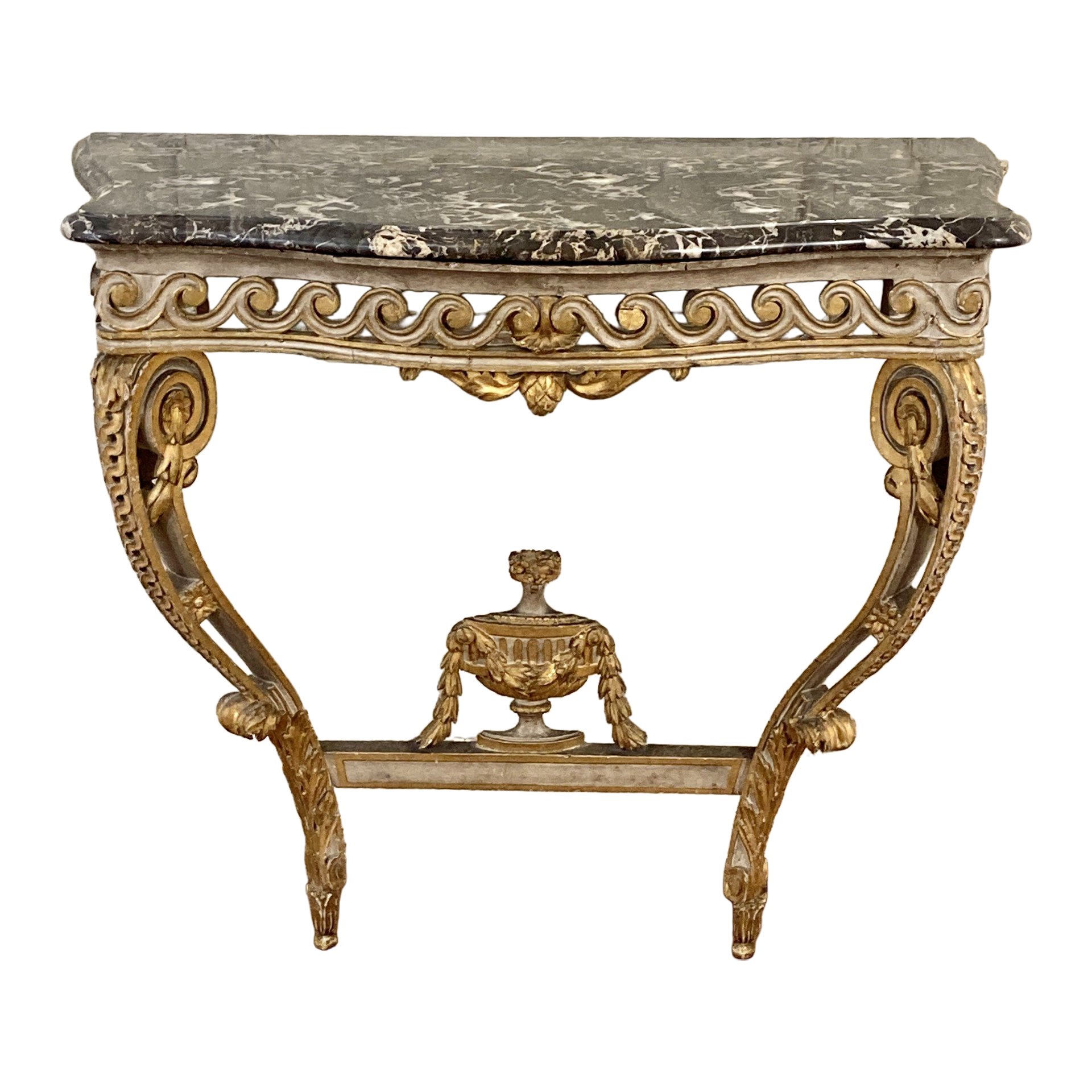
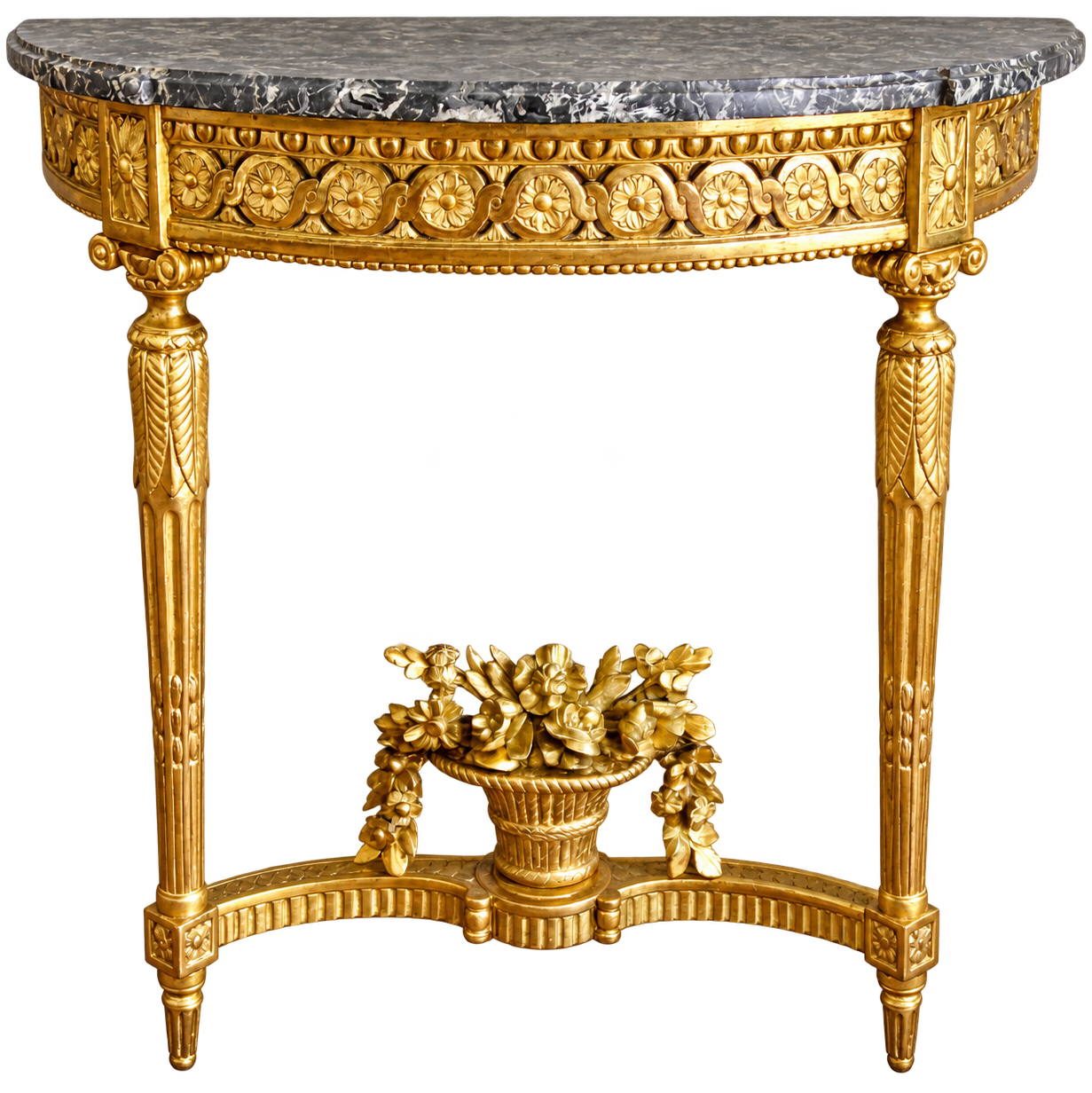
- Régence: A true style of transition, it initiates the softening of forms. Structures shed the rigour of the Grand Siècle, yet retain a visible geometry and a relatively strict symmetry.
- Louis XV: This is the reign of the assertive curve and the cabriole leg. The rocaille vocabulary unfolds through a controlled asymmetry, entirely dictated by the pursuit of comfort and lightness.
- Transition: As its name suggests, this style brings two worlds together. It is a subtle dialogue between curves inherited from Louis XV and the gradual, almost tentative, return of straight lines.
- Louis XVI: Marked by Neoclassicism and the rediscovery of Antiquity, it confirms the return of the straight line, perfect symmetry and tapering fluted legs, enhanced by garland and medallion motifs.
Discover a Selection of Objects Related to This Article


FAQ: Everything You Need to Know About Louis XV Furniture
It stands out immediately for its absence of straight lines. Look for its cabriole legs, bombé silhouettes, nature-inspired ornament and an evident pursuit of comfort.
It is all a question of geometry. Louis XV furniture swears by curves, movement and asymmetry. Conversely, the Louis XVI style marks the return of the straight line, perfect symmetry and Neoclassical taste.
This centrepiece features a serpentine front, a marble top cut to measure and chased bronze handles. Depending on its quality, it displays a precious wood veneer or the restraint of a solid regional wood.
The decorative repertoire borrows its forms from the marine and plant worlds: it chiefly features asymmetrical shells, scrolls, intertwined foliage and floral compositions.
Among the prestigious names of 18th-century Parisian craftsmanship are the cabinetmakers Charles Cressent, BVRB and Jean-François Oeben, as well as the master chair-makers Nicolas-Quinibert Foliot and Jean-Baptiste Tilliard.
The reign of Louis XV runs from 1715 to 1774, but the fully developed rocaille style flourished mainly from the 1720s to the 1760s. From the late 1750s onwards, the taste for Antiquity was already beginning to alter forms, gradually leading to the Transition style.
Unlike the à la reine armchair, which has a flat back, the cabriolet armchair has a concave back that follows the body more closely. Lighter and movable, it was designed to be placed within the room rather than systematically lined up against the panelling.
No. The stamp became compulsory in Paris in 1743 for furniture offered for sale, but earlier pieces, provincial pieces or certain Crown commissions may fall outside this rule. The absence of a mark is therefore never a sufficient verdict.
You need to examine the carcass, joints, veneers, drawers, ironwork, bronze mounts, marble, stamps and wear. The 19th century borrowed extensively from the Louis XV vocabulary: a handsome bombé profile or a rocaille shell is therefore not enough to establish a date.