This description has been translated and may not be completely accurate. Click here to see the original
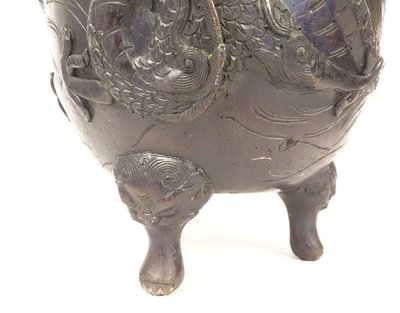
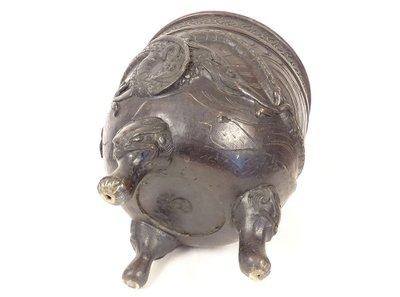
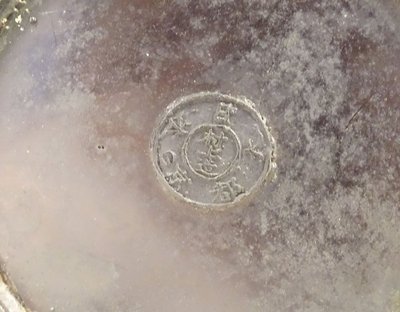
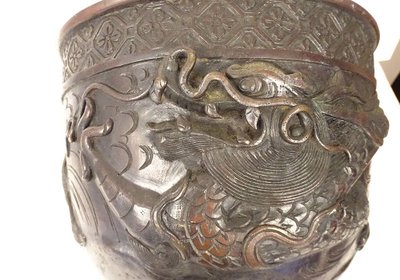
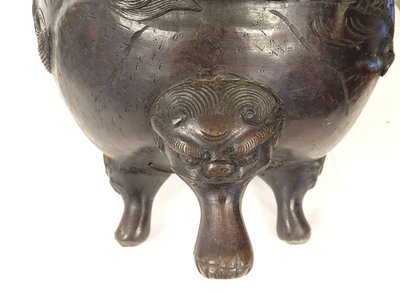
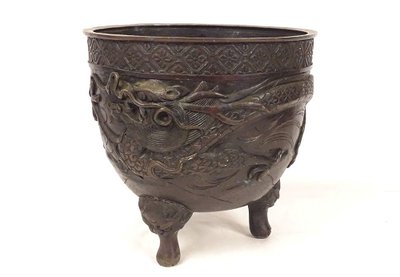
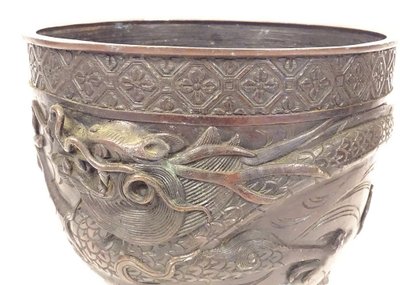
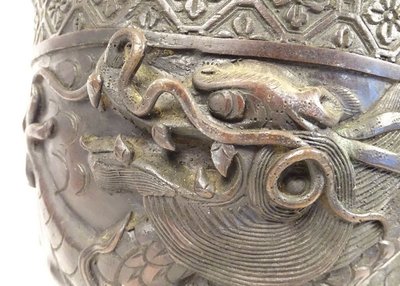
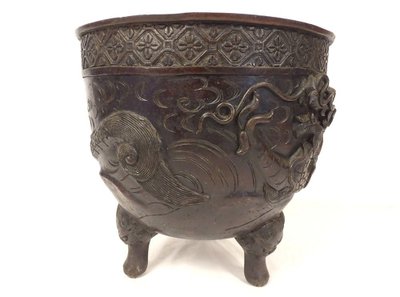
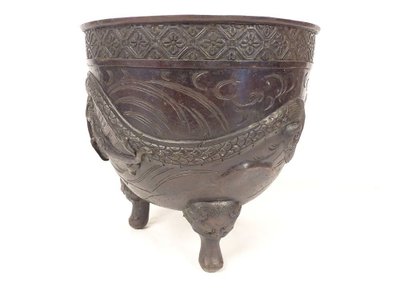
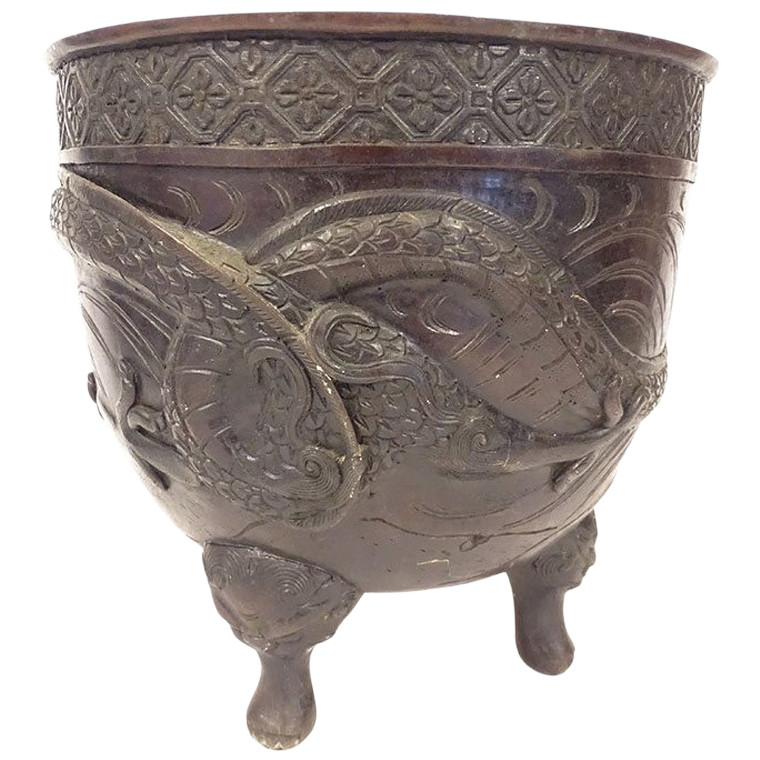
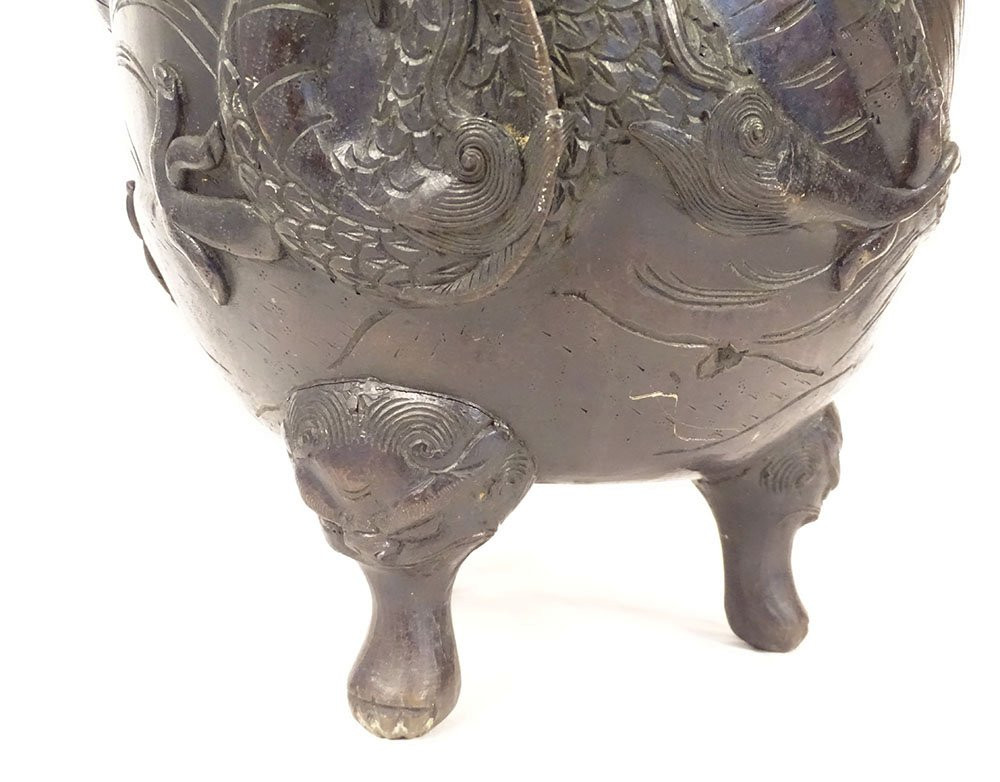
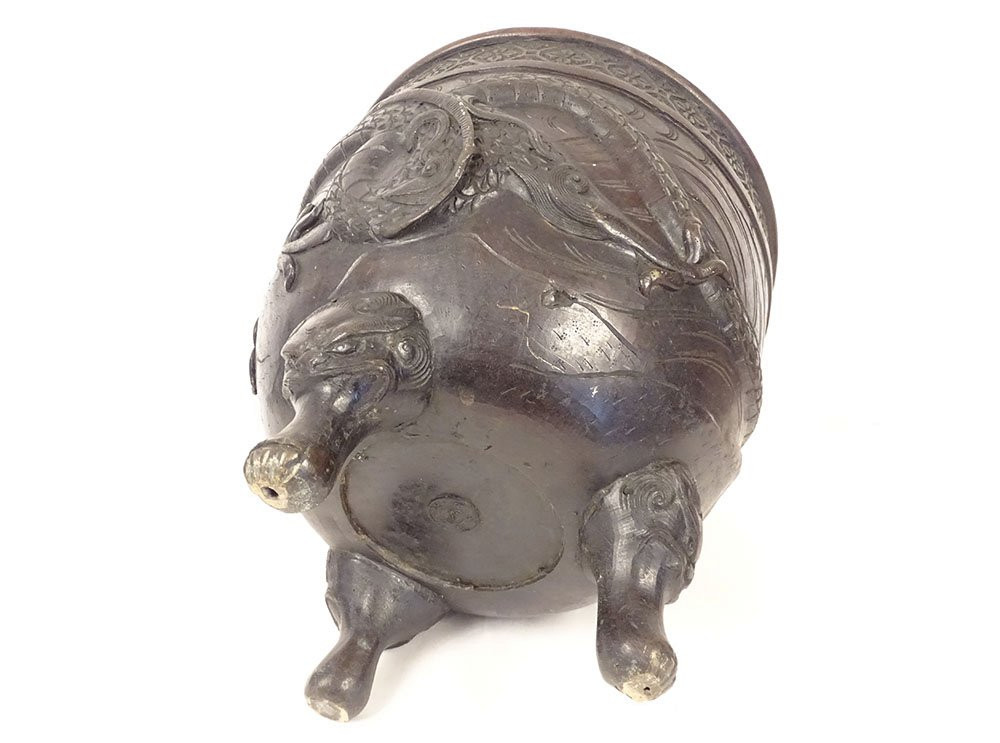
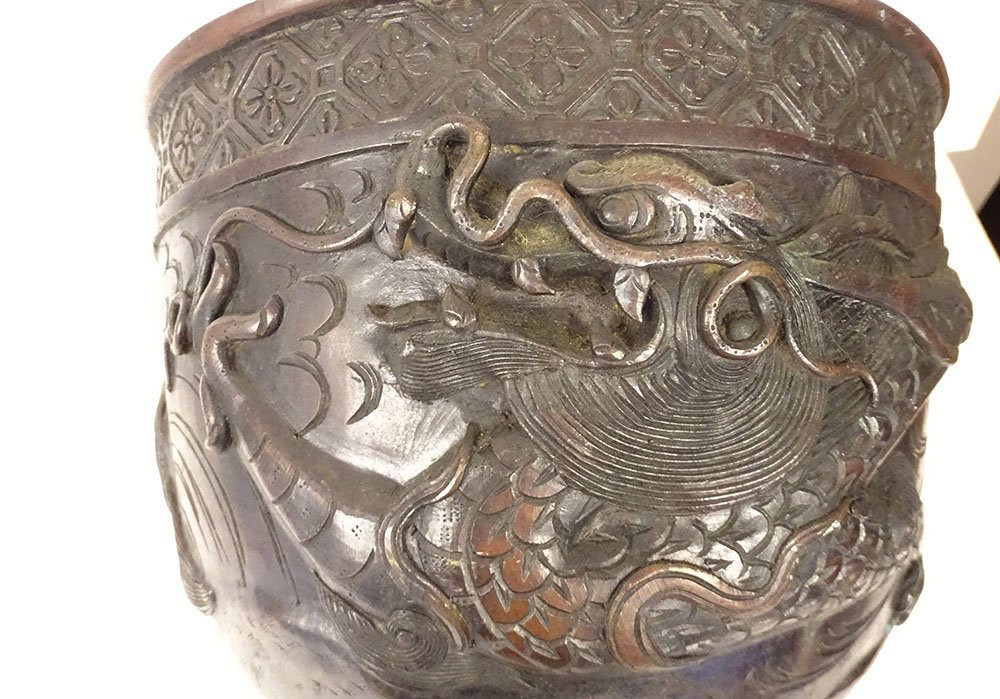
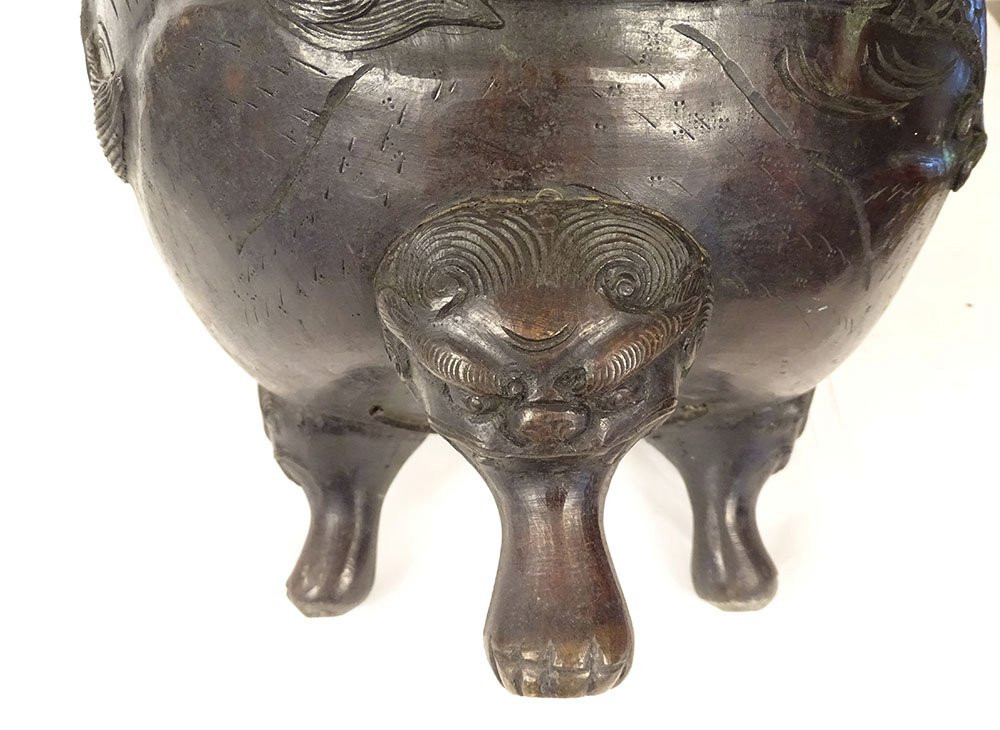
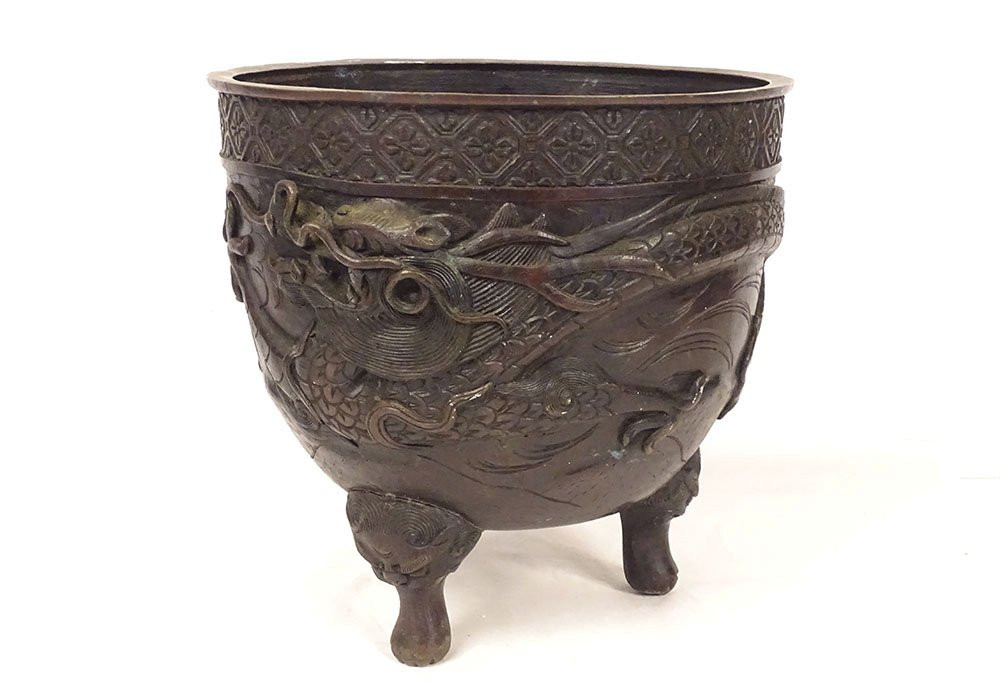
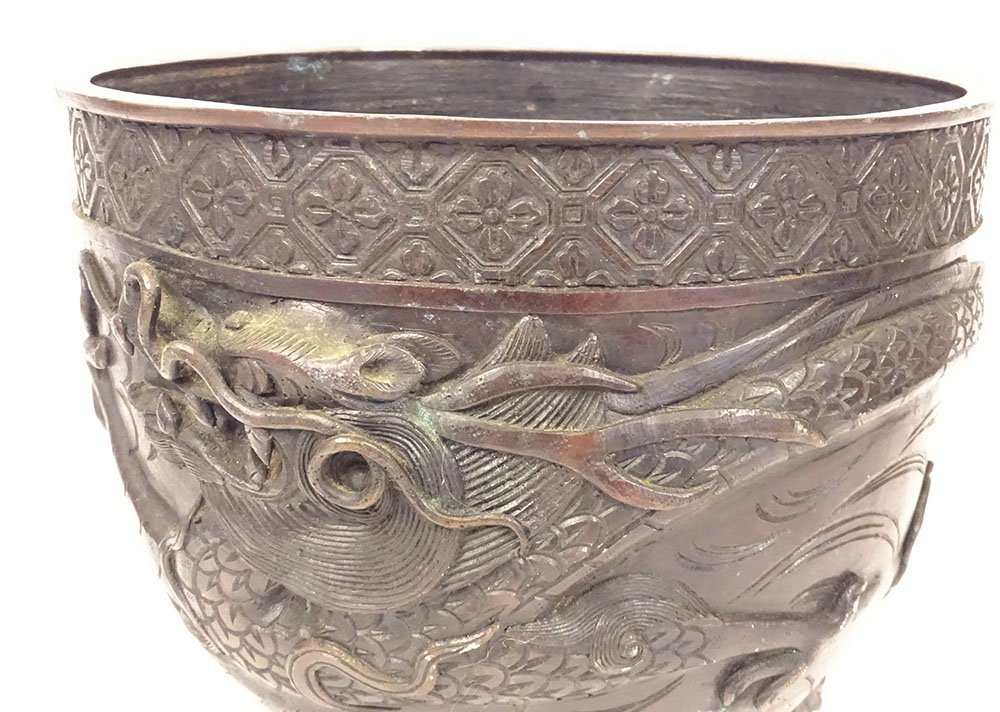
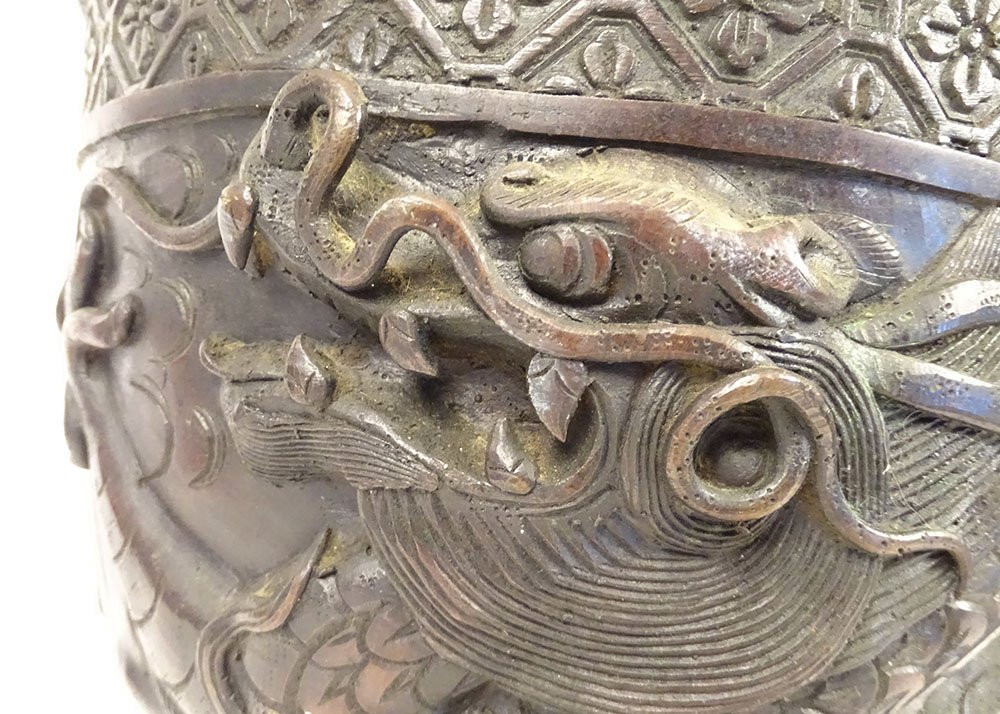
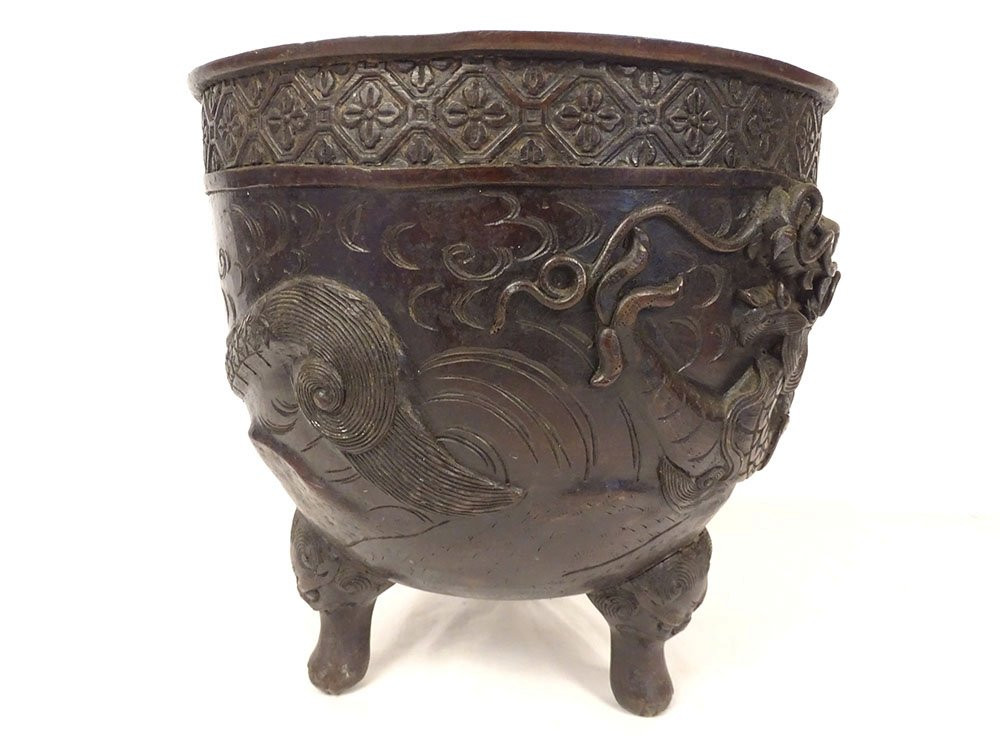
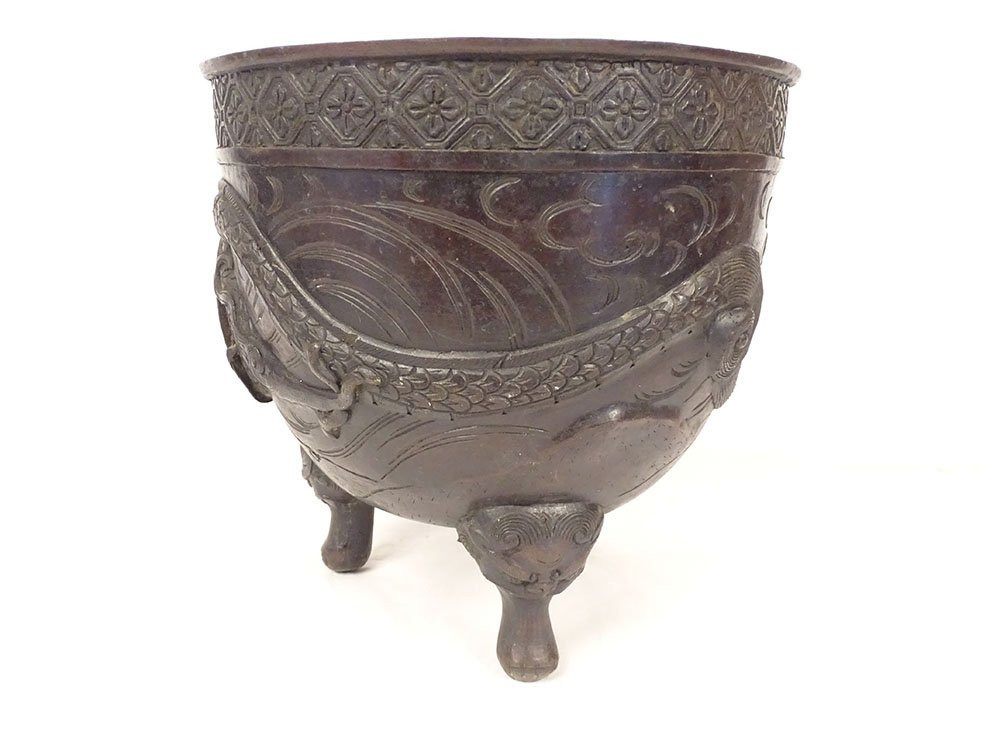
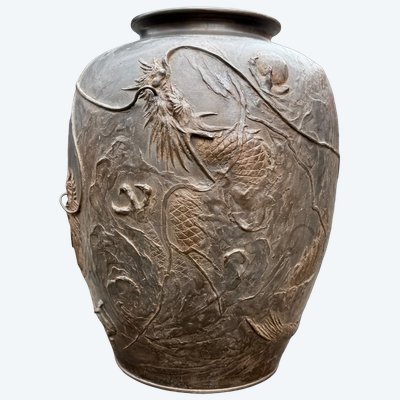
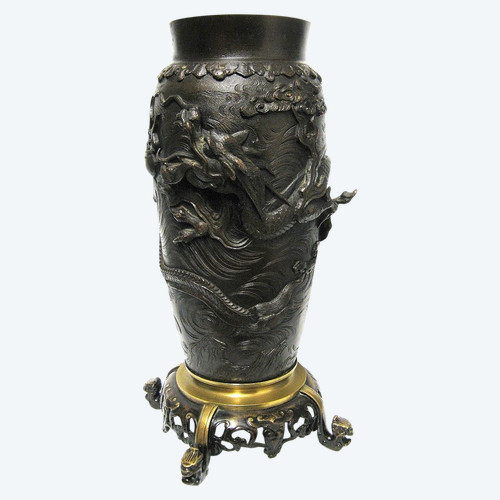
Large bronze planter cachepot decorated with a traditional oriental dragon: its open mouth and menacing eyes precede its body covered in serpentine scales in relief, above which is a beautiful stylized frieze of flowers. The tripod base is chased with the heads of fantastic animals (Taotie*). It bears the Nomura workshop mark from Kyoto, and dates from Japan, Meiji period (1868-1912), 19th century.
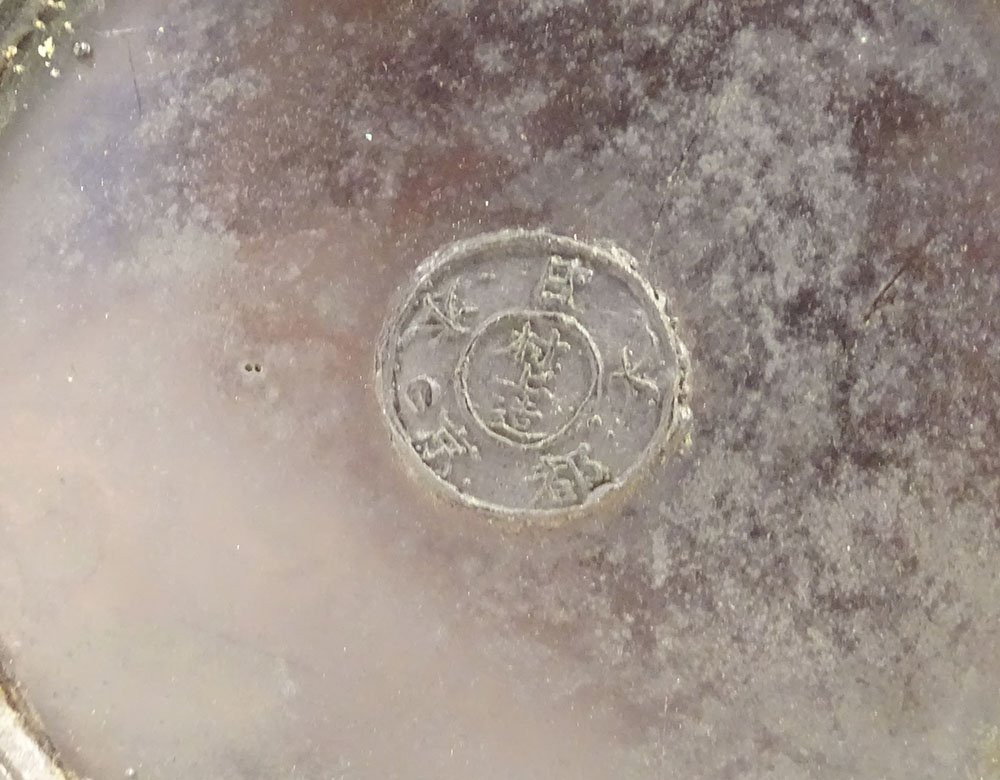
This cachepot is in very good condition and of remarkable quality. The decoration is particularly interesting, as the dragon is a very important mythological creature in Japanese culture. This cachepot could very well have also served as an incense burner. A hallmark on the base reads "Dai Nippon Kyoto" on the outer circle, meaning "Greater Japan, Kyoto." This is the typical geographical inscription found on bronze art pieces cast in Kyoto intended for major exhibitions or international export. On the central medallion is the inscription Nomura Zō, which translates to "Made by Nomura." The characters are crafted in a slightly cursive calligraphic style, typical of Meiji art casting on metal.
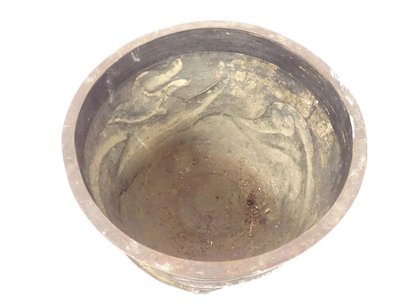
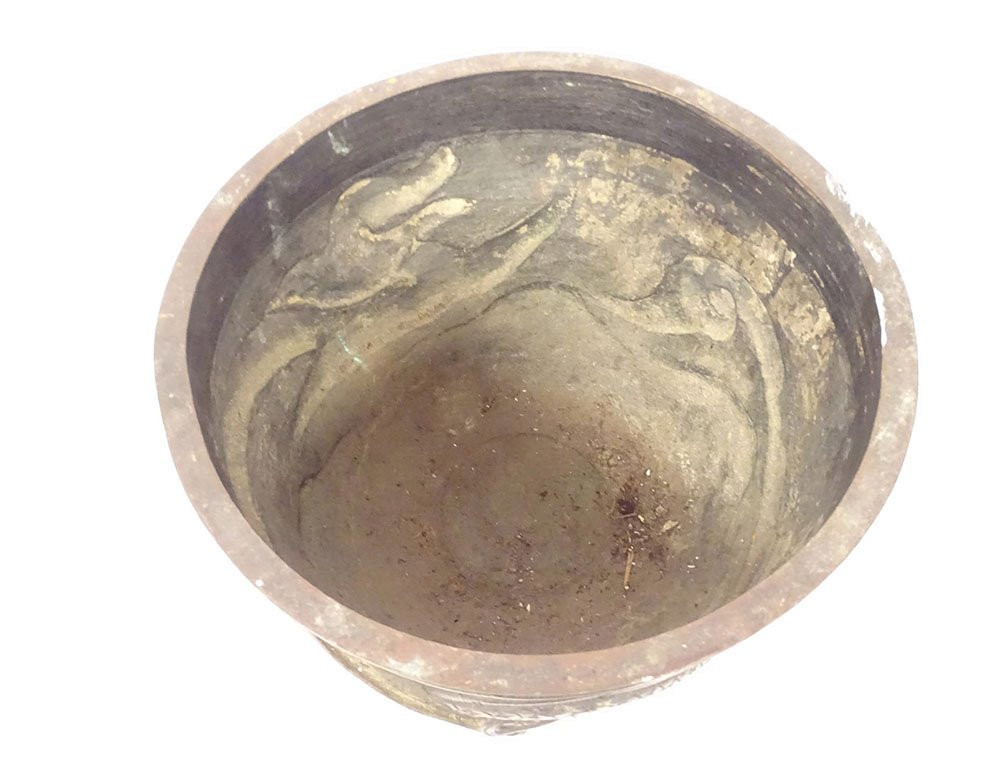
Note: some minor dents, soiling, and signs of age; see photos.
* The taotie motif is a stylized and symmetrical representation of a mythical animal, borrowing some of its features from the dragon. Other aspects link it to the tiger, or even the ox or sheep. The animal is described as a ferocious, horned creature with bulging eyes beneath thick eyebrows, its half-jaw adorned with sharp fangs. The term taotie is sometimes translated as "glutton," also known for its voracious appetite.
Dimensions
Diameter 30.7 cm / Interior 28.5 cm
Height 30.7 cm
Width at base 19 cm
G20 265
All photos are available at:
www.antiques-delaval.com
Ref: CMUVBXCQKZ