This description has been translated and may not be completely accurate. Click here to see the original
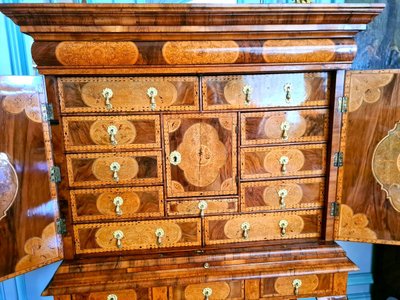
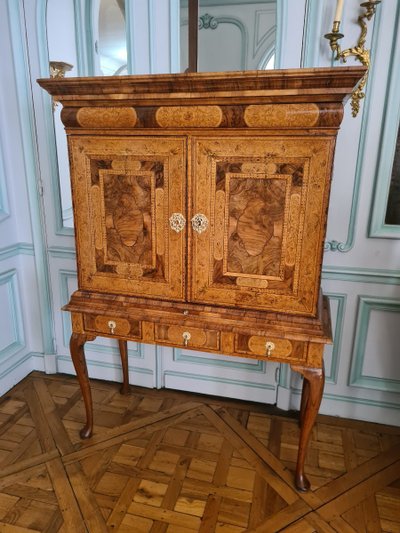
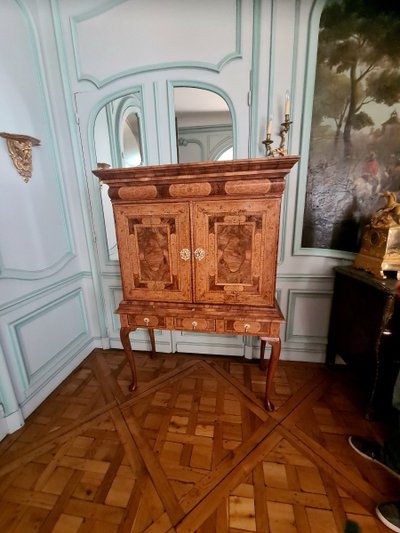
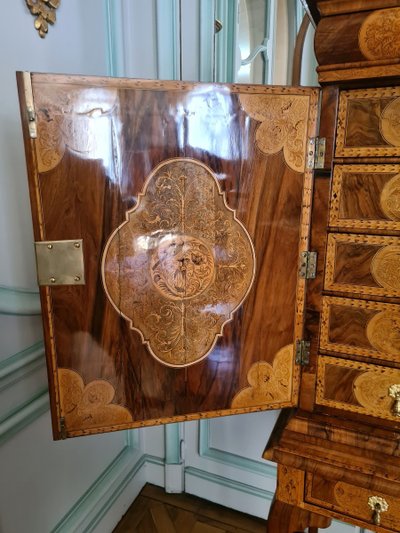
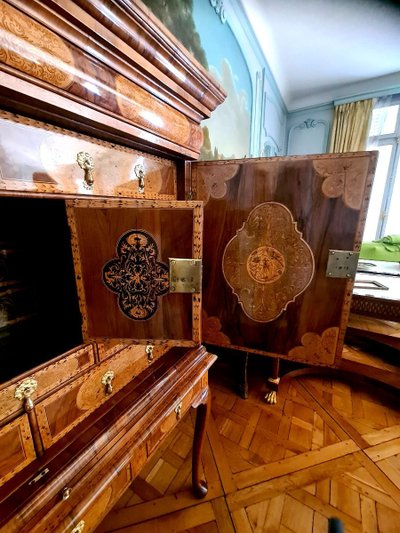
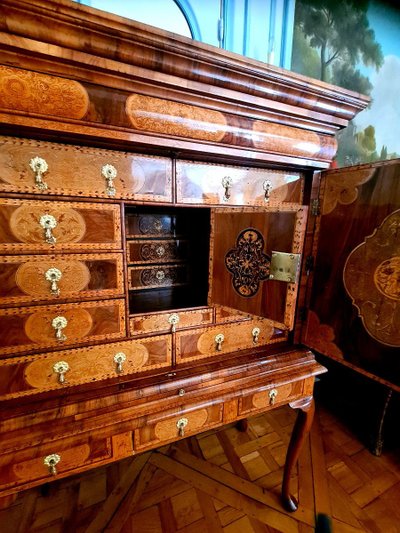
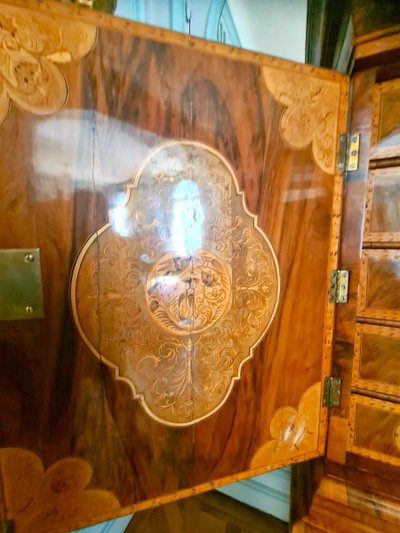
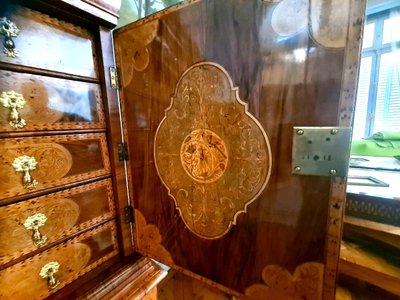
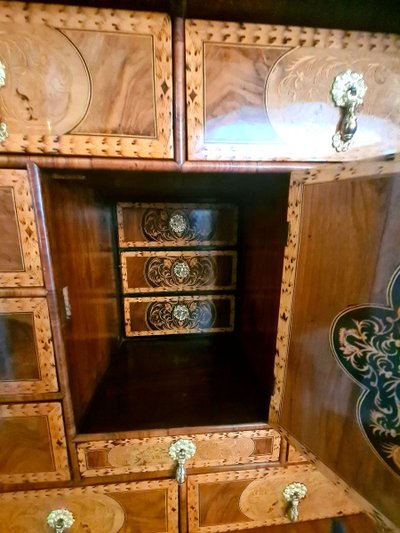
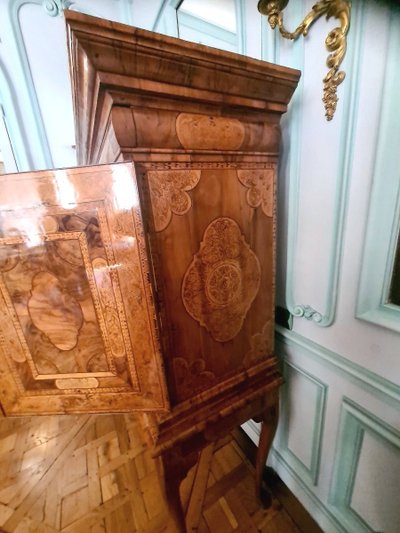
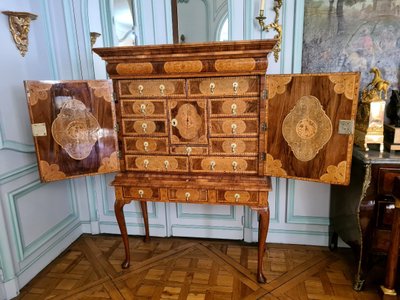
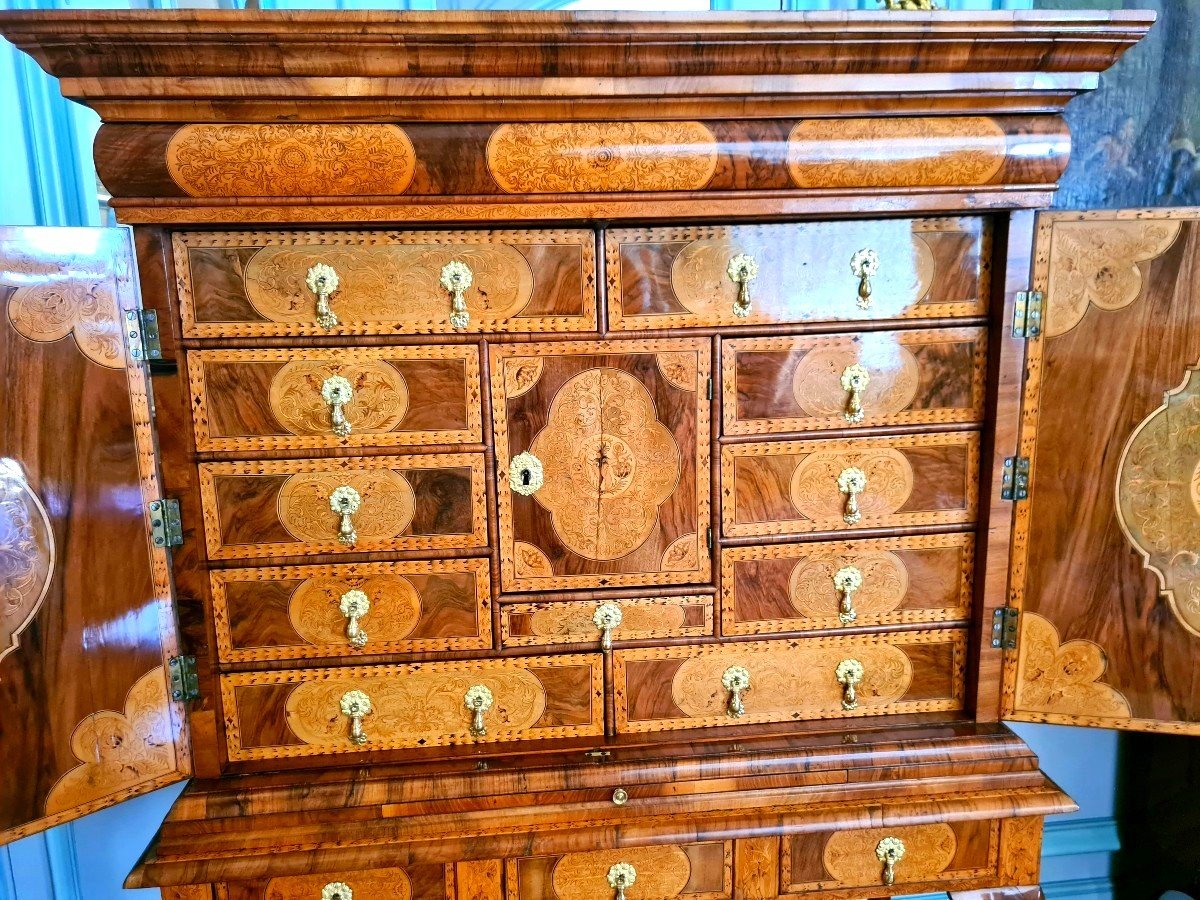
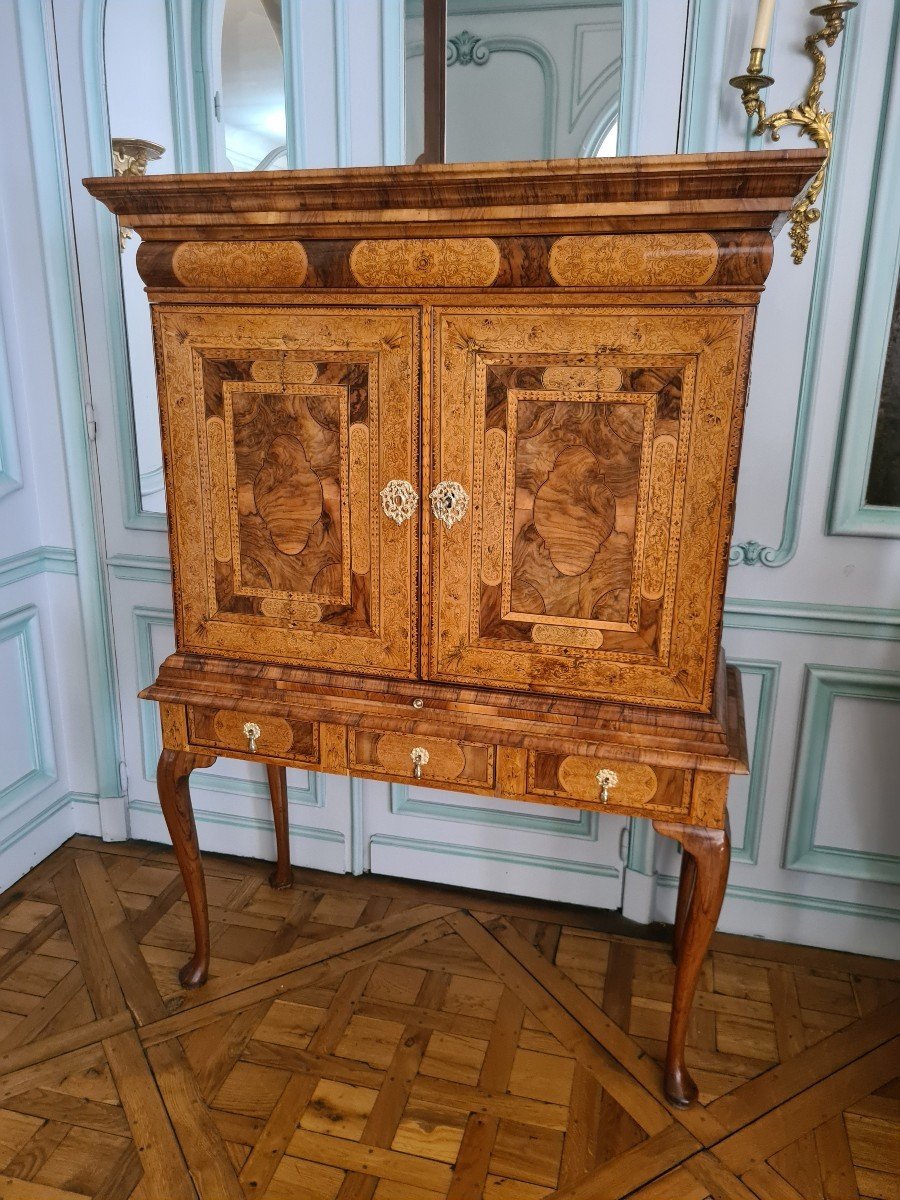
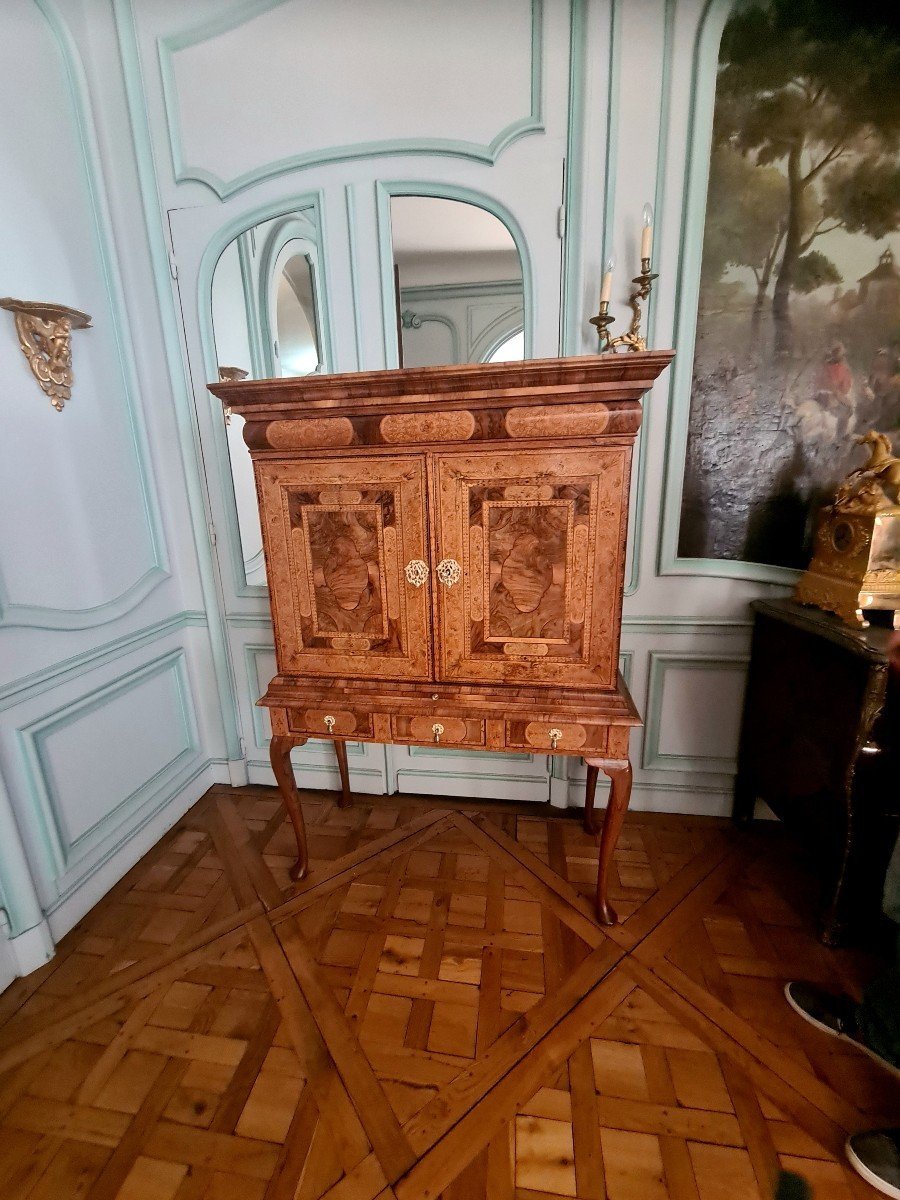
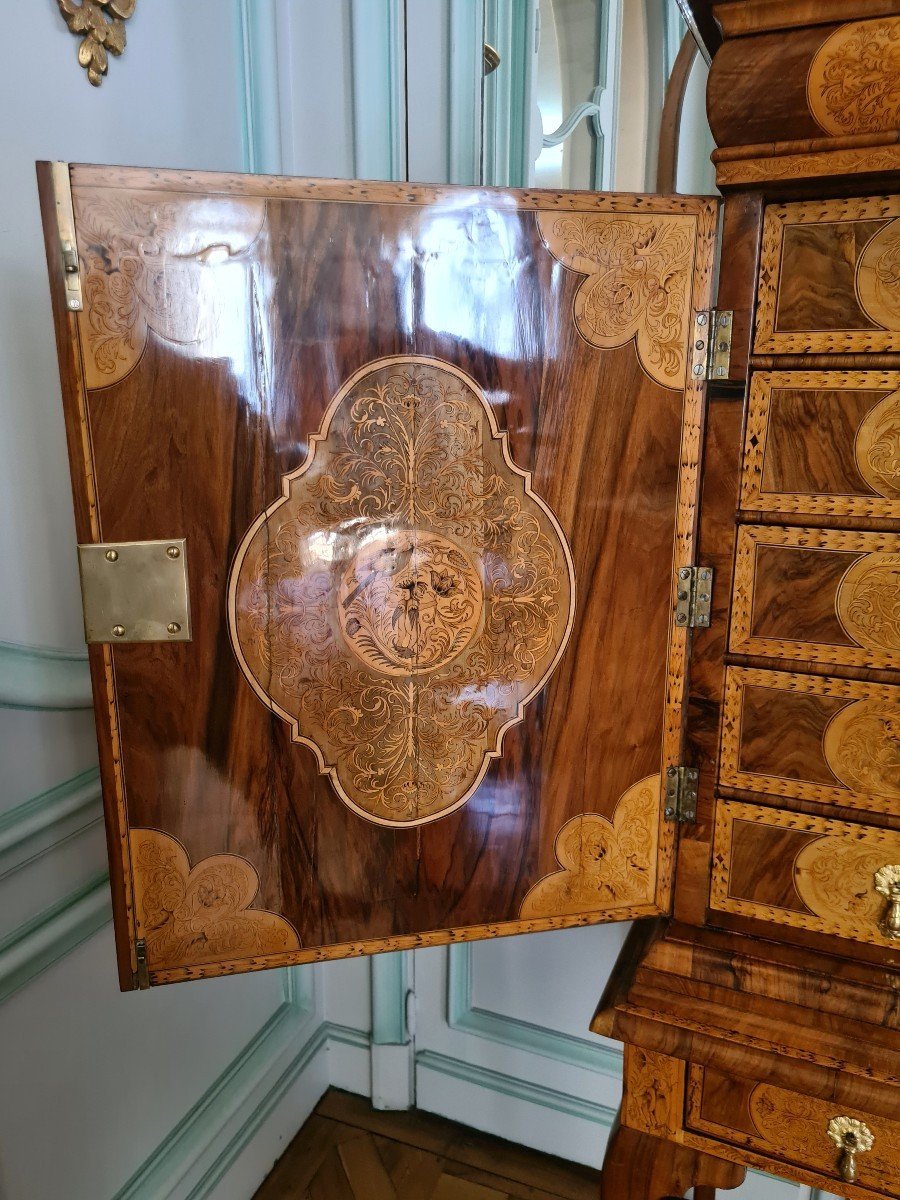
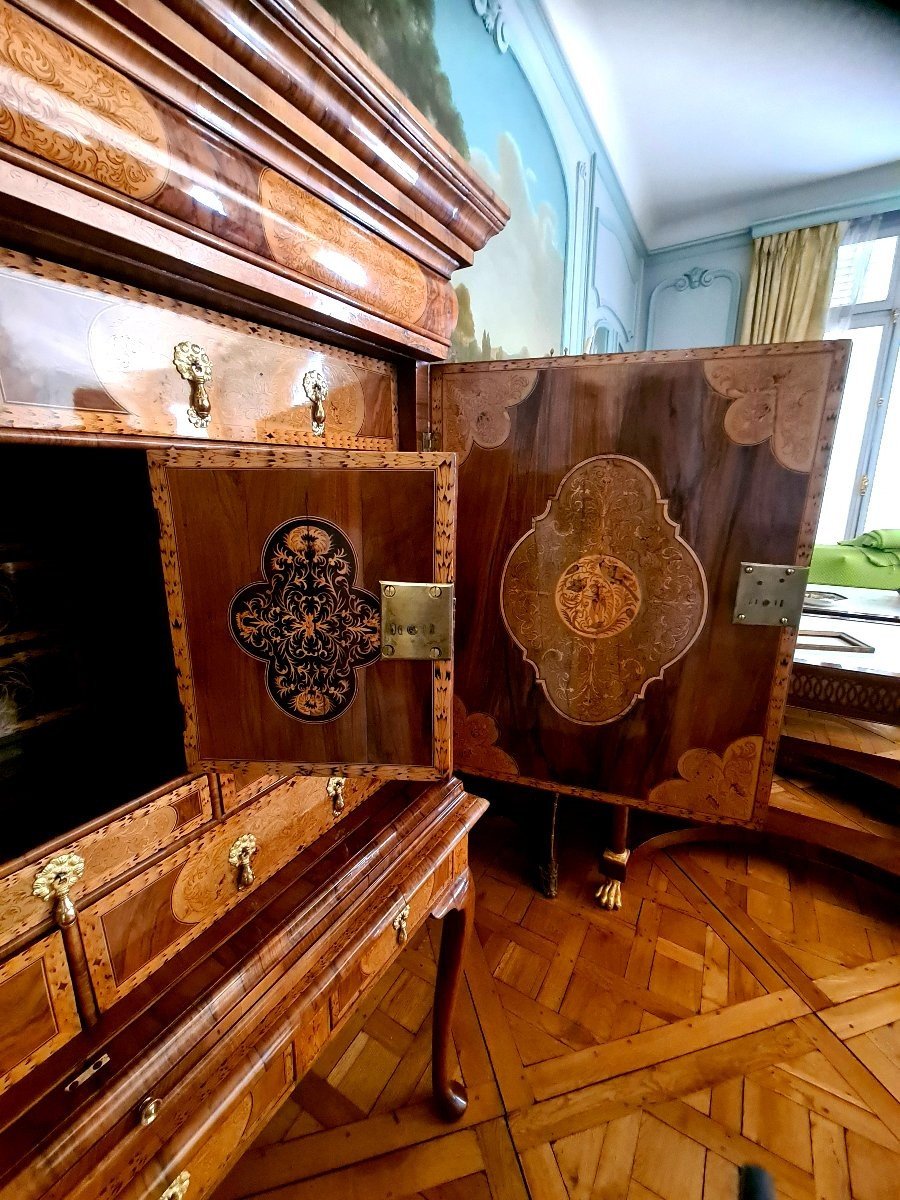
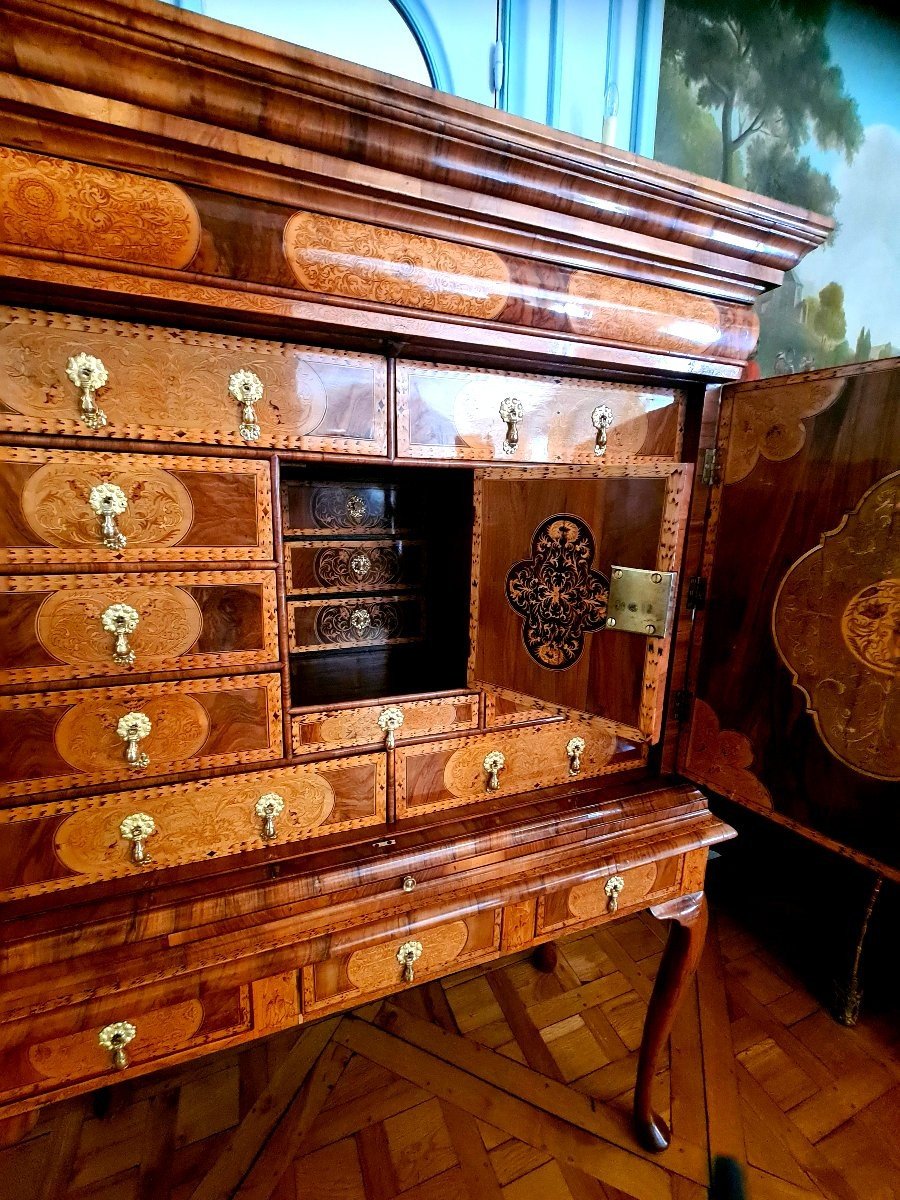
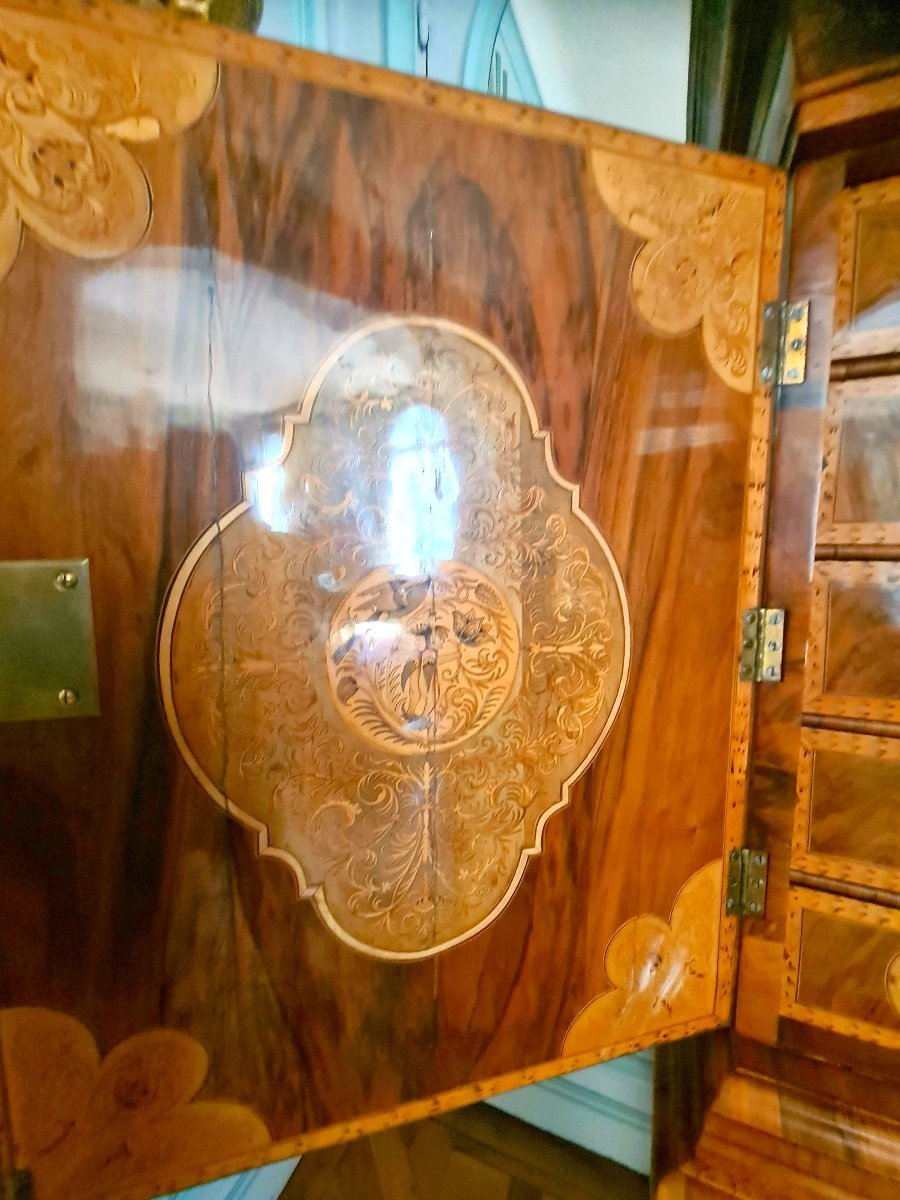
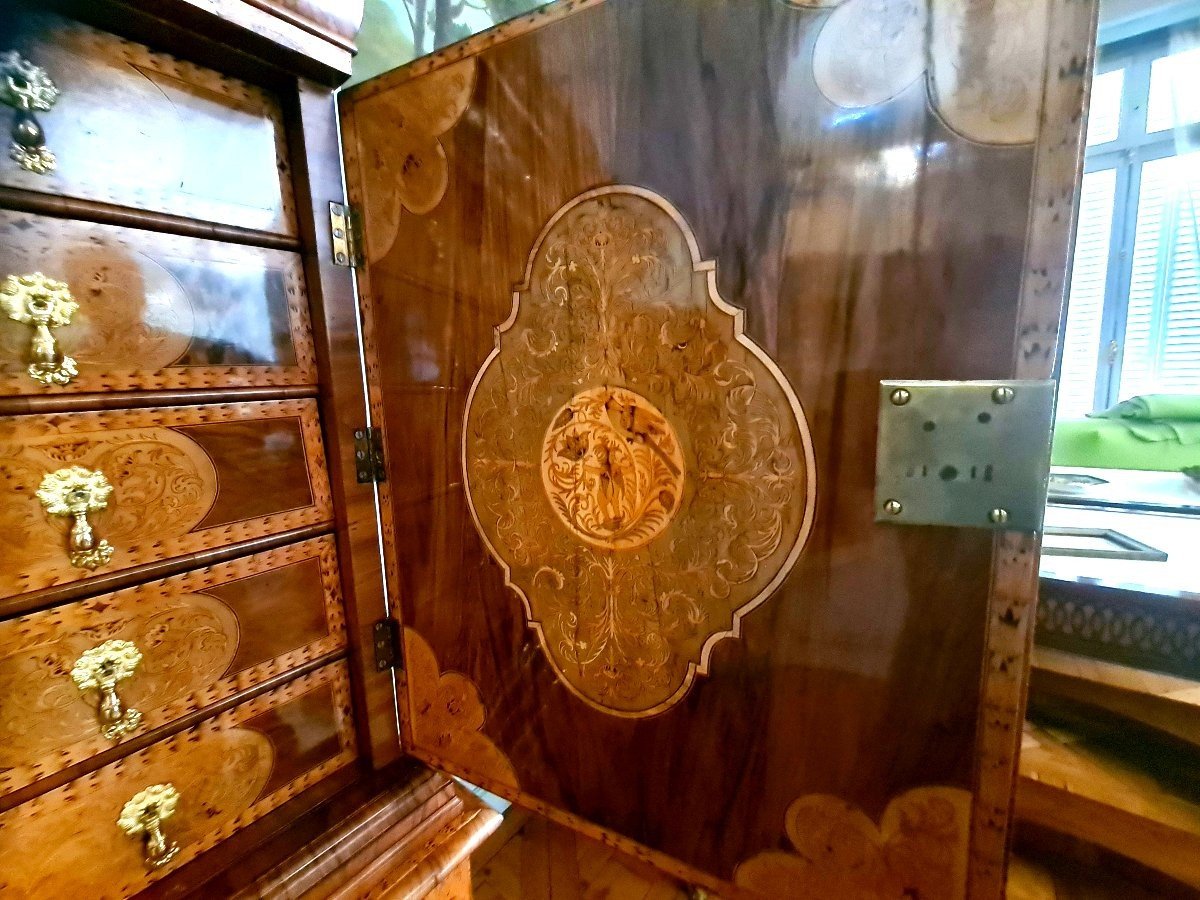
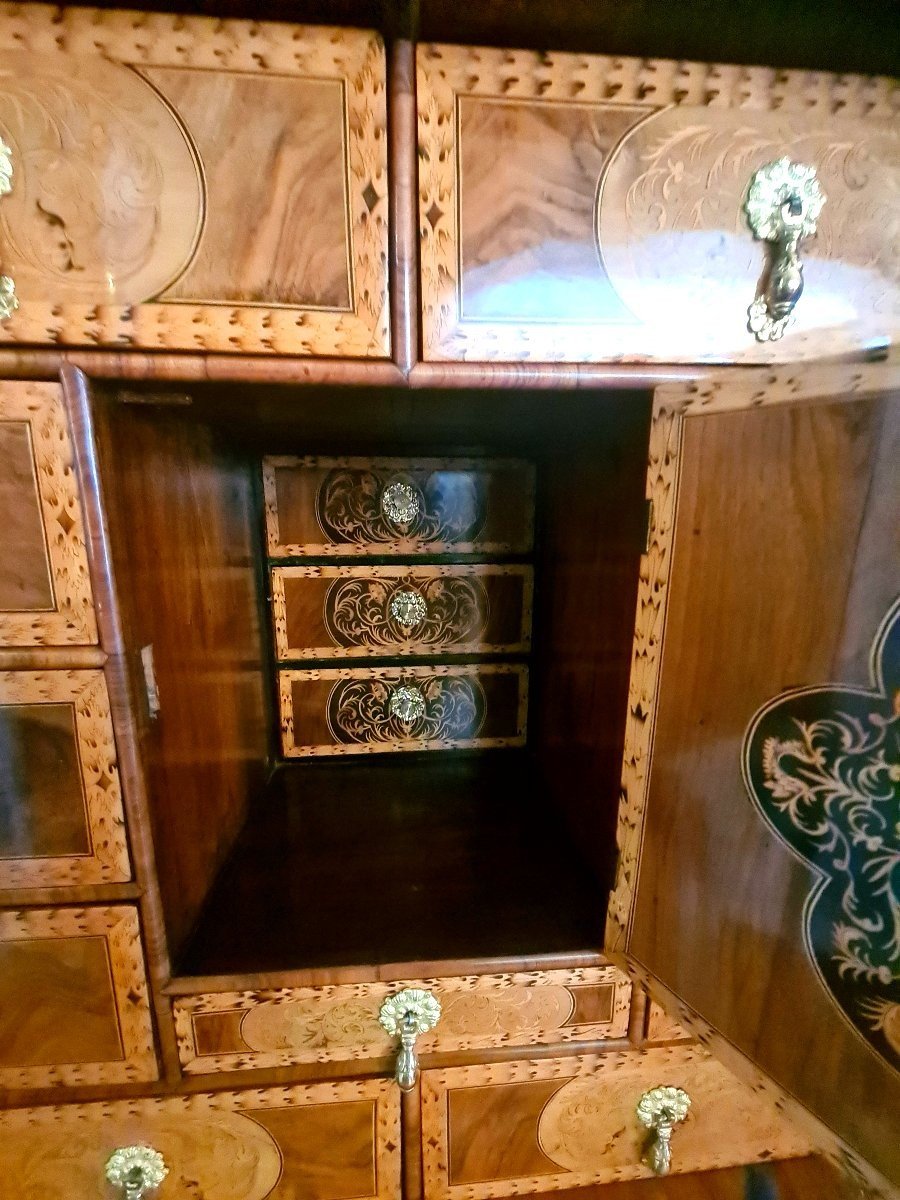
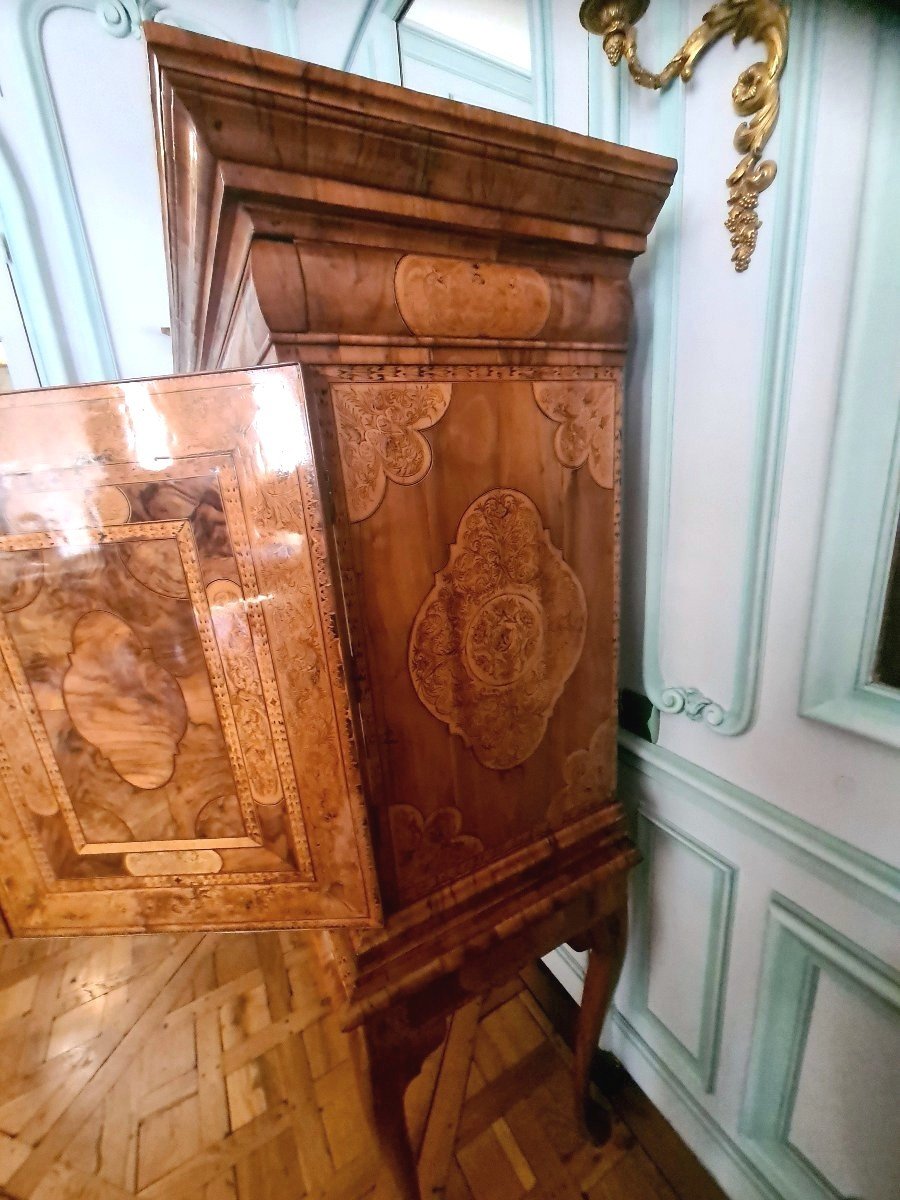
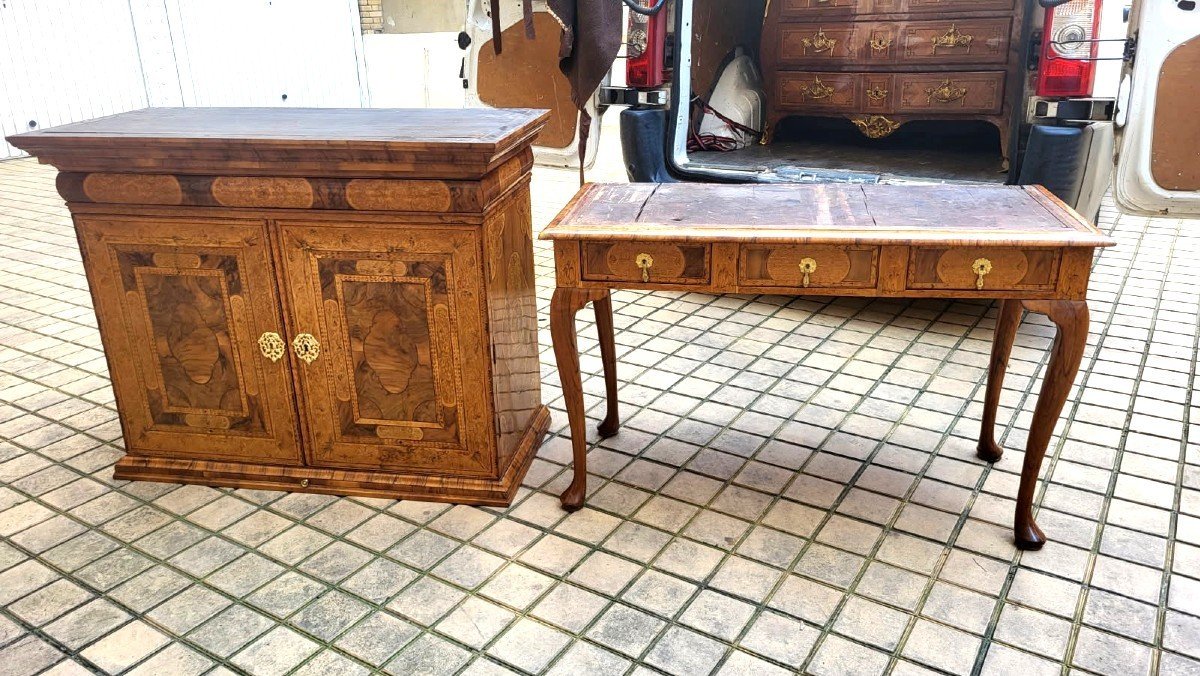
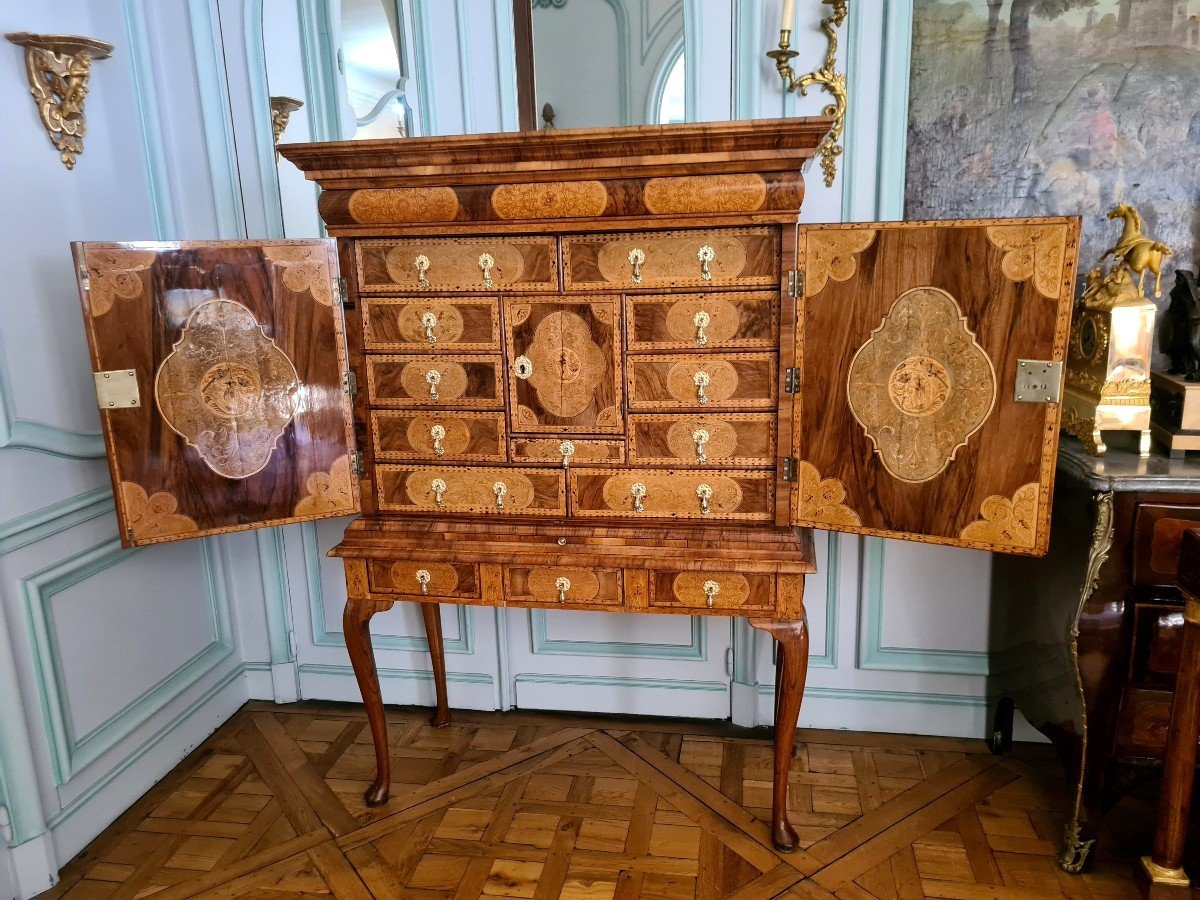
Our cabinet is a softwood cabinet with marquetry typical of Gerrit Jensen from late 17th-century England. It opens with two marquetry doors, each front and back, revealing 11 drawers and a central drawer containing three smaller interior drawers. The base supports three drawers in the frieze, also inlaid with an oyster shell motif. It is worth noting that the base is original, which is quite rare for this type of furniture. Bases were often added in the 19th century. We therefore have a coherent, complete, and harmonious piece of furniture, perfectly proportioned, and above all, crafted in a single piece.
The base is made of solid walnut.
The cabinet is dated to around 1695-1700, during the William and Mary period (1688-1702) – England, late 17th century.
H x W x D = 170 x 120 x 82 cm
Provenance: British collection in the South of France
A complete 6-page dossier is available upon request from the Galerie Dagault.
Gerrit Jensen (c. 1634–1715) was a cabinetmaker of Dutch origin, recognized as one of the most influential craftsmen of his time in England. He is sometimes called the "English Boulle" because of his marquetry techniques in metal, particularly silver, which are reminiscent of those of the French master André-Charles Boulle.
Details concerning his birth and training remain unclear. He was likely born in the Netherlands around 1634. Documents suggest he worked in Paris before settling in London, where he was registered in 1667 as a member of the Joiners' Guild under the name "Garrett Johnson," before permanently establishing himself as "Gerrit Jensen." From 1680 onward, Jensen began receiving commissions from the English court, including furniture for diplomatic gifts. In 1689, he was appointed Cabinet Maker in Ordinary to Kings James II, William III, and Queen Anne, a prestigious position he held until his death in 1715. He is also one of the first cabinetmakers to have left a significant written record of his work, thanks to the preservation of numerous royal invoices. Jensen is renowned for his Louis XIV style furniture, characterized by intricate marquetry incorporating precious metals and for seawell marquetry. He collaborated with artists such as Grinling Gibbons and supplied decorated mirrors for royal residences, including Kensington Palace.
At his death, Jensen owned several properties in London and Hammersmith, as well as a warehouse. He left a considerable fortune for the time, estimated at over £5,500. His works, though few in number, are held in prestigious collections such as the Museum of Modern Art (MoMA) in New York and the Royal Collection Trust.
Gerrit Jensen (active from 1680 to 1715) was of German or Flemish origin. He was the only cabinetmaker working in England during this period. He invented the seaweed marquetry technique and was influenced by Pierre Gole, André-Charles Boulle, and Daniel Marot.
This imposing and rare architecturally inspired cabinet, with a softwood frame, features very rich seaweed marquetry on its front and side panels. It opens with 10 drawers in four rows across the front and a door in the center revealing three rosewood-veneered drawers with a pattern similar to that known as oyster shell. Note that this is not oyster shell, as it lacks end grain.
English cabinets from the Stuart era share a very similar form with Flemish and French cabinets, particularly under the influence of the Flemish cabinetmaker Gerrit Jensen, who established the Anglo-Dutch style in the latter part of the 17th century. This style was further reinforced by the accession of William III of Orange-Nassau and his wife Mary to the throne of England.
Ref: D4IANNE5JM

 English
 Français
 Italiano
 Deutsch
 Jean PIAUBERT
12.700 € EUR