This description has been translated and may not be completely accurate. Click here to see the original
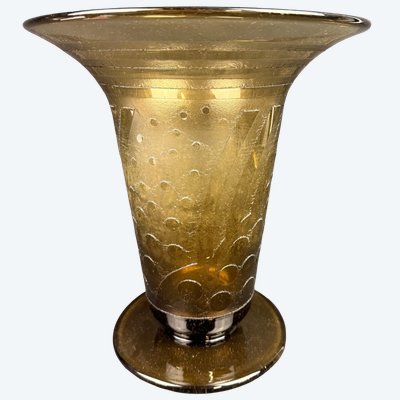
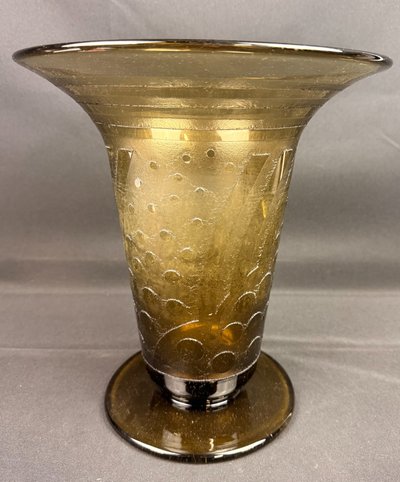
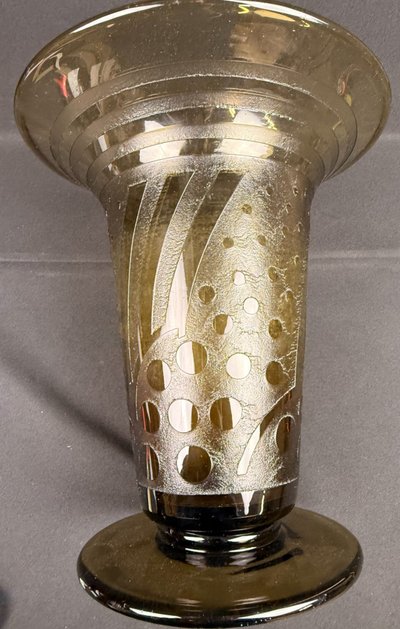
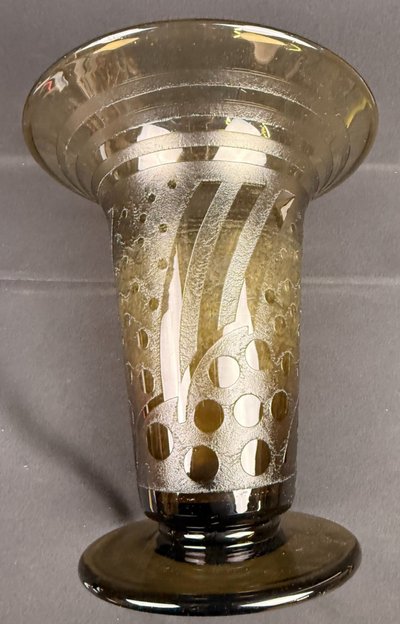
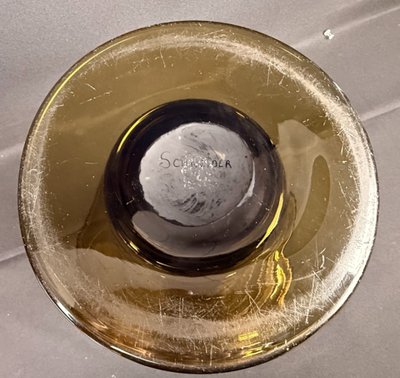
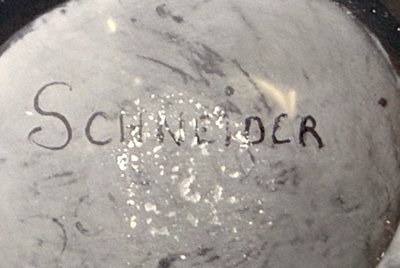
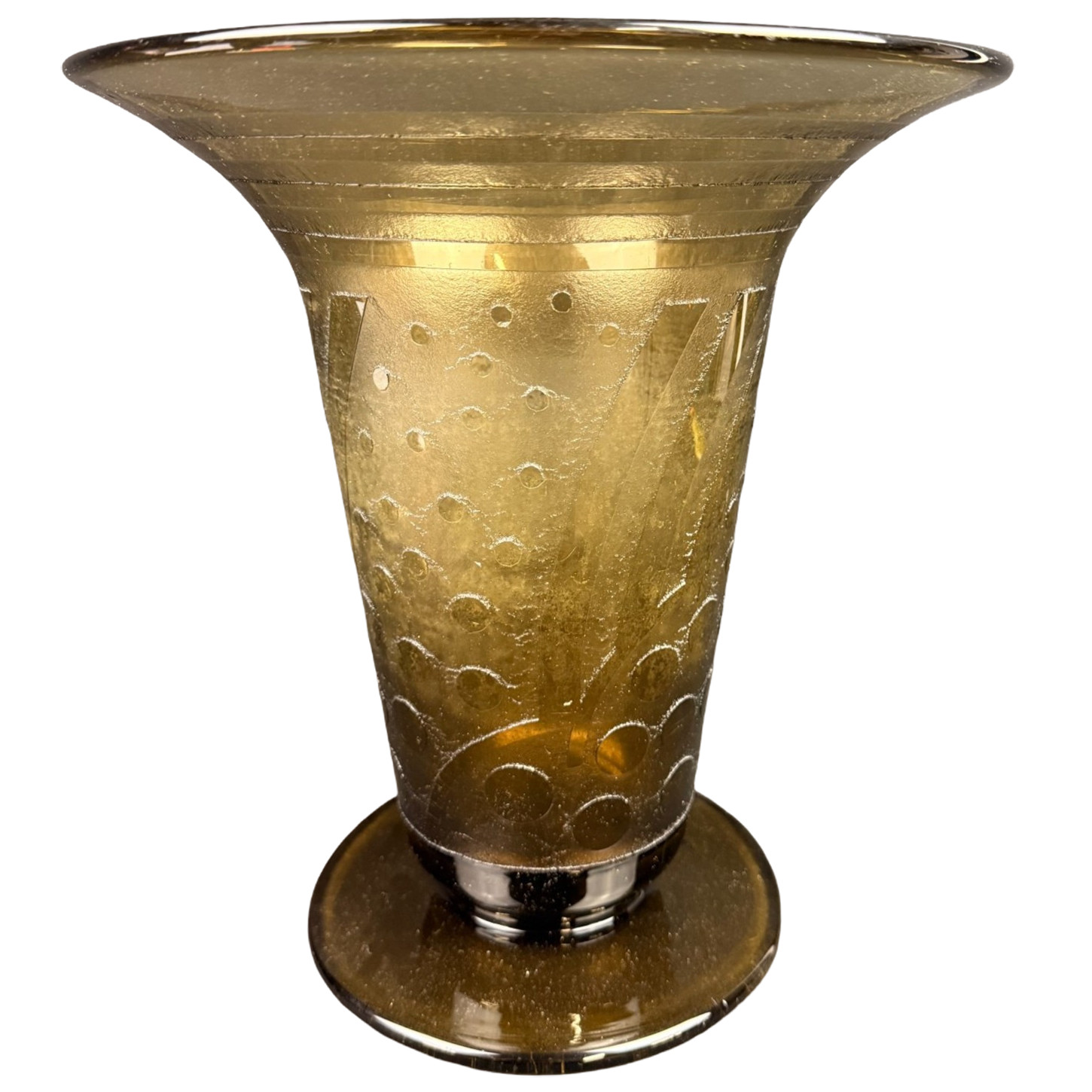
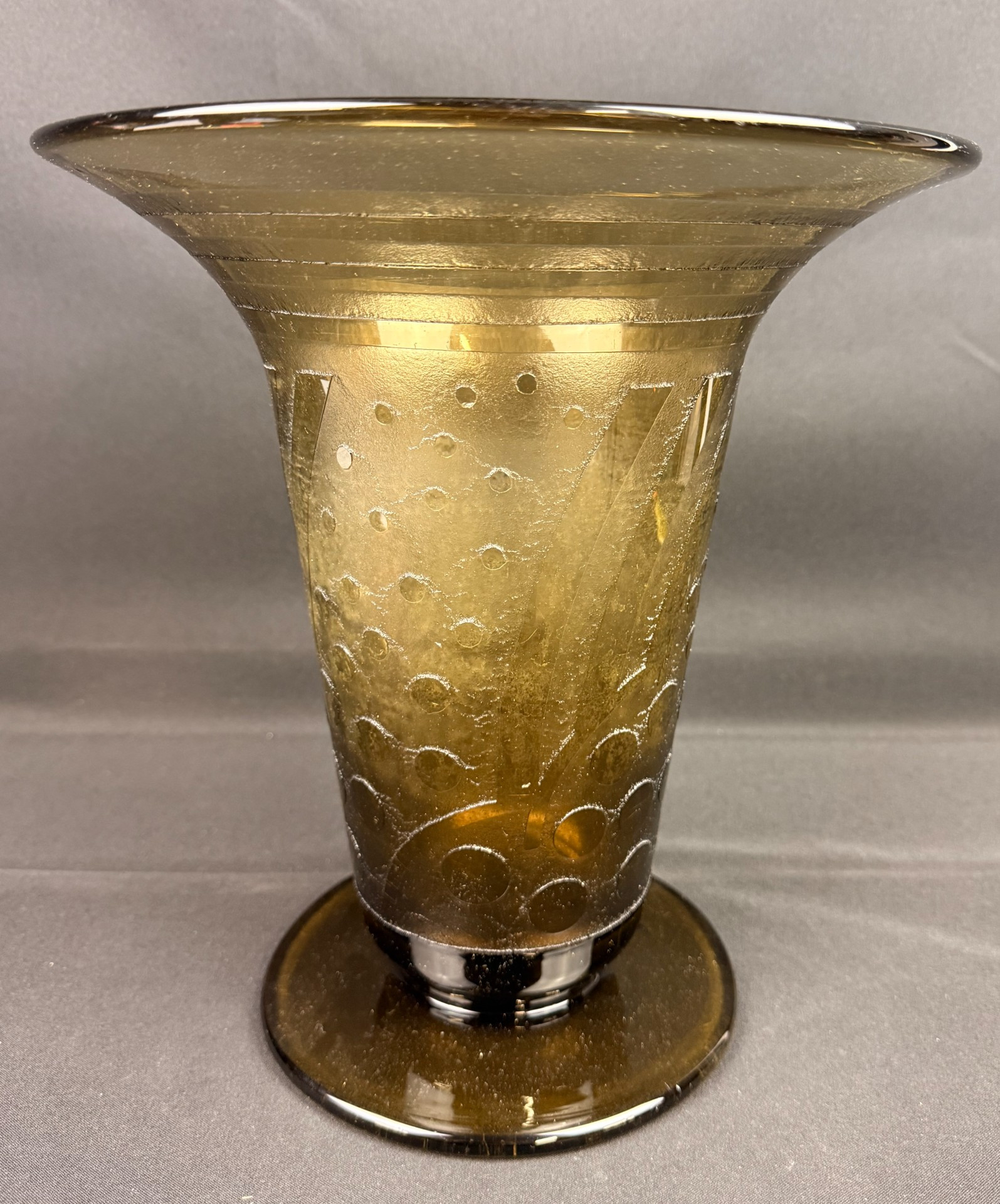
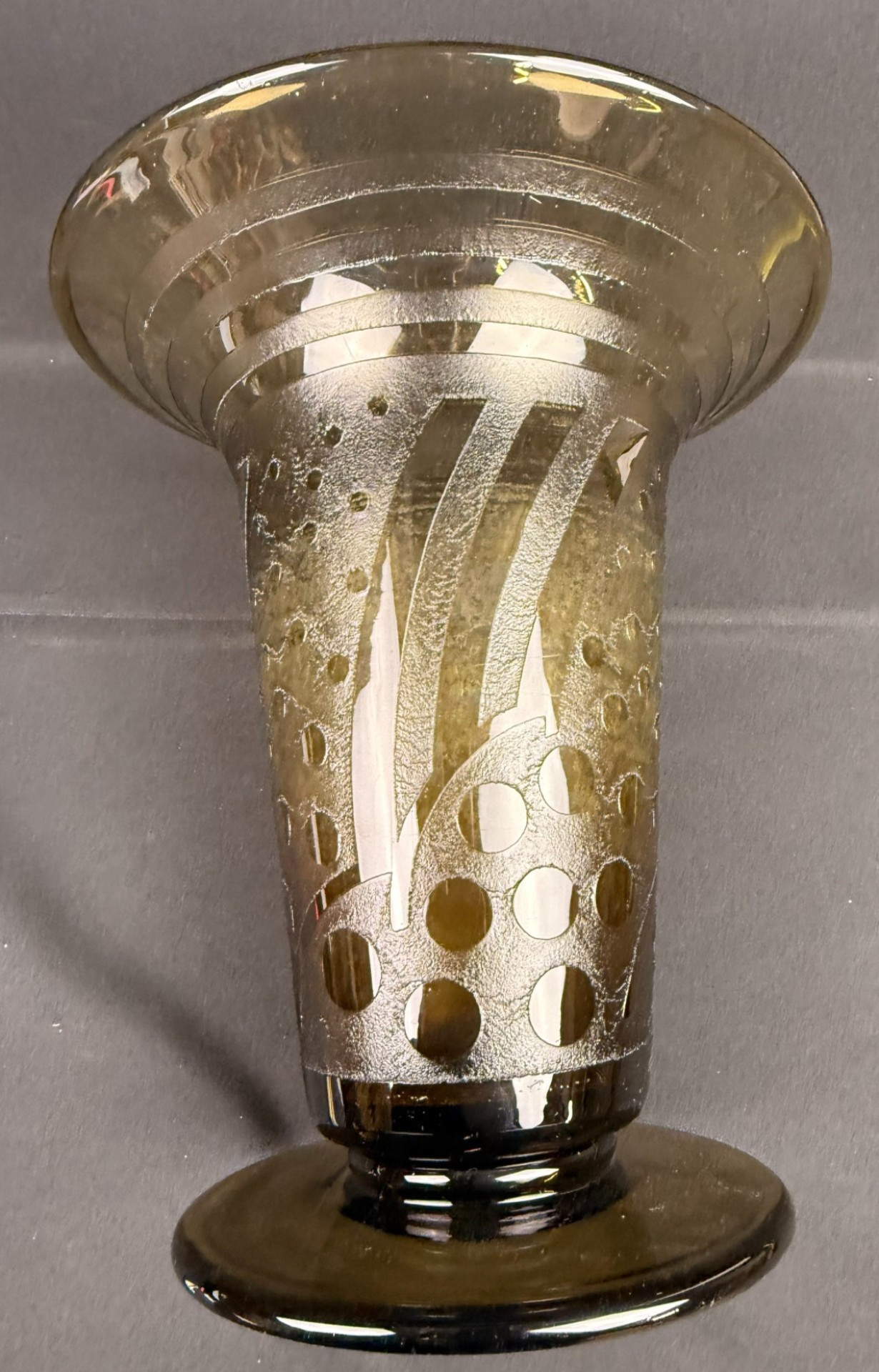
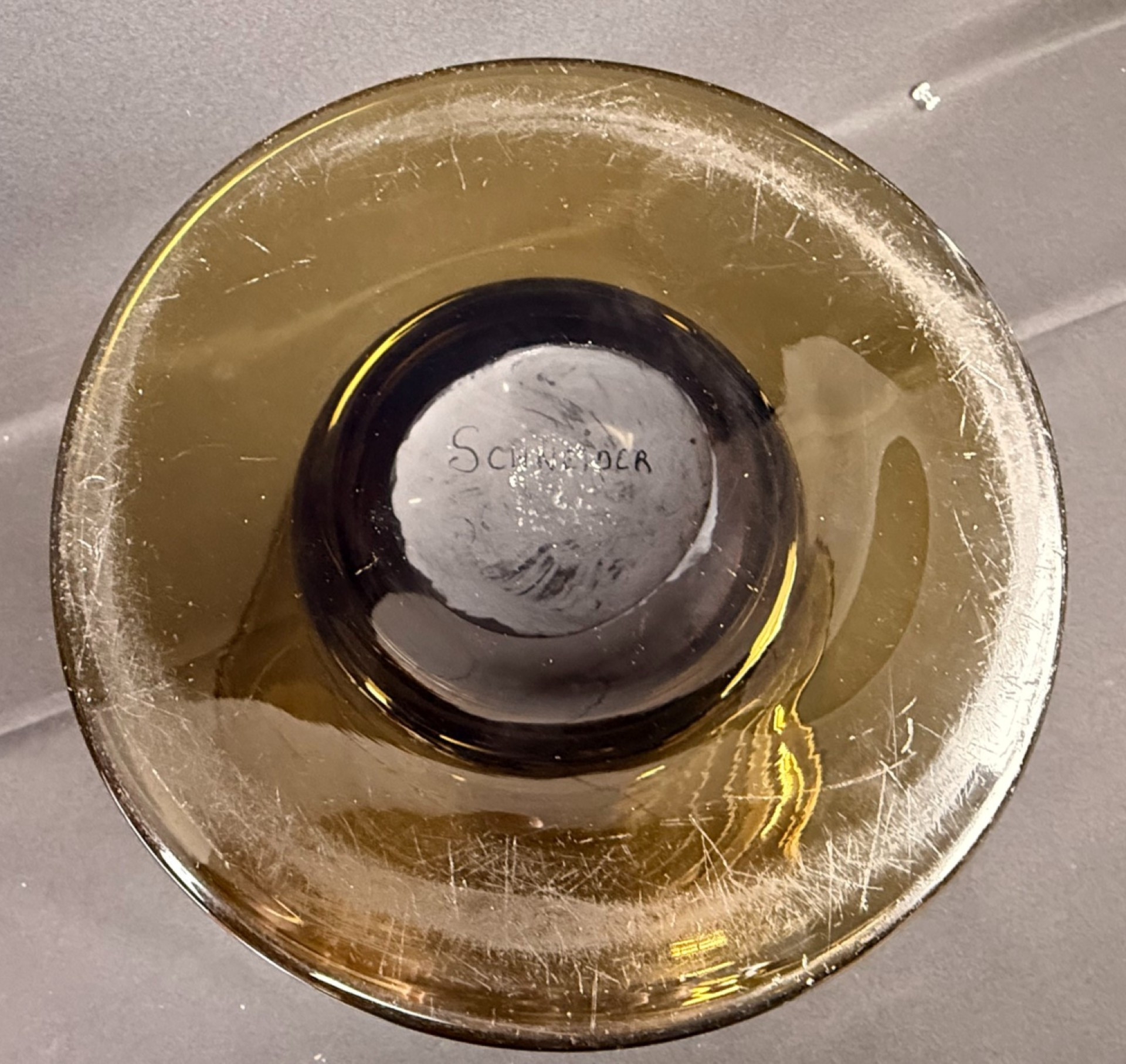
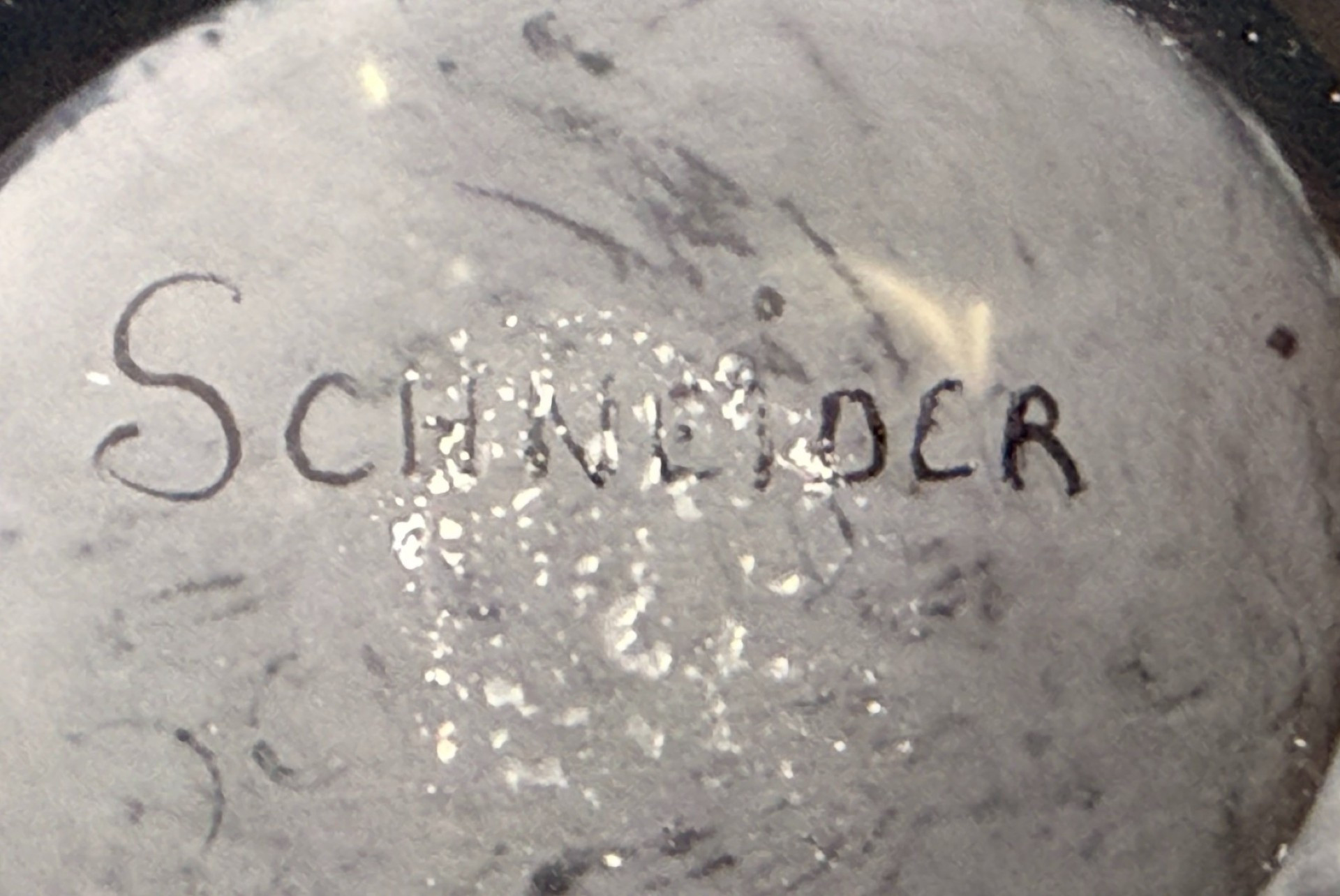
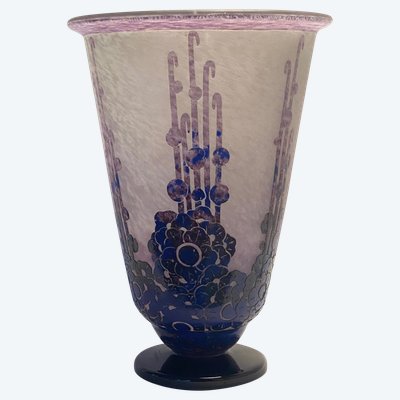
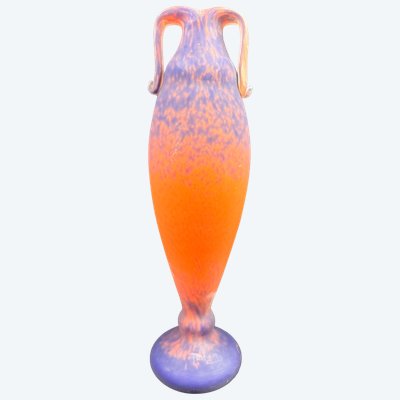
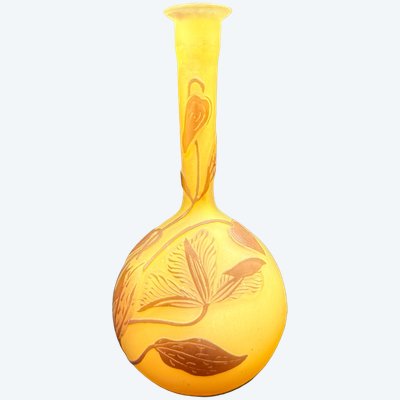
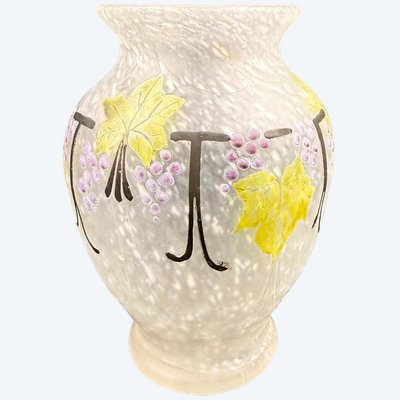
An exceptional Art Deco vase signed “Schneider” on the wheel mark beneath the base, produced in France in the 1920s–1930s.
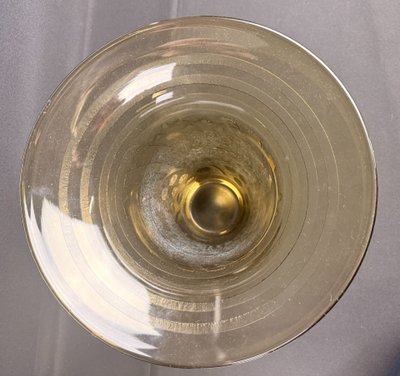
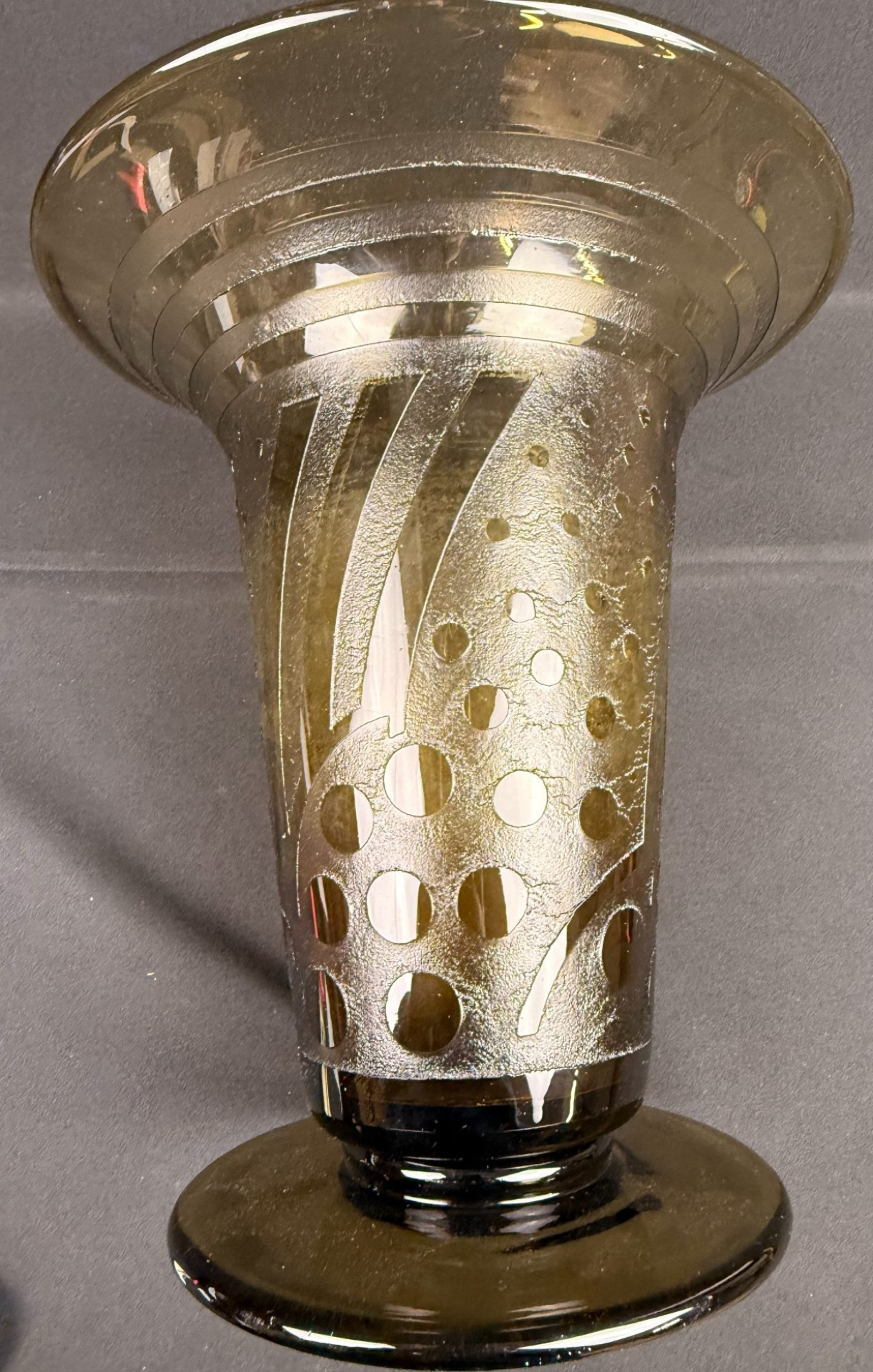
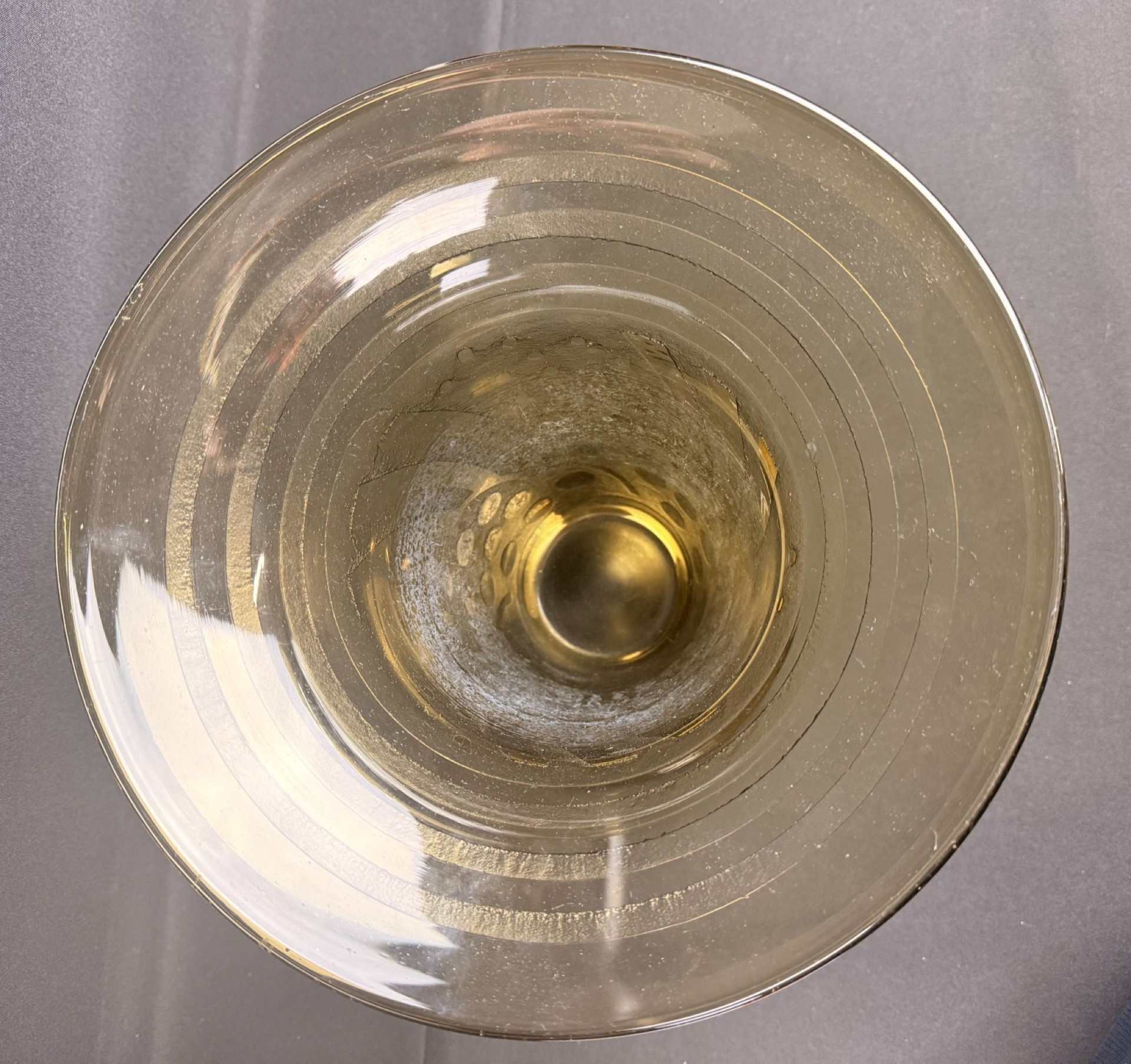
This piece immediately captivates with its generous dimensions and remarkable decorative presence. Crafted from amber-bronze-colored smoked glass, the vase features an elegant geometric design typical of the Art Deco aesthetic, composed of engraved motifs and concentric bands that beautifully capture the light.
Its proportions are particularly refined:
Height: 31 cm
Diameter at the neck: 28 cm
Base diameter: 18 cm
The flared, highly architectural silhouette lends the piece a monumental appearance, making it a standout piece in an Art Deco glassware collection or in a contemporary interior.
“Schneider” signature wheel-engraved beneath the base.
Overall condition is very satisfactory for a piece of this age. No cracks or chips observed. There are a few traces of limescale inside the vase as well as subtle scratches from use on the base, consistent with normal use and having no impact on the object’s appearance.
An authentic, decorative, and large-scale piece, much rarer than standard models.
In-person pickup is preferred given the size and fragility of the piece. Shipping is possible with professional packaging.
A spectacular Art Deco glasswork, signed by one of the greatest French manufacturers of the interwar period.
Biographical Summary of Charles Schneider, Master Glassmaker
Charles Schneider was born on February 25, 1881, in Château-Thierry (Aisne) and died in 1953. The son of parents originally from Lorraine, he grew up in Nancy, a city then at the heart of Art Nouveau and the École de Nancy, inspired by Émile Gallé. He had a brother, Ernest, and a sister, Ernestine.
Charles Schneider studied art at the École des Beaux-Arts in Nancy, then received a scholarship to continue his studies at the École des Beaux-Arts in Paris, in the studios of Jean-Charles Chaplain and Frédéric de Vernon. At the same time, he worked at the Daum glassworks in Nancy starting in 1902, where he contributed to Art Nouveau projects, particularly in glass and pâte de verre.
In 1913, Charles Schneider founded Verreries Schneider in Épinay-sur-Seine with his brother Ernest. World War I temporarily put their business on hold, but by 1918, they turned their attention to art glass. Their work combined curved forms, enameled decorations, and a colorful palette (up to 32 shades), in the spirit of Art Nouveau and Art Deco.
In 1925, their glassworks exhibited at the International Exhibition of Modern Decorative and Industrial Arts in Paris, where it was a great success.
In 1918, they registered the Schneider trademark and developed the “Le Verre Français” line, a mass-market style inspired by art glass. This line, produced on a large scale, combined botanical motifs with elegant shapes and was highly popular in the American market.
Verreries Schneider grew to employ up to 500 people by 1925 and sold its creations worldwide. Charles Schneider is renowned for his jeweled goblets, black-stemmed goblets, and innovations in glass powder coloring. The company went bankrupt in 1938, but Charles Schneider’s artistic legacy remains highly prized today.
In summary, Charles Schneider was a French master glassmaker, a student of the École de Nancy, co-founder of Verreries Schneider, creator of the “Le Verre Français” line, and a leading figure in Art Nouveau and Art Deco in France.
Ref: YH5KZTHRMP

 English
 Français
 Italiano
 Deutsch
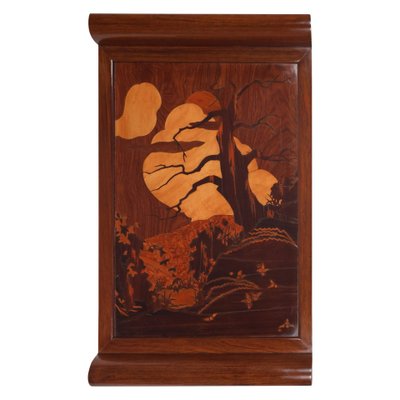
 Solid Mahogany And Inlaid Art Deco Tray
390 € EUR