


Would you like more images?

Camille Pissarro (1830-1903)
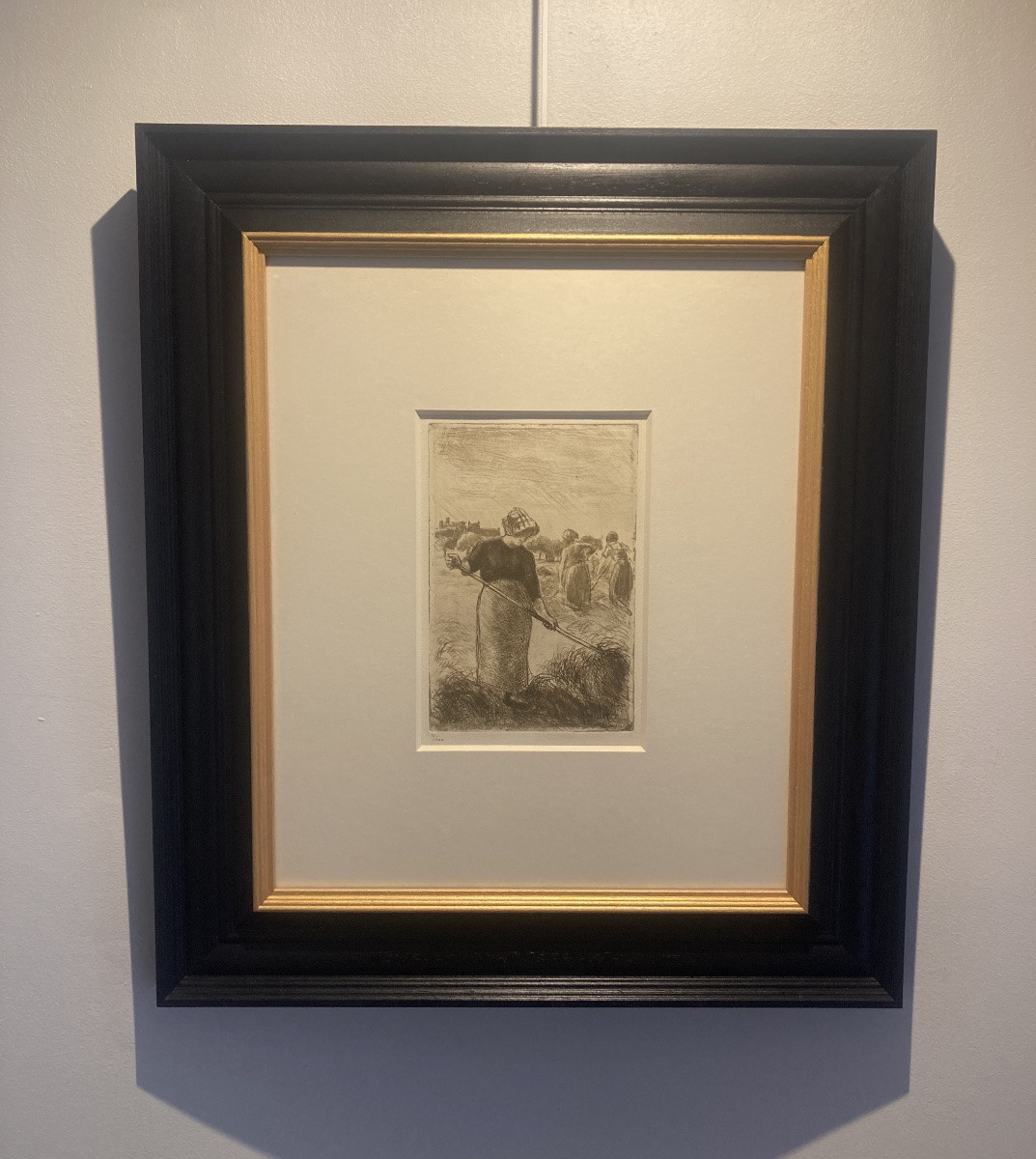
The Haymakers, 1890
Etching numbered 17/100
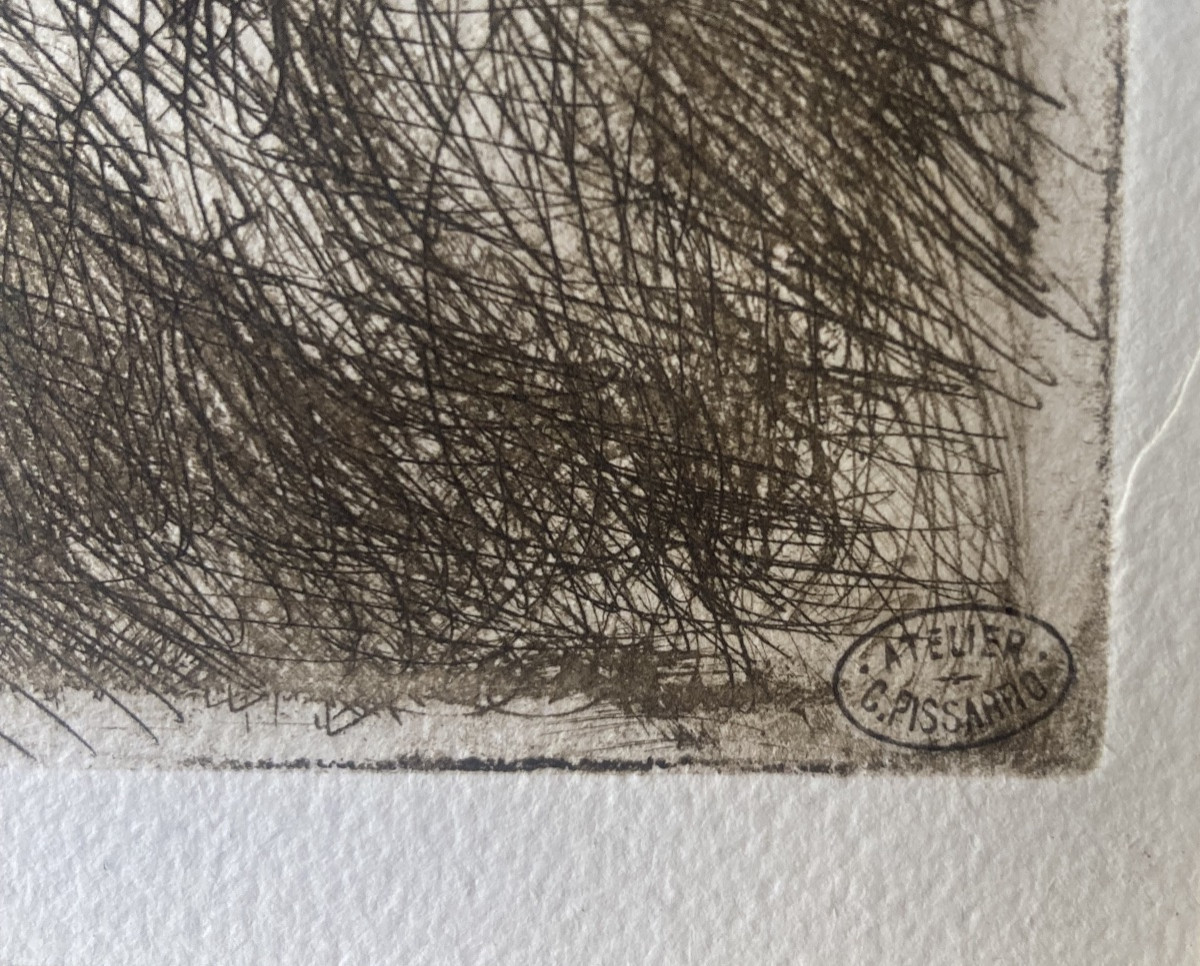
Stamp of Atelier C. Pissarro in the plate
Annotations in the lower margin (D 94)
19.9 x 13.2 cm
Provenance: Claude Bonin-Pissarro
Camille Pissarro and Engraving
Considered the "father of Impressionism," Camille Pissarro was a tireless worker who constantly questioned his work. Paul Cézanne, one of his friends, stated: "Perhaps we all come from Pissarro (...). He is the first Impressionist." Pissarro began engraving in the early 1860s, primarily under the influence of a movement of painter-engravers known as "the revival of etching." Along with Degas, he was the Impressionist who took the most serious interest in printmaking: both men introduced intaglio into their practice very early on. Their collaboration resulted in a body of prints whose experimental nature marked a turning point in the history of art.
Without realizing it, Degas and Pissarro created, with the "original" print, an art object accessible to all. After 1890, having joined the social struggle and embraced anarchist ideas, Camille Pissarro sought to combine his printmaking practice with his convictions. According to Michel Melot, he "found in printmaking the medium that could offer the unique to all and the best for all." Unlike painting, printing preserves the memory of the "states" destined to disappear. For Pissarro, each "state" was considered a finished work.
For Christophe Duvivier, “Pissarro innovates knowing he won’t be understood by print dealers or collectors.” He speaks of an “artistic sensation” or even “engraved impressions.” Through engraving, Pissarro pursues his exploration of various techniques. Thus, engraving reveals itself to the Impressionist painter as an experimental laboratory that contributes to his evolution during the last twenty-five years of his career. Pissarro, as Jean Leymarie points out, is, along with Degas, “the most prolific engraver of the Impressionists and the most Impressionist of engravers.”
Finally, according to Charles Kunstler, “Camille Pissarro left behind a large number of prints—nearly 200—most of which command admiration for their transparency, their keen observation of nature, and the richness and originality of their technique.” Almost unknown during his lifetime, Pissarro's engraved work was revealed to the general public in 1923, twenty years after the master's death, when the catalogue of his prints was published. A century later, the gallery has the honor of bringing this exceptional body of work back into the spotlight, placing its creator among the greatest engravers in the history of art.
Ref: MAQVER3SO1
| Condition | Very good |
| Style | Modern Art (Engravings, Prints of Modern Art Style) |
| Period | 19th century (Engravings, Prints 19th century) |
| Country of origin | France |
| Artist | Camille Pissarro (1830-1903) |
| Internal reference | 1712656 |
| Shipping Time | Ready to ship in 4-7 Business Days |
| Location | 75008, Paris, France |
4 commitments to buy with confidence

 English
 Français
  Italiano
  Deutsch