This description has been translated and may not be completely accurate. Click here to see the original
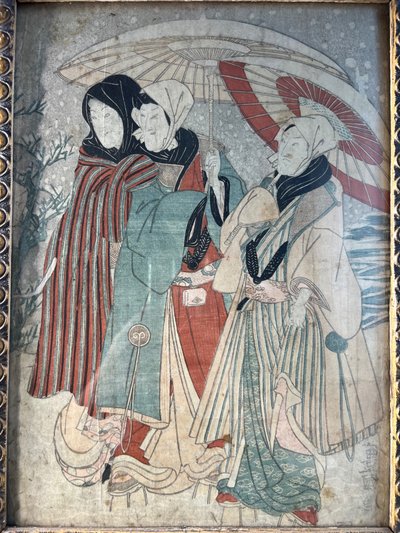
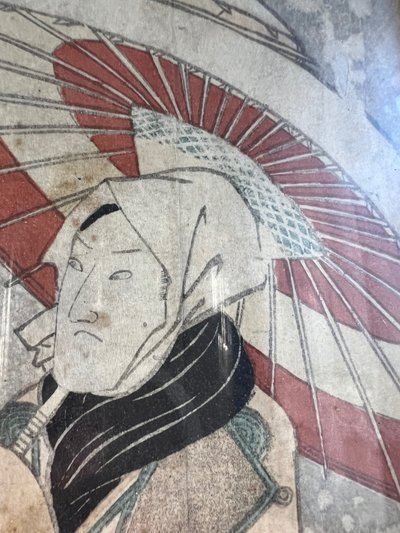
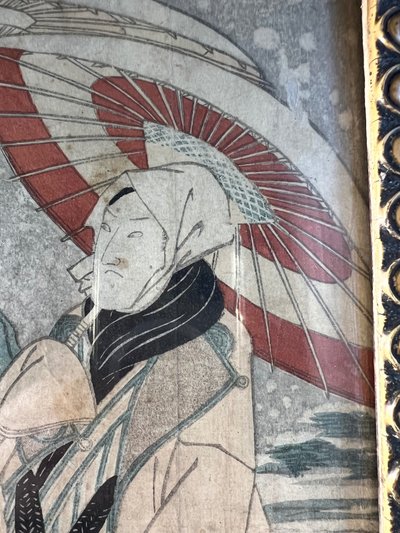
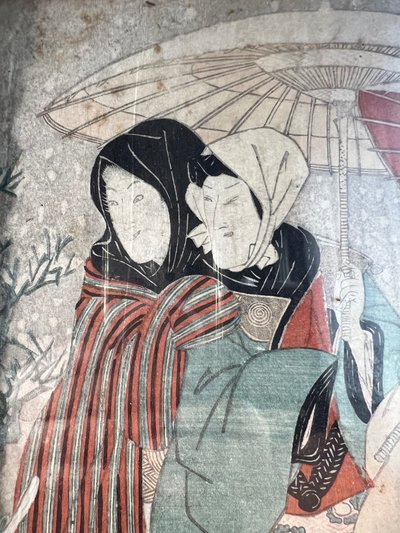
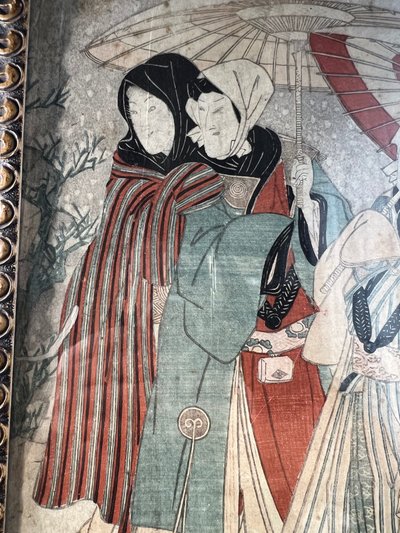
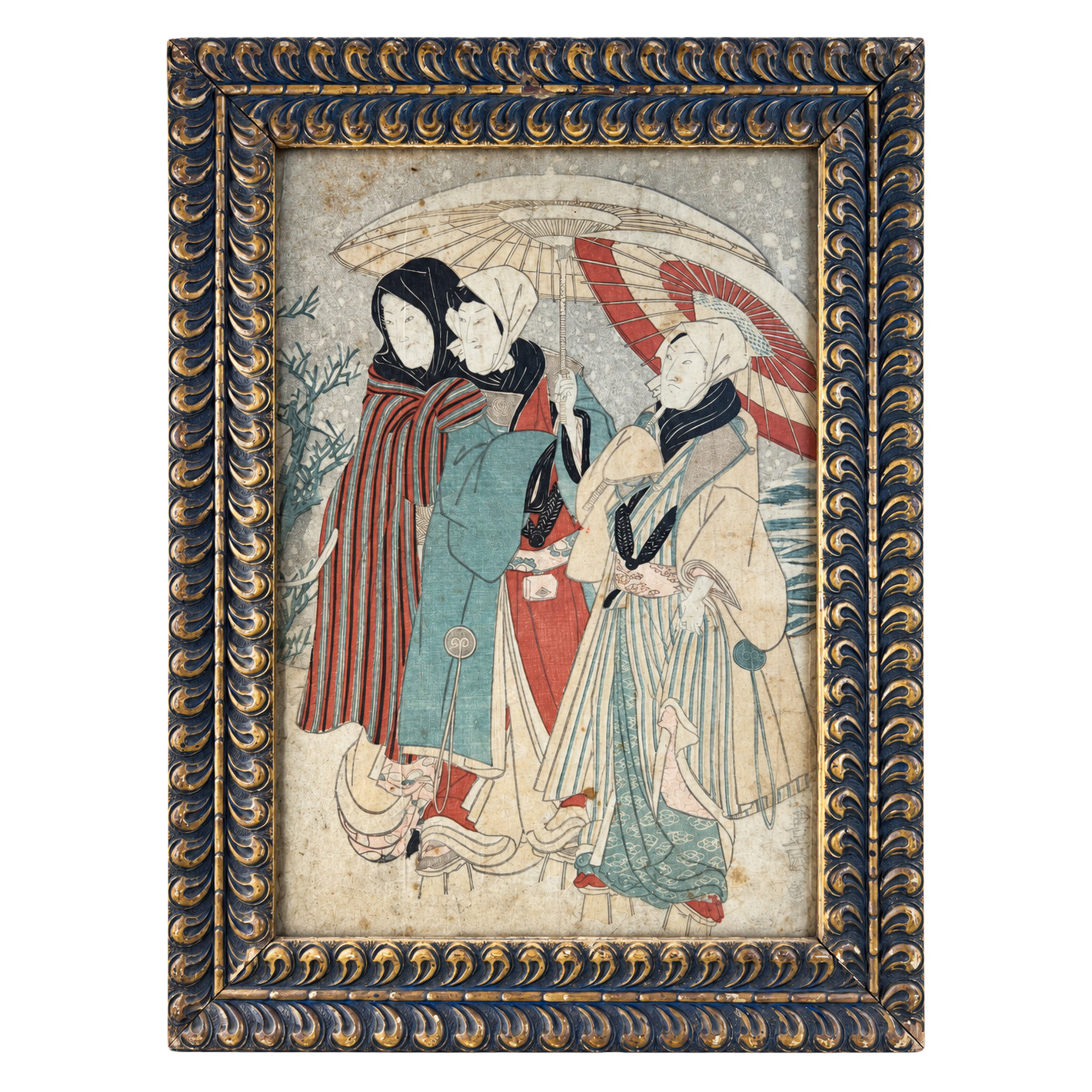
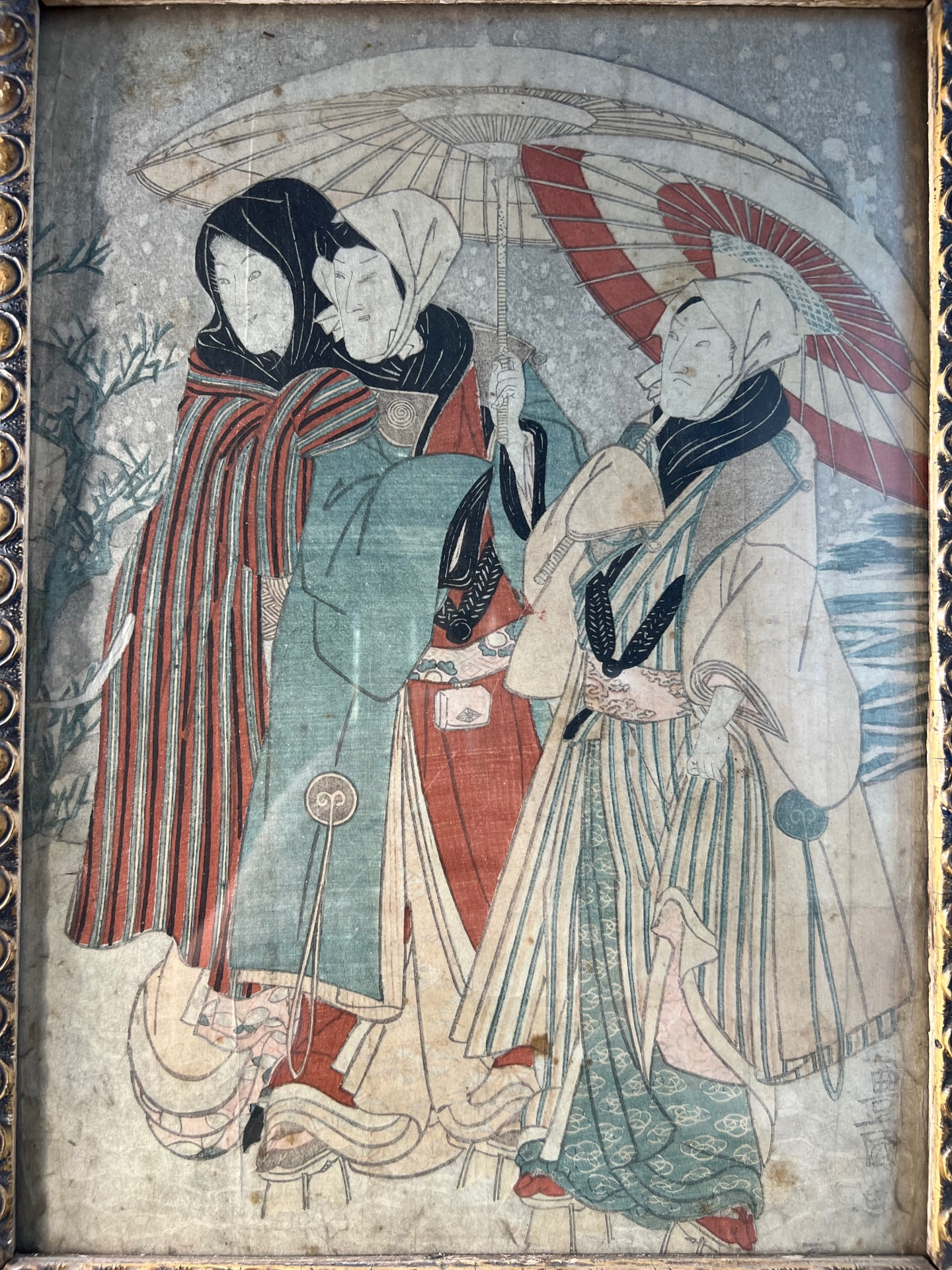
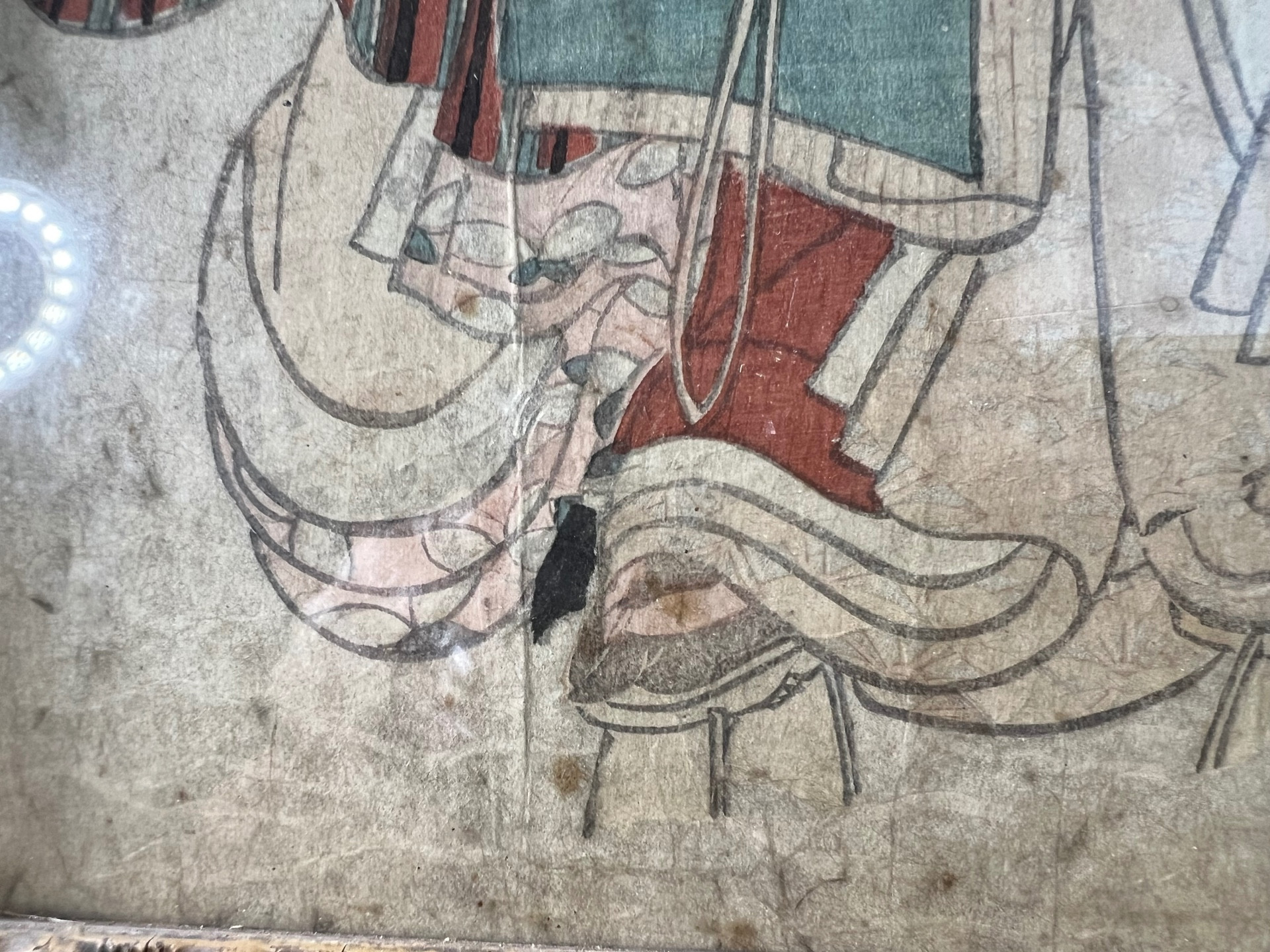
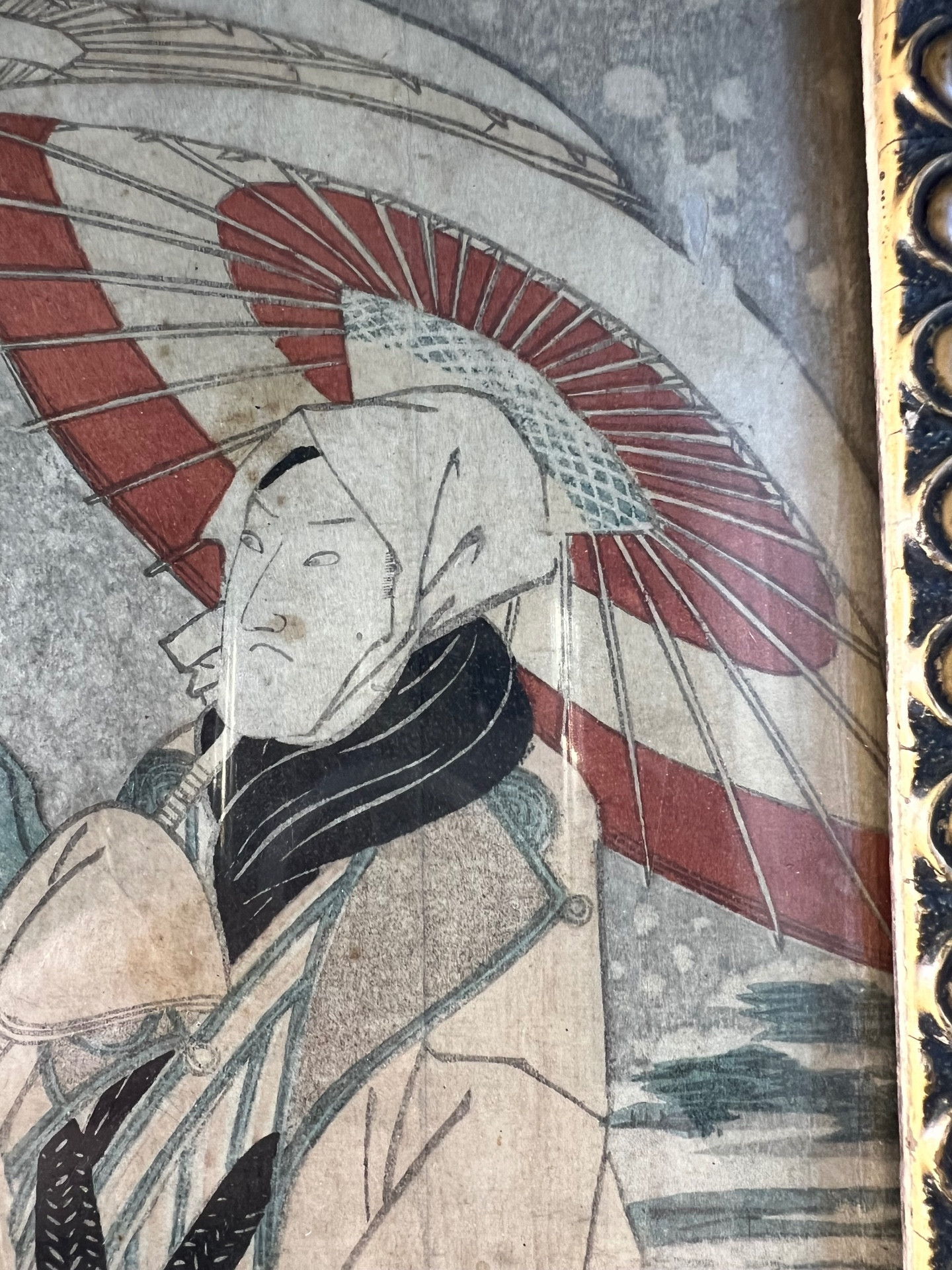
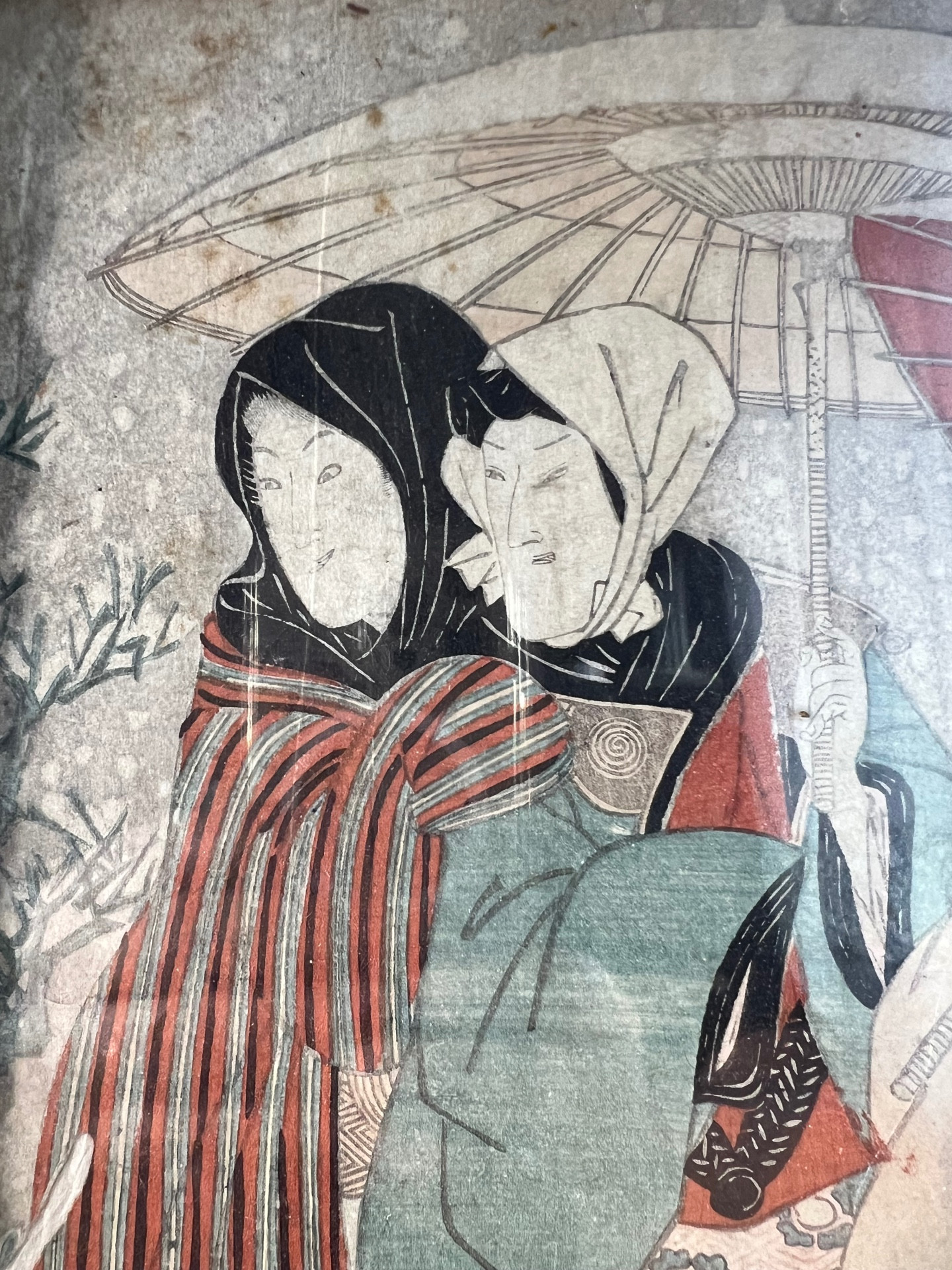
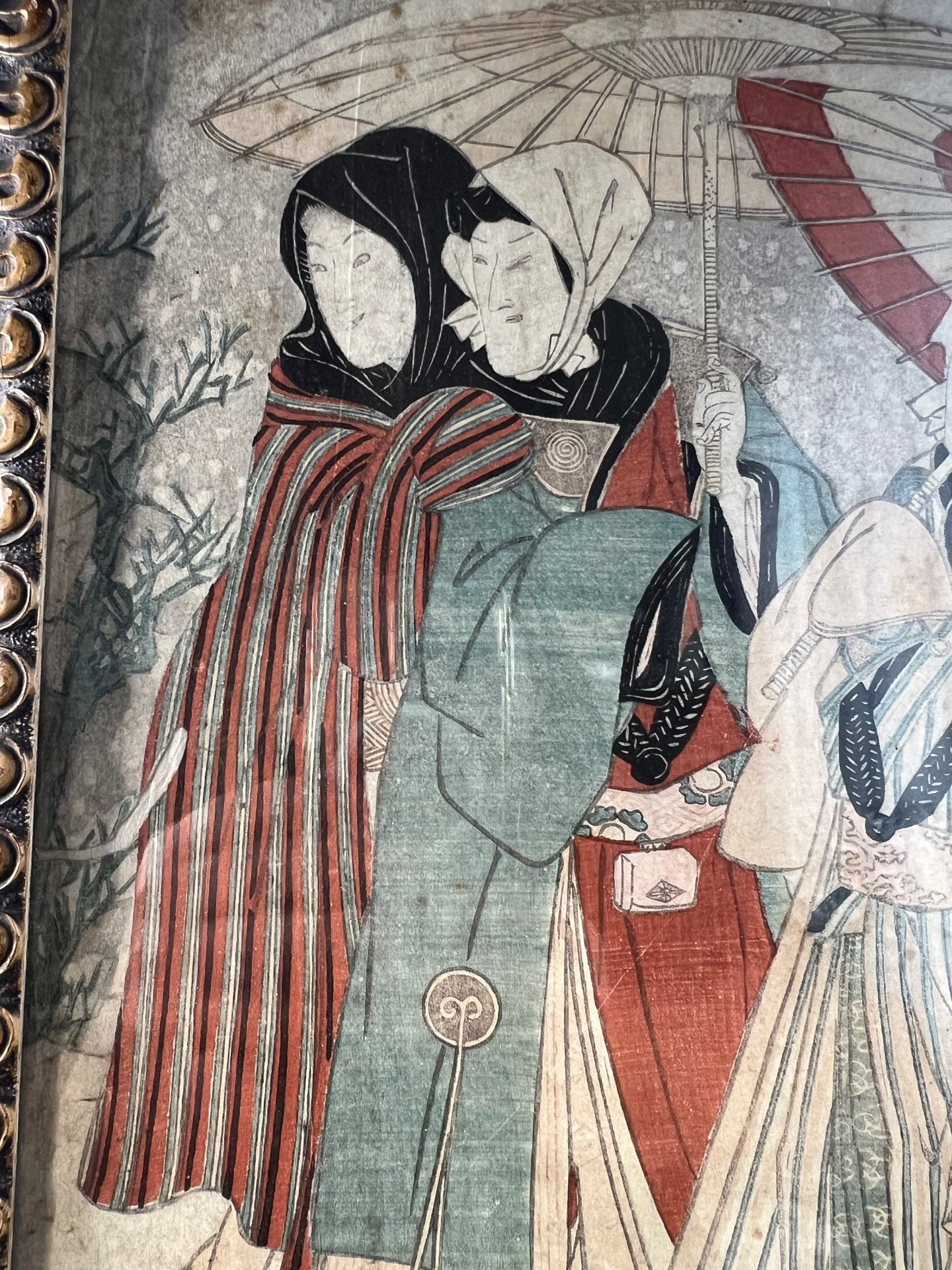
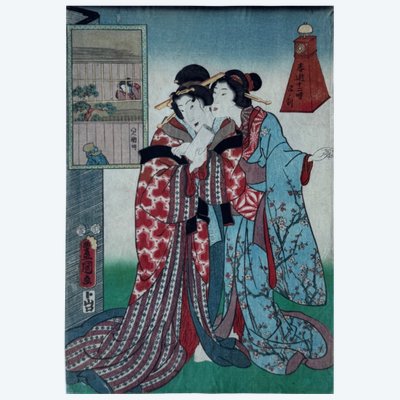
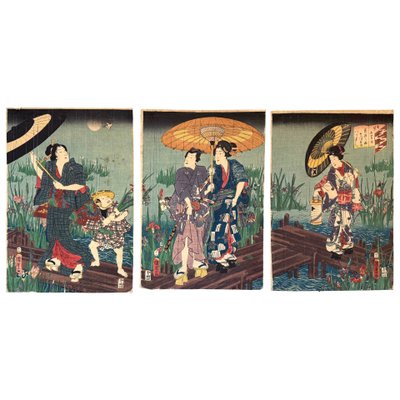
A rare and captivating polychrome Japanese print depicting three figures, likely kabuki actors, gathered under two large parasols in a snowy landscape.
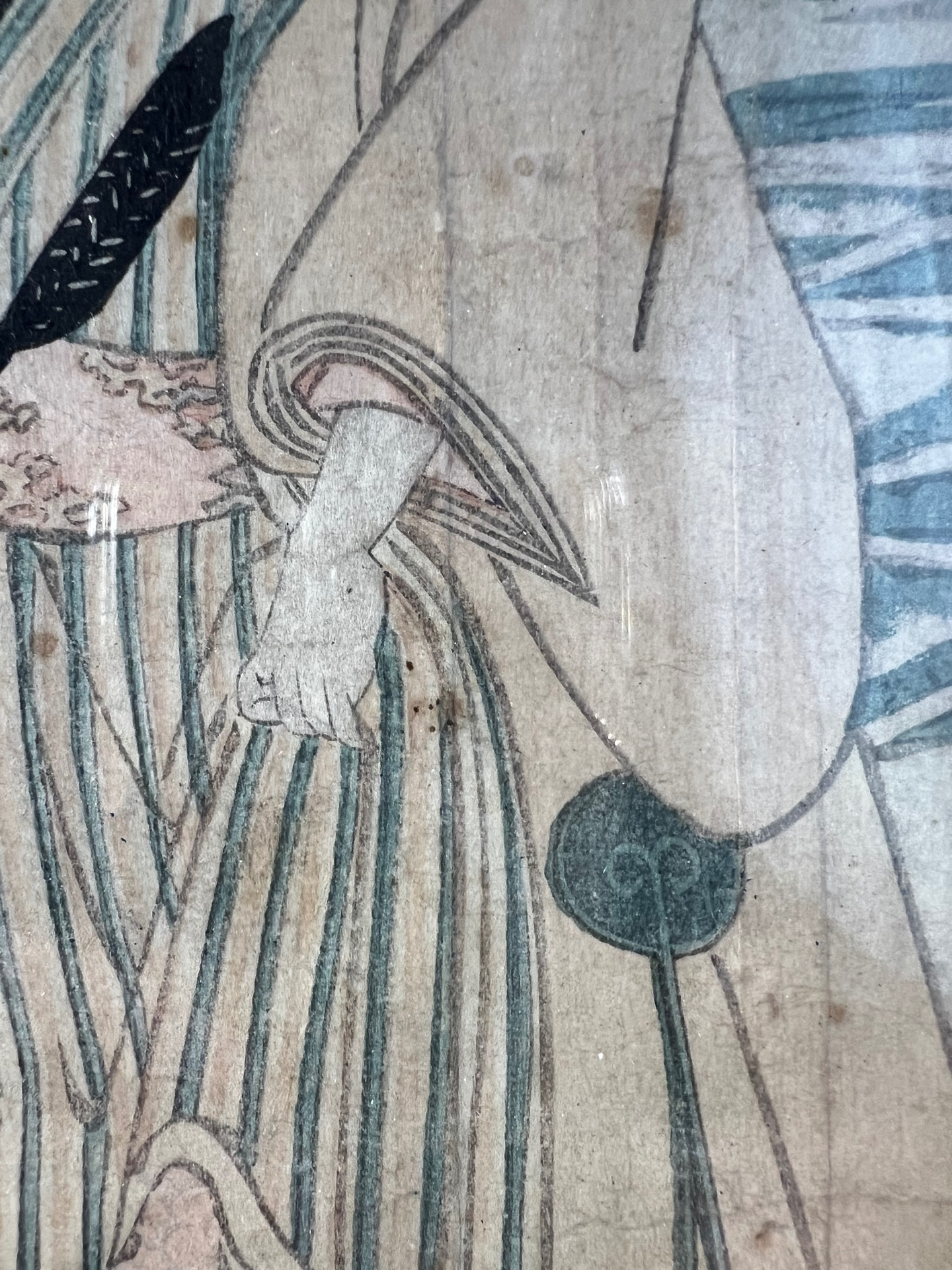
The composition, enlivened by the interplay of clothing and traditional Japanese umbrellas, offers a particularly evocative winter scene. The red, blue-green, black, and pink colors, now delicately softened by time, retain a beautiful harmony.
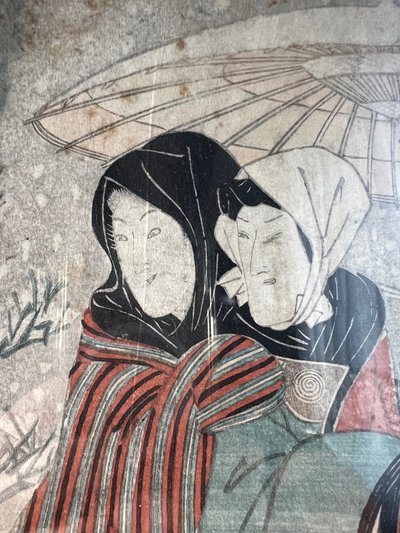
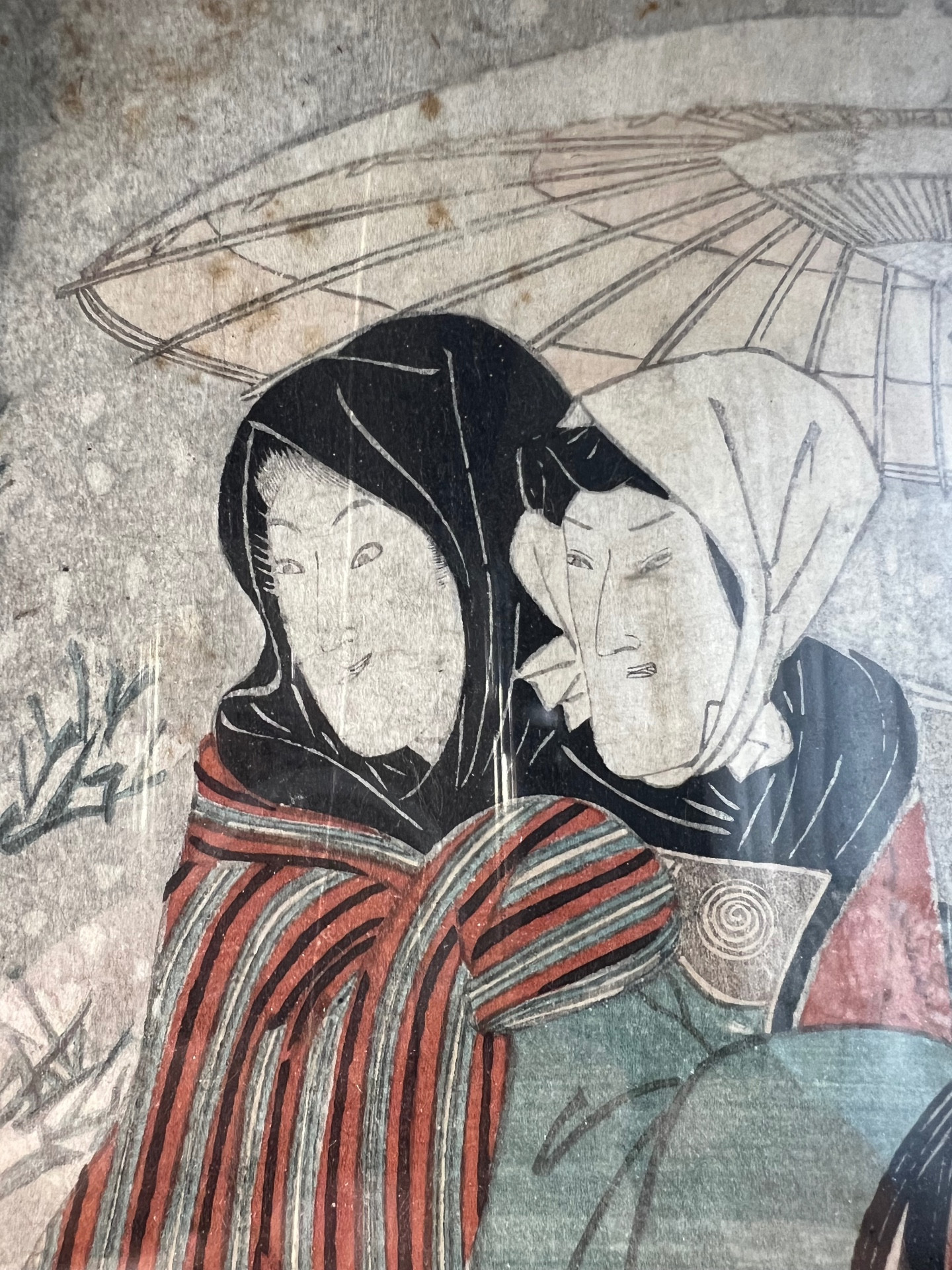
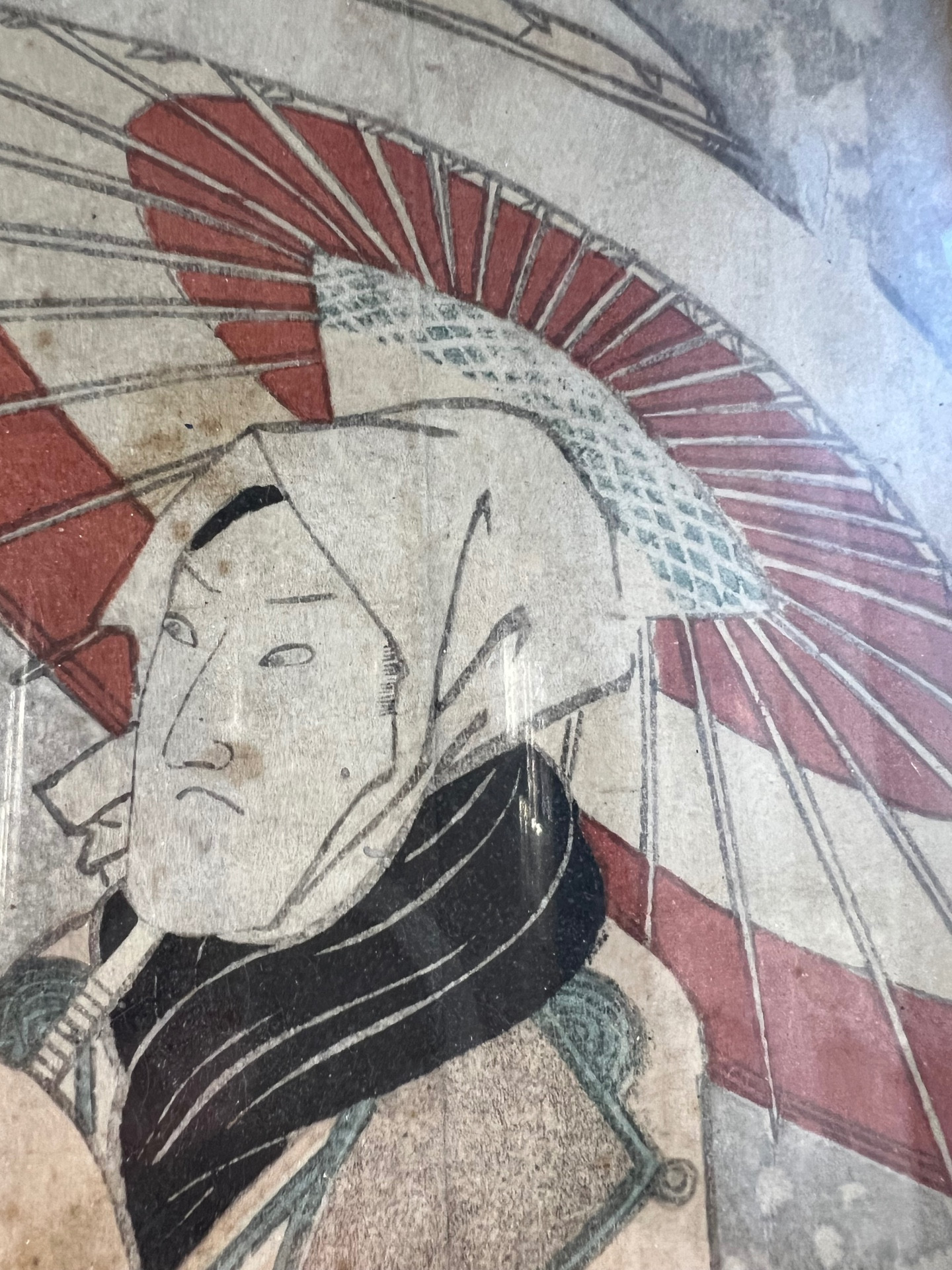
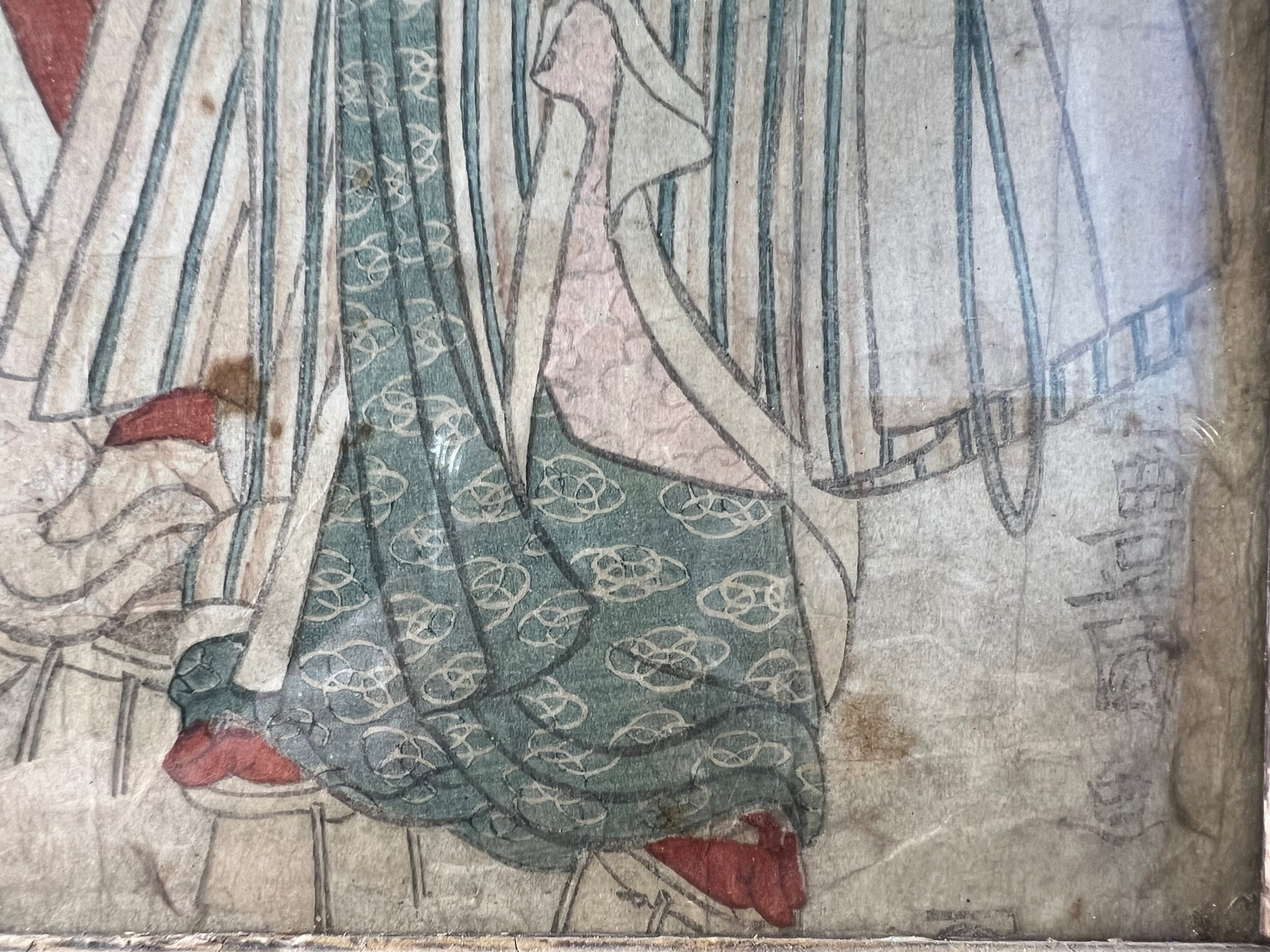
The work is executed using the traditional Japanese polychrome woodblock printing technique known as nishiki-e: the outlines and various colors are printed successively from several woodblocks. The slight misalignments in printing, the areas of flat pigment, the motifs left in reserve, and the fibrous texture of the paper are characteristic of this ancient process.
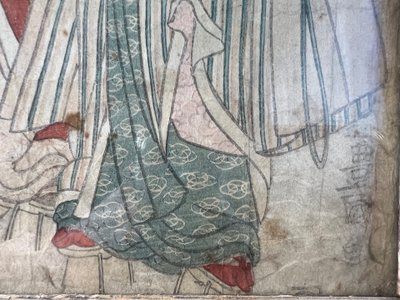
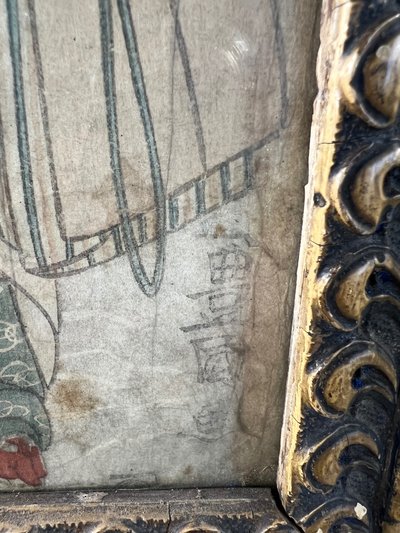
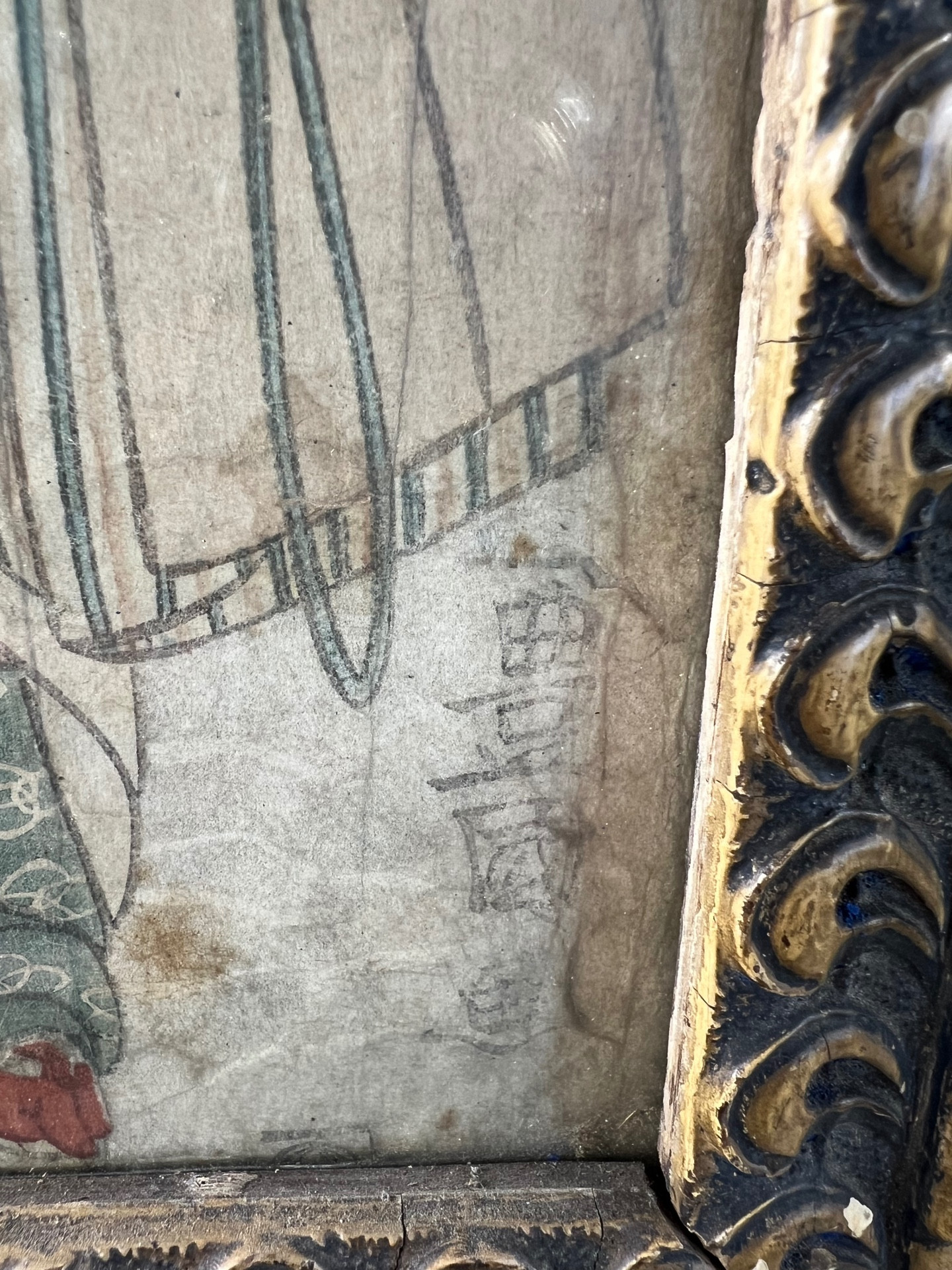
A vertical signature, unfortunately very faded, remains visible in the lower right corner. Its placement, script, and stylistic characteristics suggest a cautious attribution to Utagawa Kunisada I, also known as Toyokuni III, or his workshop, in the first half of the 19th century, probably around 1820-1845.
Utagawa Kunisada (1786-1865) was one of the most celebrated and prolific artists of the Utagawa school. He is particularly sought after for his portraits of kabuki actors, his elegant female figures, and his scenes inspired by Edo-period theatrical life.
PROVENANCE
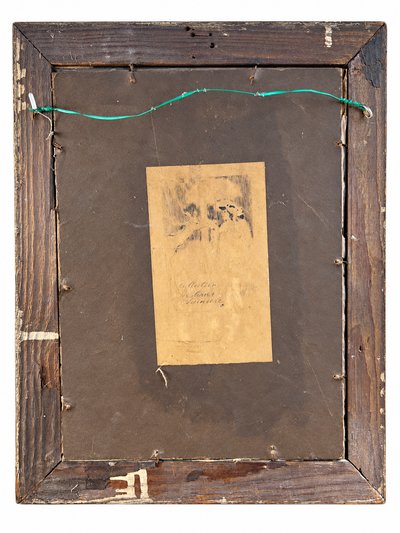
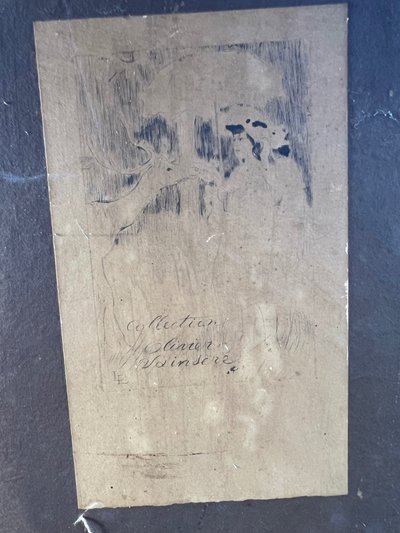
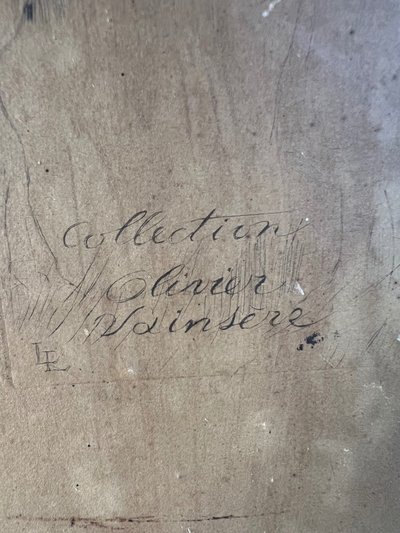
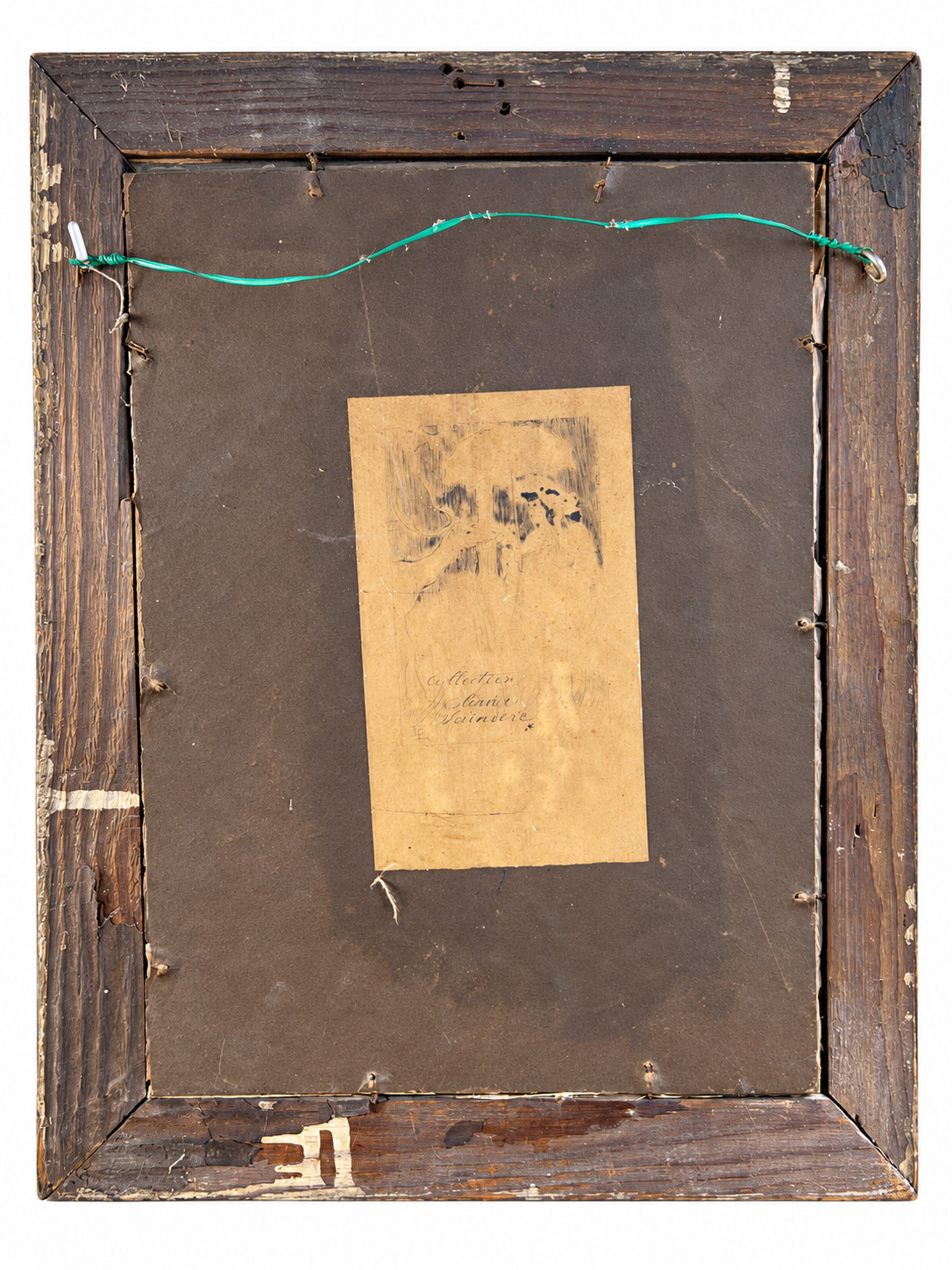
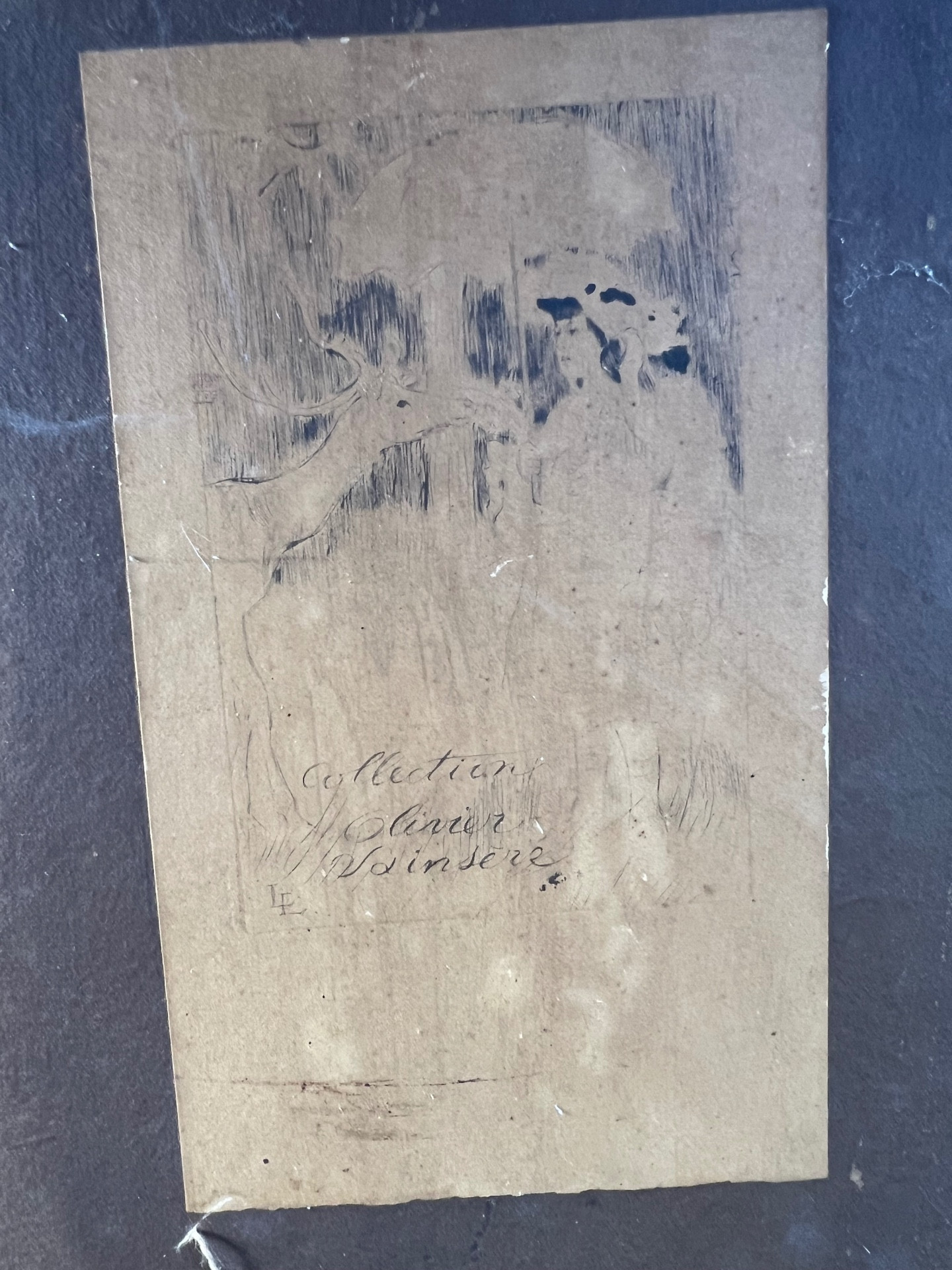
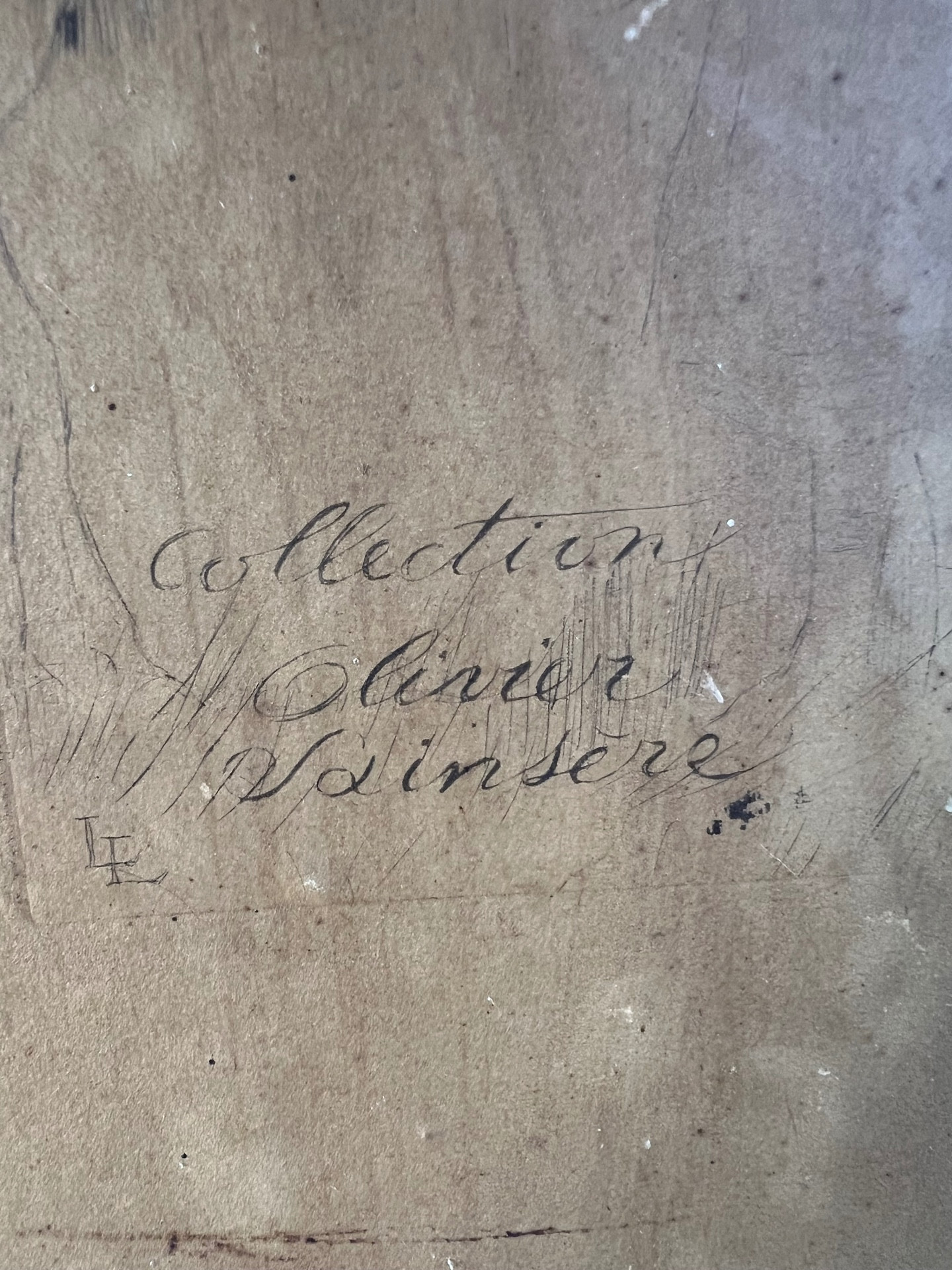
The reverse retains an old handwritten label bearing the inscription "Collection Olivier Sainsère."
Olivier Sainsère (1852-1923), a French statesman, art lover, and prominent patron of the arts, assembled a prestigious collection and maintained relationships with several leading artists of his time, notably Pablo Picasso and Odilon Redon.
This inscription is a particularly interesting piece of provenance information. It is presented as an old inscription on the reverse, without any further documentation to definitively establish its history.
FRAMING
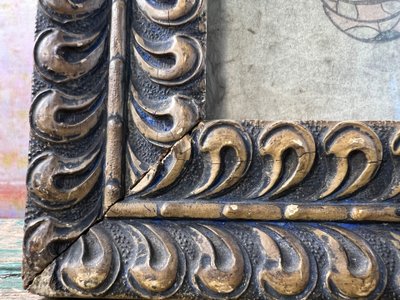
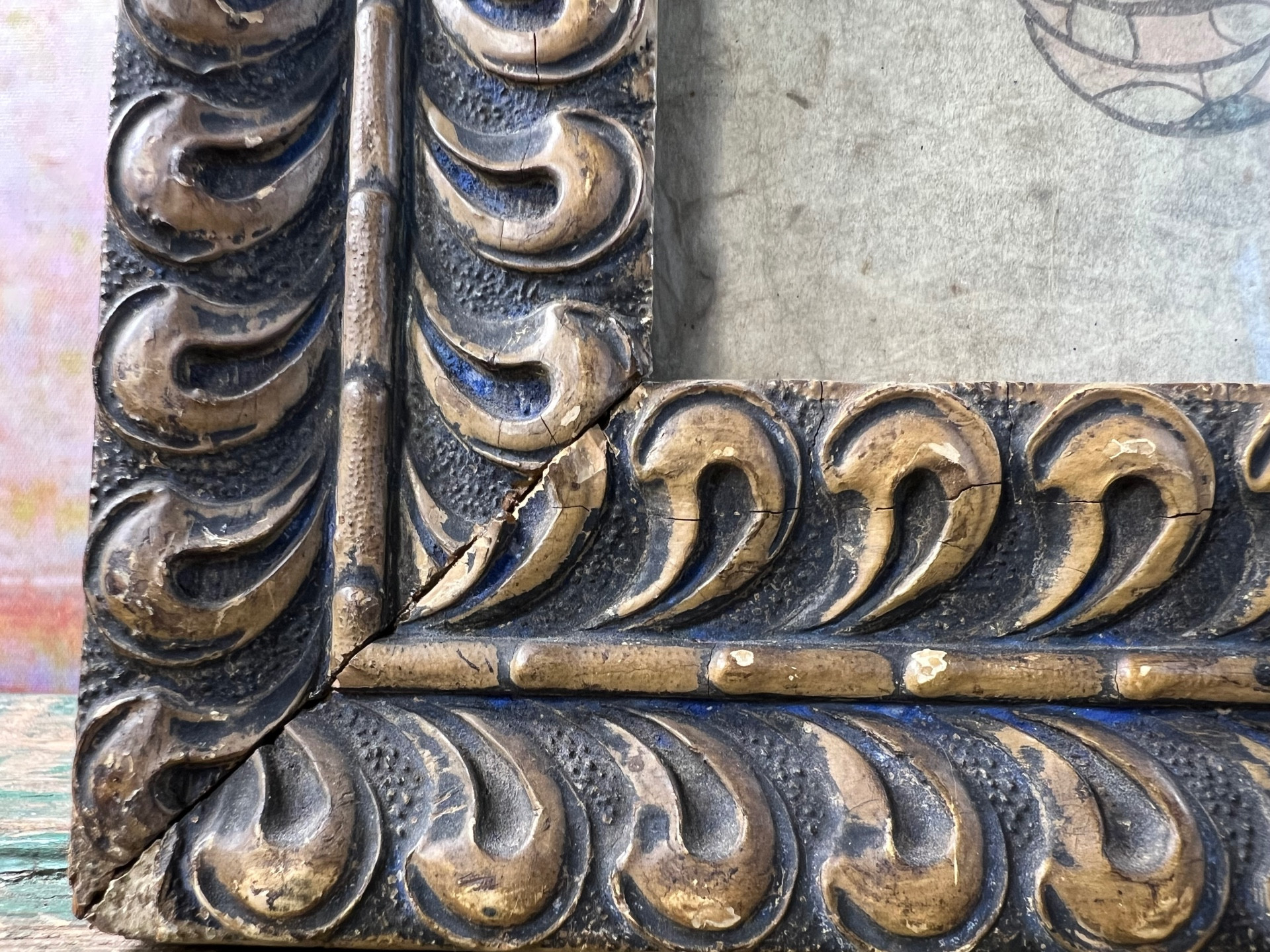
The print is presented in an imposing antique European frame of wood and blackened and gilded composition, decorated with egg-and-dart friezes and stylized motifs. This frame, probably French and datable to the late 19th century, reflects Napoleon III's taste for Japanese art.
The frame is old and was added to the work. Its deep, patinated, and slightly theatrical decoration remarkably enhances the winter scene.
CONDITION
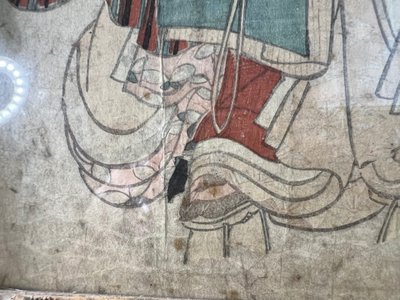
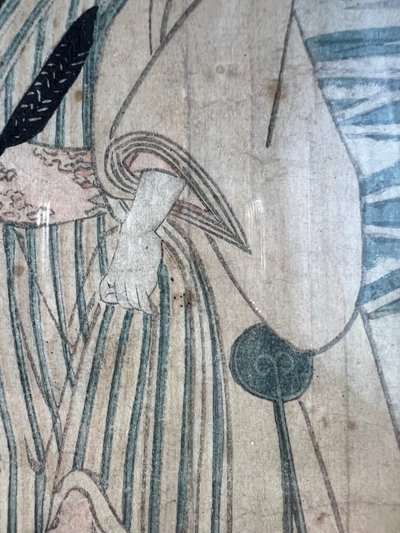
The old condition is visible in the photographs: faded colors, discoloration, foxing, stains, marks, creases, and wear to the paper.
The signature is very faint but still visible in the lower right corner.
The frame has small losses of decoration, particularly in the corners. These imperfections attest to its age and contribute to its patina.
The work is preserved under glass. It has not been disassembled in order to preserve its original mounting; therefore, the complete dimensions of the sheet and the condition of its margins have not been verified.
DIMENSIONS
Overall dimensions of the frame: 41 × 31 cm.
Dimensions of the composition visible under glass: approximately 31 × 23 cm.
An authentic window onto the theater and winter of Edo-period Japan, enhanced by a distinctive antique frame and evocative French provenance.
Ref: OZSEA9K8C4

 English
 Français
 Italiano
 Deutsch
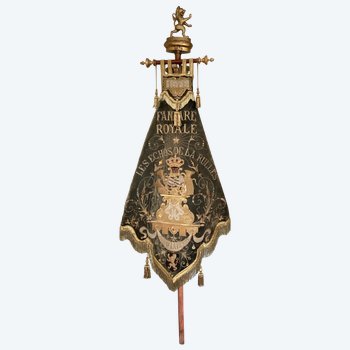
 Royal Banner
1 500 € EUR