This description has been translated and may not be completely accurate. Click here to see the original
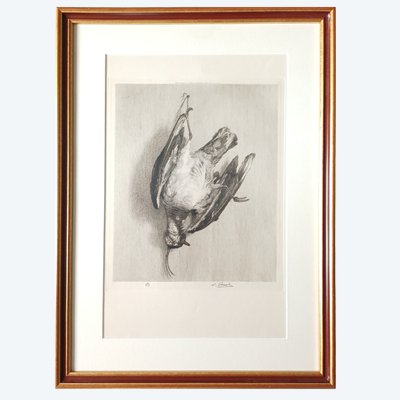
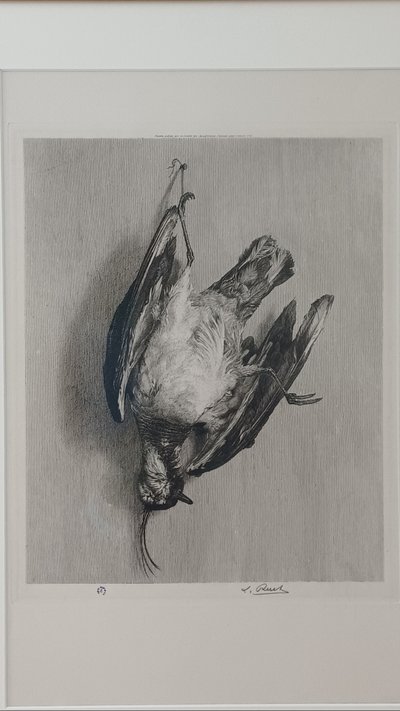
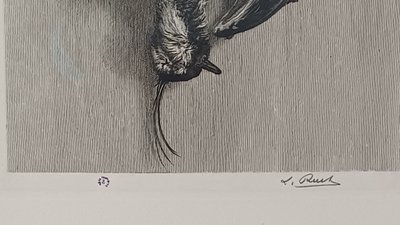
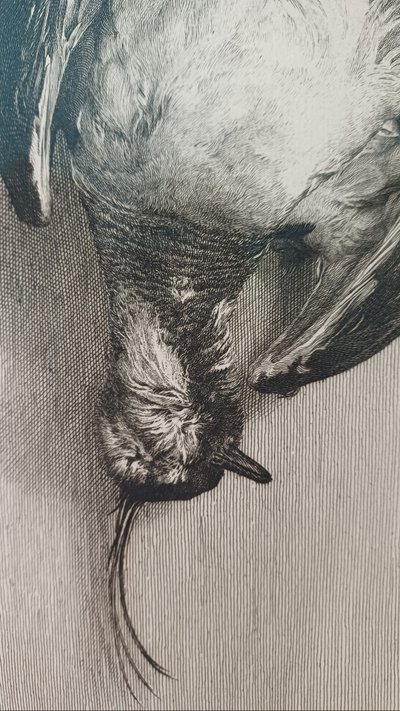
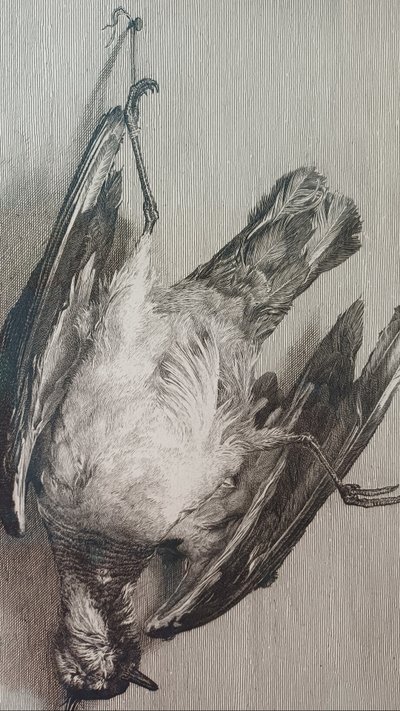
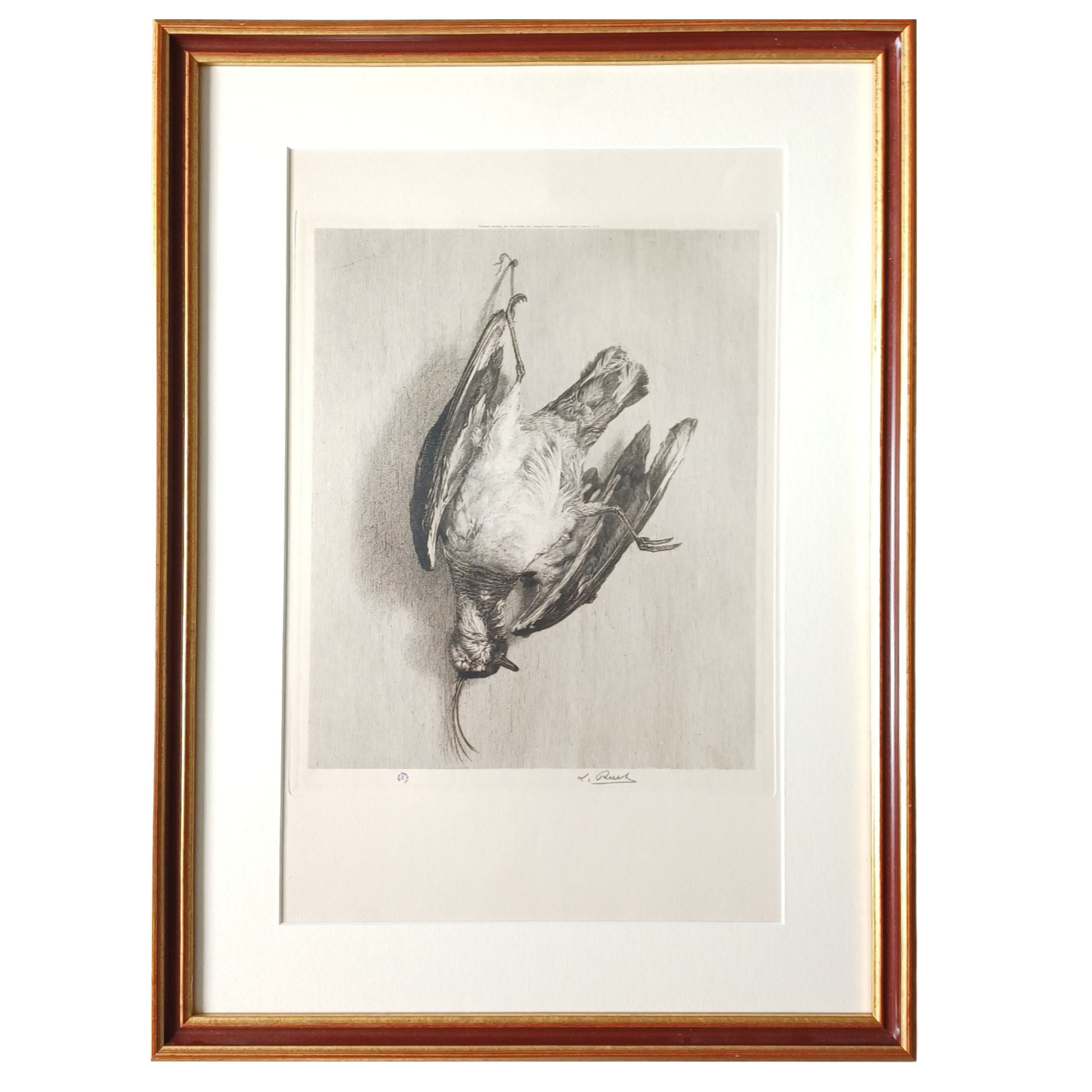
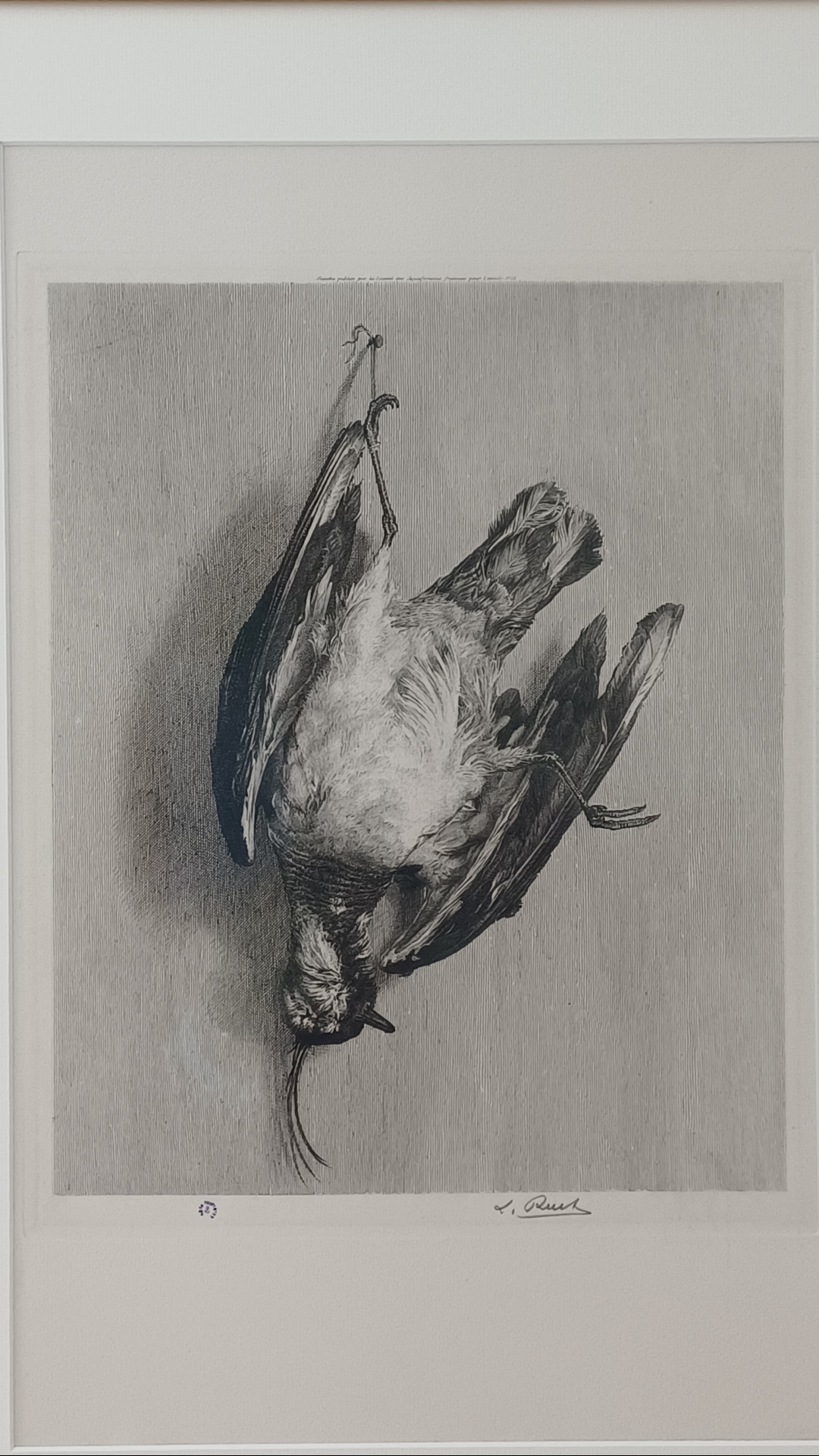
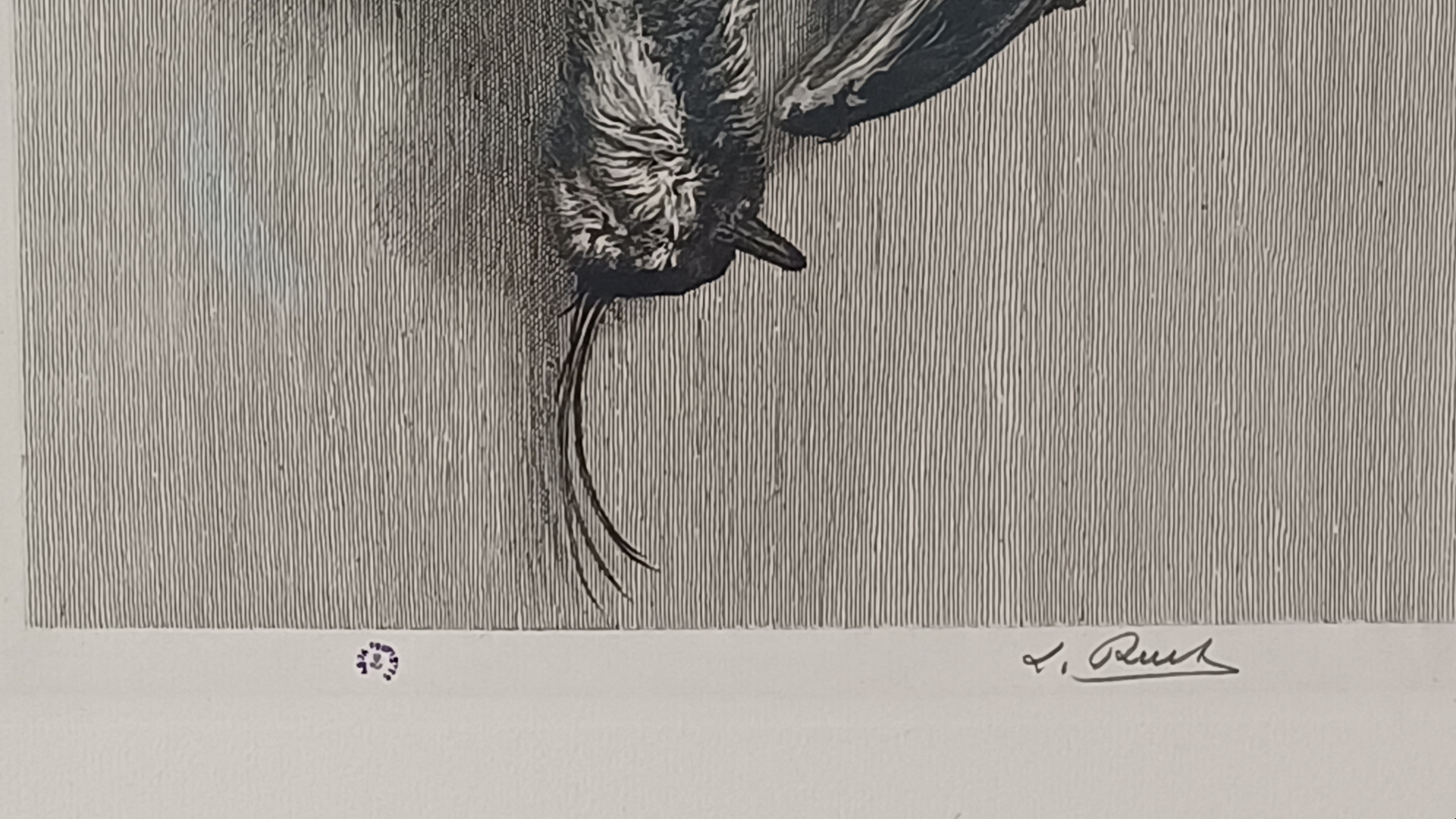
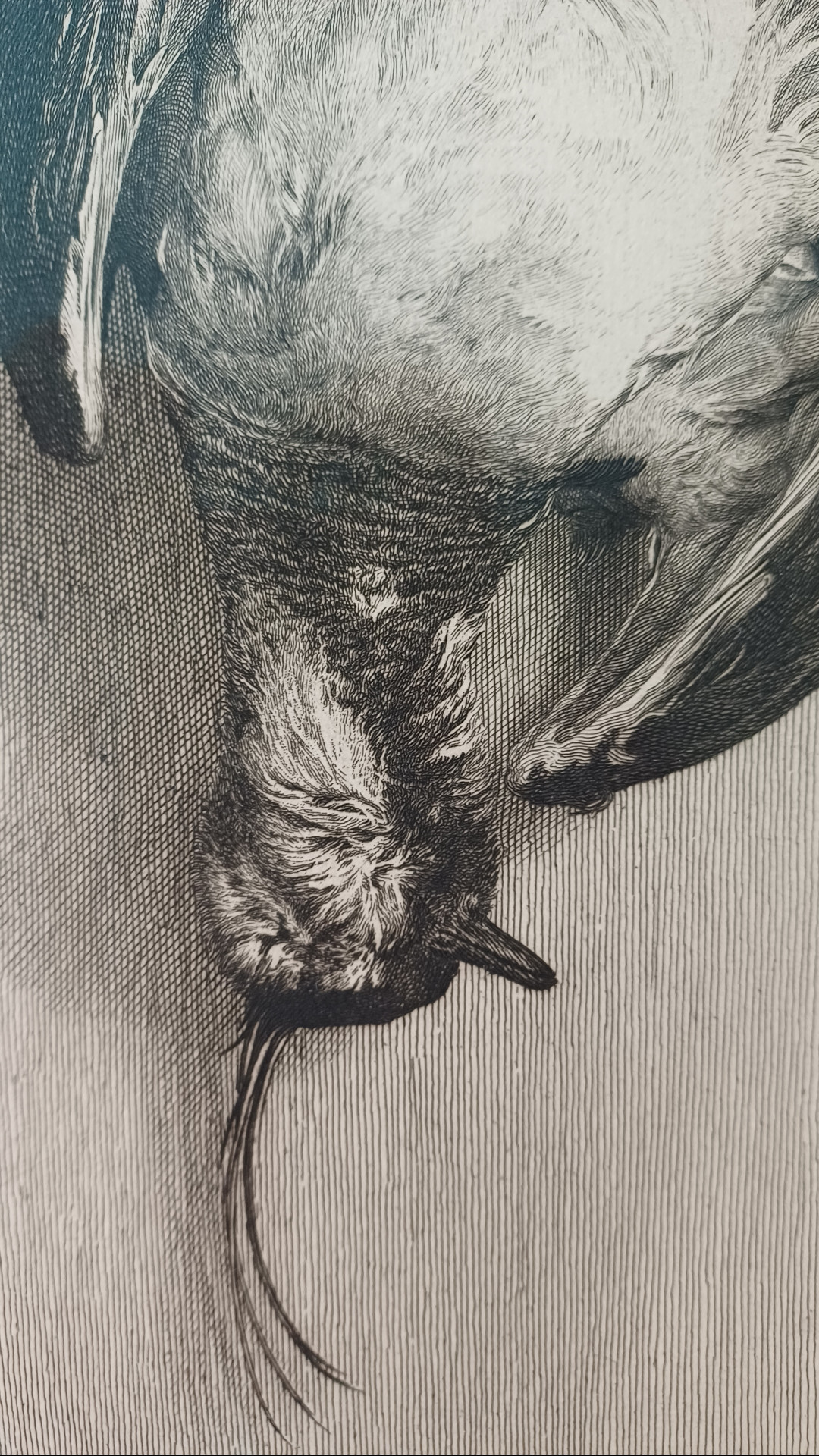
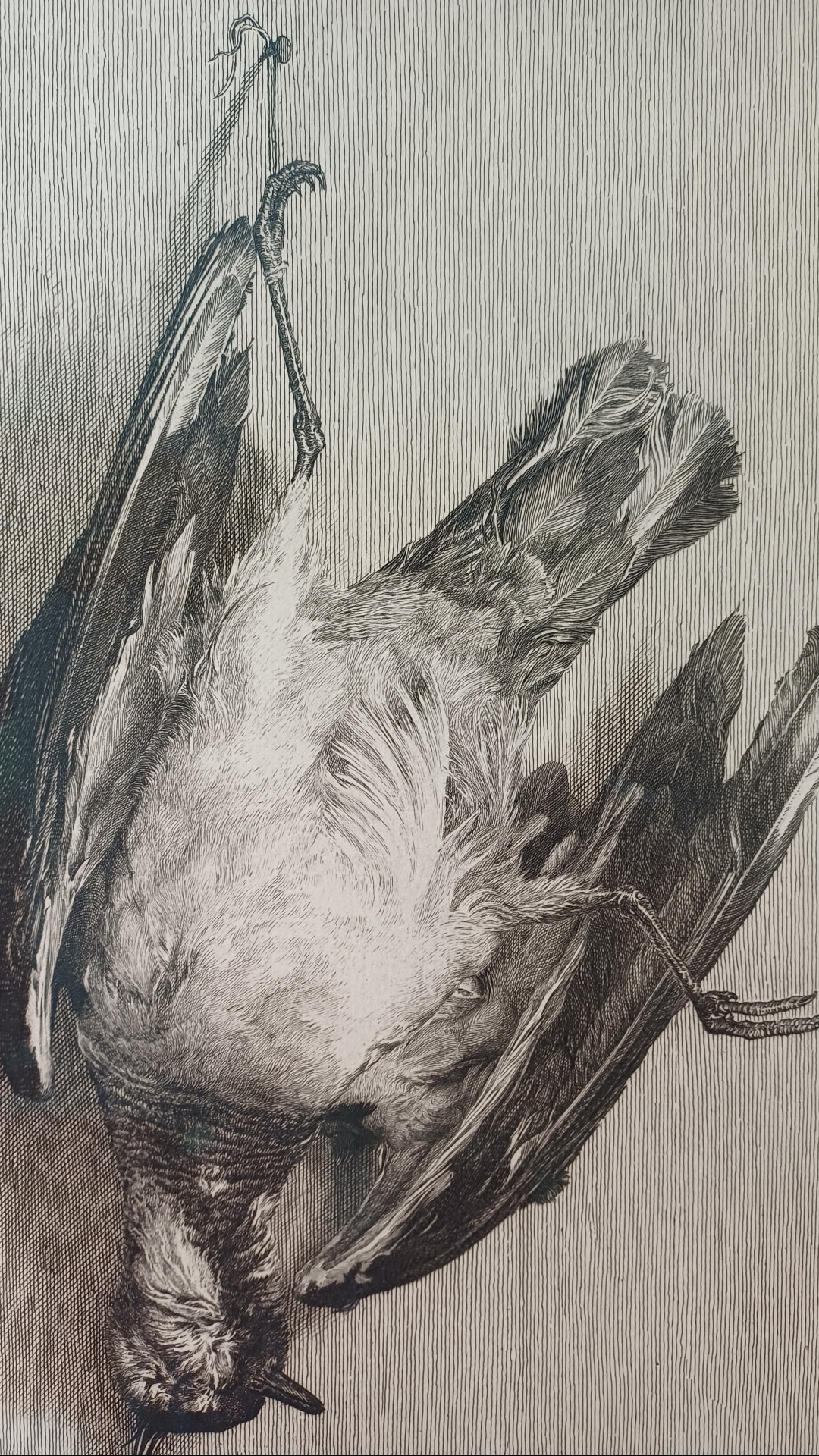
This etching by Louis Valère Ruet depicts a lapwing suspended by a nail in a naturalistic composition. The motif of the suspended bird, inherited from 17th- and 18th-century Dutch still lifes, was revived in the 19th century by artists dedicated to the study and representation of the animal world. This arrangement allows the painter and engraver to play with the effects of volume and depth, accentuated by the background composed of fine parallel lines. Louis Valère Ruet pays particular attention to the rendering of the plumage. Through a meticulous network of engraved lines, he captures the different textures of the bird's plumage: the soft down as well as the crest characteristic of the species. The etching technique, unlike drypoint, allows Louis Valère Ruet's hand to be visible, as he varies the lines, playing with light and textures to give relief to the composition.
Through its subject matter and technique, this etching also evokes certain compositions by Traviès.
Louis Valère Ruet, Painter and Engraver
A French painter and engraver, Louis Valère Ruet distinguished himself particularly in the practice of etching, a technique favored by many late 19th-century artists such as Corot and Daubigny. Louis Valère Ruet is especially known for his engravings reproducing works by 19th-century painters, including Jean-Louis-Ernest Meissonier, Alphonse de Neuville, and Adrien Moreau. His work reflects the particularly active context of printmaking and distribution in France at the end of the 19th century.
The French Etching Society
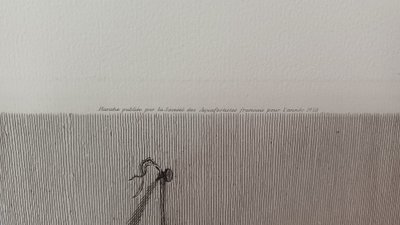
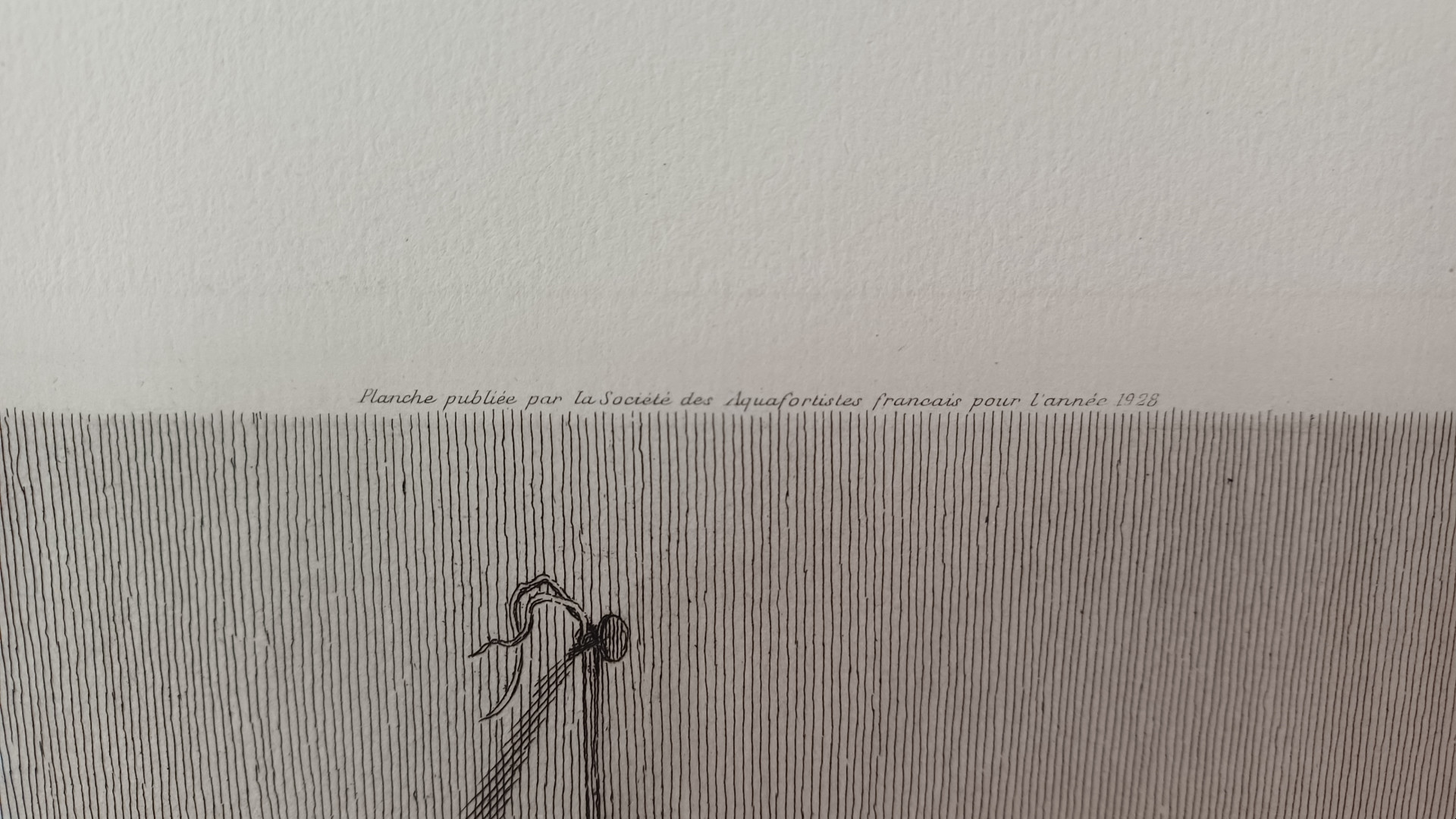
The print bears an inscription from the French Etching Society, founded in Paris in 1885 under the impetus of the engraver Auguste Laguillermie. This association aimed to promote the art of etching to combat the dominance of industrial reproduction printing and thus support artists practicing this technique. It boasted up to 320 members, including engravers, enthusiasts, and collectors, among them Sarah Bernhardt. It continued its activities until 1932.
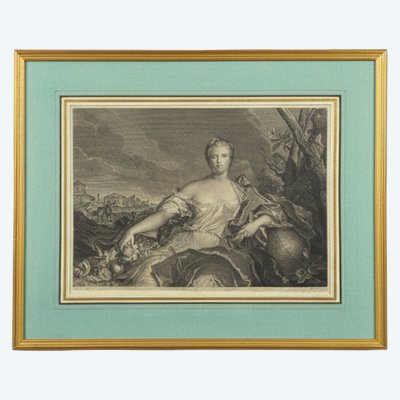
Dimensions: 55 × 40 cm overall; 42 × 26 cm visible area.
Price: €120
Reference: 126
Ref: HKLPSGTC0W

 English
 Français
 Italiano
 Deutsch
 Fang sculpture, Gabon
580 € EUR