This description has been translated and may not be completely accurate. Click here to see the original
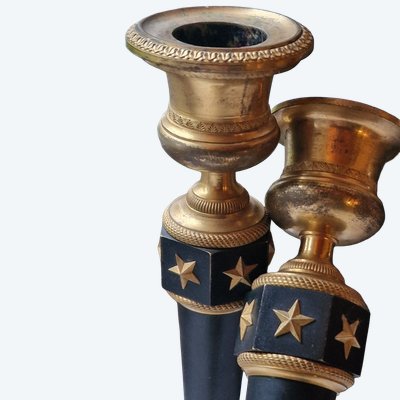
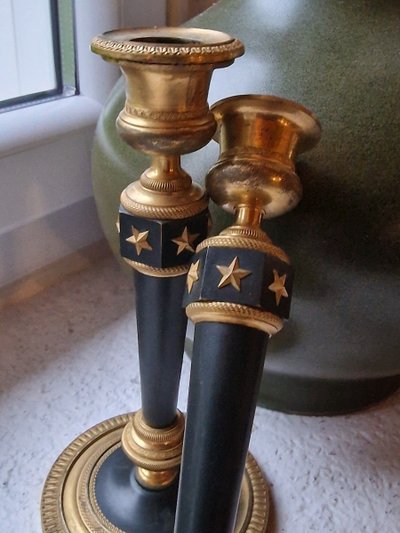
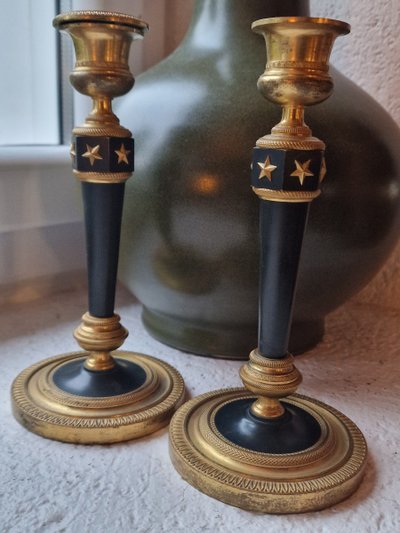
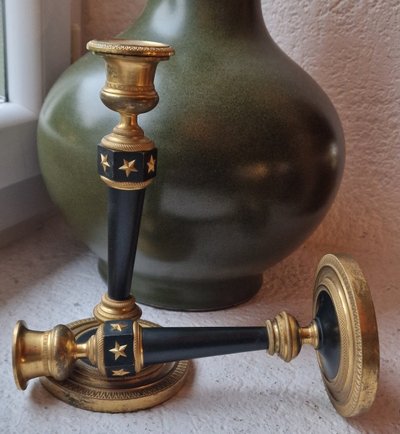
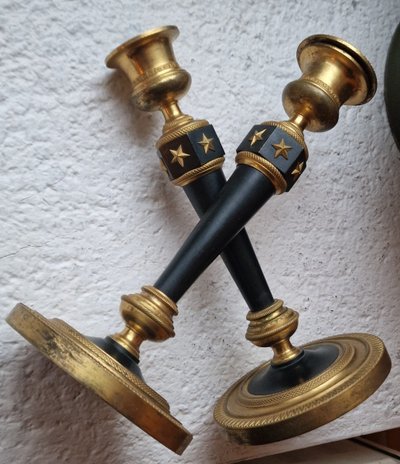
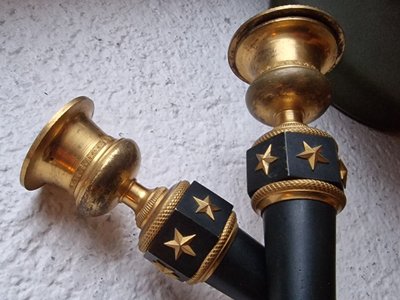
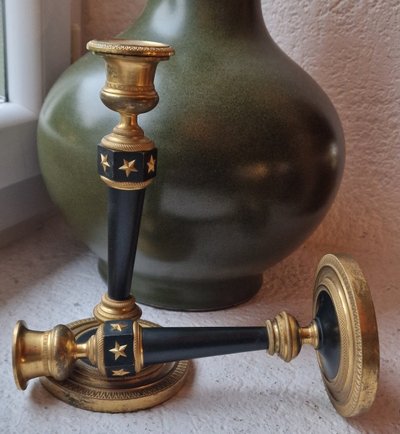
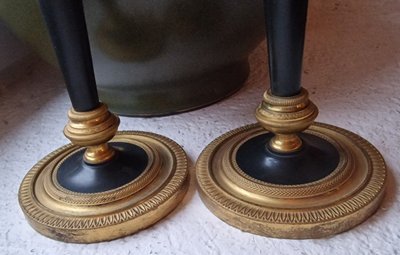
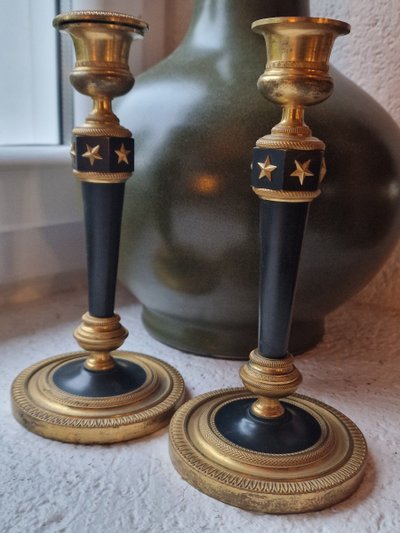
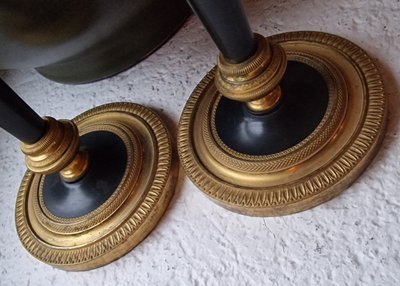
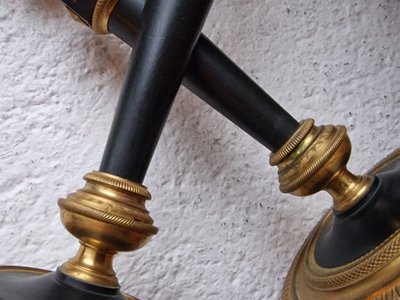
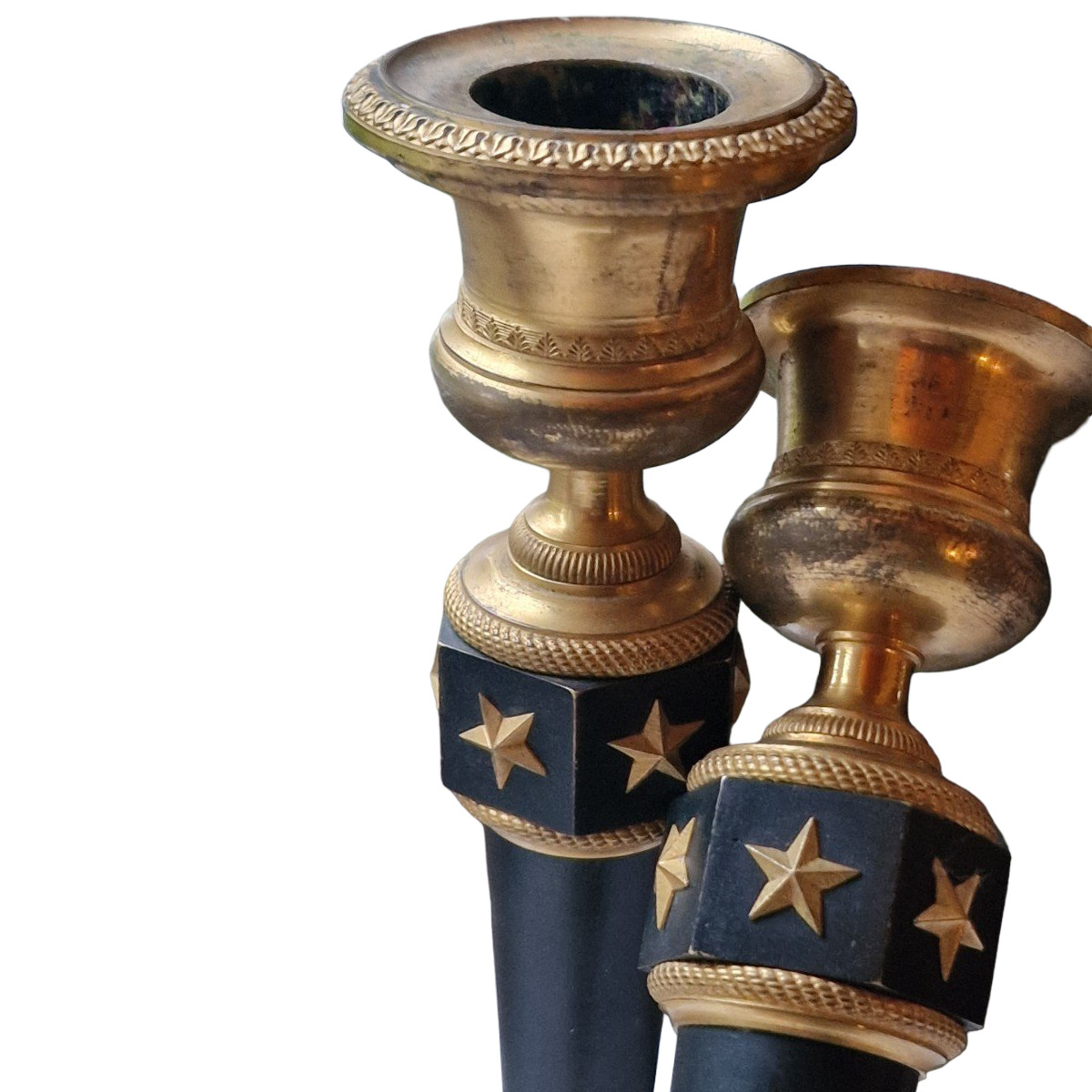
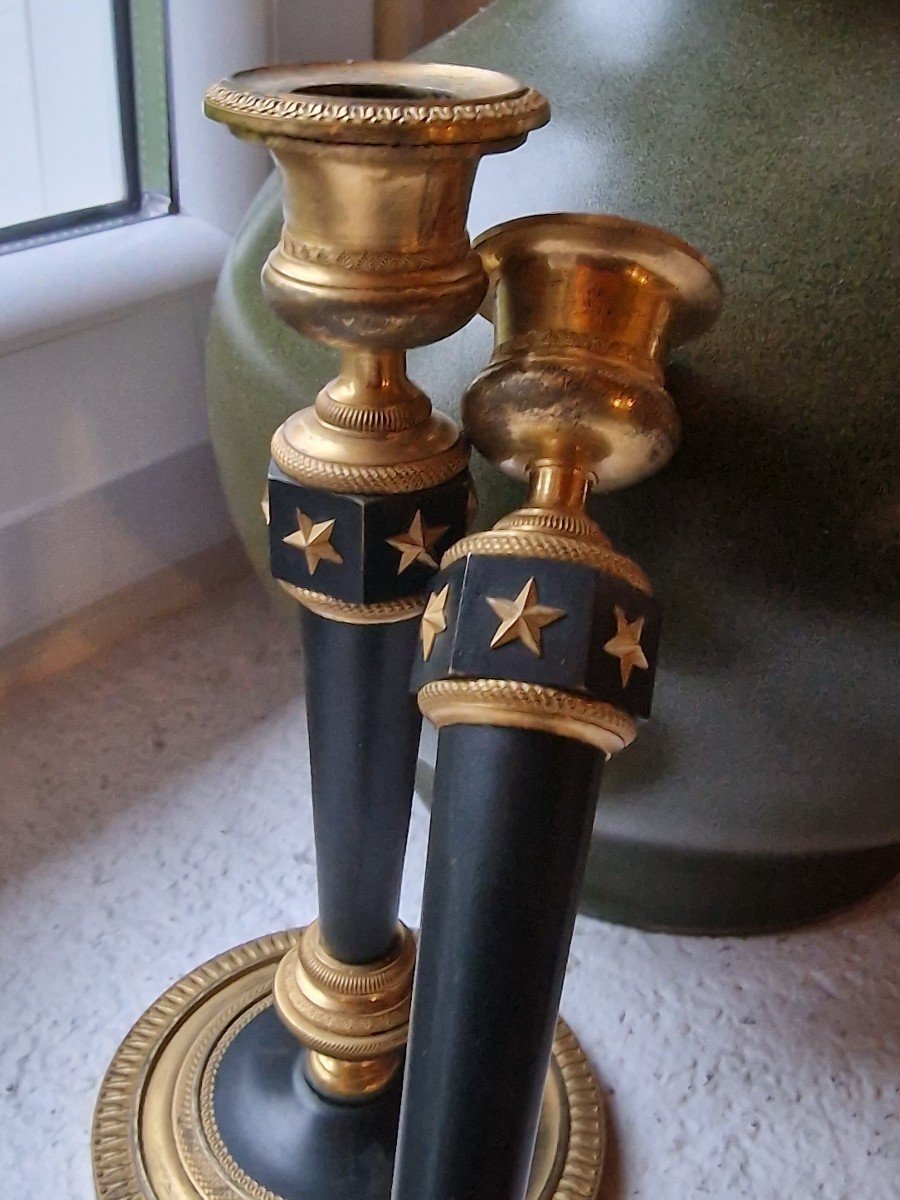
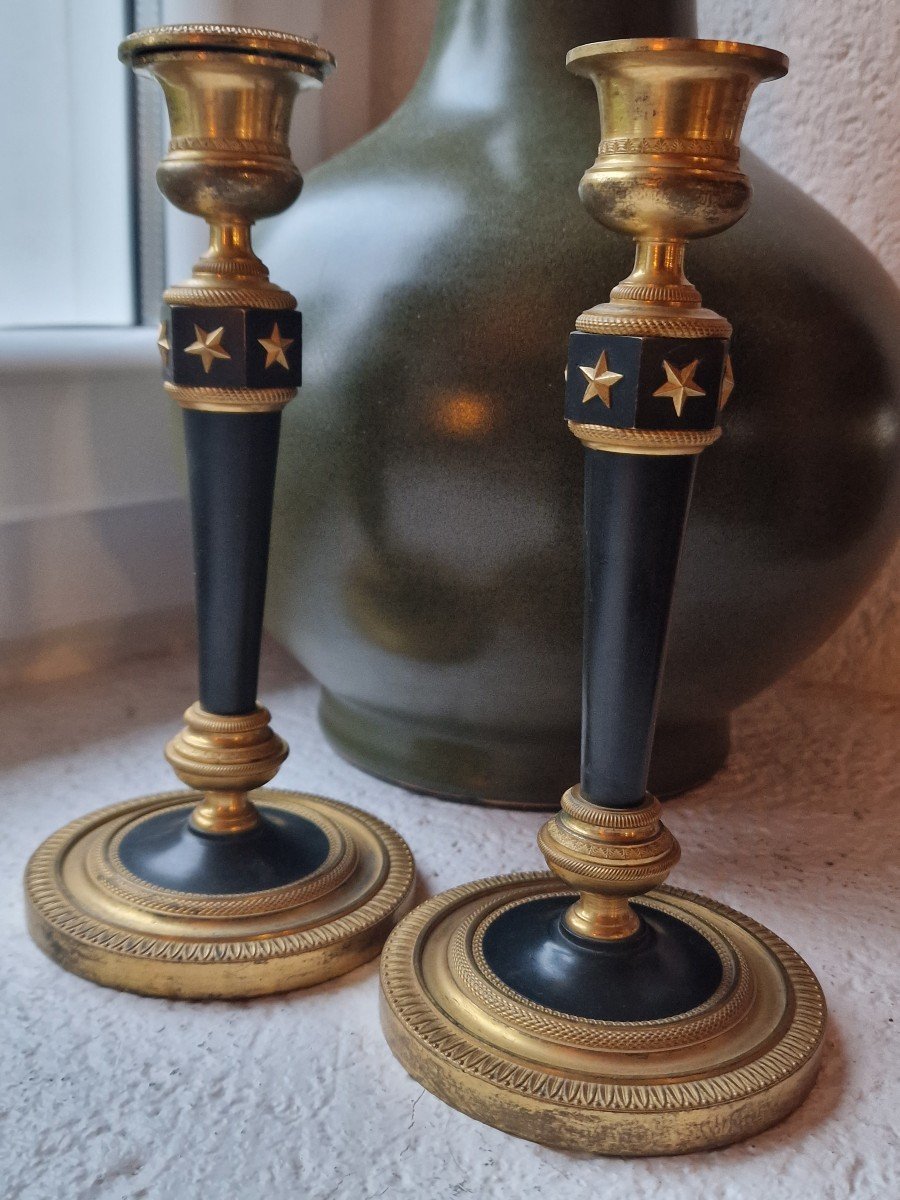
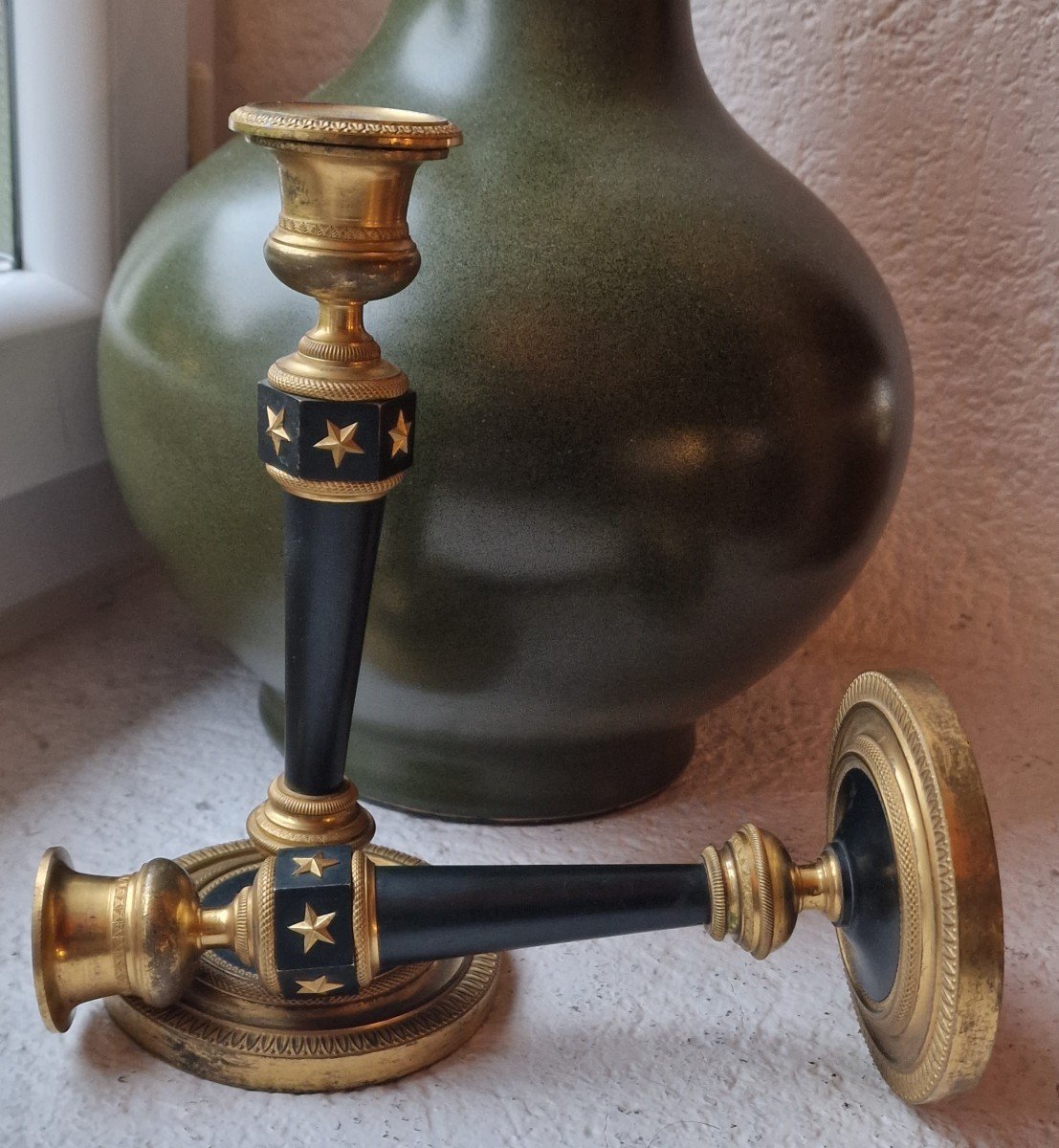
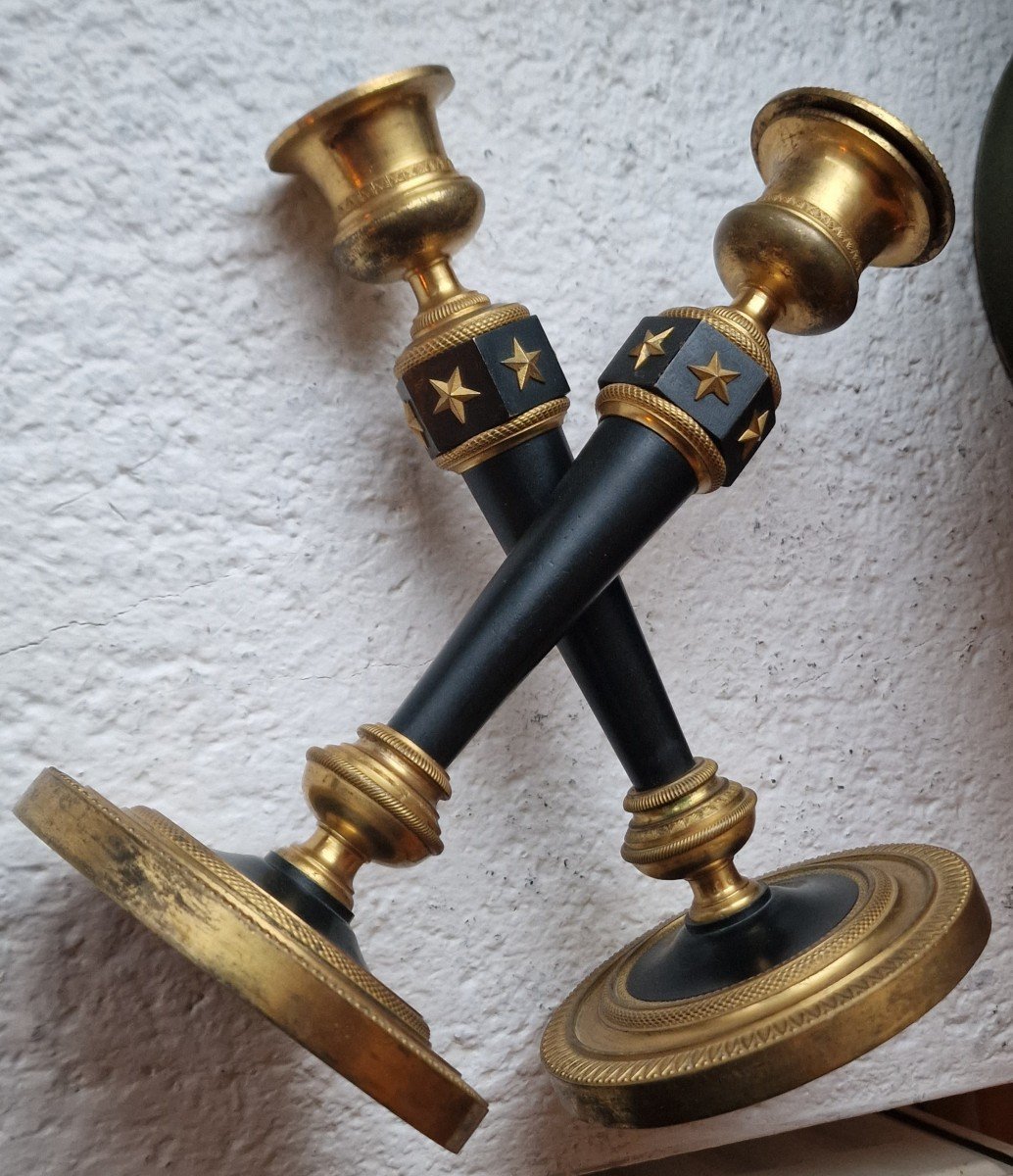
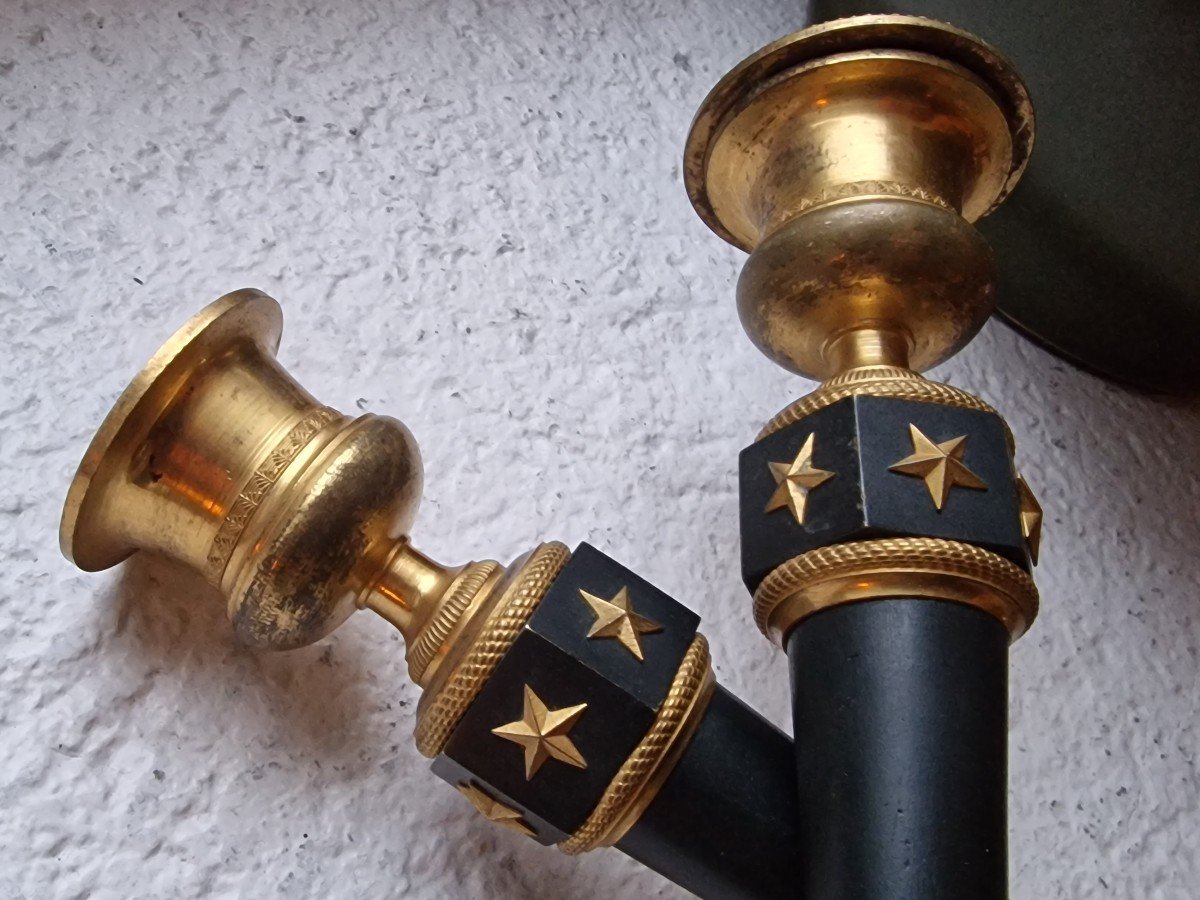
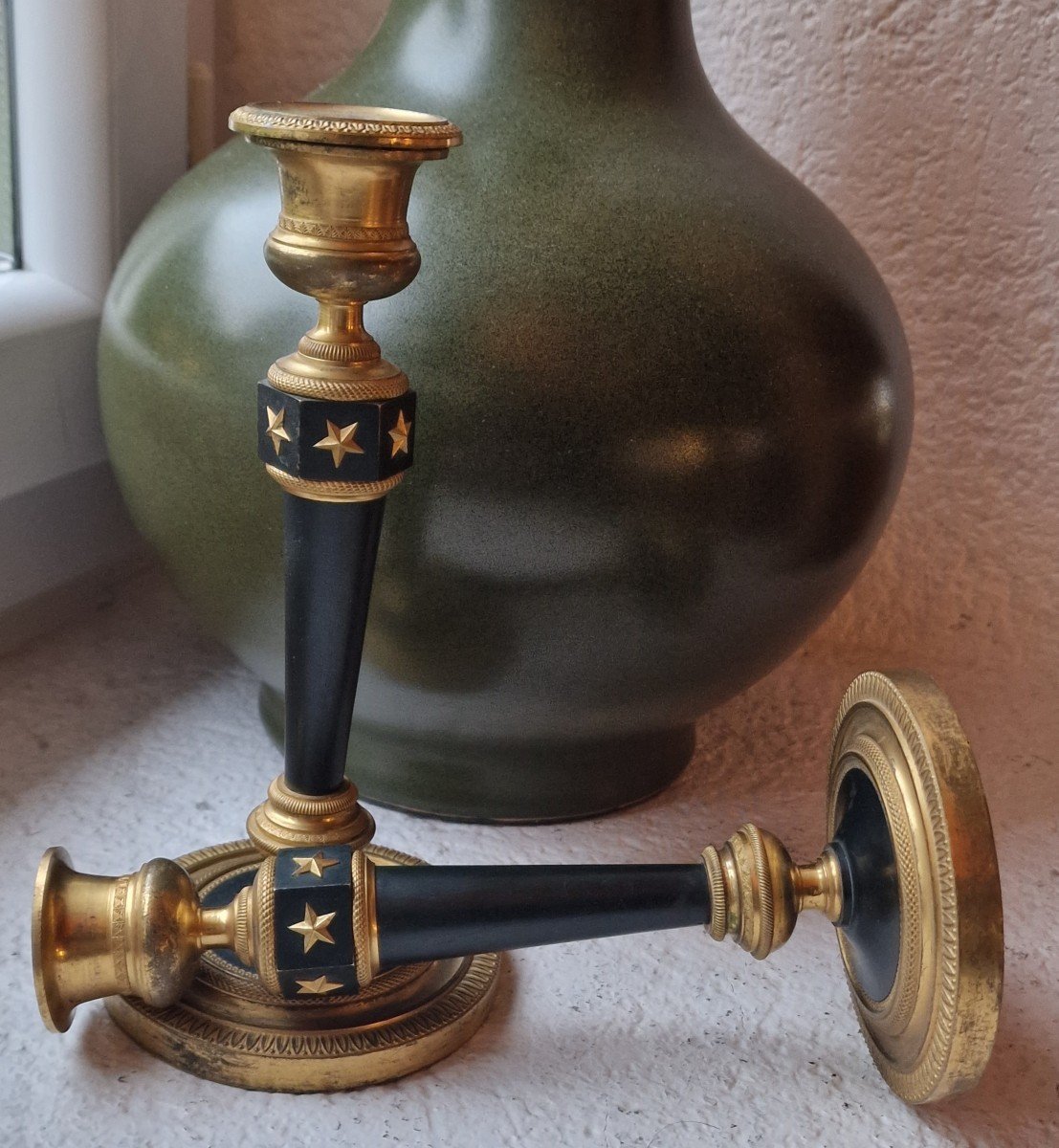
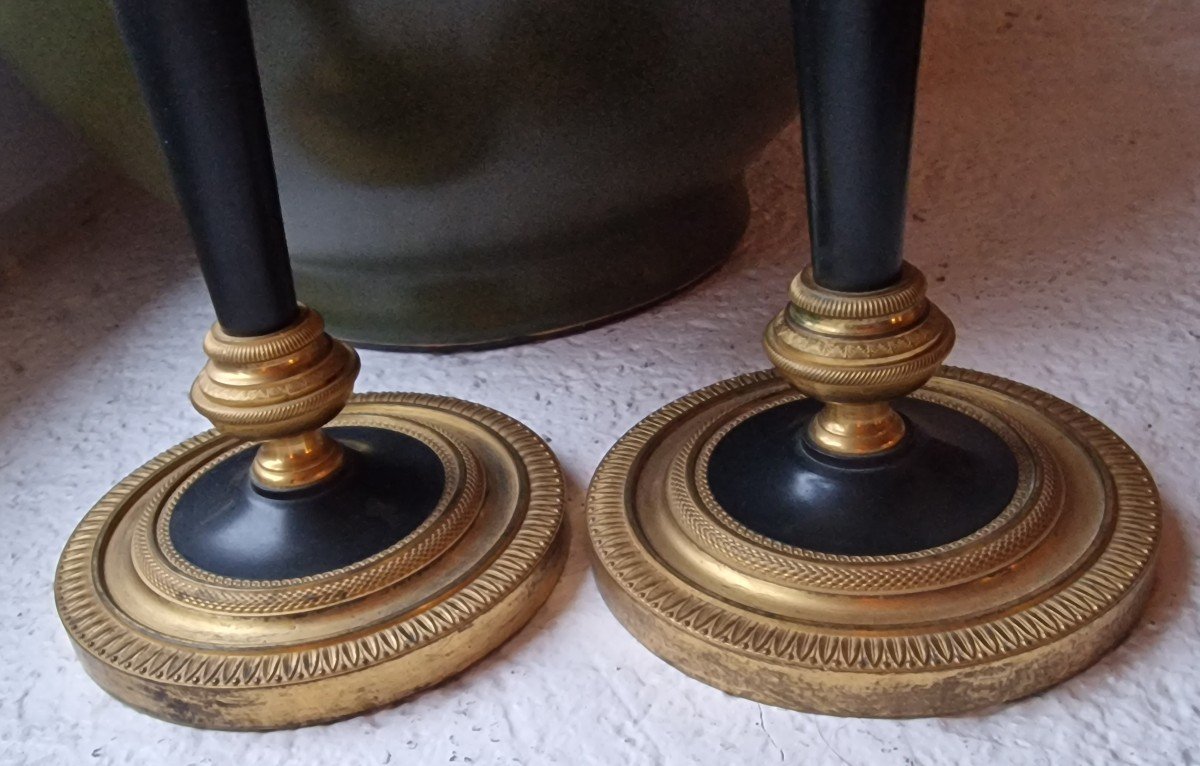
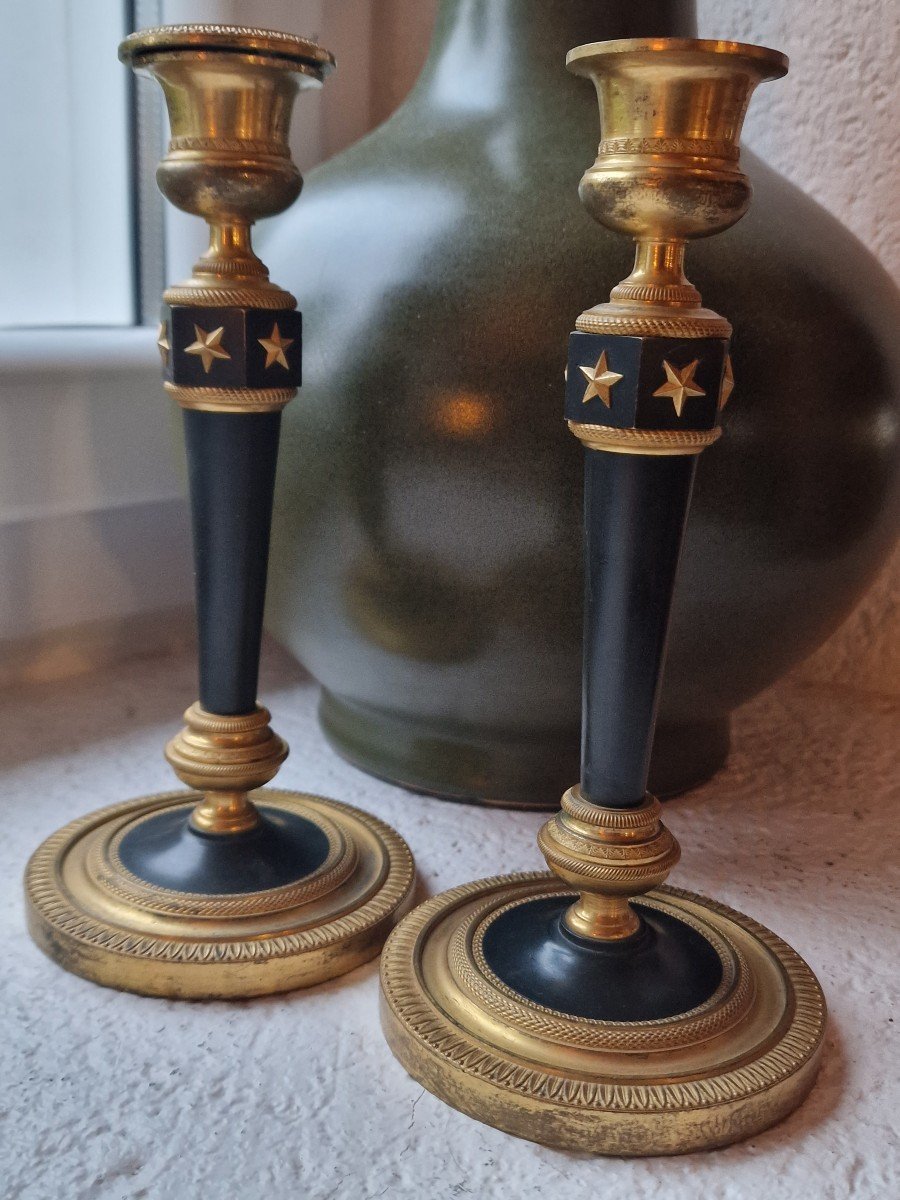
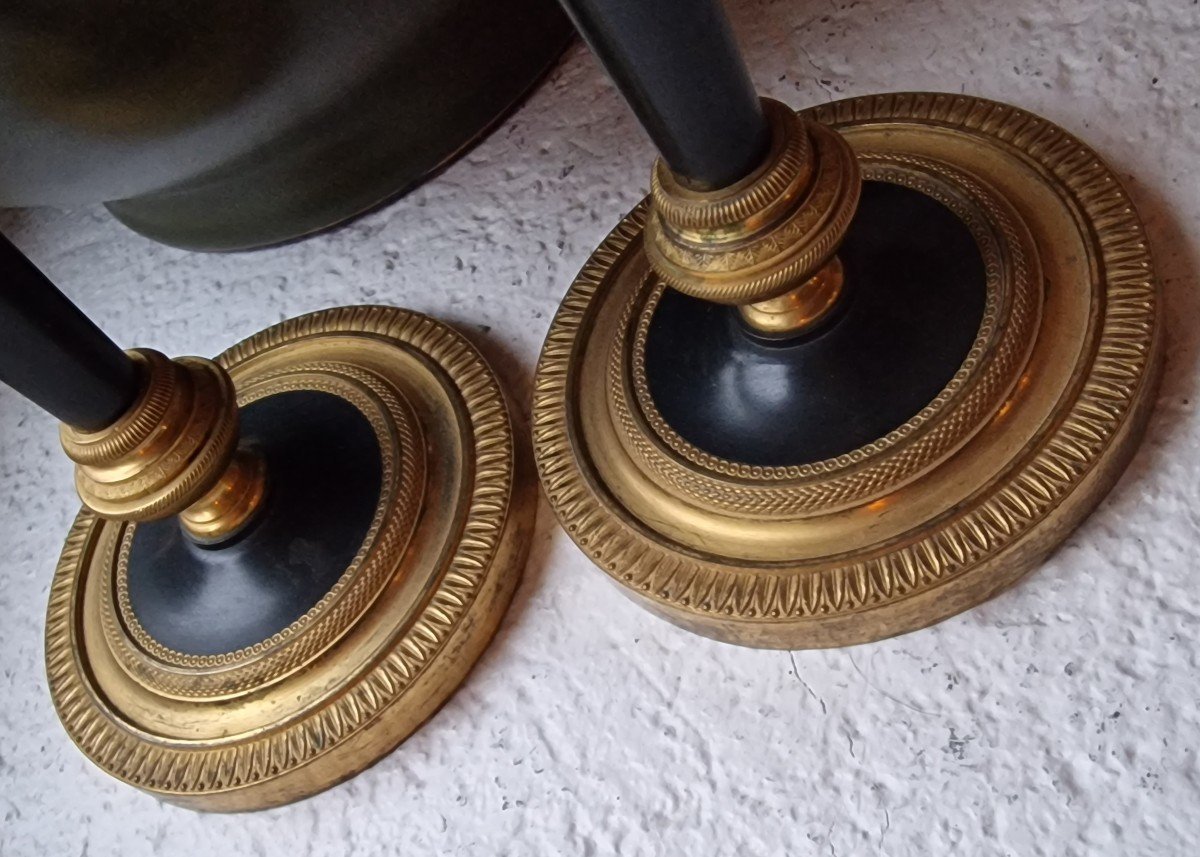
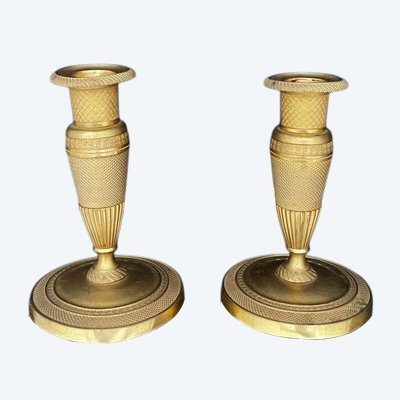
Pair of Empire period candlesticks, circa 1810-1820, resting on a circular base with a troconical stem resting on a hexagon adorned with six stars, positioned beneath the candle holder.
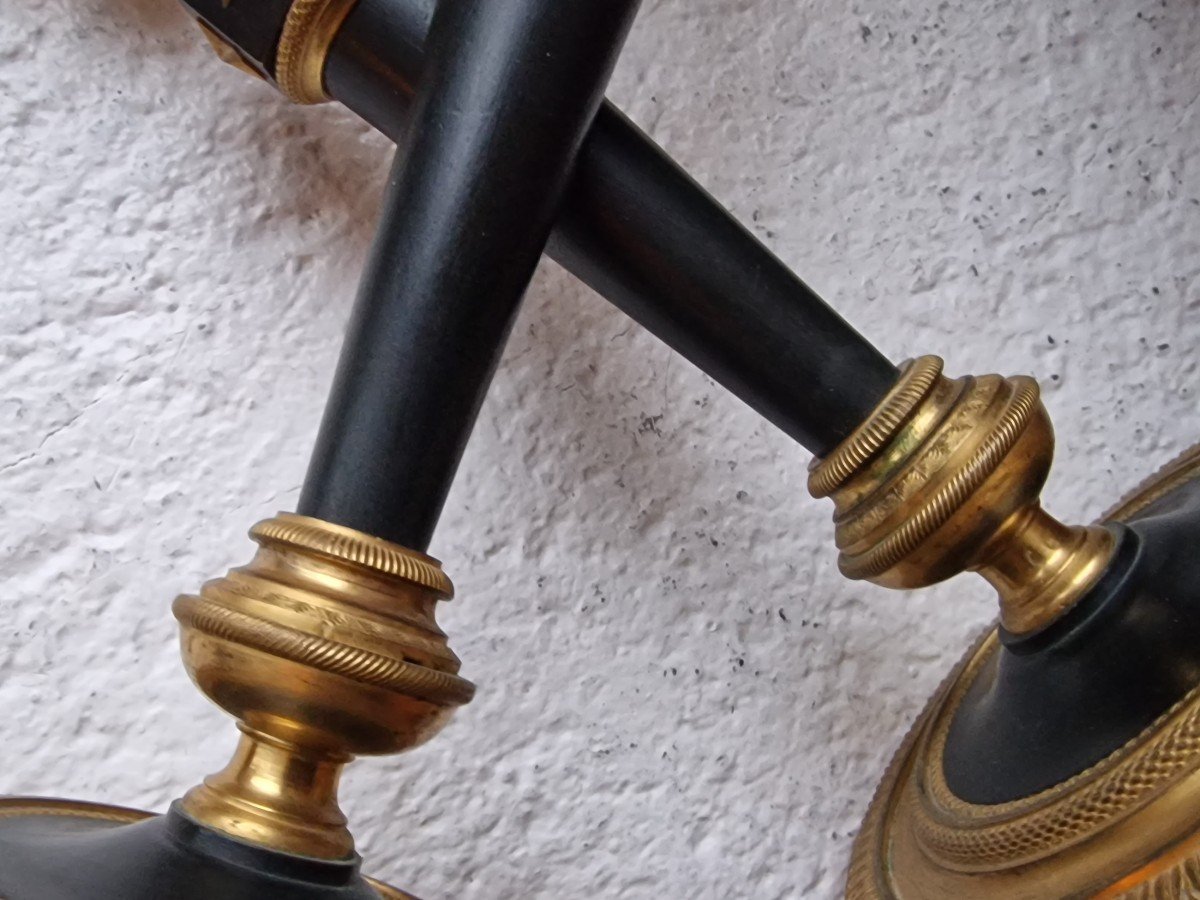
High-quality craftsmanship is evident in the alternating mercury-gilt bronze and antique green patinated bronze pieces, as well as the fine chasing of the decoration. This model is attributed in literature to the bronze caster Claude Galle.*
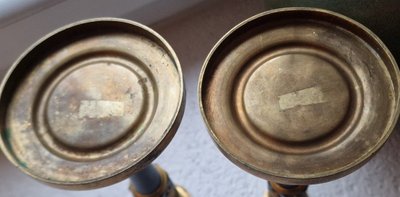
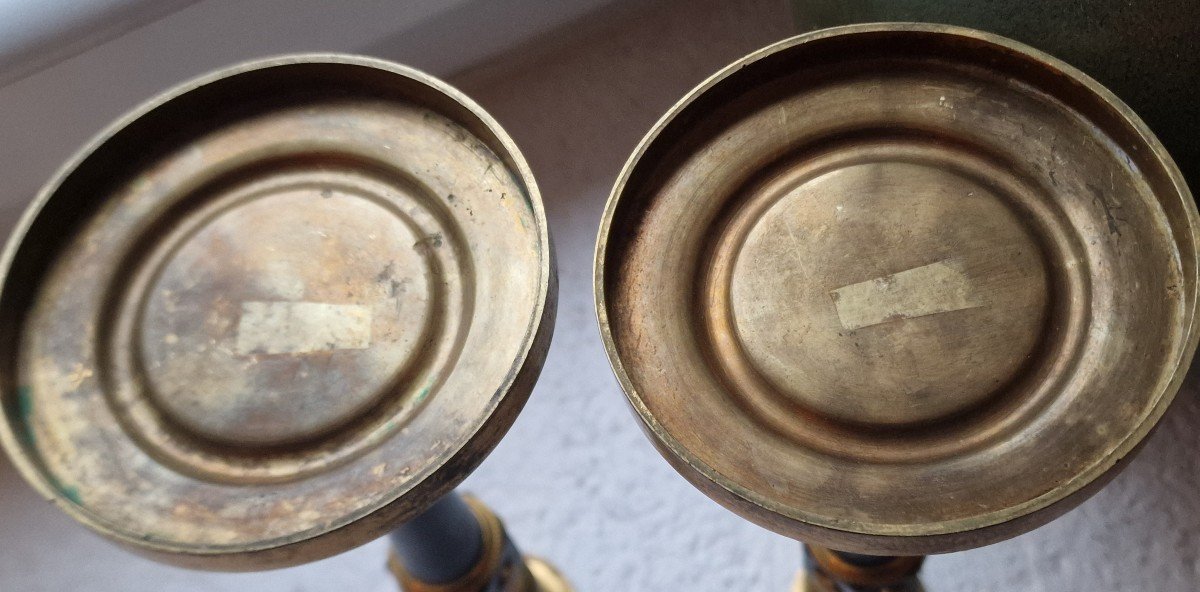
Please note that one candle holder is missing and there is some wear consistent with age, but the candlesticks remain in very good condition for being over two centuries old. Delivery is available via Chronopost with insurance and signature required upon delivery:
France €30
Europe €55
Rest of the world €80
*Claude Galle was one of the most eminent bronze casters and chasers of the late Louis XVI and Empire periods.
In 1786, he became a master caster. Upon the death of his stepfather in 1788, Galle took over the workshop, which became one of the most important in Paris, employing nearly 400 artisans at its peak. Galle first moved the workshop to the Quai de la Monnaie (later the Quai de l'Unité), then, in 1805, to 60 Rue Vivienne. The Crown Furniture Repository, under the direction of the sculptor Jean Hauré from 1786 to 1788, honored him with several commissions. Galle worked with many remarkable artisans, such as Pierre-Philippe Thomire; he supplied the majority of the bronze furnishings for the Château de Fontainebleau during the Napoleonic era. He received numerous imperial commissions for lighting fixtures, clock cases, and vases for the palaces of Saint-Cloud, the Trianons, the Tuileries, Compiègne, and Rambouillet. It supplied the Italian palaces of Monte Cavallo in Rome and Stupinigi near Turin.
Considered one of the most important bronze casters of the late 18th and early 19th centuries, Claude Galle is today a leading figure in neoclassical bronze.
He was responsible for the imperial furniture repository, furnishing the châteaux of Compiègne and Fontainebleau. Upon his retirement in 1813, he was succeeded by his son, Gérard-Jean. His pieces, once highly prized by the English and Russians, inspired bronze casters such as Andrei Voronikhin (1759-1814) and Friedrich Bergenfeldt (1768-1822). He died in 1815, having produced works that are the pride of major collections.
Ref: SAJHR5FNLH