This description has been translated and may not be completely accurate. Click here to see the original
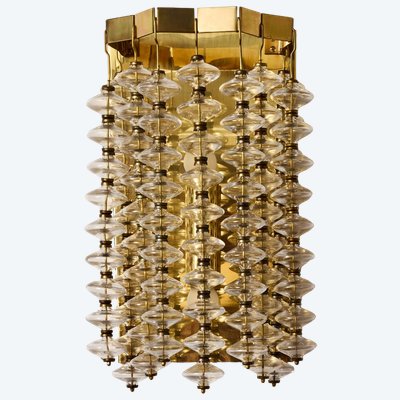
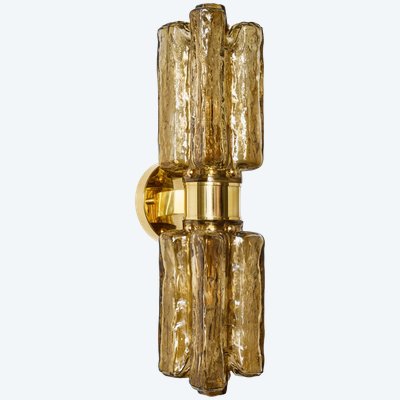
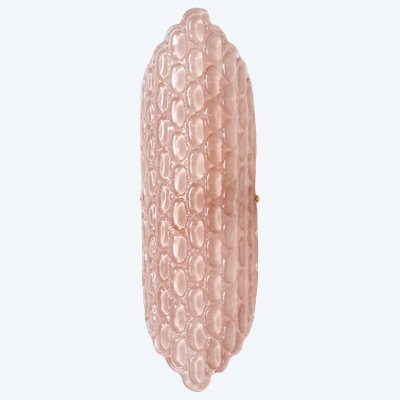
Pair of sculptural wall sconces designed by Toni Zuccheri for Venini in the 1970s. Each fixture is composed of hand-formed Murano glass tiles arranged in an expressive grid of square elements. The glass displays Zuccheri's characteristic organic inclusions, with swirling amber, caramel, and honey tones suspended in clear and pale gold textured glass, creating a vibrant interplay of color, depth, and reflected light.
The tiles are mounted on a painted metal cross-shaped frame, visible from the side and designed to support the composition while keeping the glass visually prominent. Brass pins secure the individual glass elements, providing subtle contrast and a handcrafted, architectural feel. When illuminated, the sconces diffuse a warm, atmospheric glow, serving as both lighting and sculptural wall art.
"Venini s.a.s Murano made in Italy" is stamped on the frames.
Venini is one of Murano's most influential glassworks, founded in 1921 by Paolo Venini and Giacomo Cappellin. Known for its innovative collaborations with leading architects and designers, Venini has successfully combined traditional Venetian glassmaking techniques with modern aesthetics. The company introduced iconic shapes and colors, elevating Murano glass to the realm of fine art and design. Throughout the 20th century, Venini gained international recognition for its craftsmanship, experimentation, and timeless elegance, becoming a symbol of Italian luxury and design excellence.
Toni Zuccheri (1936–2008) was an influential Italian designer and glass artist, known for his inventive, nature-inspired approach to Murano glass. Trained as an architect, he brought a sculptural sensibility to his work, frequently experimenting with color, texture, and form. In collaboration with Venini, he created expressive lighting fixtures and decorative pieces distinguished by their organic inclusions and intricate craftsmanship. Zuccheri's work embodies a blend of technical mastery and poetic imagination, earning him recognition as one of the leading figures of 20th-century Italian glassmaking.
Ref: TS95BPJNCK

 English
 Français
 Italiano
 Deutsch
 Oak sideboard, 1950
1.100 € EUR