

Would you like more images?


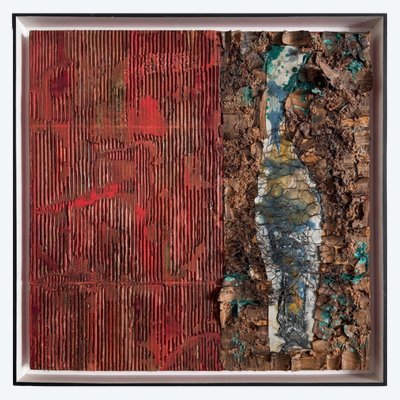
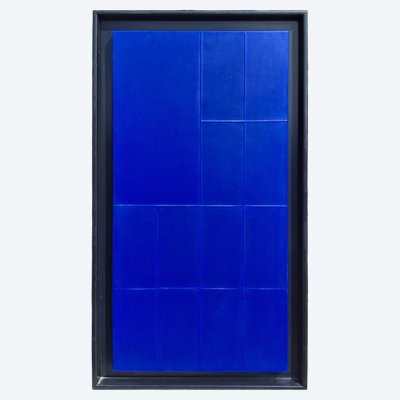
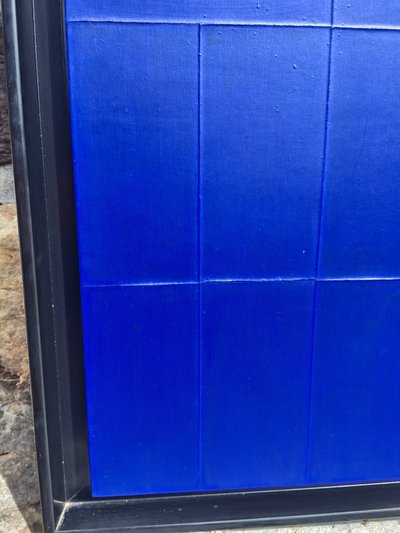
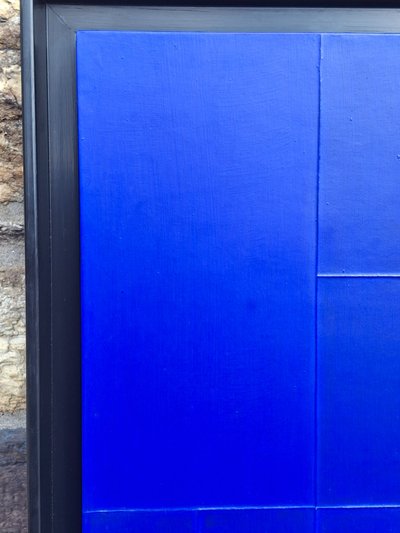
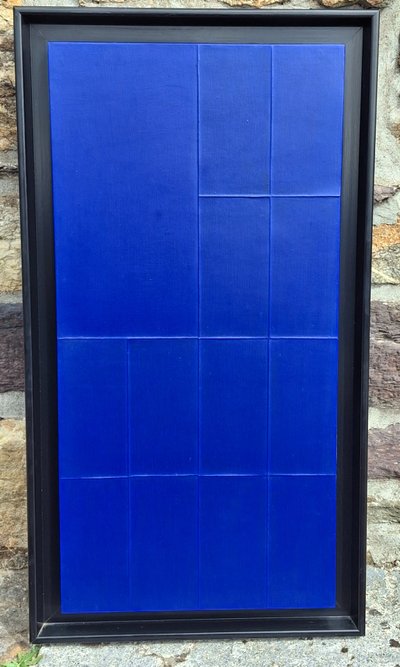
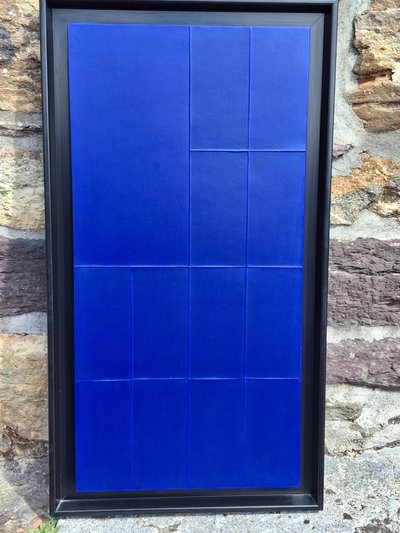
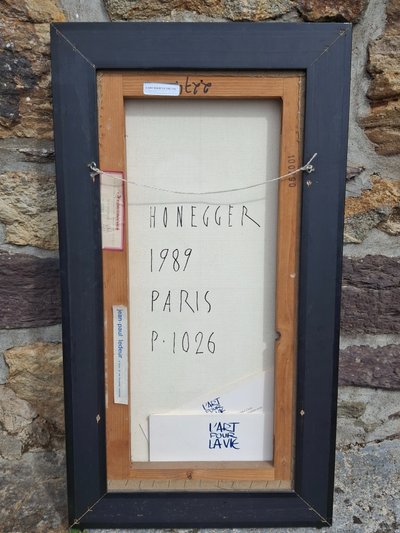
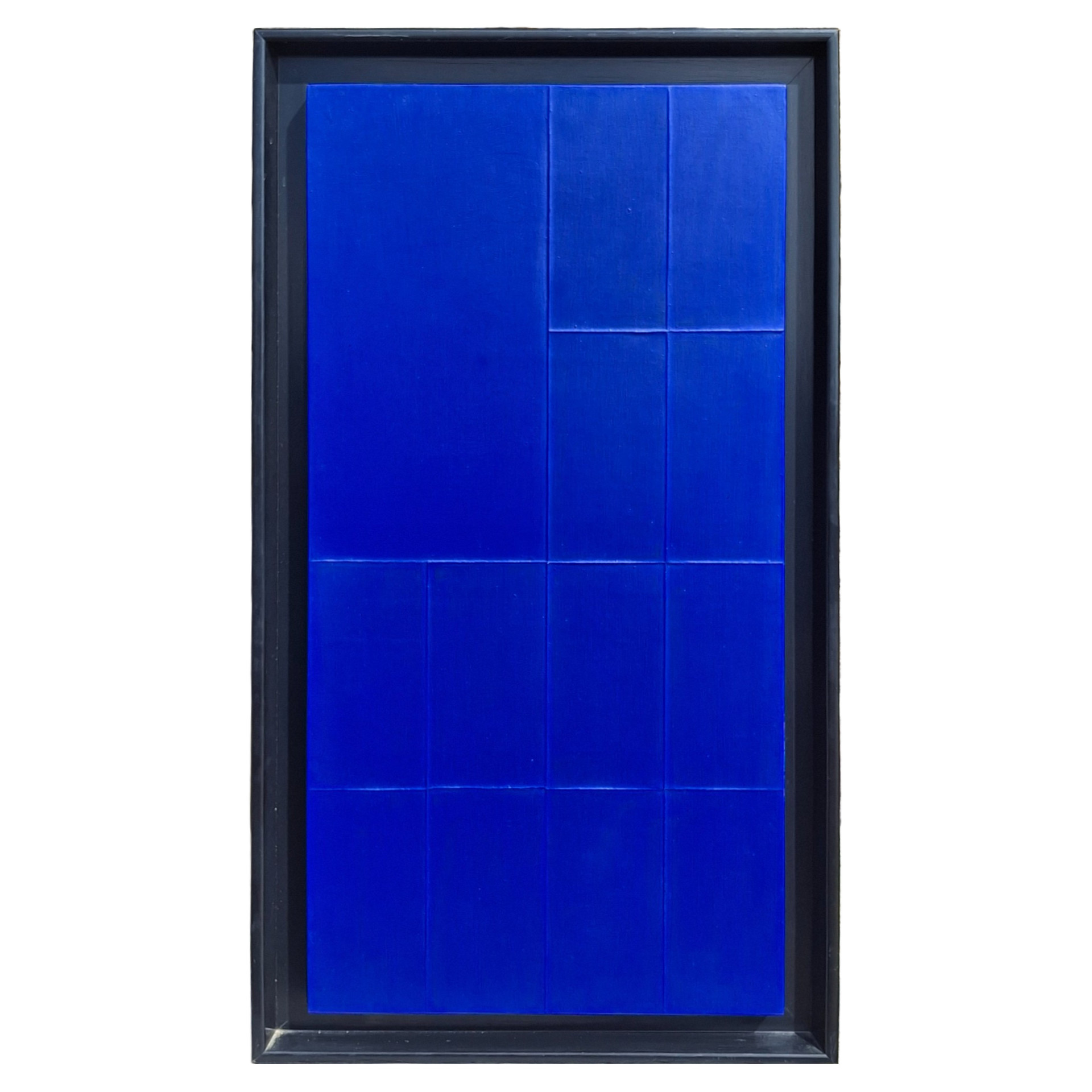
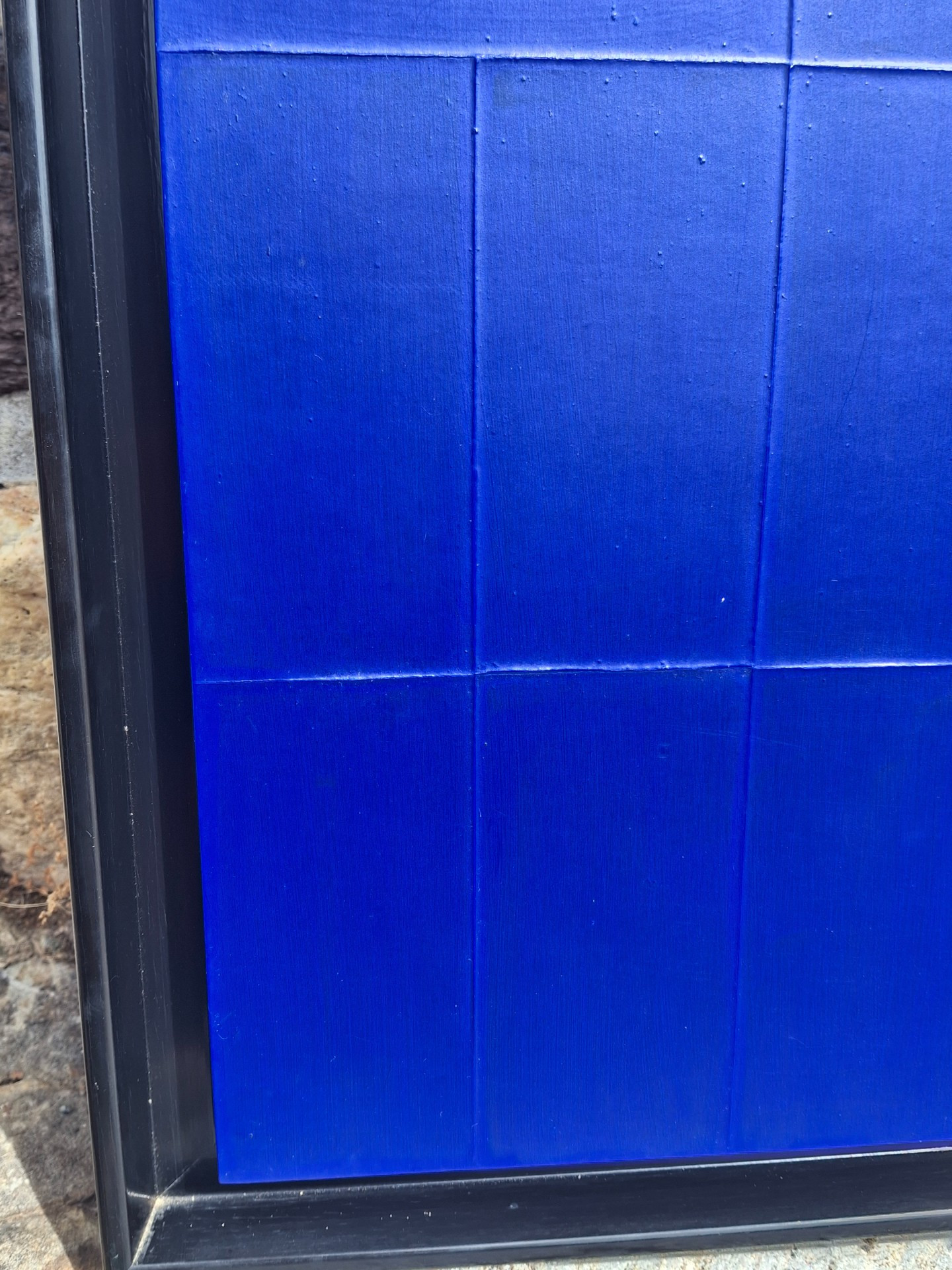
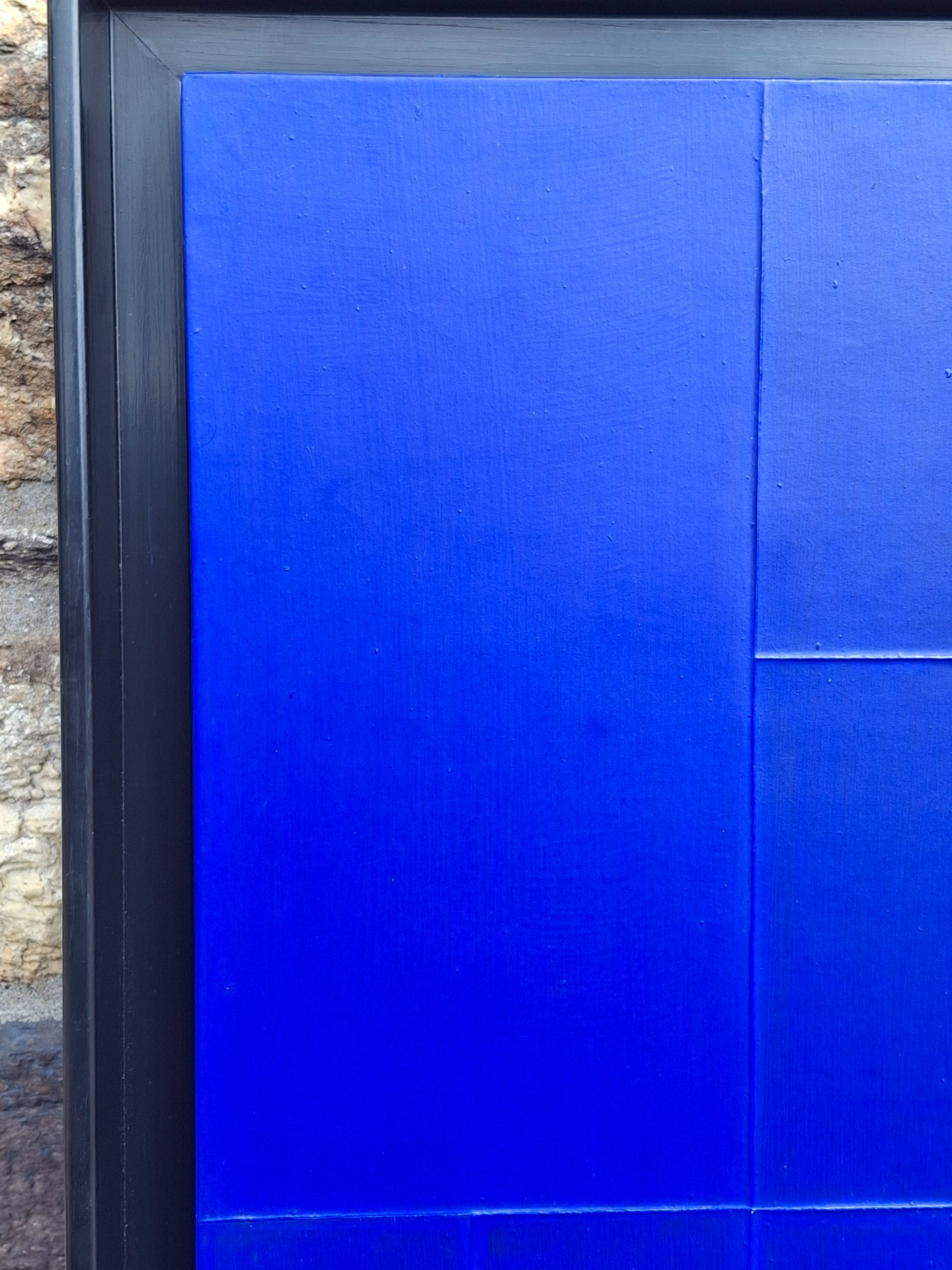
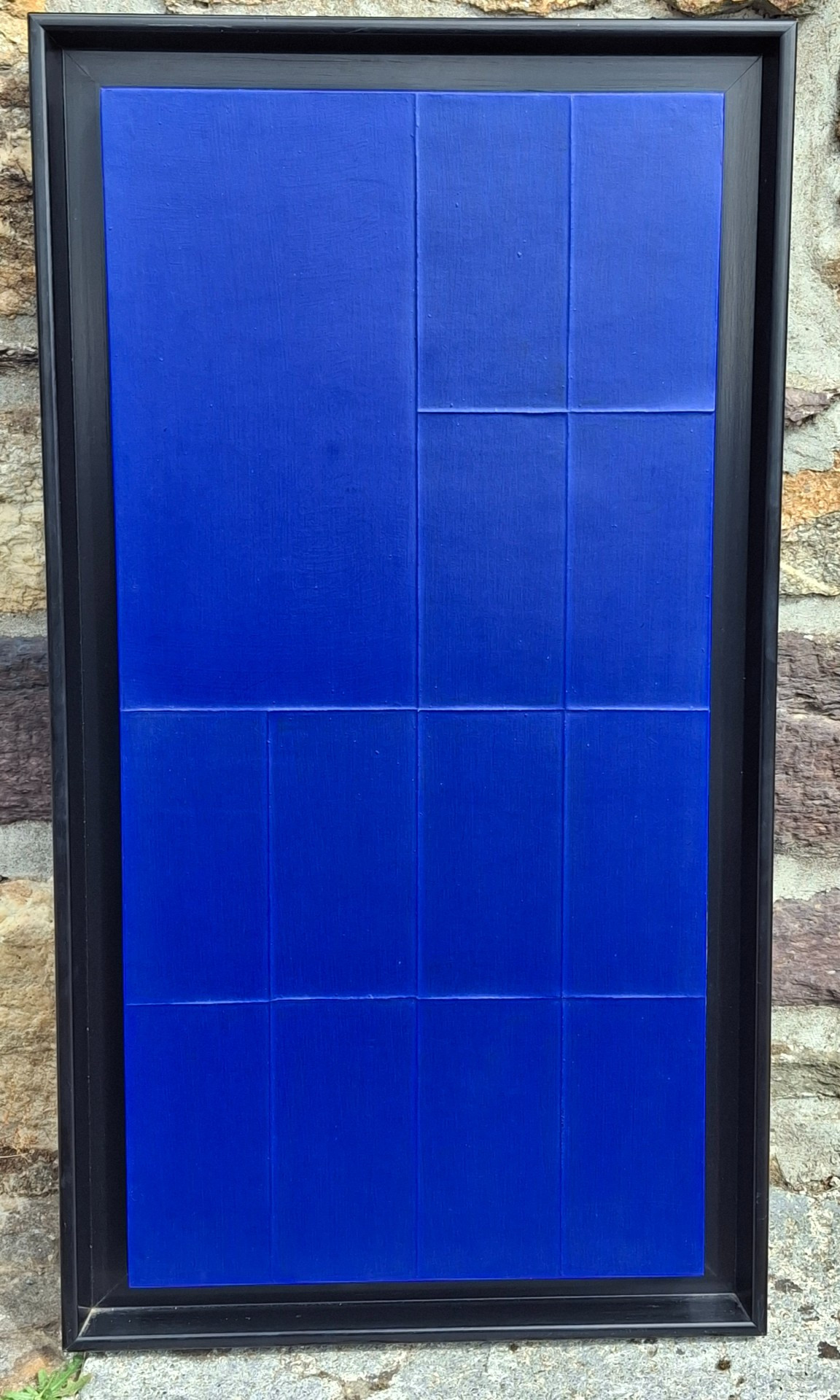
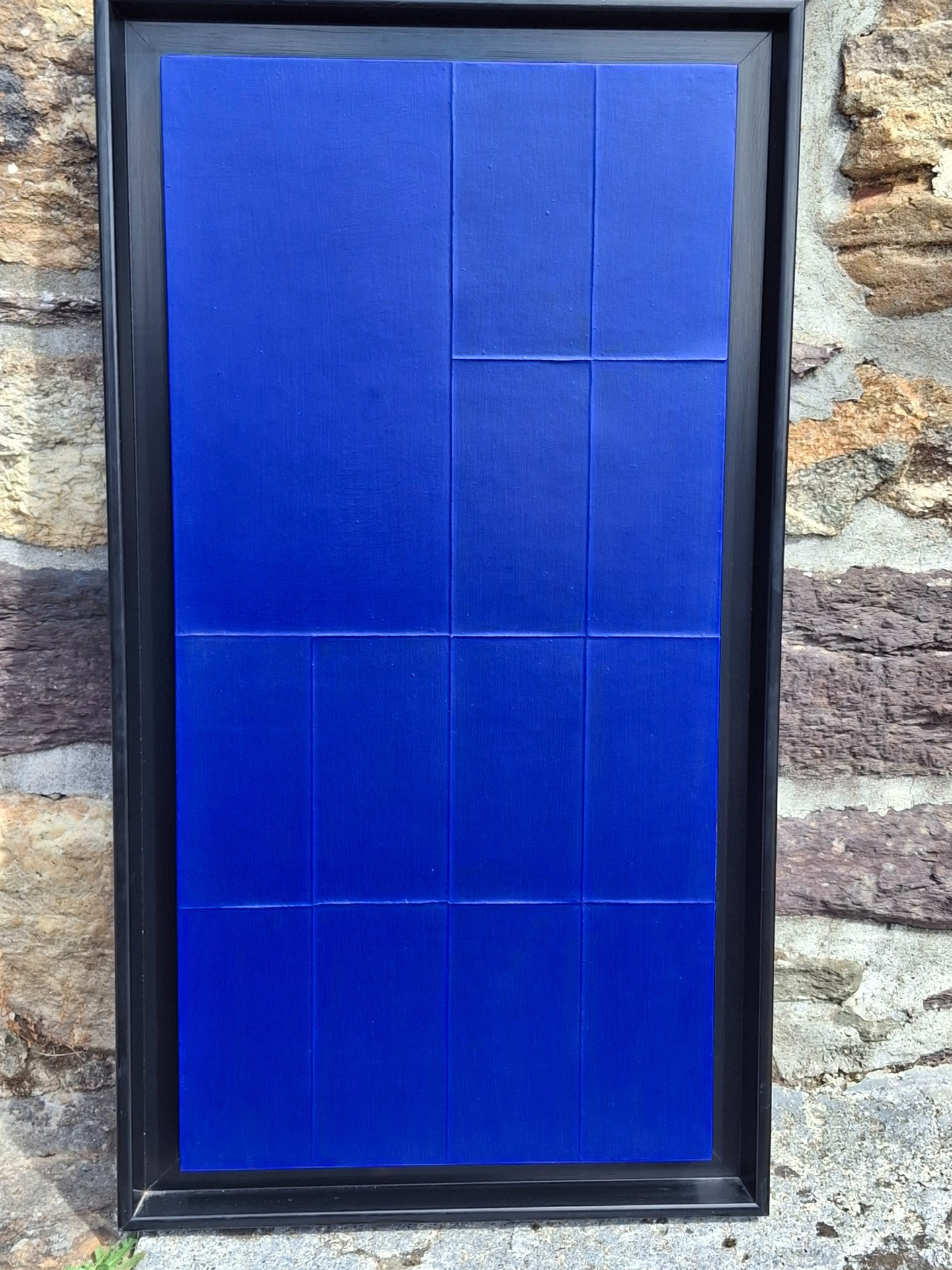
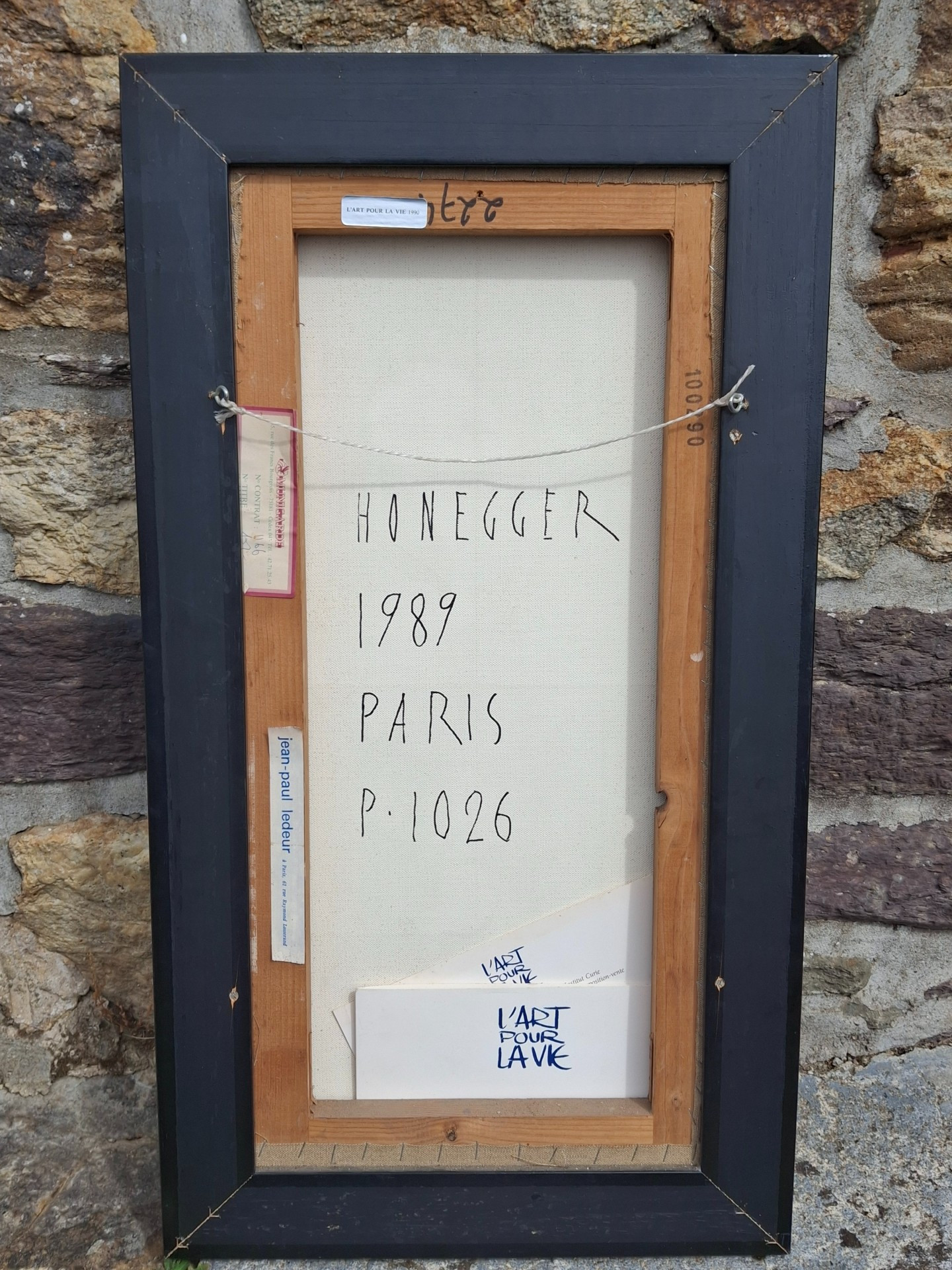
A beautiful work by the artist Gottfried Honegger, belonging to his "relief paintings" series. It is a collage of cardboard on canvas, covered with blue acrylic paint. The relief created by the cardboard allows for plays of light. The canvas is signed by the artist, dated 1989, and located in Paris. It was exhibited and sold in 1990 at a charity auction entitled "Art for Life," benefiting the Curie Institute.
Gottfried Honegger began his career as a graphic designer in Zurich. During a stay in Paris in 1939, he created his first landscapes and a few portraits in the Cubist style. World War II interrupted this momentum, and upon returning to Switzerland, Honegger did not resume his artistic activity until 1949. Close to the Zurich Concrete artists, he began painting compositions in the early 1950s that blended references to nature and geometry. In 1958, during a stay in New York, he met artists of the Abstract Expressionist movement. He also chose to devote himself exclusively to his artistic work. In 1960, at the Martha Jackson Gallery in New York, Honegger presented works foreshadowing his Relief Paintings: red monochromes whose surfaces were animated by thin, repetitive geometric elements covered in acrylic paint. That same year, Gottfried Honegger moved to Paris and established relationships with Aurélie Nemours, Sonia Delaunay, and Michel Seuphor, an important historian and critic of abstract art. Fascinated by biologist Jacques Monod's book, Chance and Necessity, Honegger was one of the first artists in France to use computers in 1970 for a series of computer-programmed drawings. The idea of programming also inspired the creation of his Relief Paintings, whose formats became monumental. The distribution of colors and shapes, module by module, was also left to chance through dice games. Despite its serial nature, this body of work avoids monotony, allowing the artist a wide variety of approaches. In the 1980s, diptychs, triptychs, and paintings appeared whose frames, cut in two, gave the exhibition wall a structuring role through a subtle shift. Since the 1990s, the Relief Paintings—freed from the constraints of the picture plane—have engaged with space in the form of reliefs or painted metal sculptures. The Pliages, which feature openwork white cylinders whose cutouts unfold in space, constitute the high point of the exhibition of an artist whose career is both sensitive and radical.
By Christian Briend, Curator at the National Museum of Modern Art, curator of the Gottfried Honegger exhibition held from June 24 to September 14, 2015 at the Centre Pompidou.
Ref: 4JPG1UTLQS
| Condition | Very good |
| Style | Other style (Abstract paintings of Other style Style) |
| Period | 20th century (Abstract paintings 20th century) |
| Country of origin | France |
| Artist | Gottfried Honegger (1917-2016) |
| Length (cm) | 60 |
| Width (cm) | 30 |
| Shipping Time | Ready to ship in 4-7 Business Days |
| Location | 56380, Saint-Malo-de-Beignon, France |
4 commitments to buy with confidence

 English
 Français
 Italiano
 Deutsch