This description has been translated and may not be completely accurate. Click here to see the original
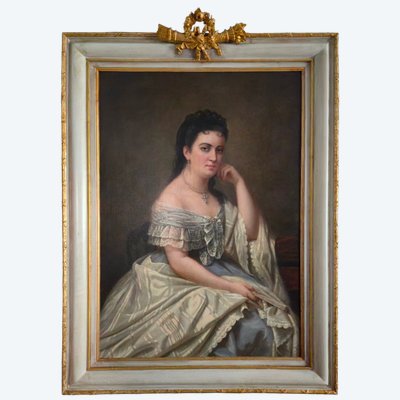
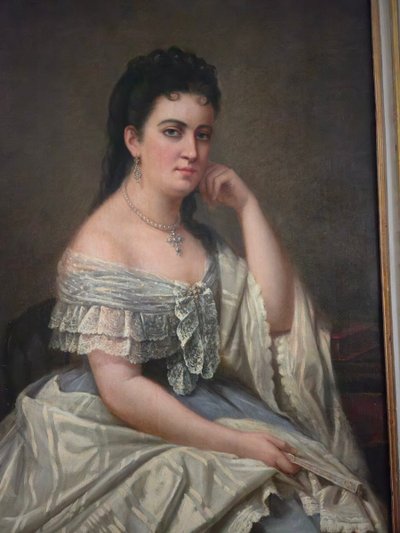
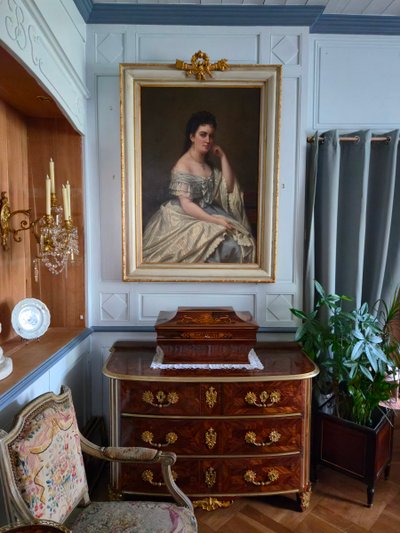
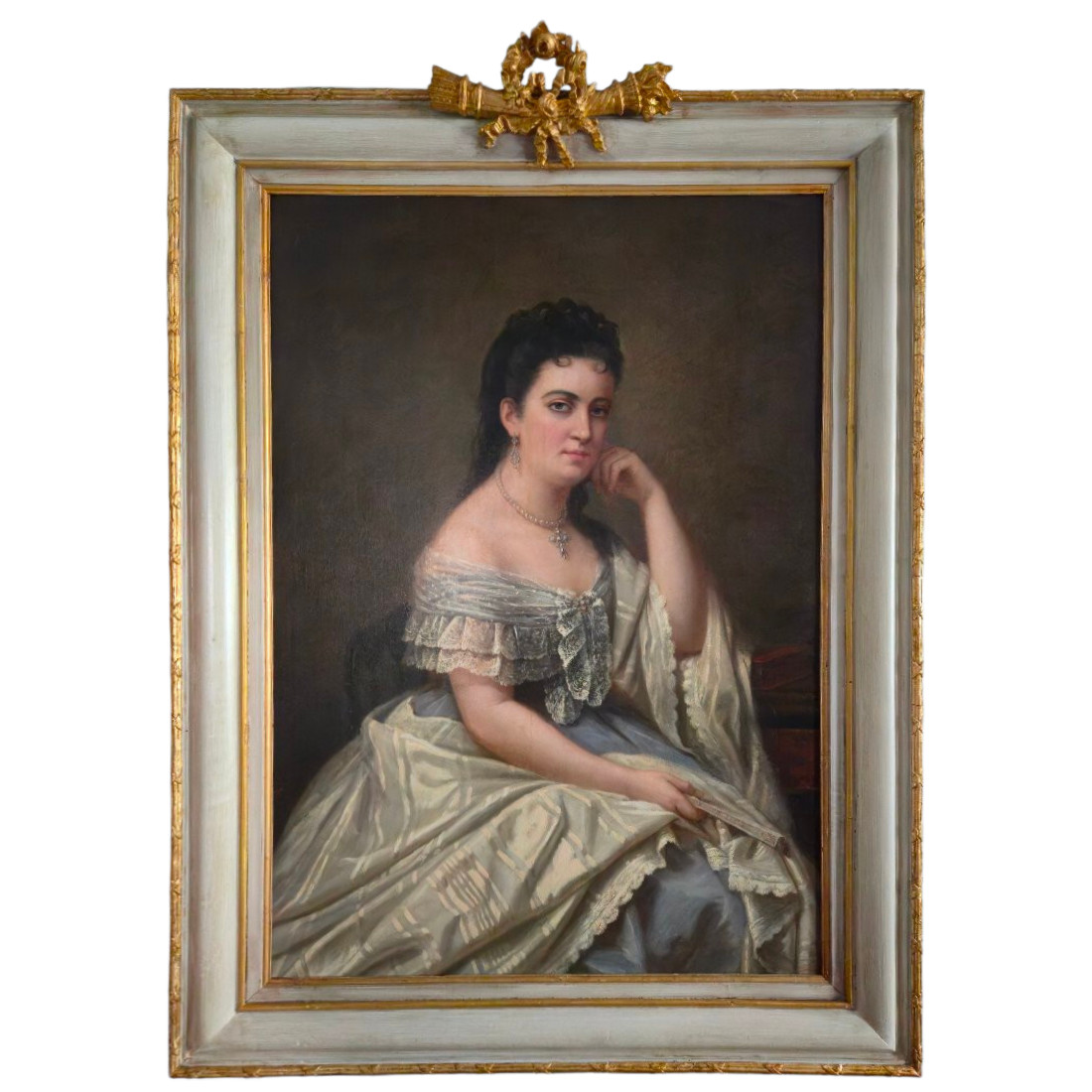
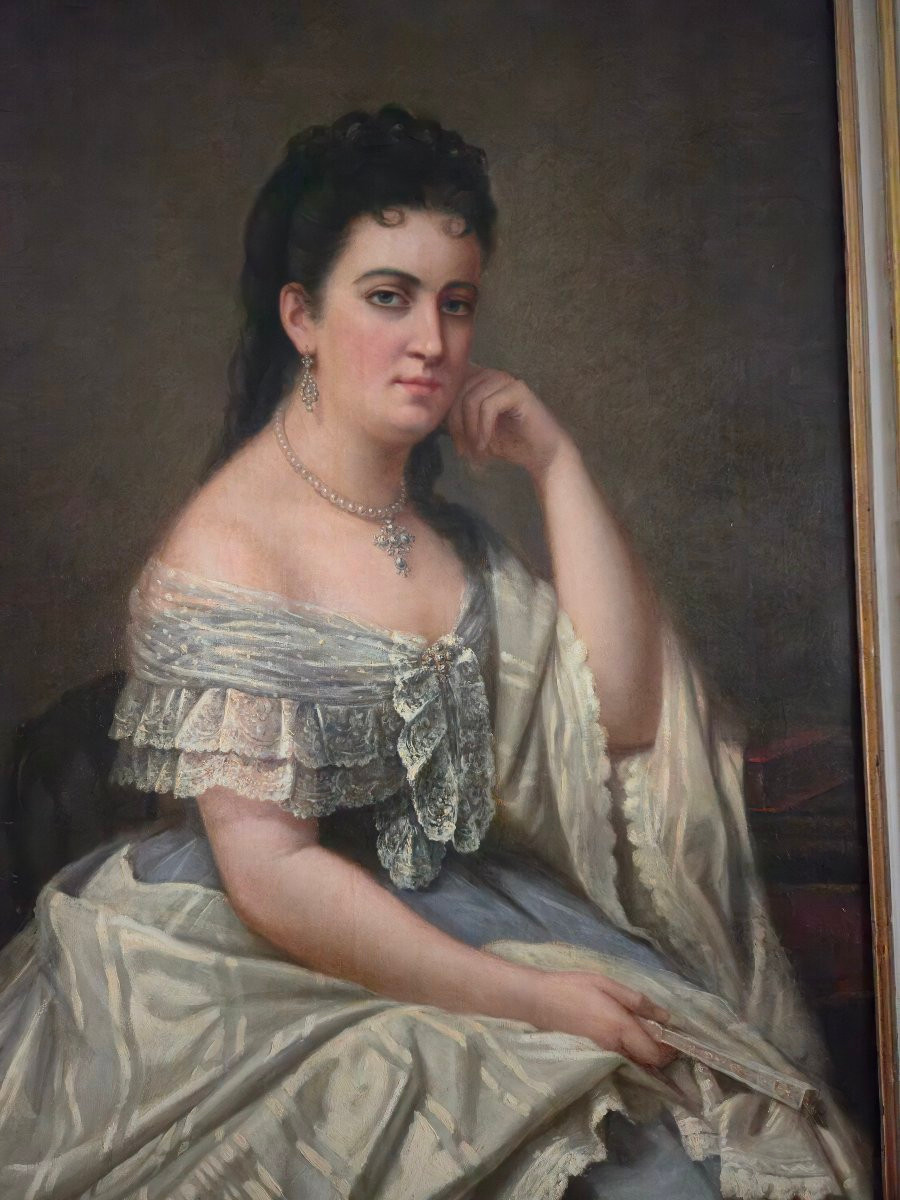
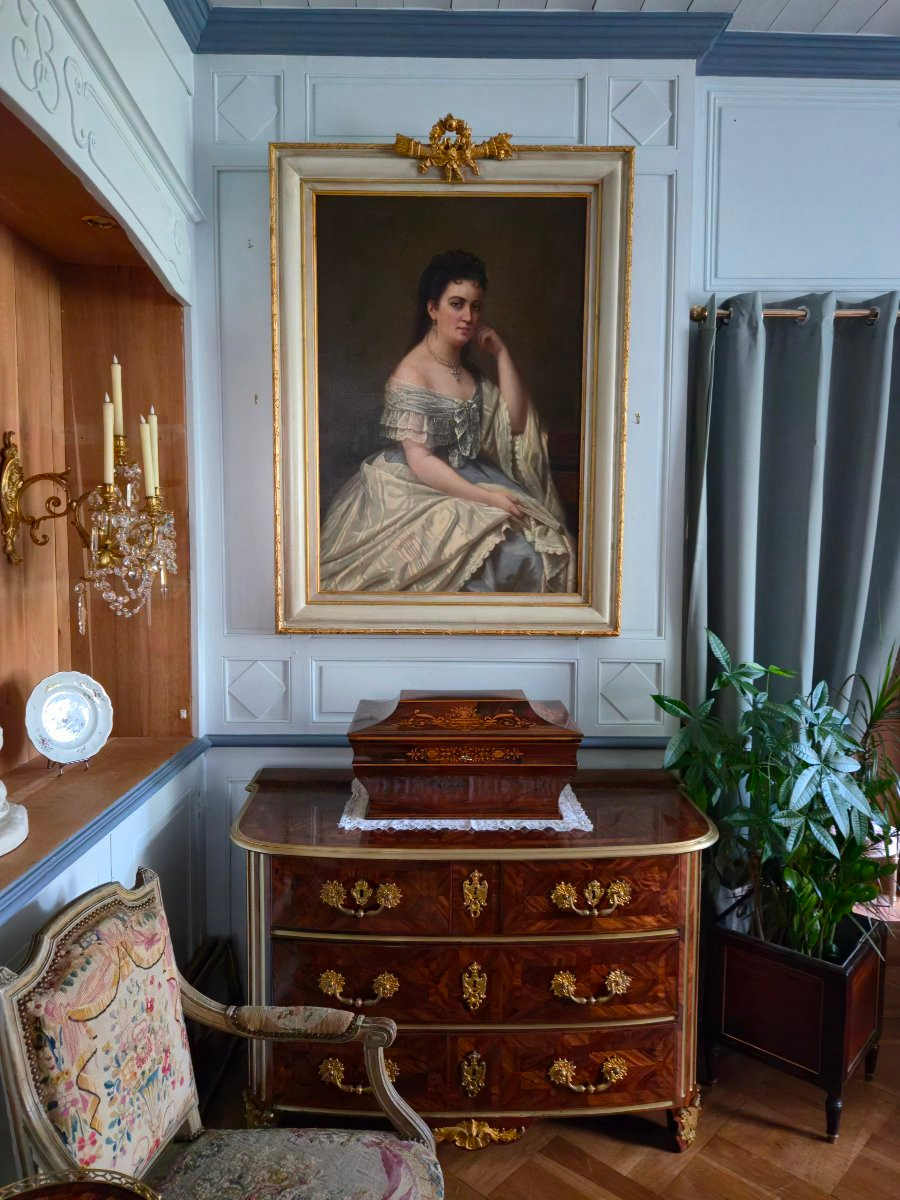
Oil on canvas depicting an elegant woman seated in a refined interior, dressed in a sumptuous silk gown in delicate shades of ivory, pearl gray, and silver. The young woman is portrayed with an air of distinction, her gaze directed at the viewer while her hand gently supports her face. The composition immediately evokes the grand female portraits that brought renown to European courts in the mid-19th century.
Trained at the École des Beaux-Arts in Paris in the studio of Léon Cogniet, Charles-Théophile Démory belonged to that generation of academic artists who perpetuated the tradition of the grand French portrait. He exhibited regularly at the Paris Salon between 1868 and 1884 and simultaneously pursued a career as a portraitist. His career is of particular interest for understanding this work, as he produced an official copy of Empress Eugénie's portrait after Franz Xaver Winterhalter in 1861. This connection to the world of the most celebrated portraitist of the European courts illuminates the sensibility that animates this painting.
The work is fully in keeping with the tradition of representational portraiture that reached its zenith under the Second Empire. The sitter's elegant pose, the richness of the fabrics, the quality of the jewelry, the sophistication of the hairstyle, and the overall refinement of the composition recall those portraits intended to celebrate the rank, culture, and refinement of their patrons.
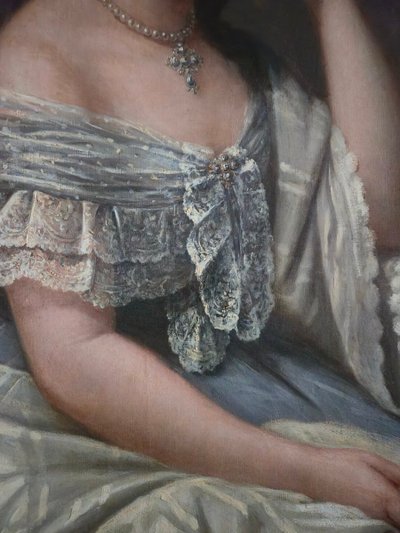
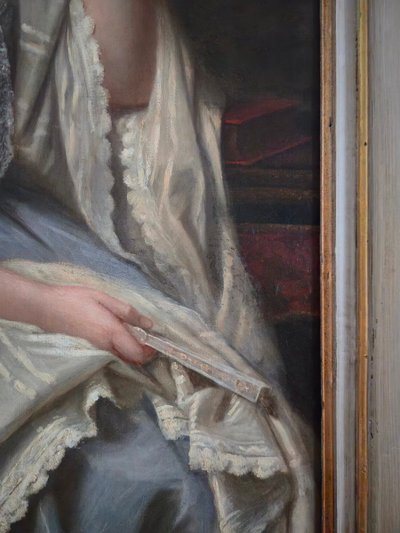
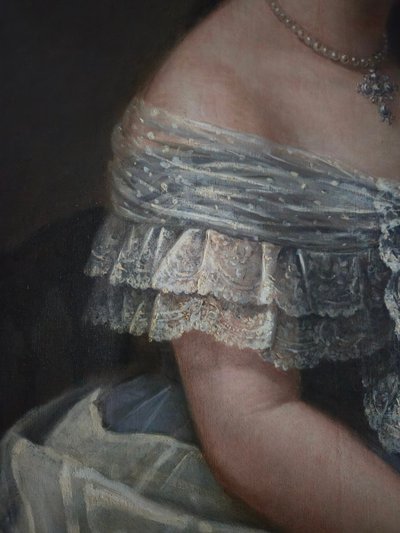
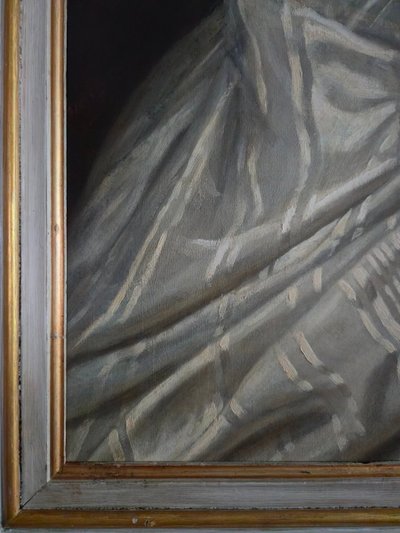
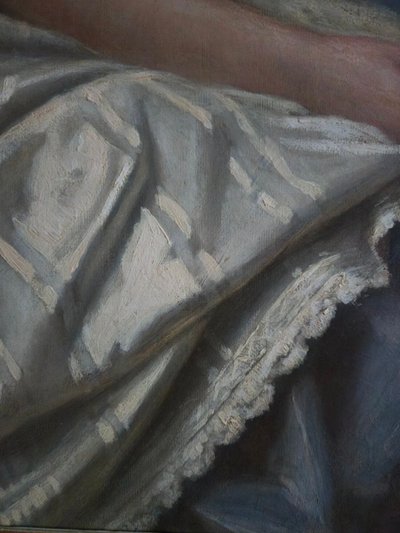
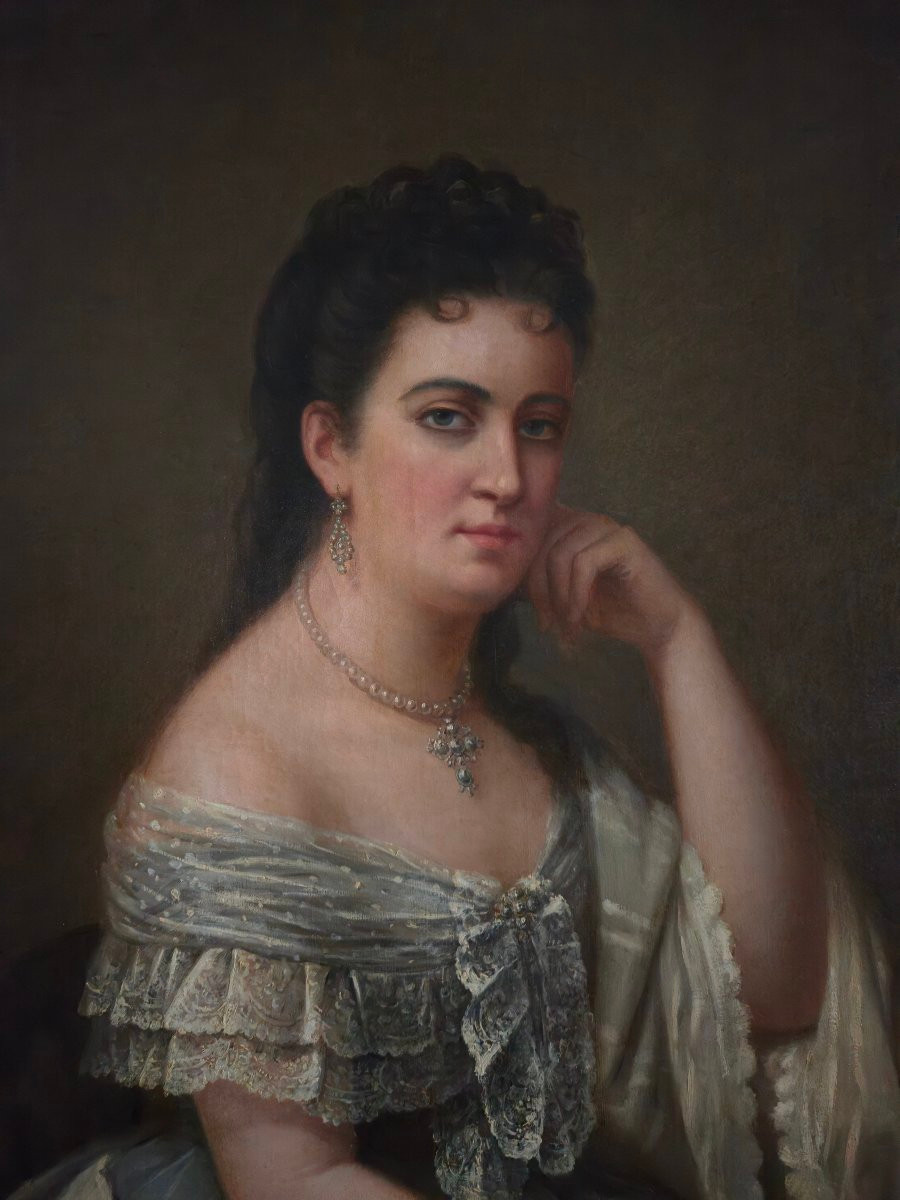
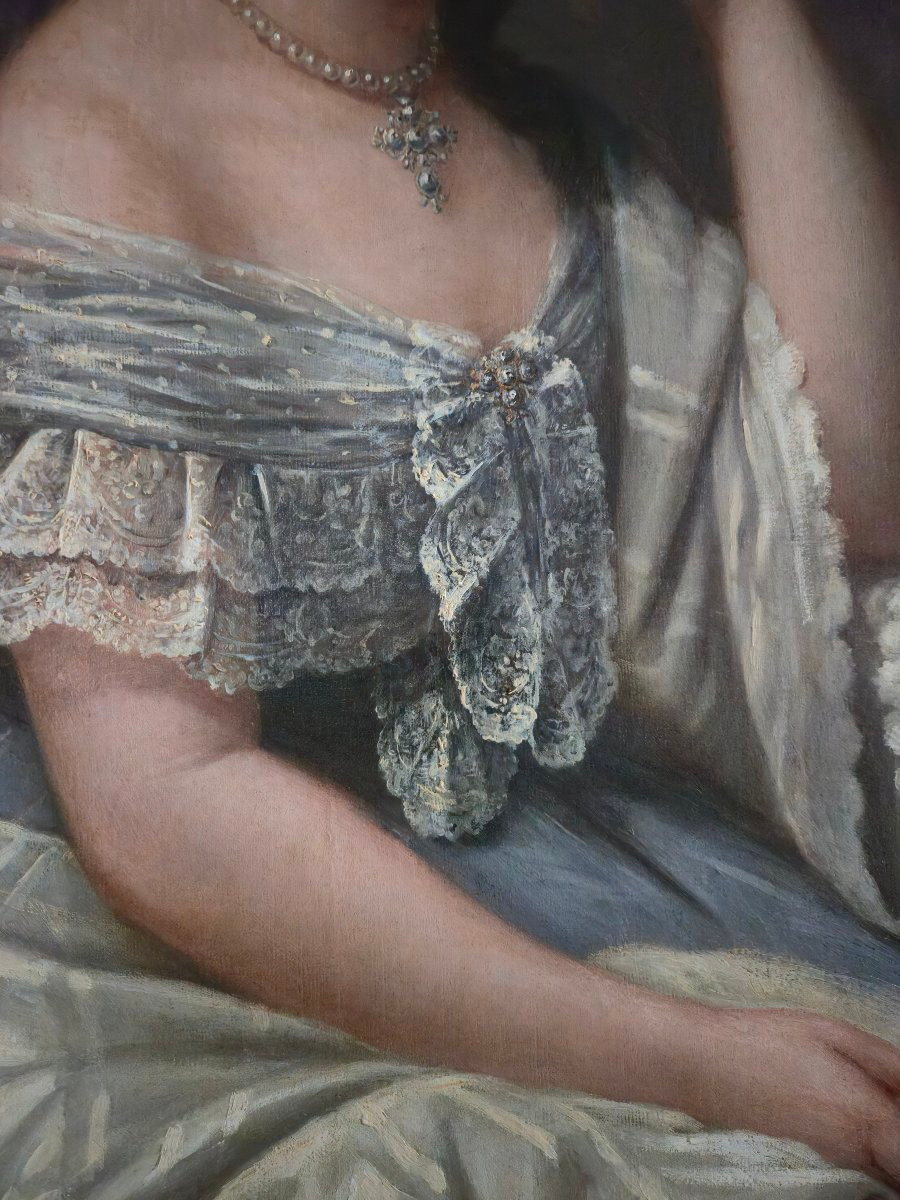
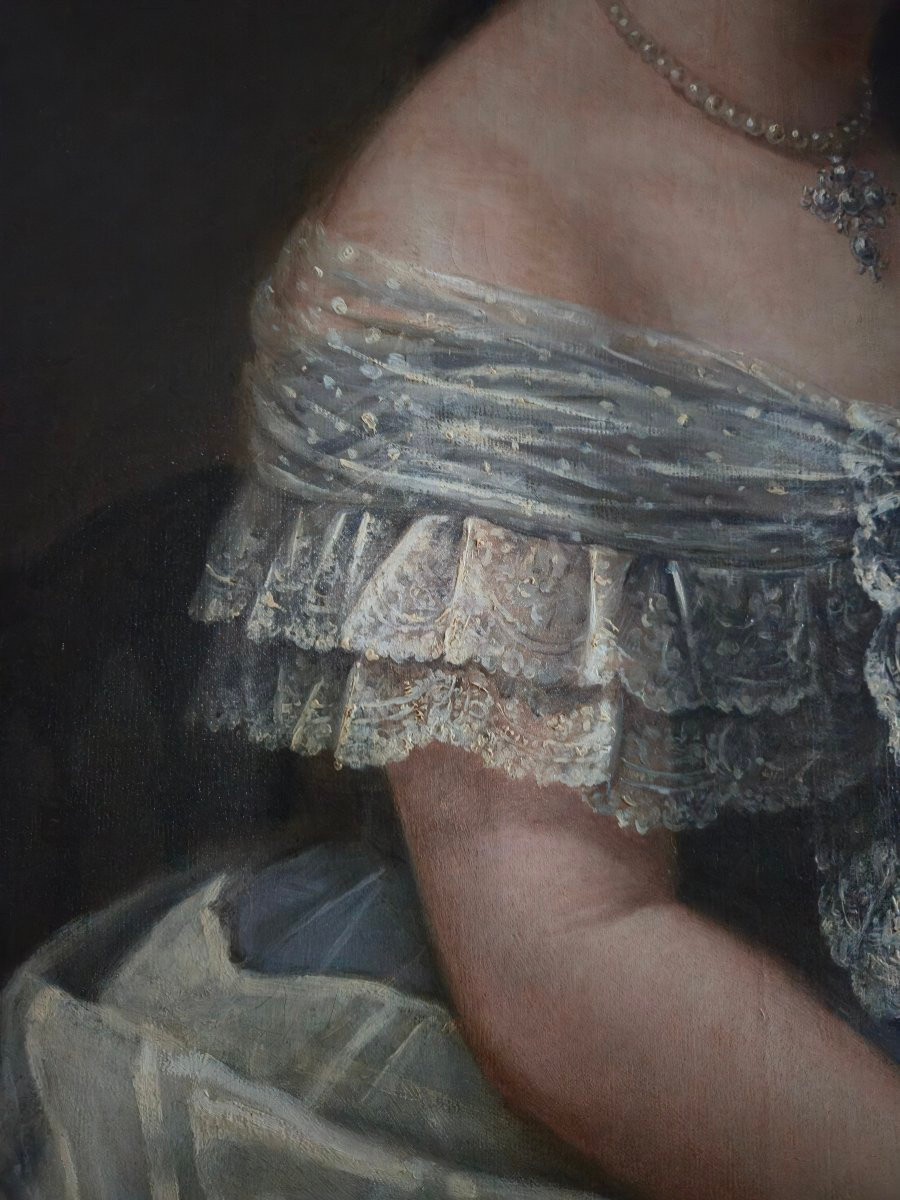
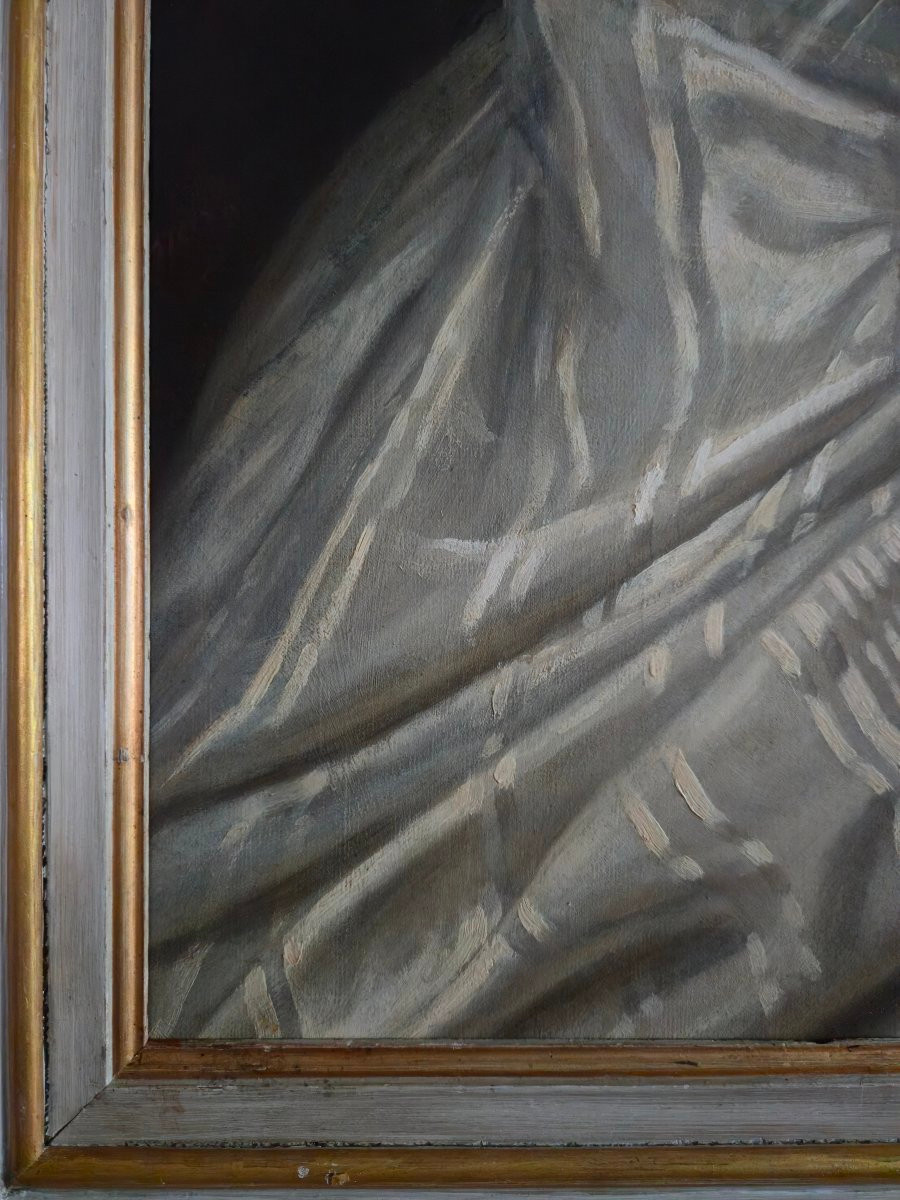
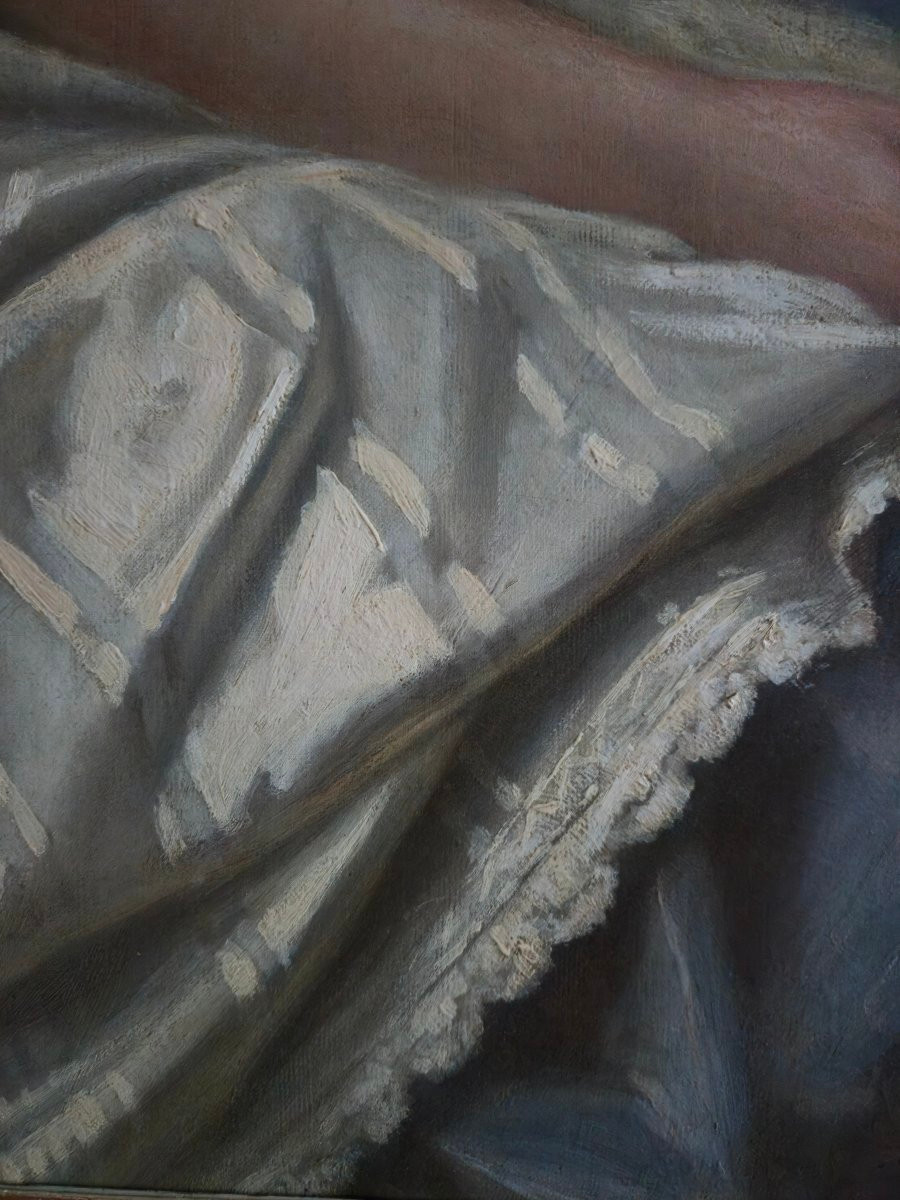
Démory displays his mastery of textures here. The silk dress is enlivened by wide folds whose pearly reflections capture the light with remarkable subtlety. The ivory, pearl gray, and silver tones harmonize, creating an impression of depth and softness. The lace, tulle, and muslin are rendered with remarkable virtuosity. The artist does not seek to reproduce every detail mechanically; A few skillfully placed brushstrokes are enough to capture the transparency, lightness, and movement of the fabrics.
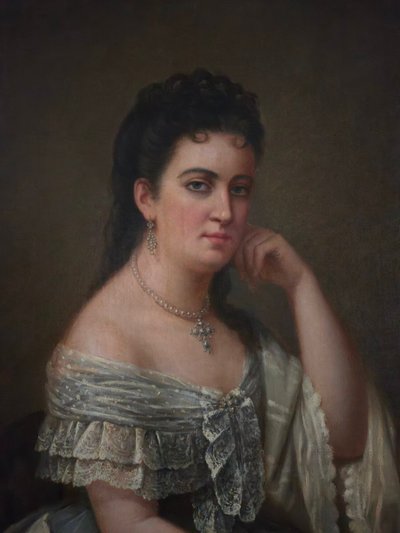
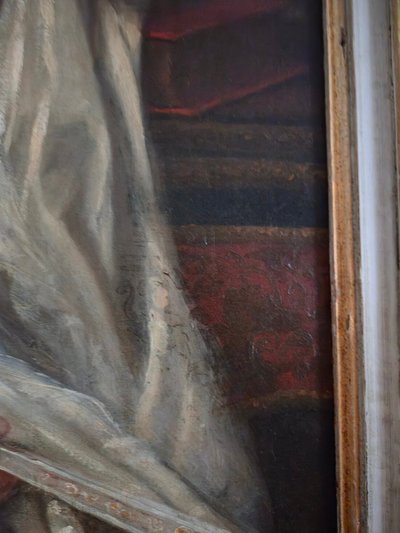
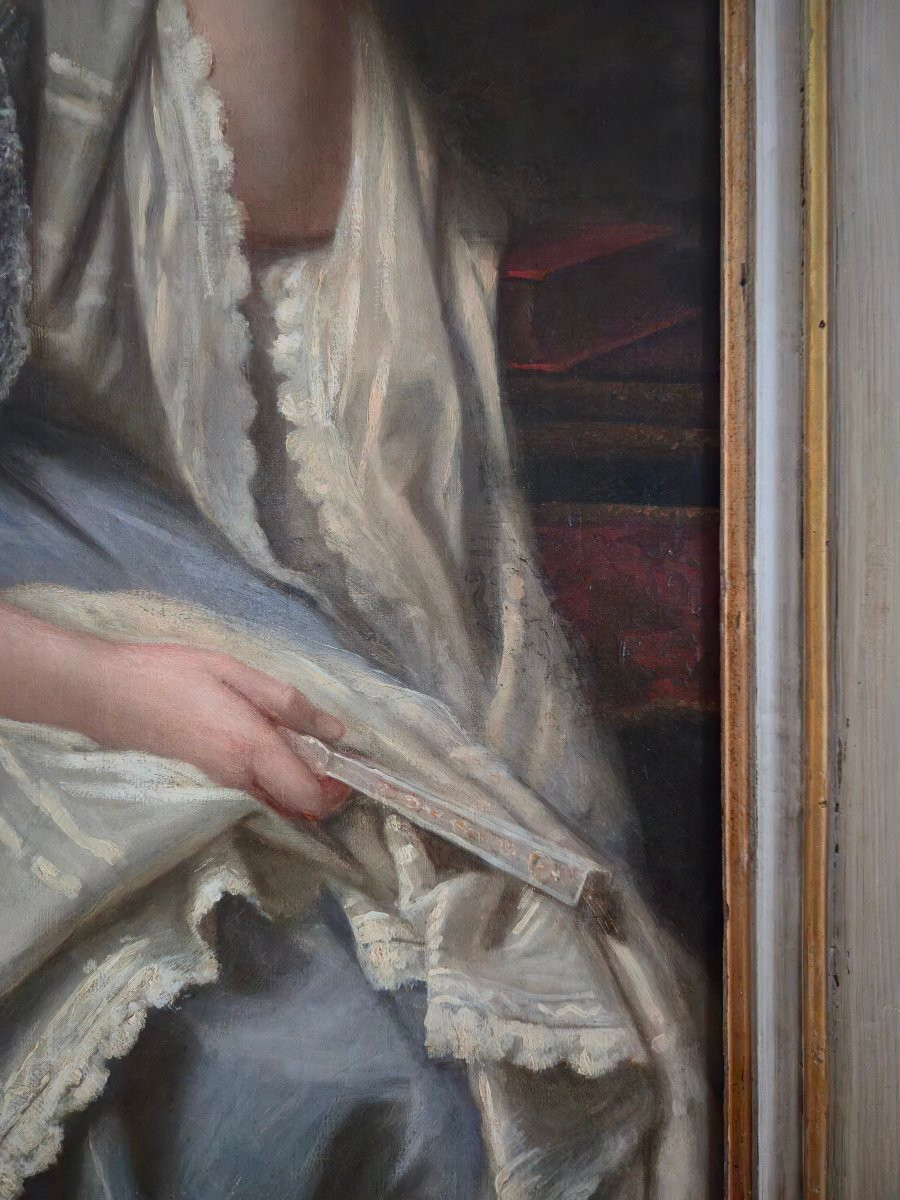
The delicate shawl draped over the shoulders is one of the most captivating elements of the composition. Its transparency is rendered with remarkable accuracy. In certain areas, the painter subtly reveals the shapes and colors of the furniture in the background. This technical refinement demonstrates a careful observation of light effects and a perfect mastery of the medium.
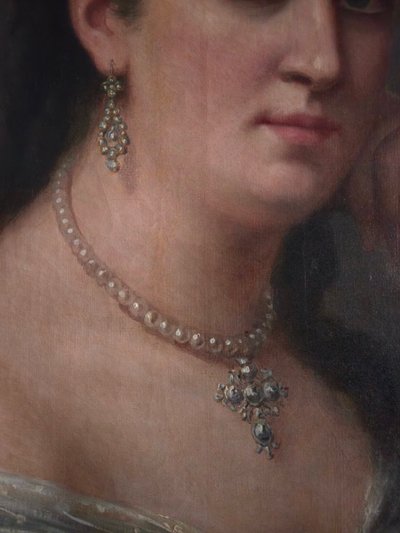
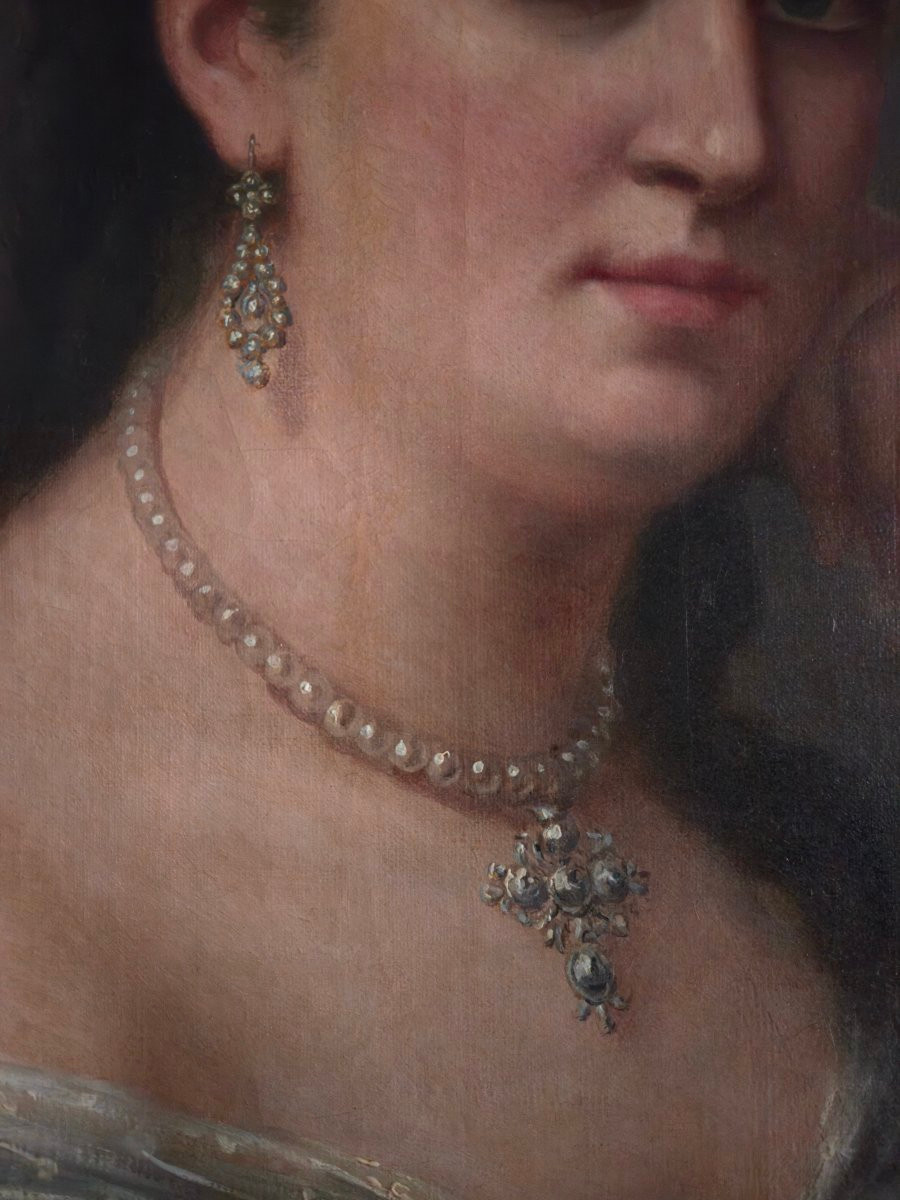
The young woman wears an elegant set of jewelry consisting of a pearl necklace with a cruciform pendant set with cut stones, matching earrings, and a brooch adorning the muslin bow at the center of her bodice. The artist excels in depicting these jewels, whose brilliance is achieved with a few precise, luminous touches. The shadow cast by the earrings on the model's neck is particularly noteworthy—a discreet detail that nonetheless reveals the painter's keen observation.
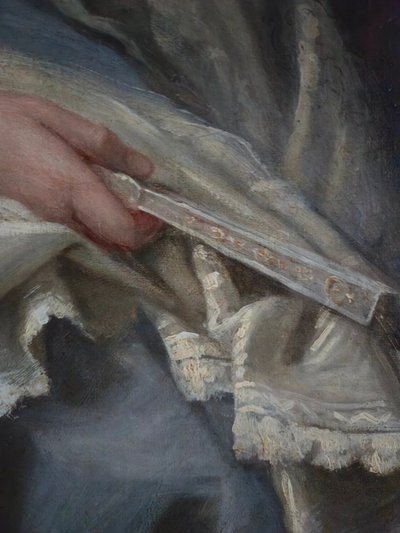
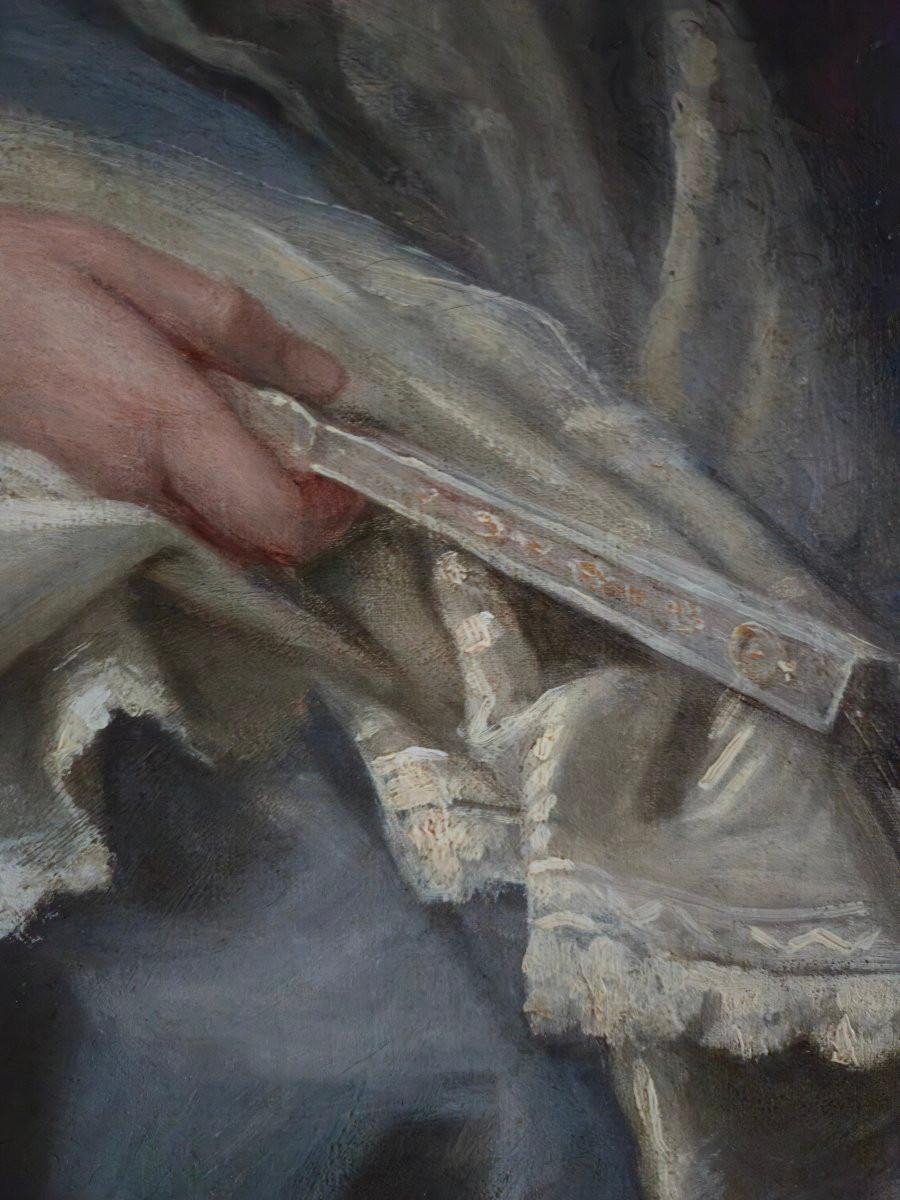
The fan held in the right hand, likely with a mother-of-pearl mount, is executed with the same care. Its translucency, pearly reflections, and the delicacy of its decoration contribute to the virtuosity evident throughout the work.
The face, however, is the true focus of the composition. The skin tones are modeled with exquisite softness through a subtle succession of pink, ivory, and warm gray tones. The eyes, enlivened by delicate highlights, avoid any academic rigidity. The discreetly drawn mouth, the calm gaze, and the restrained expression lend the sitter a real and profoundly human presence. Démory does not simply depict an elegant woman; he succeeds in capturing a personality.
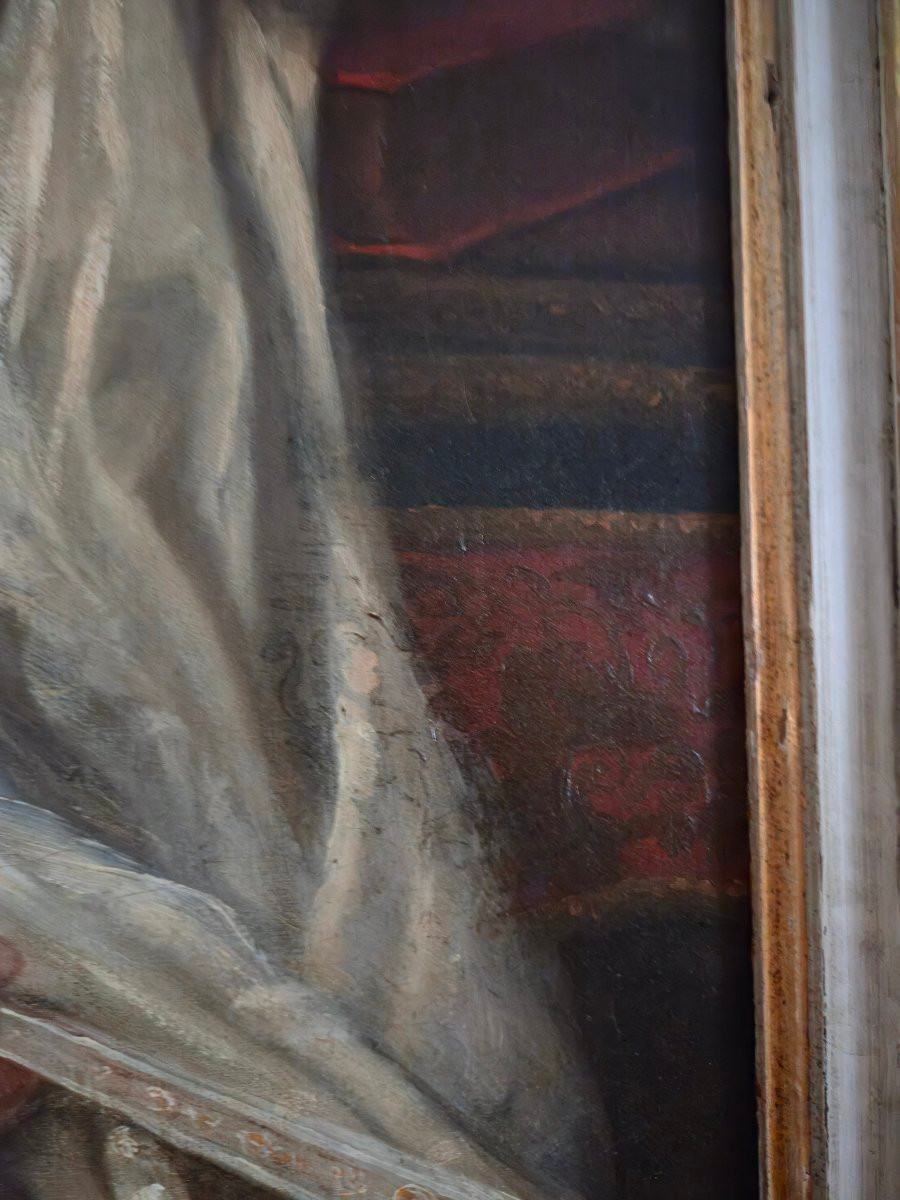
The background plays a crucial role in the narrative of the portrait. Behind the sitter appears a Napoleon III chair in ebonized wood with a turned slatted back. To the right stands an elegant Boulle marquetry games table combining red tortoiseshell, brass, and ebonized wood, embellished with bronze mounts. A red-bound book rests on this refined piece of furniture. These elements are not mere decorative accessories; they contribute to the representation of a cultivated and distinguished world, characteristic of the grand bourgeois interiors of the second half of the 19th century.
The attention to detail testifies to the artist's skill. The closer one gets to the canvas, the more the subtleties of the painting become apparent: the transparencies of the fabrics, the gleam of the pearls, the delicate interplay of light and shadow, the reflections of the silk, the modeling of the hands, and the delicate complexions. This richness of execution gives the work a remarkable presence and rewards a careful view.
The painting comes from a private collection in La Ciotat, where it had been kept for many years. We acquired it directly following an estate sale.
Ref: QFXYH0K34W

 English
 Français
  Italiano
  Deutsch
  Oak sideboard, 1950
1.100 € EUR
Oak sideboard, 1950
1.100 € EUR