This description has been translated and may not be completely accurate. Click here to see the original
Andrea Solario (Milan, c. 1470 – Milan, 1524) follower of
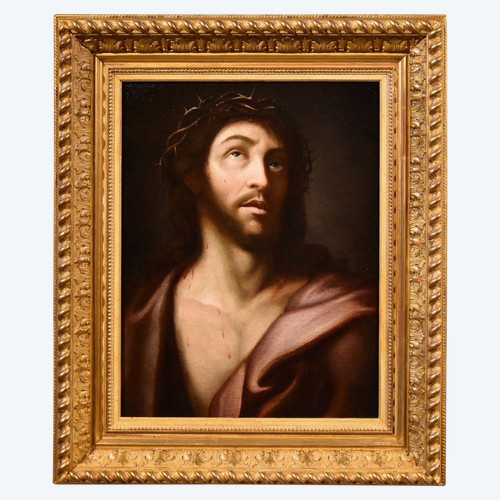
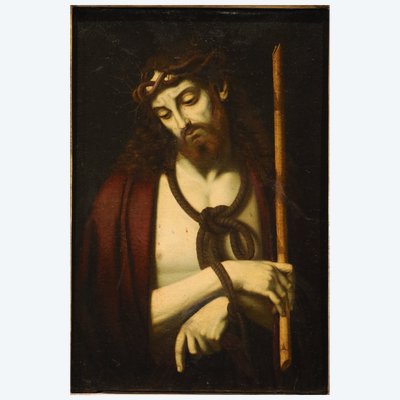
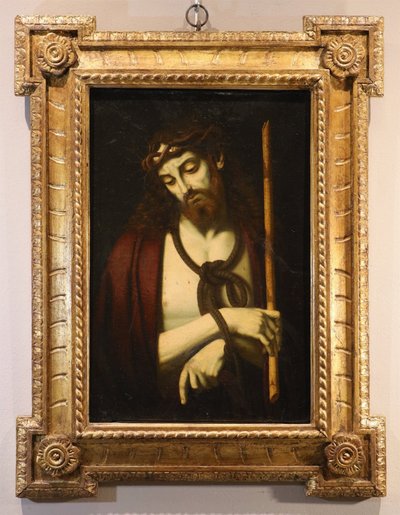
Ecce Homo
oil on canvas 64 x 45 cm. framed 92 x 72 cm.
Reference bibliography: David Alan Brown: Andrea Solario, Milan 1987
FULL DETAILS AVAILABLE BY CLICKING ON THE FOLLOWING - LINK -
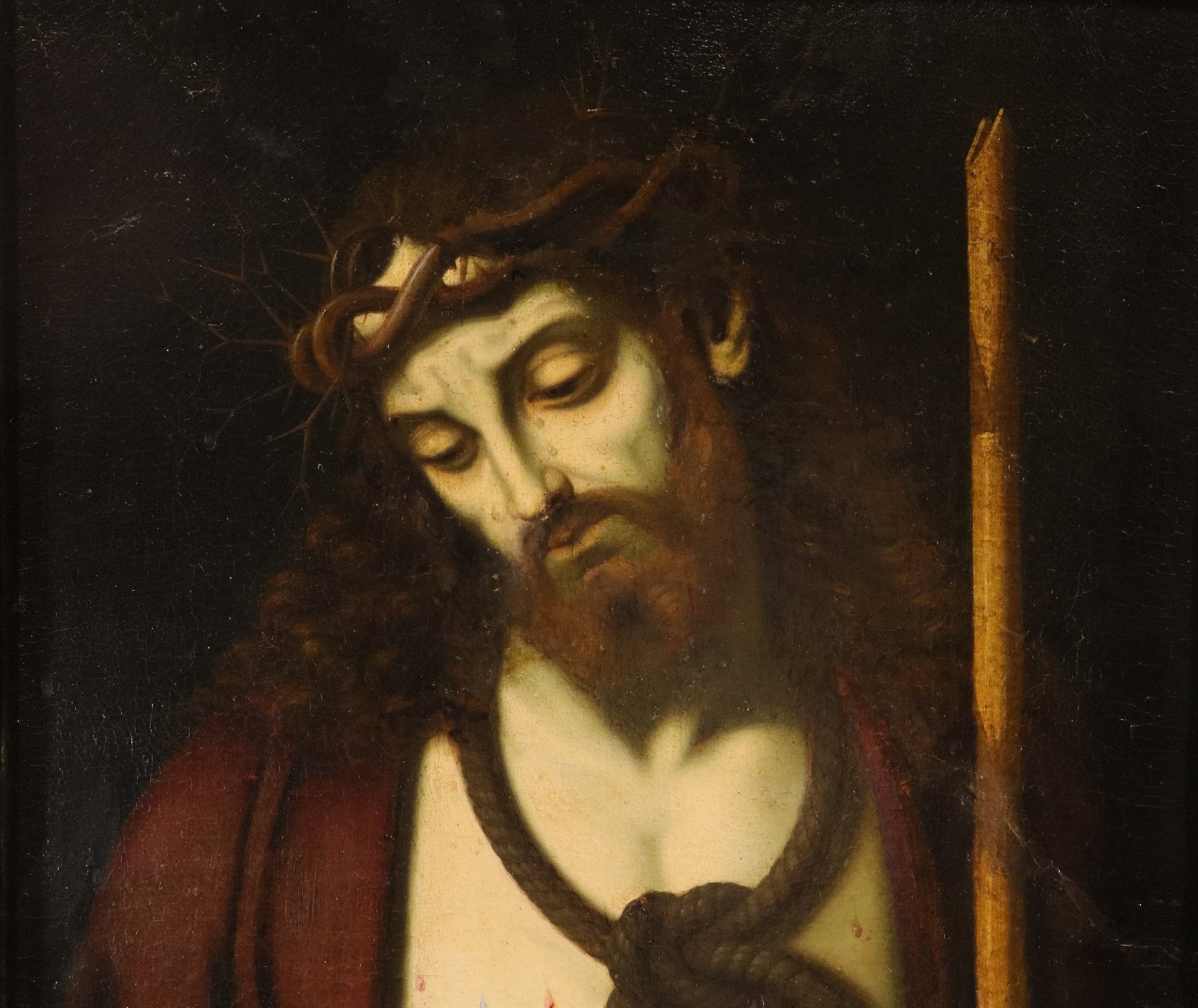
The work on offer, depicting the powerful image of Christ crowned with thorns, draws on the iconography of the *Ecce Homo* conceived by Andrea Solario (Milan, c. 1470 – Milan, 1524), one of the leading figures of the most glorious period of the Lombard Renaissance: this was a theme much celebrated throughout the artist’s career and subsequently reproduced by his workshop in numerous variations, each with slight differences from the others, bearing witness to the enormous success it had already achieved amongst contemporary collectors.
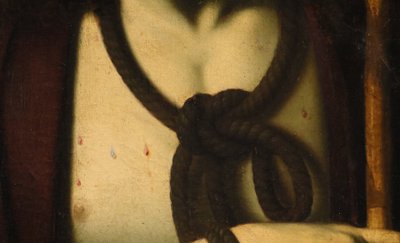
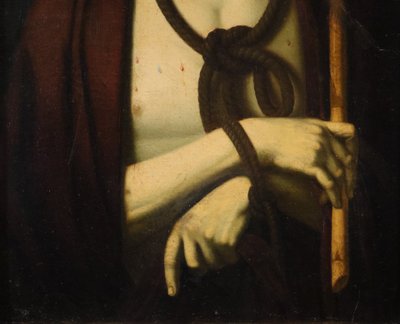
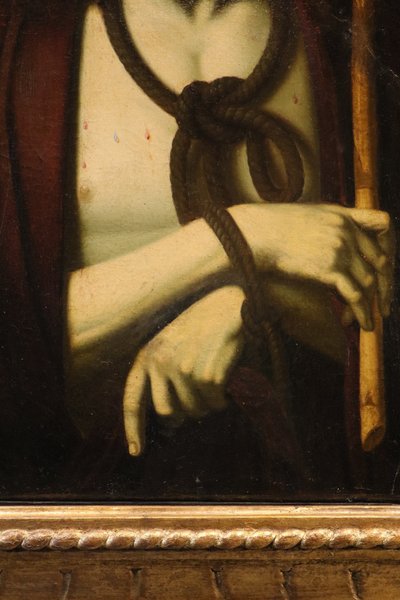
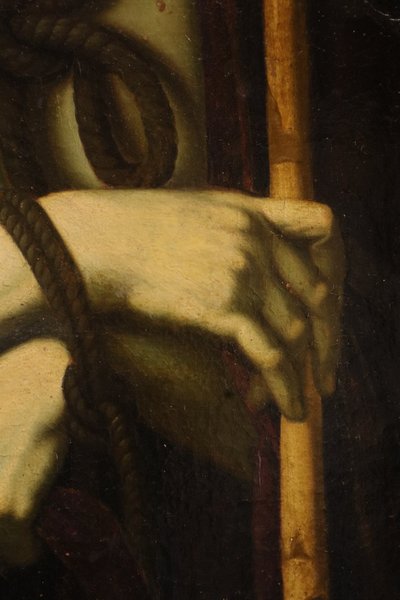
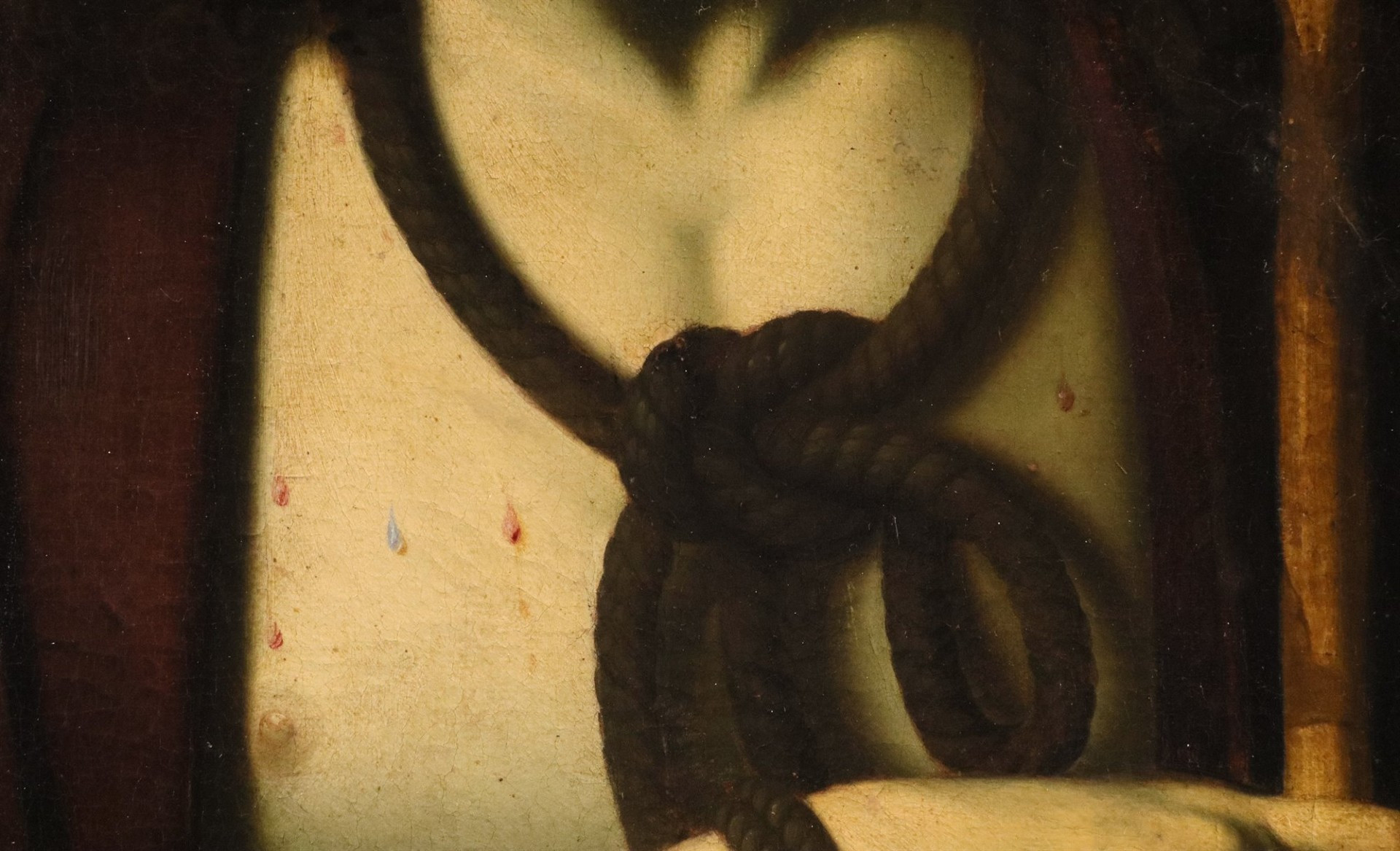
In this instance, Christ is depicted in half-length against a monochrome background, wearing the crown of thorns and holding a reed sceptre, both symbols of kingship bestowed upon him by the soldiers to mock him during his captivity. His hands are bound with a rope and his shoulders are draped in a simple purple cloak.
The eminent art historian David Alan Brown has described Andrea Solario’s *Ecce Homo* (c. 1507–1509) as one of his most iconic compositions.
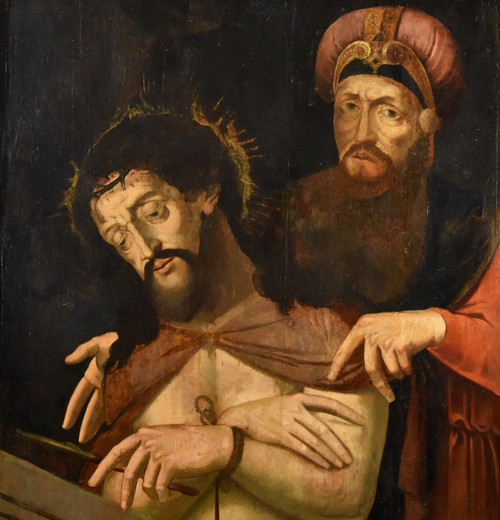
In his catalogue raisonné dedicated to the artist, Brown has identified the two authoritative autograph versions – that is, the original prototypes – one at the Philadelphia Museum of Art and the other at the Museum der bildenden Künste in Leipzig (Fig. 1 and Fig. 2 *).
There are also numerous ‘secondary’ works of Andrea Solario’s *Ecce Homo* (over fifteen versions recorded), which are divided between early prototypes and historical copies produced by his workshop or by followers active in the period immediately following his own.
In addition to the two key reference works in Leipzig and Philadelphia, the main examples of these other versions can be found in the following locations: Italian museums Poldi Pezzoli Museum (Milan): houses a splendid early version dating from around 1505–1506.
Accademia Carrara (Bergamo): houses a variant dated between 1500 and 1505, executed on paper mounted on panel. International museums Ashmolean Museum (Oxford): a distinctive variant (1505–1507) in which Christ holds the cane used to scourge him.
National Museum (Warsaw): a unique version (1505–1510) in which the Saviour wears a purple cloak instead of a red one.
There is also a large number of works held in private collections or sold at the most prestigious European auctions, often high-quality workshop replicas, which confirm the commercial success this composition enjoyed as early as the 16th century.
By way of example, we may mention: Fig. 3 – A. Solario (attributed), Ecce Homo, Lempertz Cologne, Auction 1185, 20 November 202 https://www.lempertz.com/en/catalogues/lot/1185-1/1507-andrea-solario.html Fig. 4 - A. Solario (Workshop), Ecce Homo, Vienna Dorotheum, 10 November 2020 https://www.dorotheum.com/it/l/6937675/ Fig. 5 - A. Solario (and Workshop), Ecce Homo, Sotheby’s London, 7 December 2011 https://www.sothebys.com/en/auctions/ecatalogue/2011/old-master-and-british-paintings-evening-sale/l... Fig. 6 - A. Solario (follower), Ecce Homo, Lempertz Cologne, Auction 1067, 21 May 2016 https://www.lempertz.com/en/catalogues/lot/1067-1/1202-andrea-solario-copy-after.html
The style of the work blends Italian naturalism – at once sensitive yet powerful – with the intense emotionality of the Northern masters.
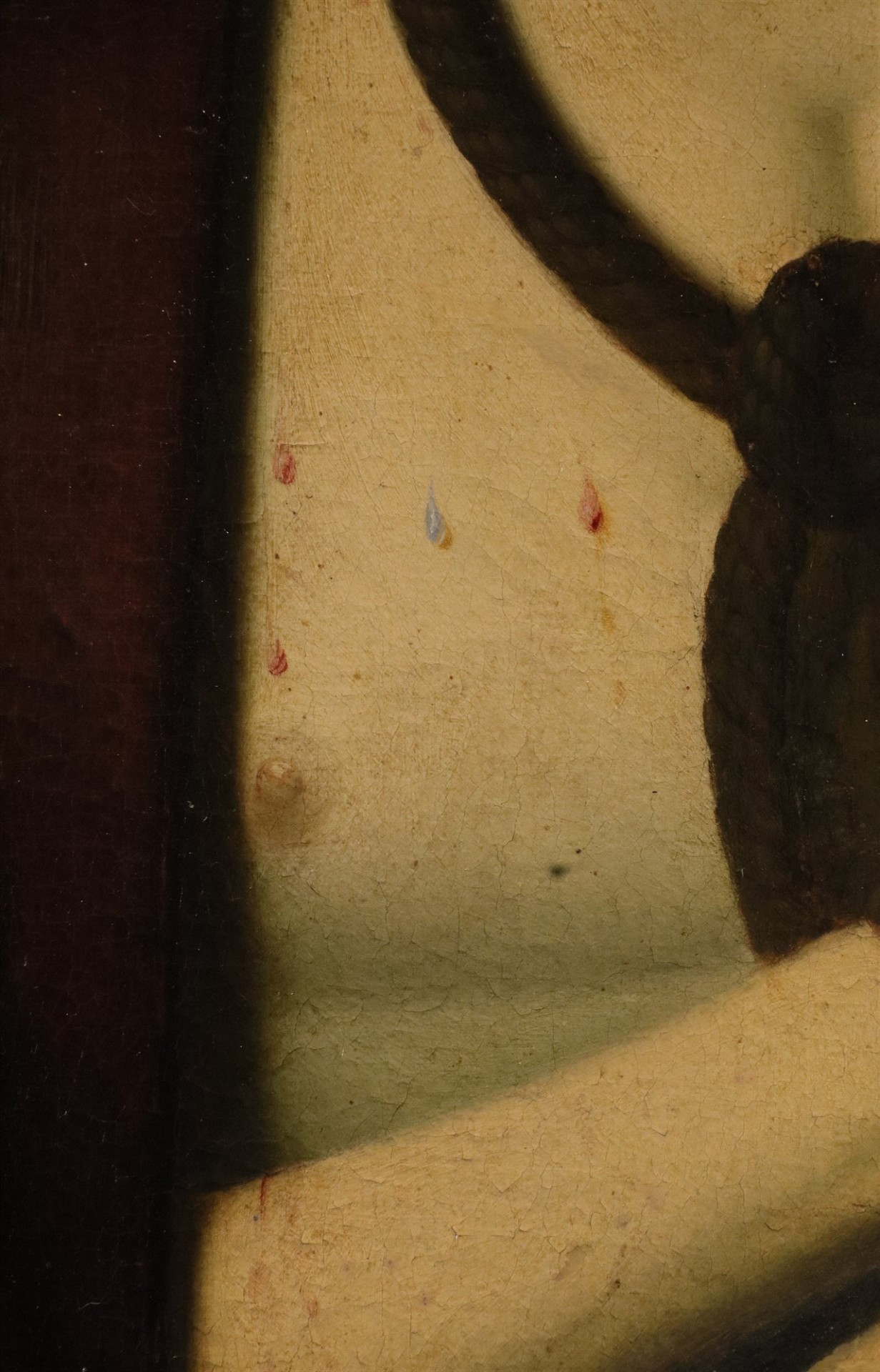
The influence of Leonardo da Vinci is profound and fundamental, absorbed by Solario during his stay in Milan and subsequently reworked in a dramatic and devotional key: for example, we see the sfumato technique – reminiscent of Leonardo – well balanced with the characteristic soft transition of light and shadow, eliminating sharp contours to gently blend the body of Christ with the dark background.
Jesus’ face reflects an intimate and melancholic suffering, a characteristic derived directly from Leonardo’s studies on the ‘moves of the soul’ and human expressiveness, as well as the detail of the clasped hands and the prominent veins, which stem from the master’s studies from life.
Leonardo’s softness is combined with a strong sense of three-dimensionality and sharp details, influenced by both Flemish painting and Northern Italian classicism.
As for our version, it is a work executed with an excellent level of painterly precision and extraordinary expressive power, such that it can easily be compared to Solari’s earlier prototypes.
We may therefore infer that the artist is one of those associated with Solari’s circle, or a follower active at a later date; many artists, as part of his circle of pupils, inevitably came into contact with the original works and had the opportunity to tackle this subject.
ADDITIONAL INFORMATION:
The work is complemented by an attractive frame and comes with a certificate of authenticity and a descriptive iconographic sheet.
We arrange and organise the transport of purchased works, both within Italy and abroad, using professional and insured carriers.
It is also possible to view the painting at our gallery in Riva del Garda; we would be delighted to welcome you and show you our collection of works.
Please feel free to contact us, with no obligation, for any further information.
Follow us on:
https://www.instagram.com/galleriacastelbarco/?hl=it
https://www.facebook.com/galleriacastelbarco/
Ref: B4LA44TUSO
















 English
 Français
  Italiano
  Deutsch