This description has been translated and may not be completely accurate. Click here to see the original
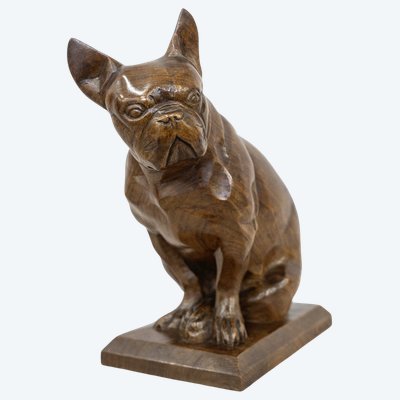
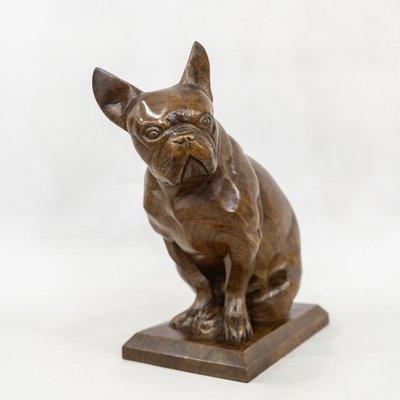
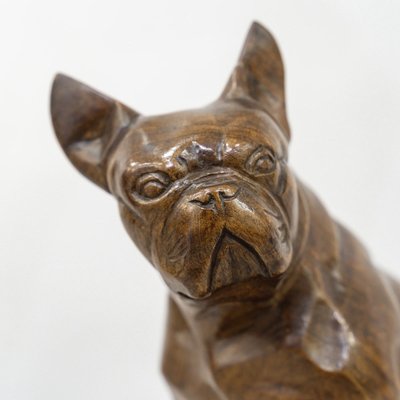
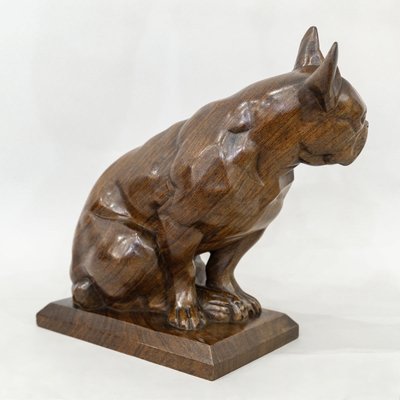
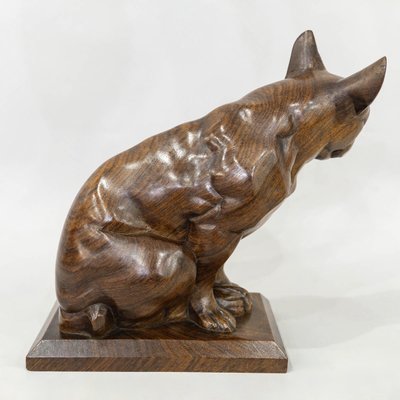
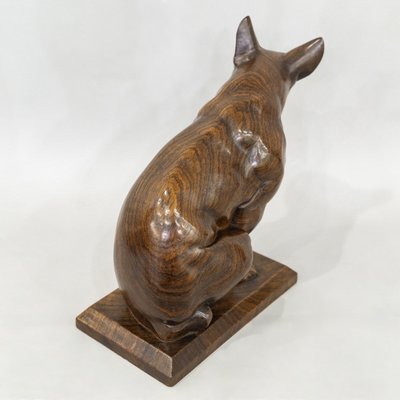
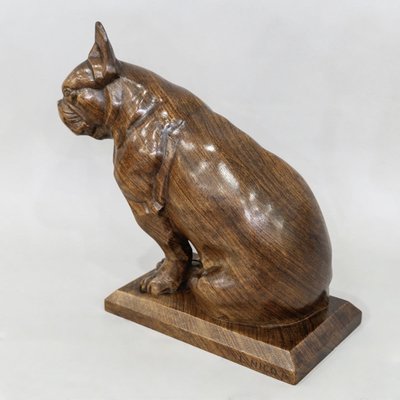
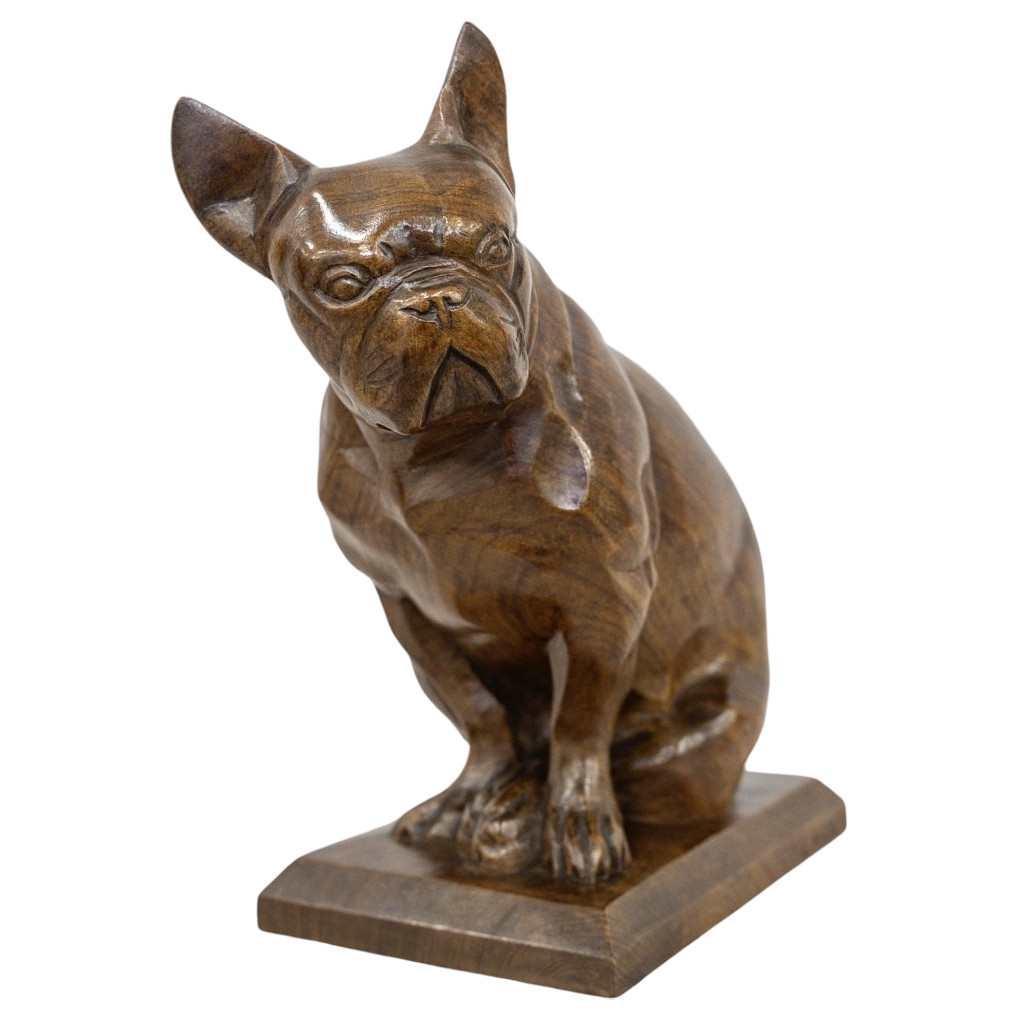
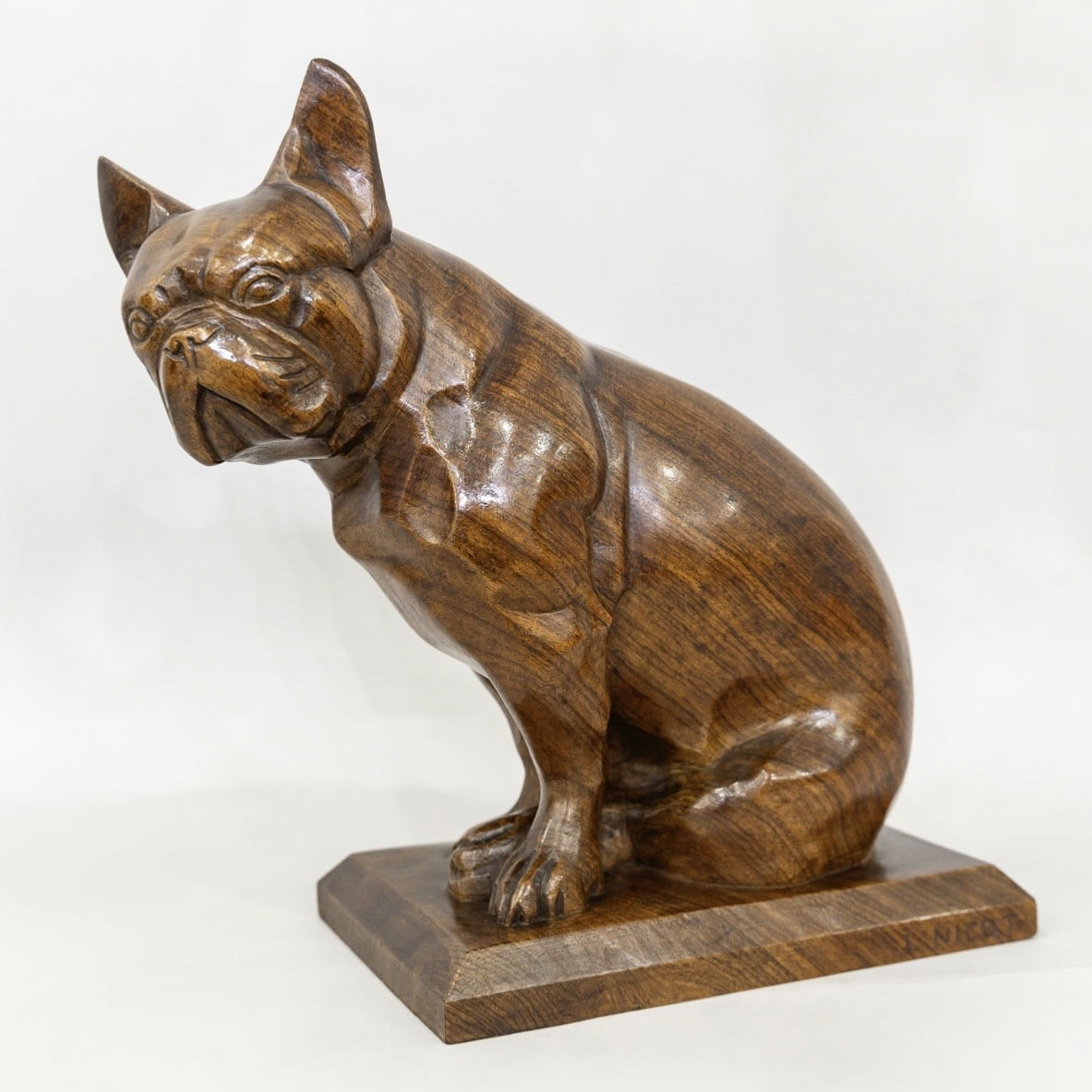
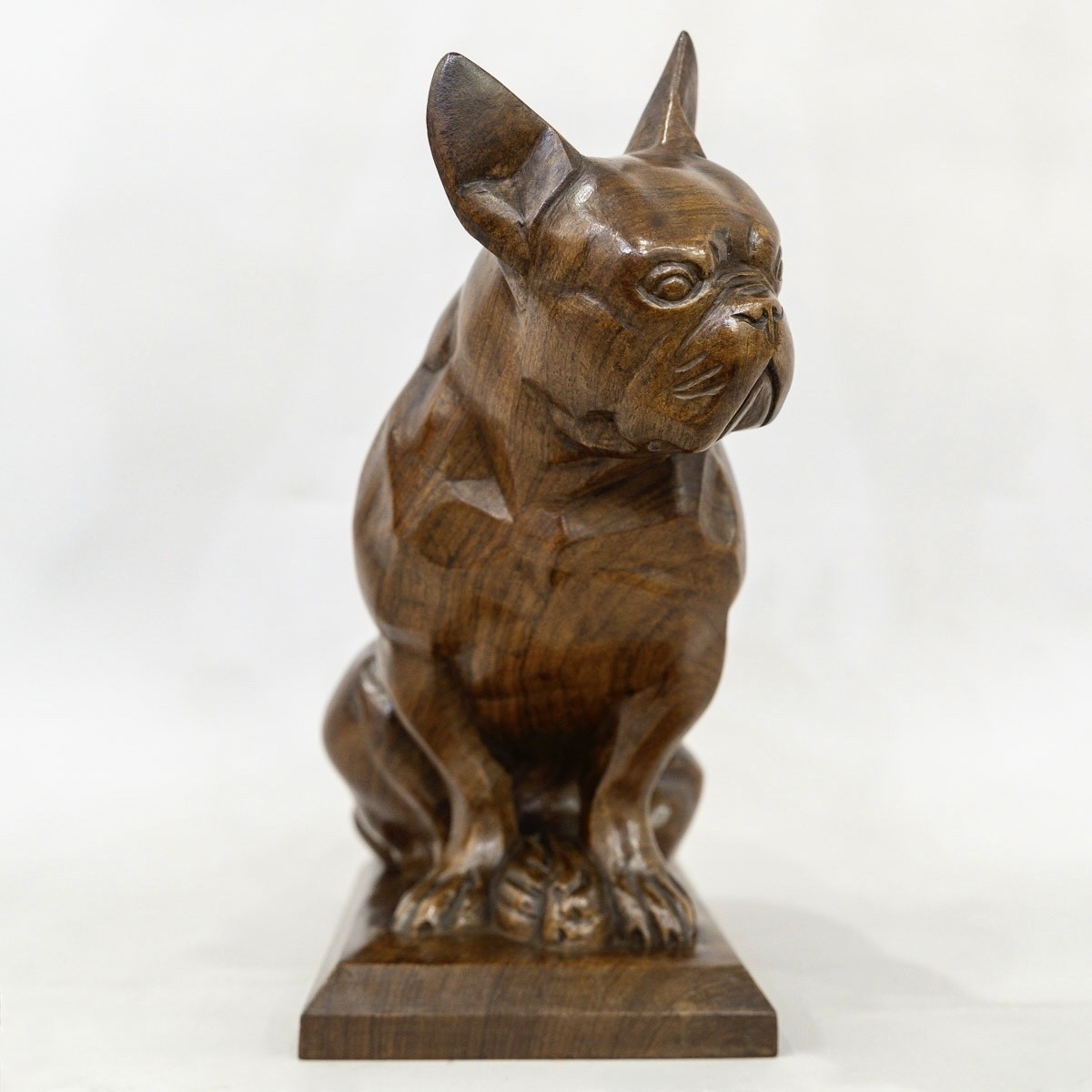
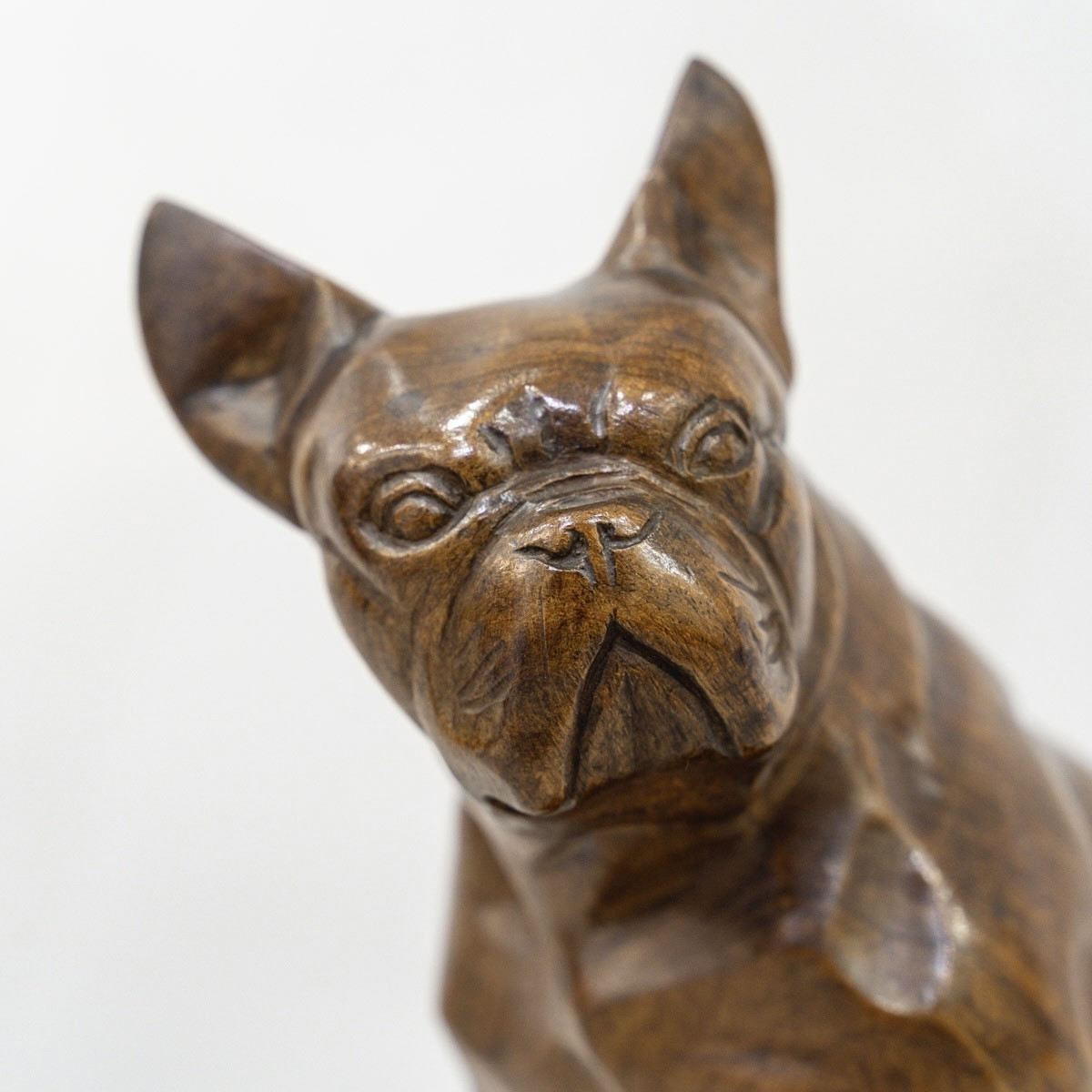
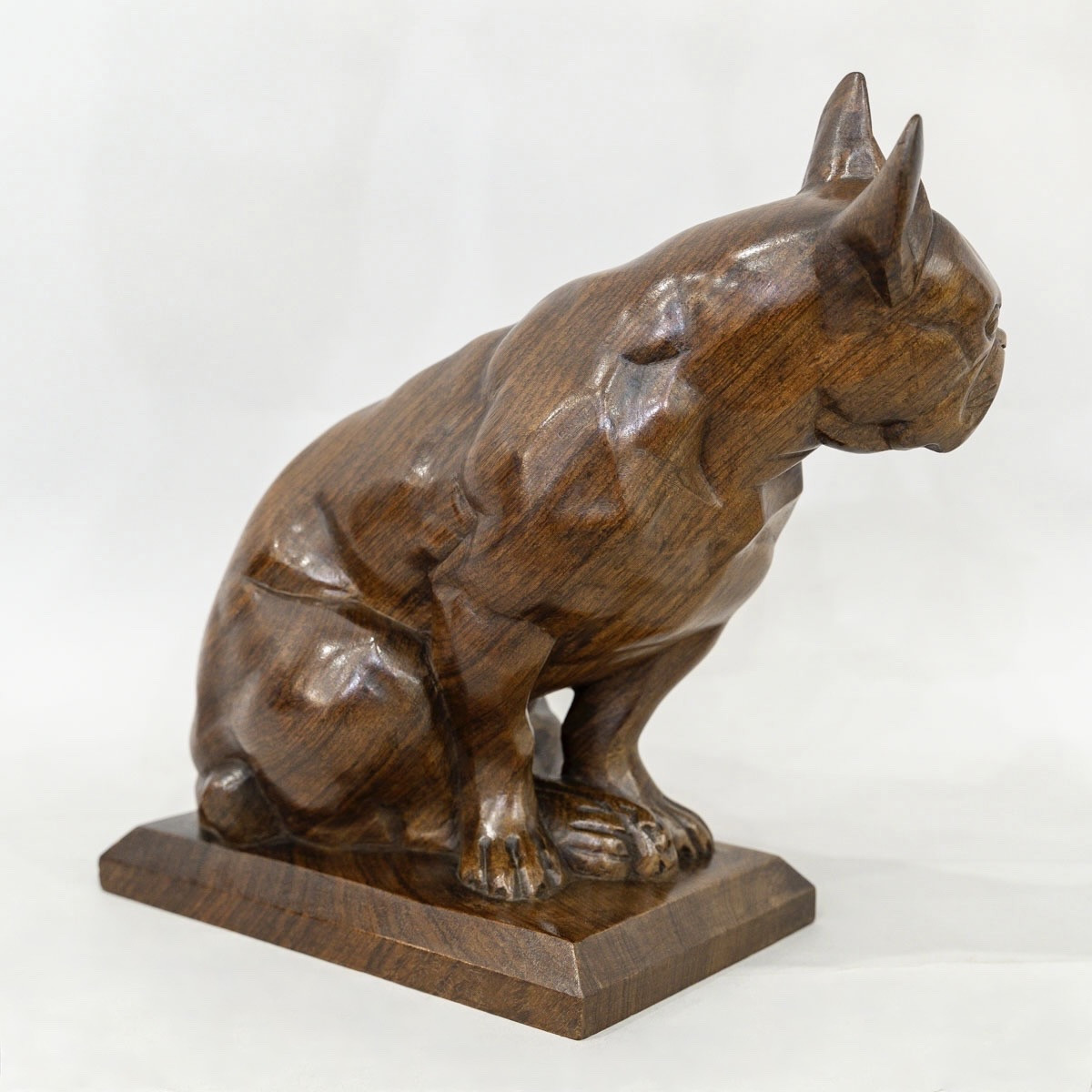
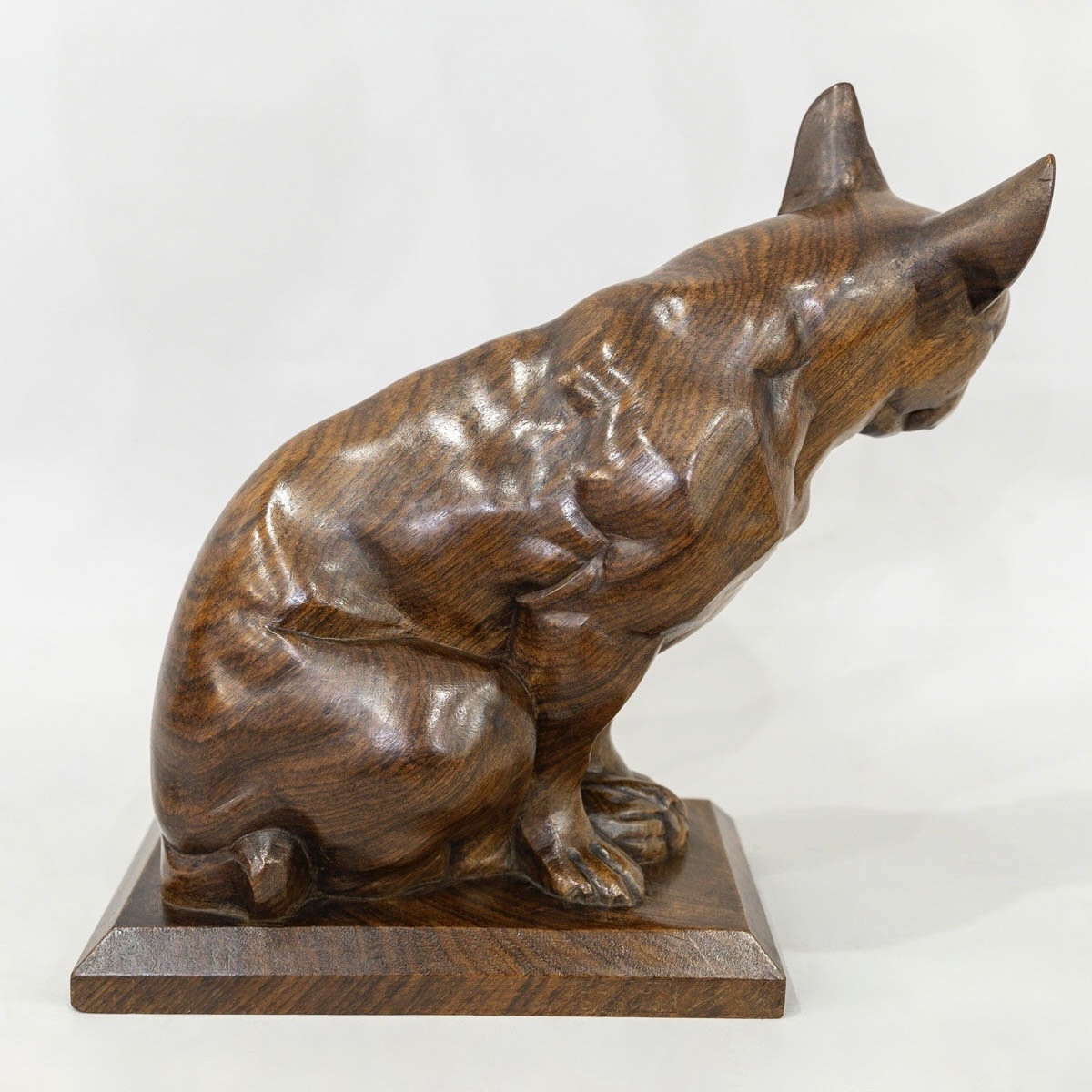
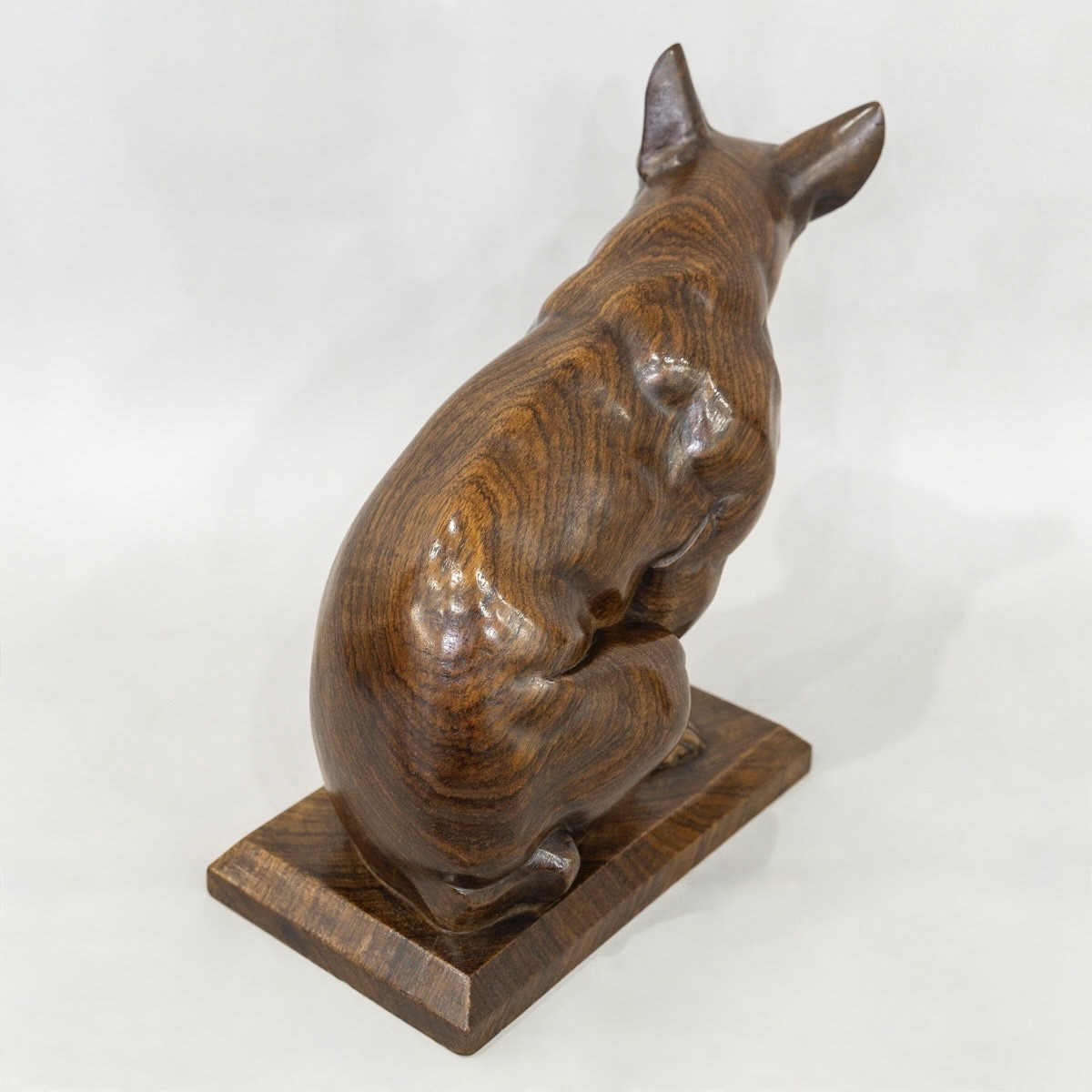
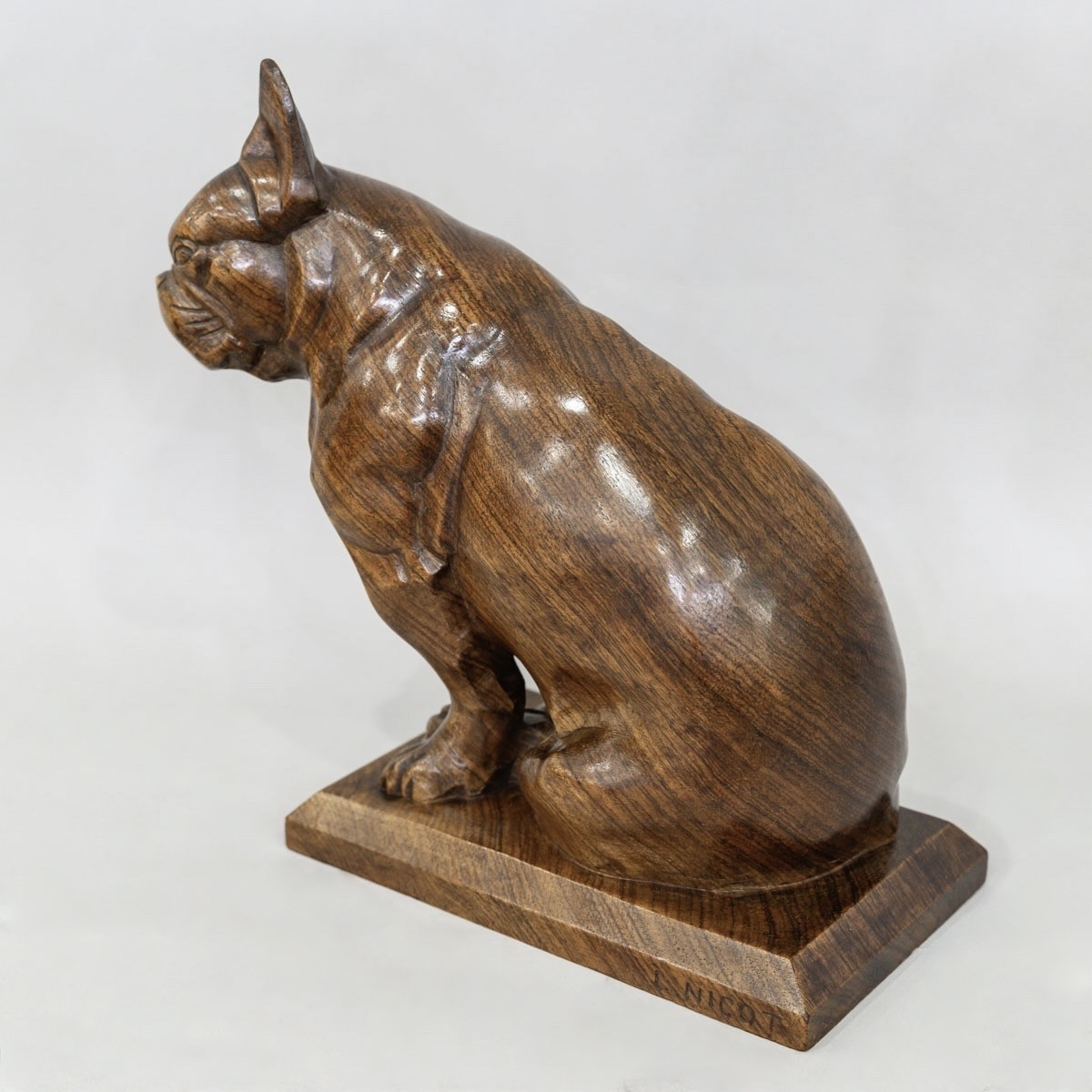
A freestanding sculpture in carved wood, depicting a seated bulldog, by the sculptor Louis-Henri Nicot (1878-1944).
Mahogany wood sculpture.
Fully developed in three dimensions, the sculpture is intended to be viewed from all angles.
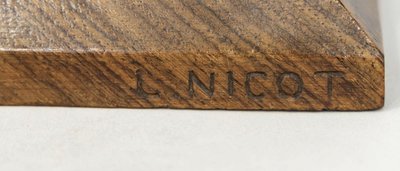
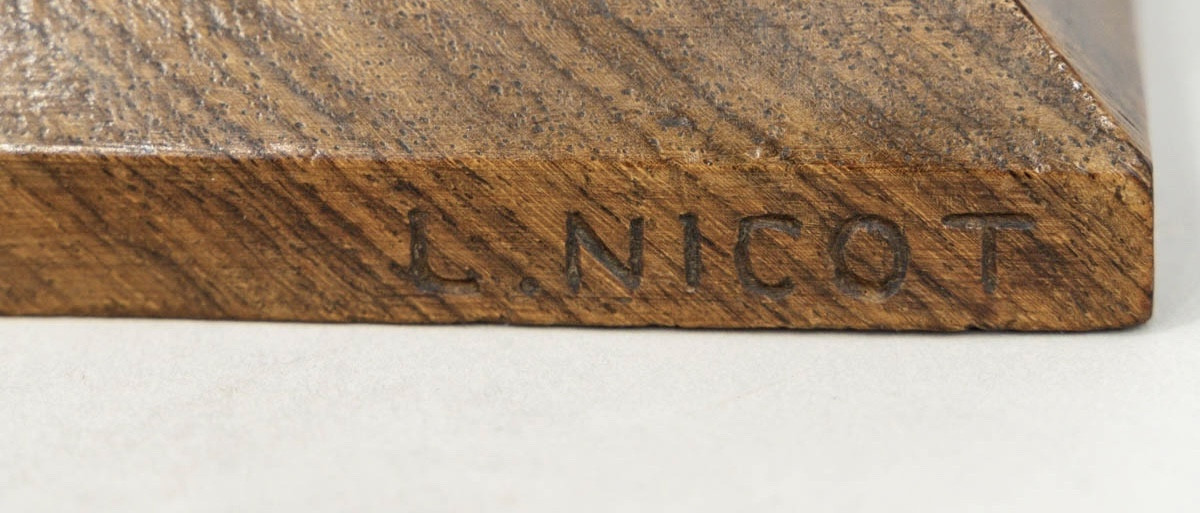
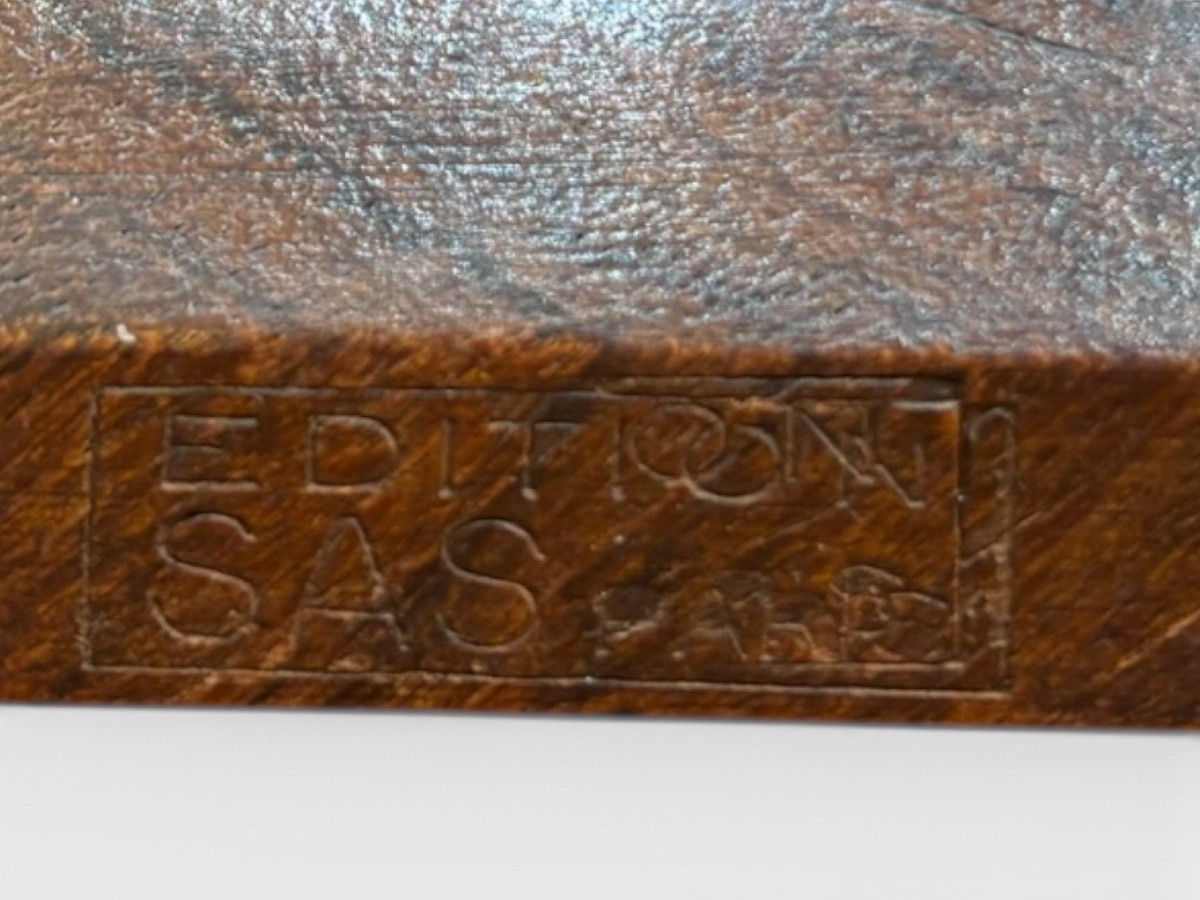
The sculptor's signature, "L. NICOT," is incised, and the publisher's stamp, "EDITION SAS Paris" (Société des Artistes de Salon), is on the edge of the base.
This bulldog was created in the 20th century, during the Art Deco period, circa 1930, at a time when Louis-Henri Nicot was already a recognized artist exhibiting at the Paris Salon.
Édition SAS Paris (Société des Artistes de Salon) was founded by the artists (sculptors) themselves who exhibited at the Salon des Artistes and published their works in limited editions.
In the late 1920s and early 1930s, these wooden sculptures were exhibited at the Salon and sometimes produced in small editions.
Artists such as Adnet, Sandoz, Privat, de Canto de Maya, the Martel brothers, Emile Just Bachelet, and of course Louis-Henri Nicot, were all part of Édition SAS Paris.
Today, these wooden sculptures, generally in mahogany or rosewood, are highly sought after by collectors.
The quality of the sculpture is very high, and the editions are very small, making the works quite rare.
They are often included in museum collections.
Louis-Henri Nicot (1878-1944)
Louis-Henri Nicot, a renowned French sculptor, was born in Rennes on February 12, 1878, and died in Paris on July 12, 1944.
He began his artistic training at the École des Beaux-Arts in Rennes under Coquelin, Lenoir, and Ronsin, before entering the École des Beaux-Arts in Paris in 1899.
He trained in the studios of Alexandre Falguière and then Antonin Mercié. These formative years led him to remain, throughout his career, deeply committed to academic and classical forms, while also incorporating a certain modernity.
He completed his studies in 1909.
He will hold the position of professor at the Olivier-de-Serres School of Applied Arts in Paris.
Very quickly, Breton themes appear in his work.
After the First World War, Louis-Henri Nicot became one of the leading Breton sculptors.
He created numerous ceramics with Breton themes, including "The Three Gossips," "Leonardo with the Calf," "The Chicken Vendor," and "The Sailor's Vow" (circa 1930), produced by the pottery maker Henriot of Quimper.
He also sculpted busts of Admiral Émile Guépratte and Charles Le Goffic, as well as numerous monuments to soldiers who died for France.
Several of his works are held at the Musée Départemental Breton in Quimper.
Regular exhibitions, numerous busts, stelae, and commemorative works, a continuous presence at the Salon des Artistes Français, which earned him a gold medal in 1933, and the official recognition of his title as a Knight of the Legion of Honor the same year—all these factors contributed to making Louis-Henri Nicot a highly regarded and universally acclaimed artist.
Analyzing the work of Louis-Henri Nicot, the art critic Gallus wrote in February 1933:
"Through tireless work, he has mastered all the secrets of his craft, taming his materials, whether marble, bronze, granite, wood, or earthenware, admirably adapting them to the subject matter."
It was between 1920 and 1935 that his talent truly blossomed, and he achieved his greatest successes and awards.
In 1925, at the Exposition des Arts Décoratifs, he was chosen by Emmanuel de Thubert, director of the magazine "La Douce France," to create, along with other artists, a grand and aesthetically pleasing composition on the Esplanade des Invalides, "La Pergola de la Douce France."
Among the sculptors who agreed to join forces to realize their mentor's generous vision and embody the characteristics of French genius were: Costa, Hilbert, Lamourdedieu, Manès, Martel, Nicot, Pompon, and Ossip Zadkine.
The artist died in 1944, while preparing the publication of new works.
The city of Rennes has named a street "Louis-Henri Nicot".
Ref: 12UYIN3LW5

 English
 Français
  Italiano
  Deutsch
  Solid Mahogany And Inlaid Art Deco Tray
390 € EUR
Solid Mahogany And Inlaid Art Deco Tray
390 € EUR