

Would you like more images?


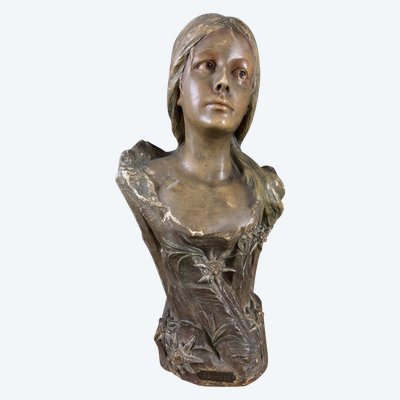
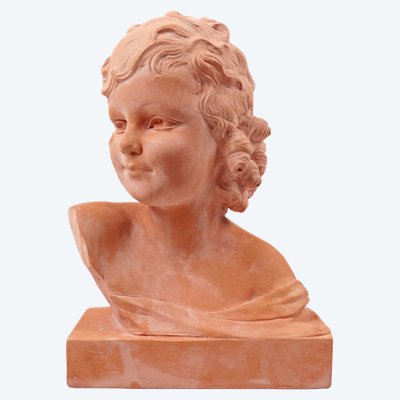
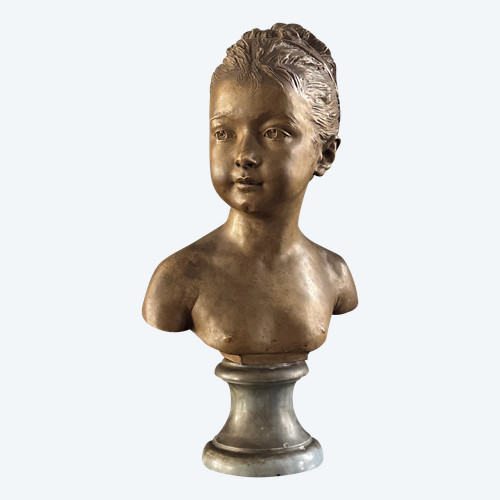
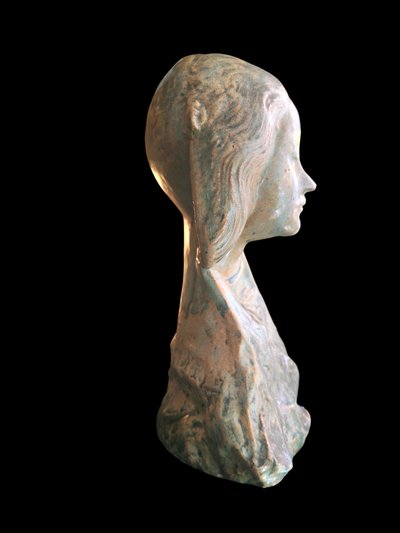
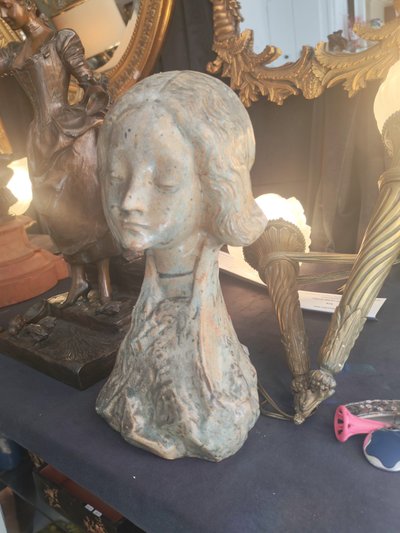
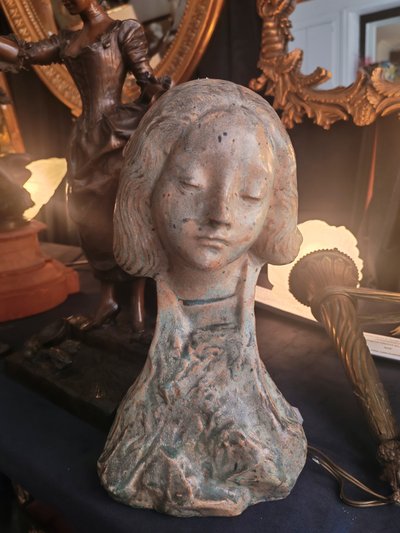
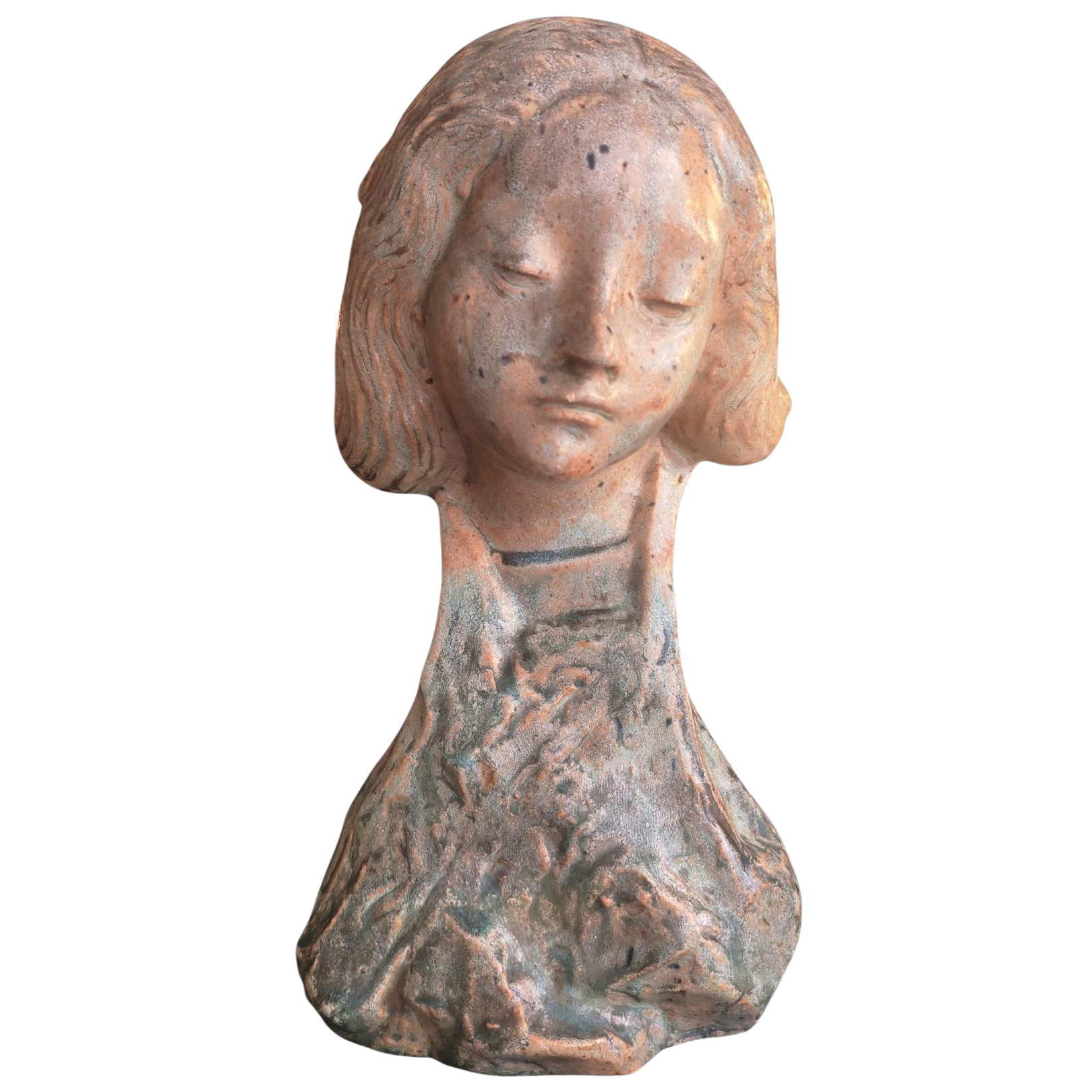
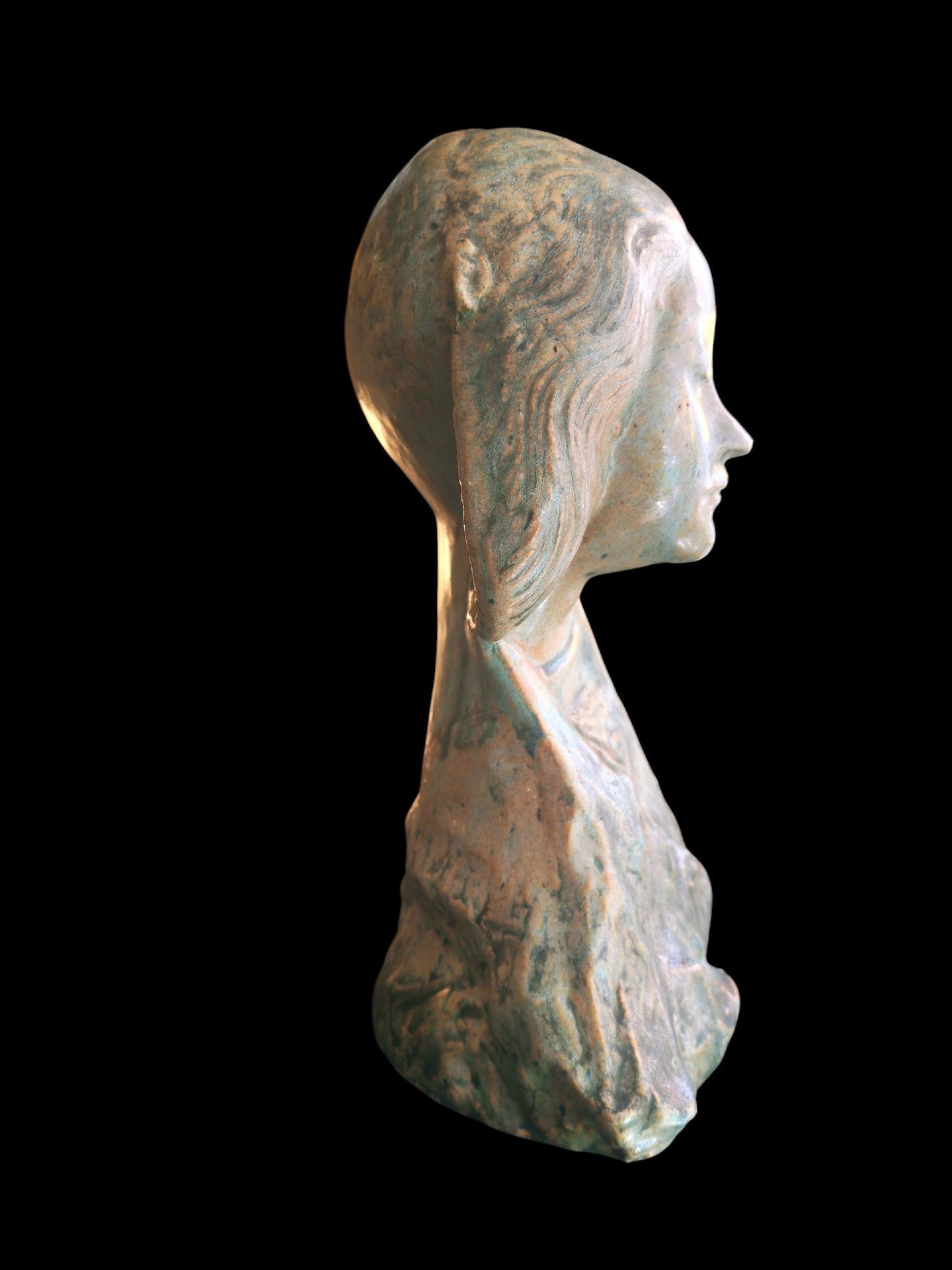
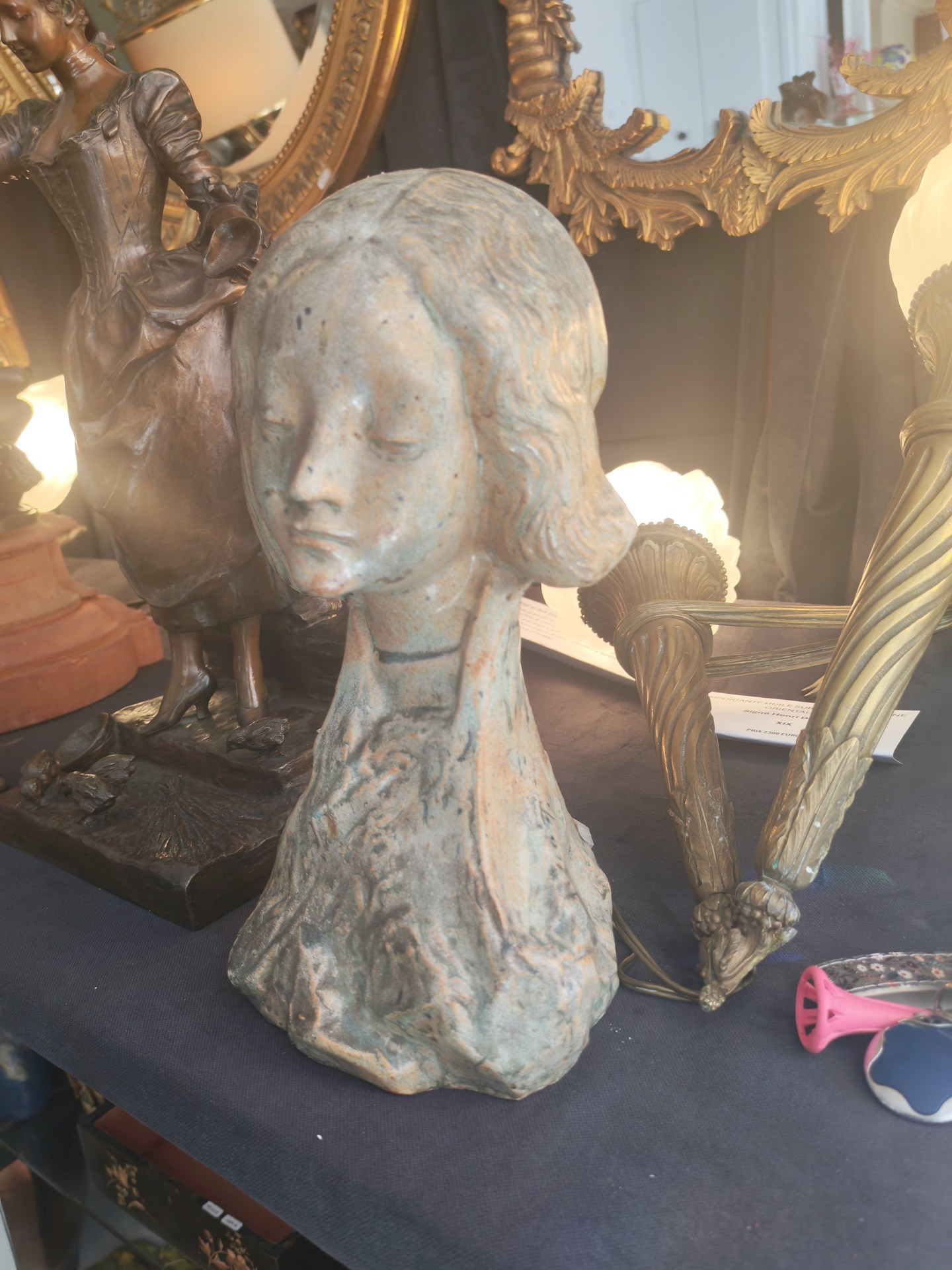
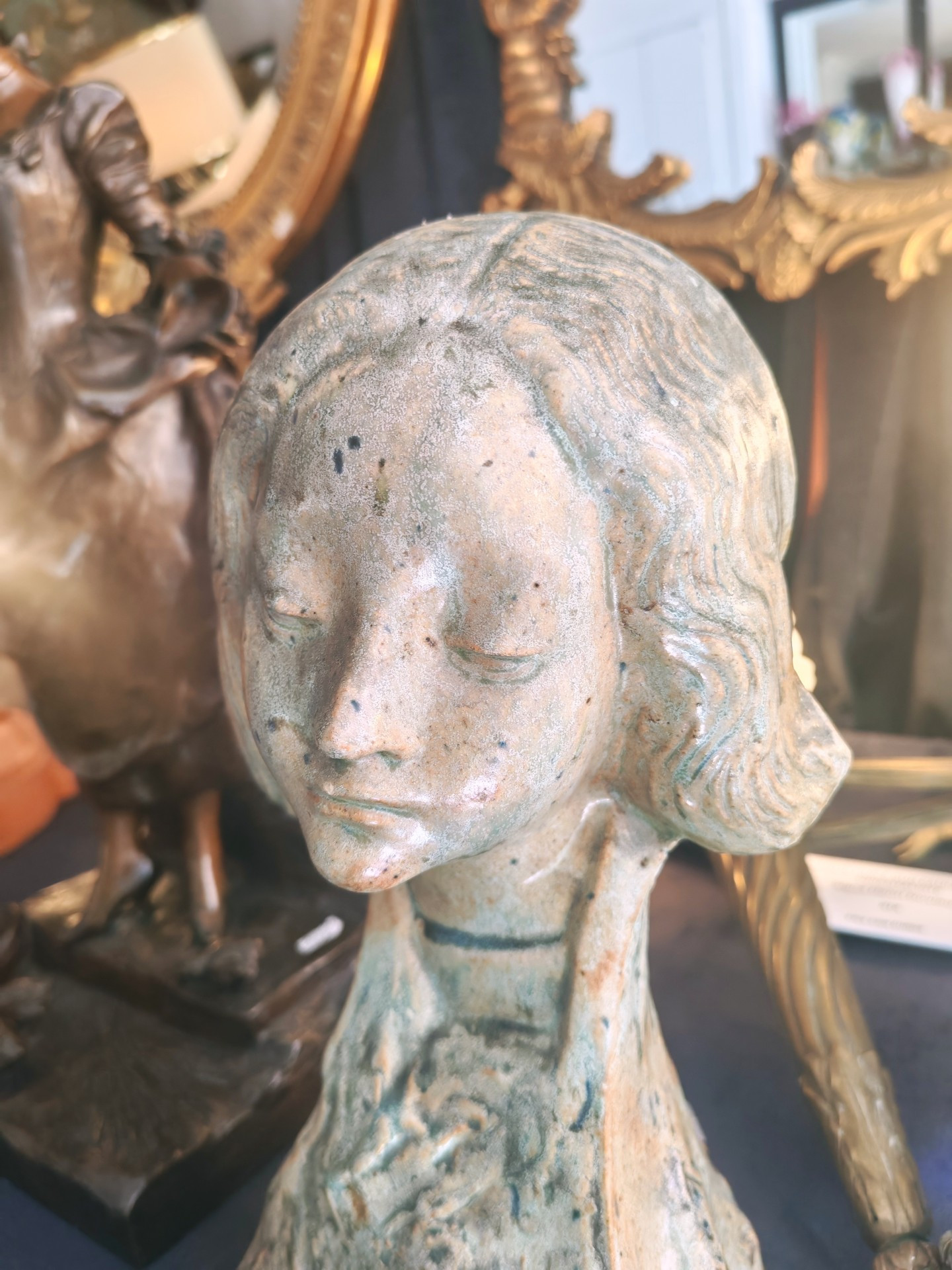
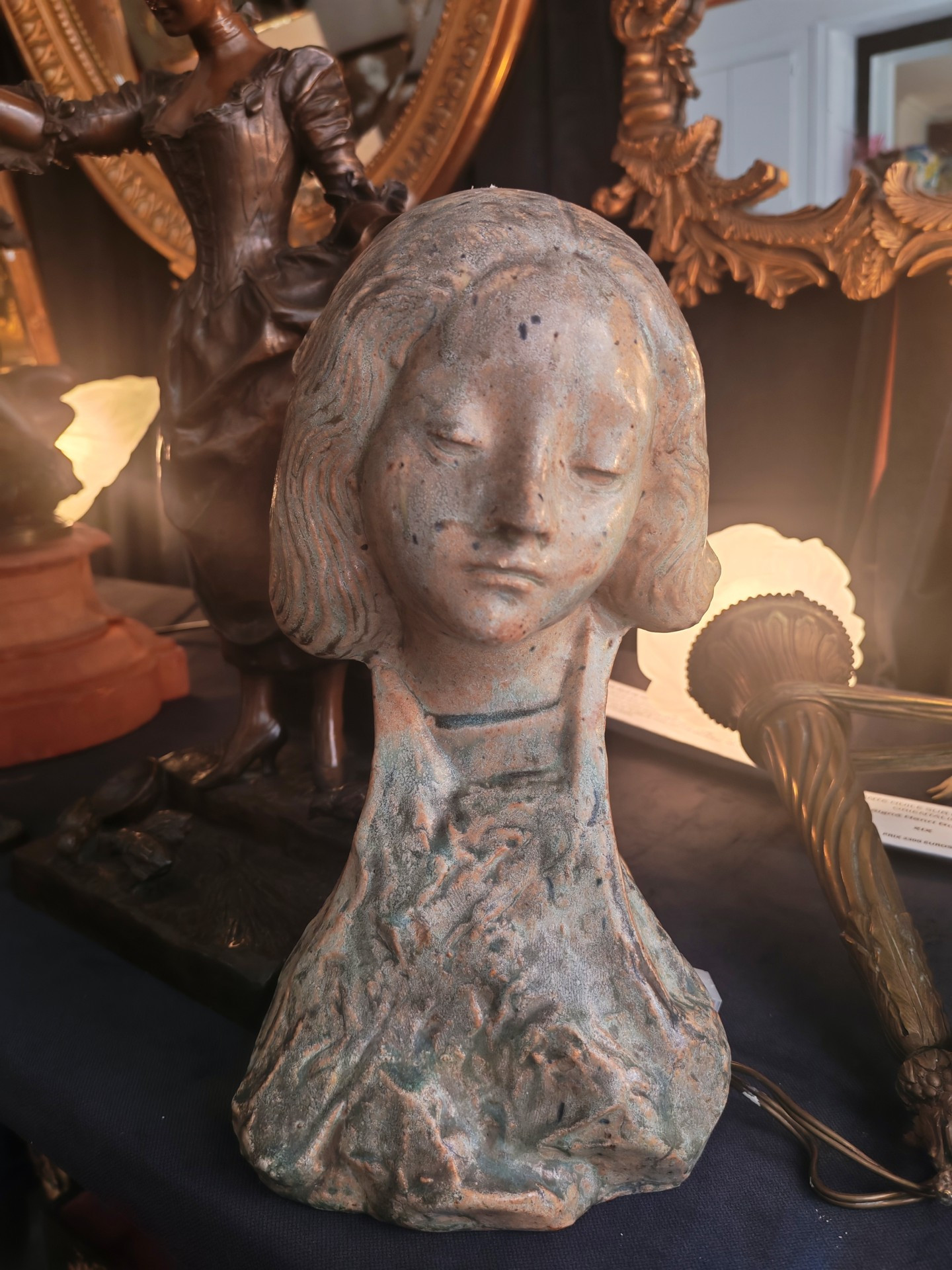
A beautiful and unusual piece: a bust of Saint Fortunade by Alexandre Bigot (1862-1927) in glazed stoneware, circa 1900, Art Nouveau.
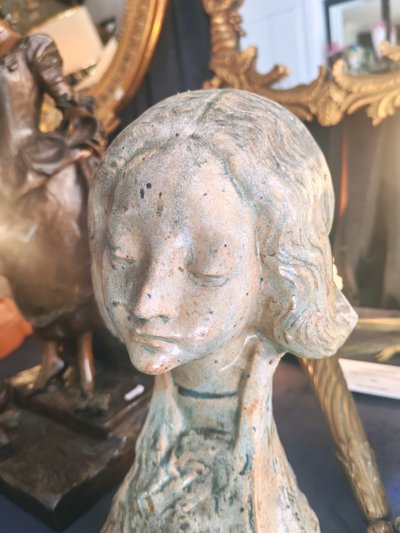
Bust of a young woman with closed eyes, known as Saint Fortunade, after the famous 15th-century tin-plated bronze reliquary head housed in the church of Sainte-Fortunade (Corrèze, France).
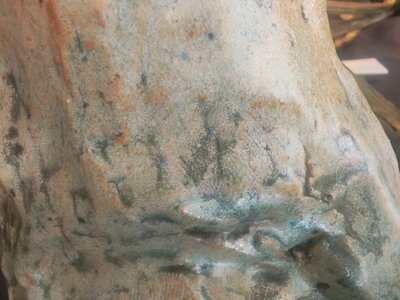
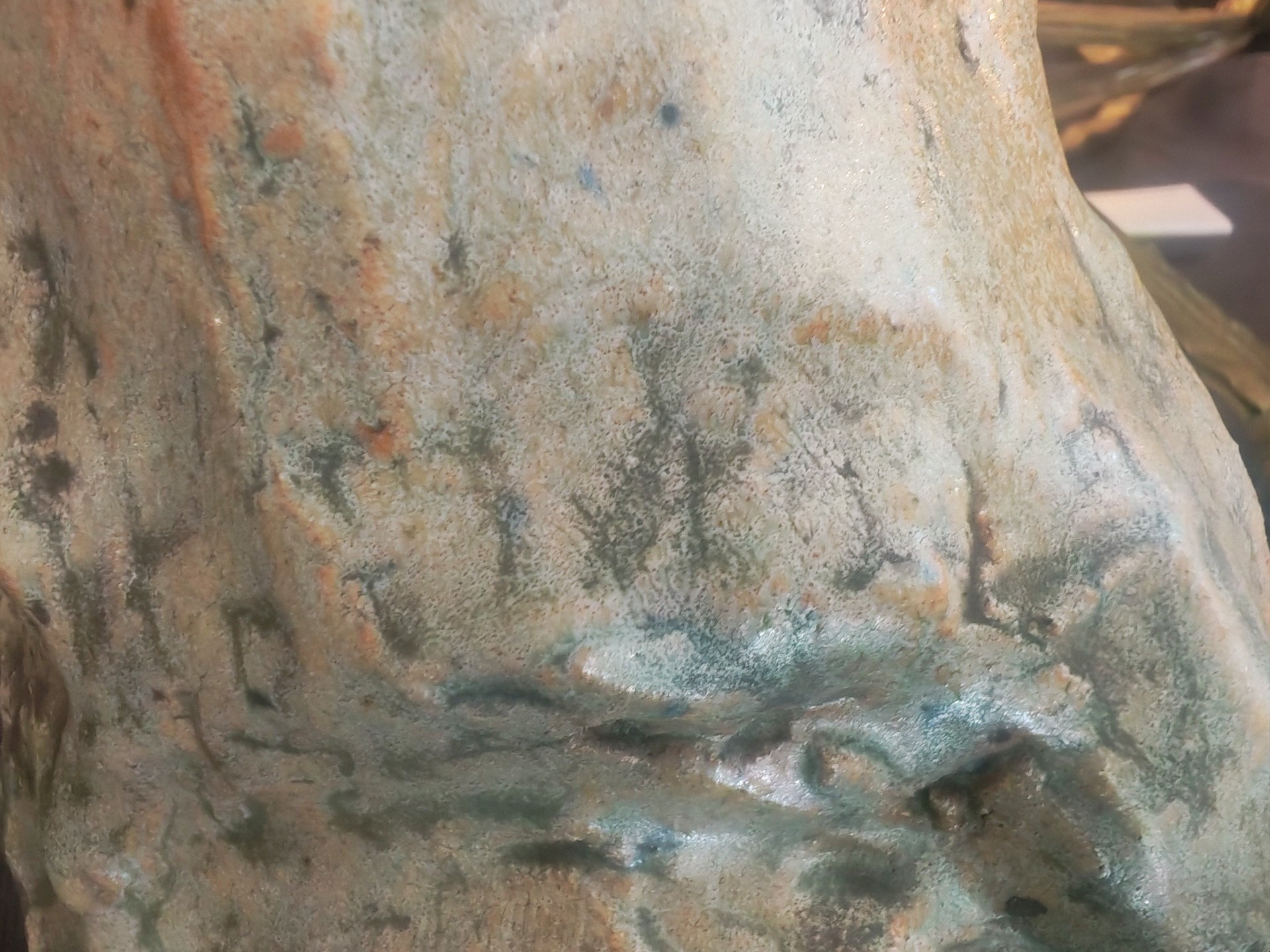
This is a glazed stoneware edition by the renowned ceramist Alexandre Bigot, a chemist and major figure in Art Nouveau architectural ceramics in Paris (a collaborator of Hector Guimard on the Paris Métro). The matte glaze is nuanced in shades of pinkish beige, blue, and sea green, with the characteristic flamed and speckled appearance of Bigot's work. The modeling is gentle and contemplative, with wavy hair, and the base features a bas-relief vegetal decoration. The stamp, "Grès de A. Bigot," is partially visible within the decoration.
History
Saint Fortunade was a local saint from Corrèze, a young martyr of the 3rd century, around 259. Persecuted, she died in Agen. Her brother wanted to bring her ashes back to Burgundy, placing them in his satchel. On the way, he stopped near a spring called Saint Martial-le-Noir. In the morning, it was impossible to lift the bag, which was too heavy. The locals saw this as a sign of Providence. The relics remained there. A chapel was then built, followed by the parish church. In the 15th century, a magnificent reliquary bust in tinned bronze was created to house the relics. It was from this bust that Bigot copied and reinterpreted Saint Fortunade around 1900. Almaric Walter also created a version in pâte de verre.
Ref: QLB1YON1UO
| Condition | Good |
| Style | Other style (Terracotta sculpture of Other style Style) |
| Period | 19th century (Terracotta sculpture 19th century) |
| Country of origin | France |
| Height (cm) | 30 |
| Shipping Time | Ready to ship in 8-15 Business Days |
| Location | 72130, FRESNAY SUR SARTHE, France |
4 commitments to buy with confidence

 English
 Français
 Italiano
 Deutsch