

Would you like more images?

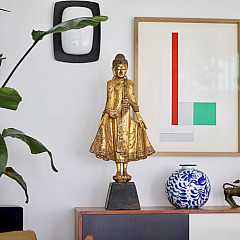
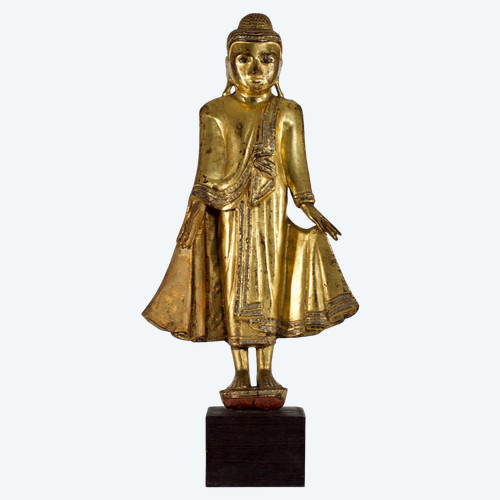
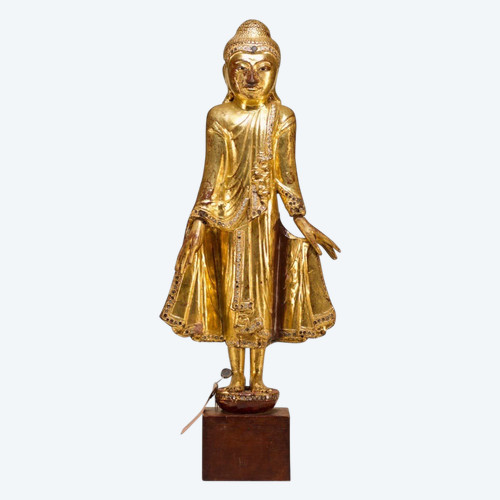
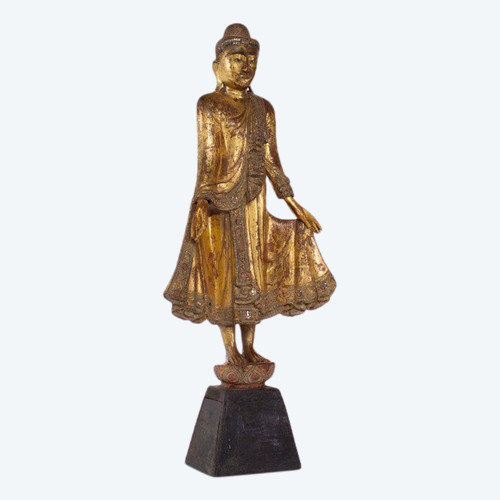
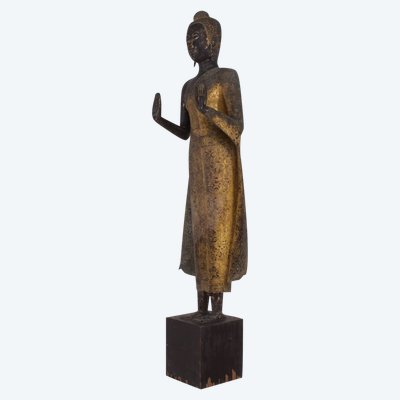
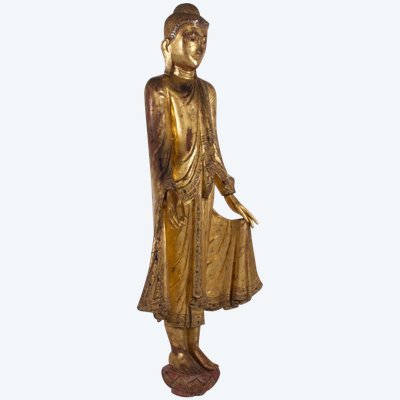
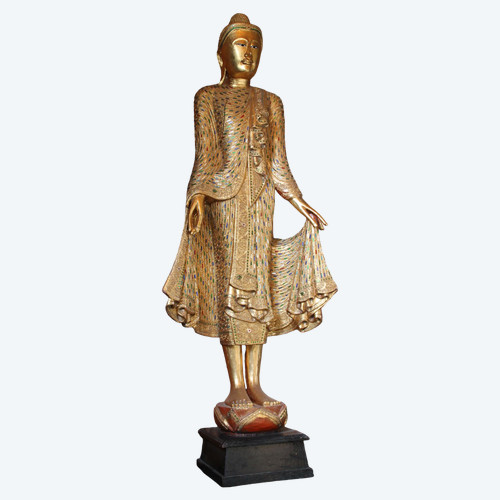
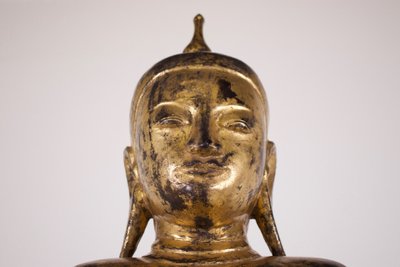
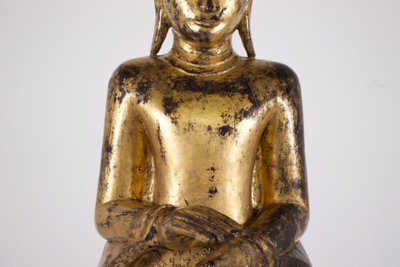
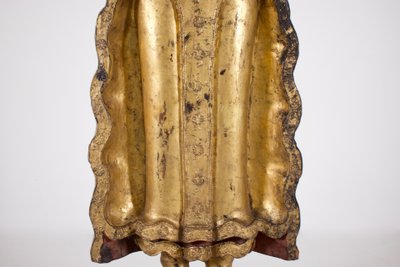
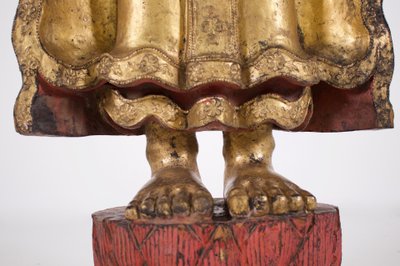
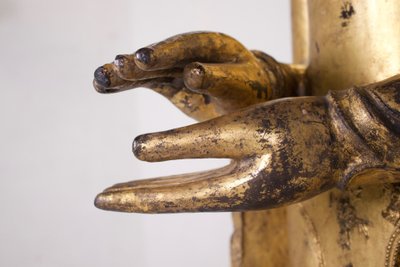
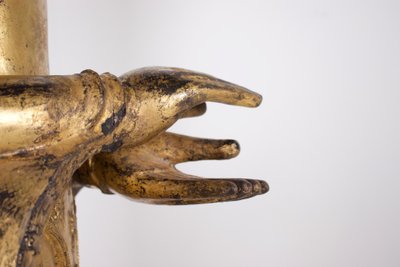
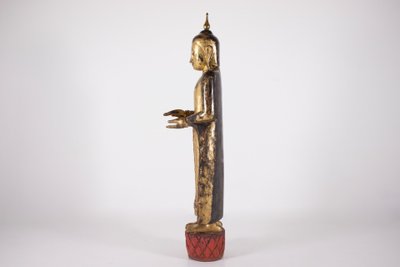
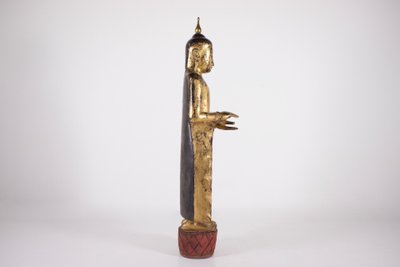
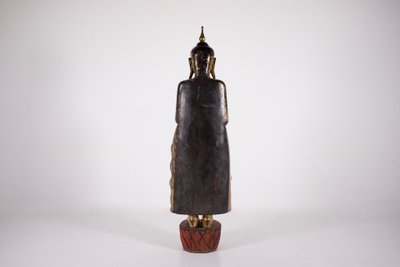
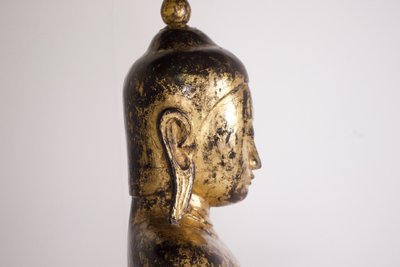
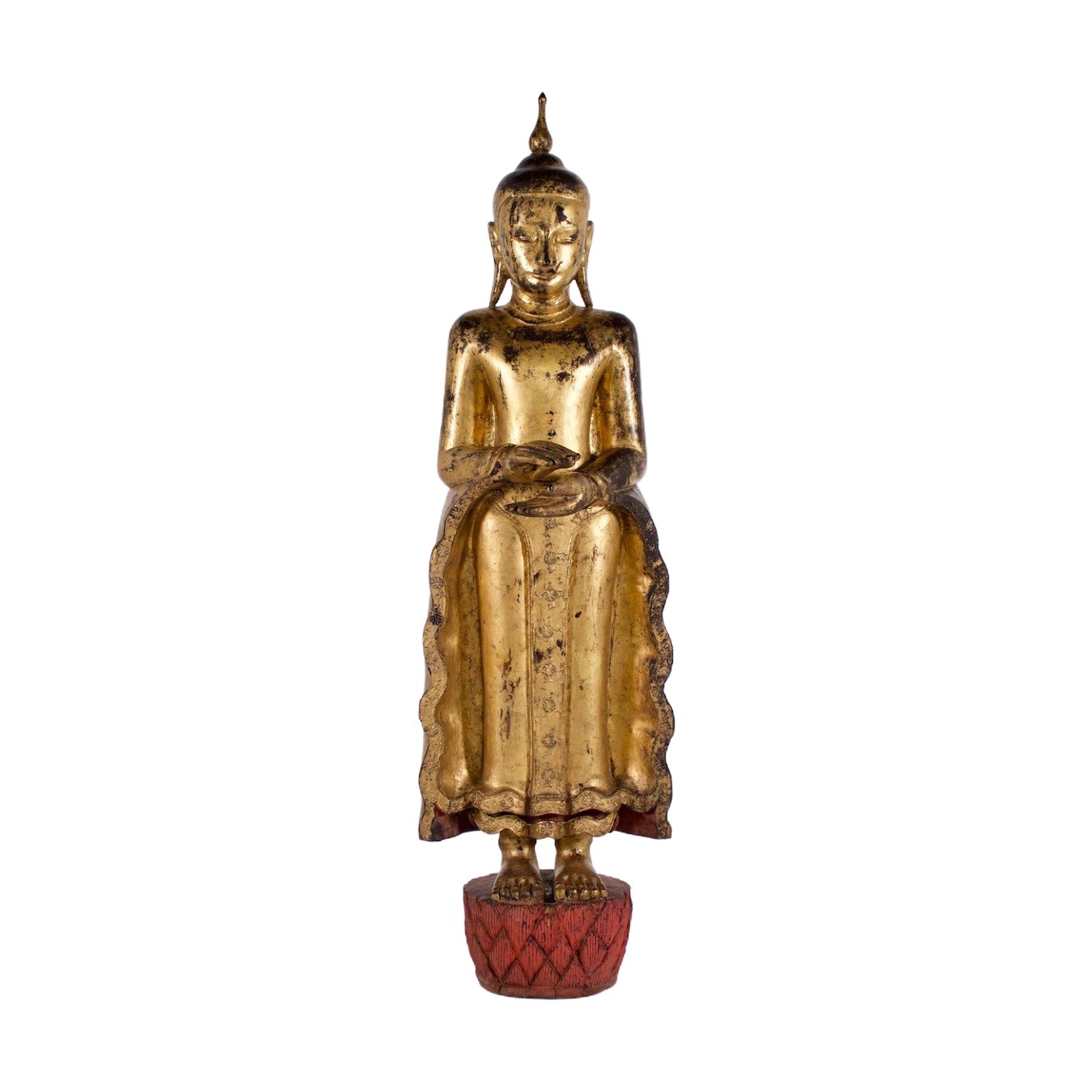
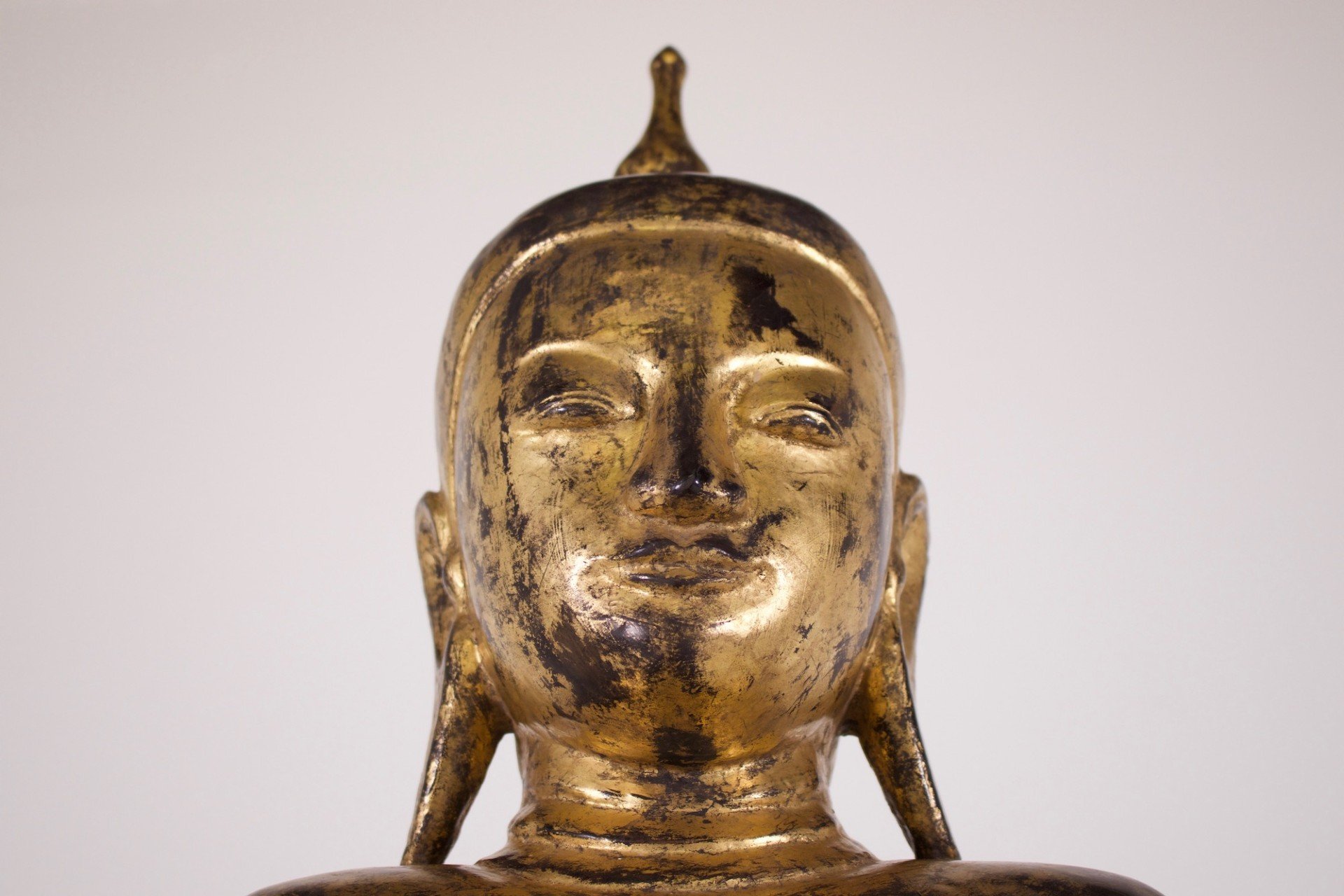
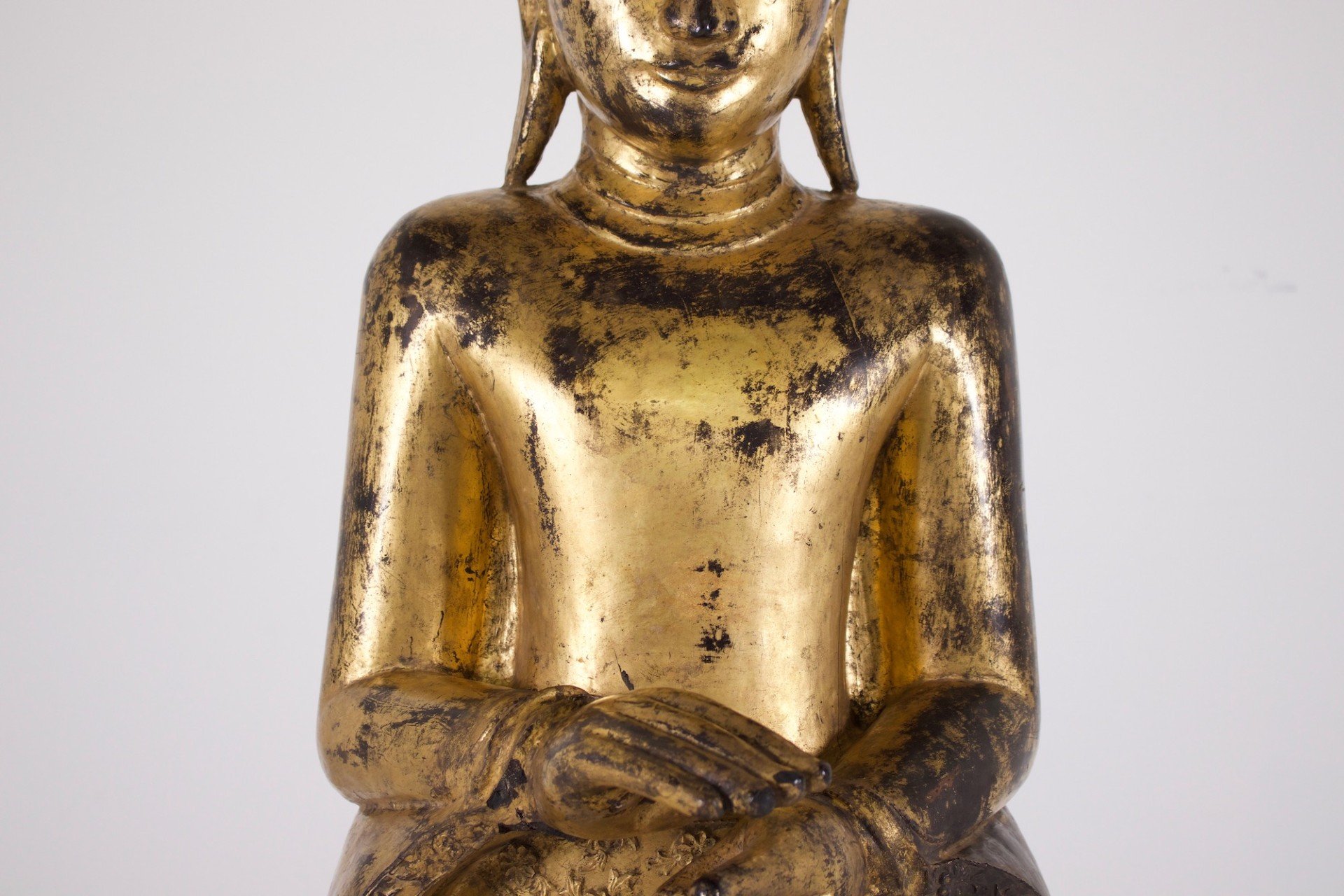
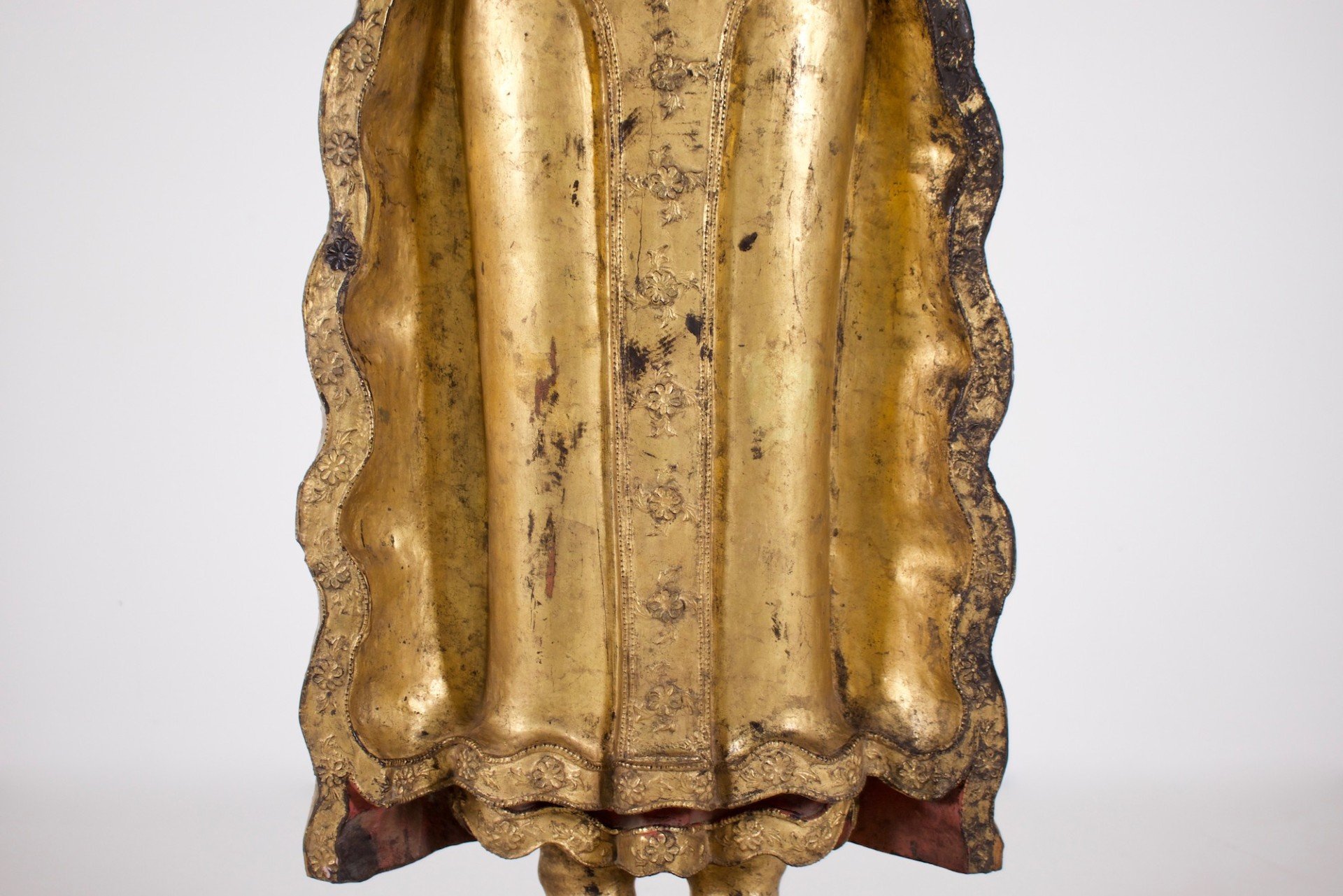
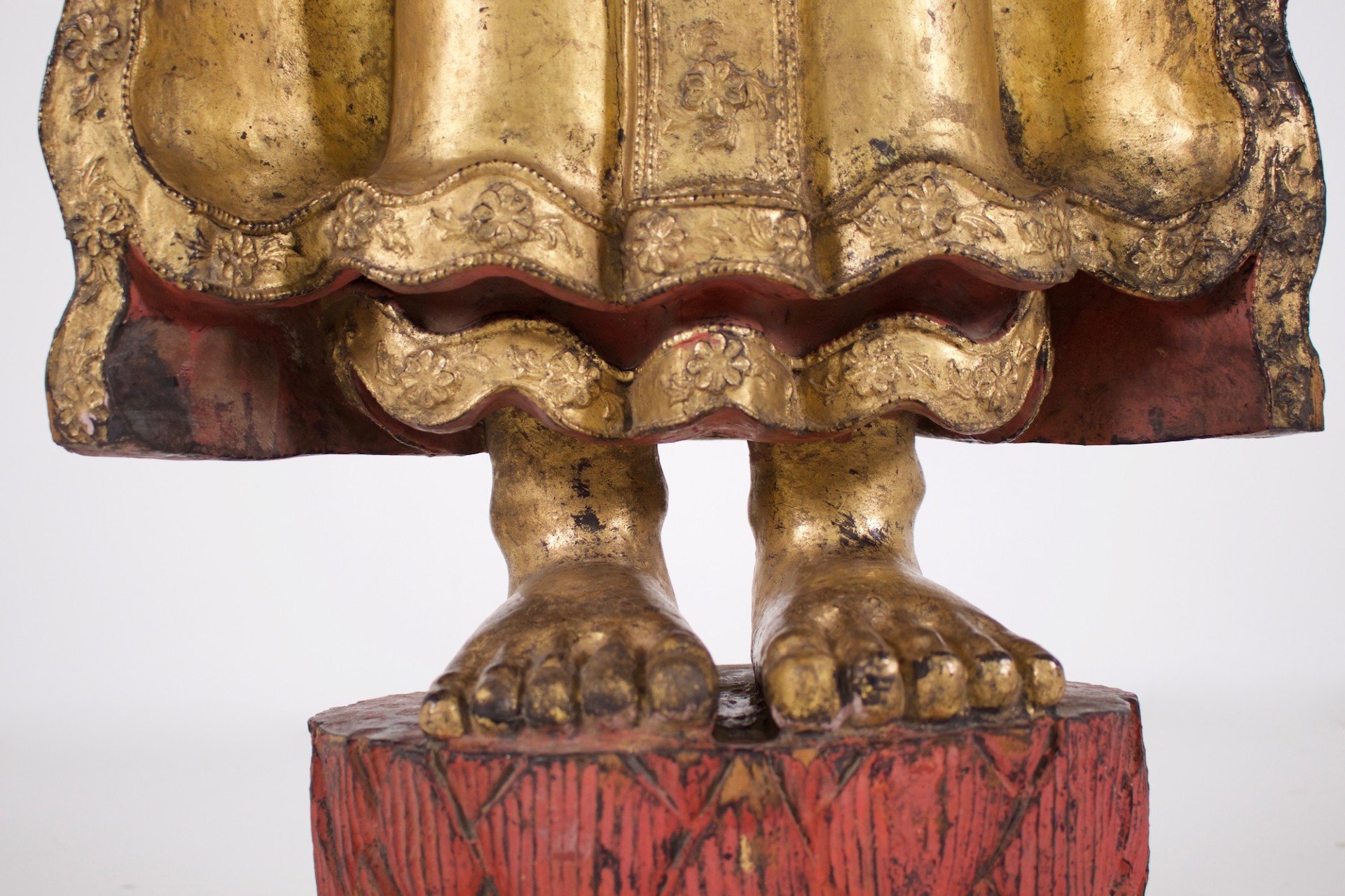
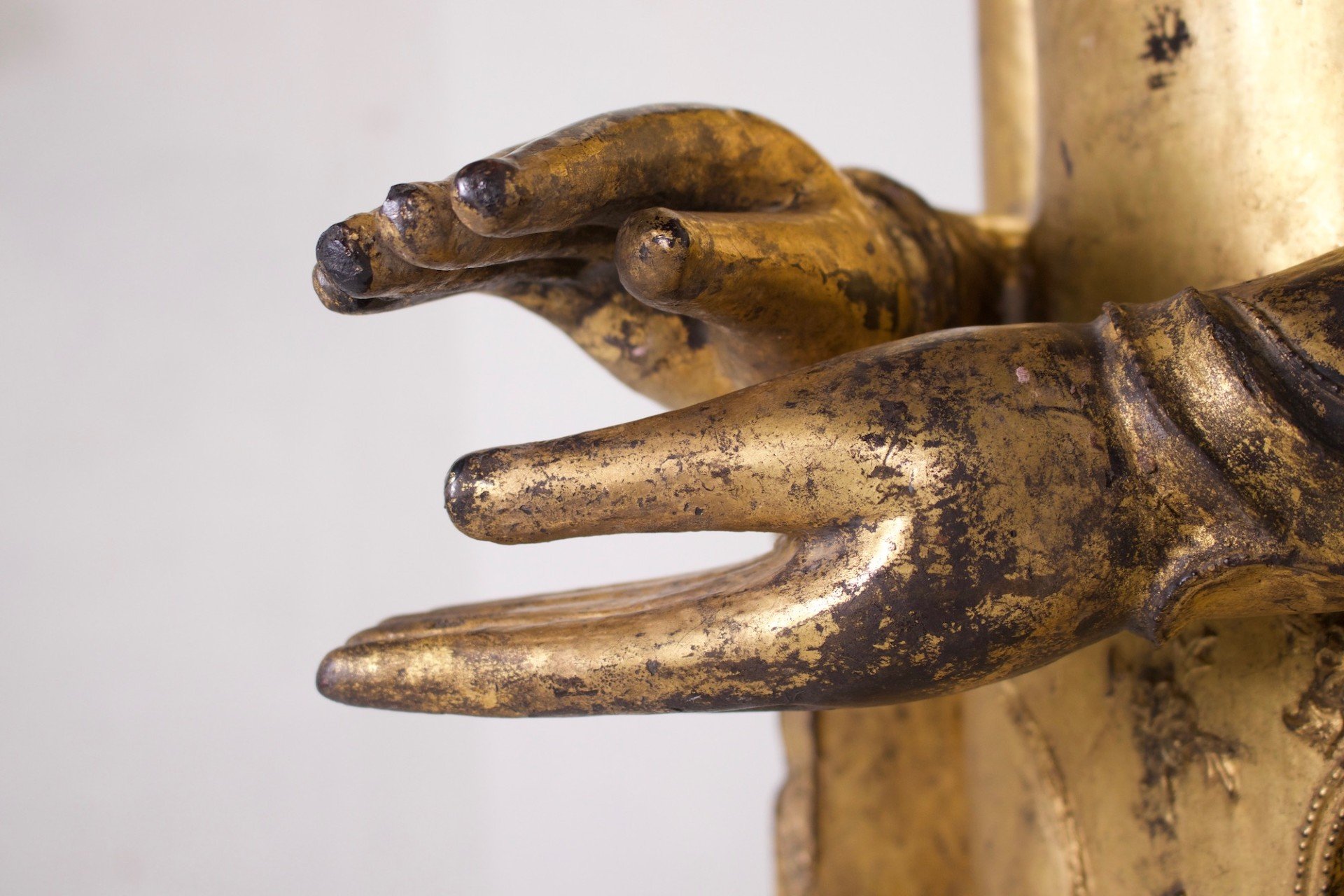
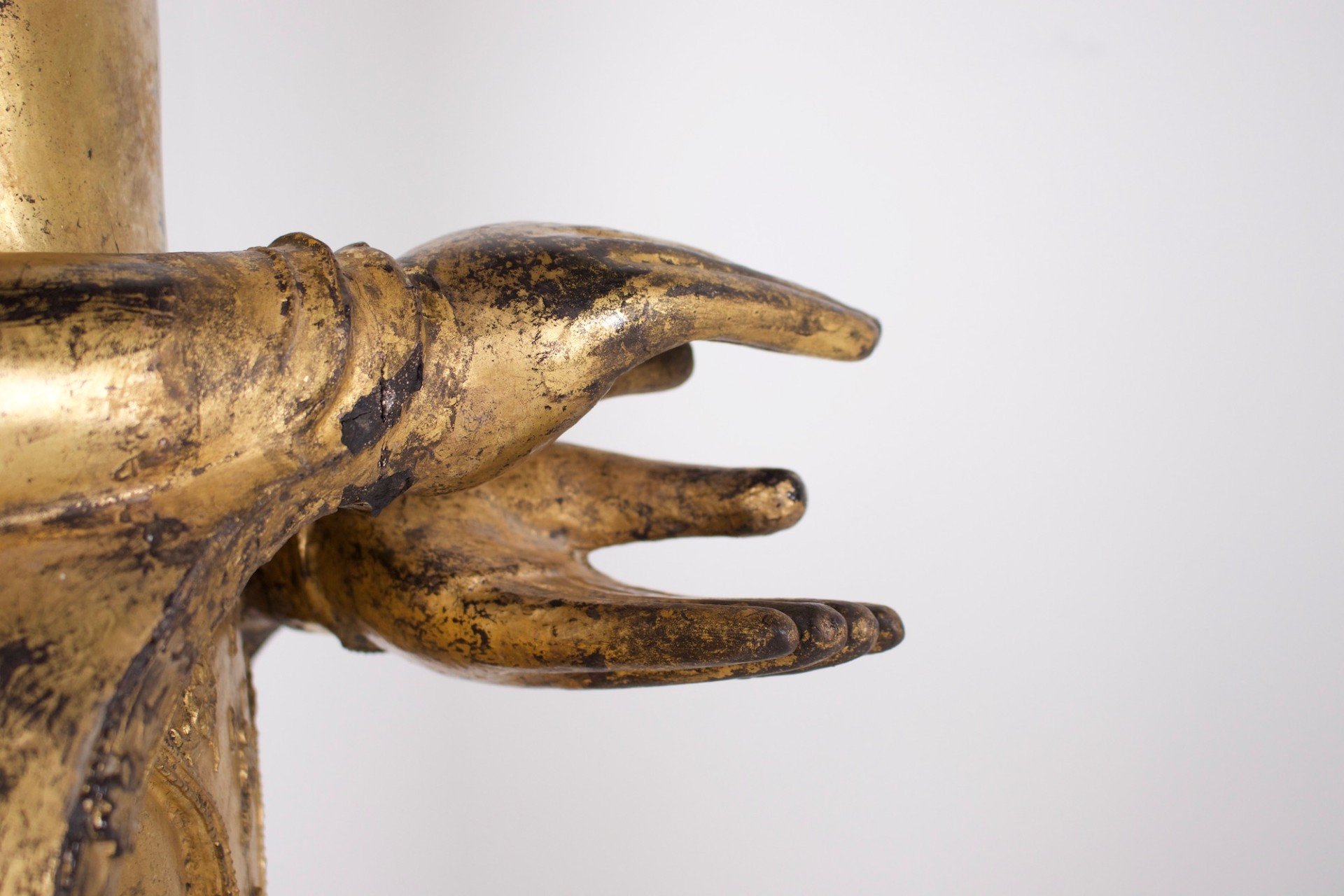
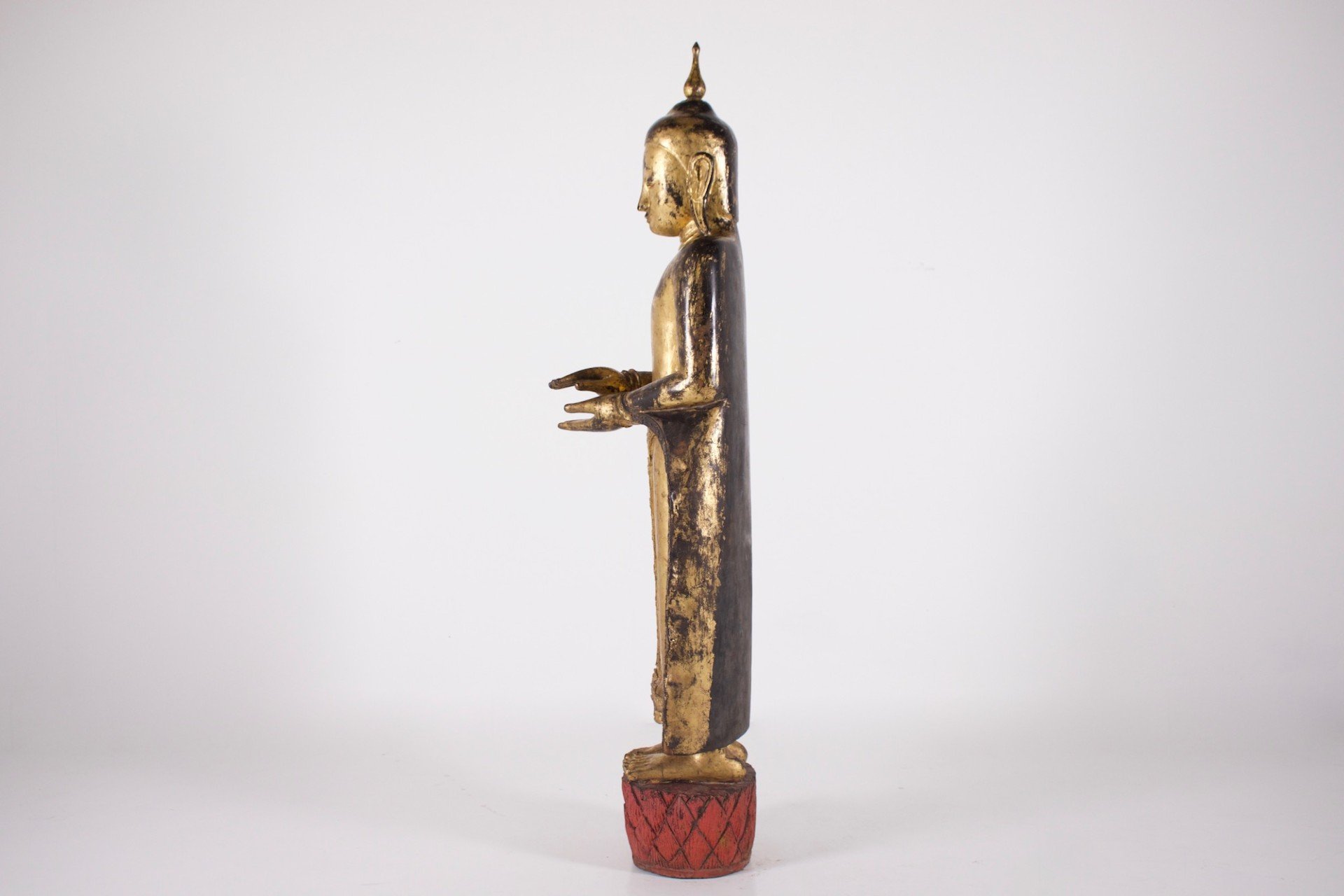
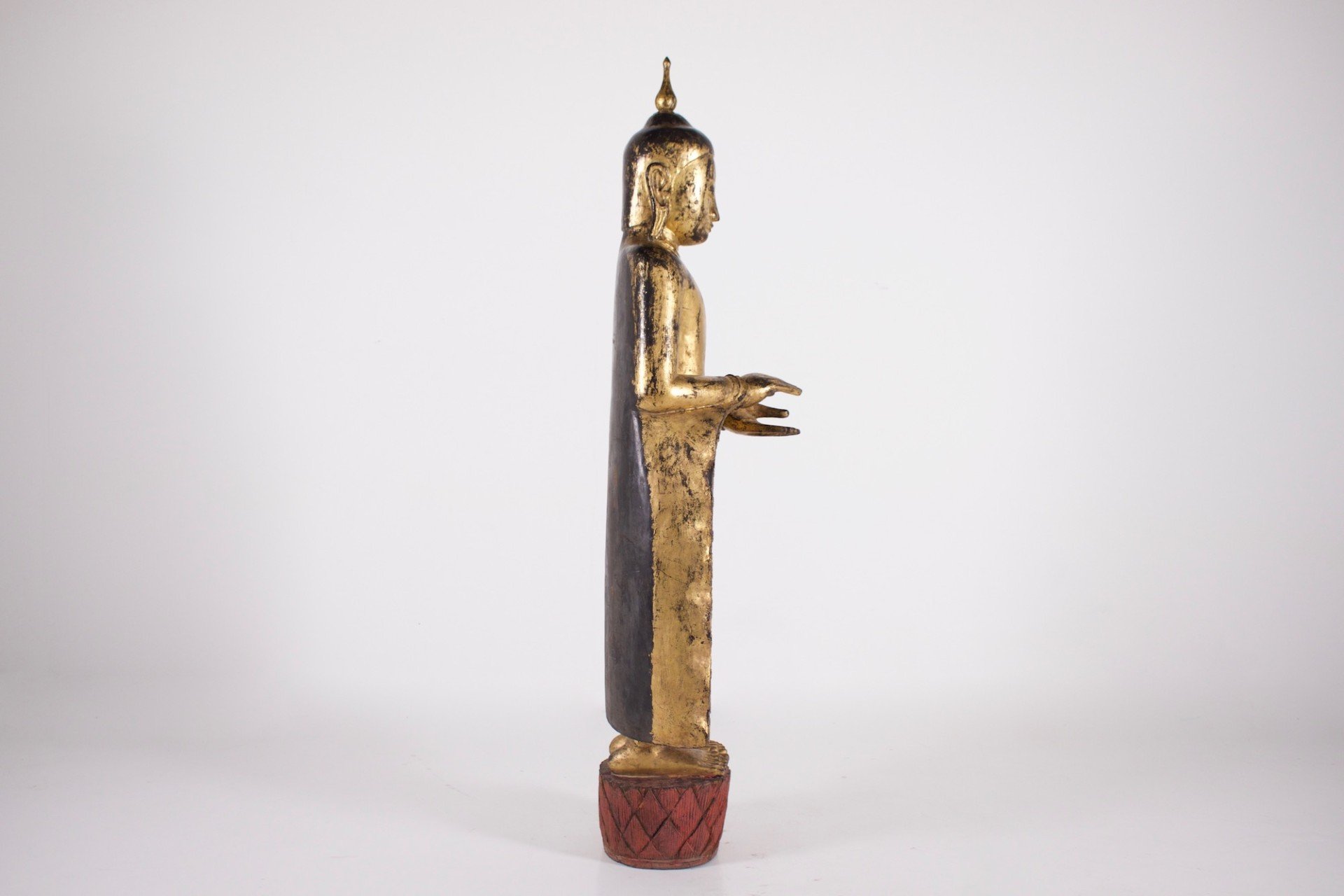
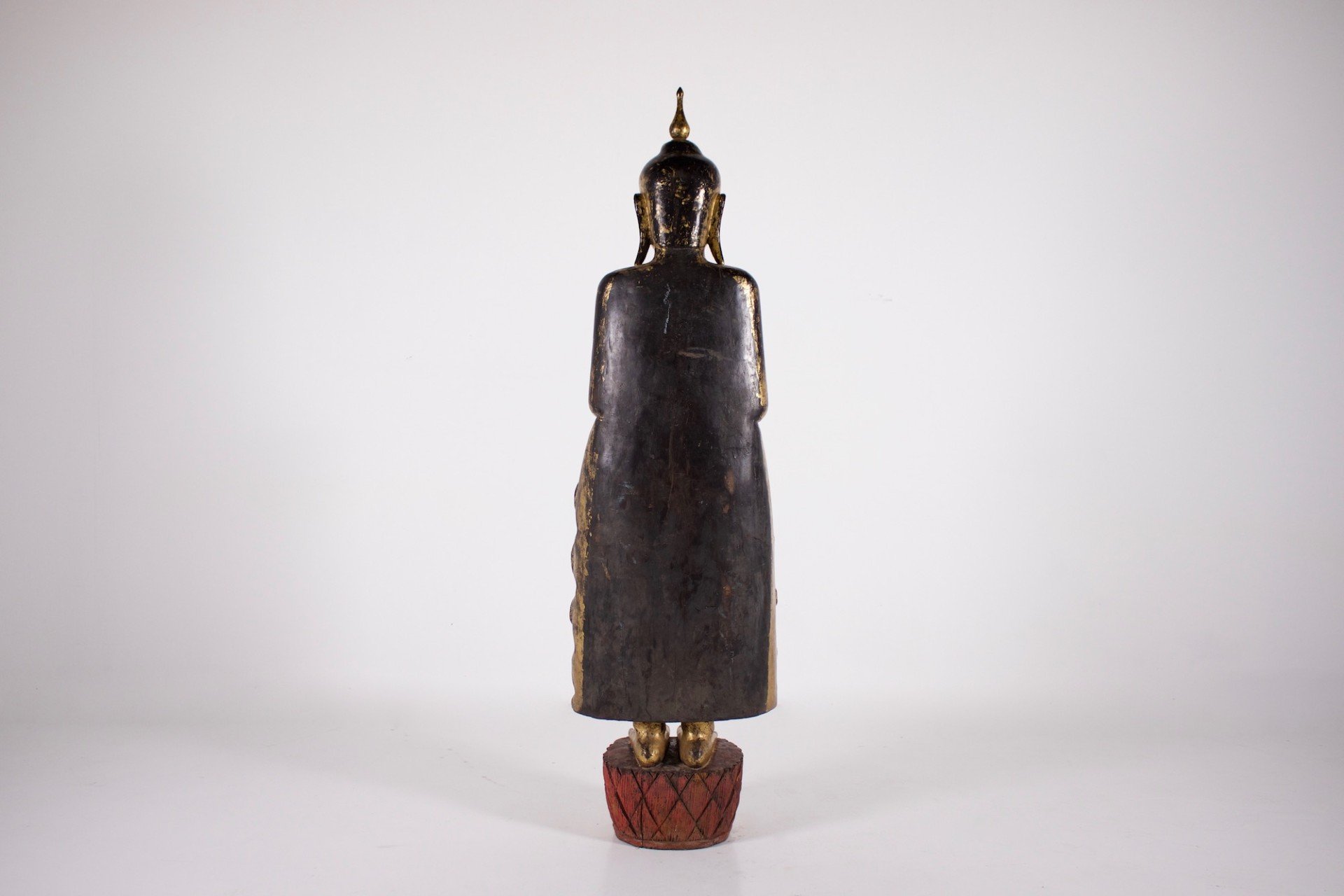
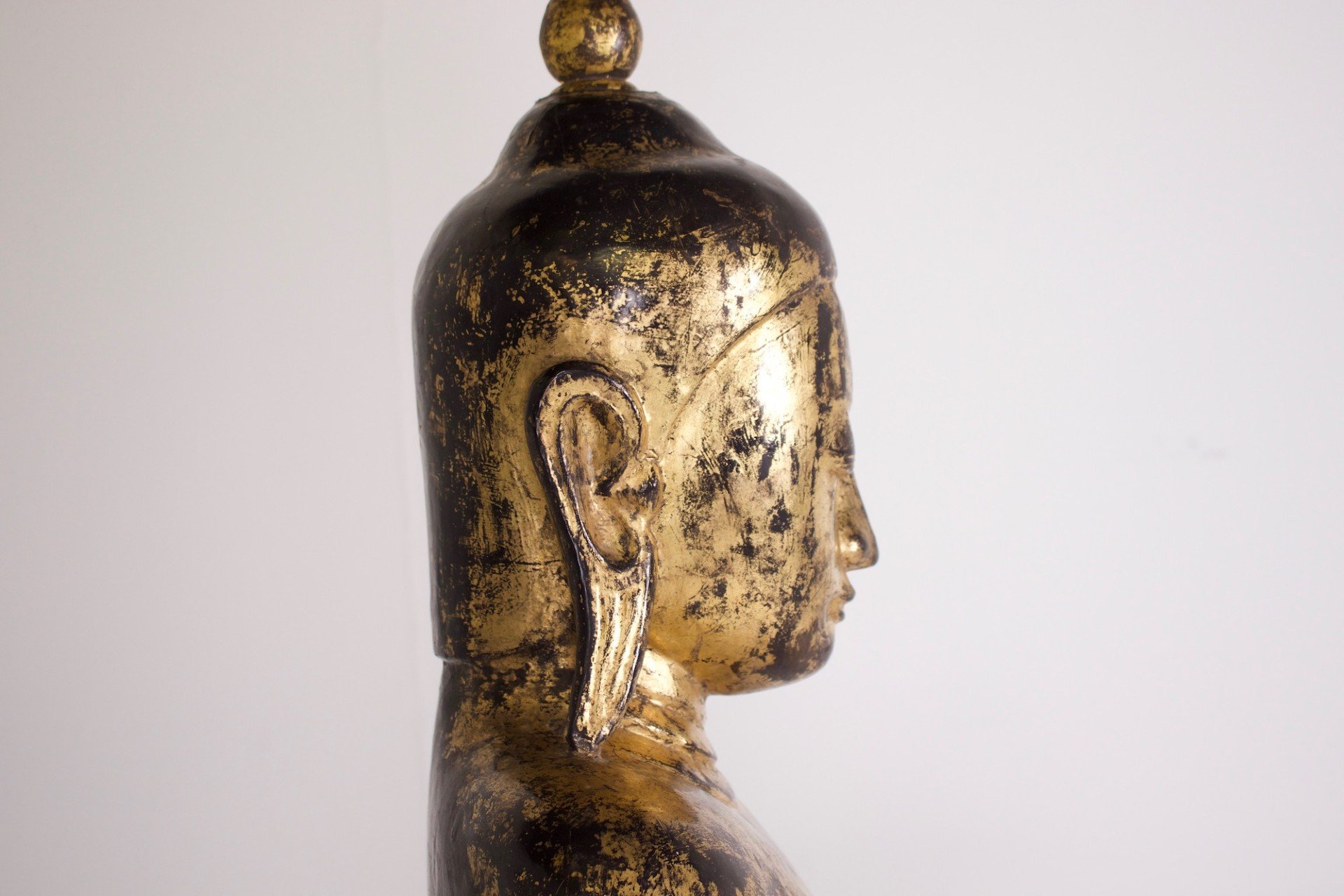
Imposing Burmese image of the Buddha in lacquered and gilded wood, represented on his pedestal adorned with stylized lotus petals. His pātra-mudrā hands, a gesture of acceptance of the offering, once held his alms bowl in which the faithful placed their offerings.
Mandalay period, 19th century.
Provenance: Claude de Marteau Collection
Sold with certificate of provenance.
H 163 cm x W 45 cm x D 26 cm
Weight: approx. 44kg
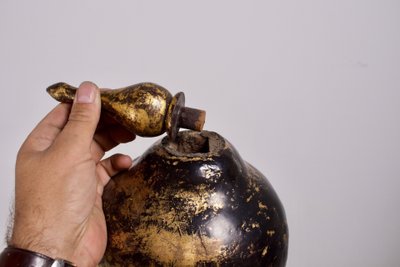
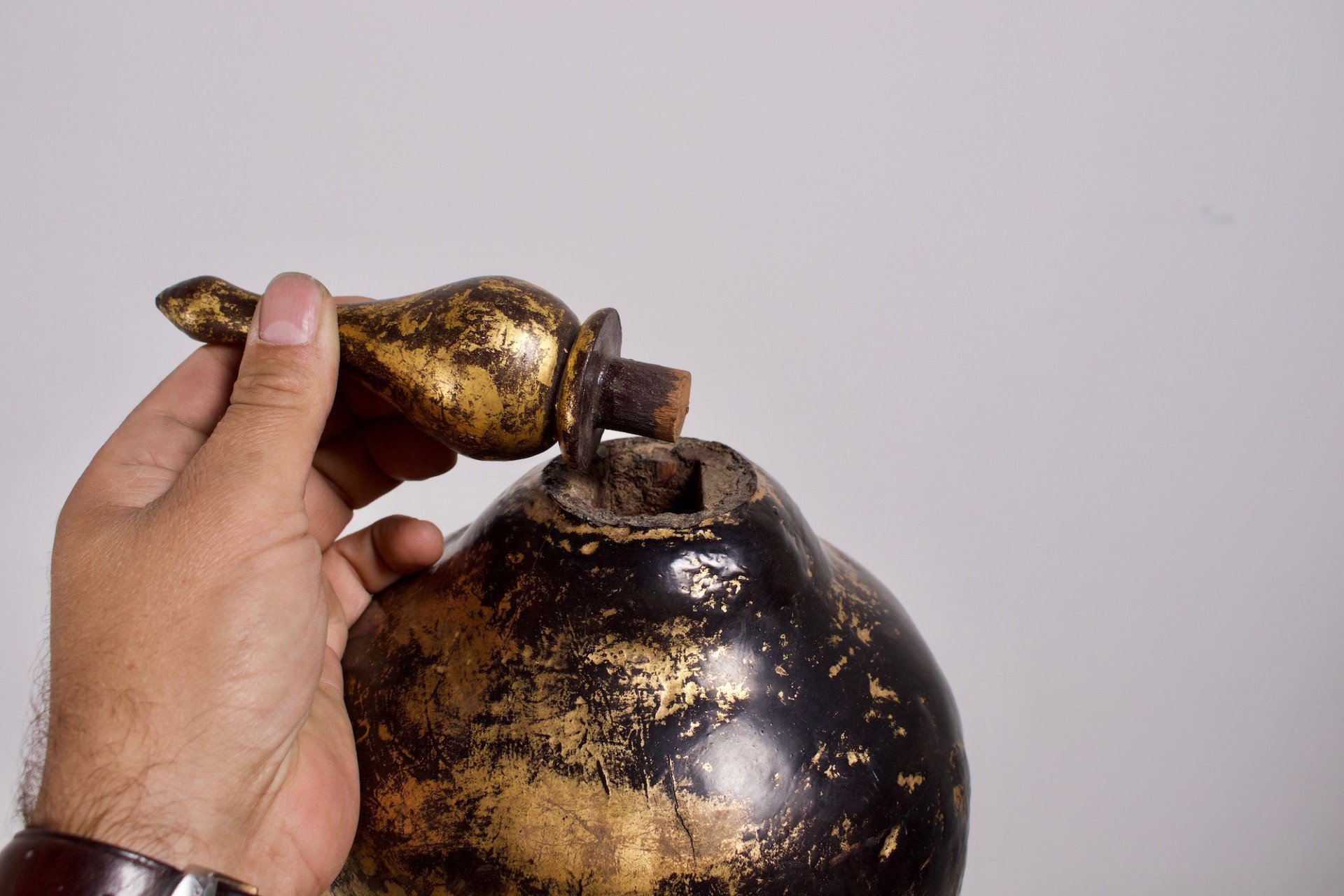
The flame is probably not original, although it was found attached to the statue in Claude de Marteau's home.
Buddhist art is distinguished by its abundant symbolism, rich history and numerous regional variations, each bearing the cultural and spiritual imprint of its place of origin. Among these emblematic expressions is the statue of Buddha with his alms bowl. These sacred images reflect the Theravada Buddhist tradition (Teaching of the Elders), which emphasizes the preservation of the original teachings of the historical Buddha and monastic life (as in the Pali canon) as the path to enlightenment. This posture symbolizes commitment to a life of humility, discipline and devotion.
Originating in Mandalay, Burma's last royal capital, this sculpture goes beyond mere aesthetics: it embodies the fundamental values of Buddhism and testifies to the profound respect accorded to monastic life.
Founded in 1857 by King Mindon, Mandalay quickly became a major center of Buddhist culture and spirituality. This city, marked by a strong religious tradition, saw the development of a singular sculptural style, known as the Mandalay style (1853-1948). Developed under the Konbaung dynasty (1752-1885), it is characterized by finesse of execution, elegance of form and a particular spiritual intensity.
Dipankara is shown in the first position, standing on the right. Sumedha (the future Shakyamuni stands before him)
In a previous life, Gautama Buddha (Shakyamuni), then called Sumedha, was a wealthy Brahmin turned hermit. He knelt down and spread his long black hair on the ground so that Dipankara Buddha could cross a mud puddle without dirtying his feet. This encounter took place long before the awakening of Sumedha, who would later become Gautama Buddha (Shakyamuni).
Bibliography: "Burmese Buddhist Sculpture - The Johan Möger Collection", Otto Karow, White Lotus, p.152
See this large Burmese standing Buddha in Pātra-Mudrā(163 CM) in full screen mode on Vintage Addict
Ref: UWXDSC1HOU
| Condition | Very good |
| Style | Asian Arts (Wood carvings of Asian Arts Style) |
| Period | 19th century (Wood carvings 19th century) |
| Country of origin | Myanmar |
| Length (cm) | 45 |
| Height (cm) | 163 |
| Depth (cm) | 26 |
| Weight (Kg) | 44 |
| Materials | Gilded wood |
| Internal reference | 8032 |
| Shipping Time | Ready to ship in 4-7 Business Days |
| Location | 4020, LIÈGE, Belgium |
4 commitments to buy with confidence

 English
 Français
 Italiano
 Deutsch