




Would you like more images?


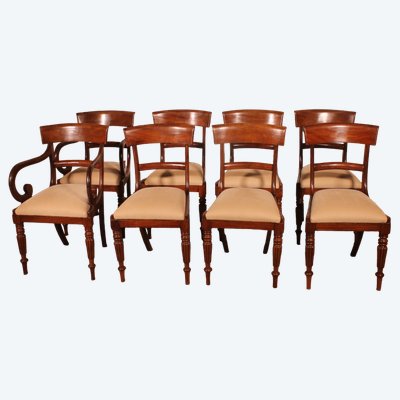
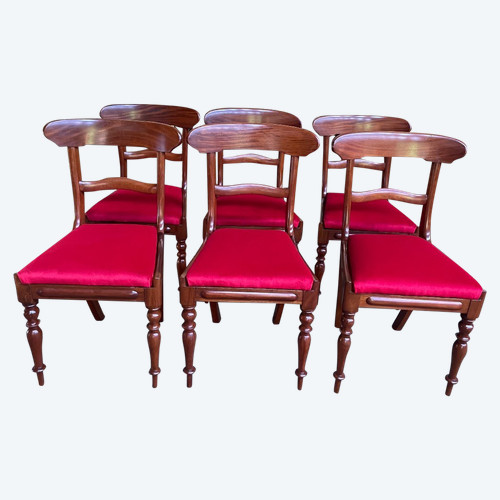
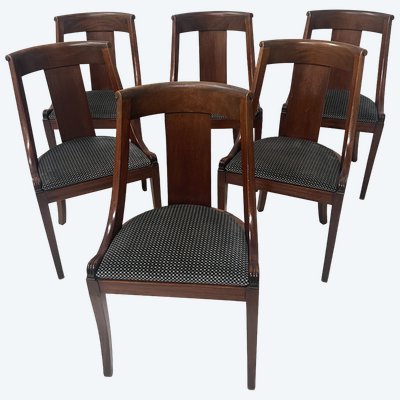
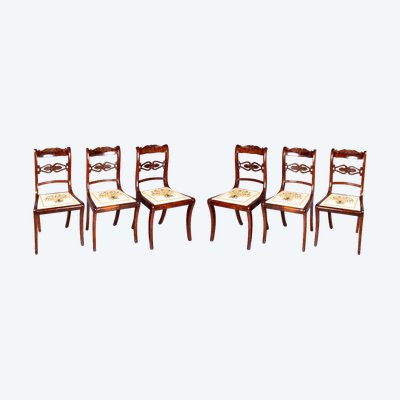
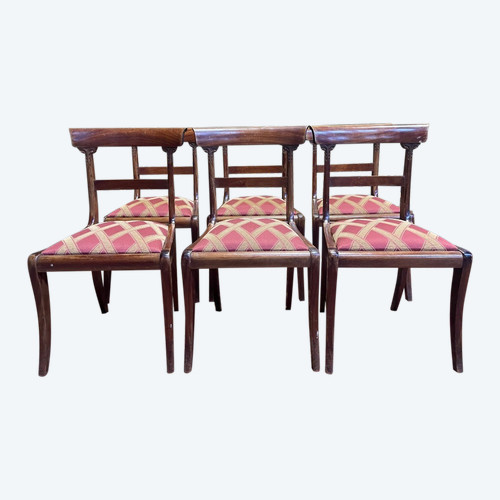
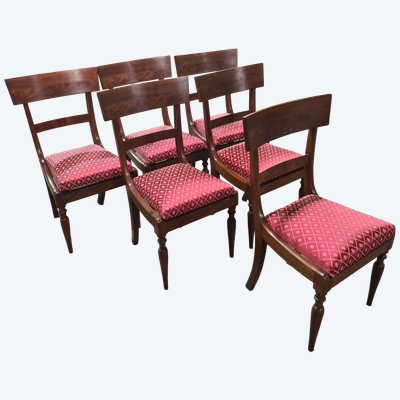
A beautiful set of six Regency period chairs with solid mahogany frame backs and seats. Circa 1880.
These chairs have been restored, both in terms of cabinetmaking and upholstery, as the seat cushions have been replaced. This set is therefore in perfect condition, with new upholstery. The work was carried out meticulously by EPV-certified craftsmen in both cabinetmaking and upholstery.
Height: 91 cm, seat height: 45 cm.
Width: 40 cm, front legs: 48 cm.
Depth: 41 cm.
Price: €2700
Our opinion: English furniture, which was extremely fashionable in the 1960s and 70s, is unjustly neglected today. It is high-quality furniture, especially for the 18th and 19th centuries. The prices are very affordable and they can even be considered investments. Our chair set is complete and, most importantly, in perfect condition (both the woodwork and upholstery).
Did you know? There are two periods of the Regency style. The first period of the English Regency style (1790-1820), similar to the French Directoire and Consulate styles, began with the Regency of England under the Prince of Wales (1762-1830). It drew inspiration from classical models. Following the example of Thomas Hope's designs, the forms of the furniture became more austere. The glossy surfaces with very restrained ornamentation were enhanced only by occasional gilt bronze mounts.
The second period of the English Regency style (1820-1830), coinciding with the French Empire and Restoration styles, corresponds to the reign of George IV. It is characterized by more ostentatious decoration, conveying an impression of power. The weighty, monumental aesthetic of English furniture is reinforced by large, flat surfaces adorned with elaborate motifs inspired by Greek, Roman, Egyptian, and sometimes exotic art.
The use of mahogany, large, smooth surfaces, and understated decoration inspired by antiquity and Etruscan art create a refined and highly elegant style. Saber legs and the inverted top of the chair back are characteristic of English furniture of this period.
Ref: NSRQ6BFC3F
| Condition | As new |
| Style | English style (Chairs of English style Style) |
| Period | 19th century (Chairs 19th century) |
| Country of origin | United Kingdom |
| Shipping Time | Ready to ship in 2-3 Business Days |
| Location | 75017, Paris, France |
4 commitments to buy with confidence

 English
 Français
 Italiano
 Deutsch