

Would you like more images?

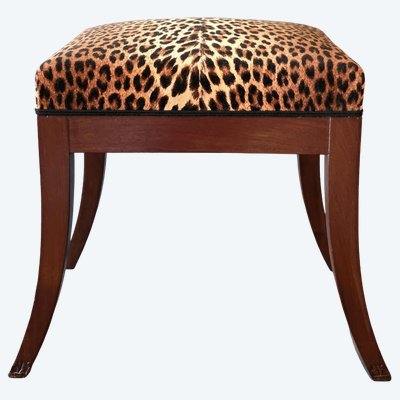
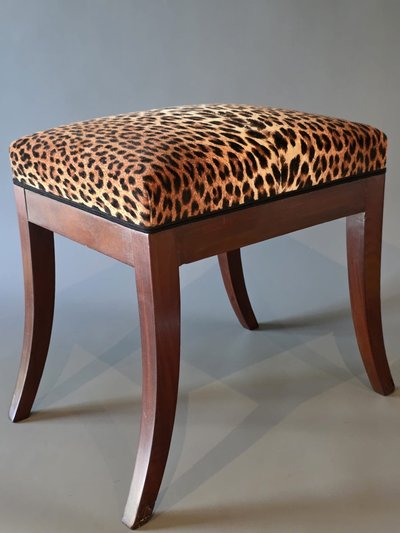
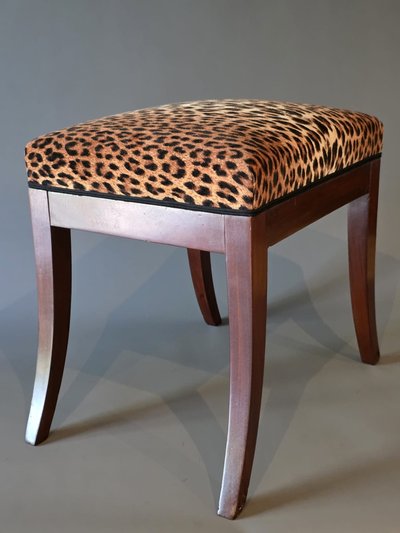
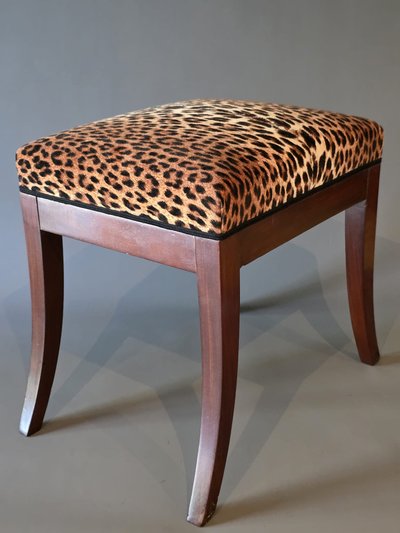
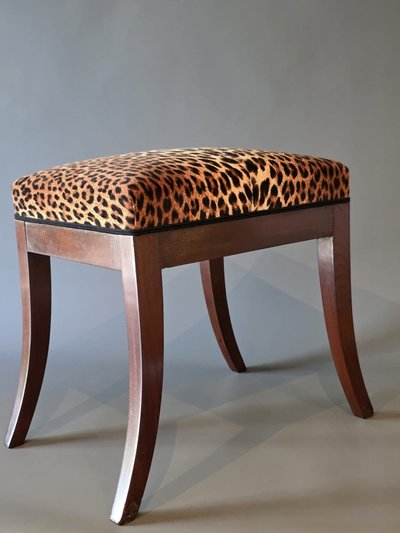
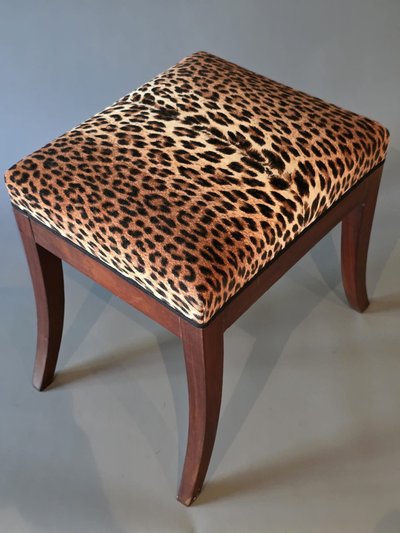
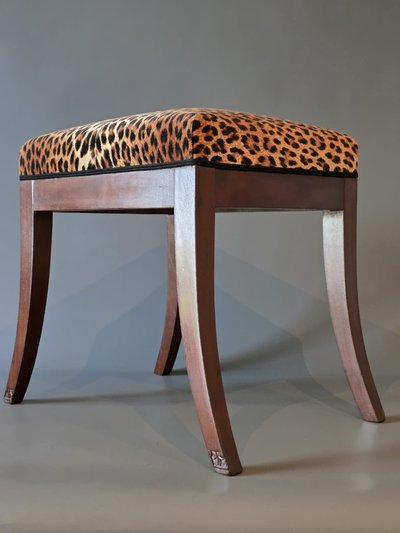
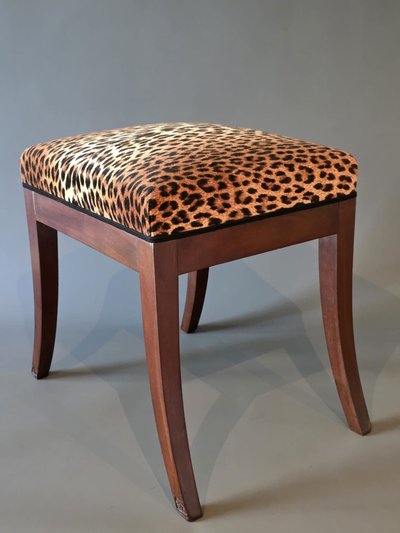
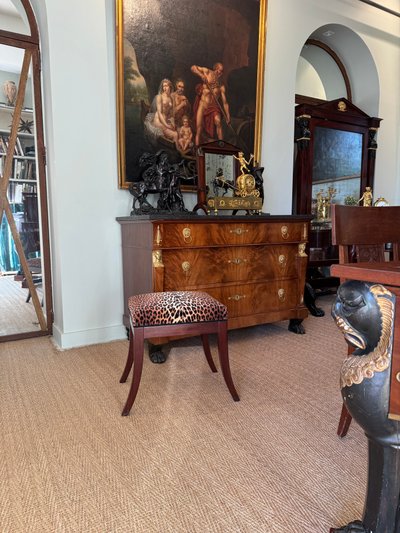
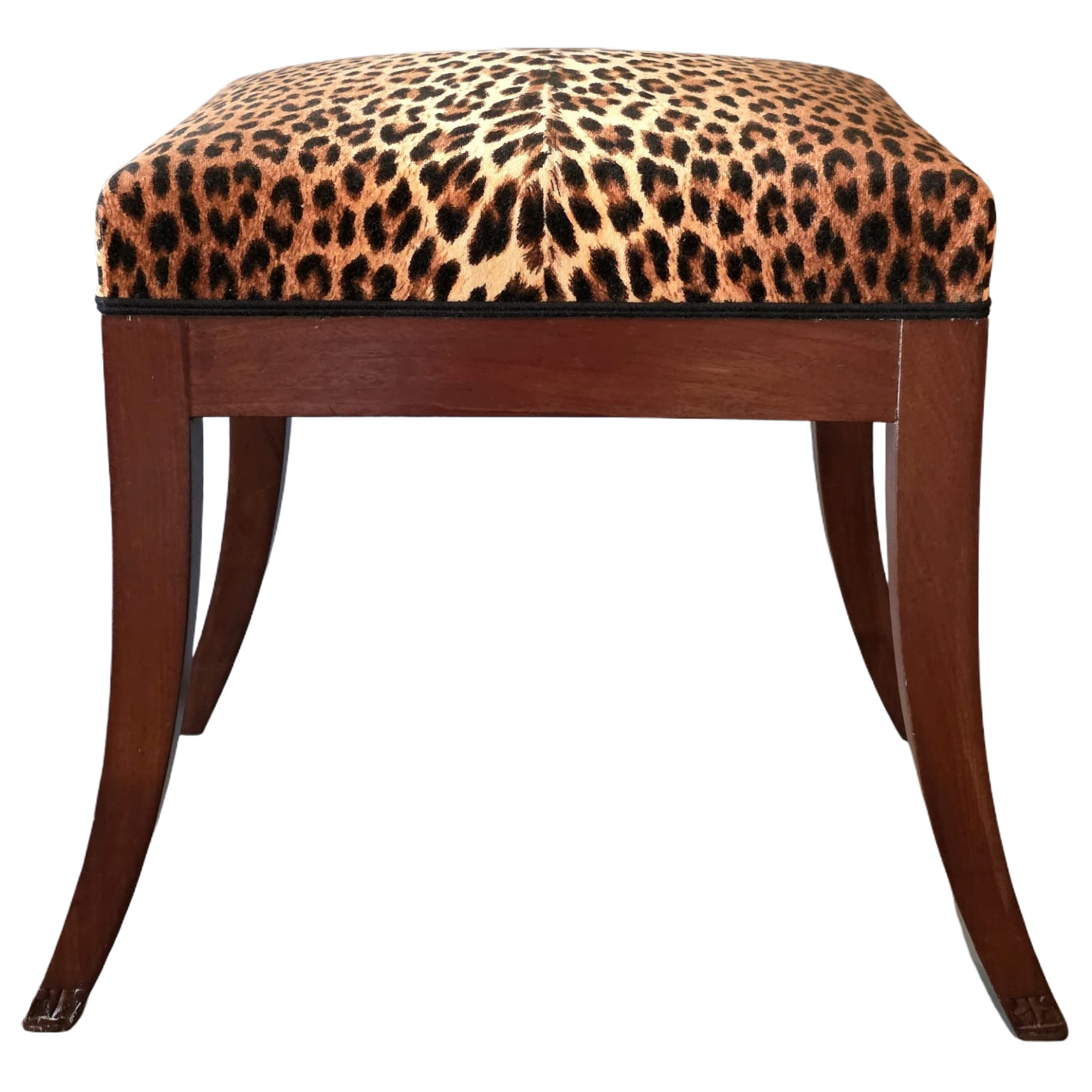
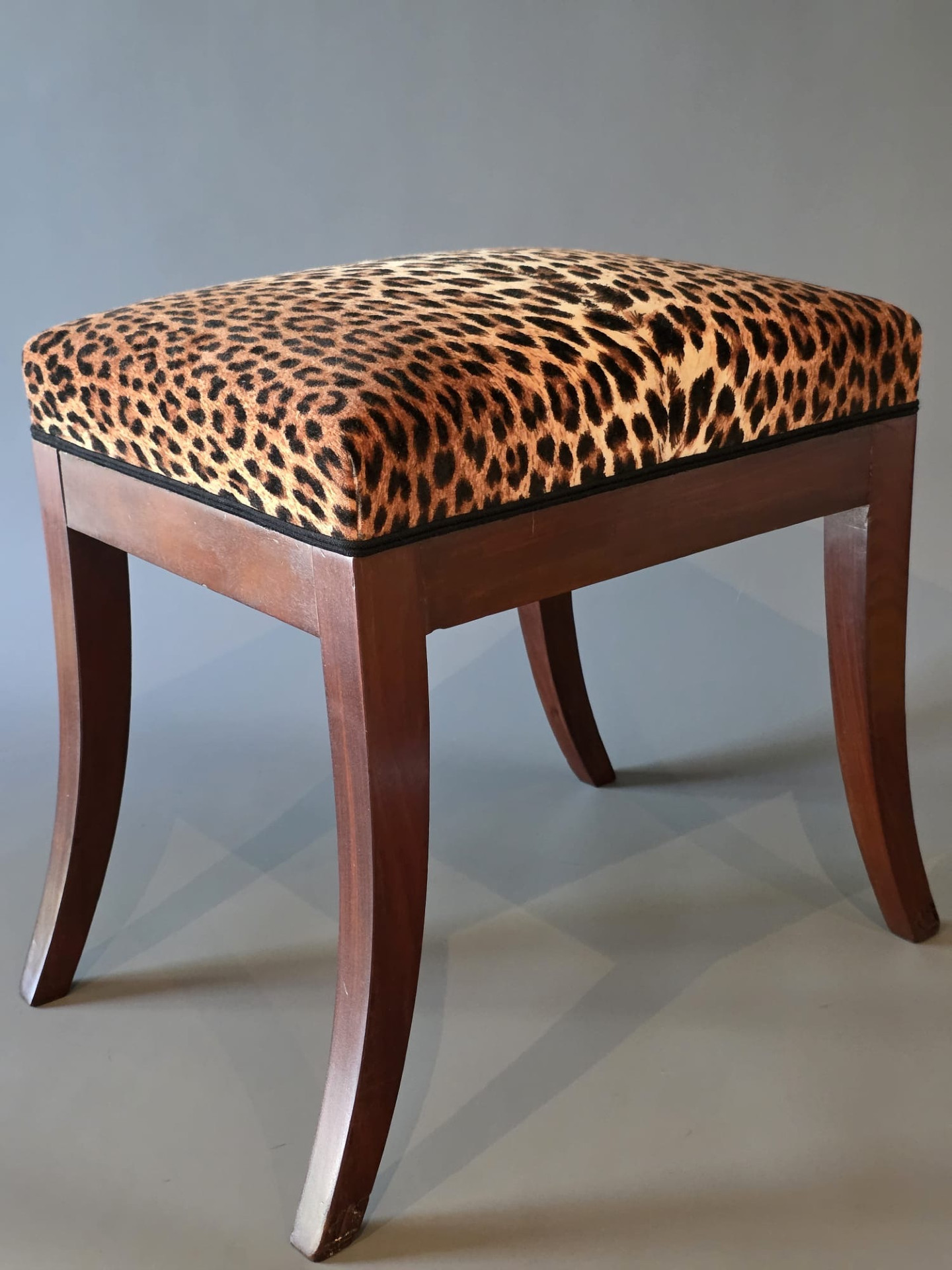
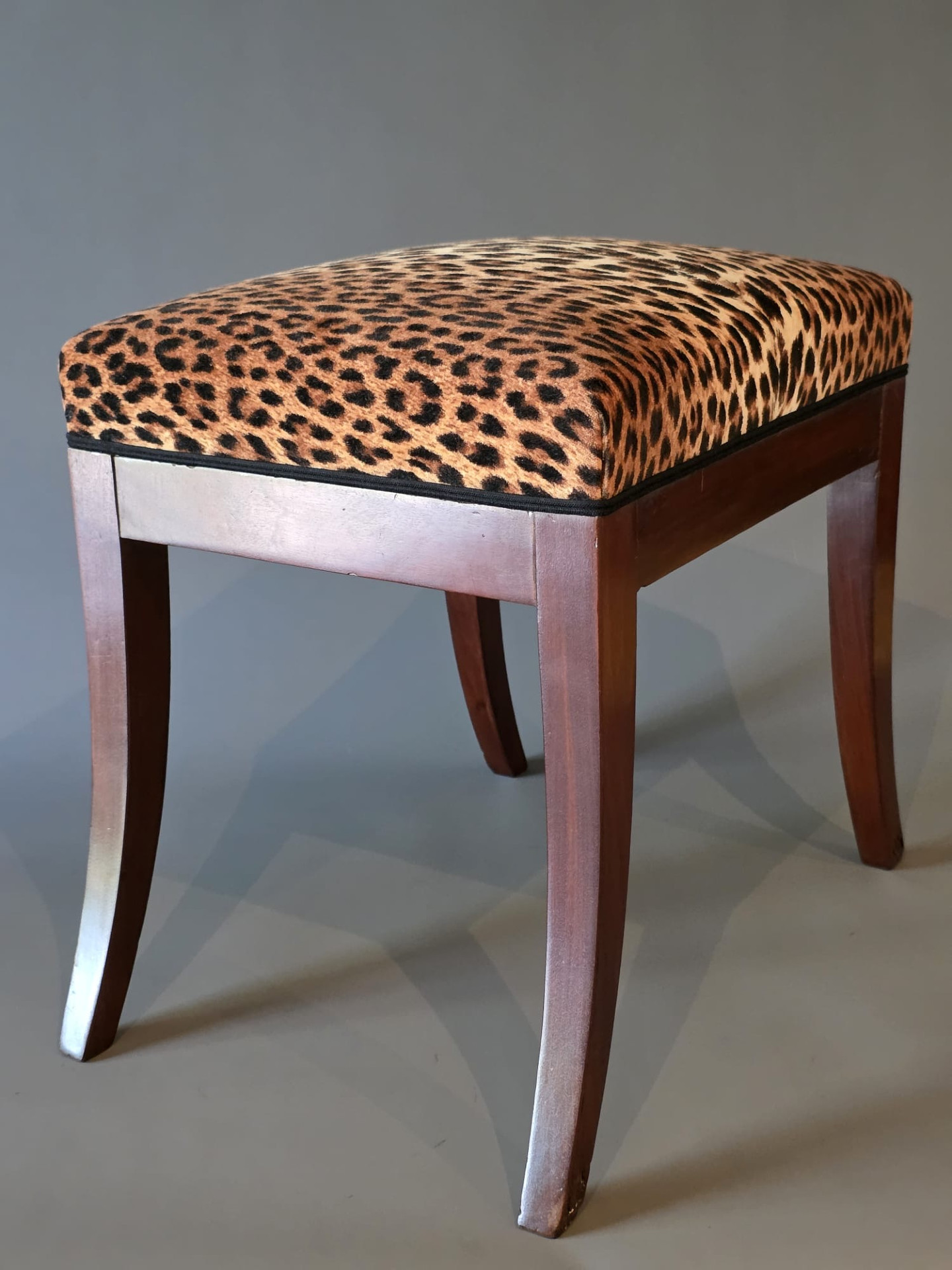
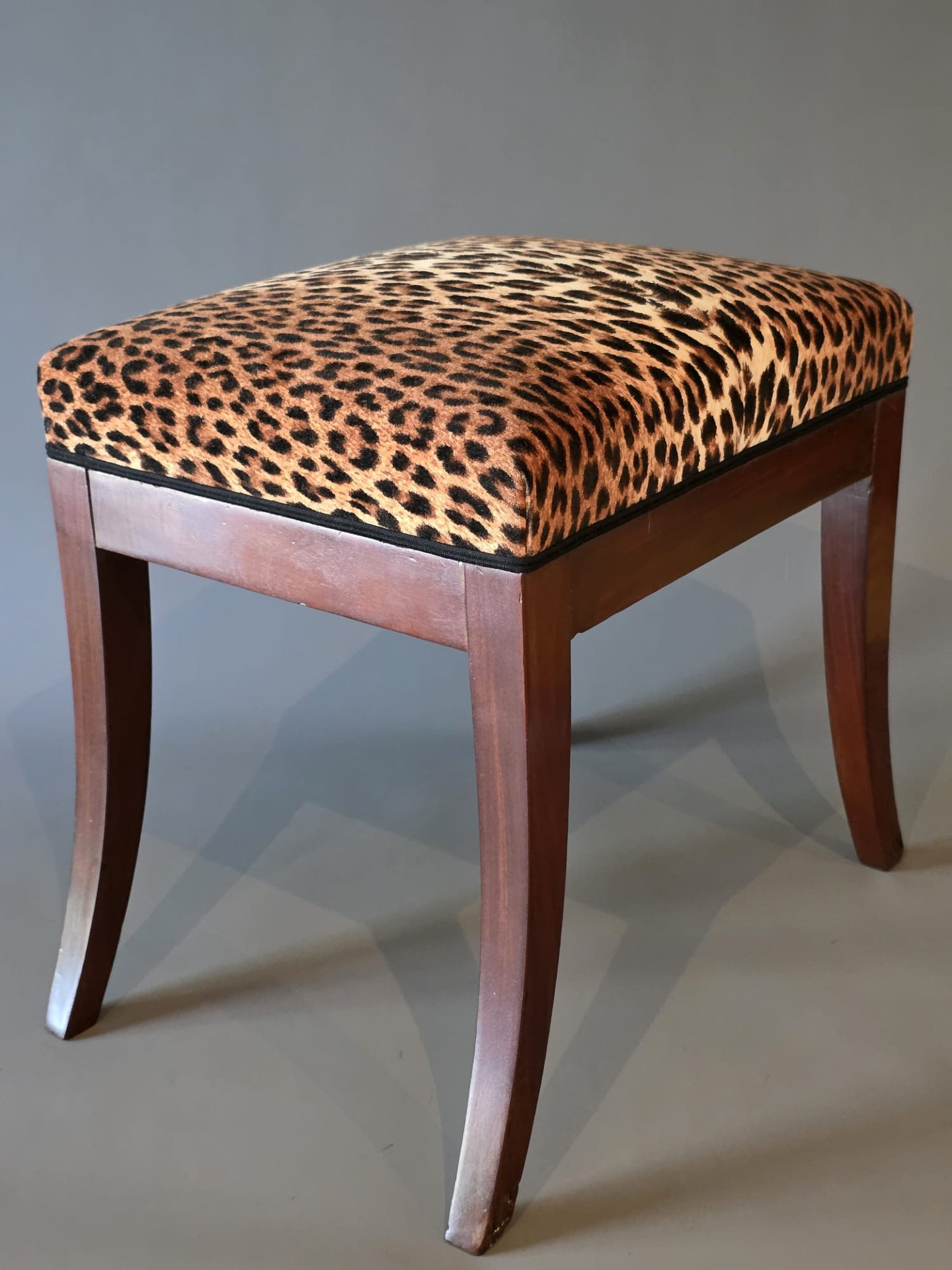
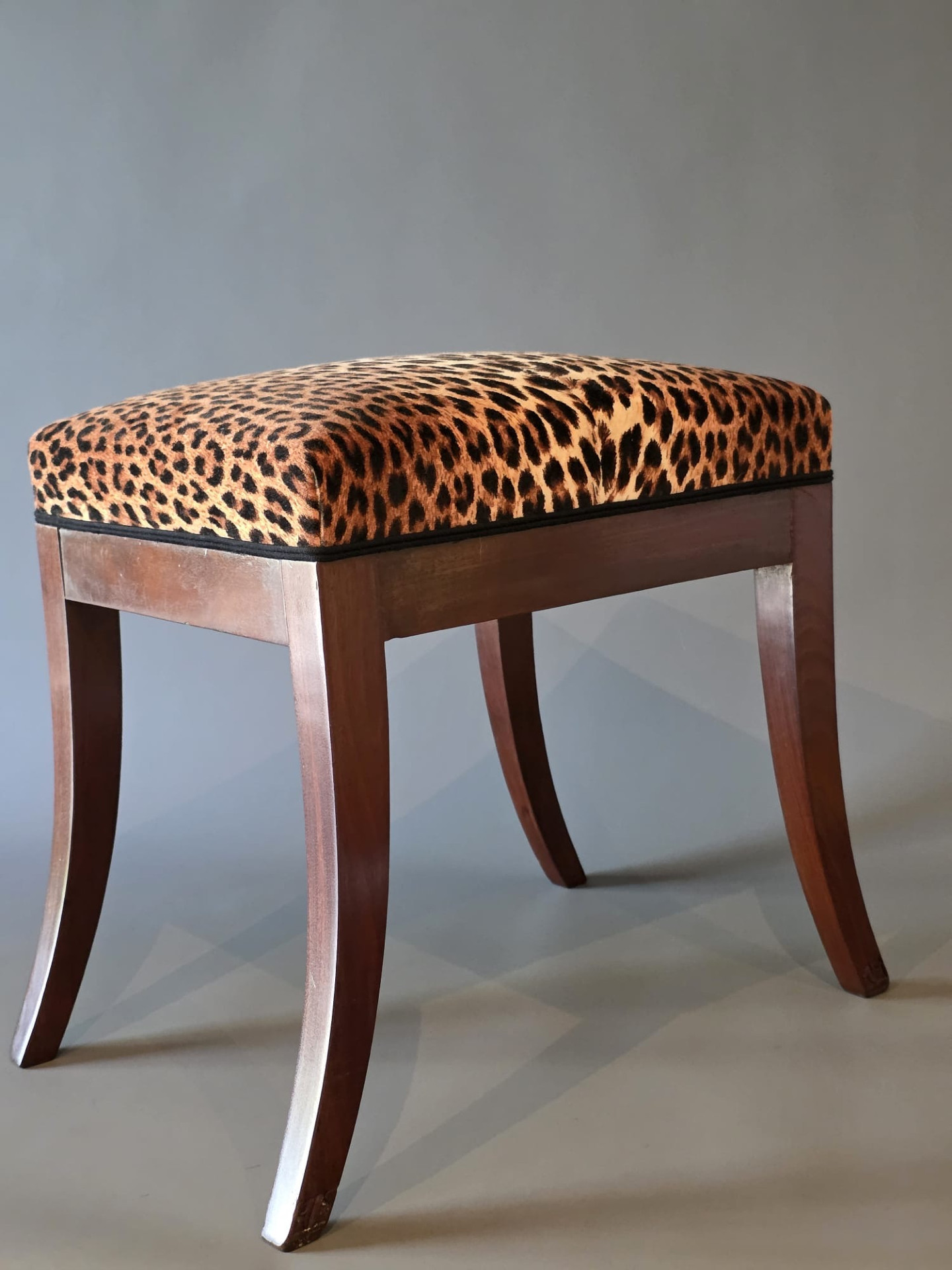
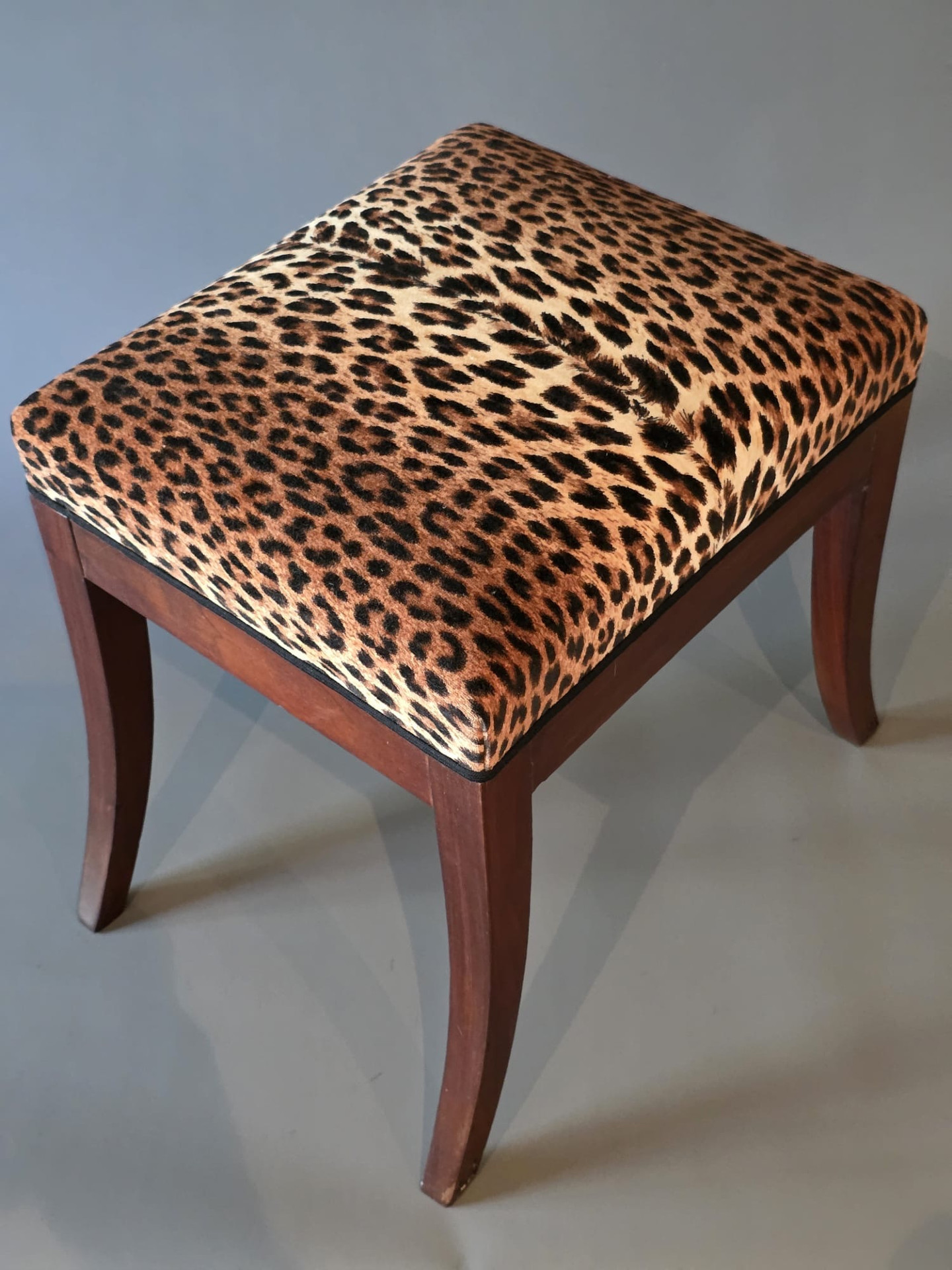
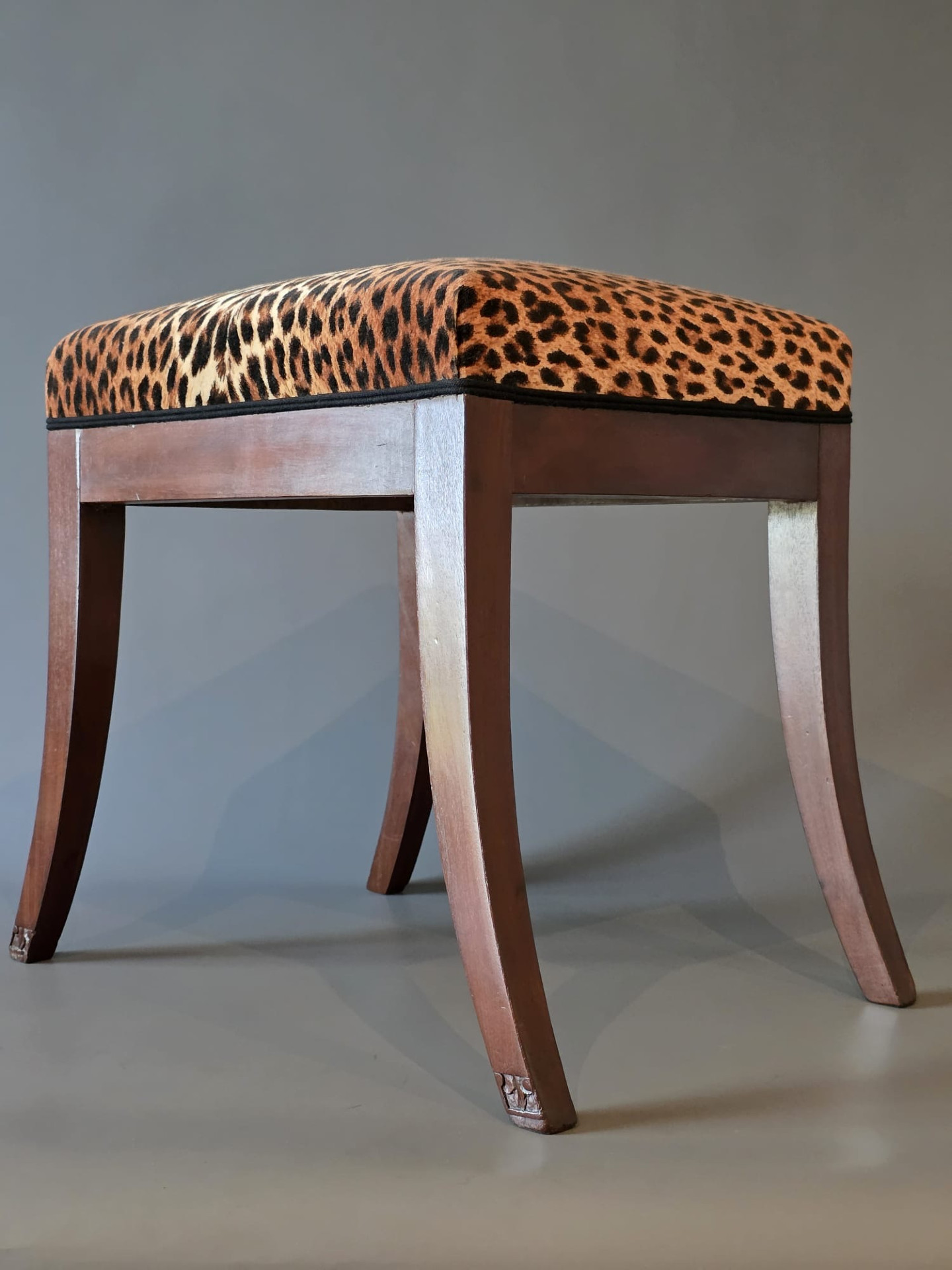
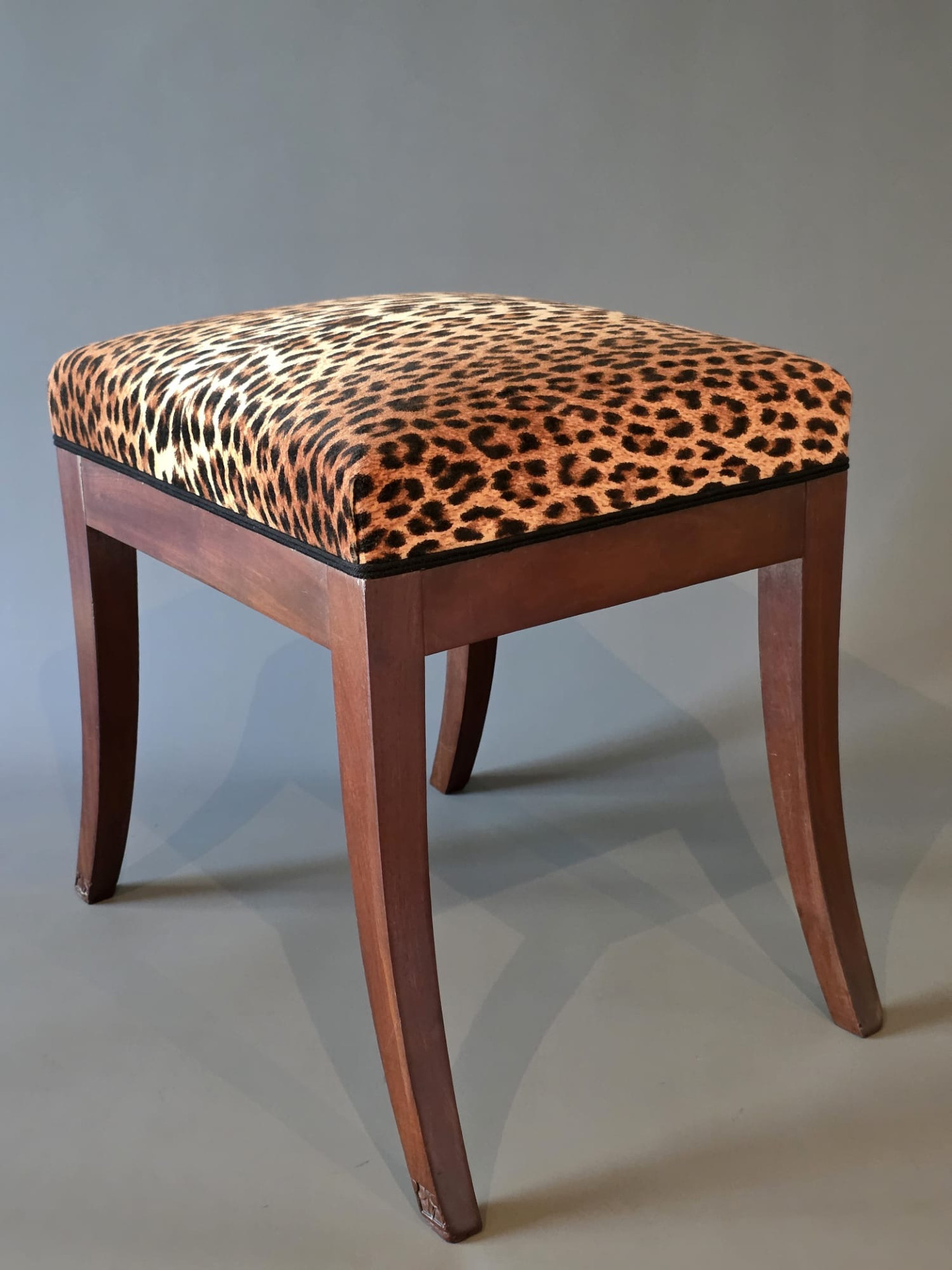
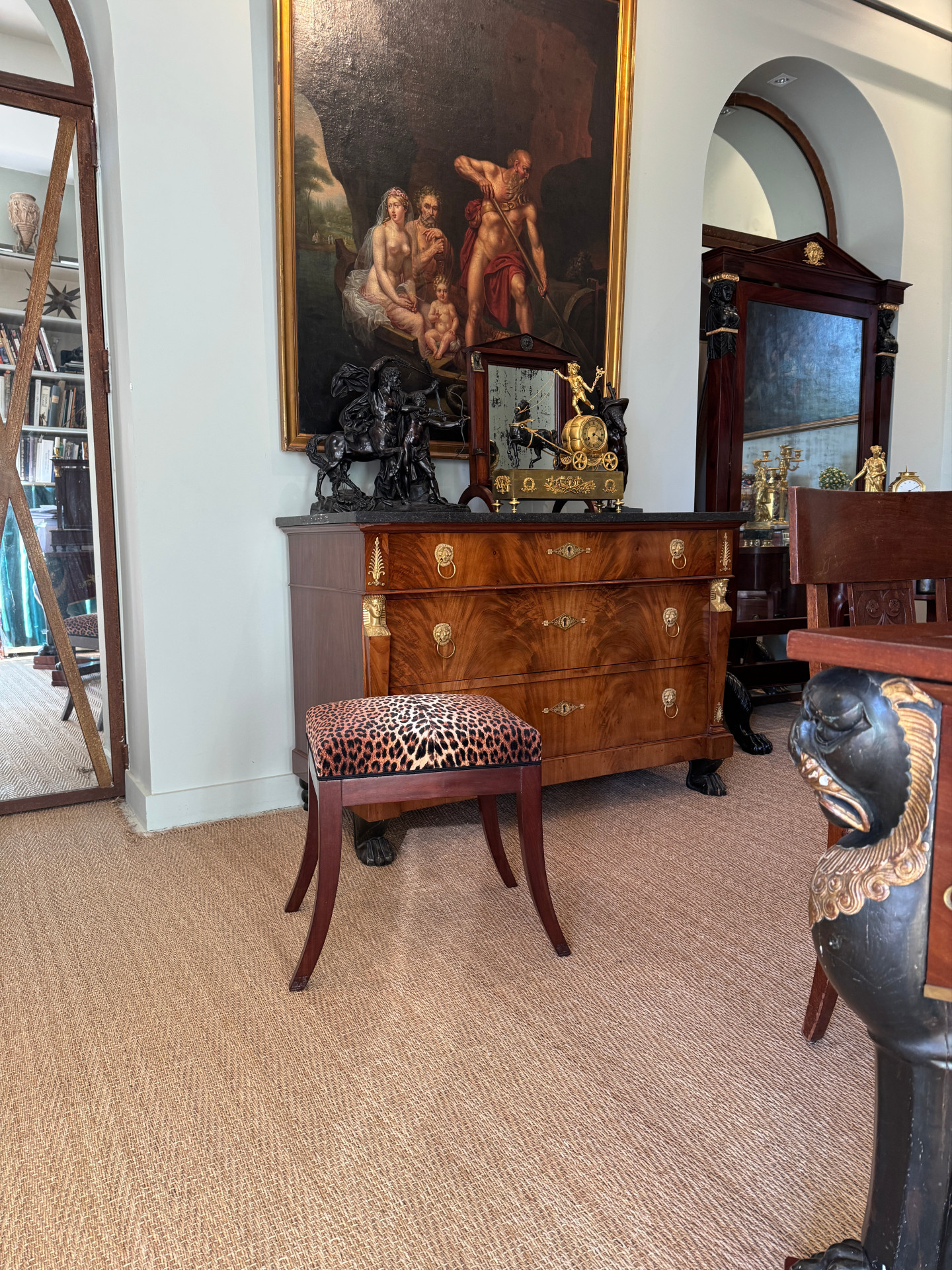
An elegant stool made of mahogany and mahogany veneer, resting on four Etruscan-style legs that are finely tapered and directly inspired by the Greek klismos. Each leg is topped with a delicate waterleaf motif carved into a cartouche.
This type of seat, stemming from the archaeological movement, was brought back into fashion by the architects Charles Percier and François Fontaine in their *Recueil de décorations intérieures*. The Jacob brothers produced it in various versions.
The seat is upholstered in leopard-print velvet, evoking a fascination with the exotic and “the wild,” already evident in aristocratic interiors of the late 18th century. This fascination was fueled by travelogues, cabinets of curiosities, and trade with Africa, Asia, and the Americas. Wild animal skins were then viewed as objects of prestige associated with power, domination, and antiquity (mythological scenes).
A similar piece, part of a series of four, was delivered by Jacob Frères for General Moreau’s boudoir around 1802. It is currently housed at the Château de Fontainebleau (“Mobilier français Consulat et Empire,” Jean-Pierre Samoyault, p. 54, fig. 68).
This stool perfectly illustrates the neoclassical aesthetic inspired by antiquity, which was very much in vogue in Paris in the late 18th century and very early 19th century.
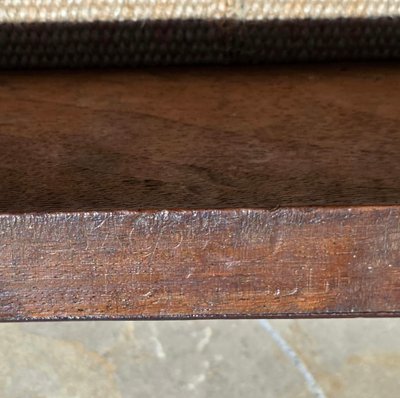
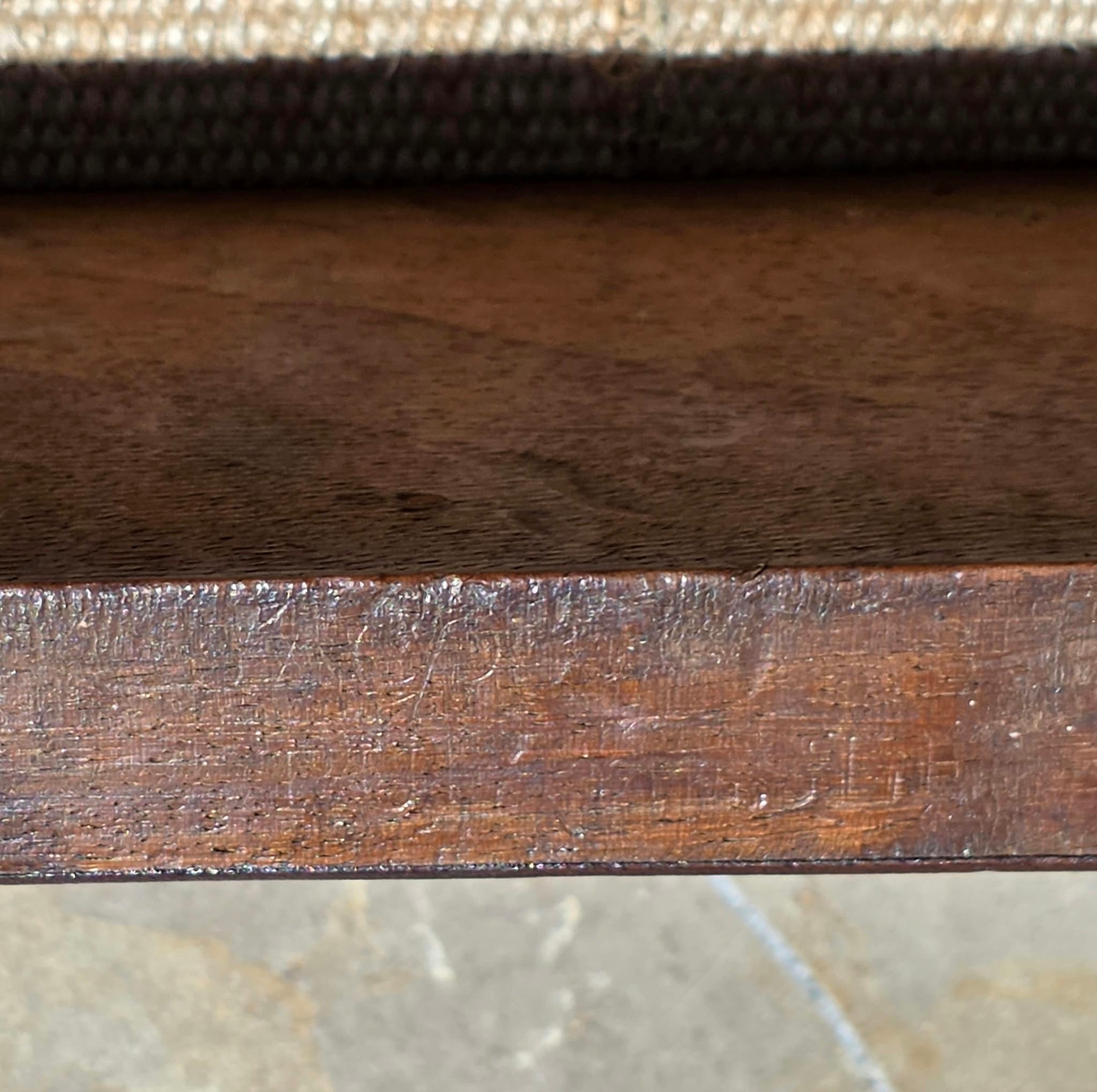
Stamped “Jacob Frères, Rue Meslée.”
Consulate period.
In very good condition.
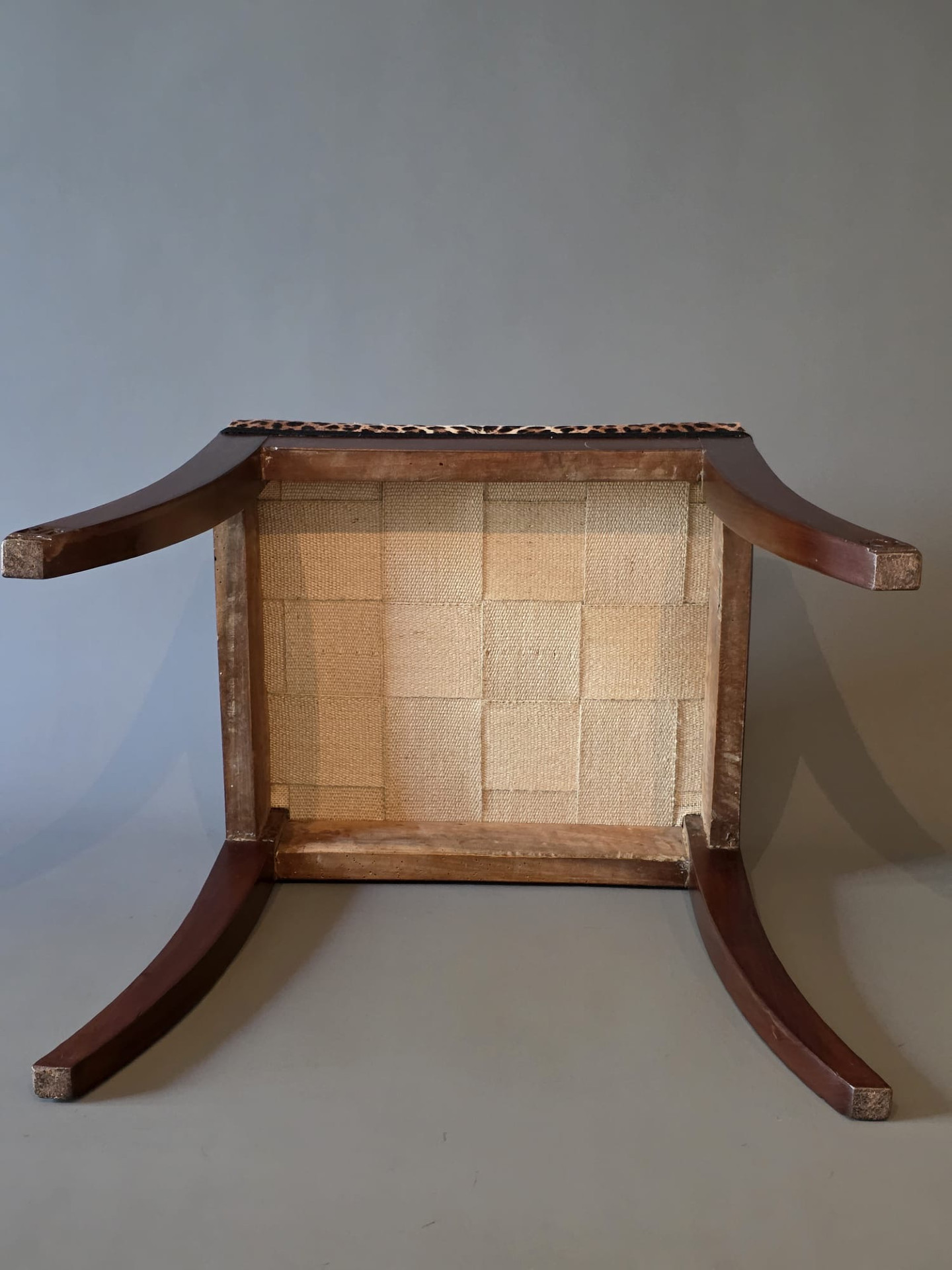
Restored by a master cabinetmaker.
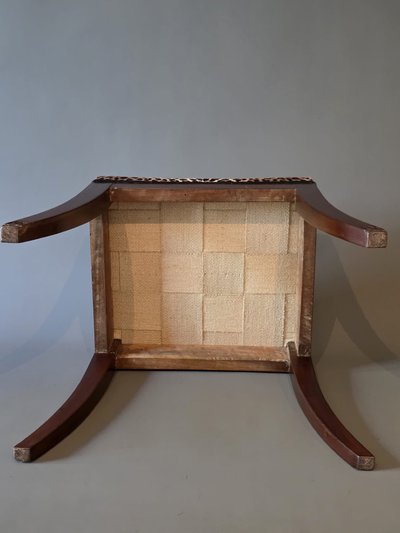
Seat reupholstered using the traditional horsehair method.
Bibliography:
-“French Consulate and Empire Furniture,” Jean-Pierre Samoyault, Gourcuff Gradenigo, p. 54, fig. 68.
Since only a portion of our furniture and objets d’art is visible on our website, we invite you to follow our Instagram account, where you can view all of our new arrivals in context: @monantiquaire
Ref: 8DS8576KR1
| Condition | Very good |
| Style | Empire Style, Consulat (Stools of Empire Style, Consulat Style) |
| Period | 19th century (Stools 19th century) |
| Country of origin | France |
| Cabinetmaker | Jacob Frères Rue Meslée |
| Width (cm) | 43.5 |
| Height (cm) | 47 |
| Depth (cm) | 37.5 |
| Materials | Mahogany |
| Shipping Time | Ready to ship in 4-7 Business Days |
| Location | 69009, Lyon, France |
4 commitments to buy with confidence

 English
 Français
 Italiano
 Deutsch