This description has been translated and may not be completely accurate. Click here to see the original
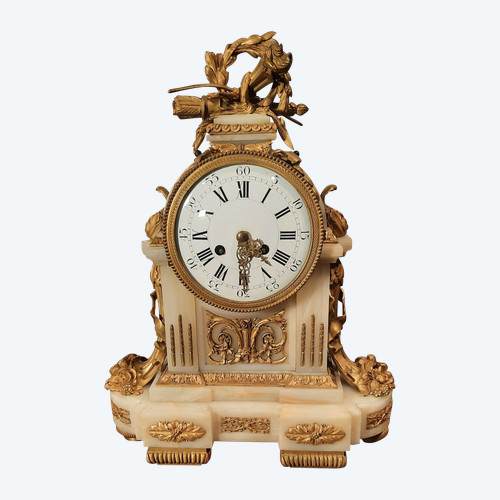
A white marble clock finely chased bronze, featuring a combination of matte and burnished mercury gilding. It rests on four round feet.
The oval base is embellished with a frieze of laurel leaves, beadwork, and floral garlands.
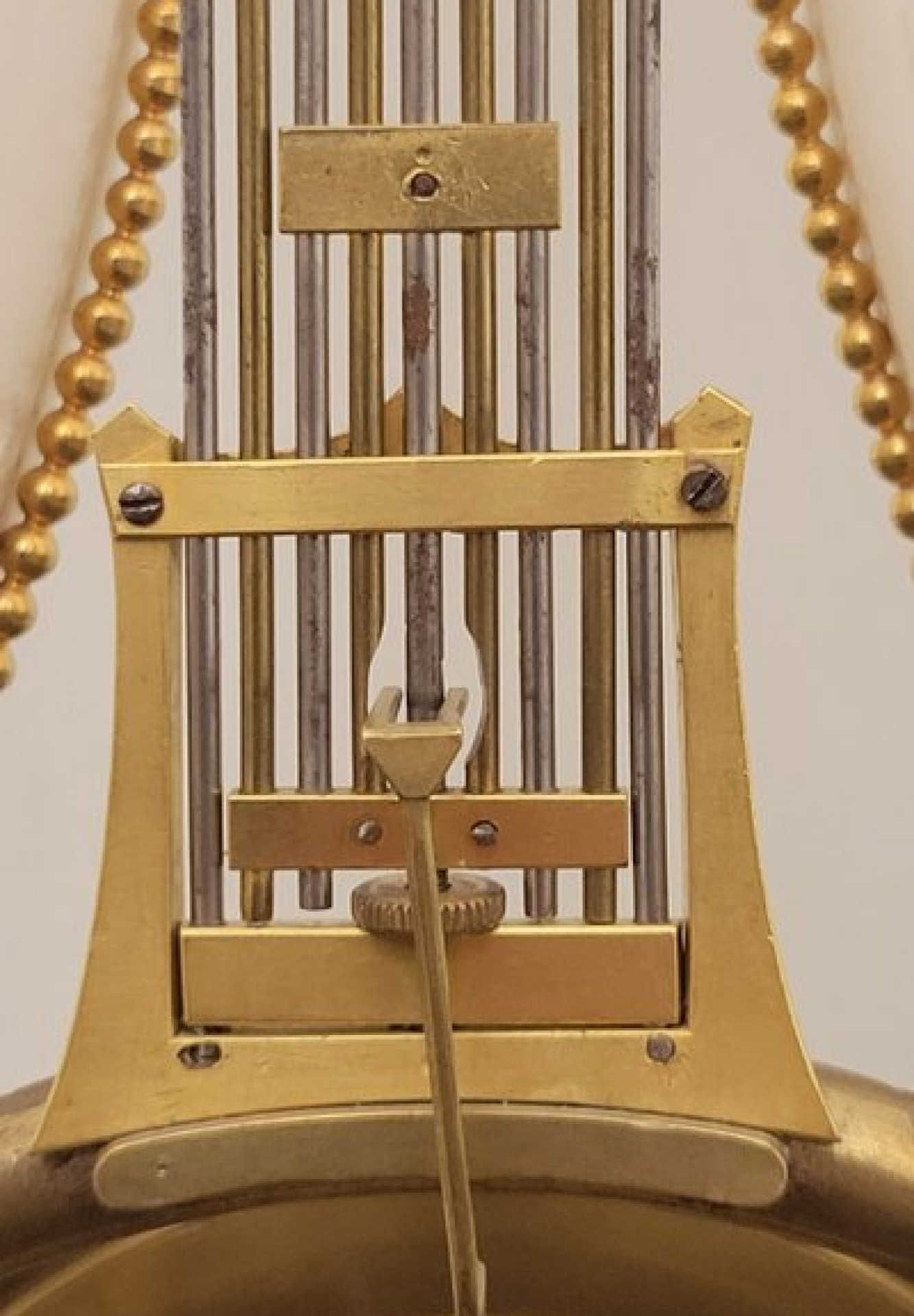
The lyre-shaped frame is outlined by two rows of beads; it is cradled by gilt-bronze acanthus leaves resting on the base and topped by a mask of Apollo positioned between the lyre's arms.
The white enamel annular dial—which reveals the movement—features black numerals for the time and red numerals for the date. The "fleur-de-lis" hands are made of openwork gilt bronze, while the date hand is of blued steel. The dial is set with rhinestones.
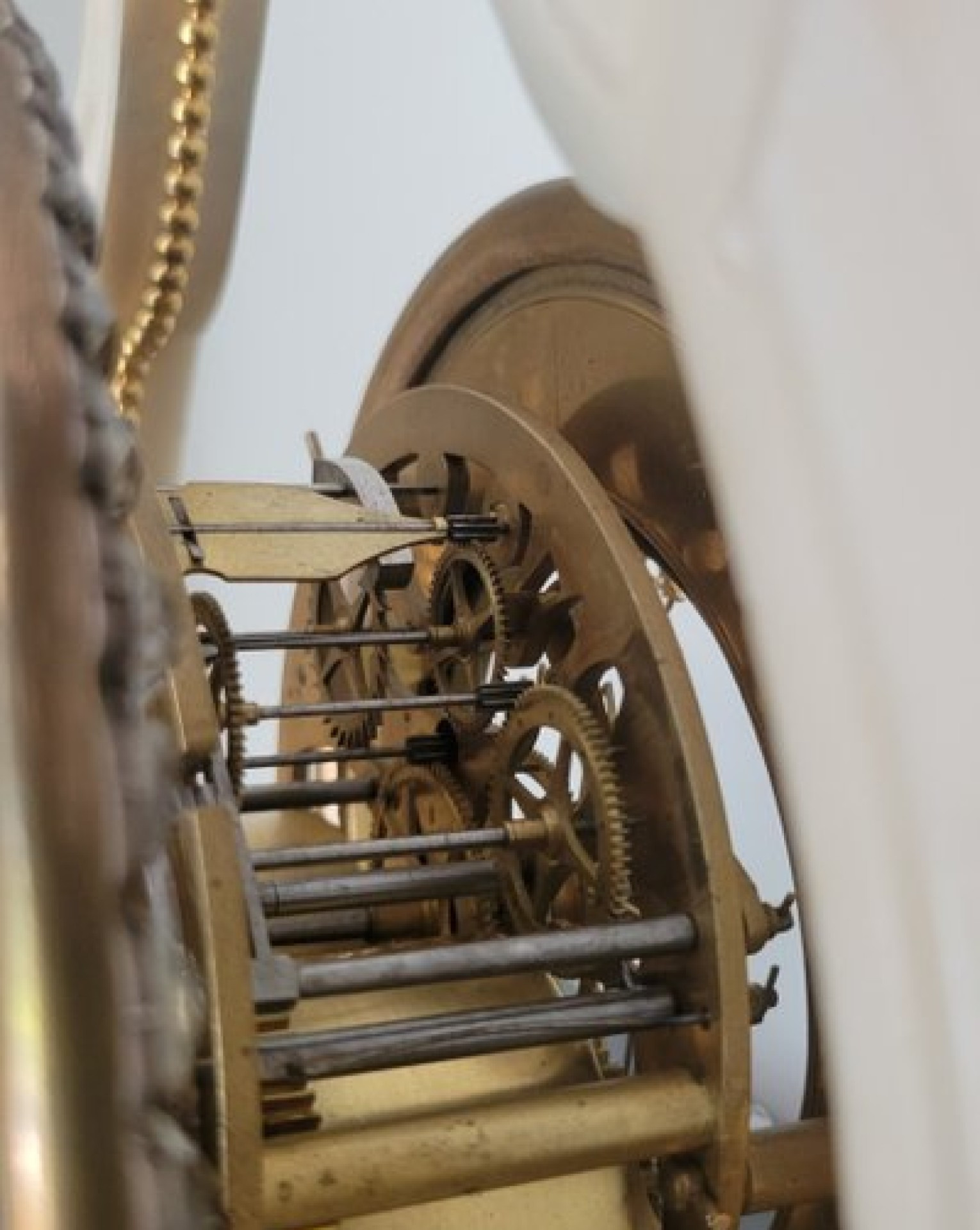
The "skeleton" movement strikes the hours and half-hours. It features an anchor escapement and a knife-edge suspension (designed to support the weight of the pendulum). A very large lyre-shaped pendulum is set with rhinestones (paste stones). The date wheel features cut-out teeth, further accentuating the movement's "skeleton" aesthetic.
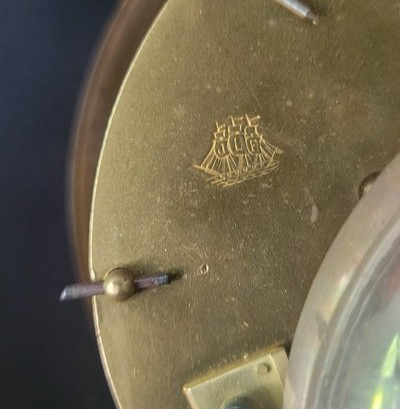
The movement's backplate bears the stamped name of the clockmaker, JEAN LEFEBVRE FILS, alongside a three-masted ship mark featuring the maker's initials, JLF.
The bronze elements exhibit exceptional casting and chasing quality and retain their original mercury gilding.
The pendulum ring occupies the space between the movement and the lyre frame, creating a magical sparkling effect from the rhinestones when illuminated. Condition report:
The clock is in good overall condition; the bronze elements retain their original, thick mercury gilding. The movement was serviced in June 2026. The clock runs perfectly and keeps accurate time. Restoration work has been carried out on the marble of the lyre.
Height: 53 cm
Width: 28 cm
Depth: 15 cm
Louis XVI period
Lyre-shaped clocks enjoyed great success and were characteristic, iconic pieces of the Louis XVI era. Dedicated to music, they often adorned music rooms.
In terms of its base, bronze mounts, and lyre design, this clock is comparable to the pink Sèvres porcelain example at the Villa Ephrussi de Rothschild (see *Les plus belles pendules françaises* by Tardy, p. 187, 1994 edition).
The same lyre design also appears on the green Sèvres porcelain clock (see p. 25, François Duesberg Museum, Mons, Belgium).
Delivery: Please contact us to discuss the possibility of delivery and installation by our team, depending on the distance
Ref: LH83898HE8

 English
 Français
  Italiano
  Deutsch
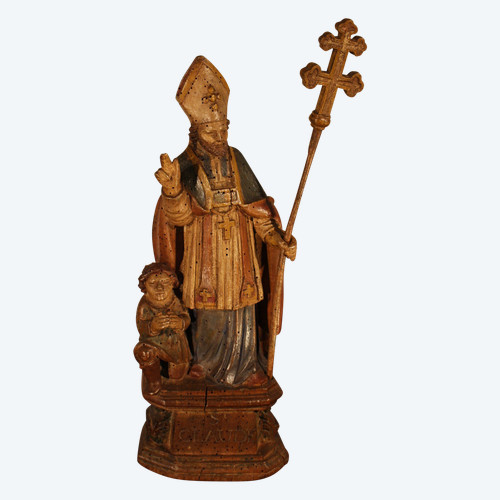
  Saint-Claude 17th century
1.100 € EUR
Saint-Claude 17th century
1.100 € EUR