This description has been translated and may not be completely accurate. Click here to see the original
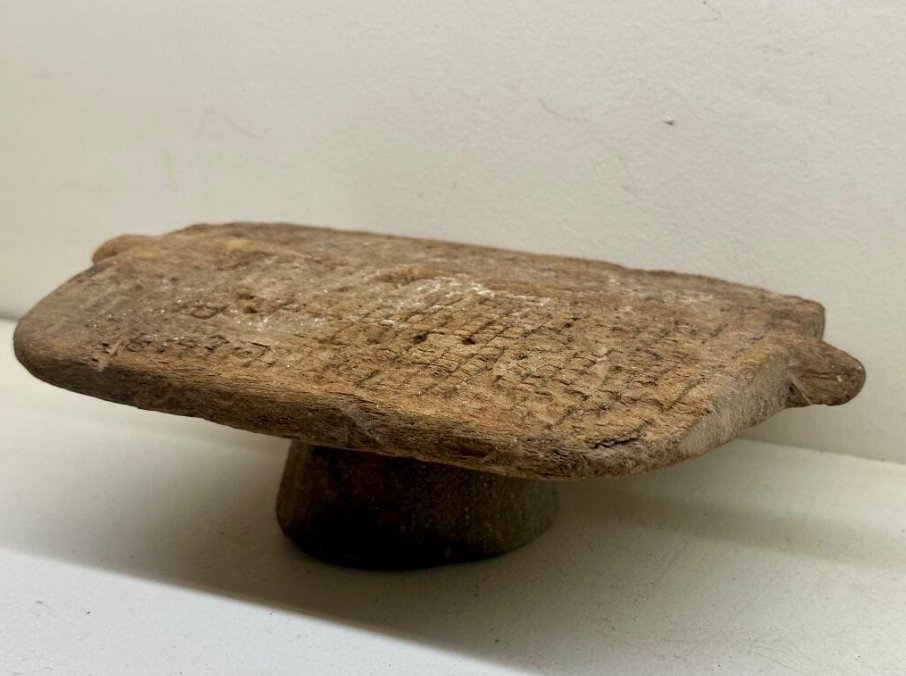
Télem" headrest - Dogon Country, Bandiagara, Mali
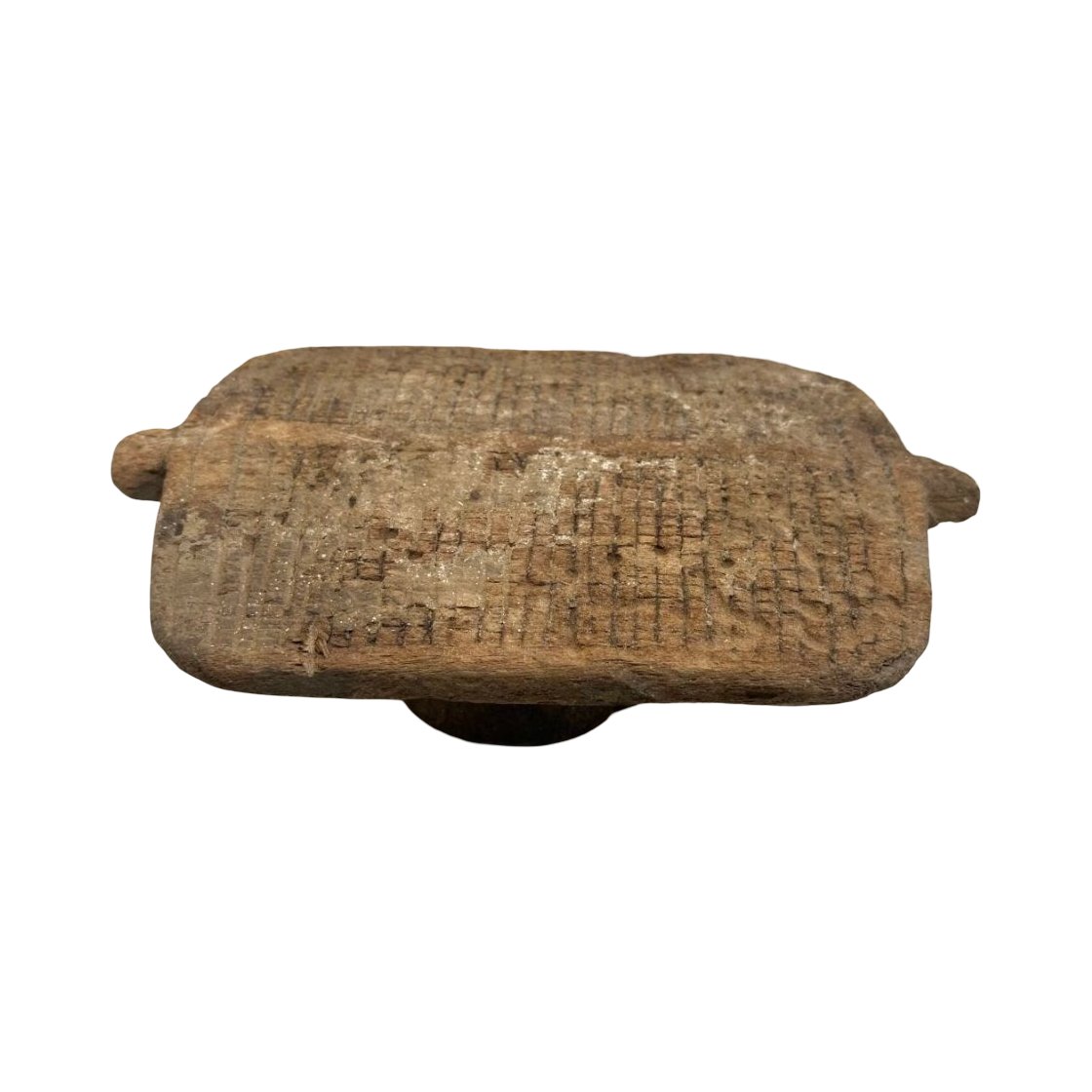
Antique wood with patina of use - Width: 6 cm; Length: 22.5 cm; Height: 16 cm
Estimated dating: late 15th - early 16th century
Provenance: ancient rock sanctuary, Bandiagara region
French private collection purchased from Jean-Michel Huguenin's Galaxie gallery
Description and analysis
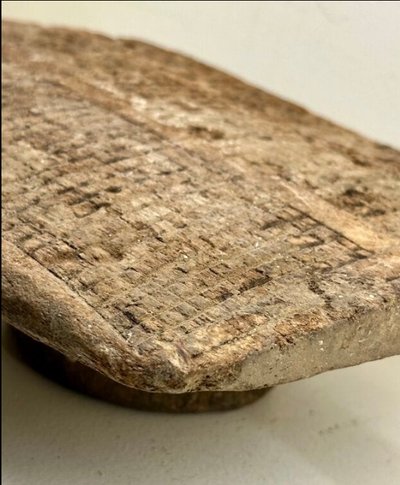
Carved from a light, close-grained wood, this rare "Télem" headrest probably comes from one of the settlement or burial caves on the Bandiagara plateau, the mythical territory of the Dogon people.
The Télem, a population that predated the arrival of the Dogon (settled from the XIVᵉ century onwards), left numerous cult or domestic objects in the crevices of the cliff, remarkably preserved by the dry climate.
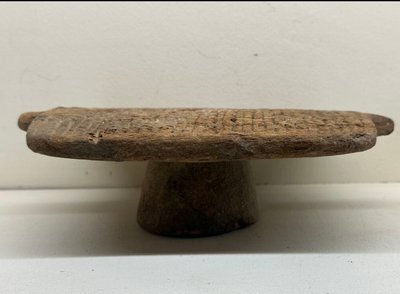
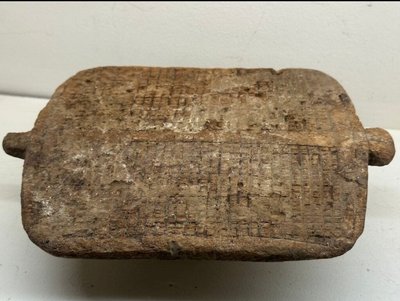
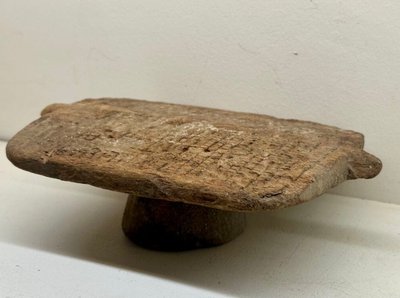
The object stands out for its archaic structure:
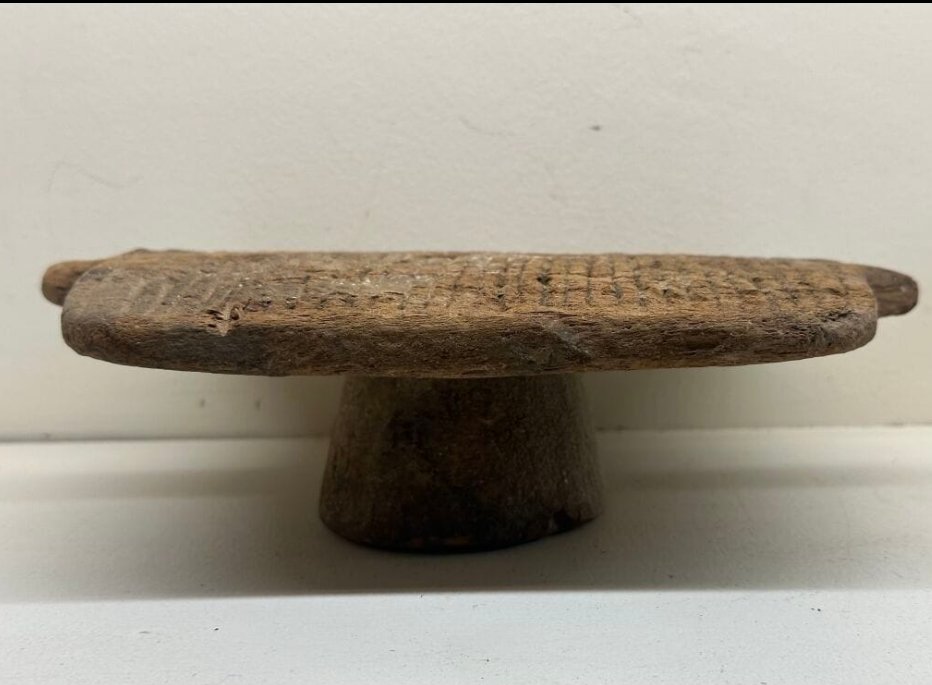
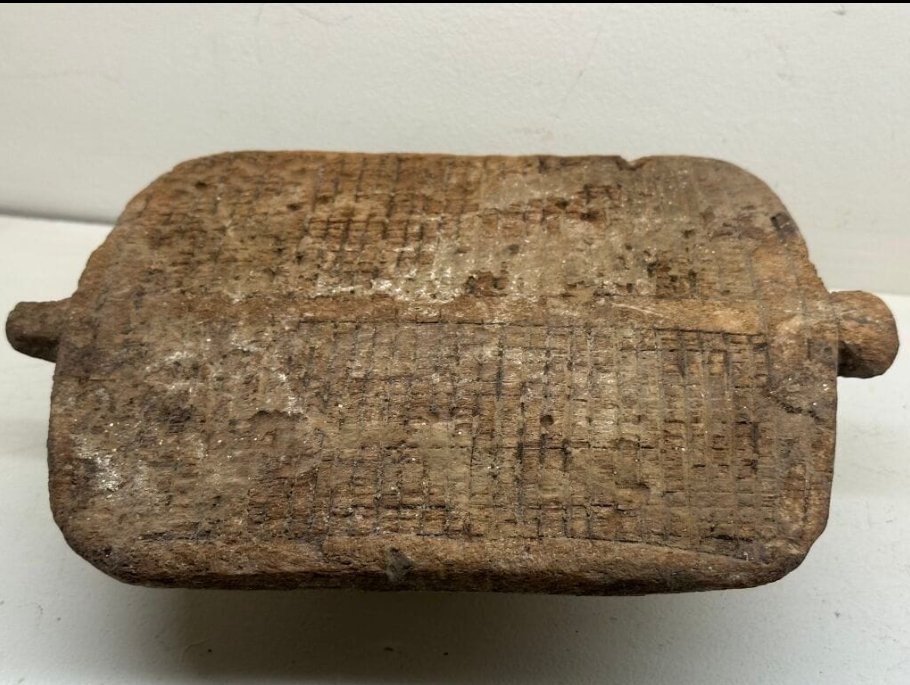
Slightly curved rectangular tray,
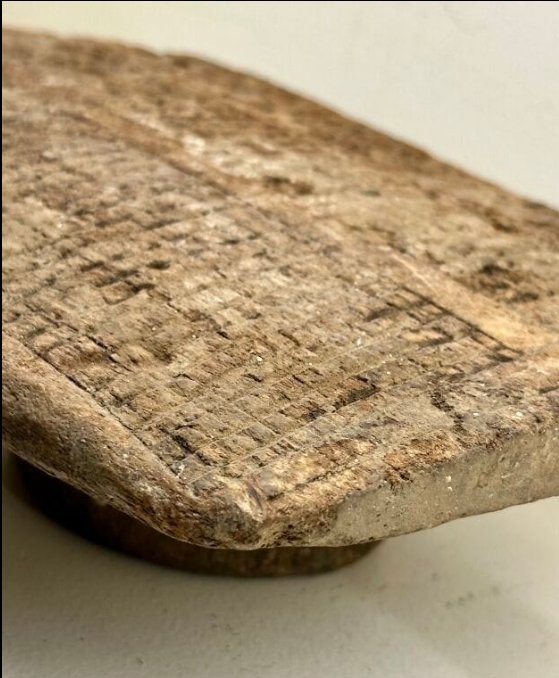
Top surface engraved with incised geometric traces, perhaps property symbols or offering marks,
Conical base hollowed out of the wood,
Lateral ends with small protuberances serving as handles.
The powdery, eroded patina, the fibrous density of the wood and the wear of the tray suggest an ancient use, prolonged before its ritual abandonment. These headrests, used as both domestic pillows and funerary headrests, often accompanied the deceased to the grave. They symbolized the transition between wakefulness and sleep, between life and death.
Telem iconography remains rare: this type of object predates the later anthropomorphic Dogon forms. Its crude style and lack of figurative decoration make it an exceptional testimony to pre-Dogon culture.
Comparisons :
Similar examples were collected by Marcel Griaule and Jean Rouch in the 1930s-1950s in the caves of the Bandiagara plateau (see Griaule, "Masques Dogon", Paris, 1938, and Huard & Leiris, "Objets d'Afrique ancienne", 1957).
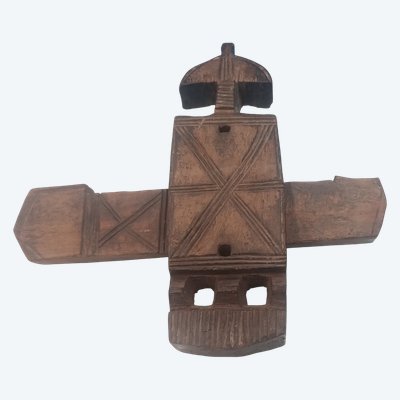
Some so-called anthropomorphic or zoomorphic Dogon headrests (late XIXᵉ-XXᵉ c.) hardly seem functional for actual resting use.
This is an essential distinction that many catalogs fail to emphasize.
Ethnographic explanation: from functional to symbolic
Early Telem and Dogon headrests (up to the XVIIIᵉ century) were really used as pillows, often on a daily basis.
They were used for :
Preserve ritual headdresses,
Protect the head from impure soil,
And accompany the sleeper in a state "between two worlds".
But from the XIXᵉ century onwards, the sacred and commemorative function took over.
Dogon sculptors then began to anthropomorphize these objects: the uprights became arms, legs or human figures supporting the tray.
These works are no longer intended to sleep on, but to symbolize the spiritual support of the ancestors.
It is often said that "man no longer rests on wood, but on his forefathers".
Thus :
The tray retains the form of a support,
But the sculpture is above all votive: it was placed in an altar or a ritual house (ginna).
Contact with the head became metaphorical, linked to meditation, not sleep.
the Télem, first inhabitants of Dogon country
The Télem, a mysterious people who predated the Dogon, occupied the cliffs of the Bandiagara plateau until the XIVᵉ century.
Their material culture - headstands, statues, pottery, textile fragments - bears witness to an organized rock civilization.
The Dogon then sacralized their remains, considering these objects to be the traces of a founding people linked to the spirit world.
These ancient headrests are among the few remaining examples of Telem domestic furniture, revealing the continuity of a tradition of rest and contemplation handed down to the Dogon.
Continuity of a thousand-year-old gesture
For the Télem and later the Dogon, the headrest is much more than a pillow. It raises the head, the seat of the spirit (nyama), above the impure ground.
By encouraging sleep and daydreaming, it becomes a bridge between the visible and invisible worlds.
The Dogon have perpetuated this ancestral practice, moving from the utilitarian simplicity of the Télem to the symbolic and aesthetic sculpture of the XIXᵉ century.A010
Ref: 7UZ7W63136

 English
 Français
 Italiano
 Deutsch
 Oak sideboard, 1950
1.100 € EUR