

Would you like more images?


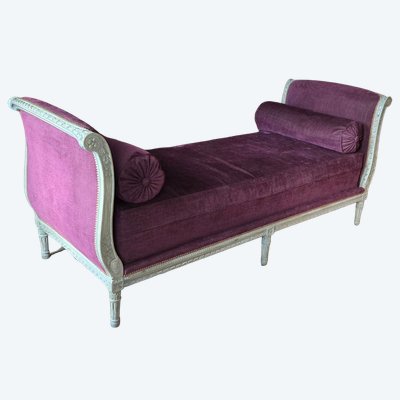
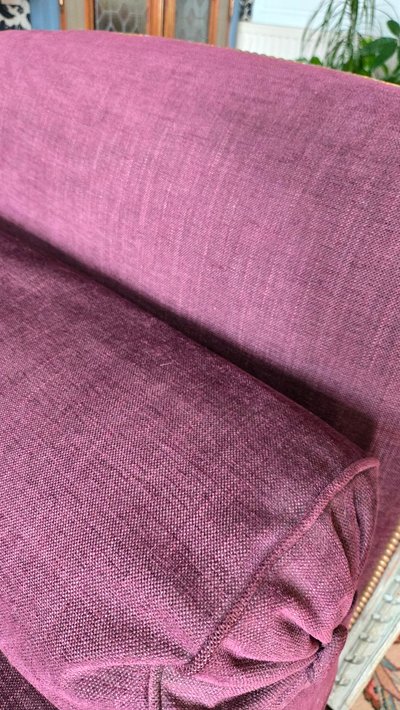
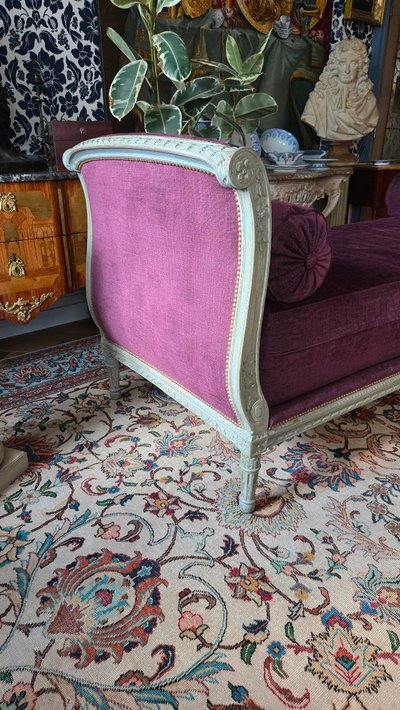
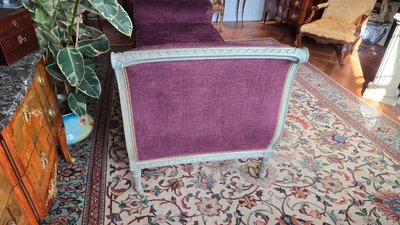
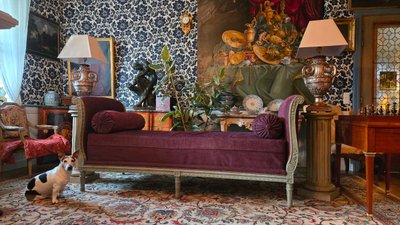
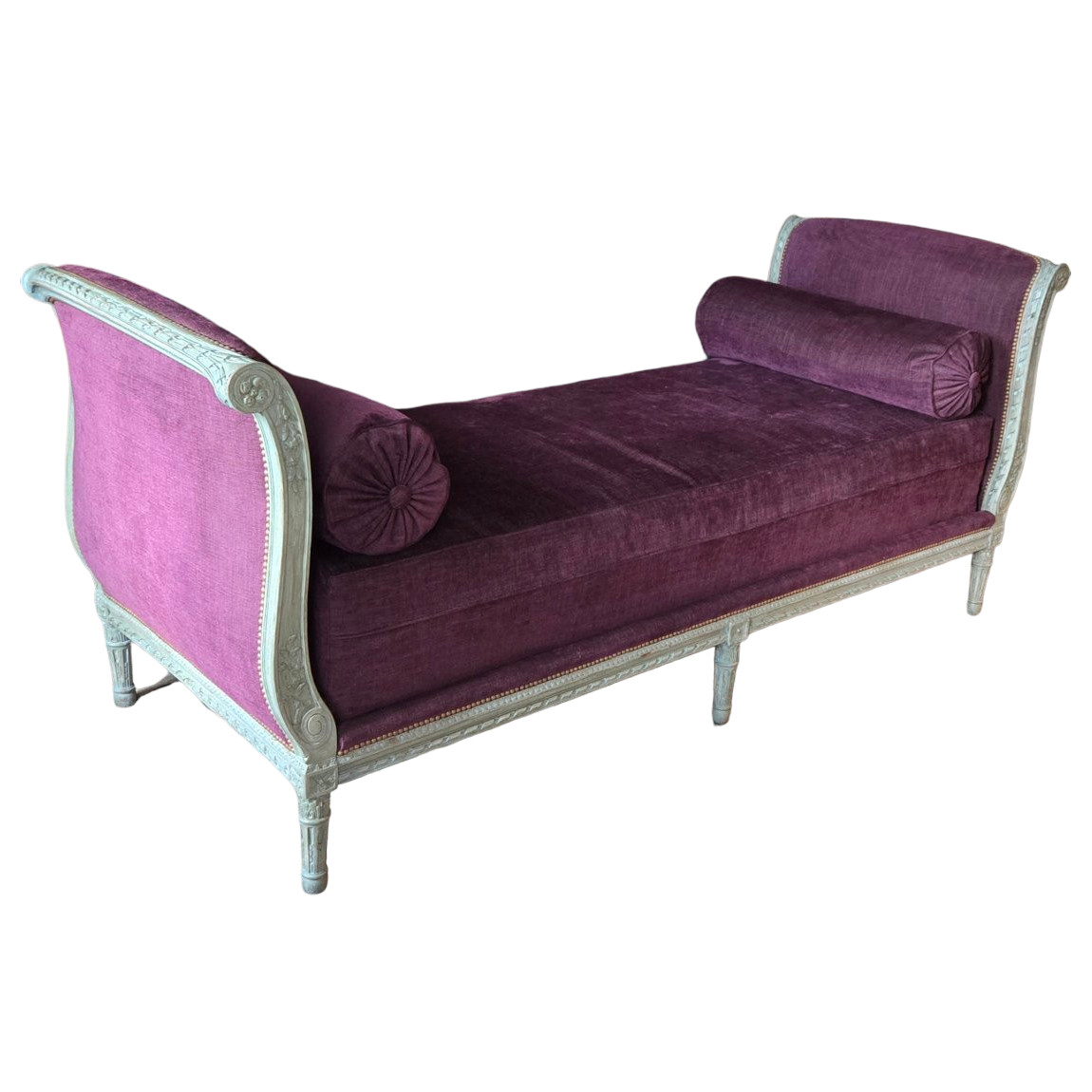
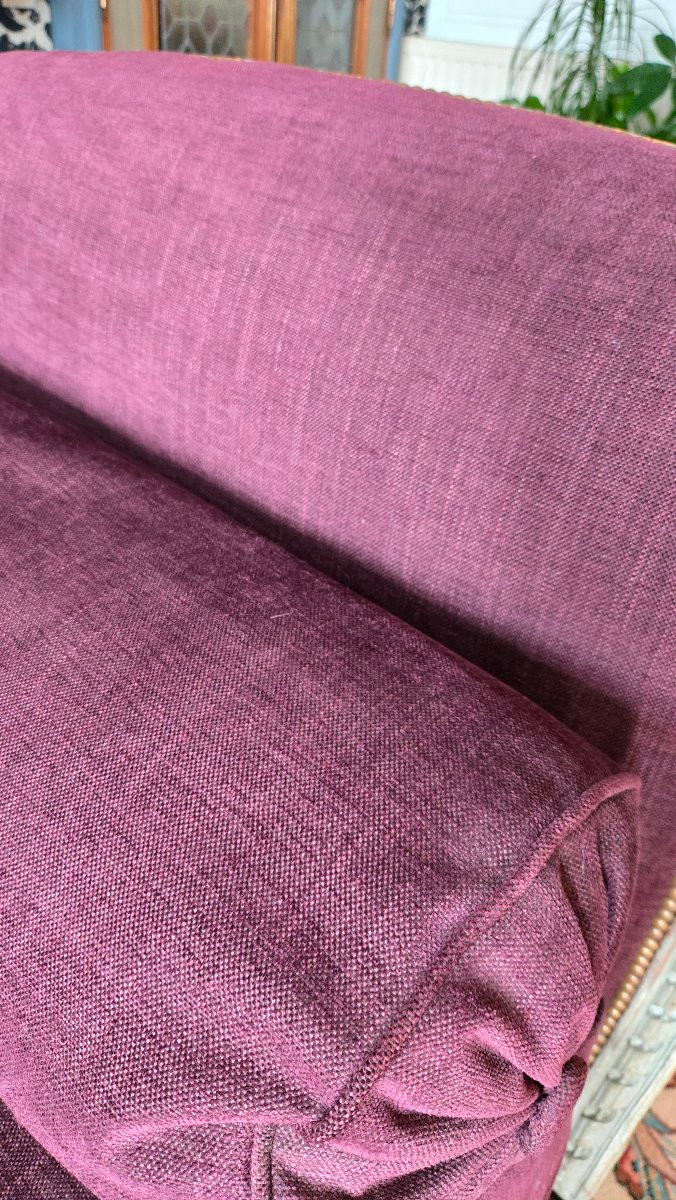
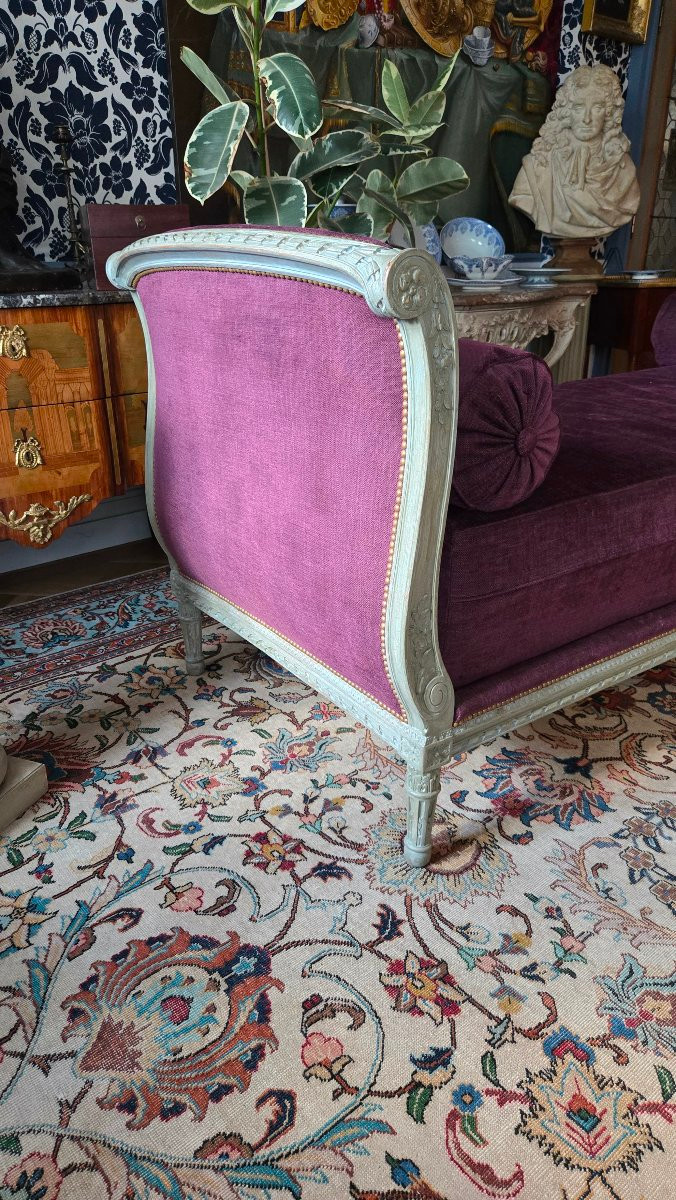
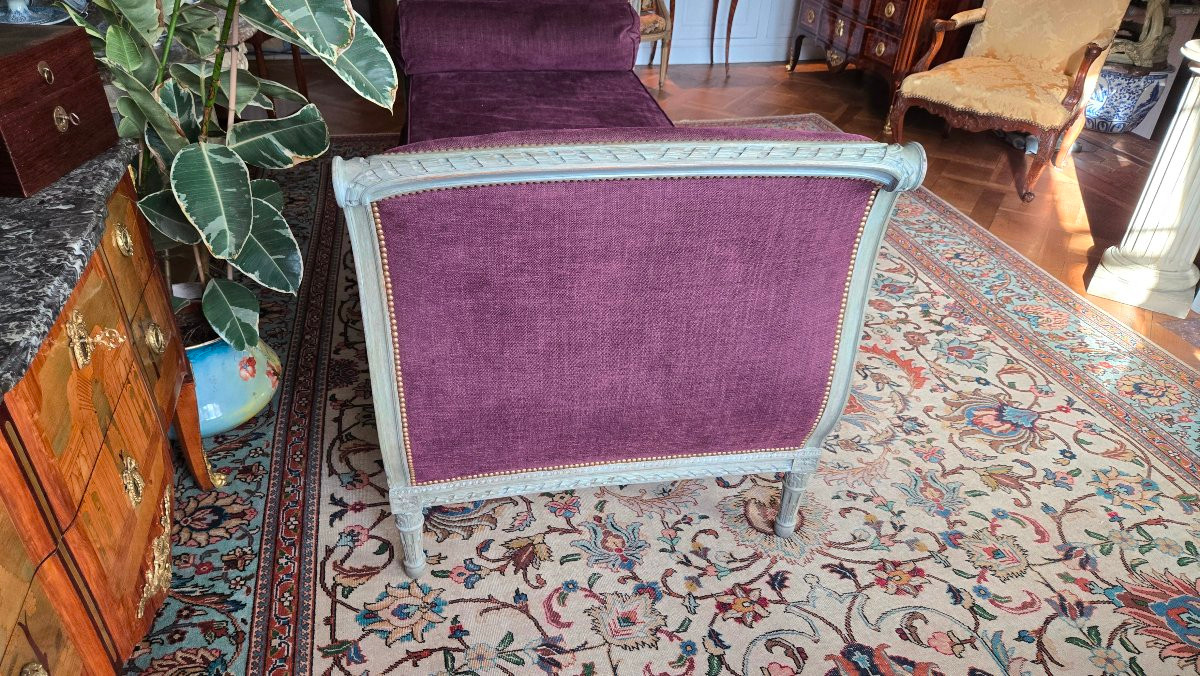
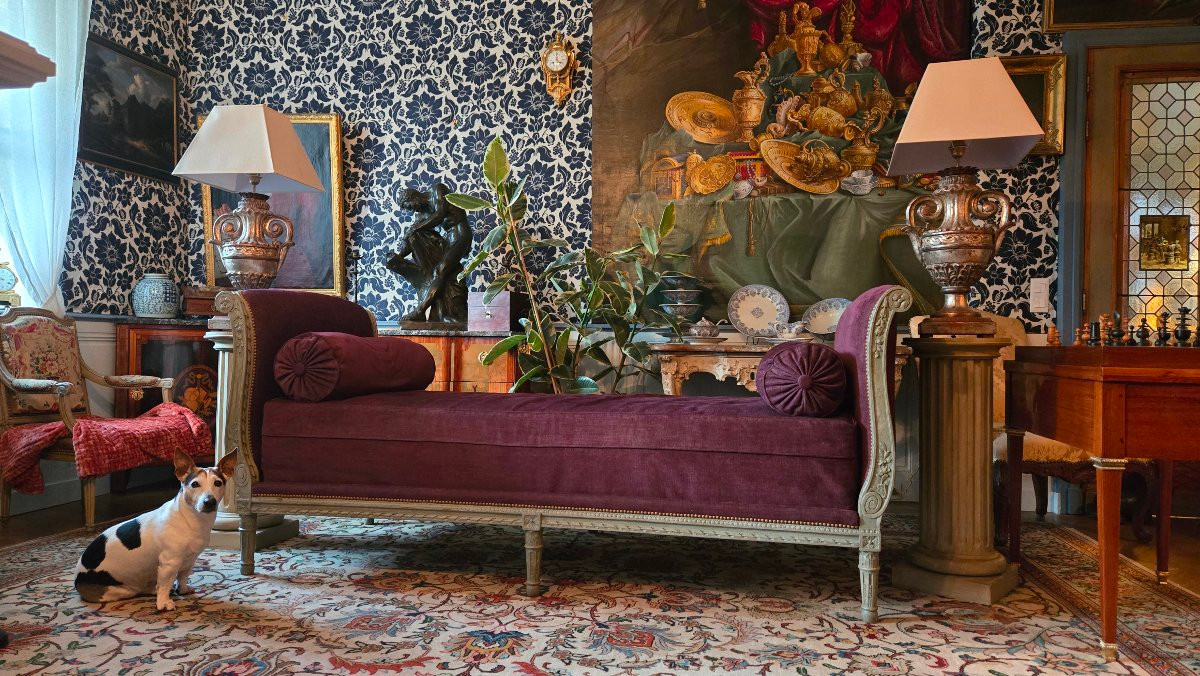
A Turkish-style daybed with two curved headboards, made of molded, carved, and painted beech wood, crafted in the last third of the 19th century, faithfully reproducing a model created around 1785 by Georges Jacob (1735–1814), now housed at the Château de Compiègne, in the collections of the Louvre Museum (inv. OA 9451).
Origin and History of the Model
First appearing in 18th-century French furniture, the Turkish-style daybed belongs to a category of furniture intended as much for rest as for conversation and socializing in salons. Its shape, similar to that of a divan, is characterized in particular by two raised headboards topped with scrollwork, allowing one to sit or lie down on it.
This type of furniture reflects the 18th-century taste for so-called “Oriental” forms, reinterpreted by French cabinetmakers according to the decorative styles of their time.
Nicole de Reyniès, in her book *Le Mobilier domestique, vocabulaire typologique*, precisely defines this category as a “daybed with scrolled headboards,” also referred to as a “turquoise,” “Turkish-style daybed,” or “sultane” (Volume I, pp. 192–193).
During the reign of Louis XVI, Georges Jacob, one of the leading Parisian chairmakers of his time, gave this design a neoclassical interpretation, combining the fluidity of the sloping backs with particularly elaborate carving.
The piece in question, made around 1785 and bearing the G. JACOB stamp, features two headrests ending in crooks, carved with acanthus leaves, floral scrolls, pearls, and foliage. The crossbars are adorned on all four sides with curving ribbons and heart-shaped motifs, while the four tapered, fluted legs feature water leaves and godrons.
Measuring 195 cm in length, this carved and gilded daybed is now housed at the Château de Compiègne, under Louvre Museum inventory number OA 9451.
From Fontainebleau to Empress Eugénie’s Music Room
The history of this model continues into the 19th century.
Originally housed at the Château de Fontainebleau in the 18th century, Georges Jacob’s daybed later became part of the collections at the Château de Compiègne.
During the Second Empire, Empress Eugénie showed a particular interest in furniture from the Ancien Régime and, more specifically, in objects associated with the memory of Marie-Antoinette.
As part of the redecoration of her music room at the Château de Compiègne, Georges Jacob’s daybed was installed in 1862, alongside other pieces of Louis XVI-era furniture.
According to historical research published by Mathieu Caron in *Le Garde-Meuble et l’invention du mobilier historique au XIXe siècle*, the Empress likely chose this piece because she believed it had once belonged to Marie-Antoinette.
However, this supposed provenance was already being questioned in the 19th century and cannot be considered established today.
In 1865, the salon’s furnishings were completed with several pieces of seating from Marie-Antoinette’s grand inner cabinet at the Château de Saint-Cloud: a sofa, two bergère chairs, and two armchairs. These pieces complement Jacob’s daybed, helping to create an ensemble that evokes the queen’s apartments.
The music parlor at Compiègne thus bears witness to the rediscovery of 18th-century French furniture during the Second Empire and to the role played by Empress Eugénie in restoring it to prominence.
It is within this context of a return to the designs of the great cabinetmakers of the Ancien Régime that our piece was crafted during the last third of the 19th century.
Description of Our Daybed
Our daybed faithfully reproduces the composition and sculptural vocabulary of Georges Jacob’s model.
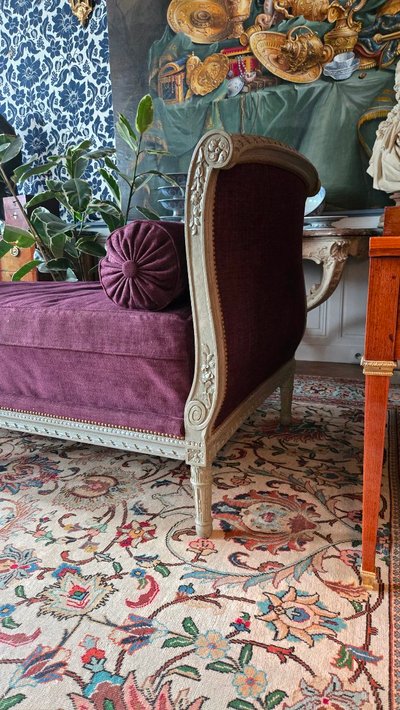
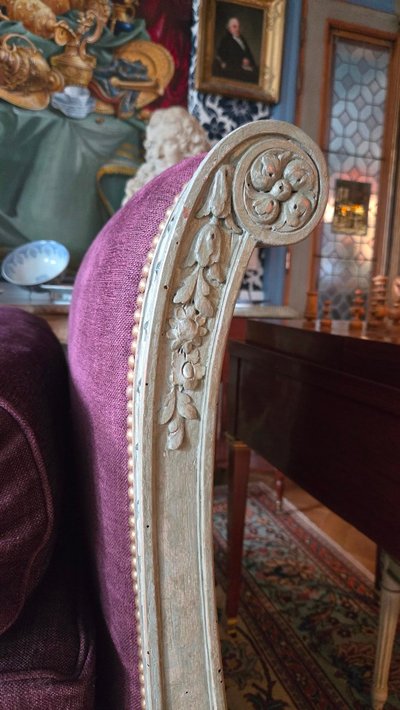
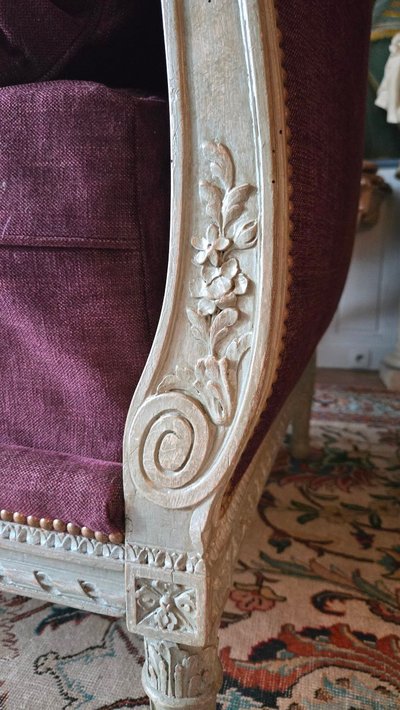
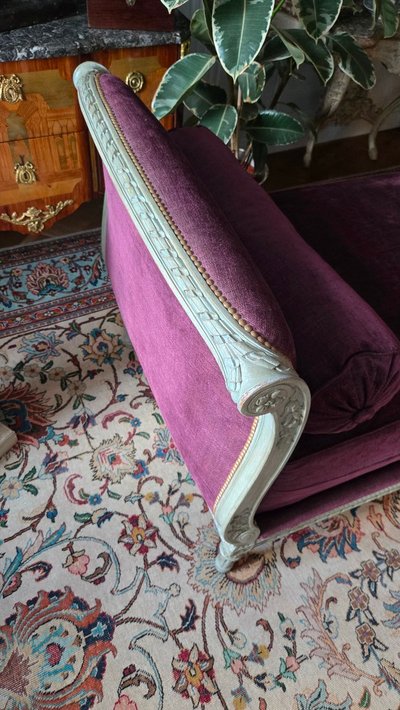
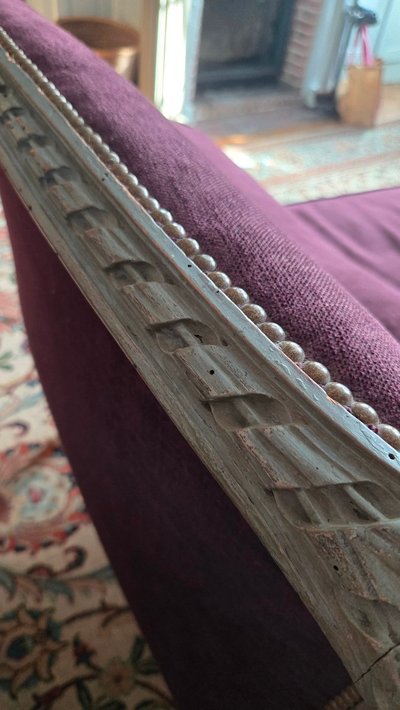
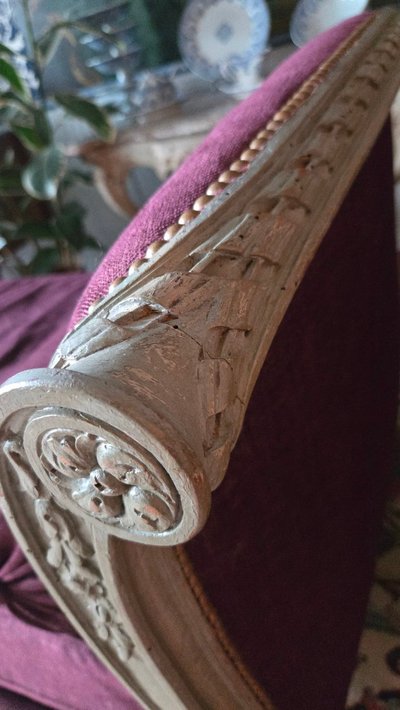
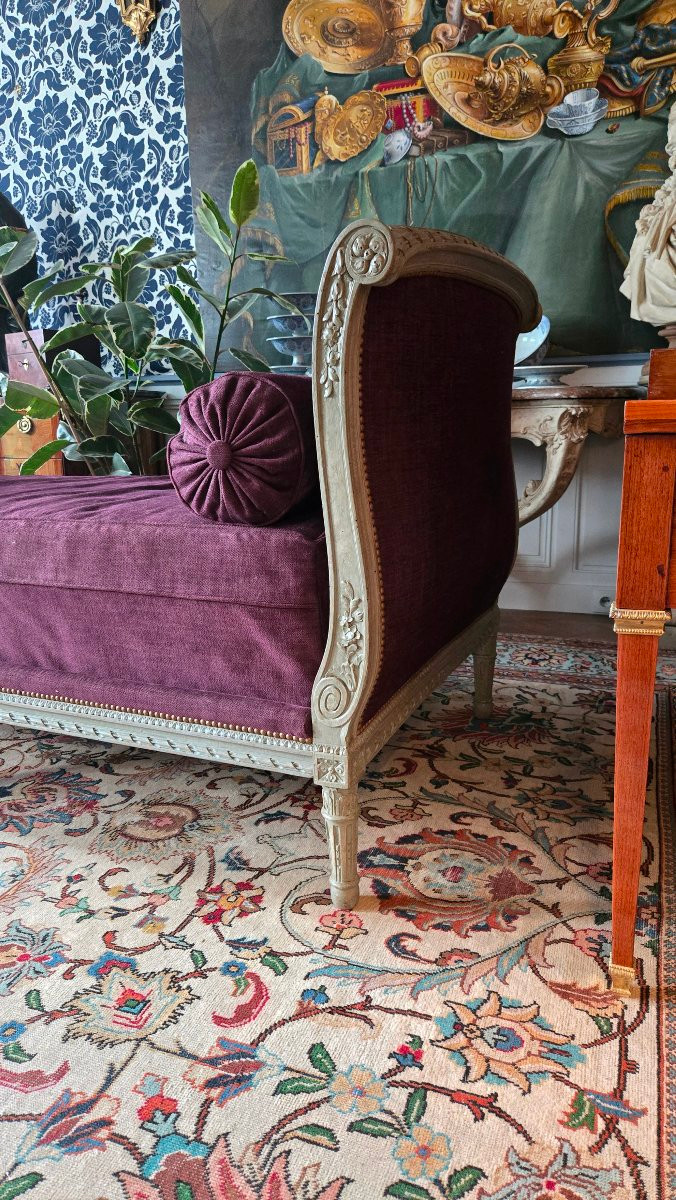
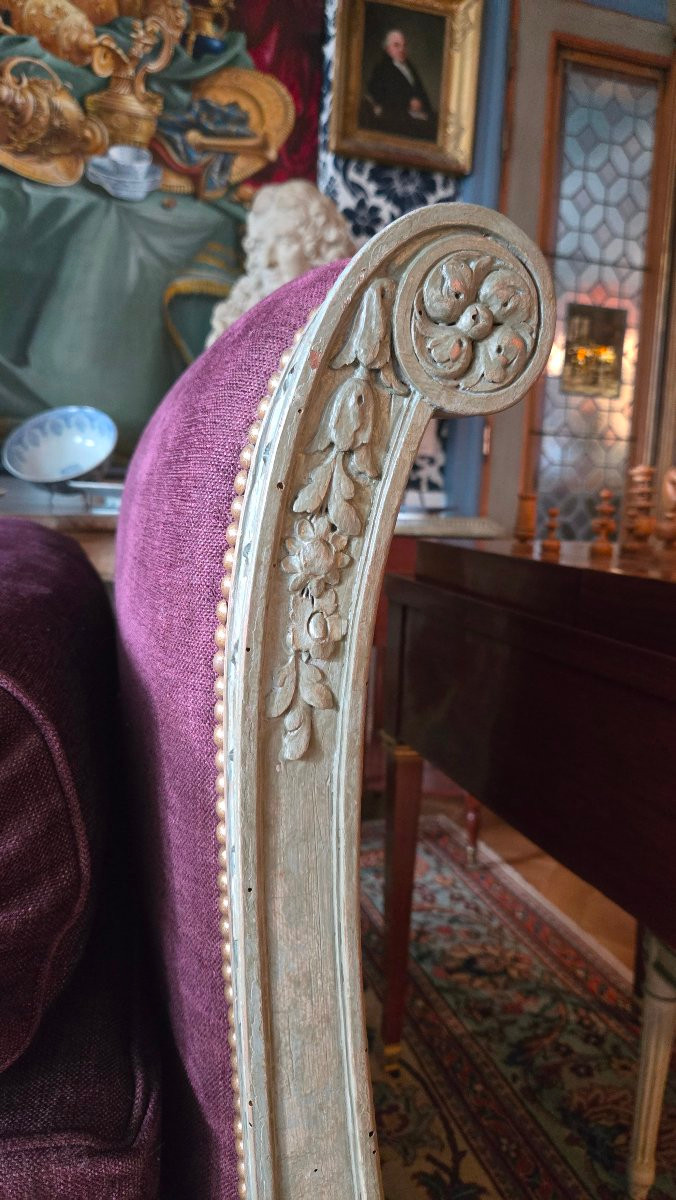
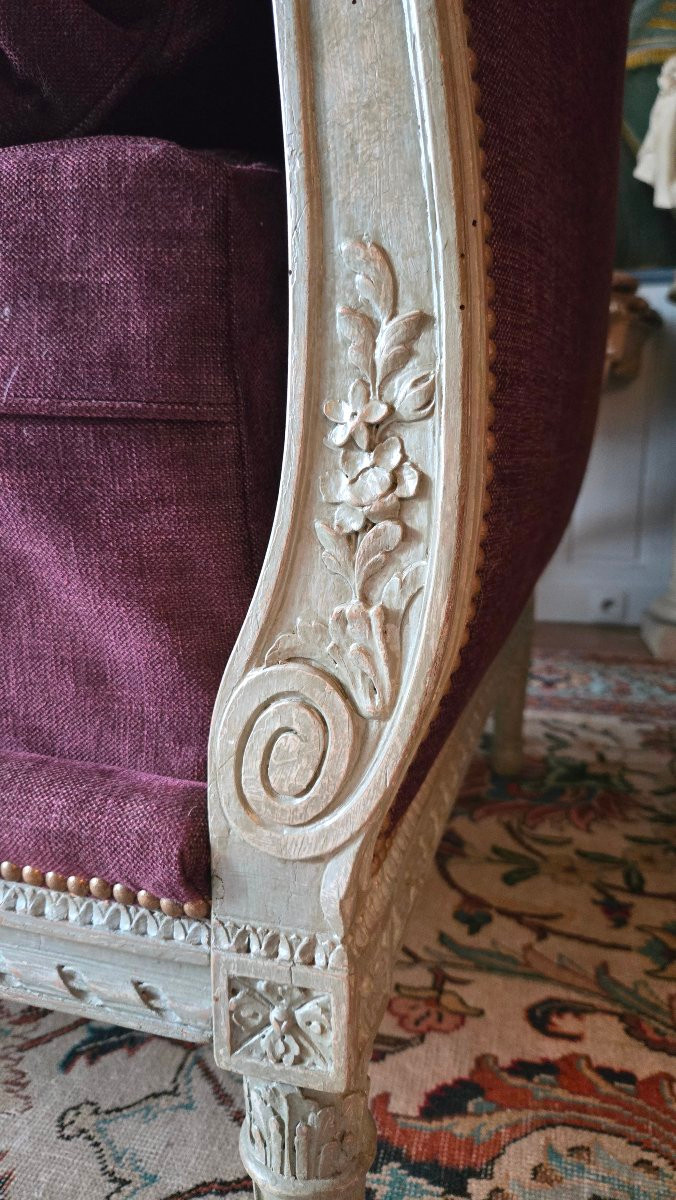
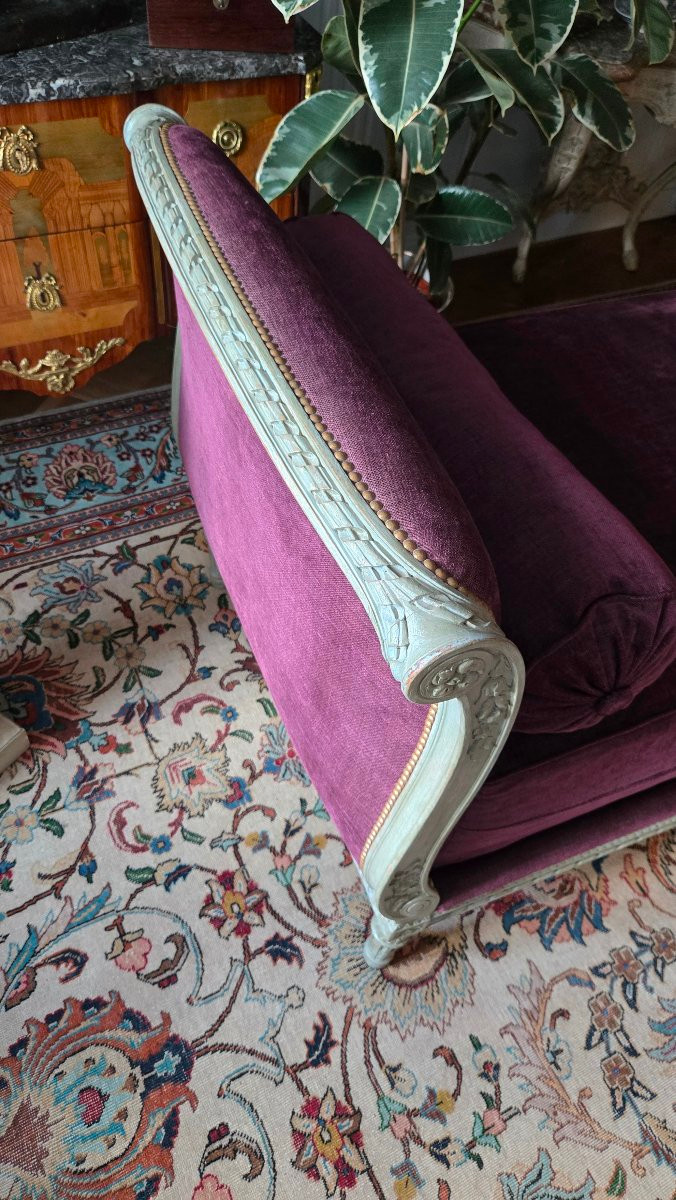
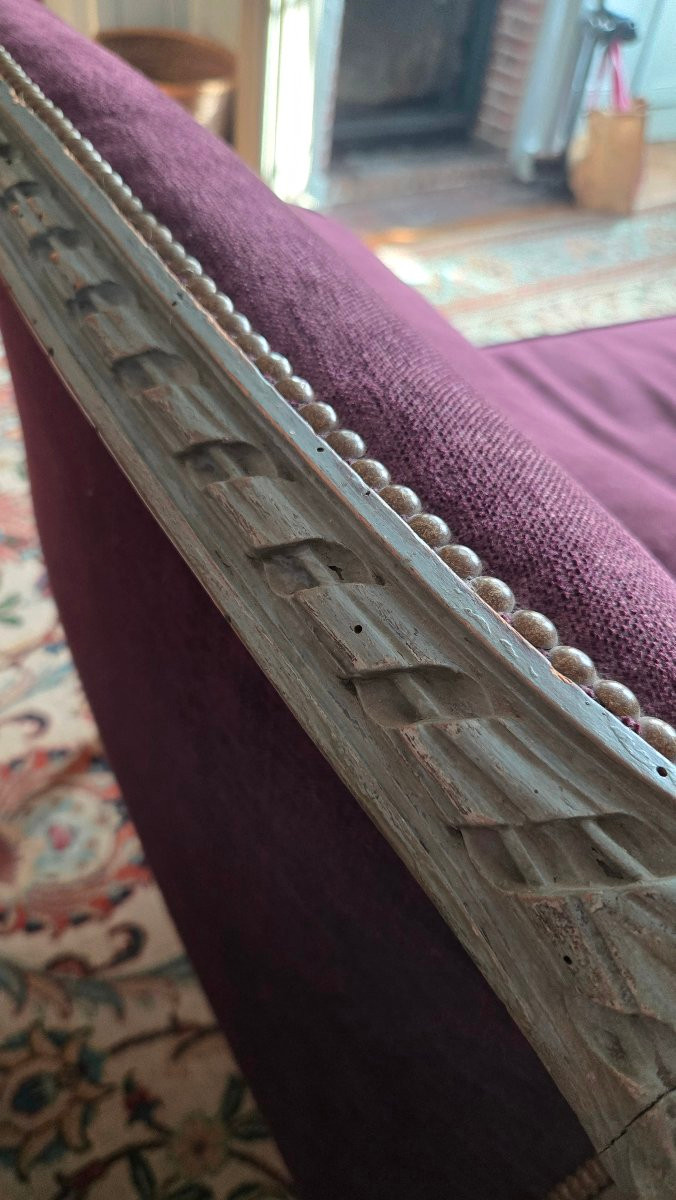
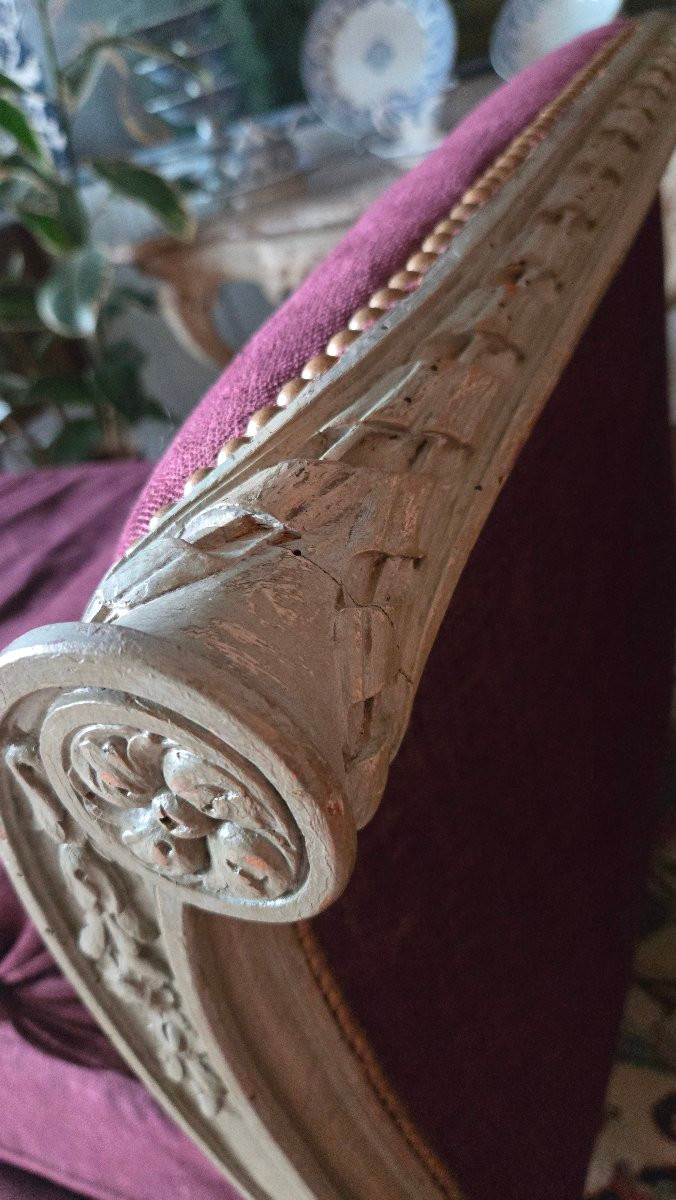
Crafted from molded and carved beech wood, it features two headboards with inverted backs, forming large curves that terminate in scrollwork with leafy rosettes.
The posts are adorned with cascading flowers and foliage, following the curves of the headboards. The upper sections feature a design of swirling ribbons, while the longitudinal crossbars are carved with intertwined ribbons and heart-shaped motifs.
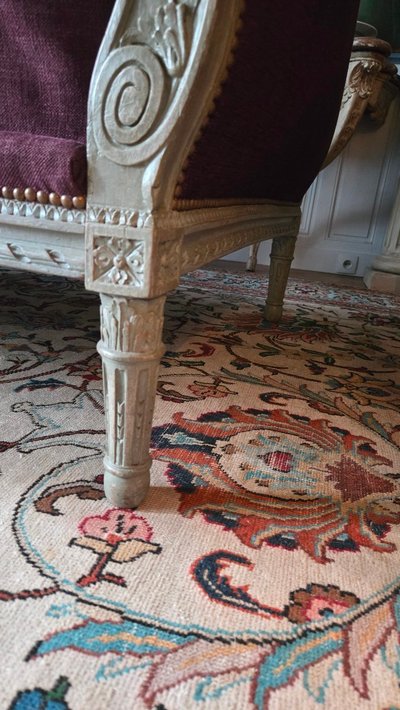
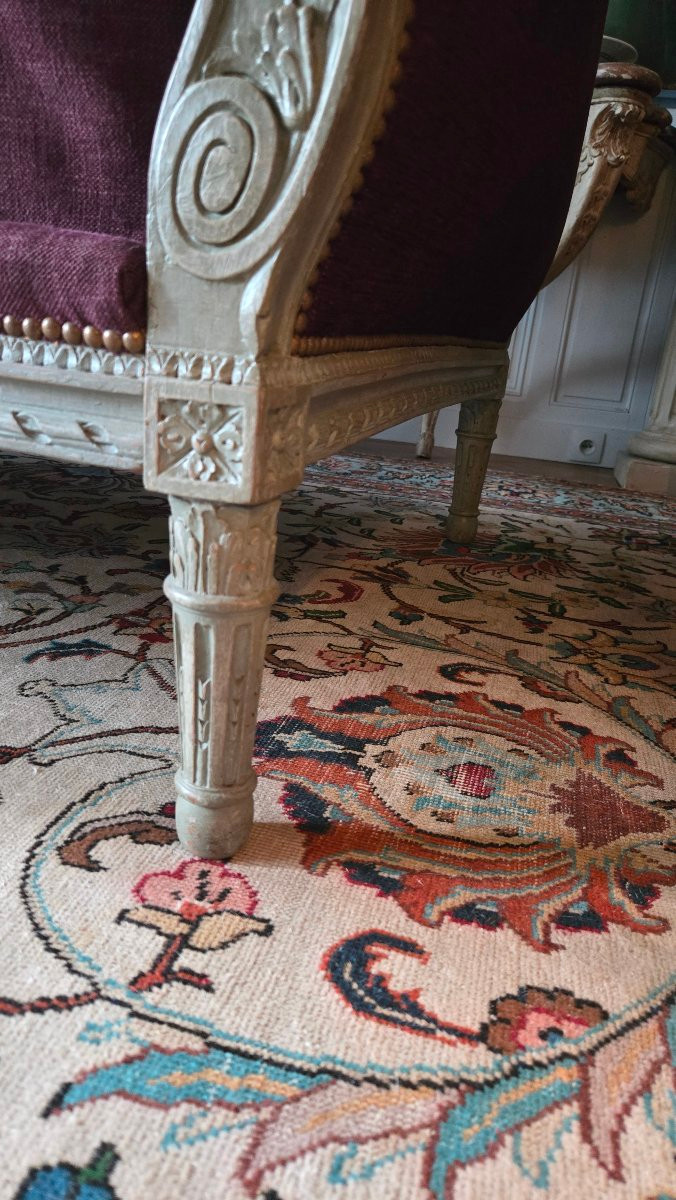
The connecting blocks are adorned with fleurons set within square medallions.
The tapered, fluted legs feature upright leaves at their upper sections, while the fluting is embellished with small carved plant stems.
The entire piece is painted in a shade of aged blue verging on verdigris. This finish, with its nuances, signs of wear, and small irregularities, highlights the relief of the carving.
Unlike Georges Jacob’s original model, which measures 195 cm and rests on four legs, our example has a total length of 225 cm.
This enlargement provides an actual sleeping surface measuring 190 × 80 cm. To ensure stability,
Ref: GE330XS6LI
| Condition | Very good |
| Style | Louis XVI (Beds of Louis XVI Style) |
| Period | 19th century (Beds 19th century) |
| Country of origin | France |
| Shipping Time | Ready to ship in 4-7 Business Days |
| Location | 89260, La chapelle sur oreuse, France |
4 commitments to buy with confidence

 English
 Français
 Italiano
 Deutsch