

Would you like more images?


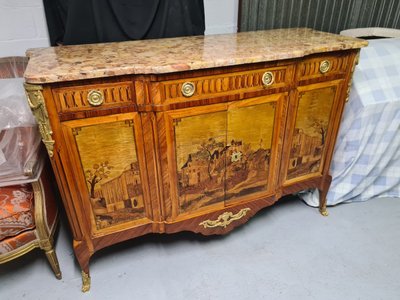
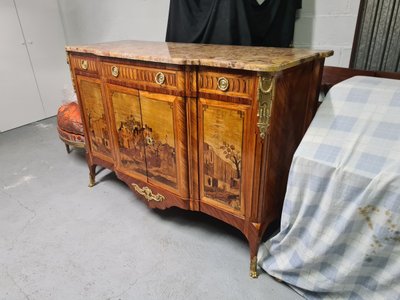
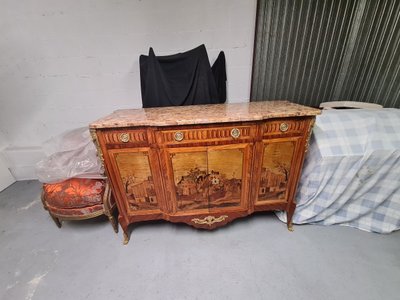
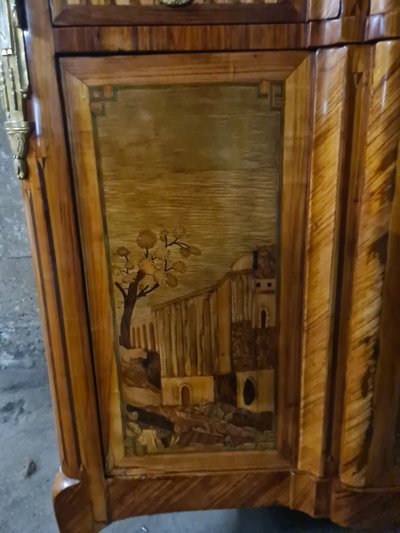
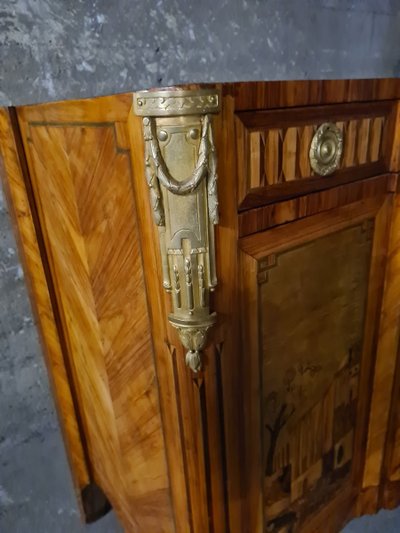
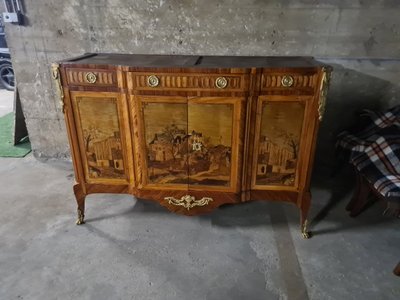
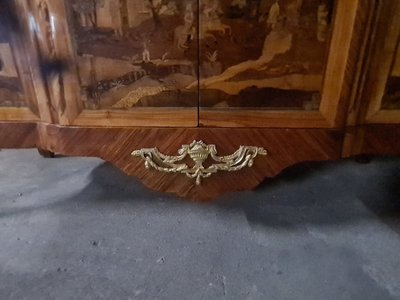
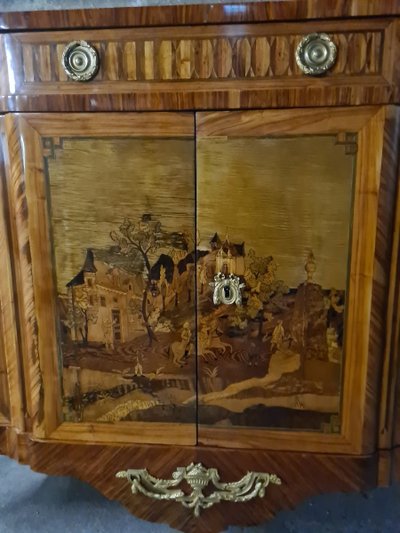
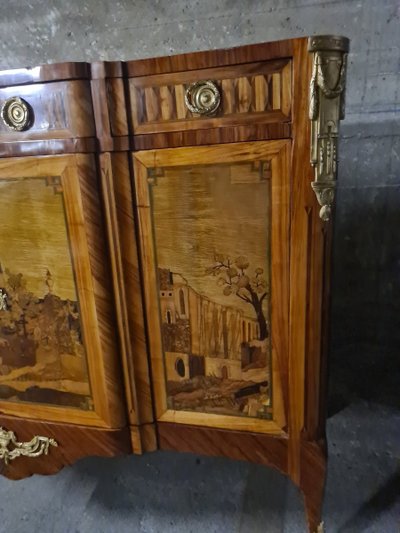
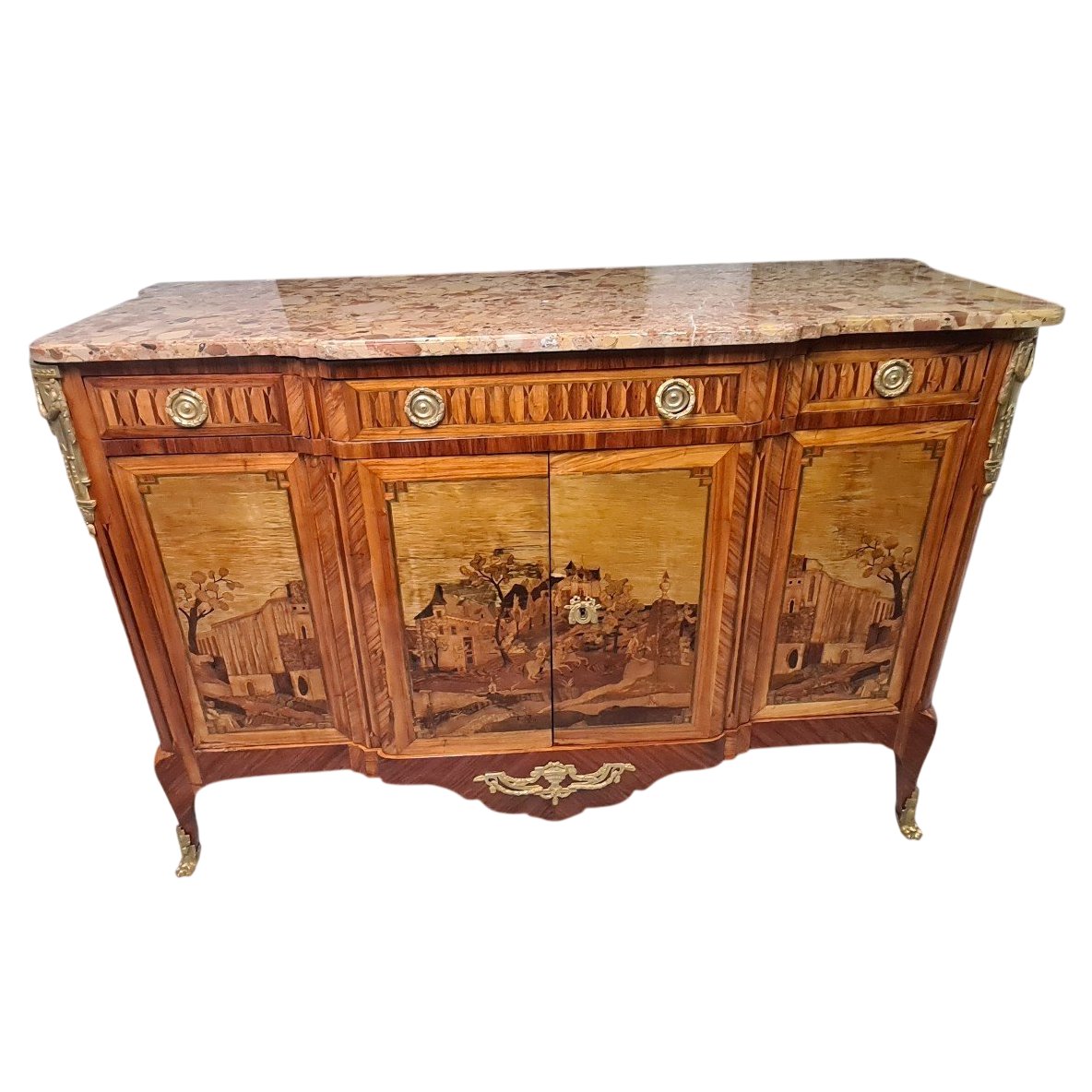
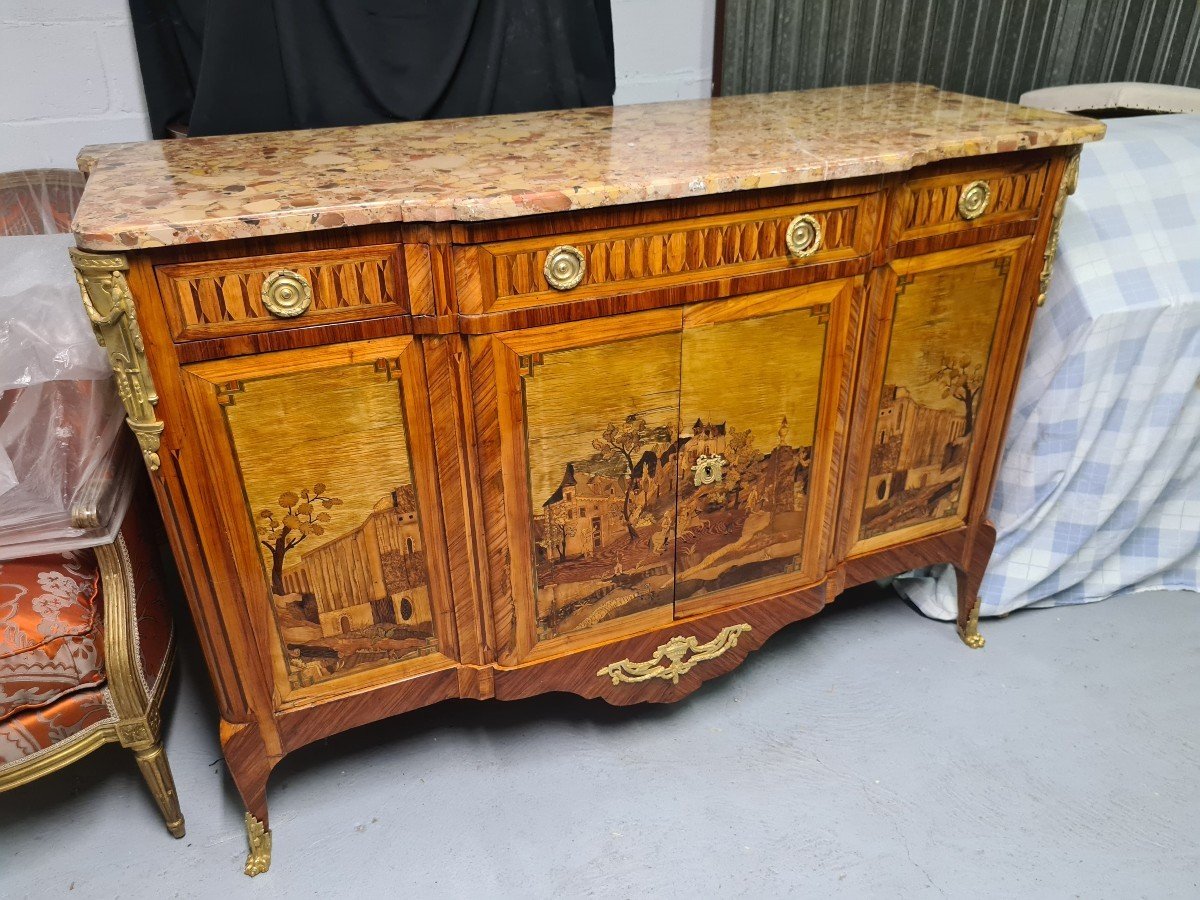
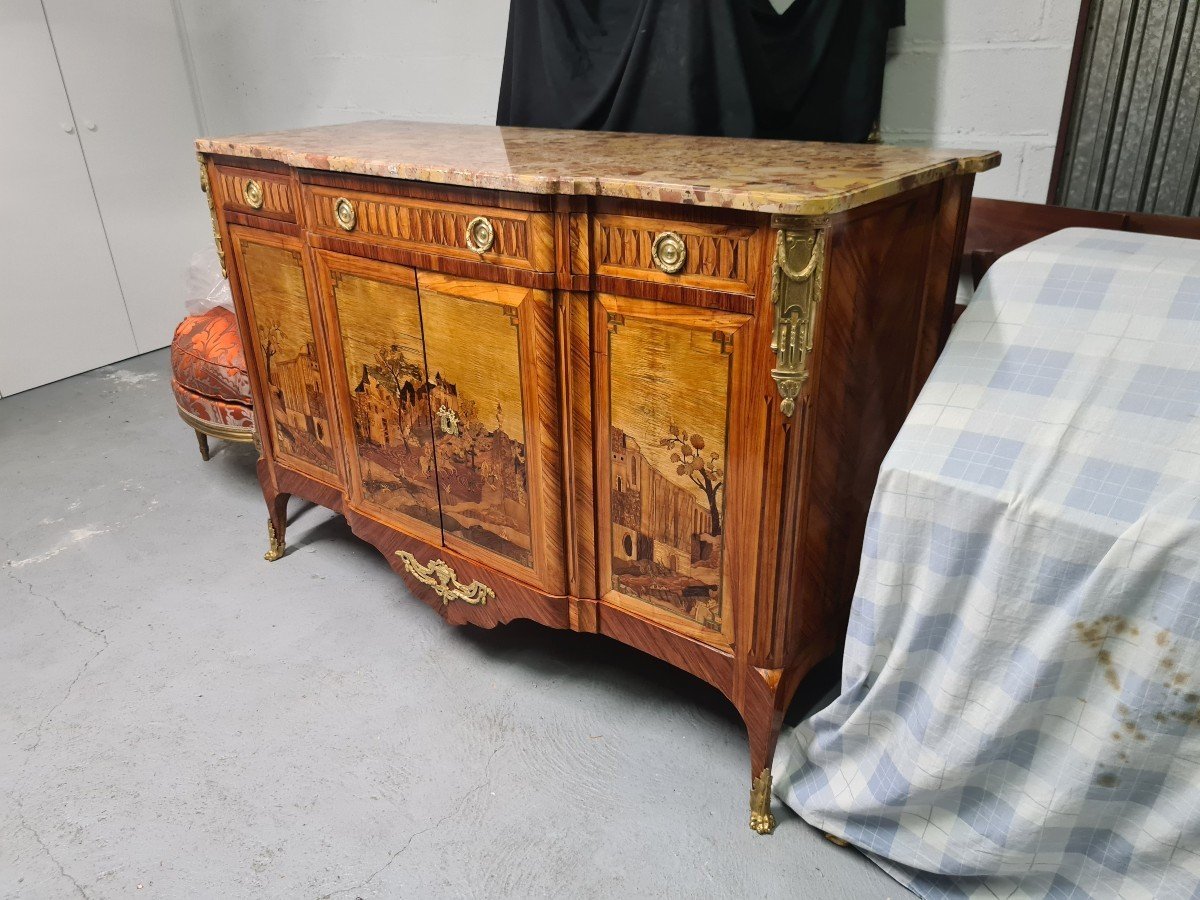
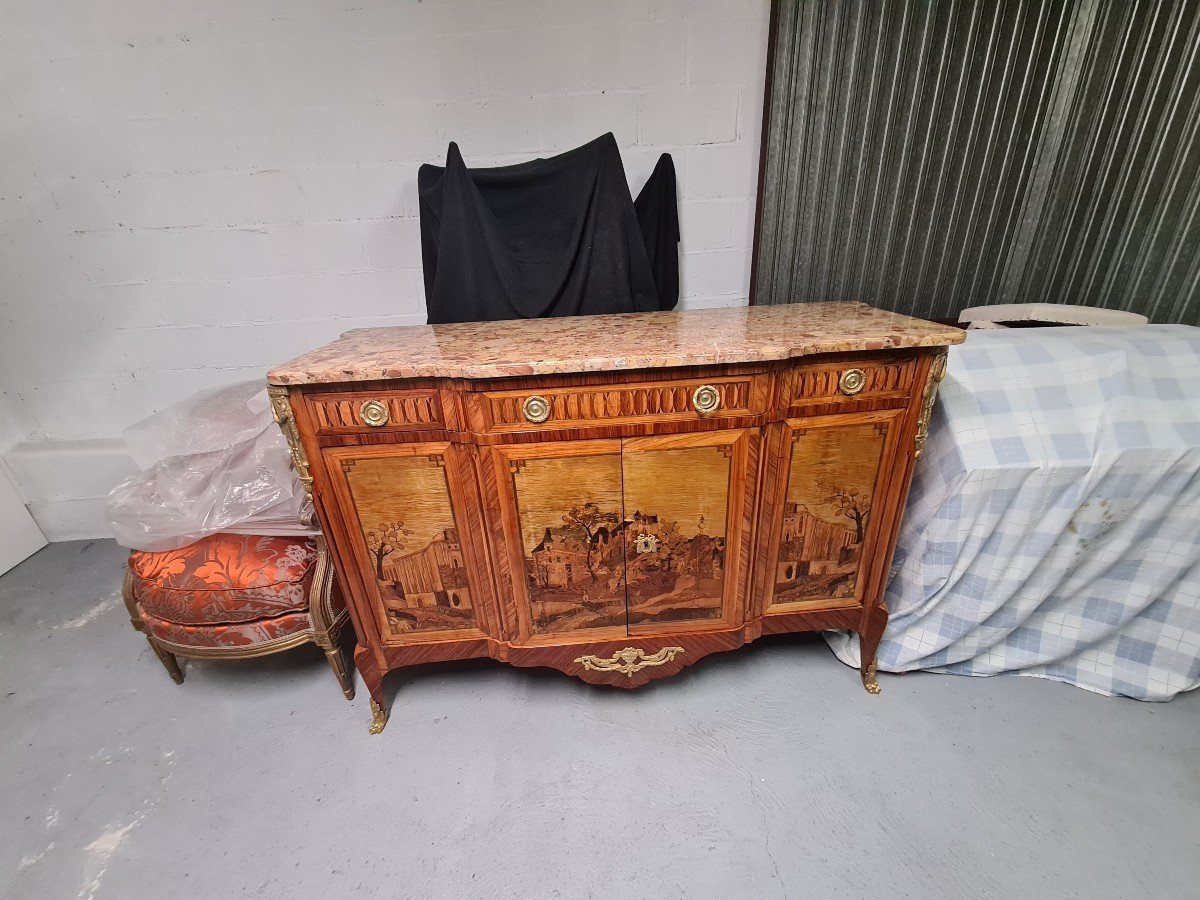
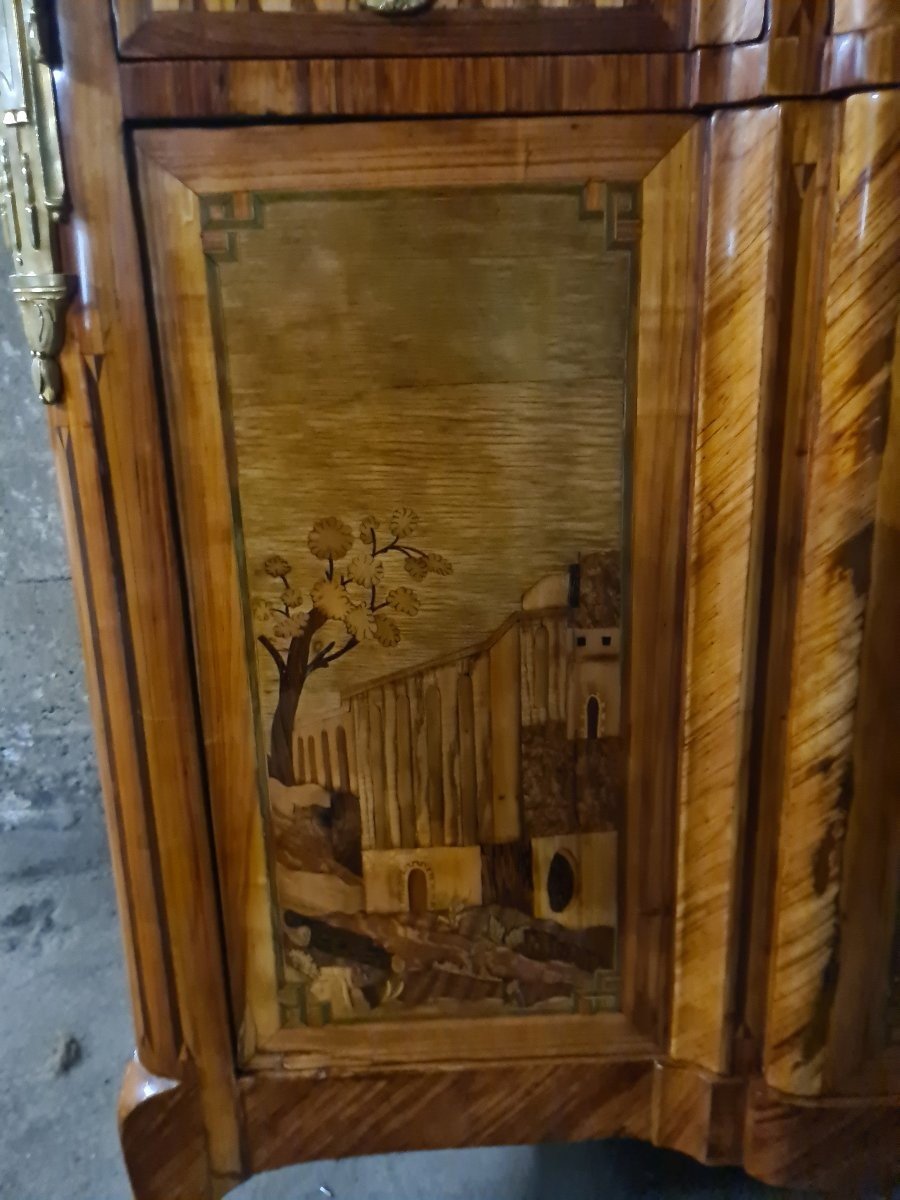
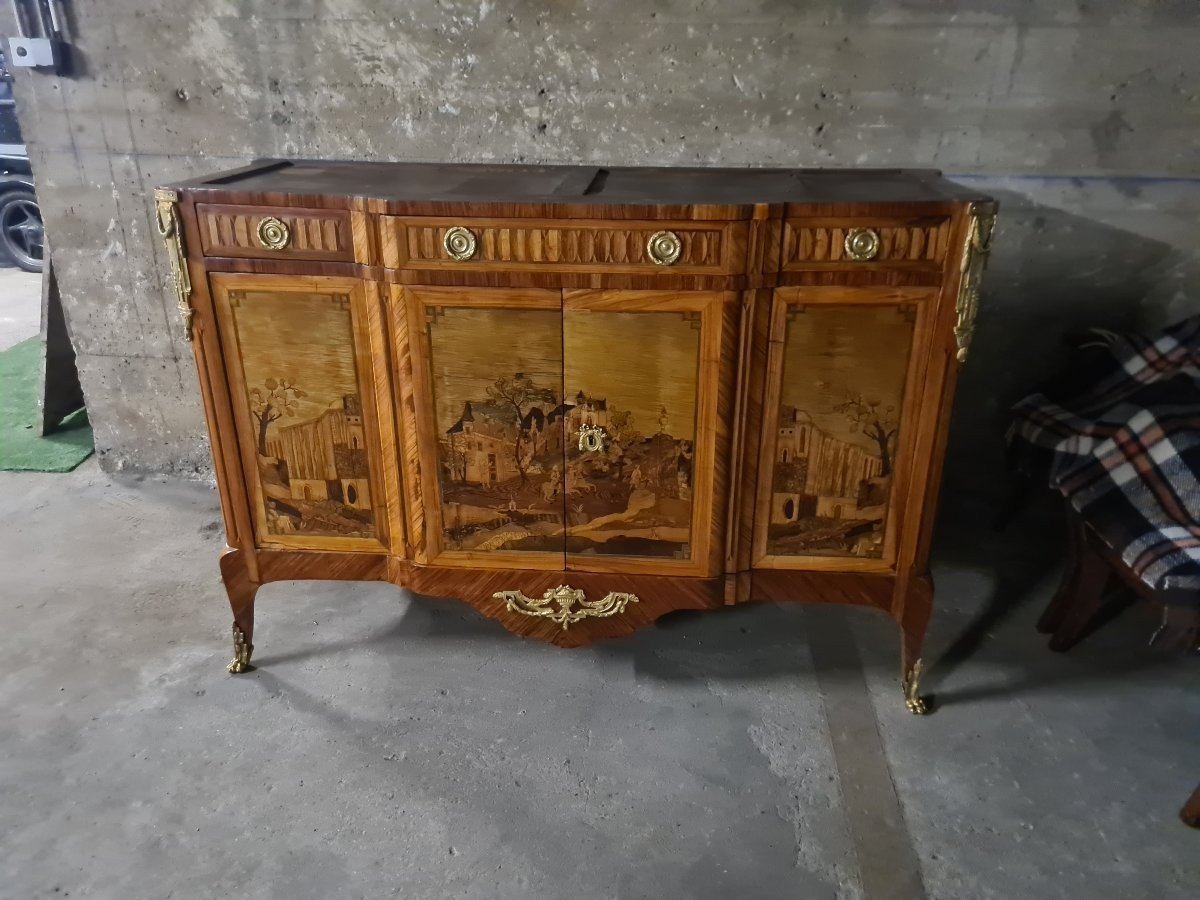
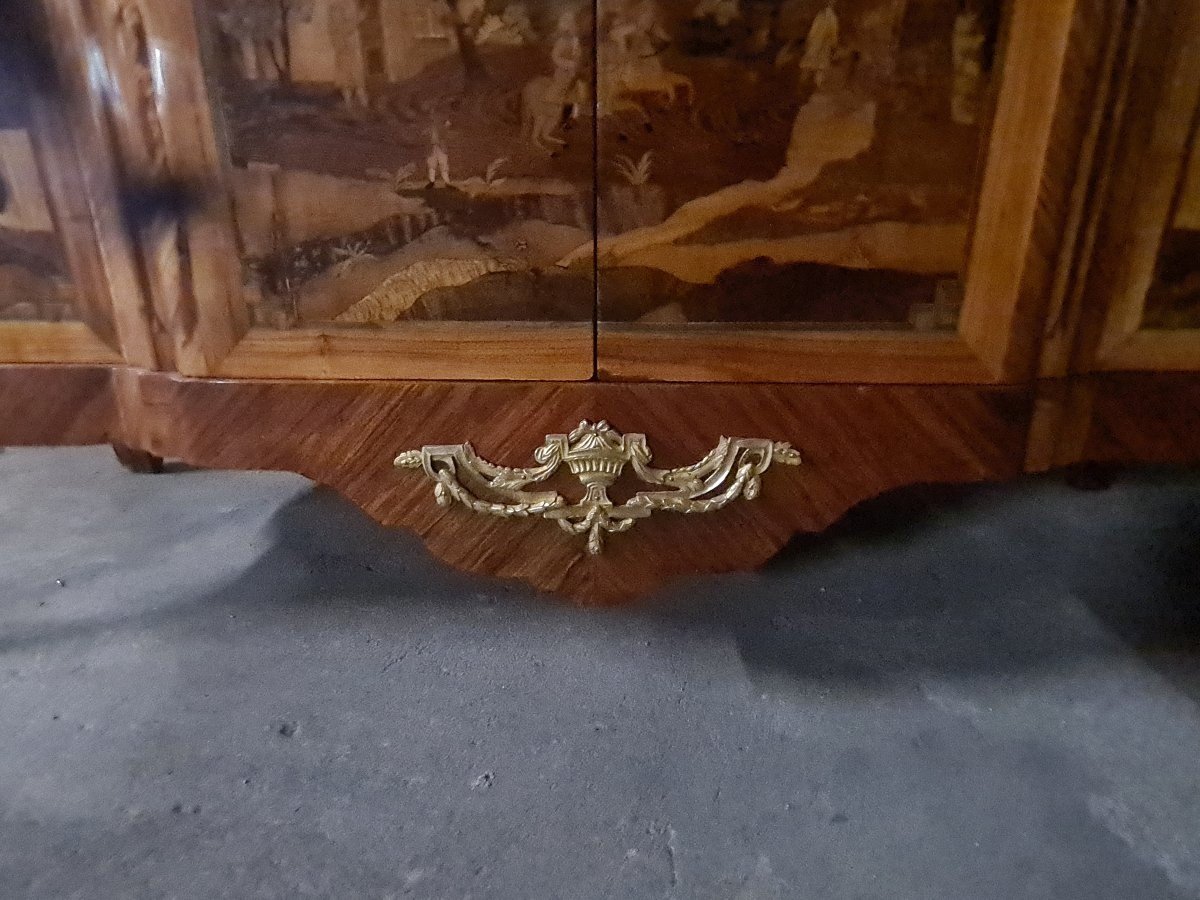
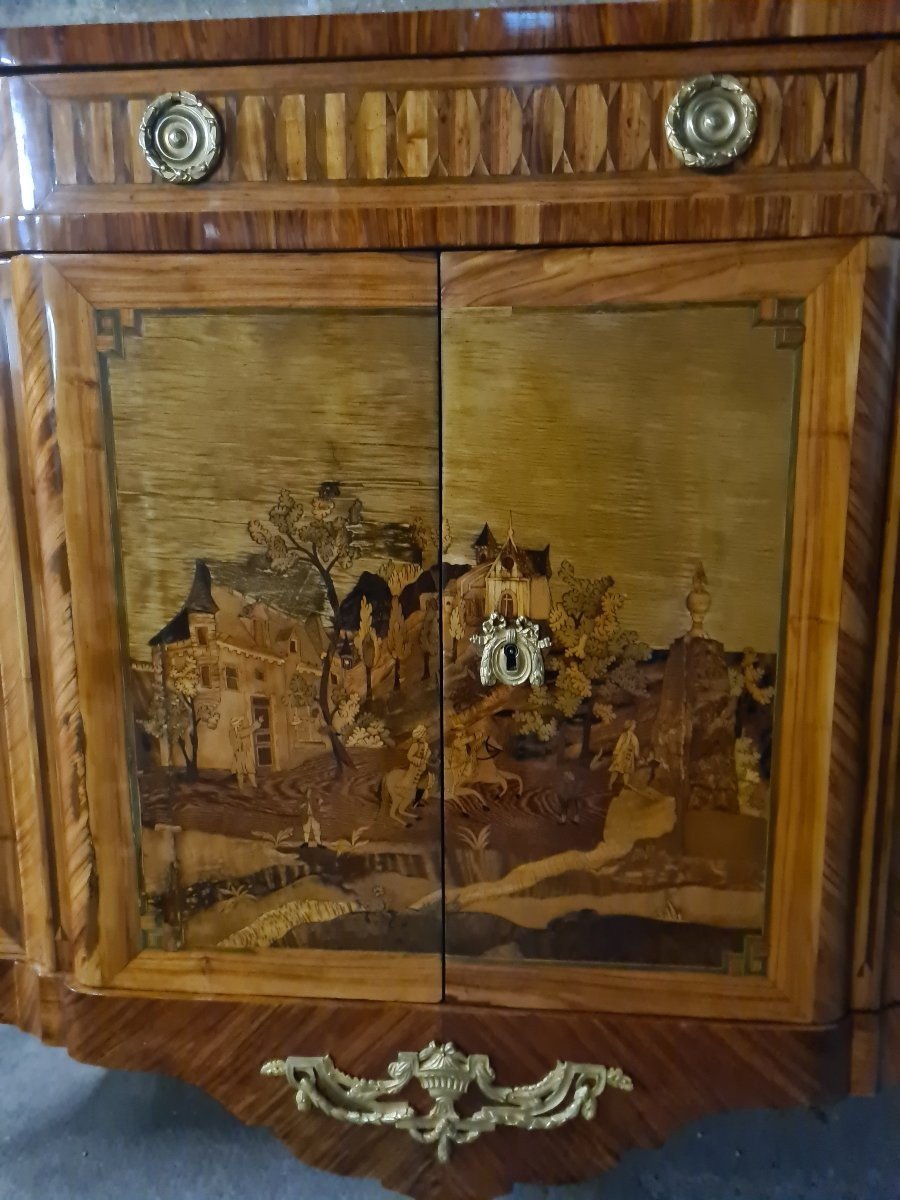
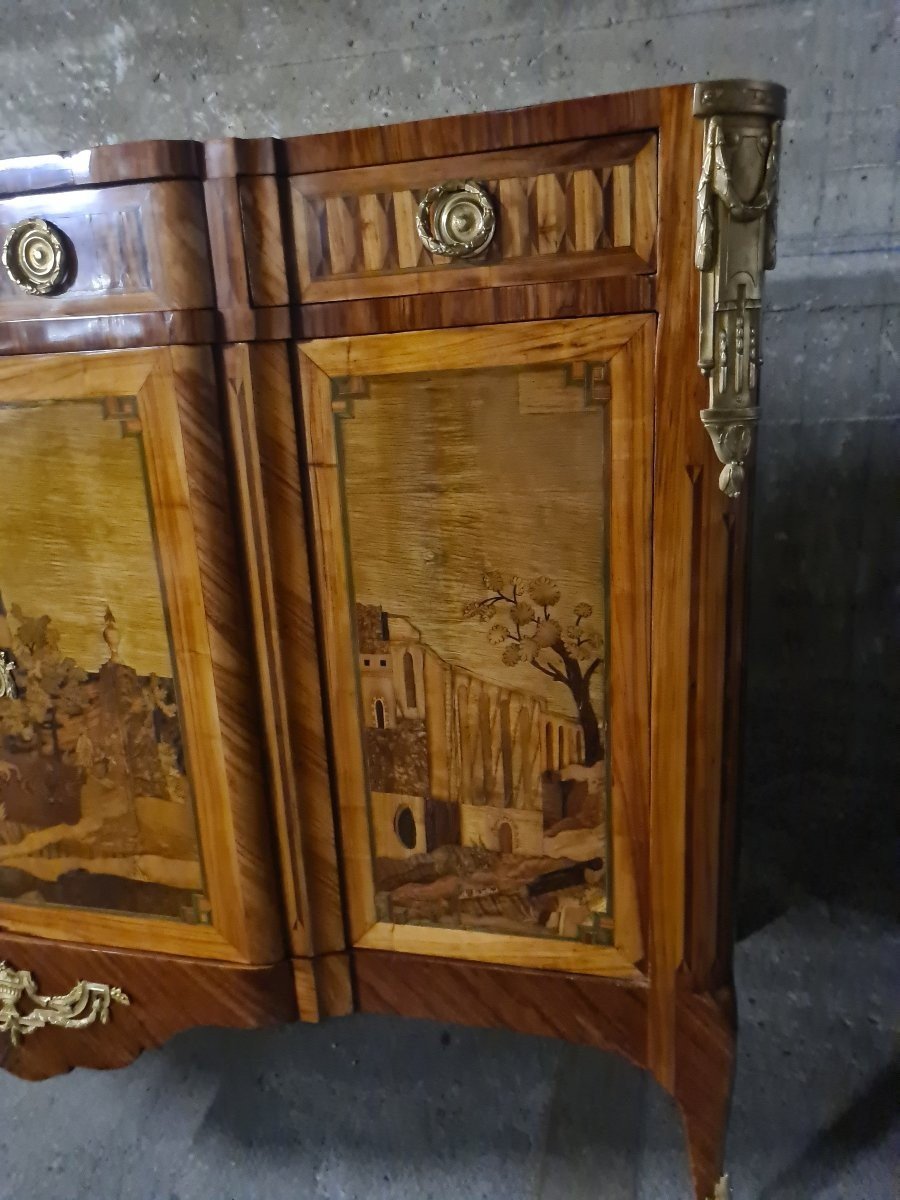
Large sideboard or enfilade with central projection in veneered wood with inlaid decoration of ruins and landscapes. The cabinet opens with 3 belted drawers and two leaves. The rounded uprights rest on a slightly arched base finished with bronze lion claw hooves.
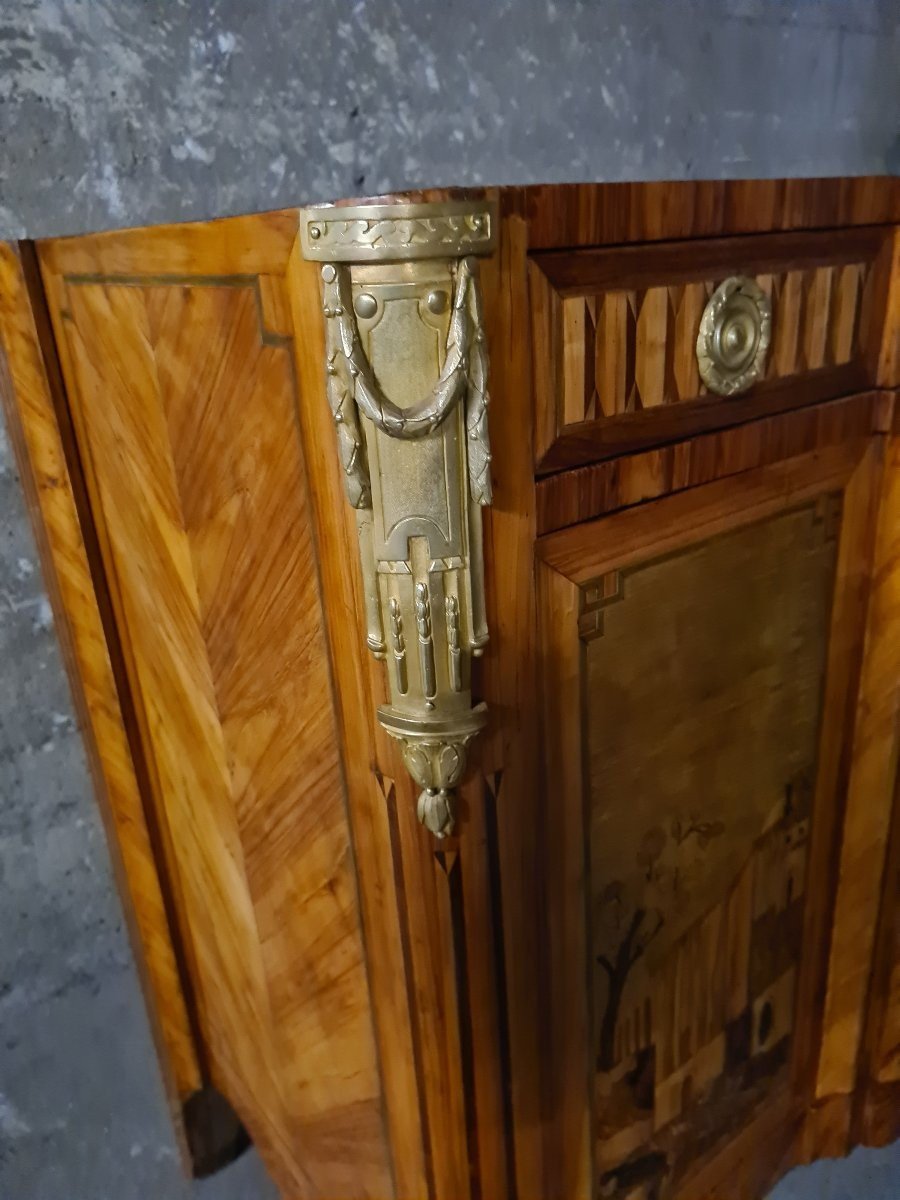
Breche d'Alep marble top. High-quality bronzes. Superb marquetry of rosewood and various exotic woods (rosewood, amaranth, boxwood, etc.).
H: 112 cm; W: 166 cm; D: 65 cm
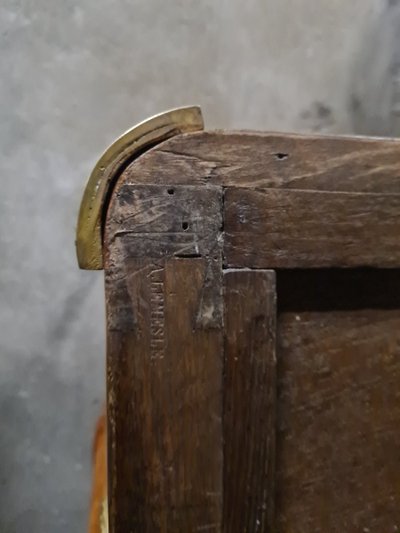
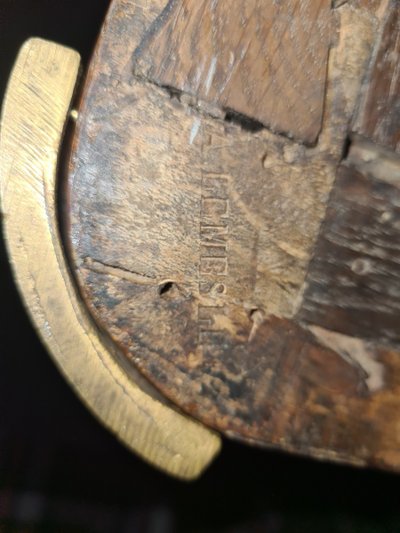
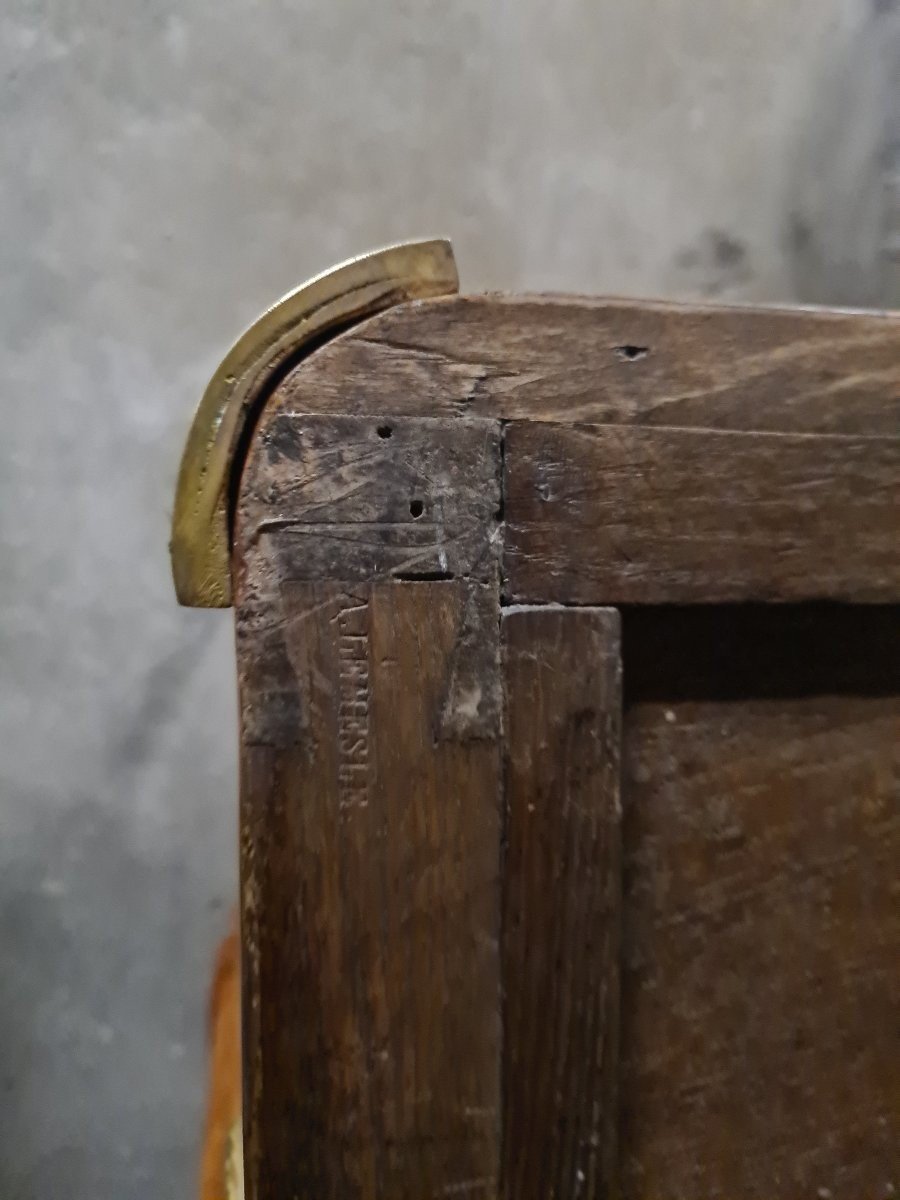
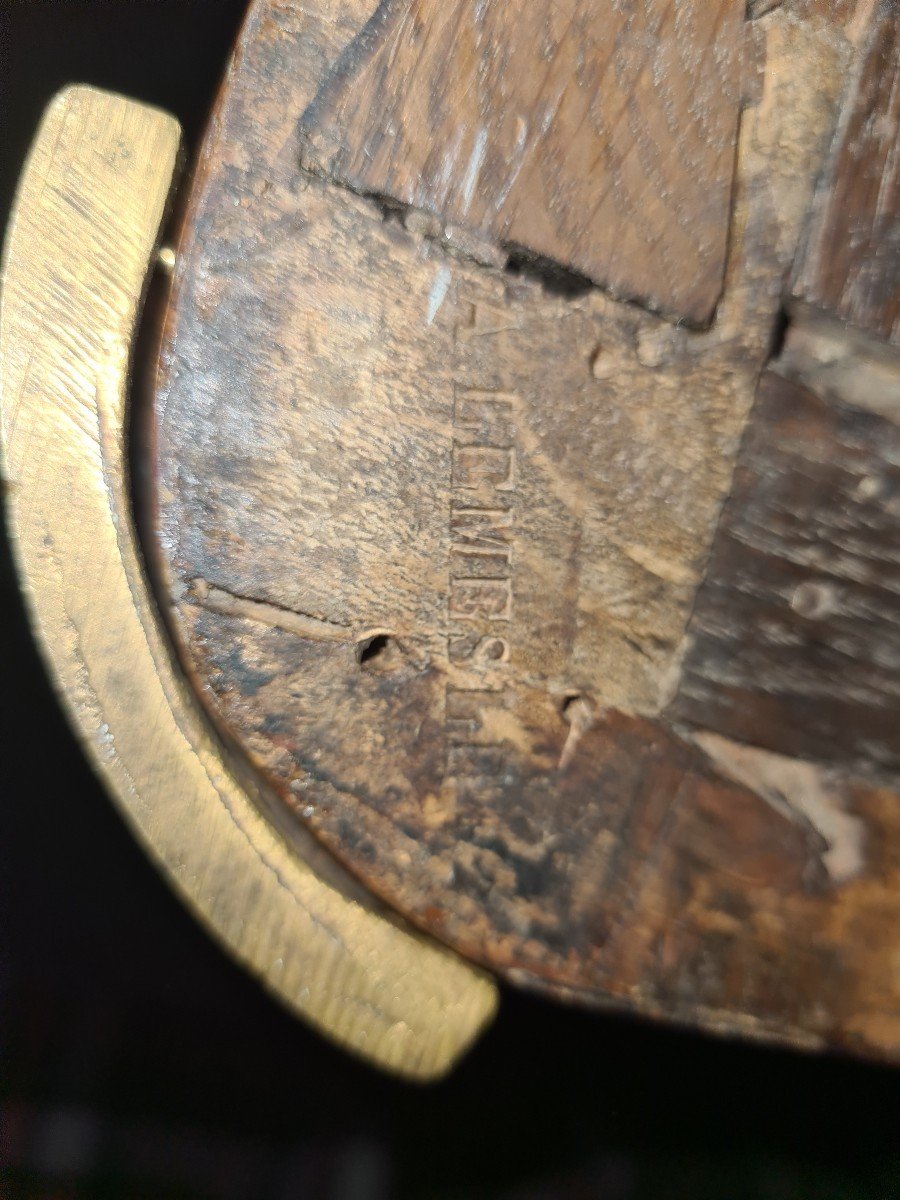
Stamped A Lemasle - Late Louis XVI period
Excellent condition - reconditioned in our workshop - stamped varnish. Transport included in France.
Biography :
According to "Les ébénistes du XVIIIe siècle" by François de Salverte LEMASLE ran a cabinetmaking store in Nantes, place Saint-Nicolas, towards the end of the reign of Louis XVI. Although he was not a member of the carpenters' guild, he had most of his goods made at his own expense, in a workshop employing a dozen workers. In 1795, there was still a furniture factory in Nantes, opposite the Bourse, run by the Lemasle brothers, undoubtedly sons of the former.
Bibliography :
1-F. de Salverte, les ébénistes du XVIIIème siècle, Paris, 1975, pl. L.X.
2-O. Brackett, Catalogue of the Jones Collection, t.1, pl. 35-36, N° 65-67
3-G. de Bellaigue, Ruins in Marquetry, Apollo, 1968
4-G. de Bellaigue, Engravings and the French eigthteenth-century marqueteur, Burlington Magazine, May 1965, pp. 240-250
5-T. Dell, Furniture in the Frick Collection, vol. V, Princeton 1992, p. 364
6- Pierre Kjellberg, 18th-century French furniture, page 521.
Our opinion: a truly spectacular piece of furniture (in terms of size and marquetry) in excellent condition. The bronzes are original.
They are less exuberant so as not to steal the limelight from this exceptional marquetry.
The marble is also original, very thick and the color of Aleppo Breche.
Did you know? The fashion for furniture inlaid with architectural decorations spread in the 1770s, at the same time as the neoclassical movement was developing. Cabinetmakers continued to draw their models from the engravings of ornamentalists, but their inspiration took on a broader register, in line with the return of a taste for antiquity. Architectures, ruins, port scenes, trophies and vases complement the floral and foliage motifs.
The most sophisticated pieces, such as our secretary, were commissioned, as Geoffroy de Bellaigue demonstrates (3-4), with the customer choosing the engravings to be reproduced according to his taste.
Ref: P7VMSHHDAW
| Condition | As new |
| Style | Louis XVI (Buffets, Sideboards Furniture of Louis XVI Style) |
| Period | 18th century (Buffets, Sideboards Furniture 18th century) |
| Country of origin | France |
| Width (cm) | 166 |
| Height (cm) | 112 |
| Depth (cm) | 66 |
| Materials | Rosewood |
| Shipping Time | Ready to ship in 2-3 Business Days |
| Location | 75017, Paris, France |
4 commitments to buy with confidence

 English
 Français
 Italiano
 Deutsch