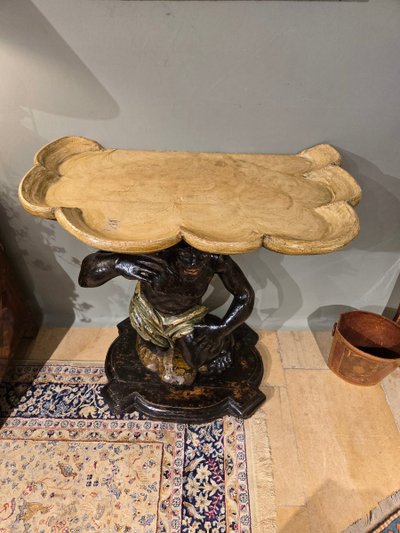
Venetian console table with a Moorish figure supporting a seashell – late 17th, early 18th century
slider-bg
more images

Would you like more images?

Venetian console table with a Moorish figure supporting a seashell – late 17th, early 18th century

By Gallery M&N Antiquités
Member of the Authenticity-Quality label
3.800 €
17th century
Louis XIV style
DELIVERY
From: 89260, La chapelle sur oreuse, France

Change your address to get an accurate estimate of shipping costs.

    Item offered for sale by

    See the gallery
    This description has been translated and may not be completely accurate. Click here to see the original

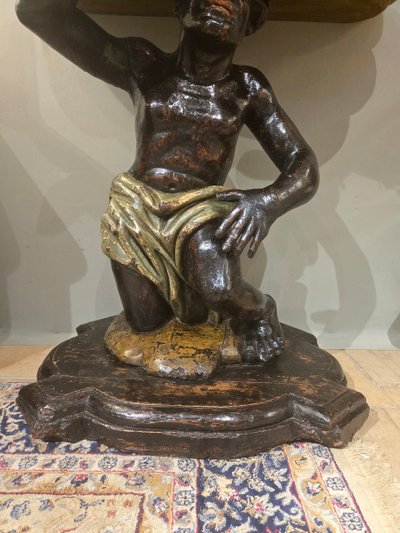
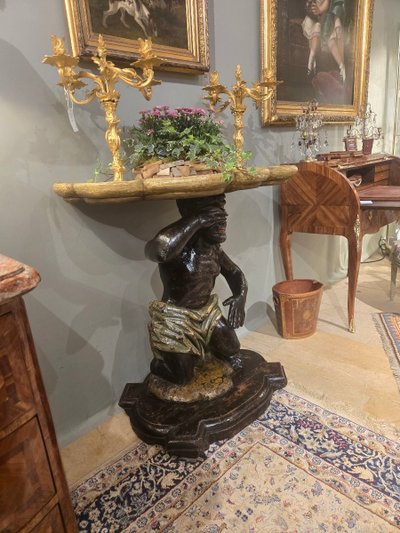
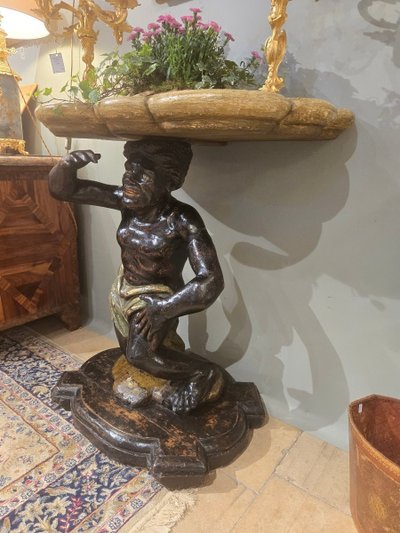
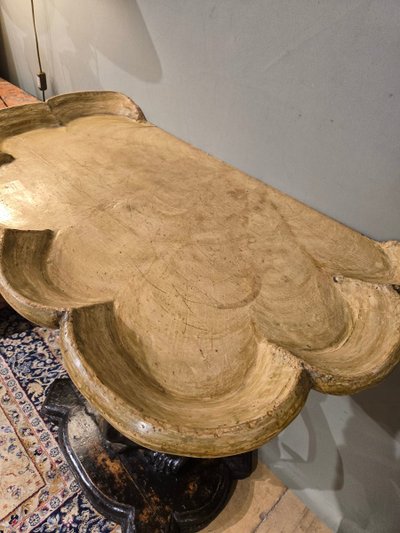
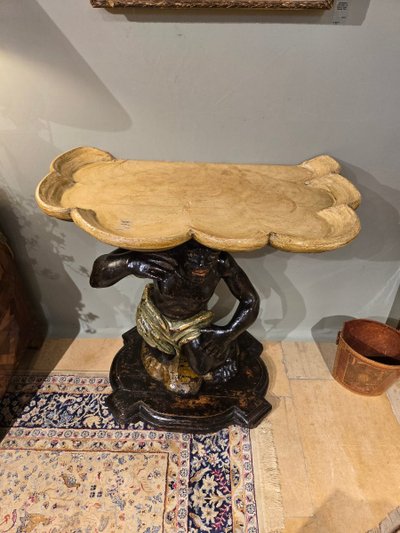
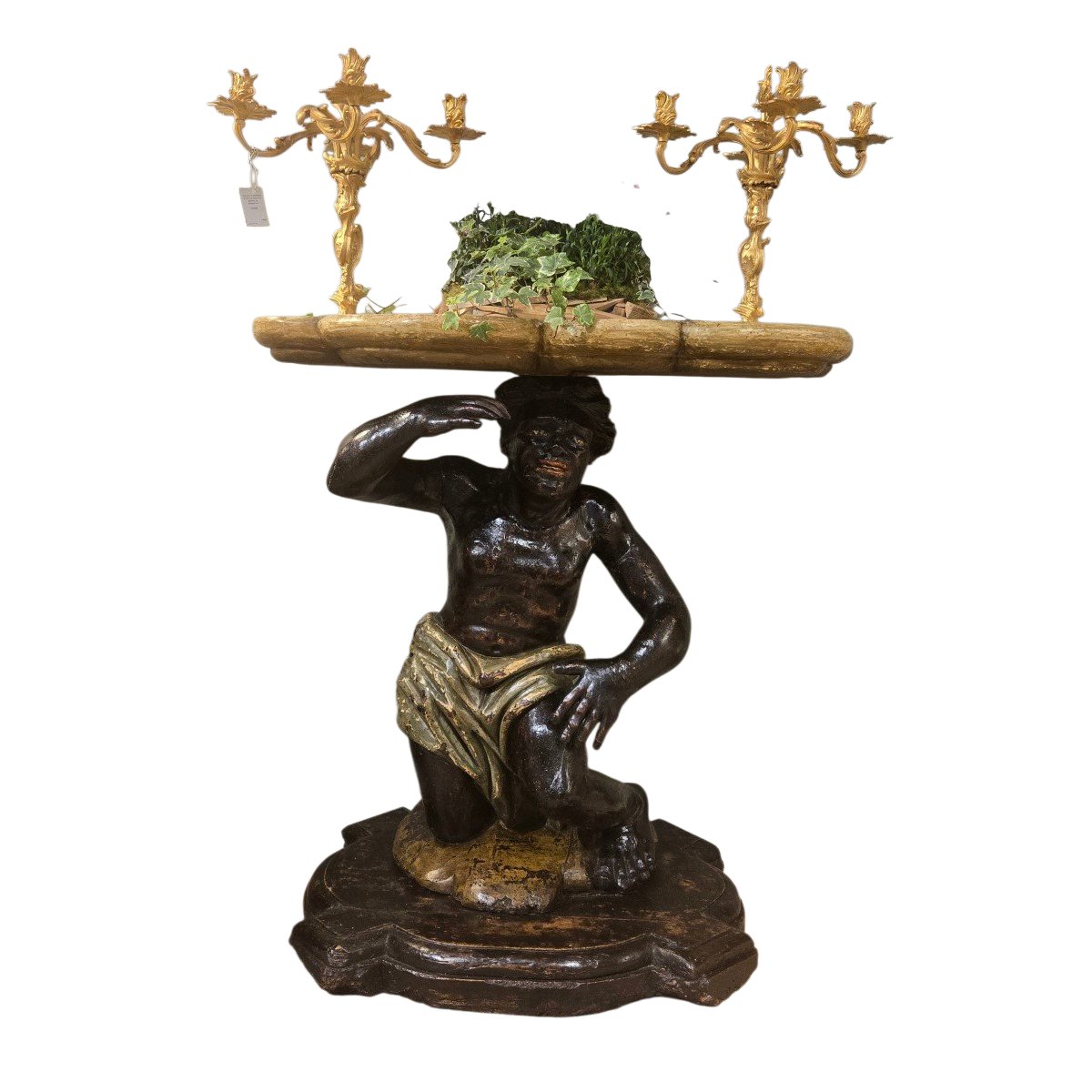
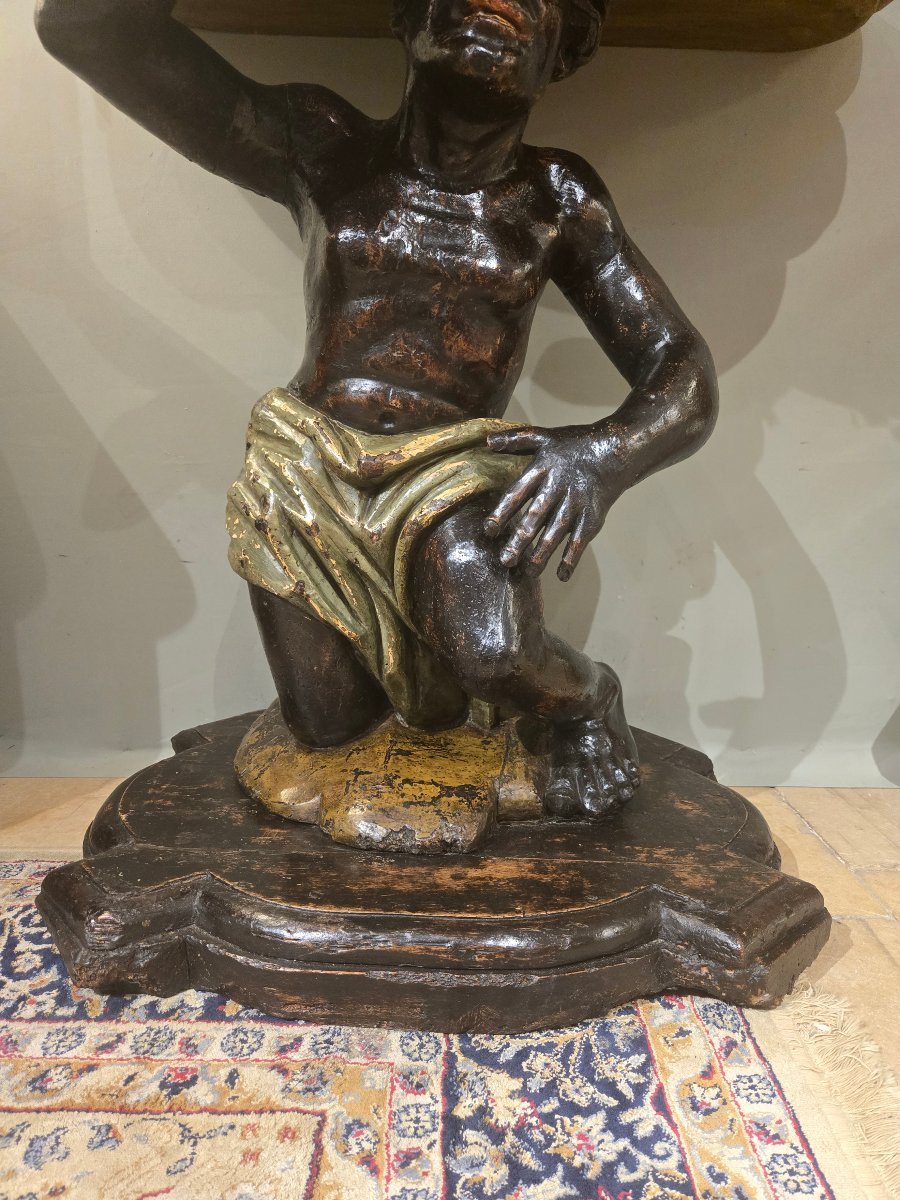
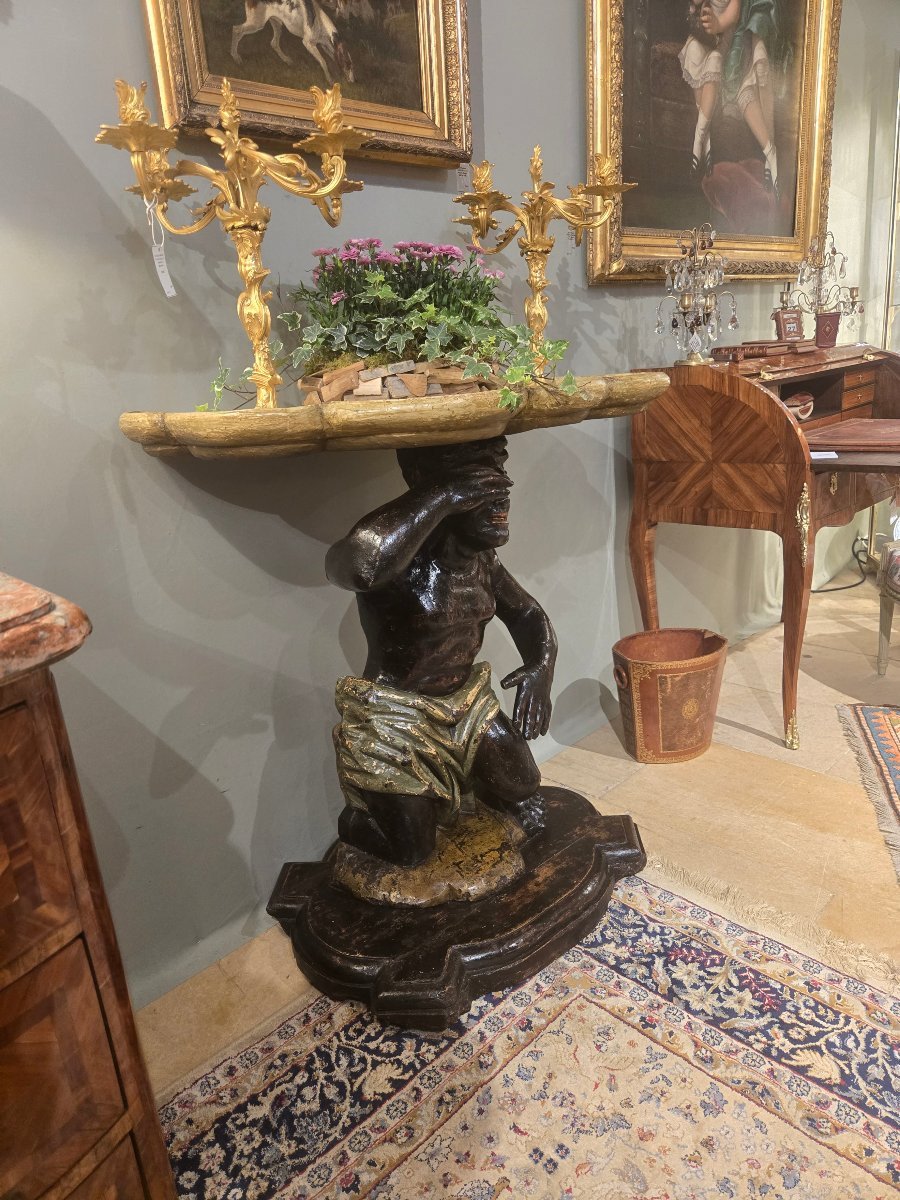
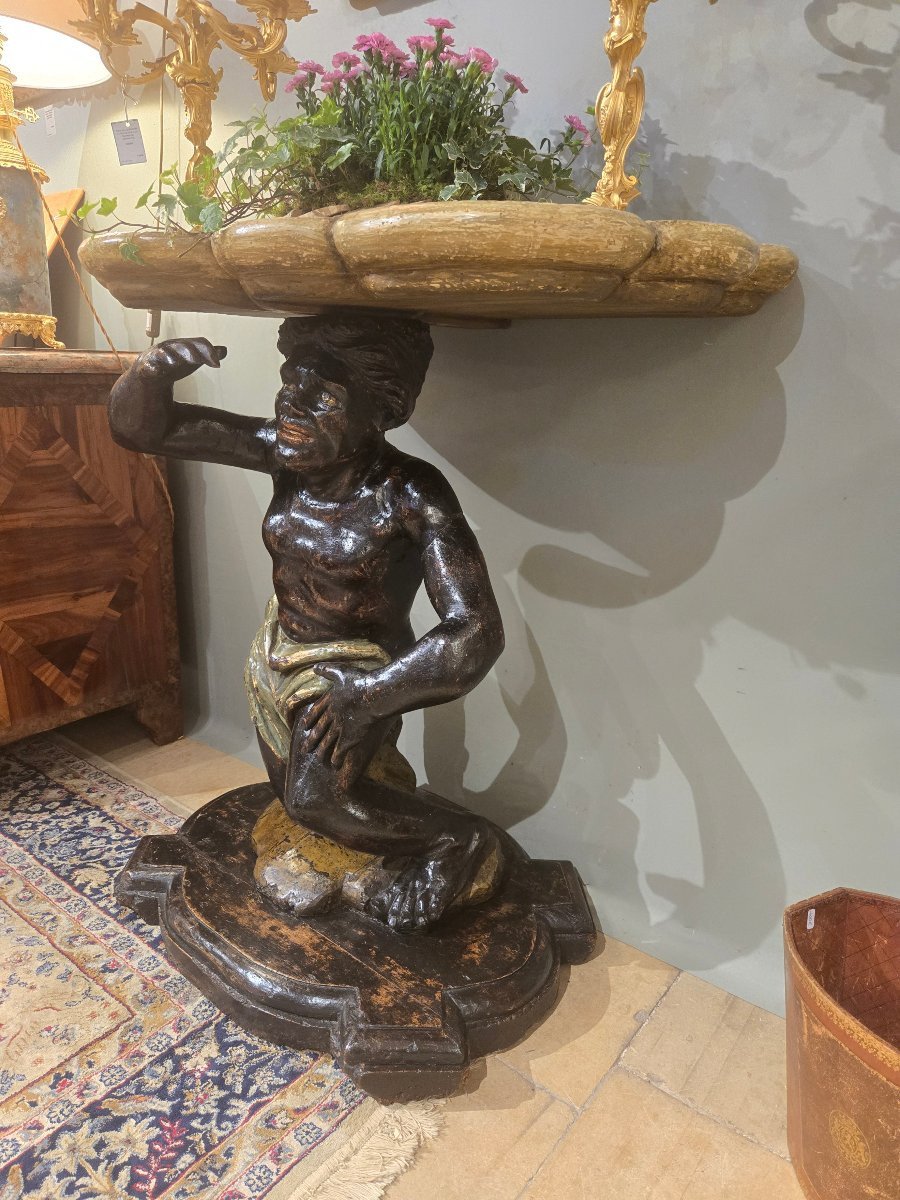
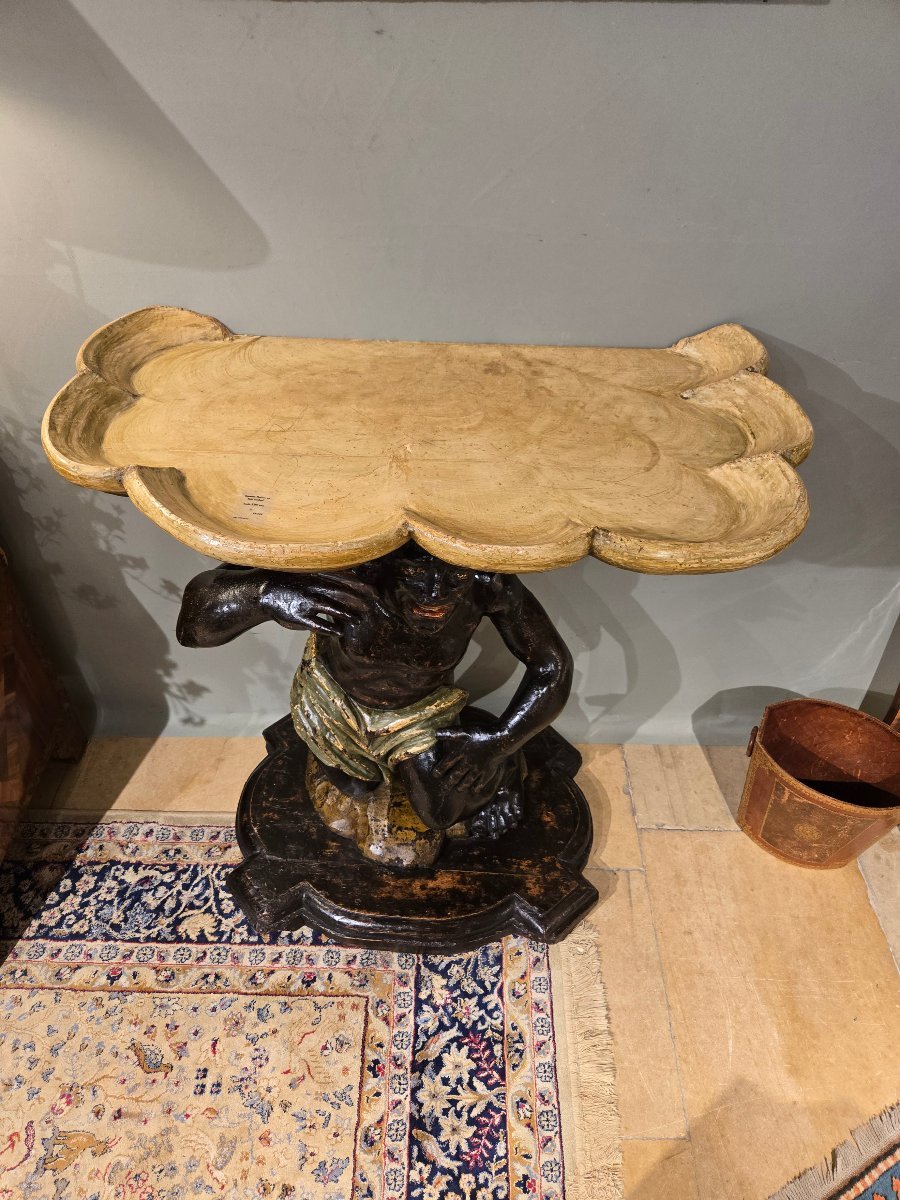
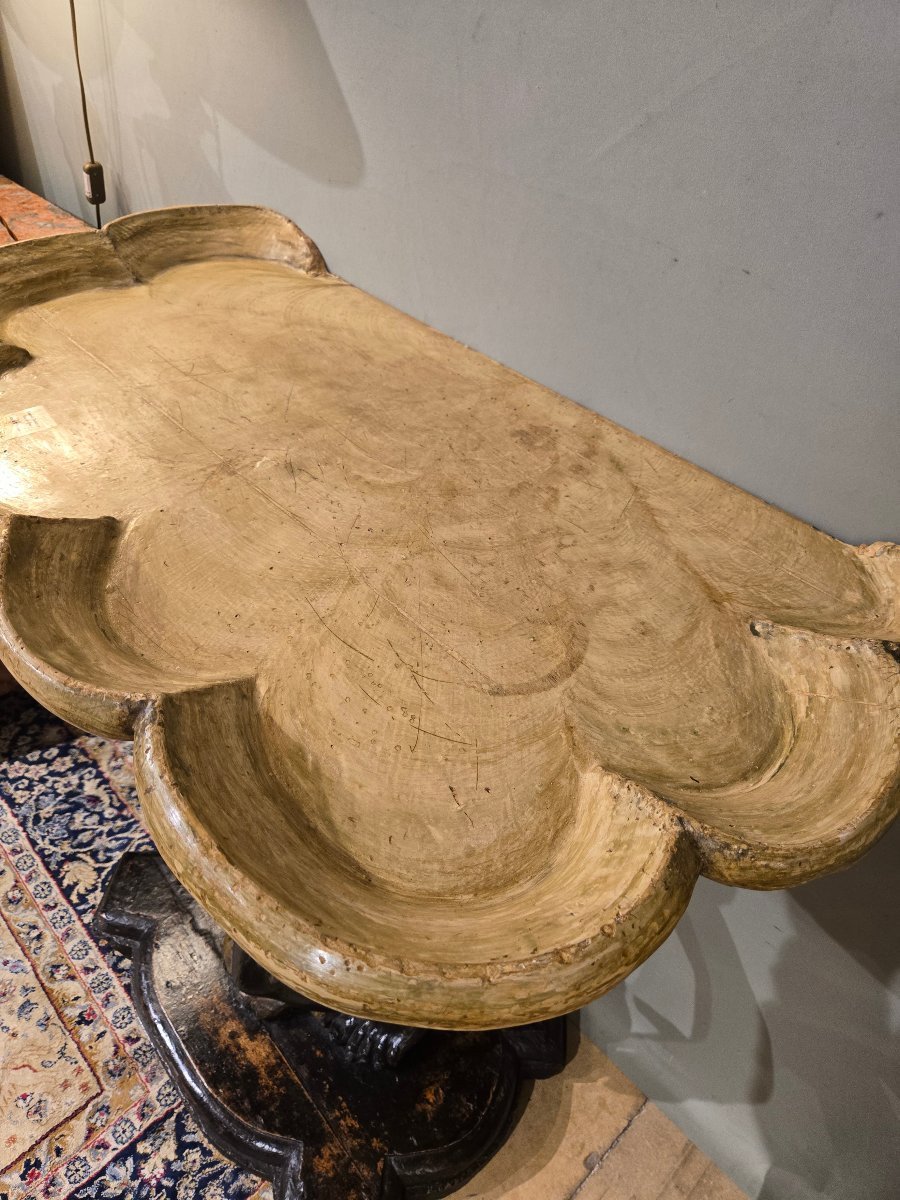
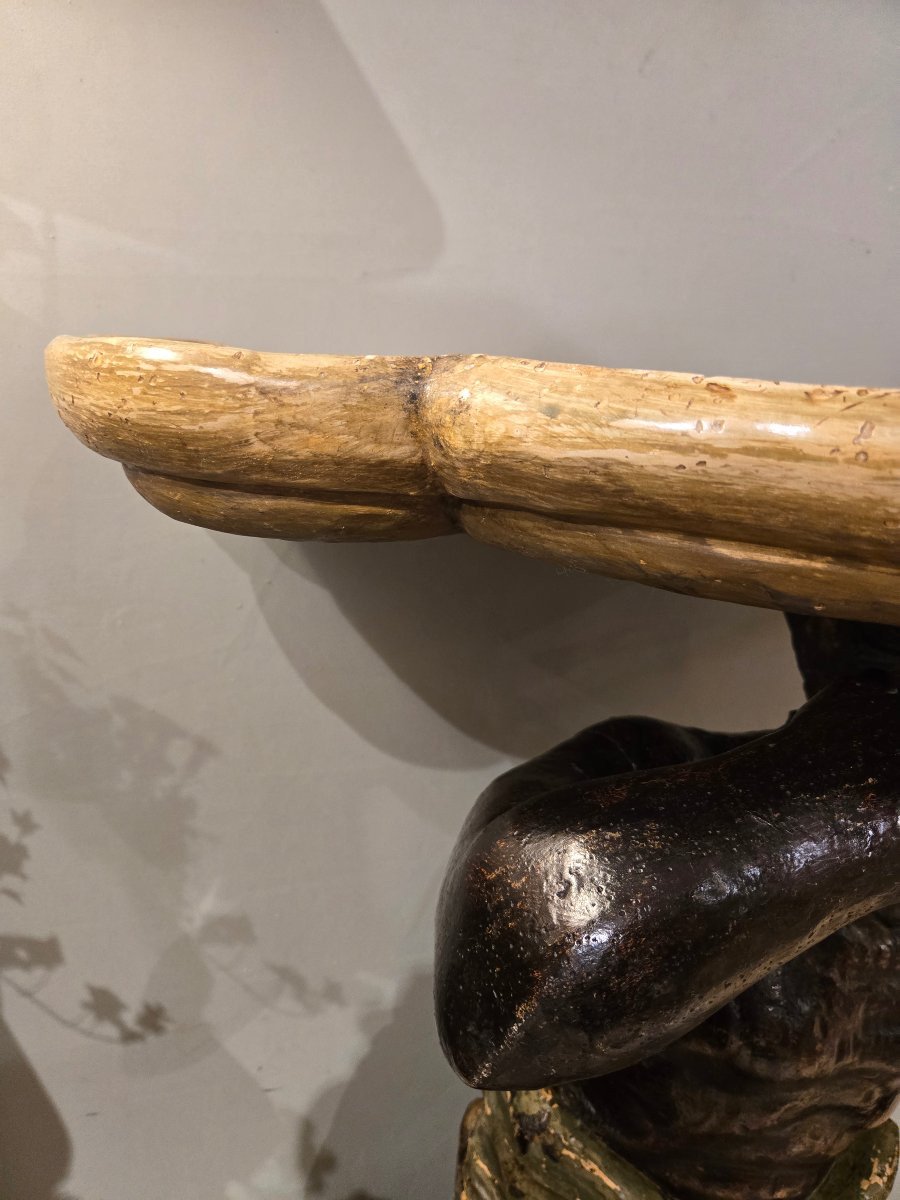
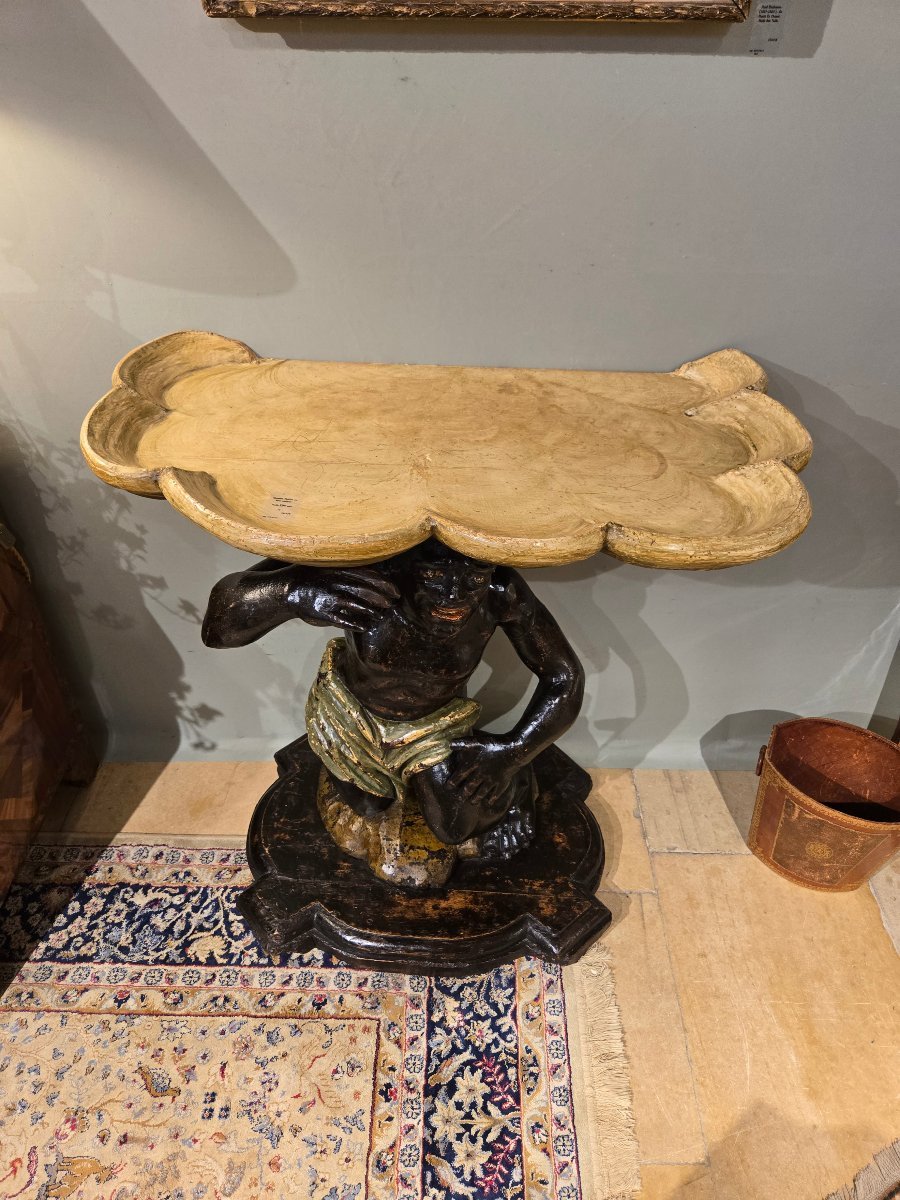
    A very interesting and decorative Venetian ceremonial console table dating from the 1700s, carved in wood (linden and softwood), depicting a kneeling Moor supporting a large, shell-shaped tray.

    This sculptural piece, emblematic of Venetian Baroque taste, combines decorative exuberance, refined polychromy, and technical virtuosity.
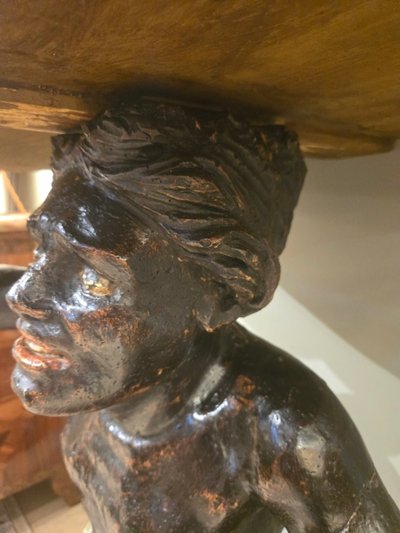
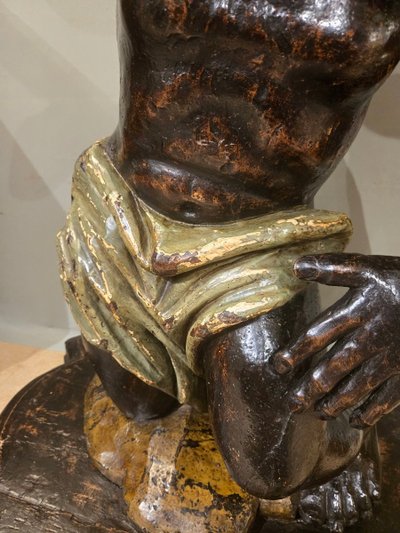
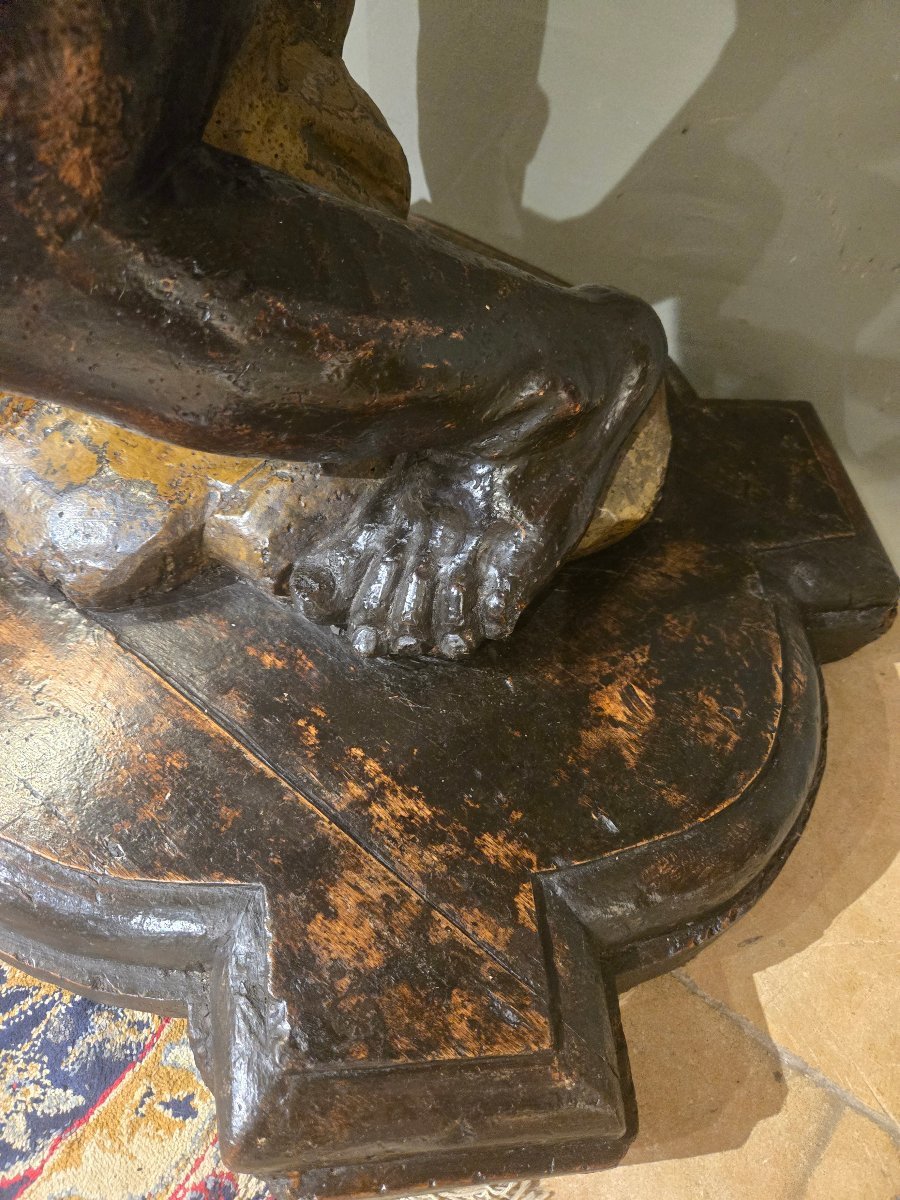
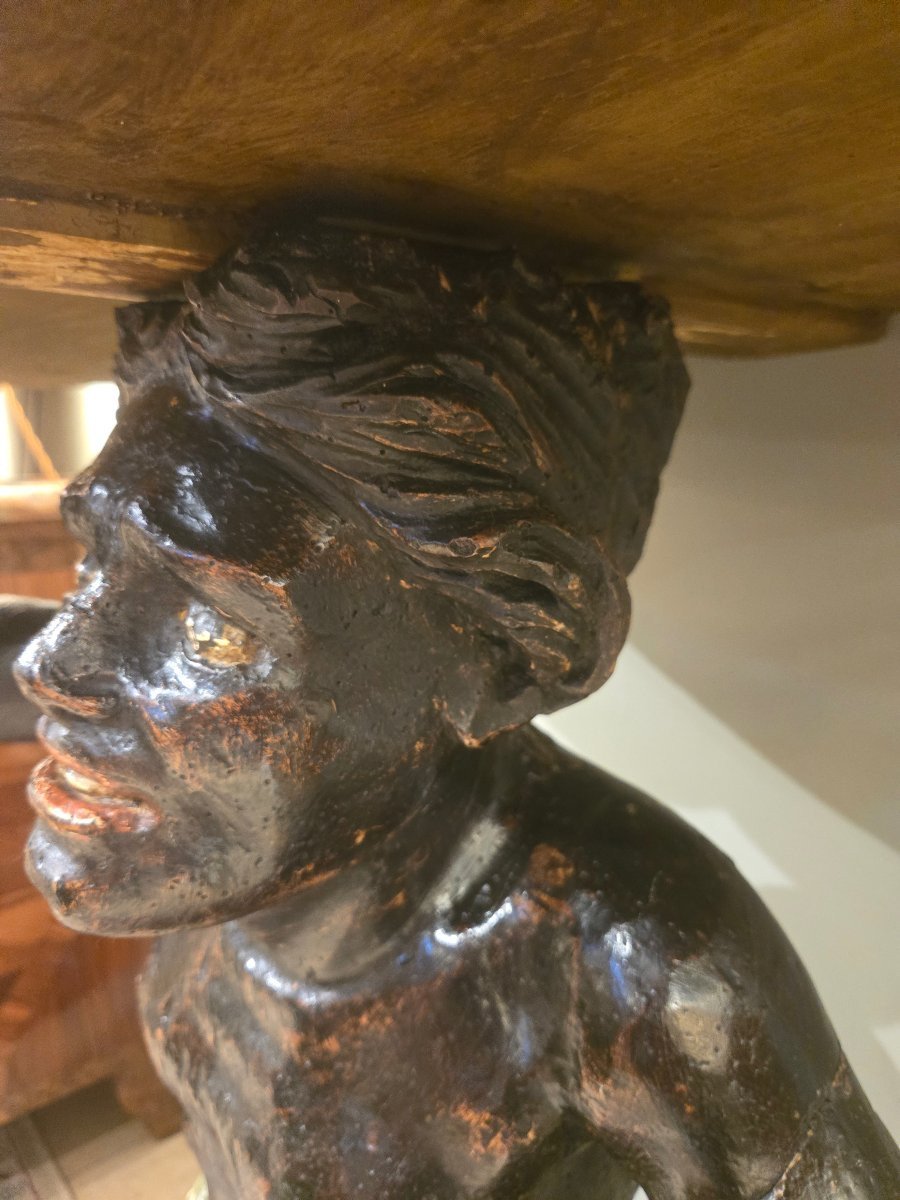
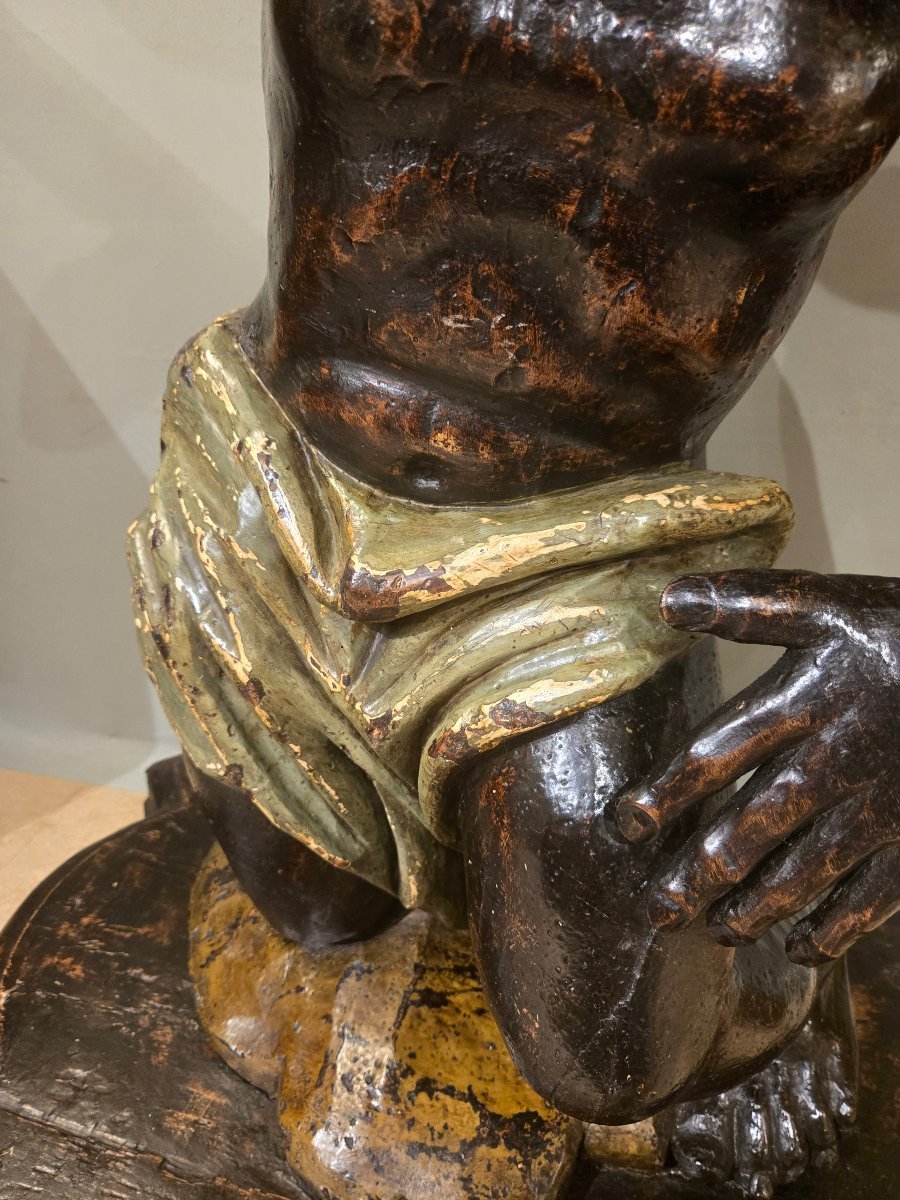
    The figure is painted black, with his lips and eyes enhanced in polychromy, emphasizing the expressiveness of his face. He is draped in a green robe with deep, pronounced folds, and the base is also blackened.

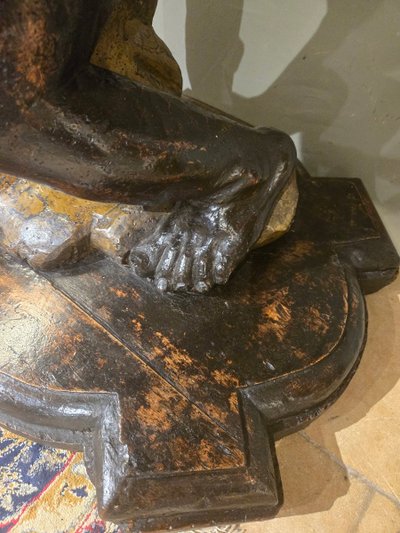
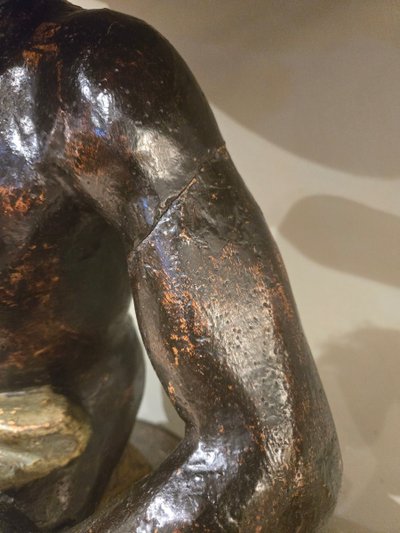
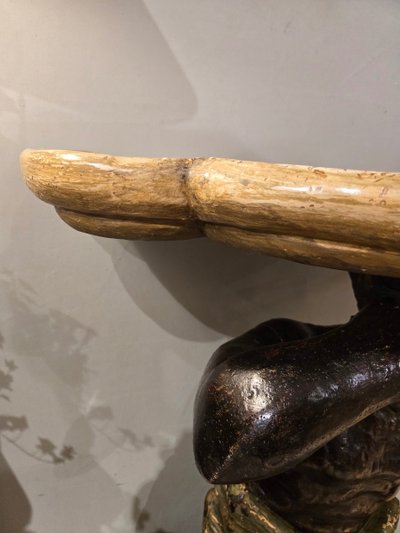
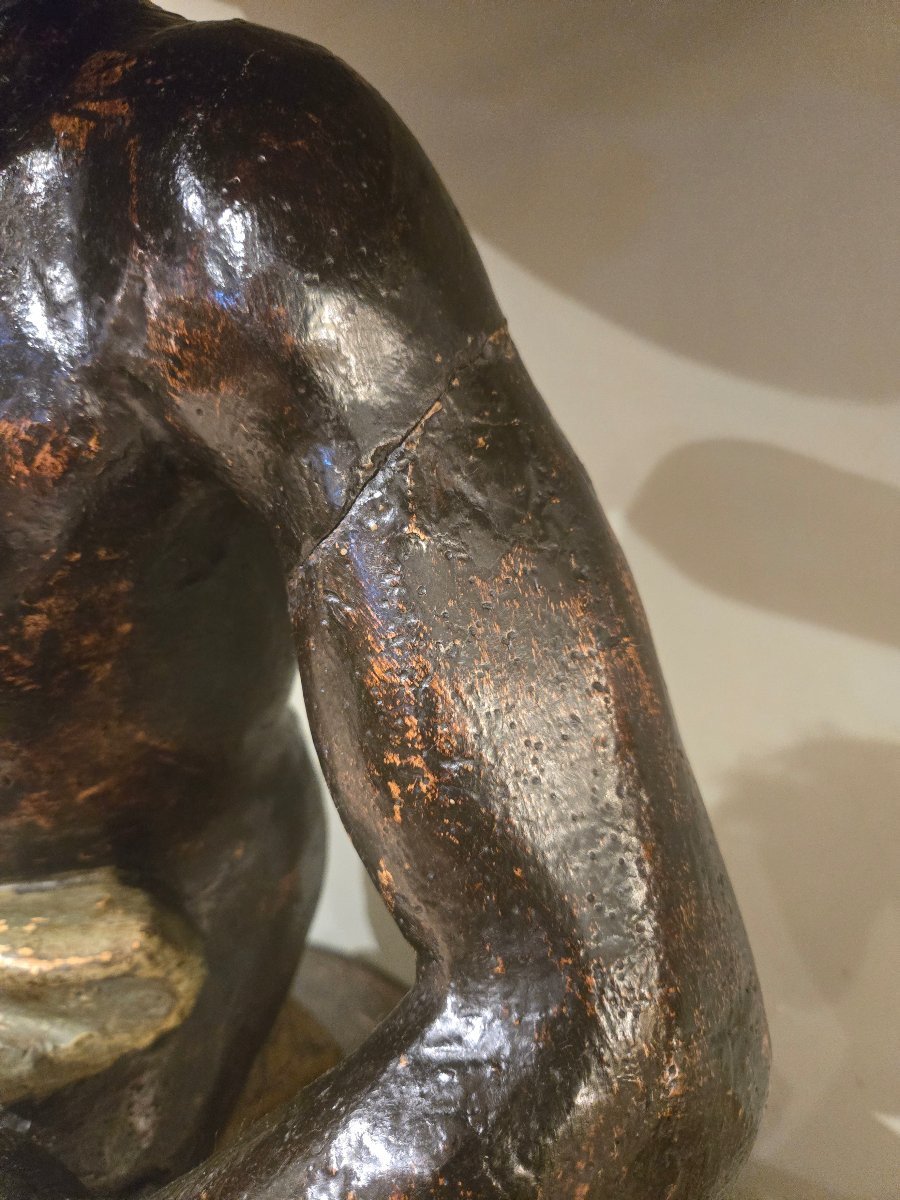
    The figure is partially seated on a rock. The tray, irregularly shaped to resemble a scallop shell, is lacquered in sandy tones with a pearly sheen. The whole piece is massive in proportion and has a strong visual impact. The craftsmanship is particularly meticulous: the arms are attached to the body using pegged mortise and tenon joints, demonstrating exceptional skill. The tabletop is secured by a wrought iron thread, shaped with a file, and held in place by a nut embedded in the wood. This is a typical manufacturing technique of the 17th and 18th centuries.

    Despite visible wear, some worm damage, and holes from old wood-boring insects, the piece is in remarkably good condition for its age, having not been subsequently redecorated, making it a highly desirable collector's item. The wood has been treated and stabilized by a professional, ensuring the piece's longevity.

    Dimensions:
    Height: 98 cm
    Width: 94 cm

    Provenance: This collector's item comes from an elegant Parisian collection, where it was displayed among other European sculptures from various periods. Its rarity and authenticity make it a precious example of Venetian Baroque decorative art.

    Context and Comparisons
    In Venice, Moorish figures appeared frequently in prestigious decoration and furniture from the late 17th century onward. Used both as freestanding sculptures and as supports for consoles or torchères, they reflected the attraction to exoticism and opulence in the City of the Doges.

    These subjects have a long history in European decorative art, originating in particular with the sculptures of Andrea Brustolon (1662–1732), a renowned Venetian cabinetmaker and sculptor. He was one of the first to elevate the Moorish figure to the status of an architectural and ornamental element in ceremonial works. His influence endured for a long time in Venetian and European decorative arts.

    Ref: FFESQT70SF

    Condition Good
    Style Louis XIV style (Consoles Tables of Louis XIV style Style)
    Period 17th century (Consoles Tables 17th century)
    Country of origin France
    Shipping Time Ready to ship in 4-7 Business Days
    Location 89260, La chapelle sur oreuse, France
    Antikeo Buyer Guarantee

    4 commitments to buy with confidence