This description has been translated and may not be completely accurate. Click here to see the original
Among the pieces of furniture designed for the refined apartments of the second half of the 18th century, the so-called “all-purpose” tables hold a special place. Designed to meet the needs of a more intimate living space, they combine in a single piece several functions that were typically distributed among different pieces of furniture. Intended for boudoirs, studies, or bedrooms, they accompanied their owners throughout the day: getting ready using a retractable dressing mirror, writing, having a light meal, or playing a game of chess, checkers, or backgammon. This versatility perfectly reflects the changing lifestyle under Louis XVI, when people sought furniture that was as elegant as it was functional, capable of offering maximum utility in a compact space.
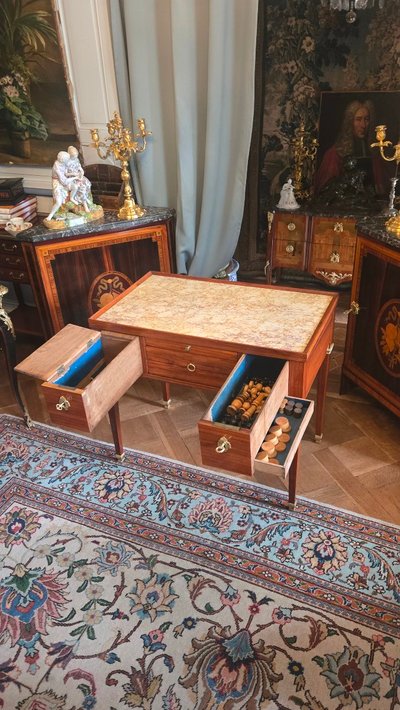
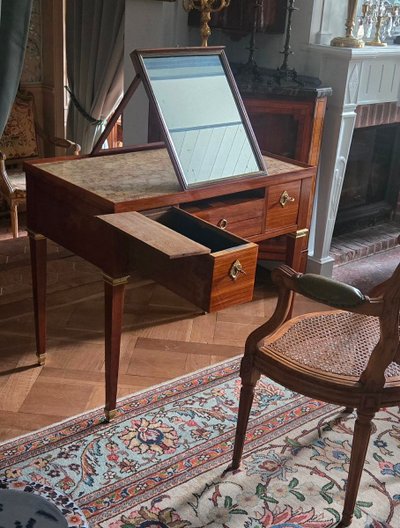
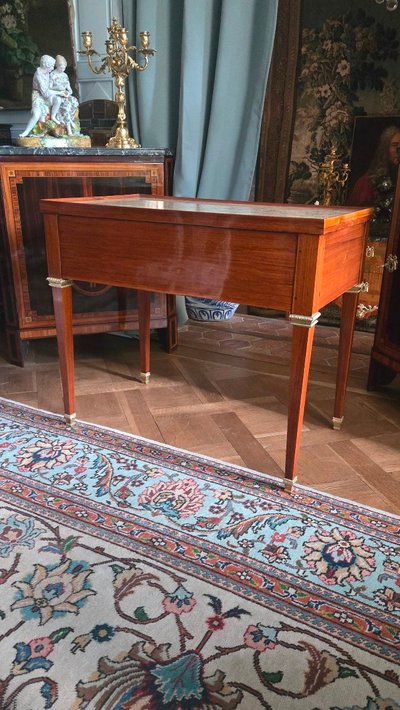
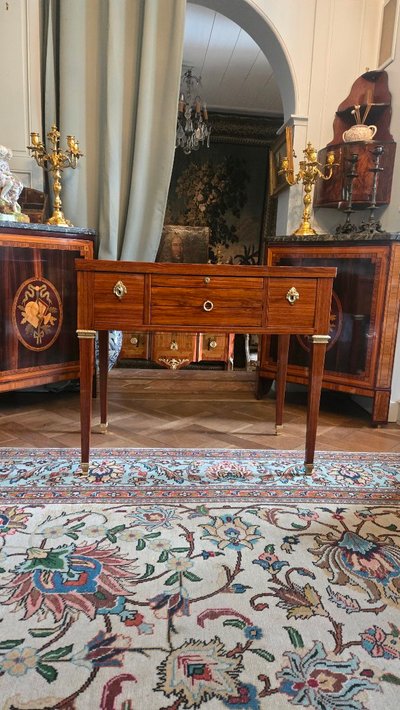
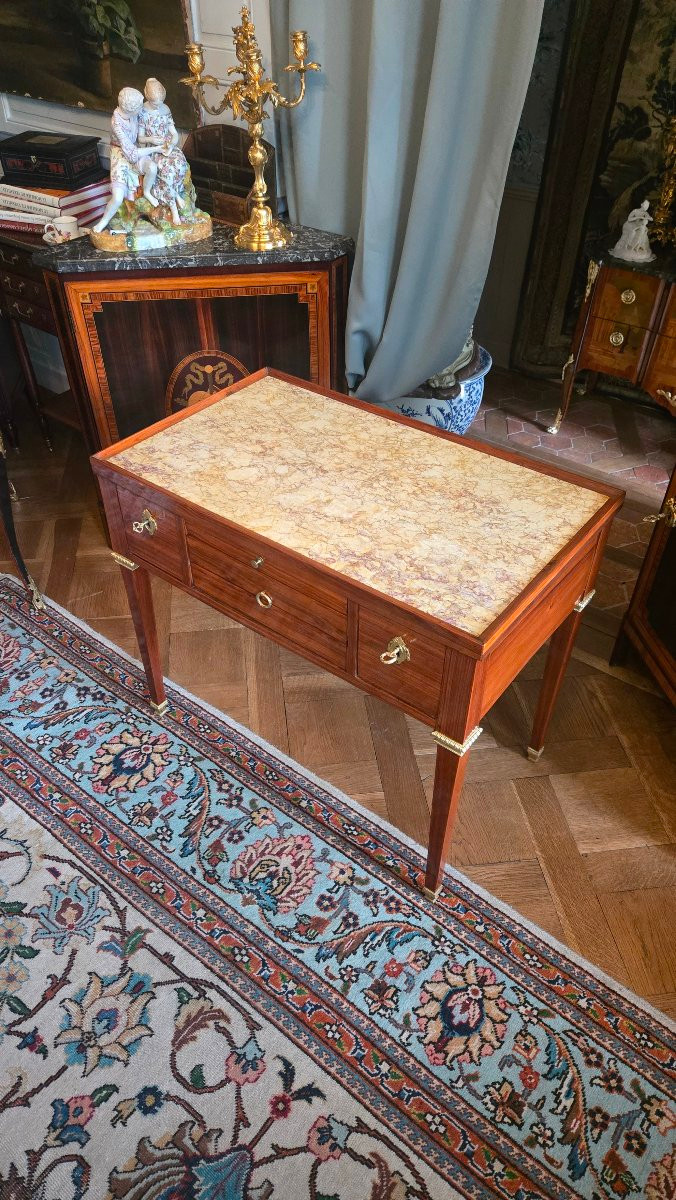
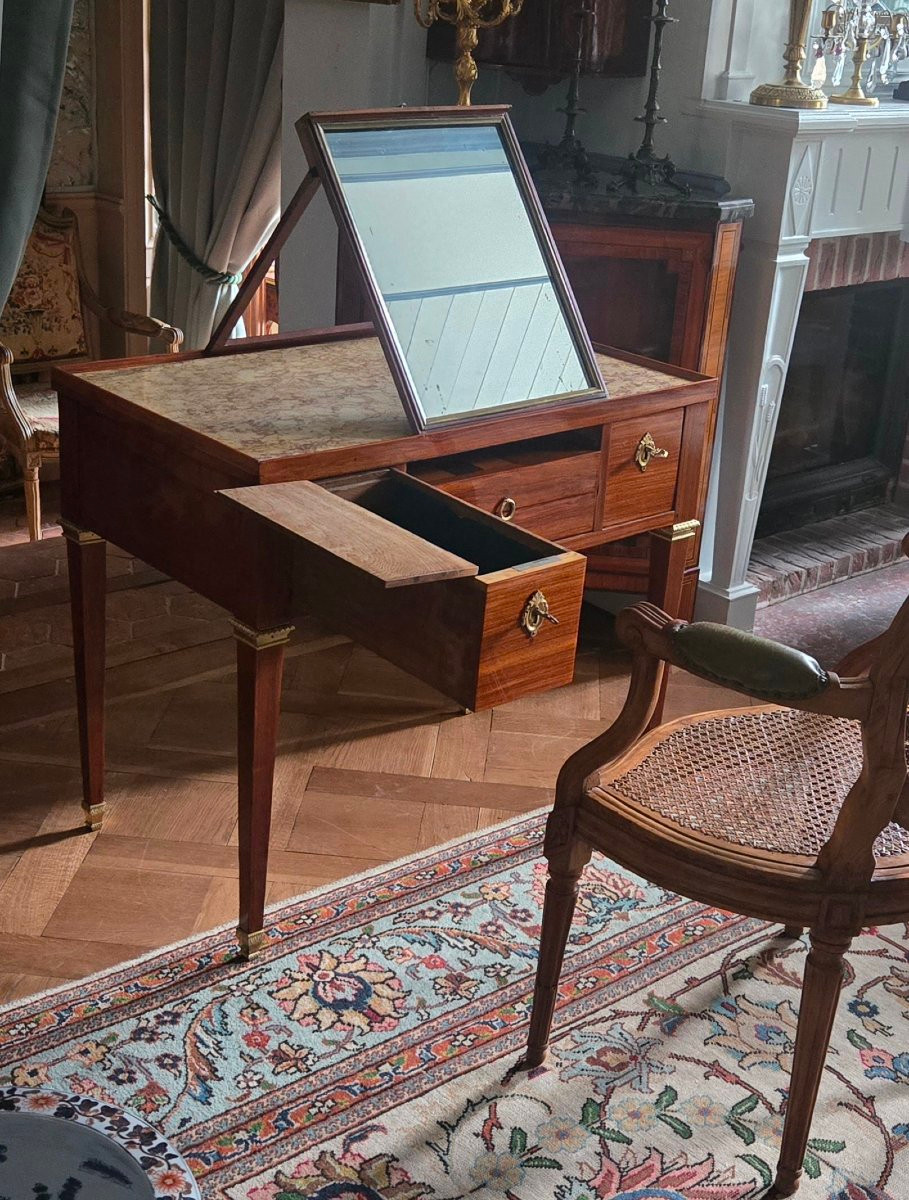
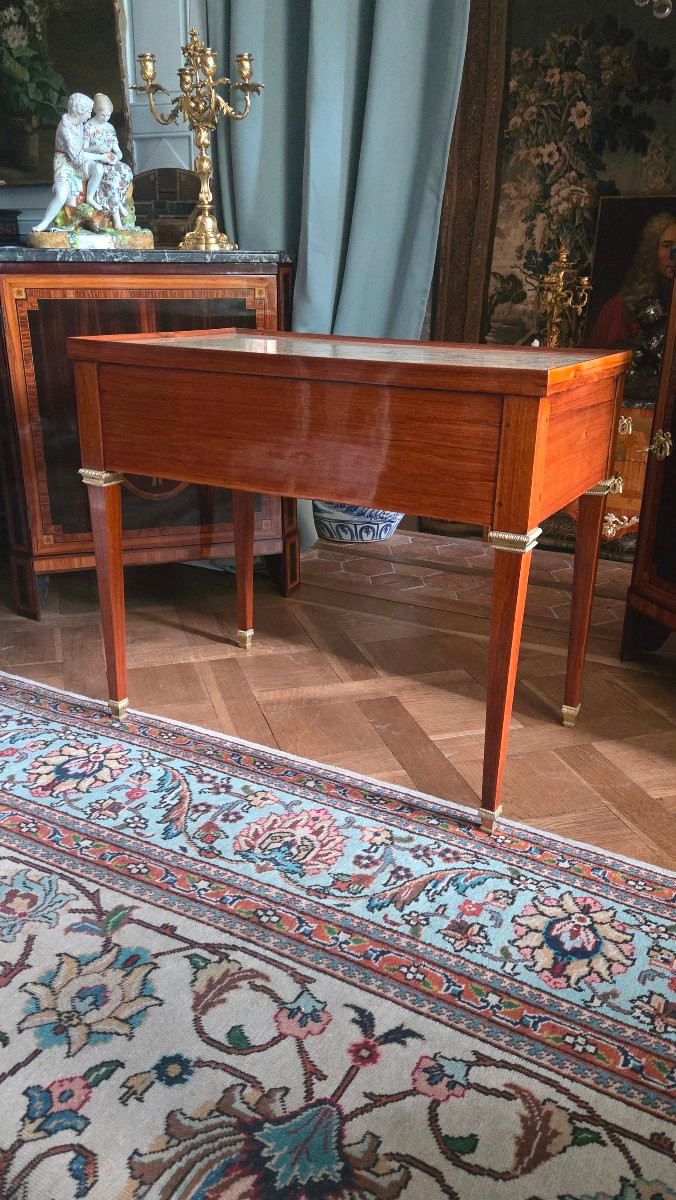
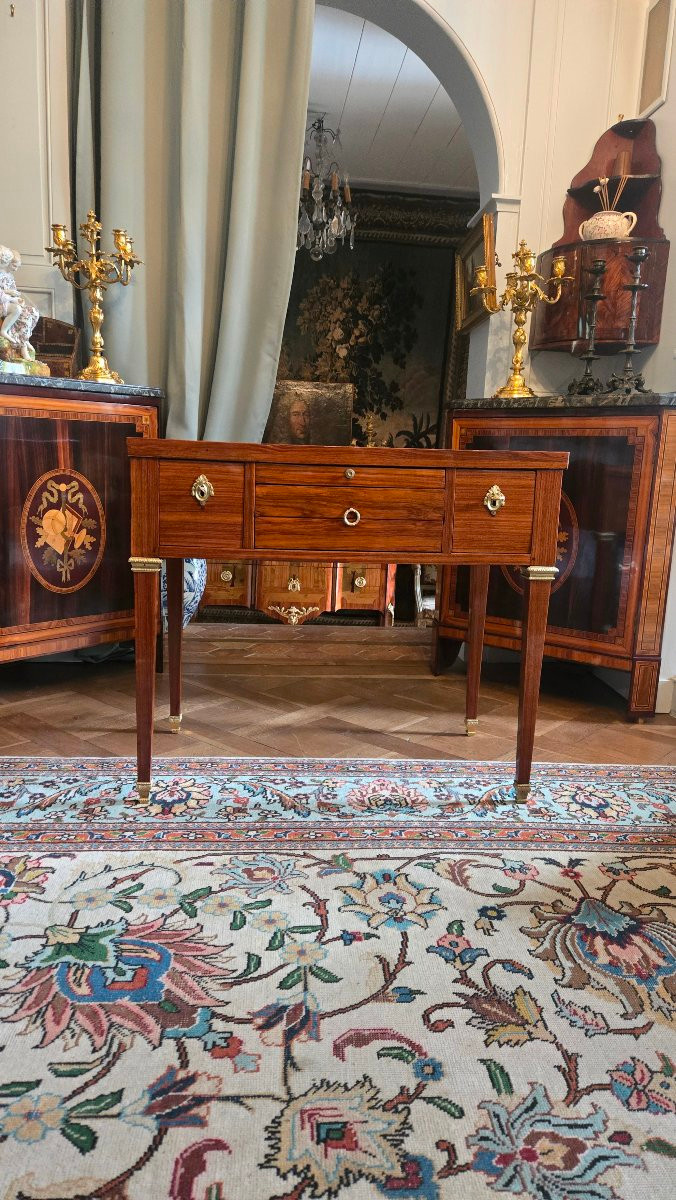
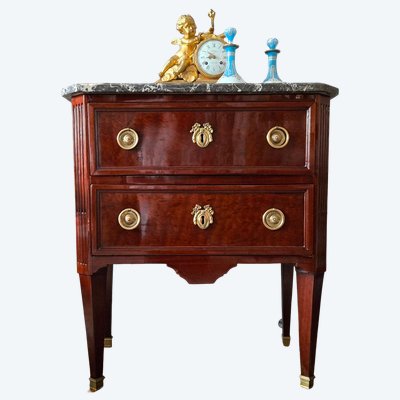
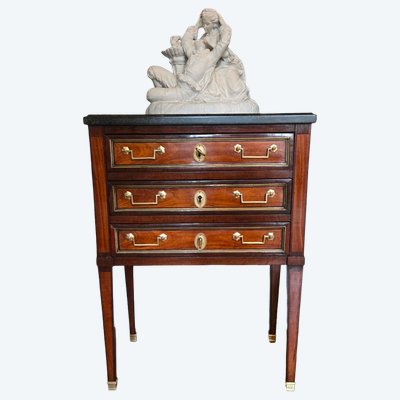
This table is a remarkable example of this. Behind its apparent simplicity lies a piece of furniture of particularly refined design, where every compartment, every drawer, and every storage space naturally finds its place without ever disrupting the balance of proportions. Entirely veneered in rosewood, it is topped with a Trets marble slab framed by a solid rosewood rim, molded with a wide fillet that forms an elegant edge. This design is reminiscent of cabaret tables while also protecting the marble. It also allows the retractable vanity mirror to rest naturally on the rim when extended, holding it in place to form a true tabletop mirror.
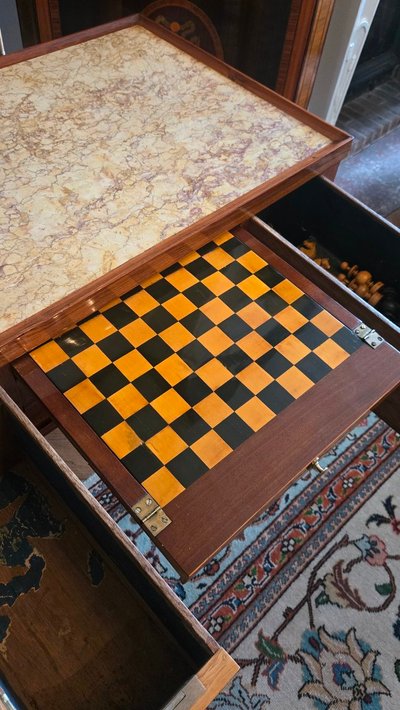
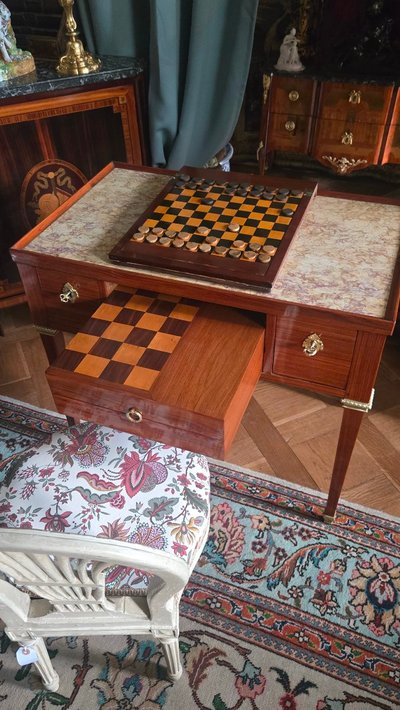
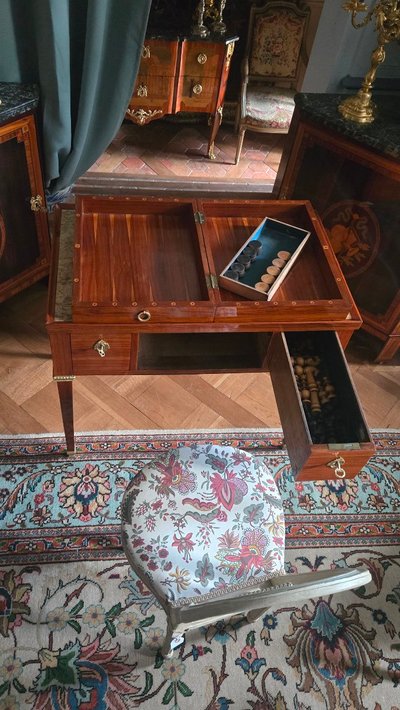
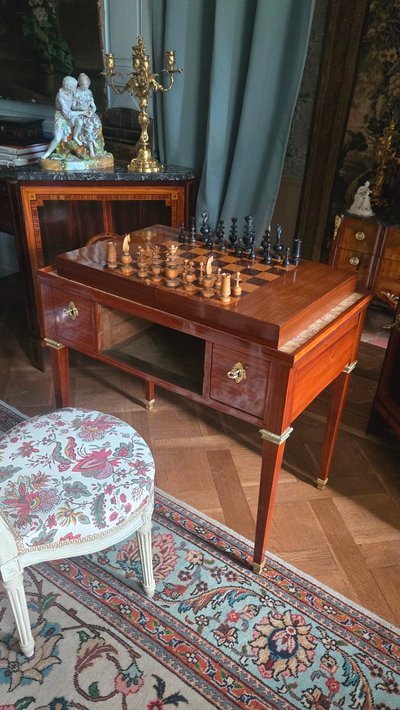
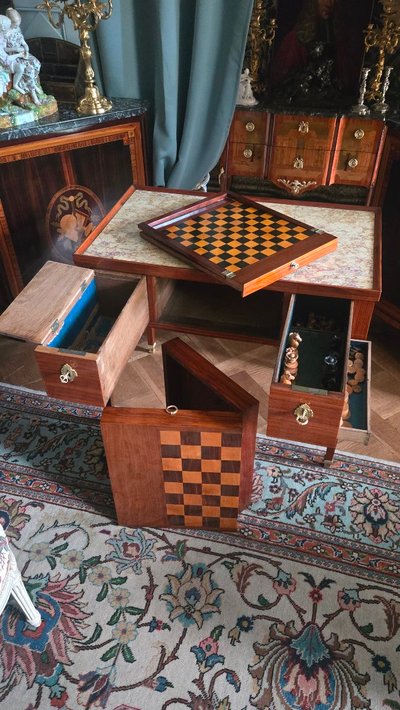
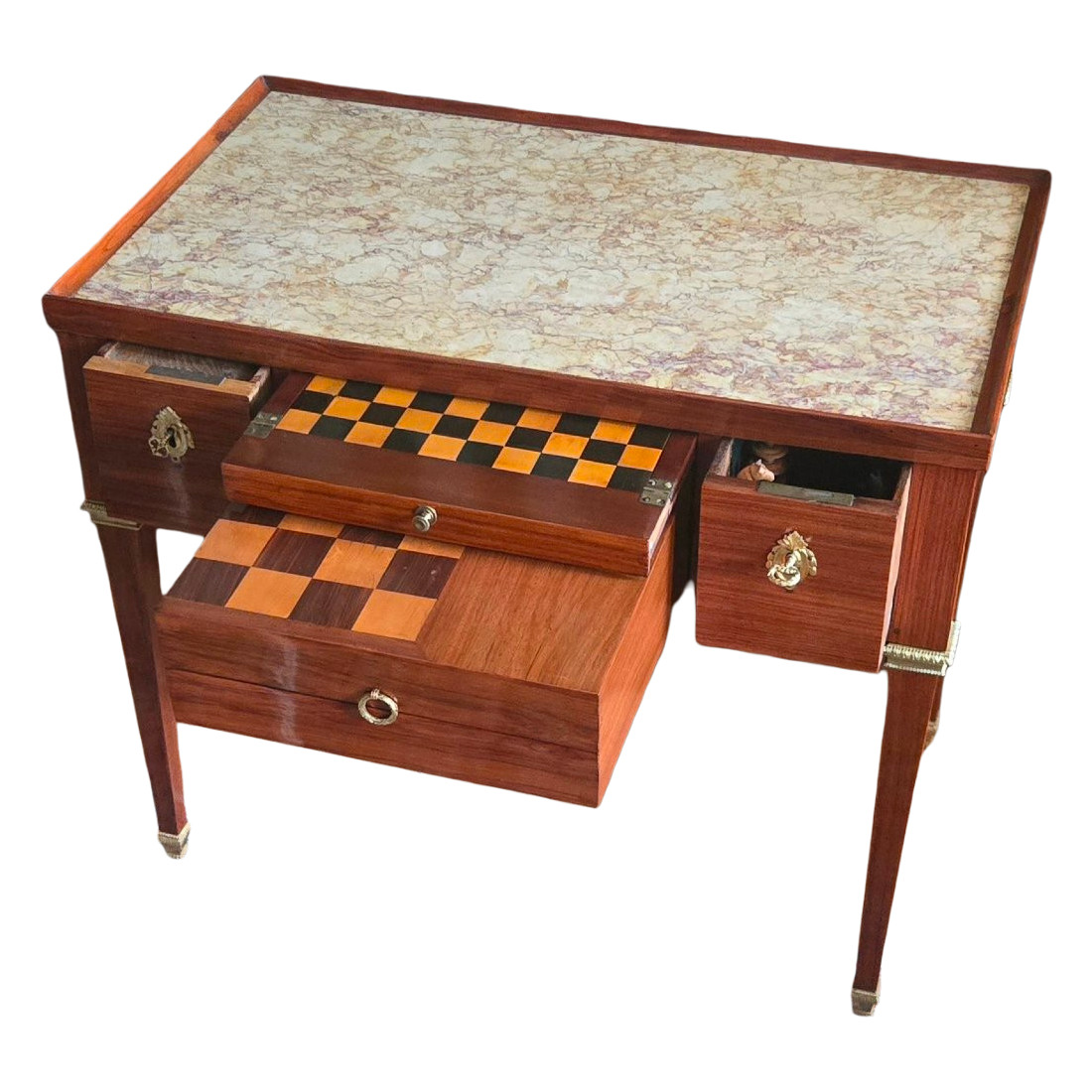
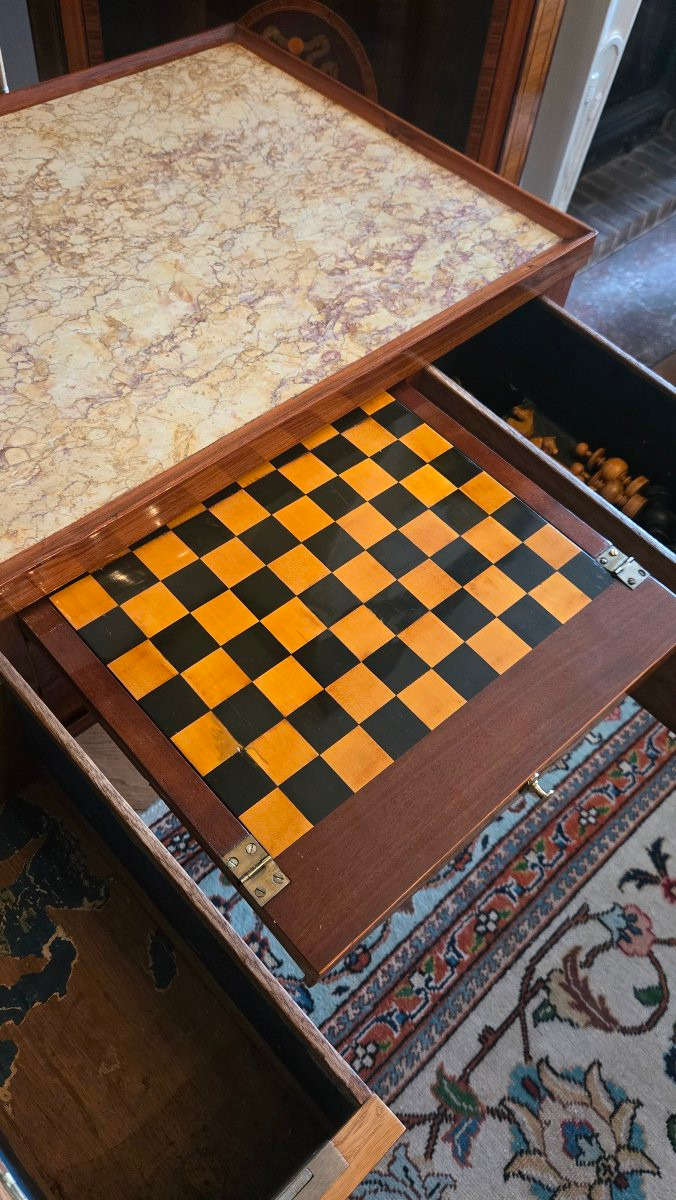
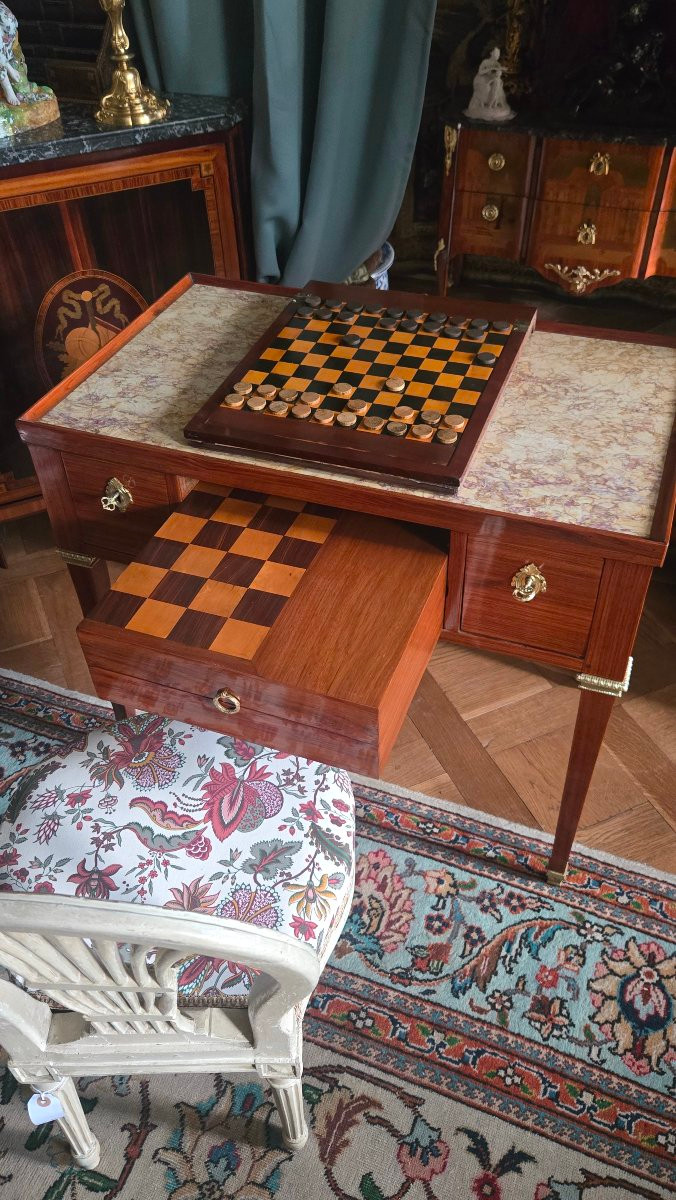
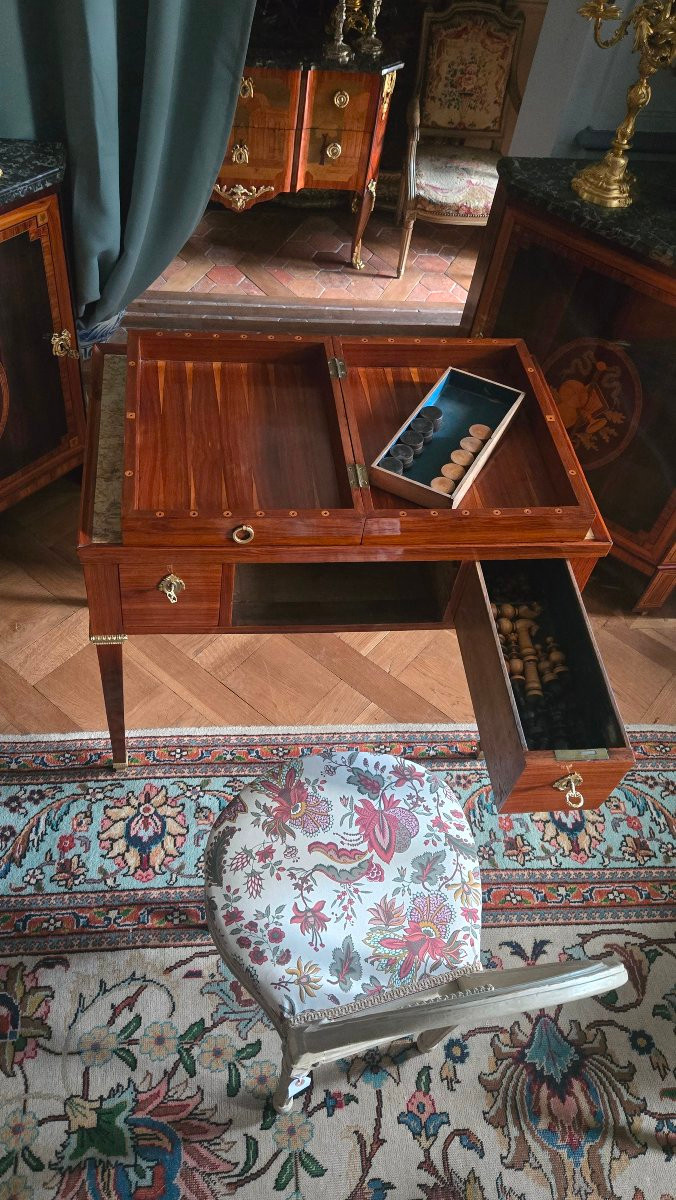
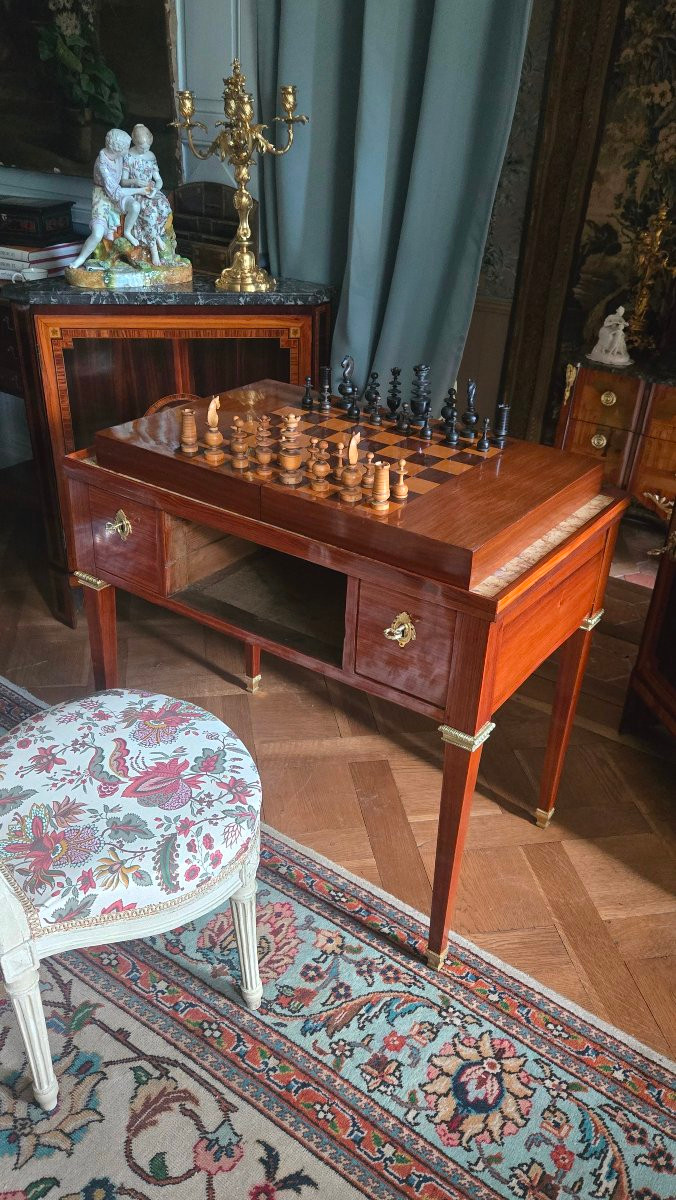
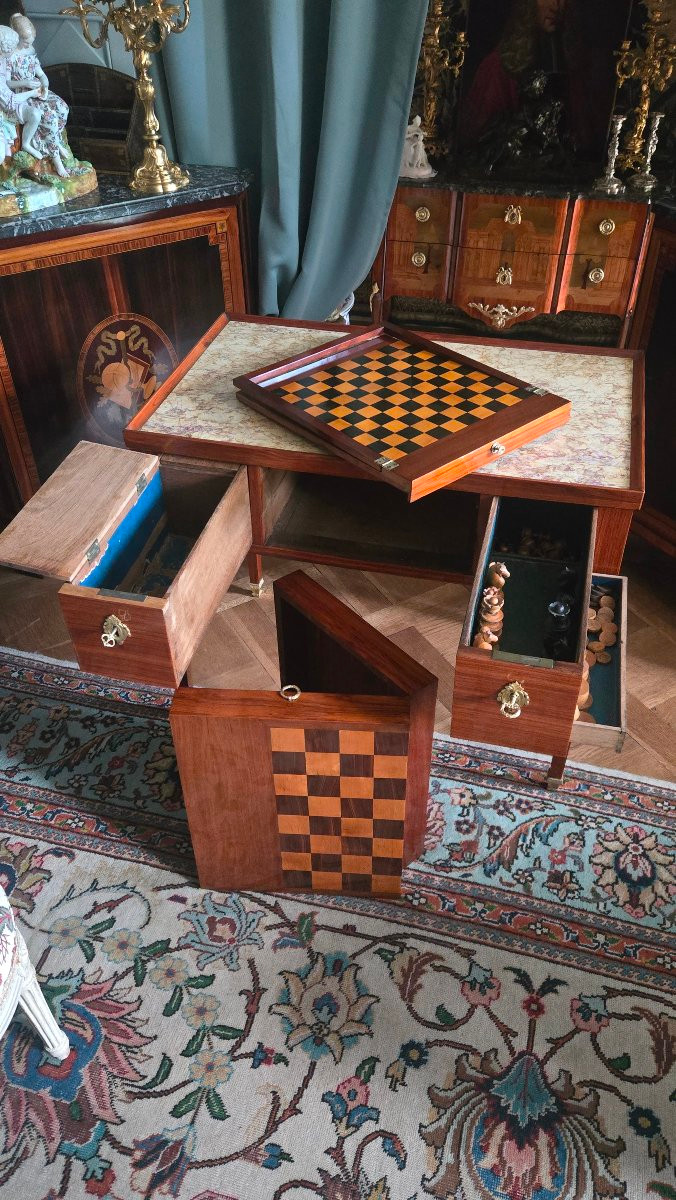
The rim opens to reveal two side drawers flanking two sliding compartments that span the full width of the piece. The lower section reveals a game cabinet whose interior is fitted for backgammon, while its exterior features a chessboard veneered with satinwood, violetwood, and maple. Above it, a second pull-out drawer features, on one side, a checkerboard made of maple and blackened wood for playing checkers, and on the other, the retractable vanity mirror.
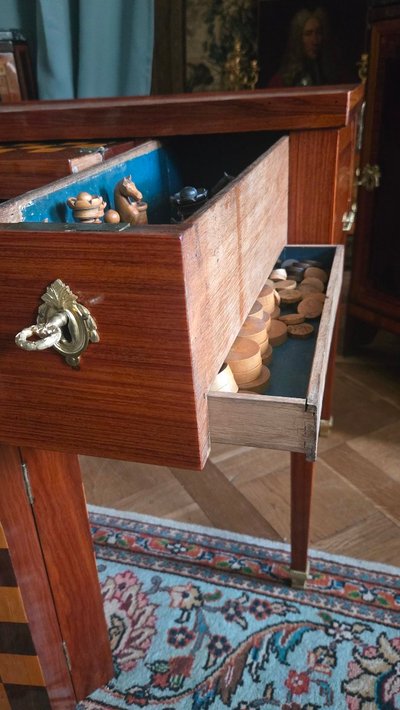
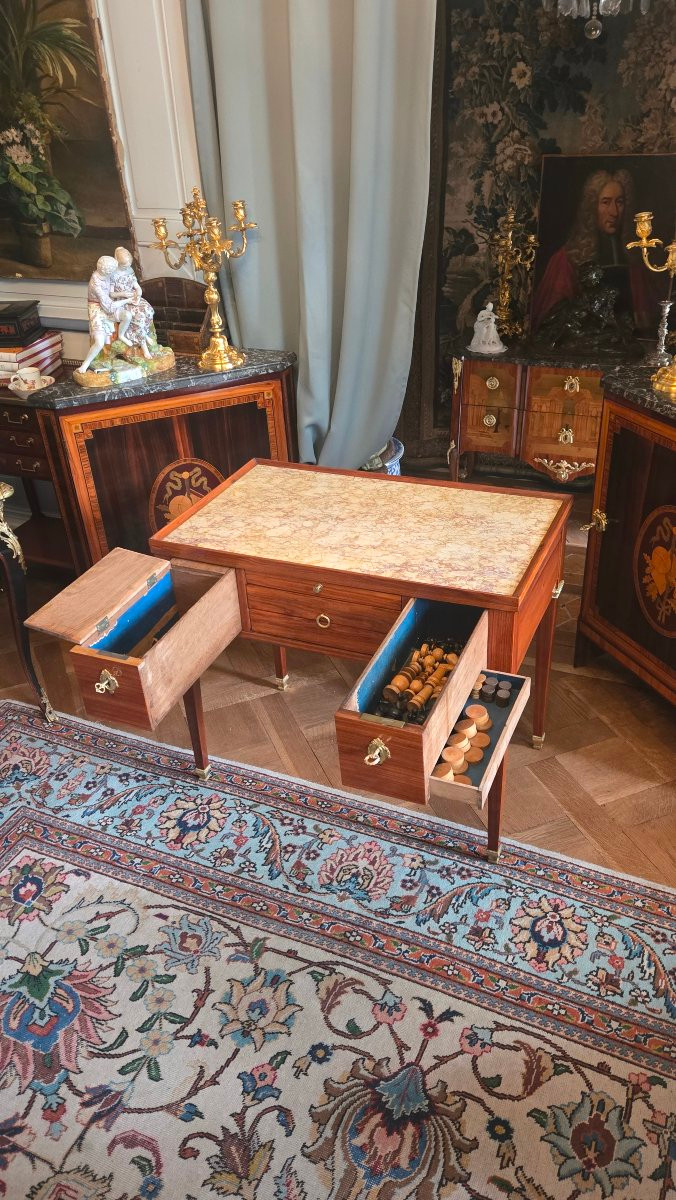
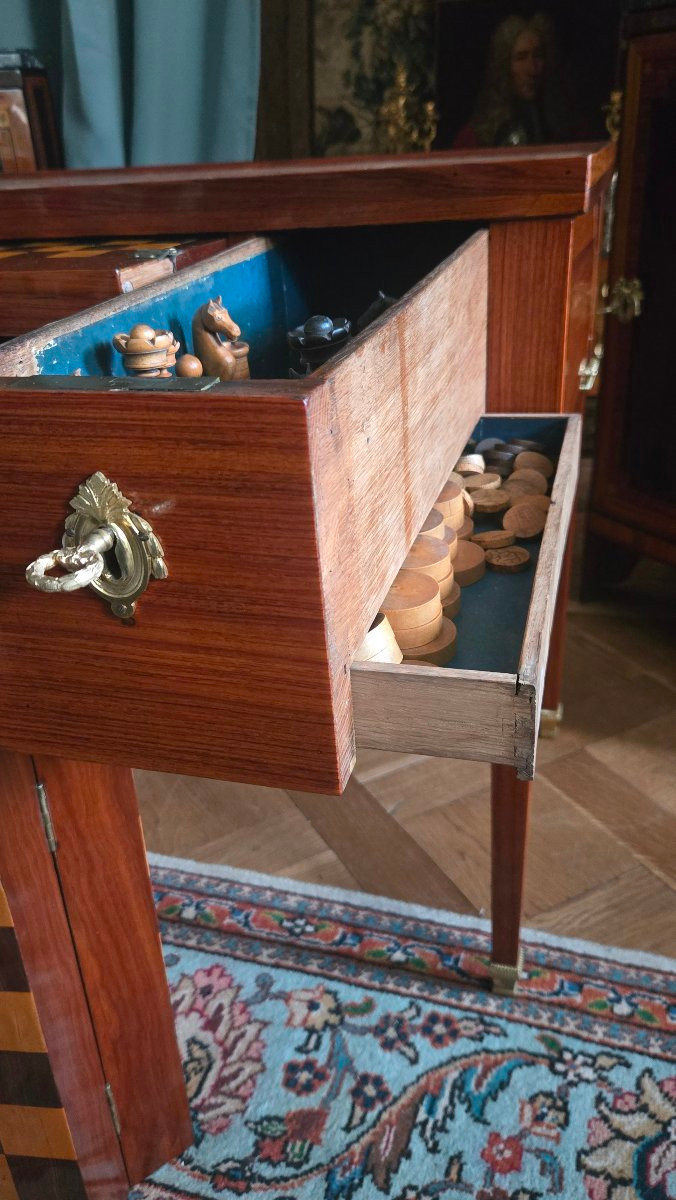
The left drawer contains a drop-down compartment for toiletries. When the drawer is fully pulled out, it also reveals, at the back, a second compartment concealed beneath a small lid, providing a secure place to store valuable items or personal belongings. The right-hand drawer, meanwhile, conceals a sliding secret compartment—accessible only after opening the main drawer—designed for storing chess pieces or small items. These various features attest to the care taken in designing this piece of furniture, which was conceived to offer ample storage space while keeping its contents discreet.
The frame is made of beech and softwood, while the two side drawers are constructed entirely of oak. The entire piece is veneered in rosewood, whose particularly even grain highlights the piece’s elegance. The chiseled and gilded bronze ornamentation is entirely original. It includes the lock plates, the connecting blocks decorated with foliage motifs, and the caps fitted over the tapered, square-sectioned legs. Discreet yet featuring fine-quality chiseling, this trim subtly accentuates the piece’s understated lines.
The top is fitted with its original Trets marble, identified according to the typology published by Jacques Dubarry de Lassalle in *Identification des marbres*. This Provençal limestone breccia, with light ochre tones cemented by reddish-brown calcite, was used in several prestigious 18th-century projects, notably at the Trianon palaces and the Royal Chapel at the Palace of Versailles. Its warm hues blend particularly harmoniously with those of rosewood.
The games are complete. They include a beautiful set of antique chess pieces as well as backgammon checkers, which are antique and likely original. The checkers for the checkers game, however, are of a later period.
The set is in remarkable condition. The frame is entirely original and required only a few very discreet veneer repairs. The piece has been cleaned and completely refinished, highlighting the quality of its veneer. The sliding mechanisms function perfectly. The marble top has only one small, old crack in the front left corner that has been restored; it is very discreet and shows no loss of material. The lock on the right drawer is the original; the one on the left drawer was replaced some time ago. Both function with their original keys.
Comparisons and Bibliography:
A comparable example, stamped “Jacques Bircklé,” was sold at Christie’s in London on July 4, 2017.
Pierre Kjellberg, in *Le Mobilier français et européen*, notes that the majority of tables of this type are made of mahogany. The examples
Ref: R5K9BZUE0B

 English
 Français
 Italiano
 Deutsch
 Louis XIV Norman writing table
850 € EUR