


Would you like more images?

Pierre Brochet (1922-2016)
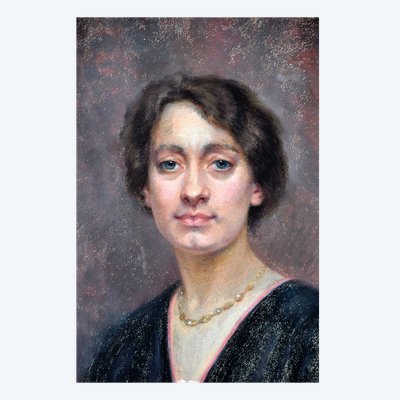
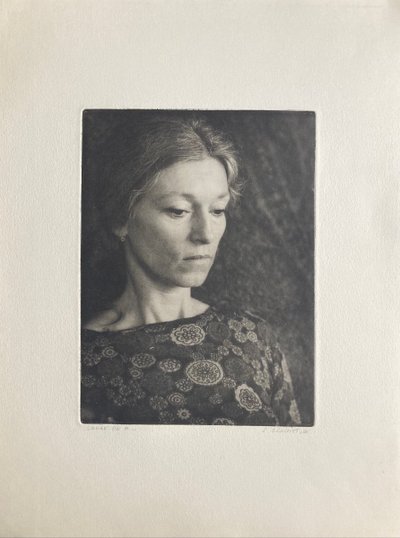
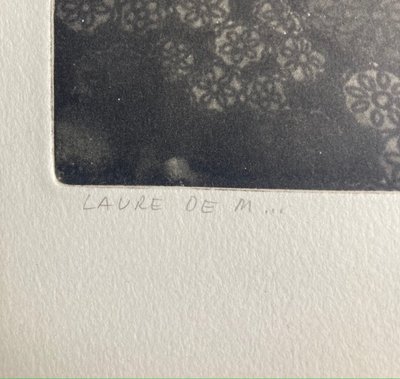
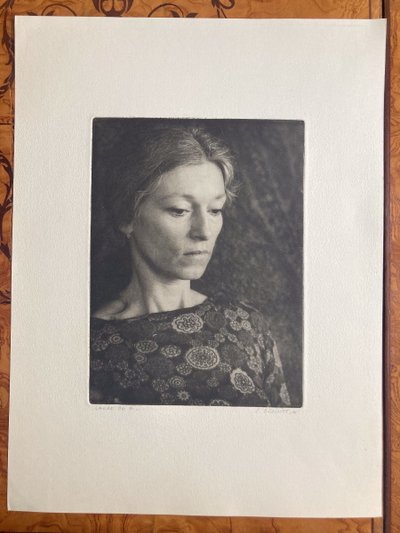
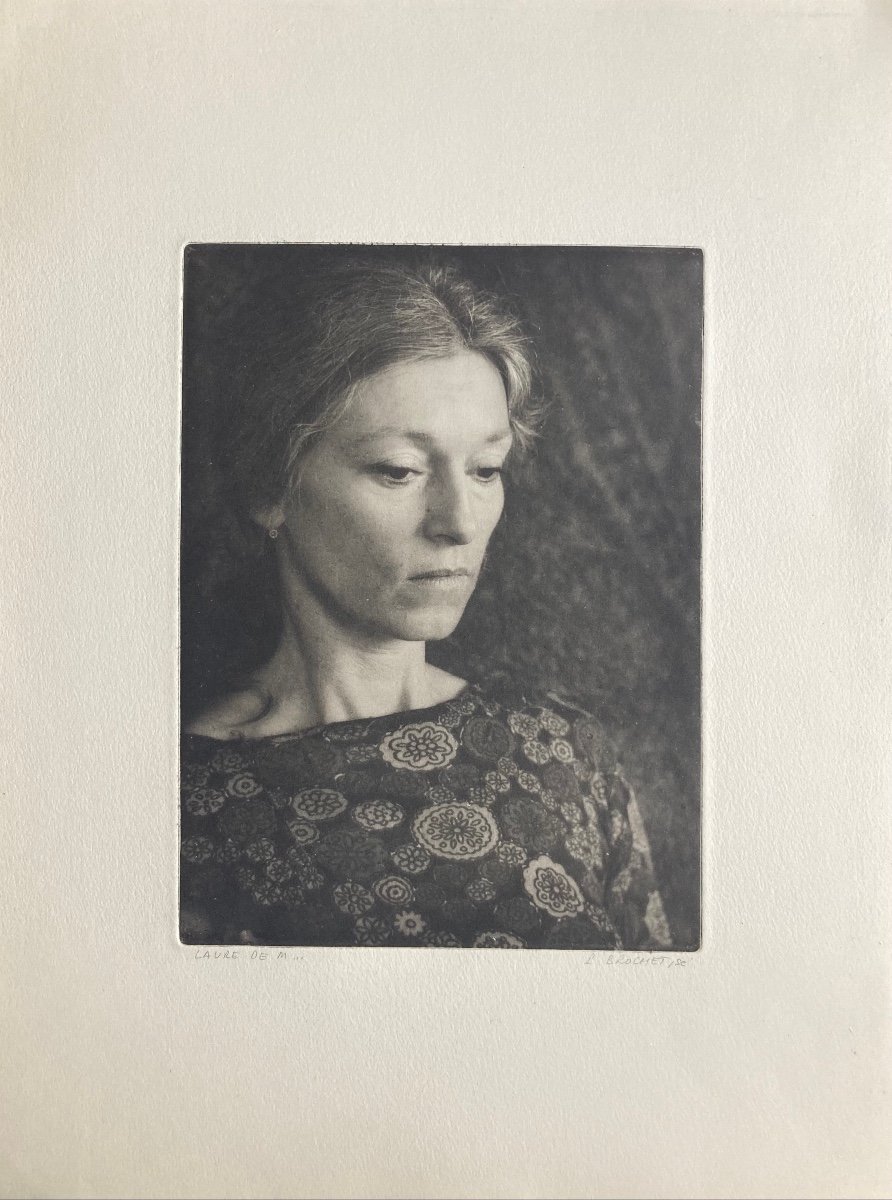
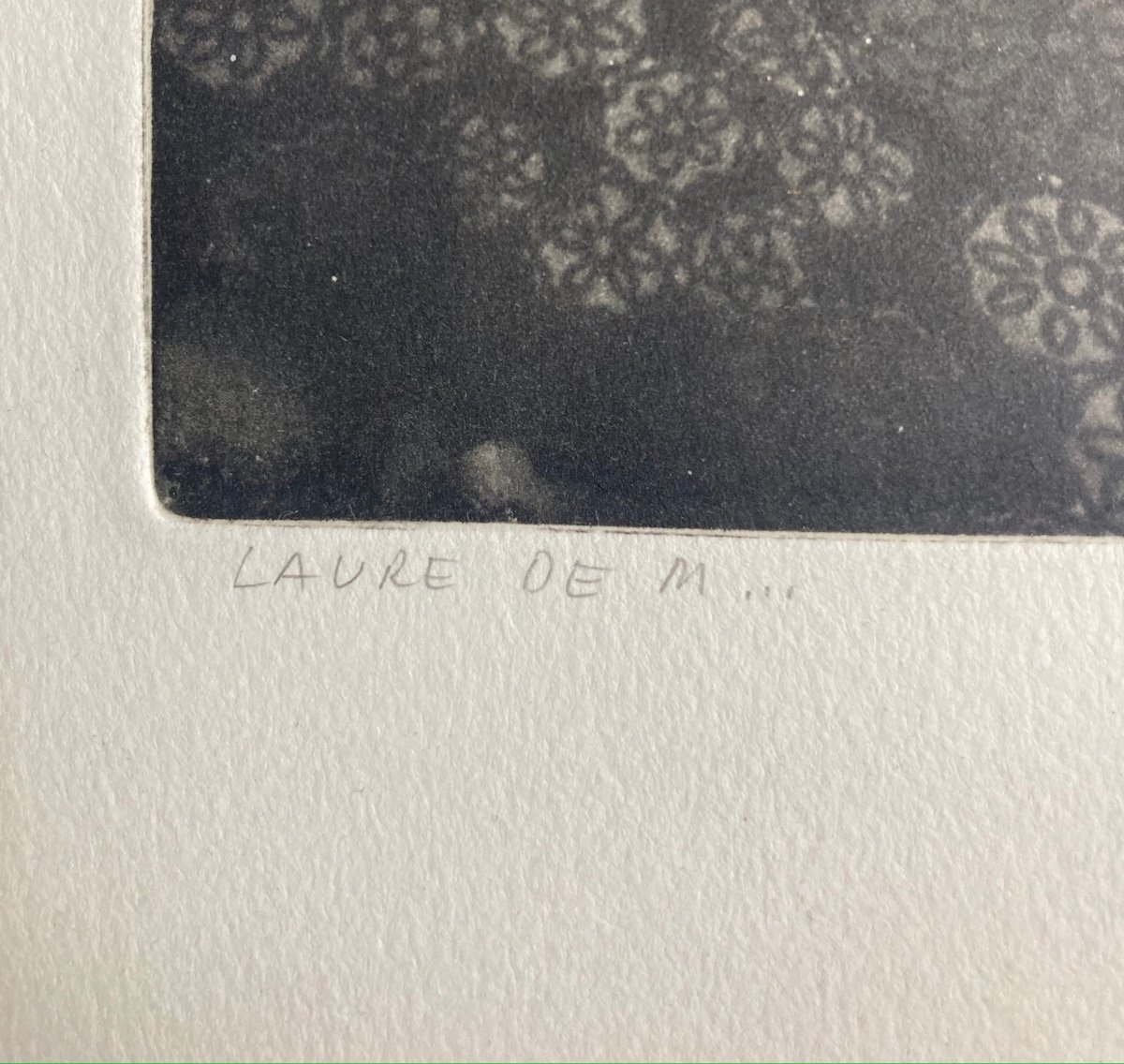
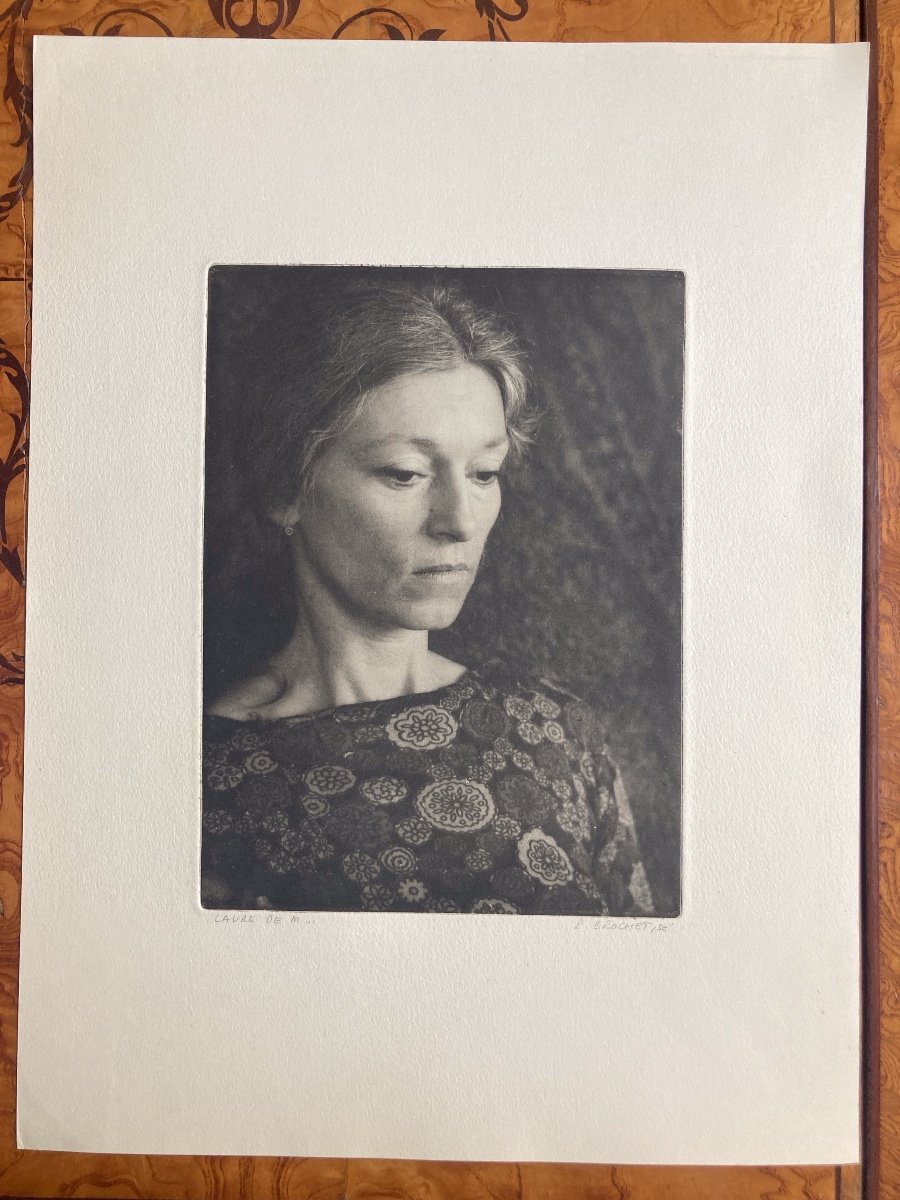
Portrait of Laure de Monfreid, 1969
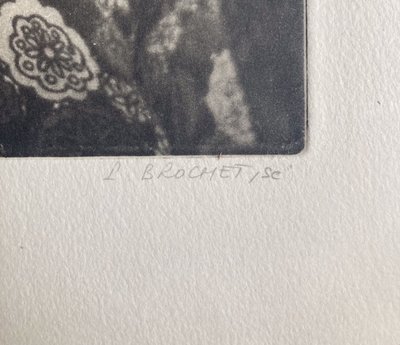
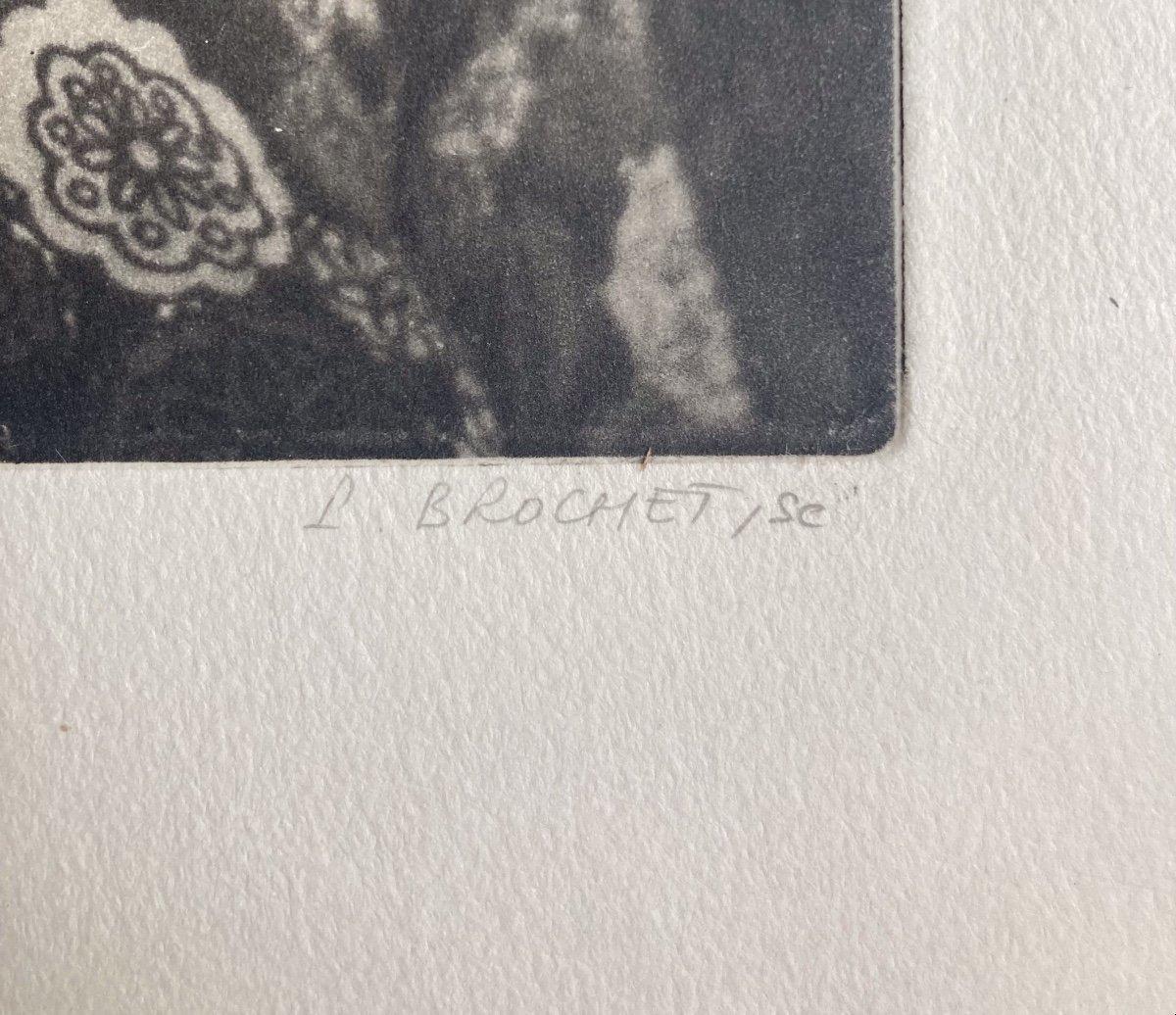
Heliogravure by Pierre Brochet, signed and titled in pencil
Image: 23 x 17 cm; Sheet: 40 x 30 cm
Provenance: Pierre Brochet's studio
Related work: A variant was sold at the dispersal of the Karl Lagerfeld collection at Sotheby's on May 6, 2022
Pierre Brochet, born on December 10, 1922, in Auxerre, spent his childhood on the family estate, surrounded by five siblings. He came from a well-to-do family; his father was a painter and playwright. His brother François was also a renowned sculptor in Auxerre. After graduating from high school, he went to the family nursery in Vitry, near Paris, where his future as a landscape gardener would take shape. This activity he pursued alongside photography, his great passion since 1937.
In the photographic landscape of the 1980s, practitioners of this art began to show a desire to break free from industry, as the quality of paper was no longer what it once was. Each strove to overcome these drawbacks by exploring alternative methods, which old literature and textbooks could offer to bewildered practitioners: carbon, platinum, oil-based inks, gum bichromate, toning, and pinhole photography.
The name of Pierre Brochet often came up in discussions among specialists who wished to approach him to ask him about these abandoned processes, of which he seemed to hold all the keys. In 1981, a retrospective exhibition was organized at the Nicéphore Niépce Museum in Chalon-sur-Saône. The following year, Brochet led a carbon printing workshop. The revival of these old processes had begun.
In 1983, he established his heliographic engraving workshop and produced a portfolio of ten engraved plates based on original prints by Charles Nègre.
The Association for Early Photography (APA) naturally emerged from this favorable situation. Brochet, as a French specialist in early photographic processes (gum bichromate, carbon printing, and platinum printing), was its founder. Through his numerous workshops, he skillfully instilled in his students both the passion and the means to revive these little-known techniques.
Pierre Brochet's preference was for heliographic engraving, in which he was a leading authority. In addition to his own work, he lent his talent to some of the greatest photographers (Salgado, Weiss, Dieuzaide, Nègre, Atget), enhancing their work with prints on the finest art papers, guaranteeing an almost tangible image with striking relief, made timeless by the quality of the pigments it contains.
“In original engraving or aquatint photographic engraving on copper, manual wiping and the pressure exerted by the press rollers alter the plates and, consequently, the prints. Some prints will be preferred to others by collectors.”
Brochet produced a portfolio for the APA, published in seventy copies: *Appel aux sources* (Call to the Sources), a polemical plea in defense of little-known photographic processes, comprising thirty heliogravure prints made in his studio, signed by the artists. In 2004, he published, with Béatrice Seguin: *Mariette en Egypte ou la métamorphose des ruines* (Mariette in Egypt, or the Metamorphosis of Ruins).
Pierre Brochet in Public Collections
Carnavalet Museum, Paris
National Library of France, Paris
Pompidou Centre, Paris
Historical Library of the City of Paris
Rodin Museum, Paris
Monet's House, Giverny
Nicéphore Niépce Museum, Chalon-sur-Saône
Photo Elysée - Cantonal Museum of Photography, Lausanne
French Museum of Photography, Bièvres
Le Château d'Eau Gallery, Toulouse
National Center of Photography, Paris
National School of Photography, Arles
Photographic Center of Île-de-France
Heritage Mission, Paris
National Institute of Geographic and Forest Information, Saint-Mandé
Cities of Montpellier, Pithiviers, Saint-Florentin, Grasse
Ref: BJXJZZ0HTU
| Condition | Very good |
| Style | Other style (Photography of Other style Style) |
| Period | 20th century (Photography 20th century) |
| Country of origin | France |
| Artist | Pierre Brochet (1922-2016) |
| Shipping Time | Ready to ship in 4-7 Business Days |
| Location | 75008, Paris, France |
4 commitments to buy with confidence

 English
 Français
  Italiano
  Deutsch