This description has been translated and may not be completely accurate. Click here to see the original
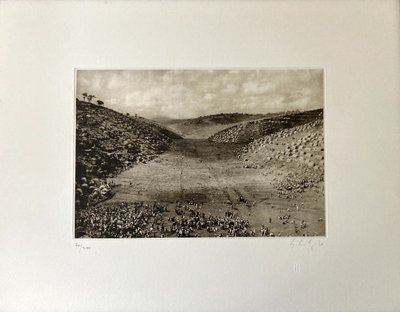
Sebastião Salgado (1944-2025)
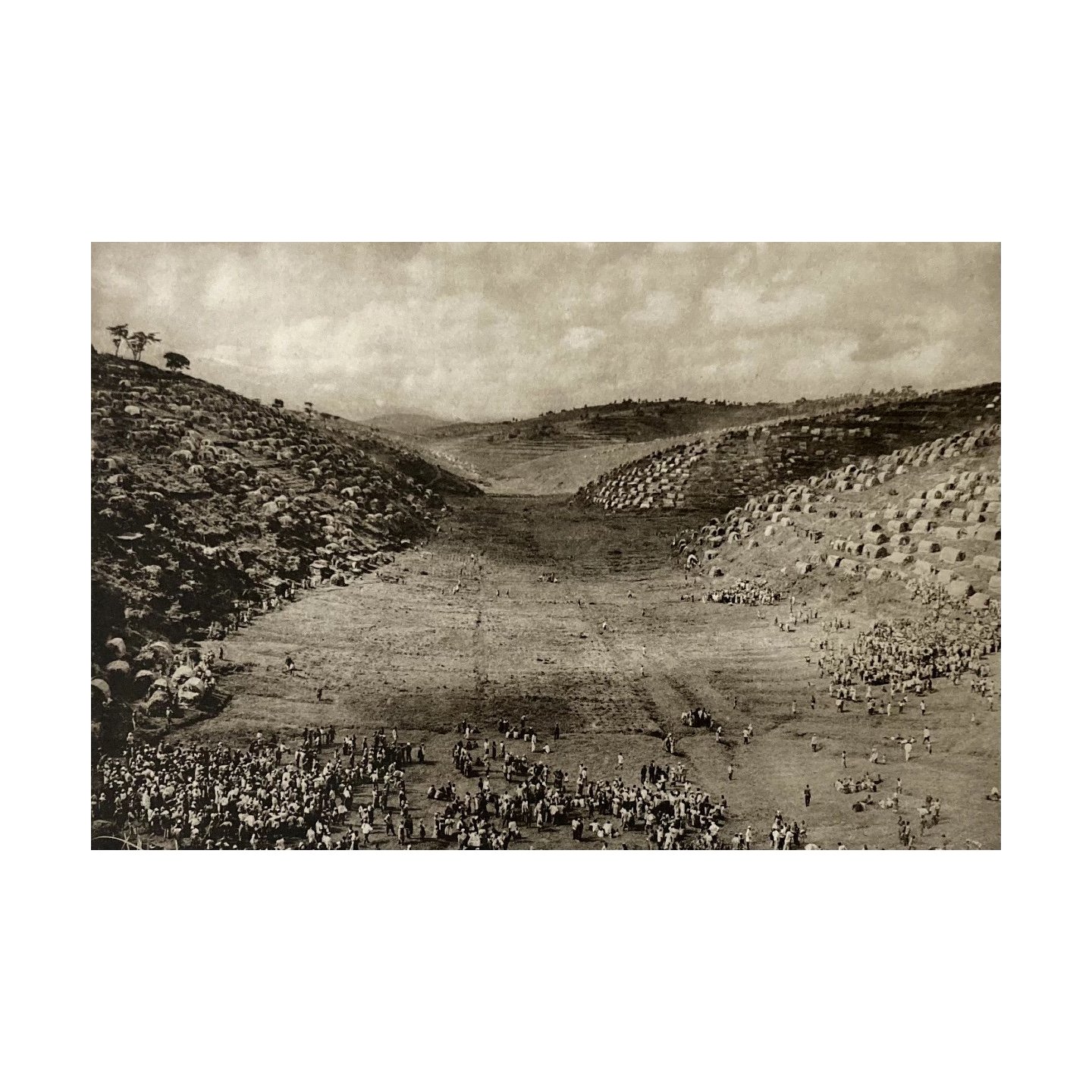
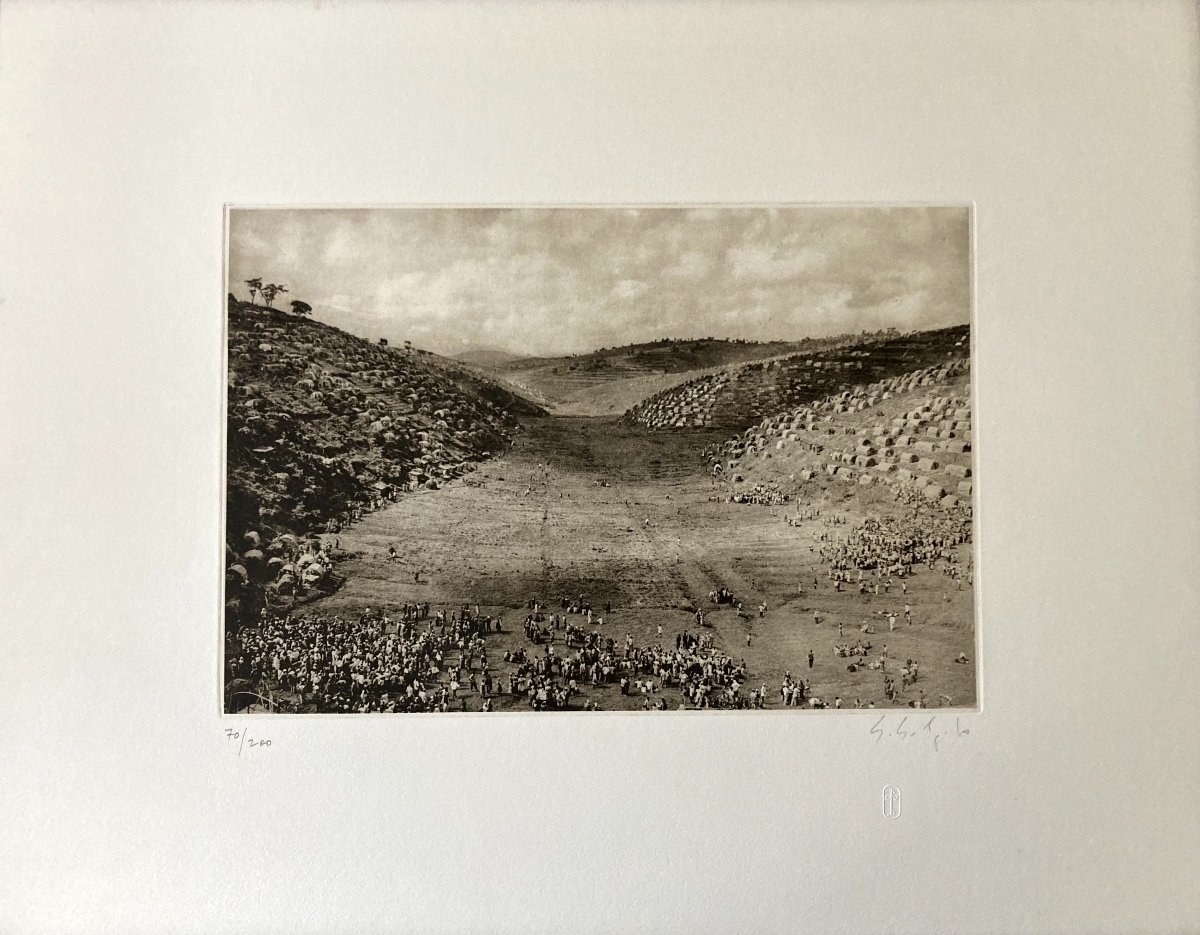
Rwanda, 1995
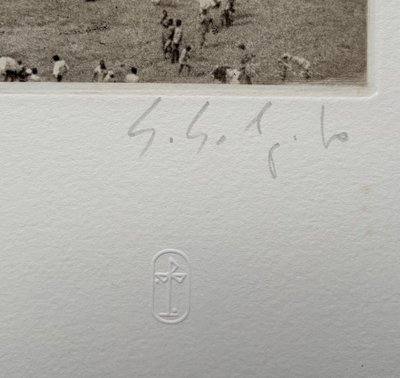
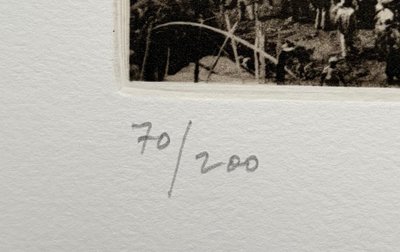
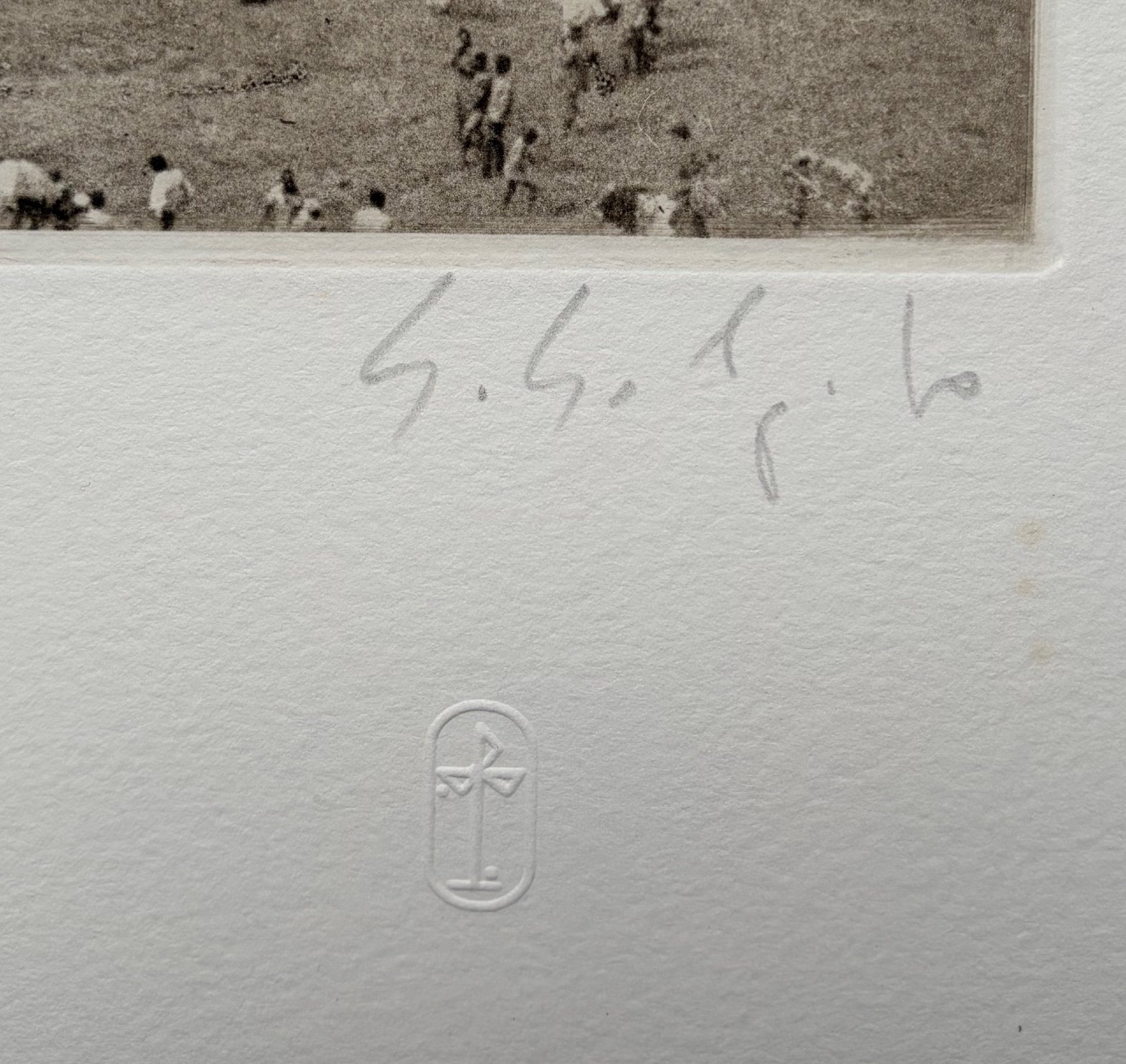
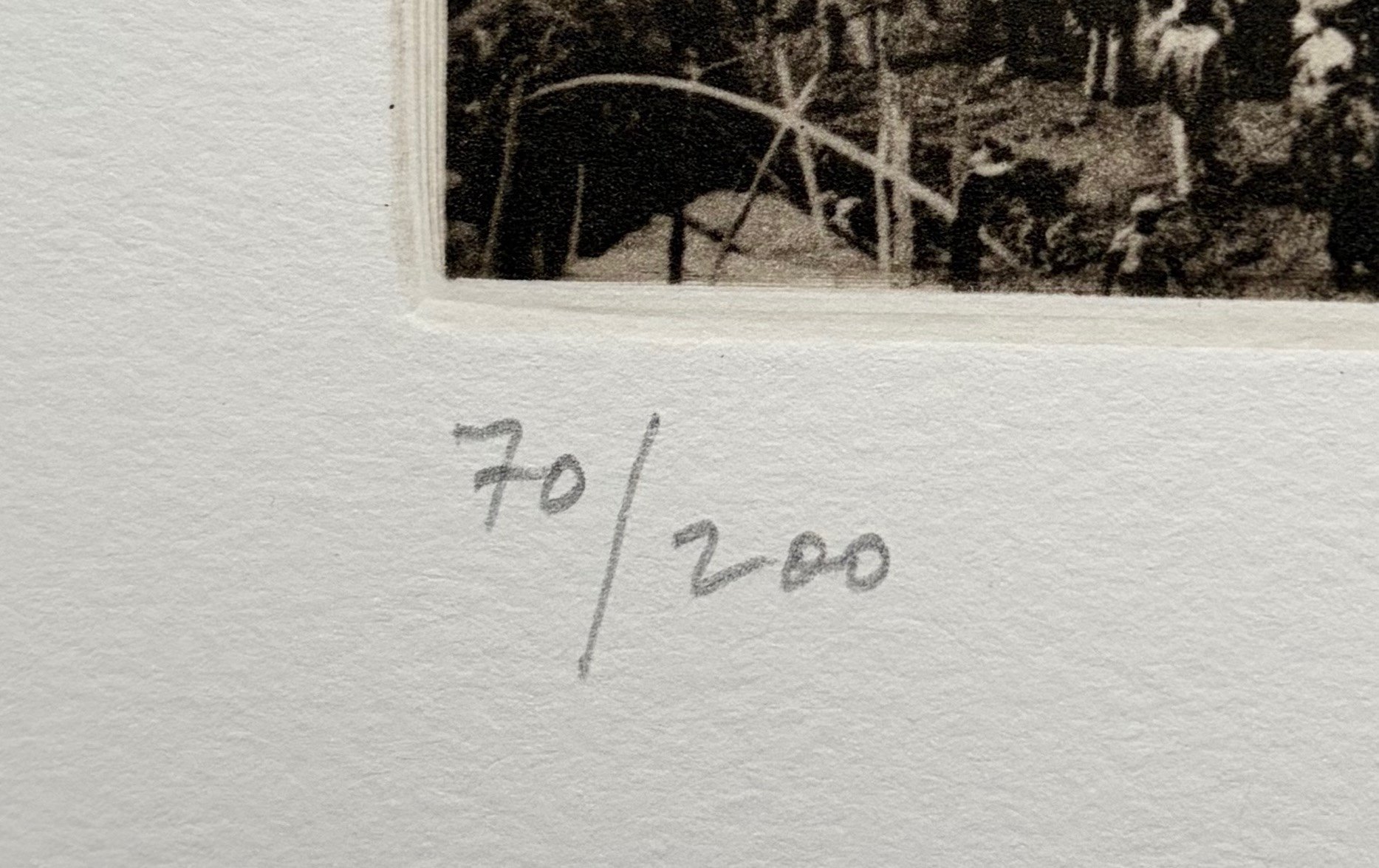
Heliogravure by Pierre Brochet, signed and numbered 70/200 in pencil by the artist and bearing the engraver's blind stamp.
Certificate of authenticity on a label affixed to the back of the frame.
Image: 26 x 38.3 cm; Sheet: 50 x 65 cm
Bibliography: Exodes, Éditions de La Martinière, 2002
(stained oak frame and museum glass)
Sebastião Ribeiro Salgado was born in Aimorés, Brazil. After working as an economist at the Ministry of Finance in São Paulo, he joined the International Coffee Organization in London in 1971, where he worked until 1973.
He decided to pursue a career as a photographer and joined the Gamma agency in 1975, leaving in 1979. That same year, he was elected to the international cooperative Magnum Photos, of which he remained a member until 1994. Salgado covered the wars in Angola and the Spanish Sahara, the Israeli hostage crisis in Entebbe, and the assassination attempt against Ronald Reagan. In 1978, he produced a report on the Cité des 4000 housing project, and the following year, he undertook a project on transhumance and the living conditions of immigrants in Europe.
From 1977 to 1984, Salgado traveled extensively throughout Latin America. The photographs taken during this journey were published in the book *Other Americas* in 1986. In it, he evokes both the persistence of peasant and indigenous cultures and the cultural resistance of the indigenous peoples of this continent. During 1984-1985, he traveled through the Sahel region, ravaged by drought and famine. His presence in refugee camps allowed him to capture the images compiled in the book *Sahel: Man in Distress*. In it, he depicts the suffering of the victims and the damage inflicted on their environment.
For six years, from 1986 to 1992, Salgado led a project on the global production system, which took him to twenty-six countries. The book was published under the title *The Hand of Man* in 1993. The struggle waged by poor farmers in Brazil resulted in the publication of *Terra* in 1997. Between 1994 and 1999, Salgado produced thirty-six photo essays on the issue of civilian migration. In 2001, he followed and documented the global polio eradication campaign led by the WHO and UNICEF.
In 1994, Sebastião and his wife Lélia founded the Amazonas Images agency, an organization entirely dedicated to his work, and in 1998, the Terra Institute, whose objective is to replant the Atlantic Forest that once existed in the country.
In 2016, Sebastião Salgado was officially inducted into the photography section of the prestigious Academy of Fine Arts. He occupies the seat previously held by Lucien Clergue.
Ref: D2SB3E43KG

 English
 Français
 Italiano
 Deutsch
 Oak sideboard, 1950
1.100 € EUR