

Would you like more images?

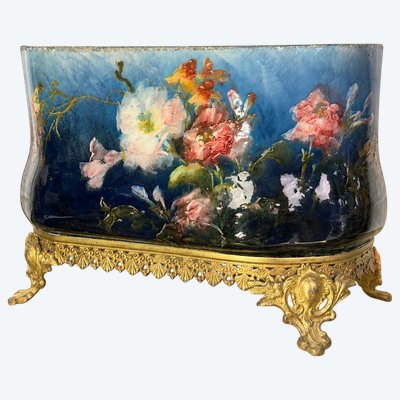
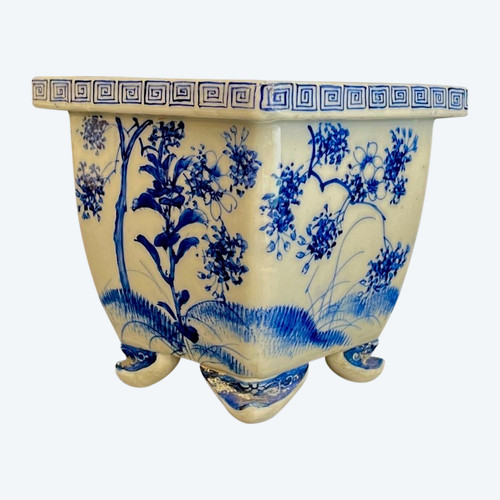
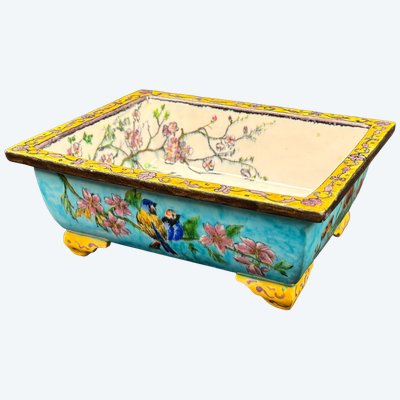
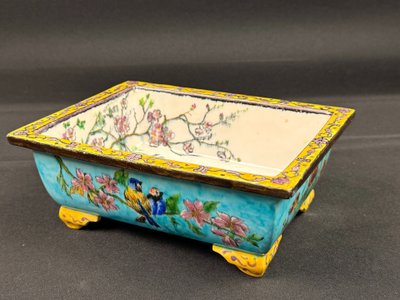
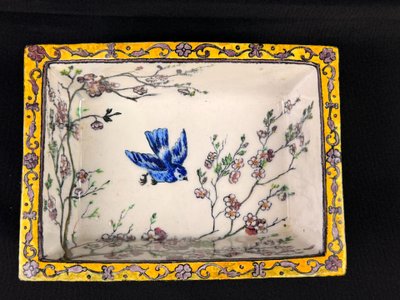
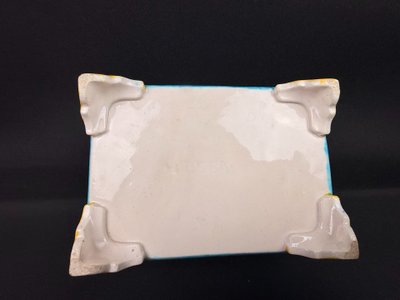
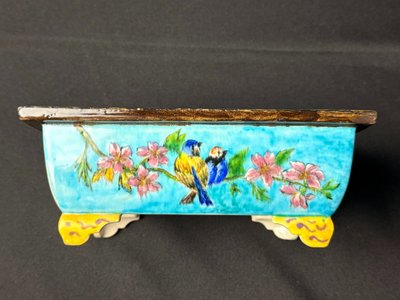
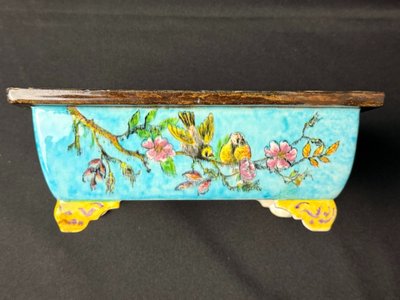
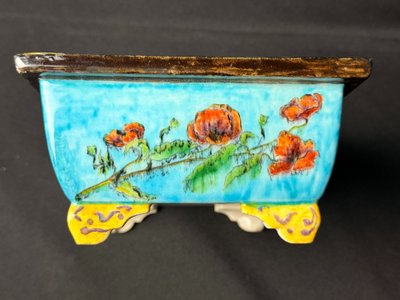
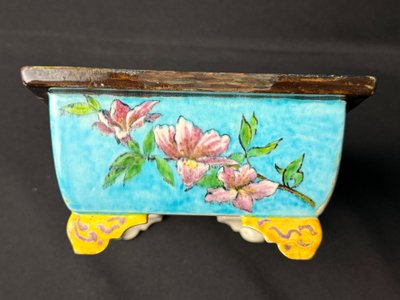
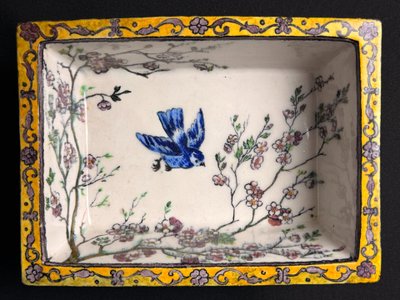
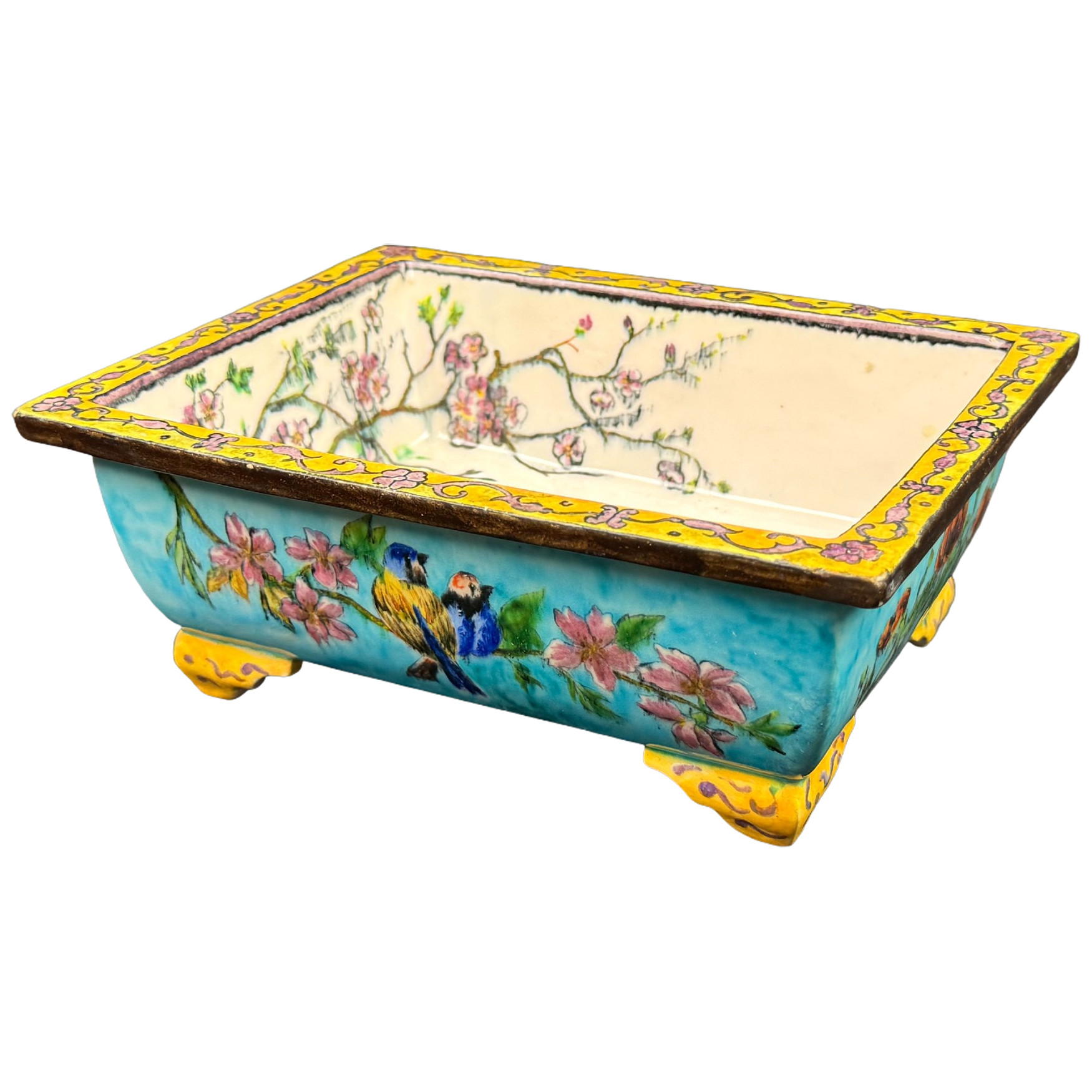
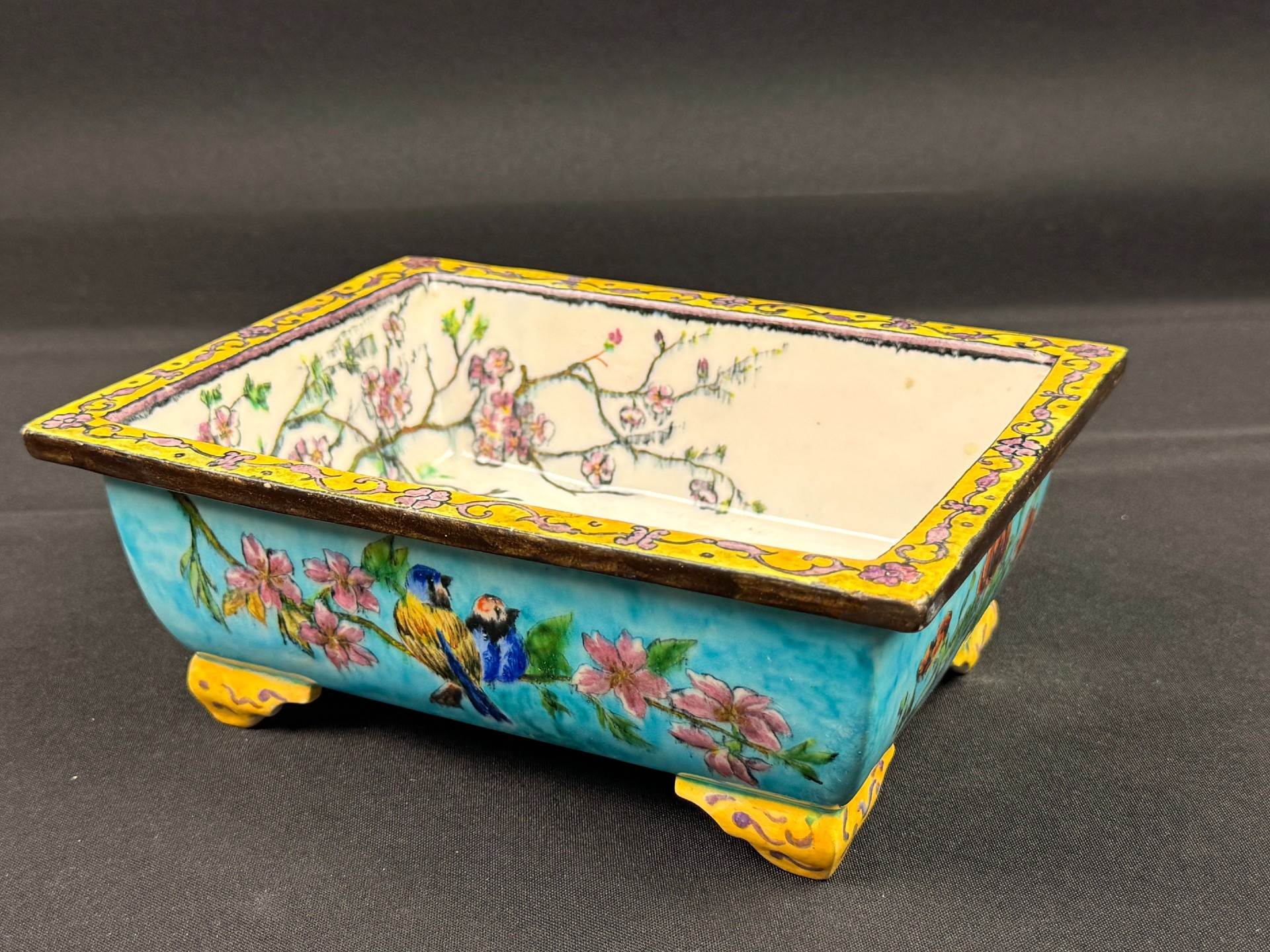
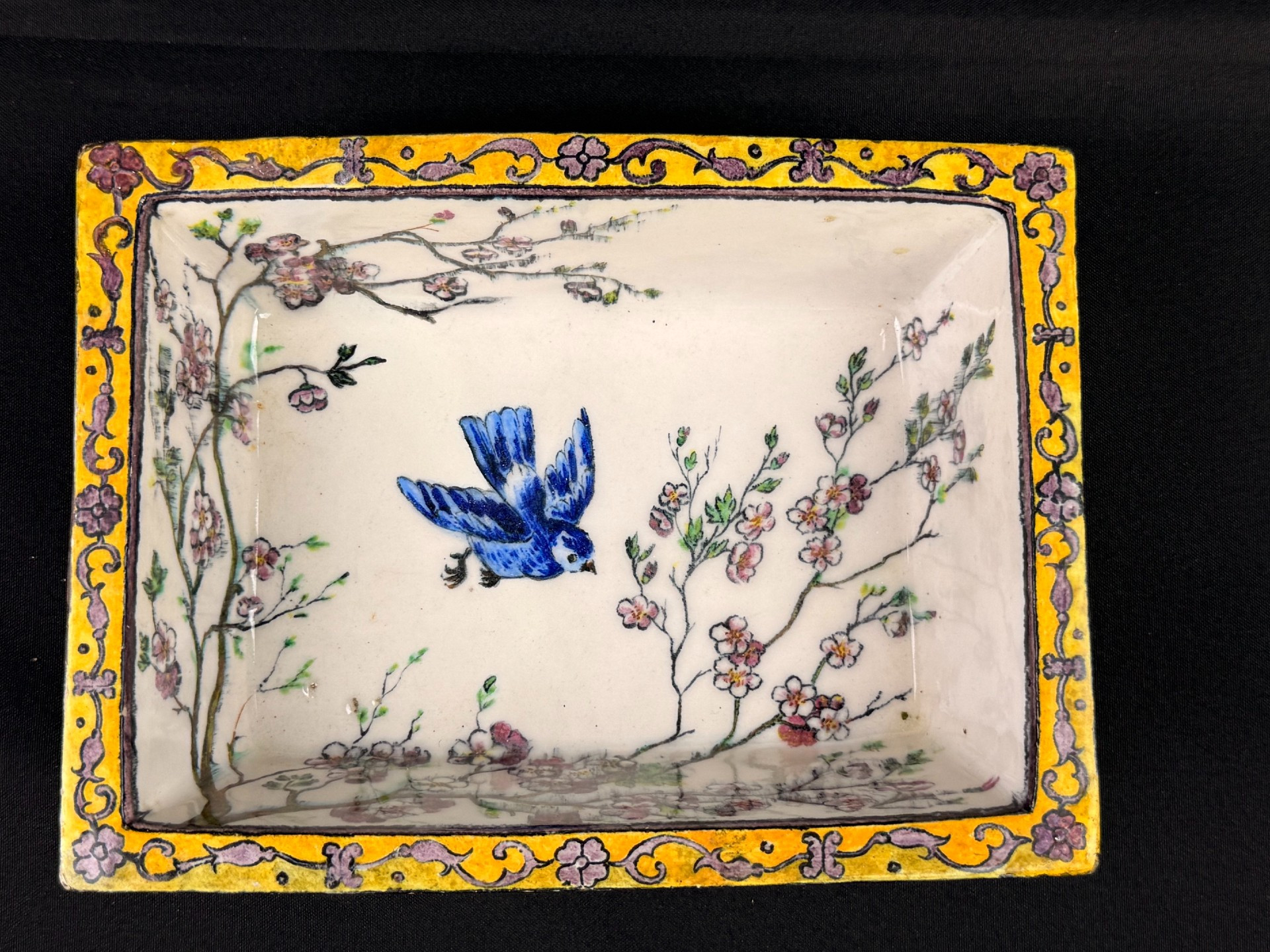
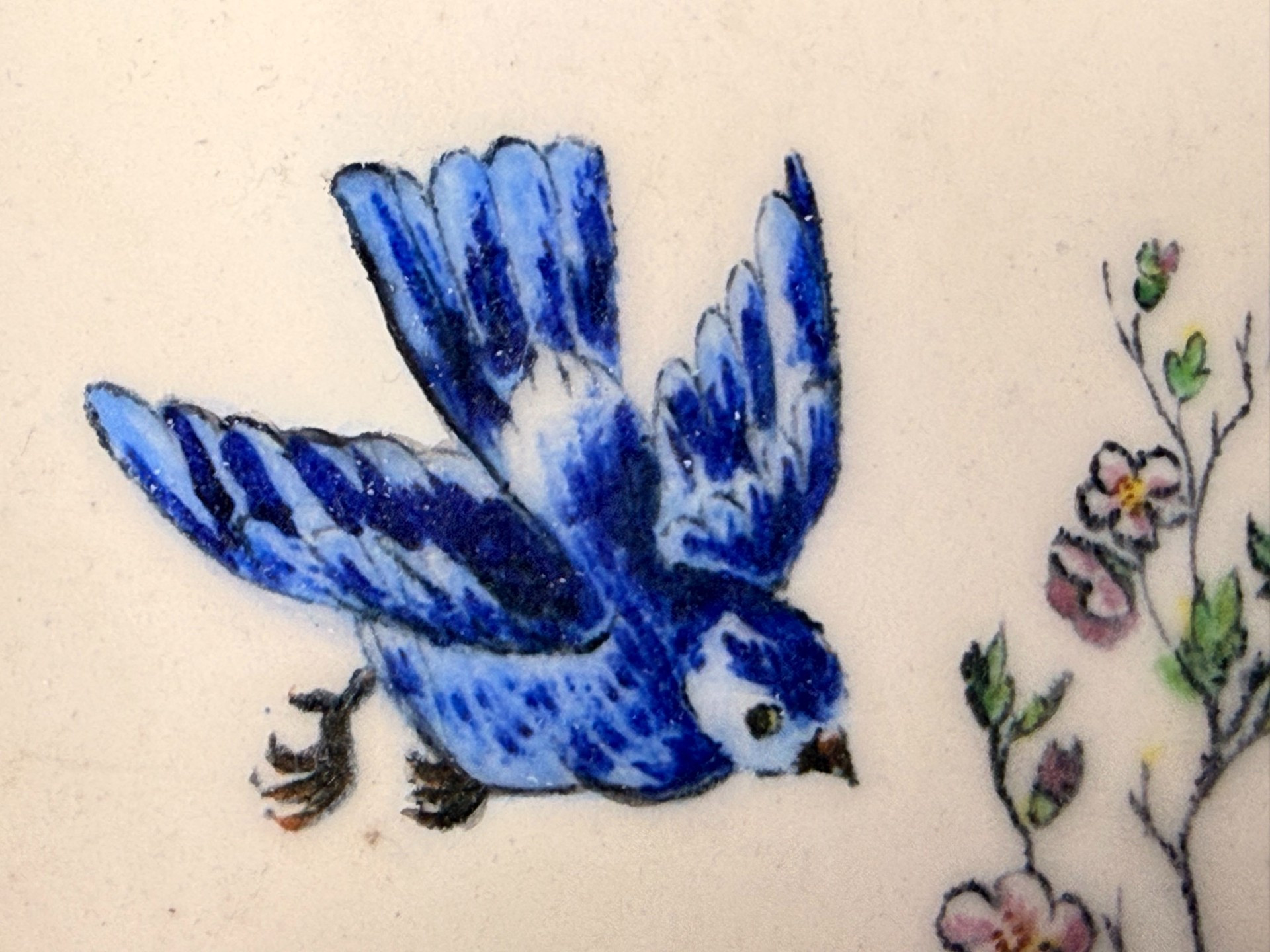
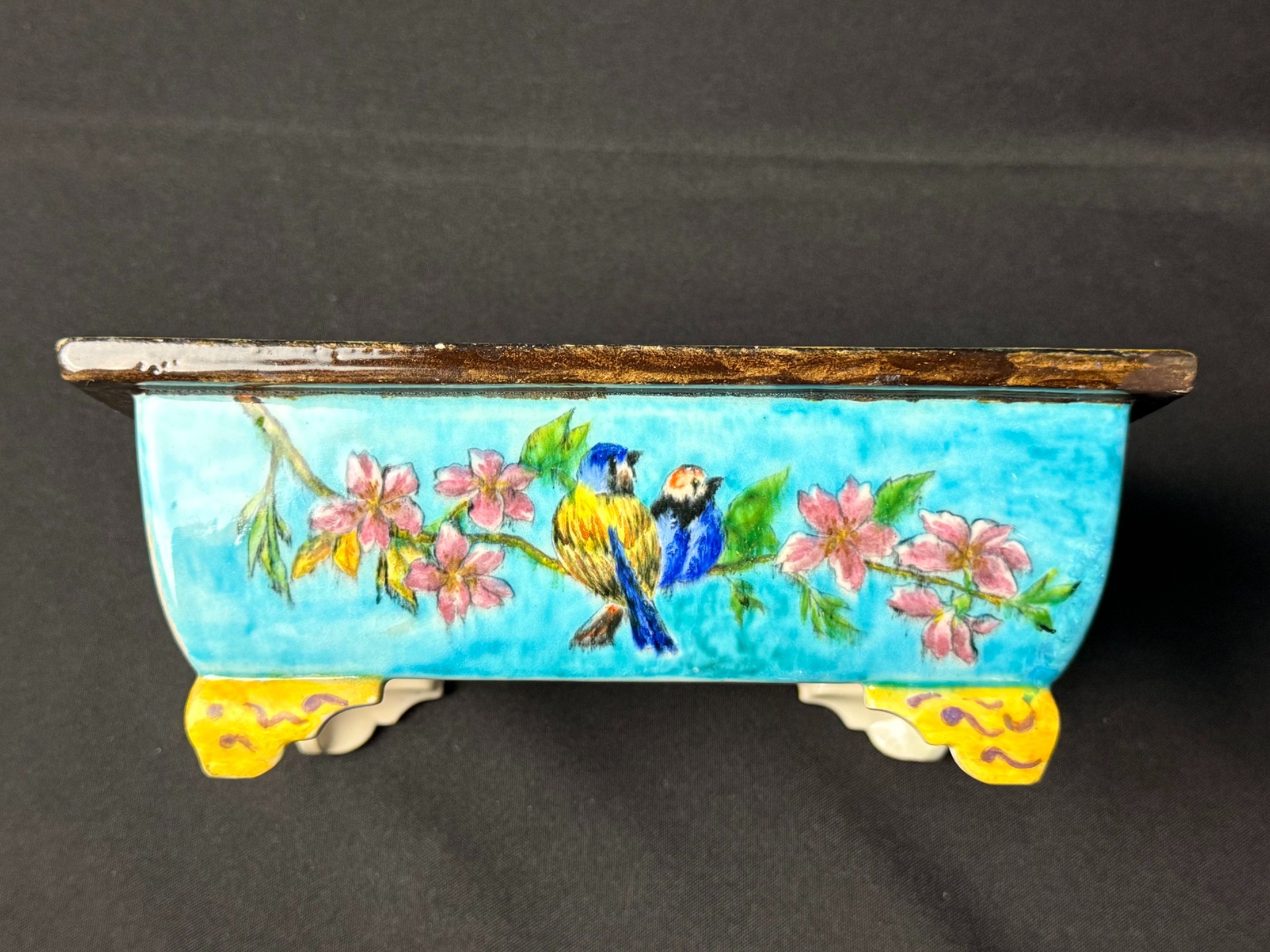
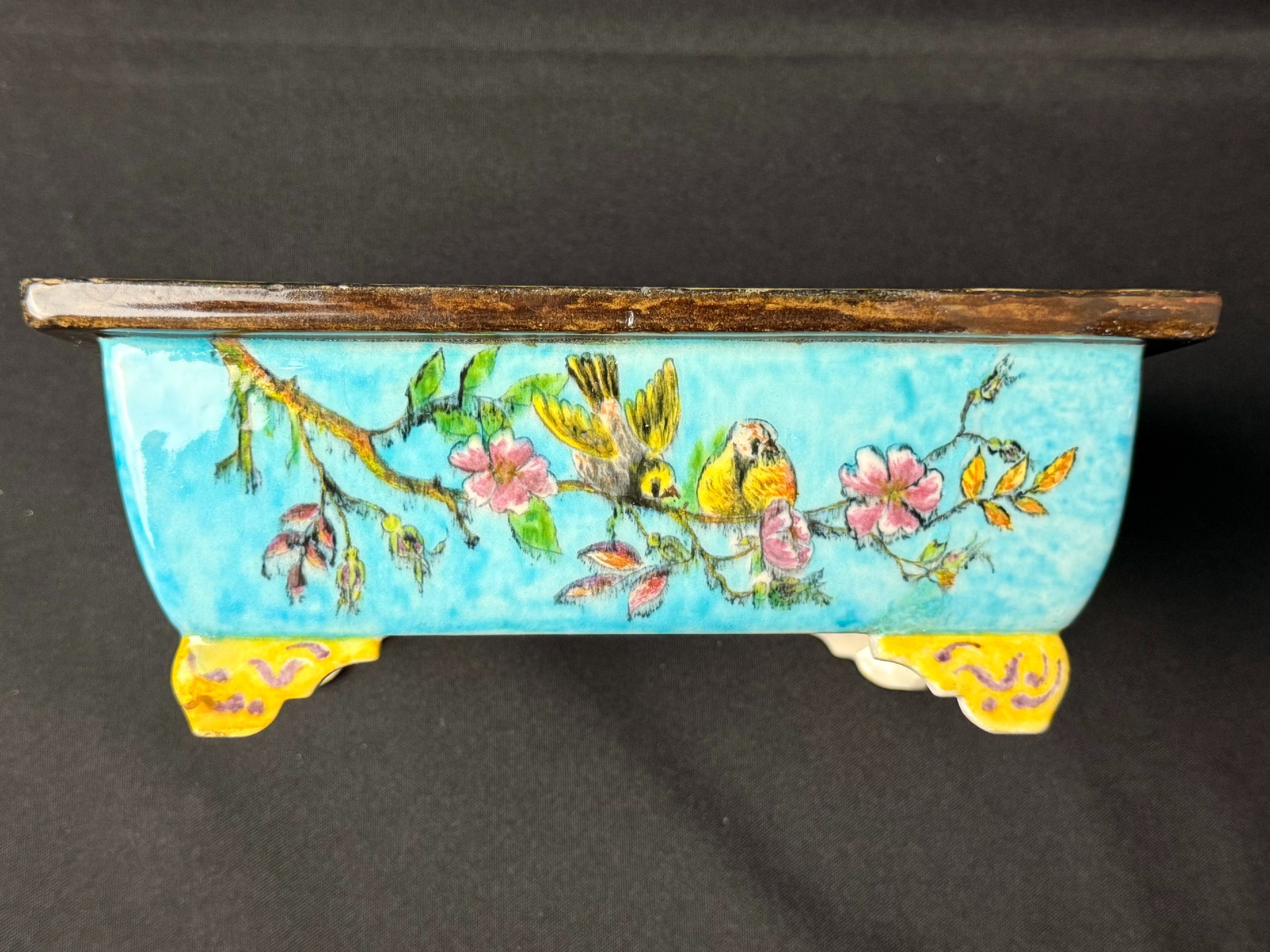
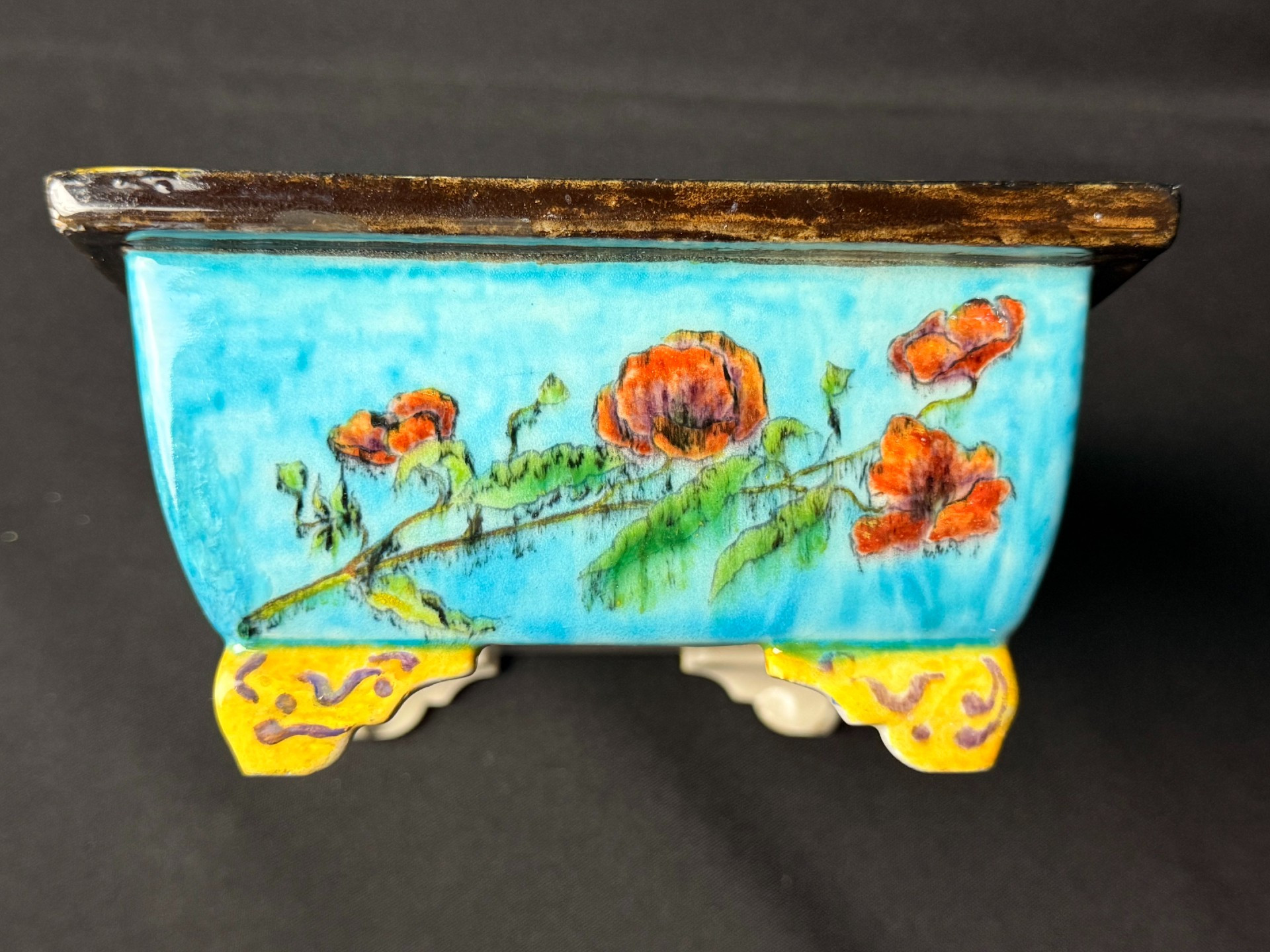
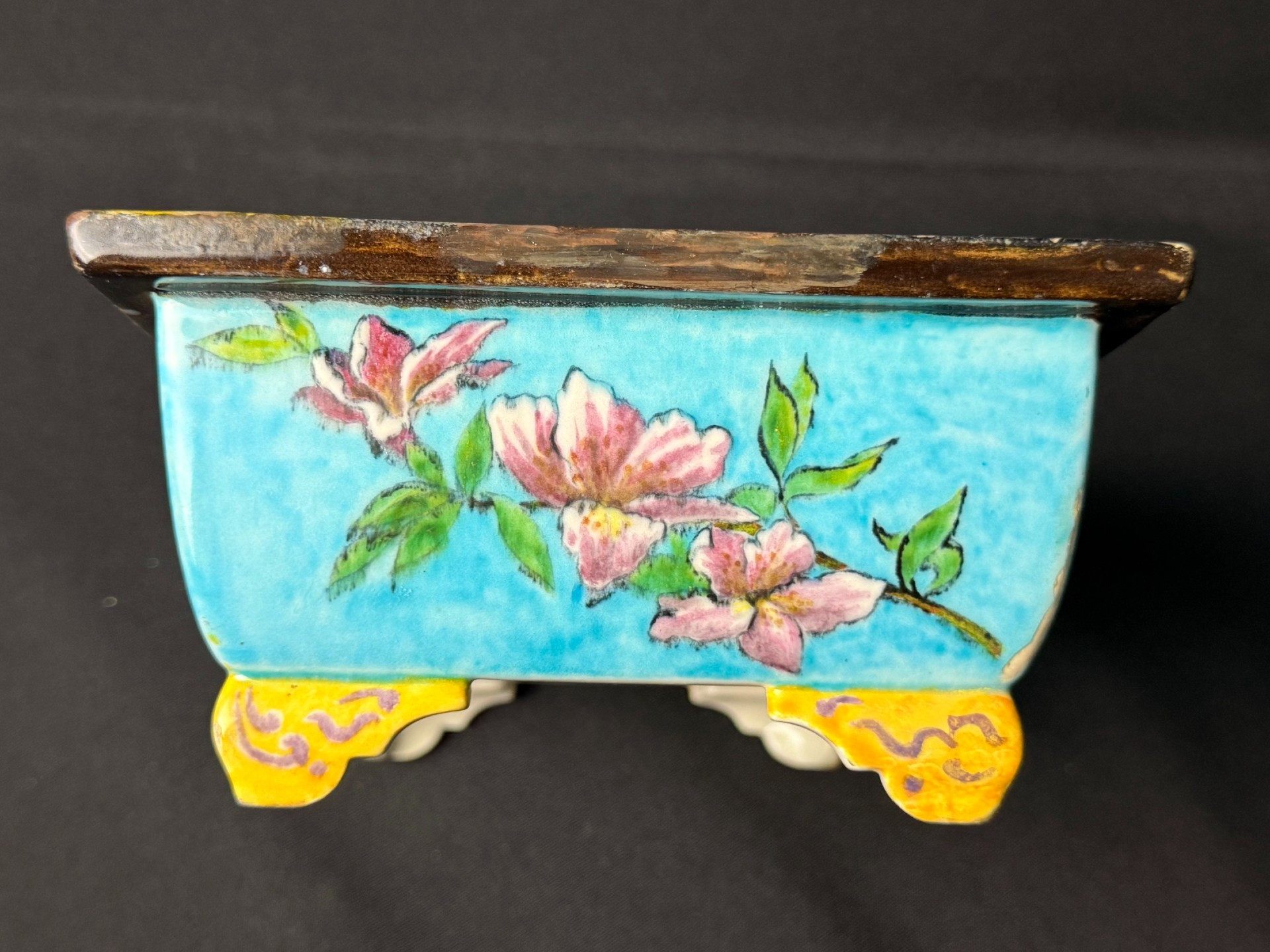
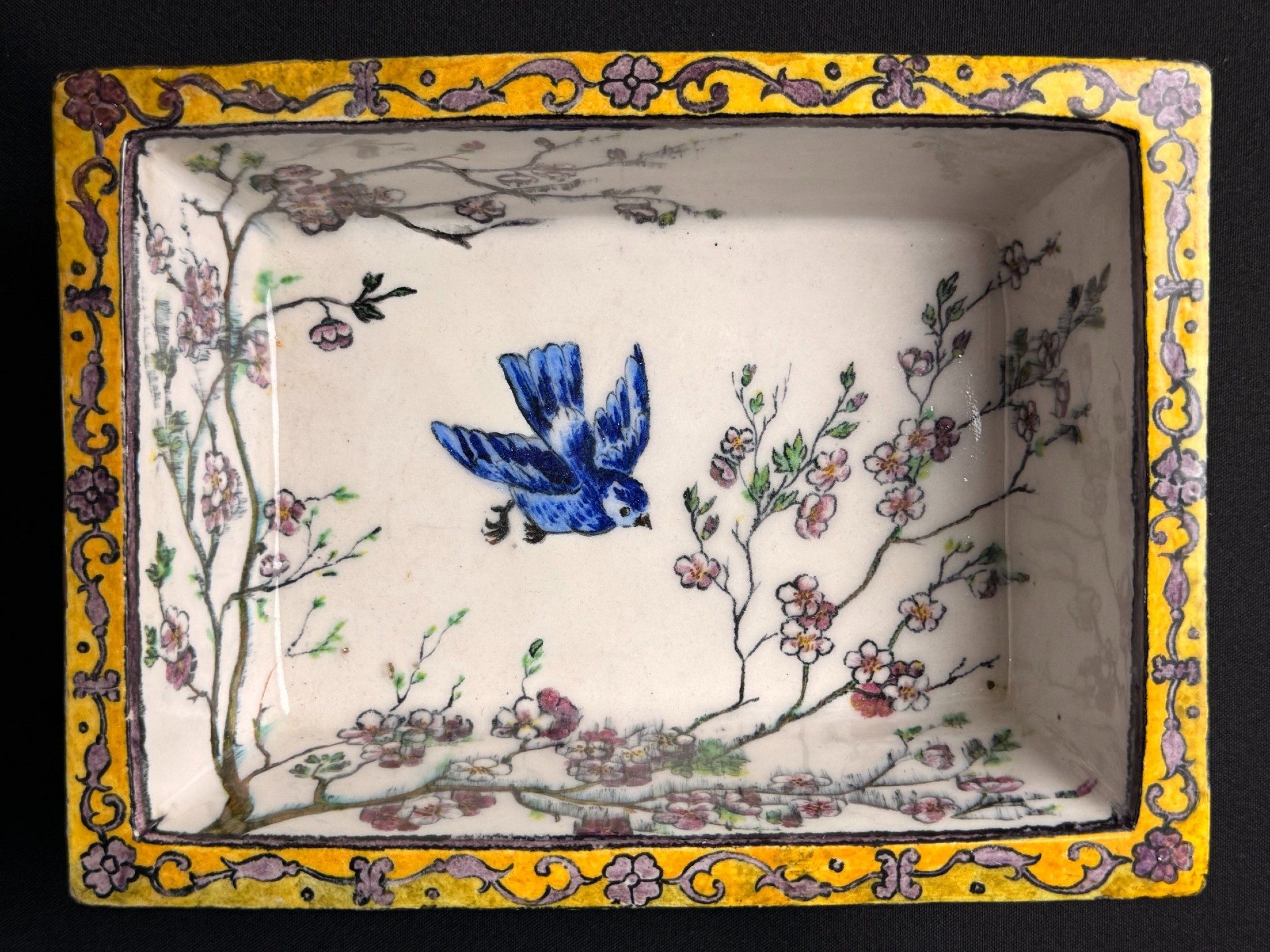
Stunning rectangular planter resting on four legs
made of turquoise-blue glazed earthenware
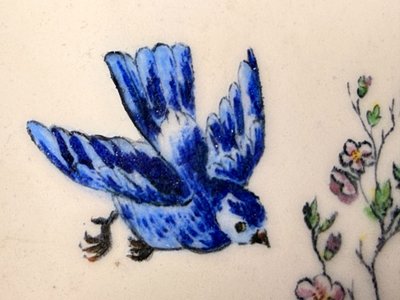
With polychrome decoration featuring a bird and flowers
Height: 8 cm
Length: 20.5 cm
Width: 16 cm
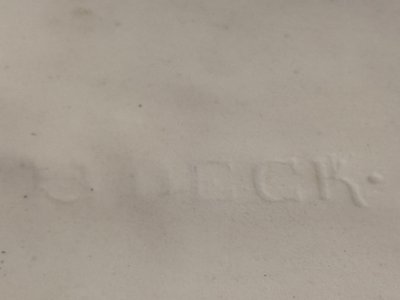
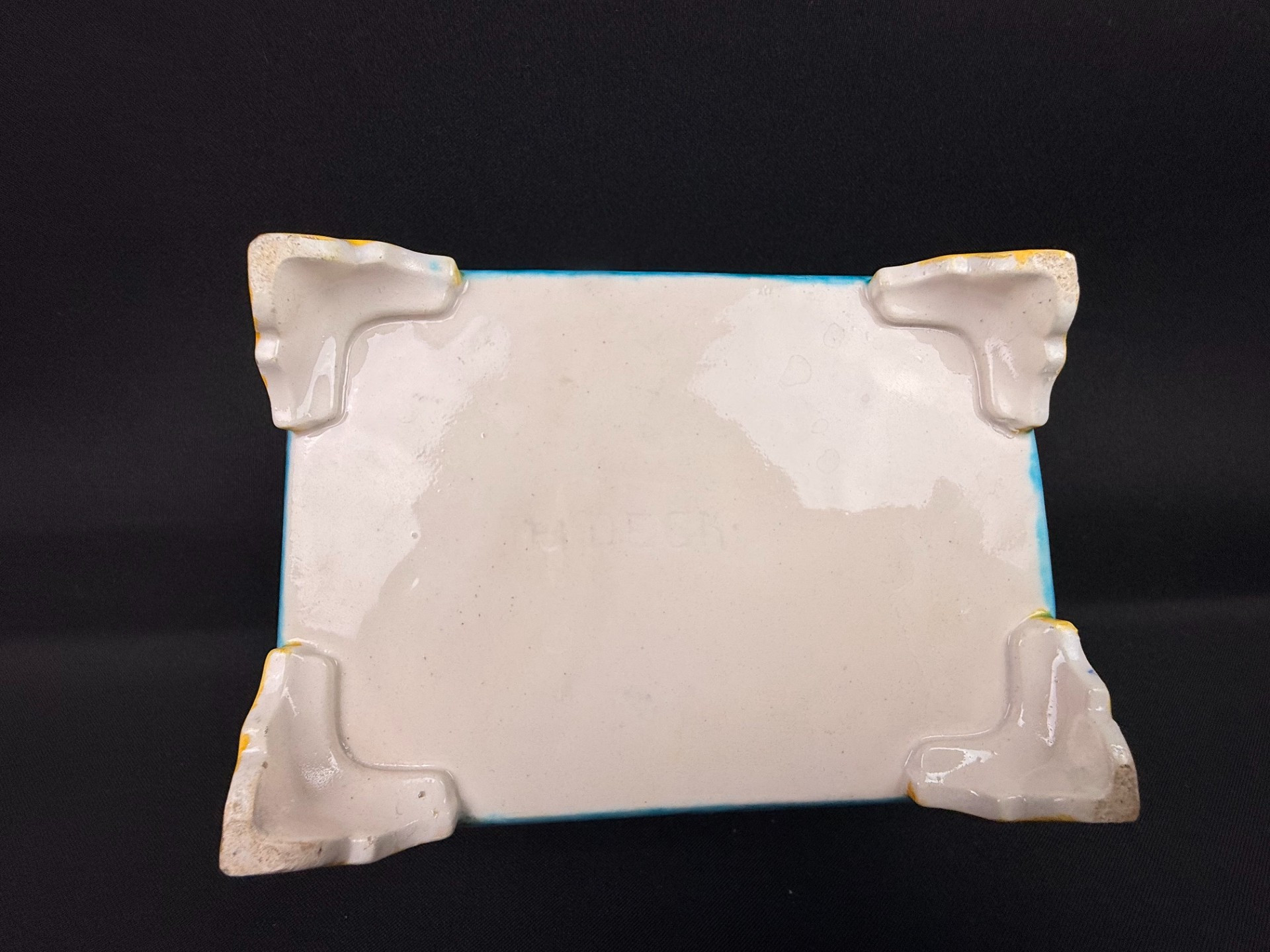
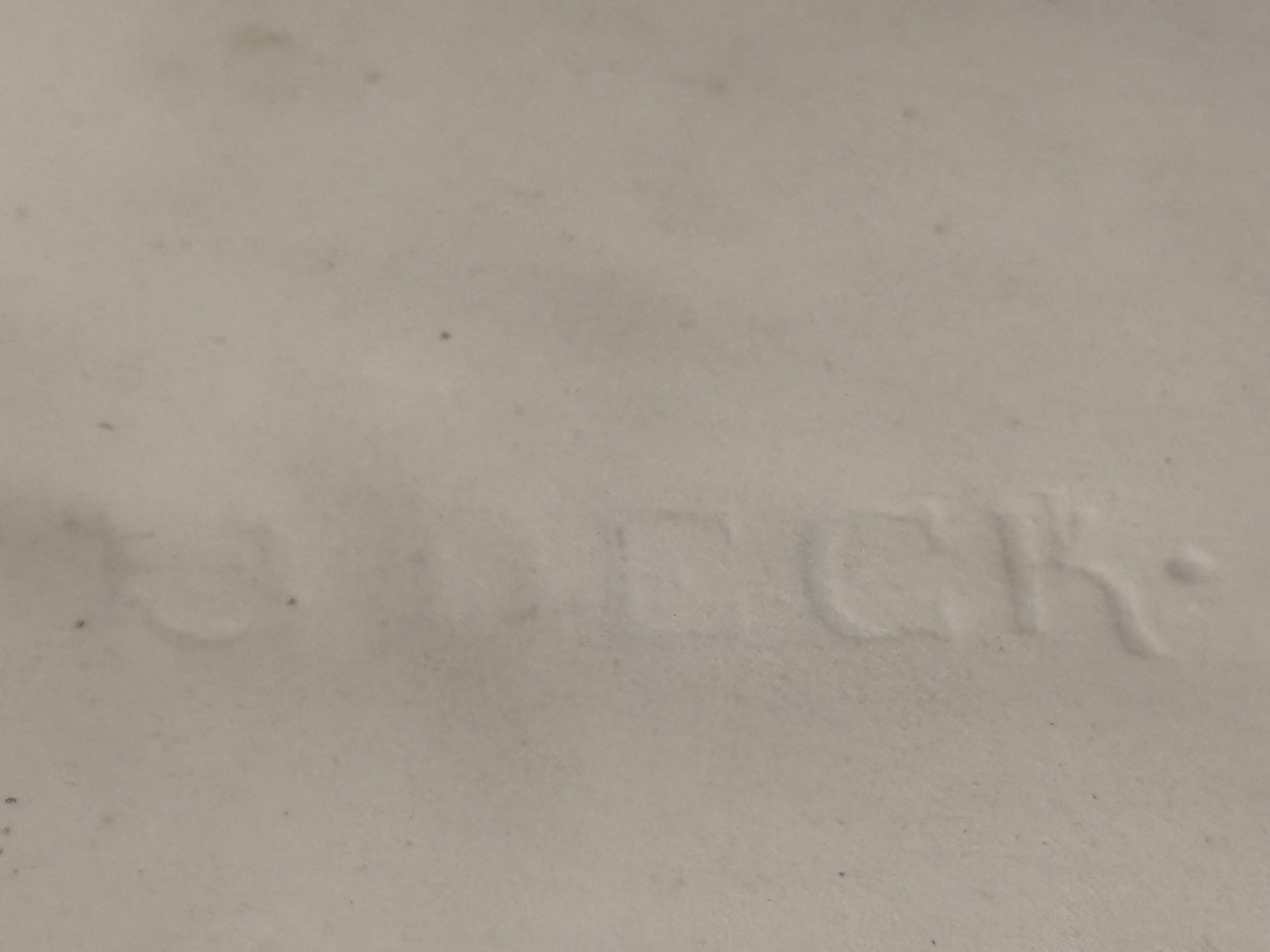
Signed “THDECK” in low relief
Condition: very good overall condition. A few old restorations detectable only under a Wood’s lamp; they remain invisible to the naked eye and do not affect the piece’s aesthetic qualities.
Brief Biography of Théodore Deck
Joseph-Théodore Deck (Guebwiller, January 2, 1823 – Paris, May 15, 1891) was a leading 19th-century French ceramist, renowned for his innovations in earthenware and his role in French decorative arts
Born in Guebwiller (Haut-Rhin), the son of a silk dyer, he developed a passion for chemistry and the arts of fire at an early age.
In 1841, he became an apprentice to the master stove maker Hügelin in Strasbourg, where he mastered the techniques of Saint-Porchaire Renaissance-style earthenware. He then undertook a study tour of Germany, Austria, and Hungary, securing commissions for castles and palaces, notably Schönbrunn.
Upon arriving in Paris in 1847, he worked for the potter Vogt; then, after the Revolution of 1848, he returned to Guebwiller before heading back to Paris in 1851 as a foreman at the Dumas factory. In 1856, he set up his own business on Boulevard Saint-Jacques with his brother Xavier, and later became director of the Sèvres Manufactory in 1887.
Creations and Innovations
Deck developed styles influenced by Ottoman, Persian, and Japanese earthenware and created the famous “Bleu de Deck.” He collaborated with artists such as Paul Helleu and Albert Anker and trained numerous ceramists, including Edmond Lachenal.
His works adorned prestigious residences, and he exhibited in Paris, London, at the 1878 World’s Fair, and elsewhere.
Author of the treatise *La faïence* (1887), he left a lasting artistic and technical legacy. An Officer of the Legion of Honor, he died in Paris in 1891 and was buried at Montparnasse Cemetery, with a monument designed by Auguste Bartholdi.
Ref: J8M2TOZF9U
| Condition | Very good |
| Style | Art Nouveau (Shaped pieces Faience of Art Nouveau Style) |
| Period | 19th century (Shaped pieces Faience 19th century) |
| Country of origin | France |
| Artist | Théodore Deck |
| Length (cm) | 20.5 |
| Height (cm) | 8 |
| Depth (cm) | 16 |
| Materials | Earthenware |
| Shipping Time | Ready to ship in 4-7 Business Days |
| Location | 68530, MURBACH, France |
| Shipping Information | All items will be carefully packed and shipped by colissimo registered post or Chronopost. For large items (furniture, very large pieces of faience, extremely fragile objects), suitable packing and transport will need to be arranged, so a tailored quotation must be requested. |
4 commitments to buy with confidence

 English
 Français
 Italiano
 Deutsch