This description has been translated and may not be completely accurate. Click here to see the original
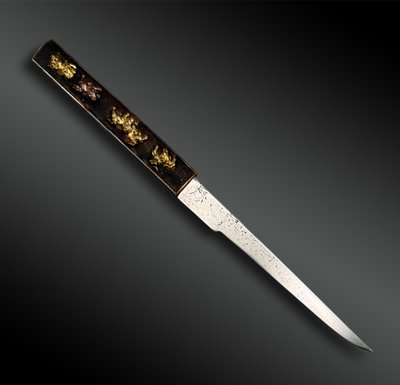
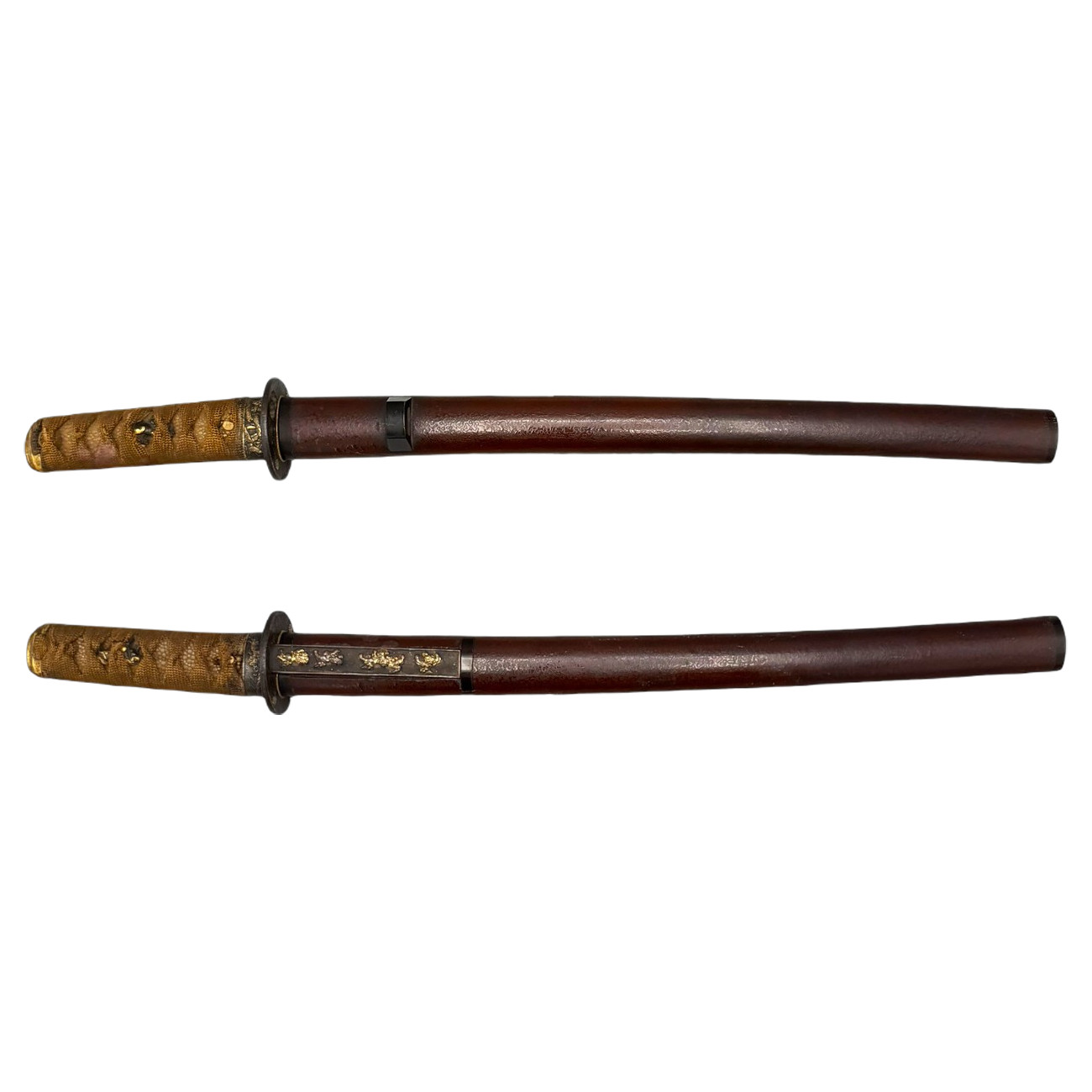
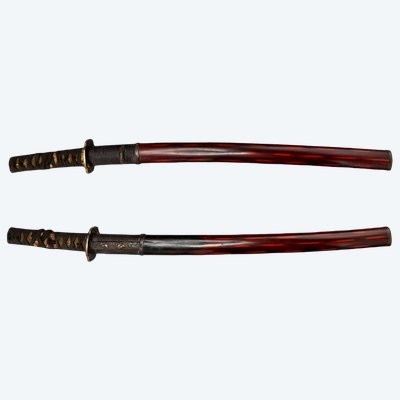
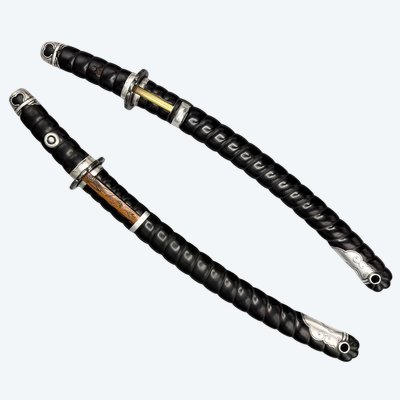
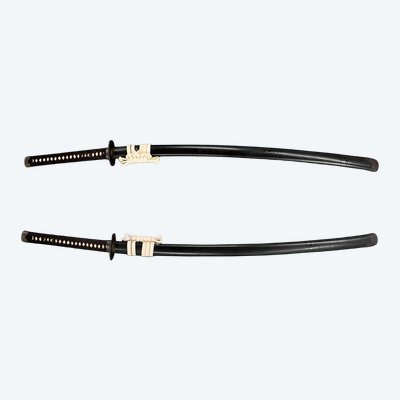
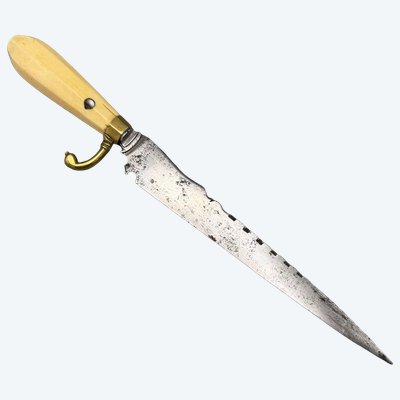
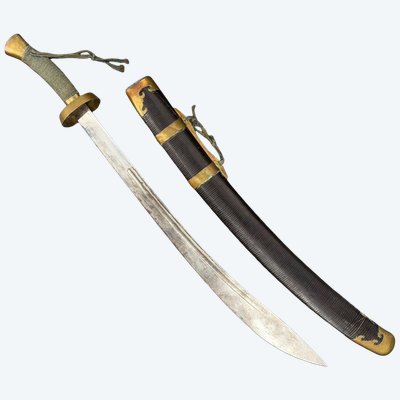
SABRE known as Tanto
Japan
Edo Period (1603–1868)
Steel, wood, lacquer, copper, iron, gold, shakudo
Nagasa: 20.3; Nakago: 10.5 cm
(Cracks on the scabbard)
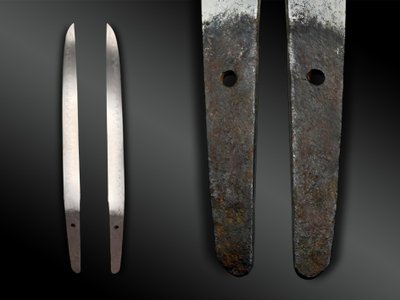
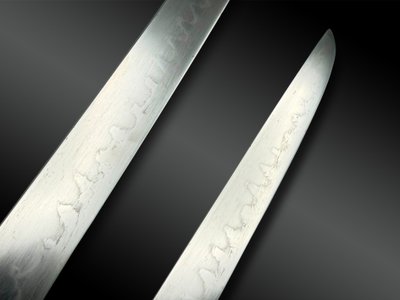
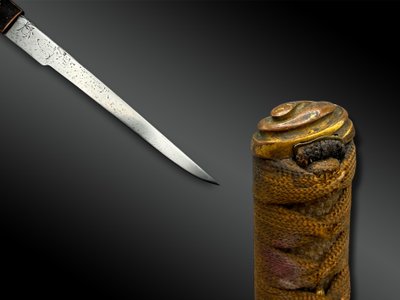
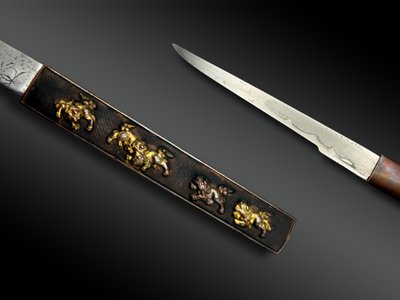
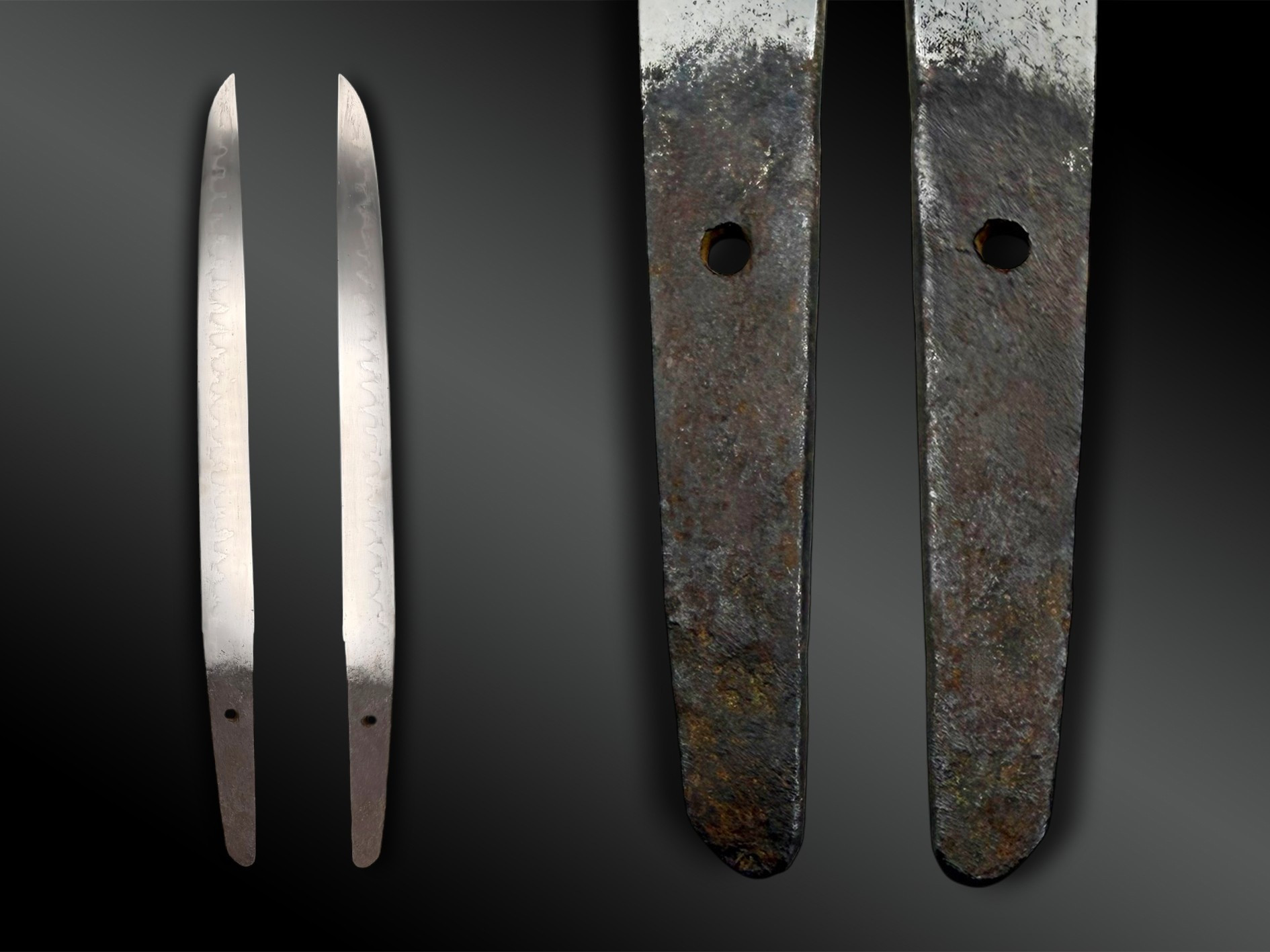
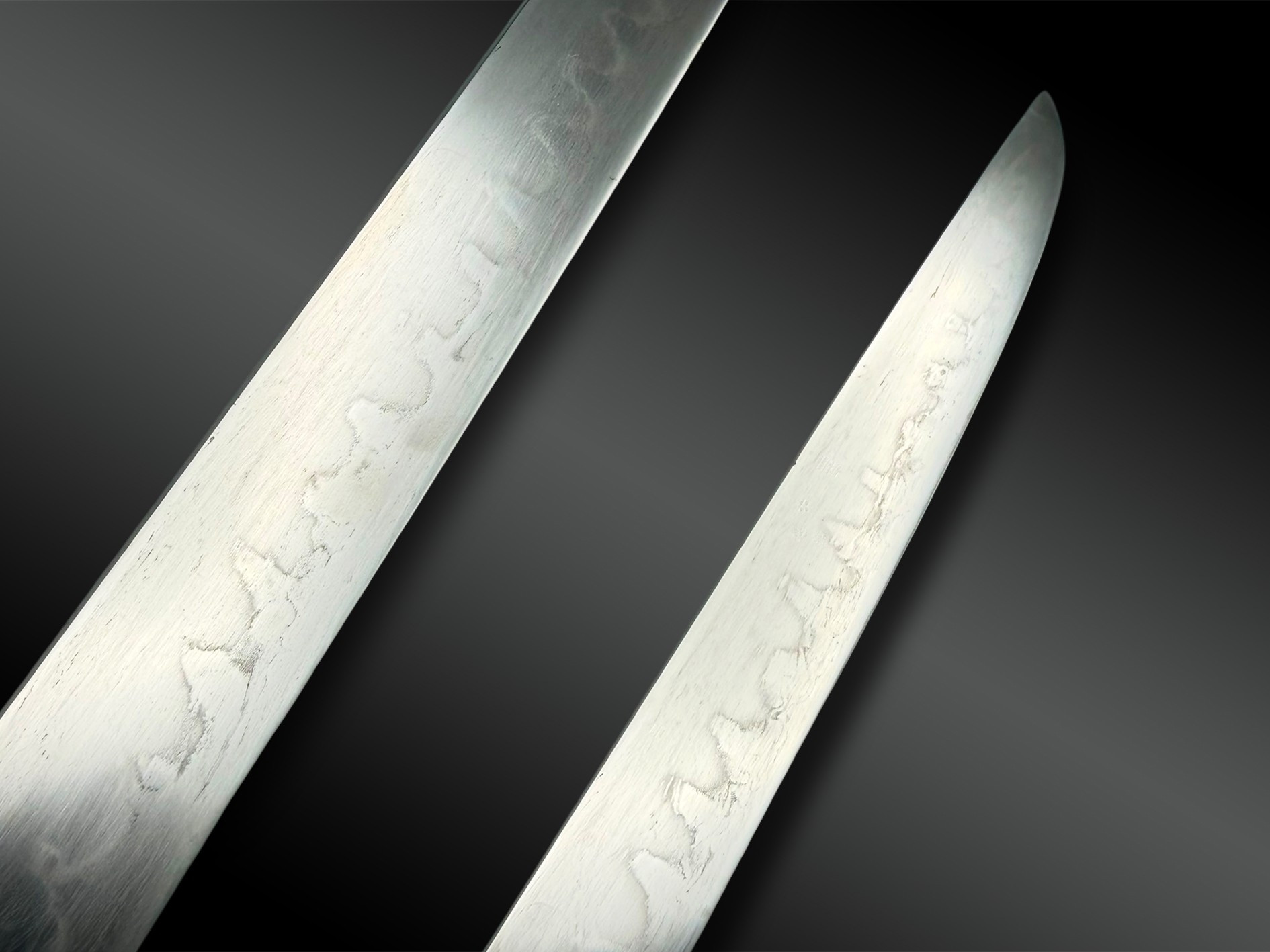
Kata kiri ha-style blade, mune hikushi, kawazu choji-style hamon.
Kaen-style boshi.
Funa gata nakago with ha hagari kuri jiri.
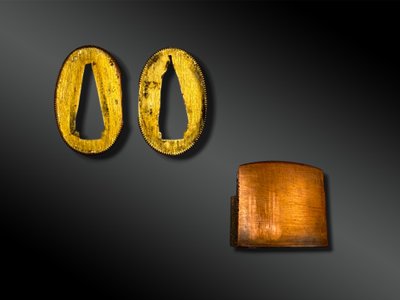
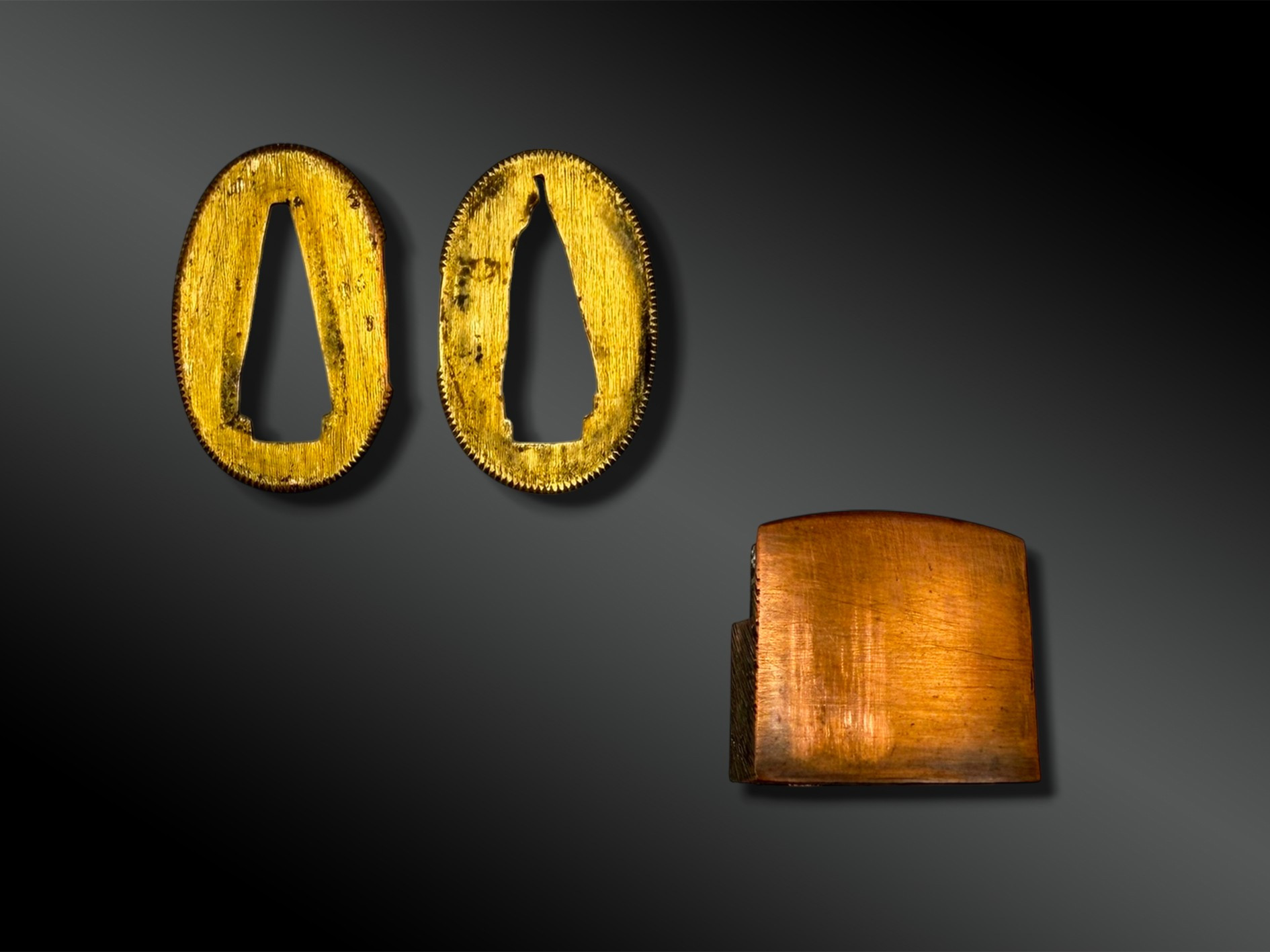
Copper habaki.
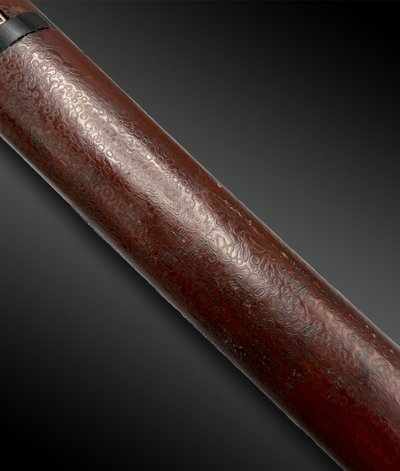
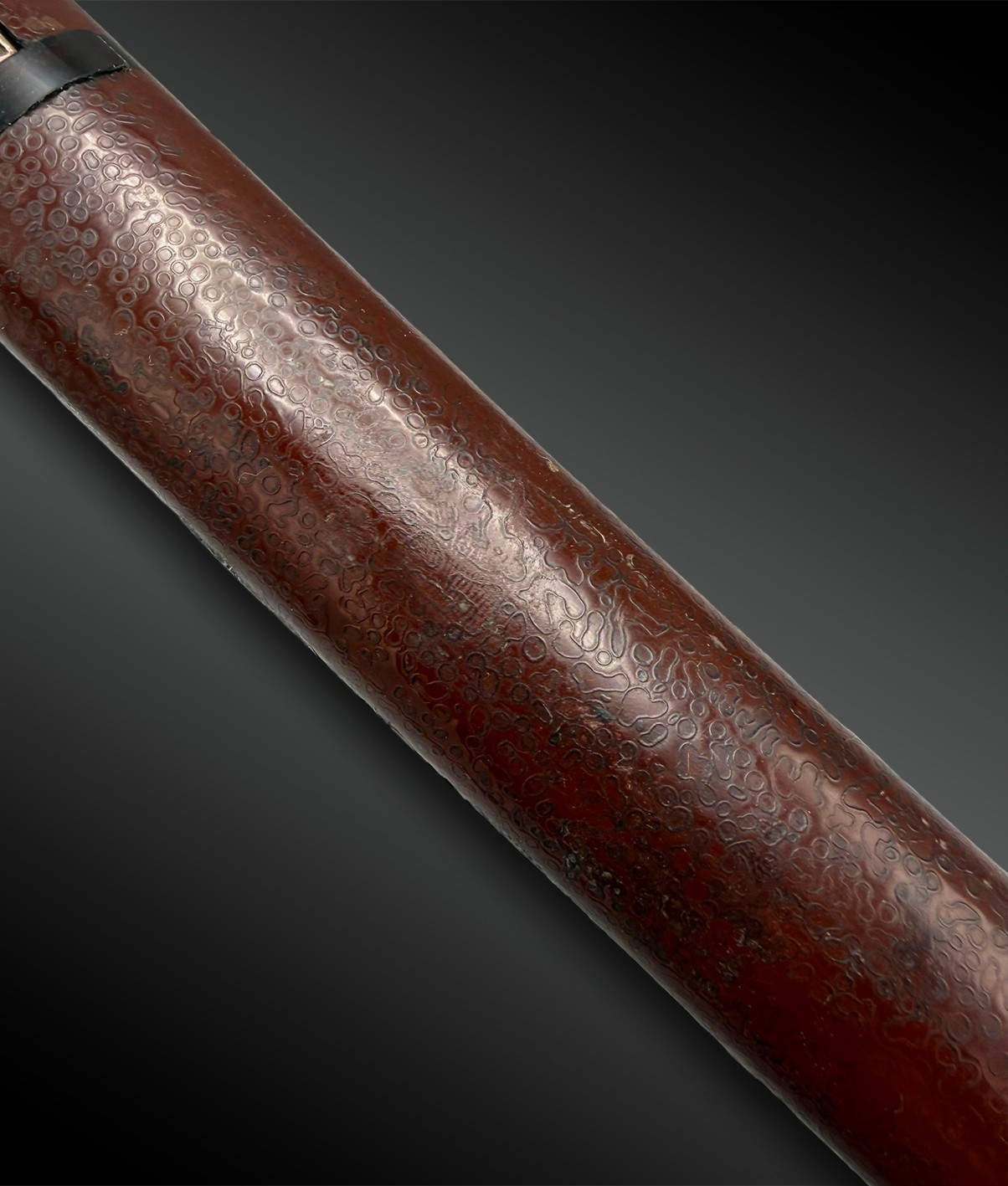
Wooden saya coated with matte red lacquer.
Kojiri, kuri gata, and koi guchi made of buffalo horn.
Shitodome made of chiseled brass.
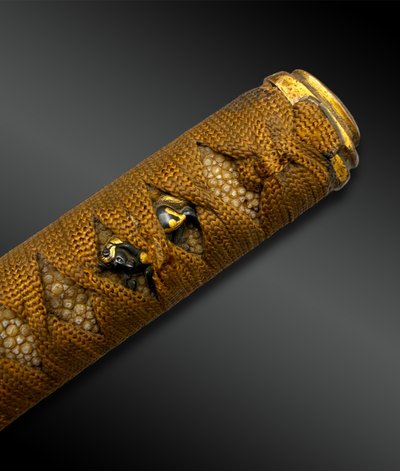
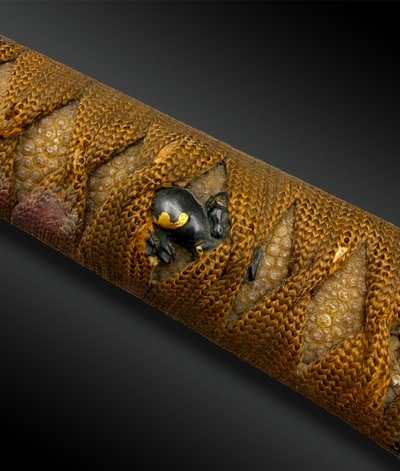
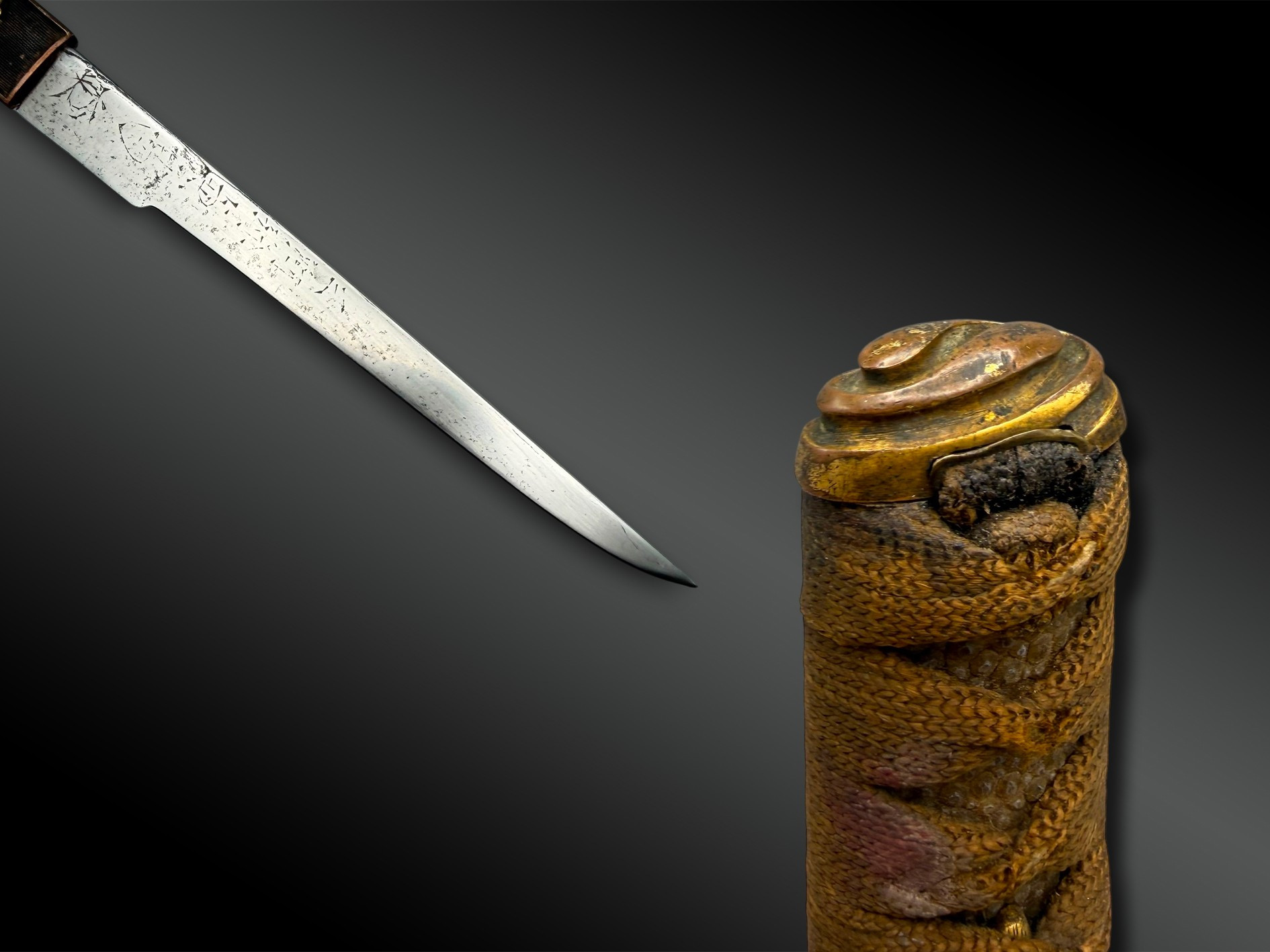
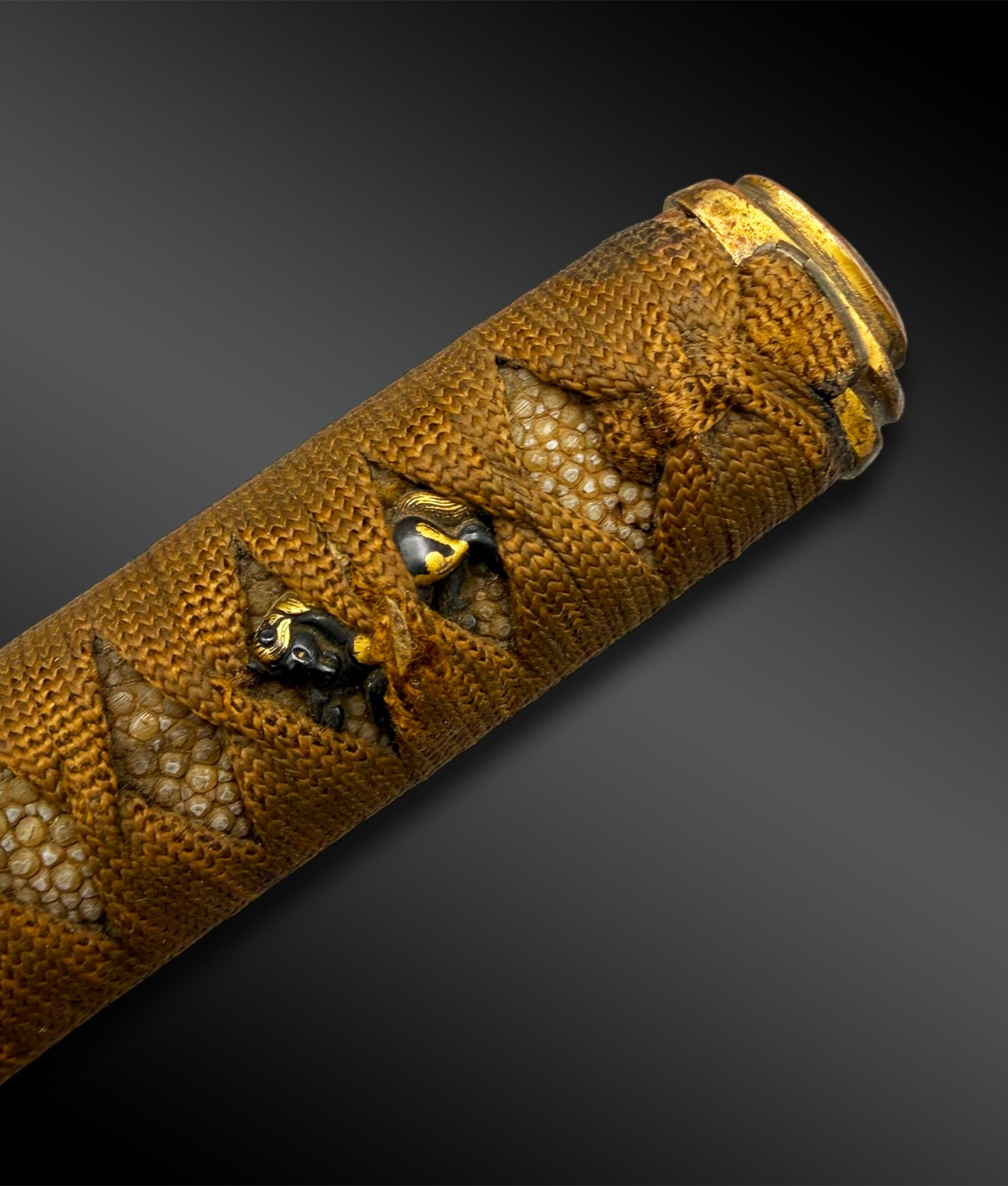
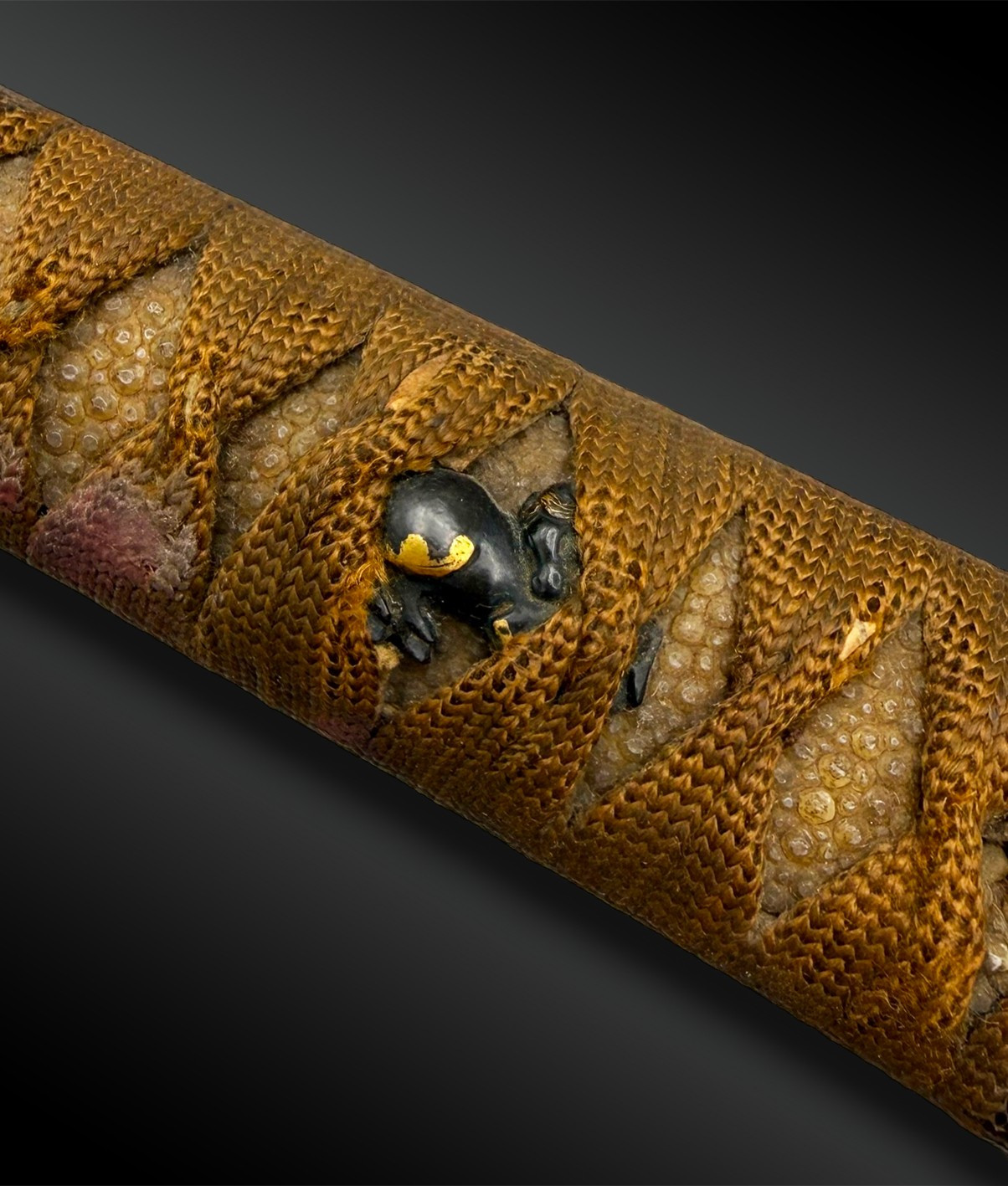
Tsuka ito made of wood, covered with shagreen, and braided with brown silk.
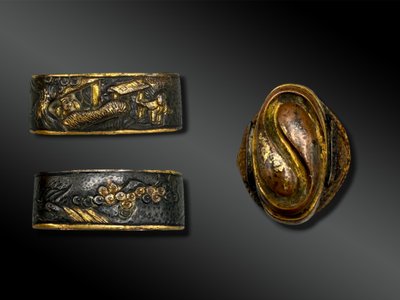
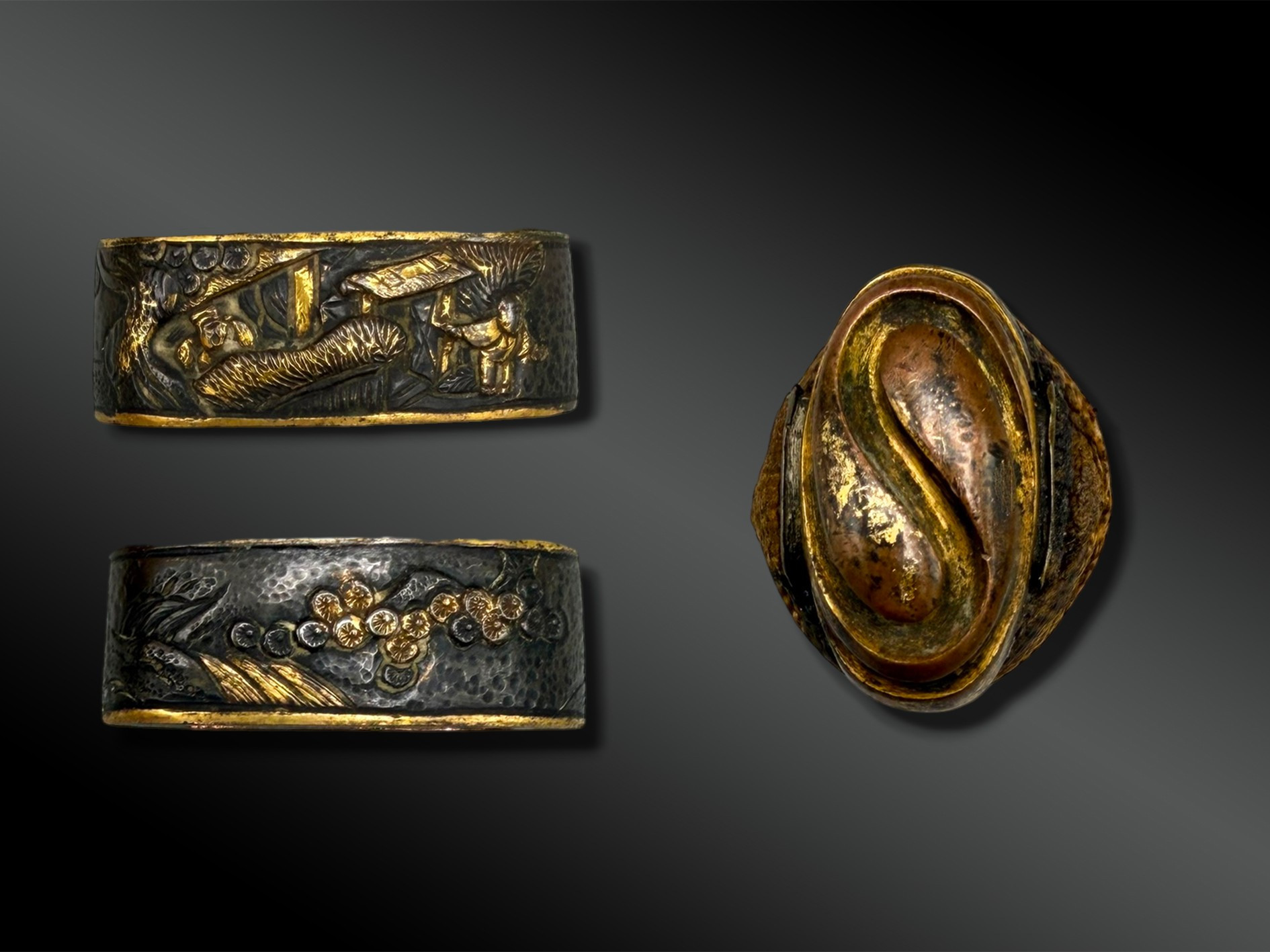
Copper fuchi overlaid with shakudo, chiseled with two figures in a architectural scene and flowering branches; the entire piece is accented with gold.
Gilded copper kashira in the shape of a geometric motif.
Menuki depicting two horses, made of shakudo and accented with gold.
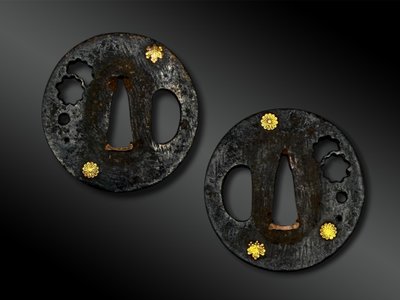
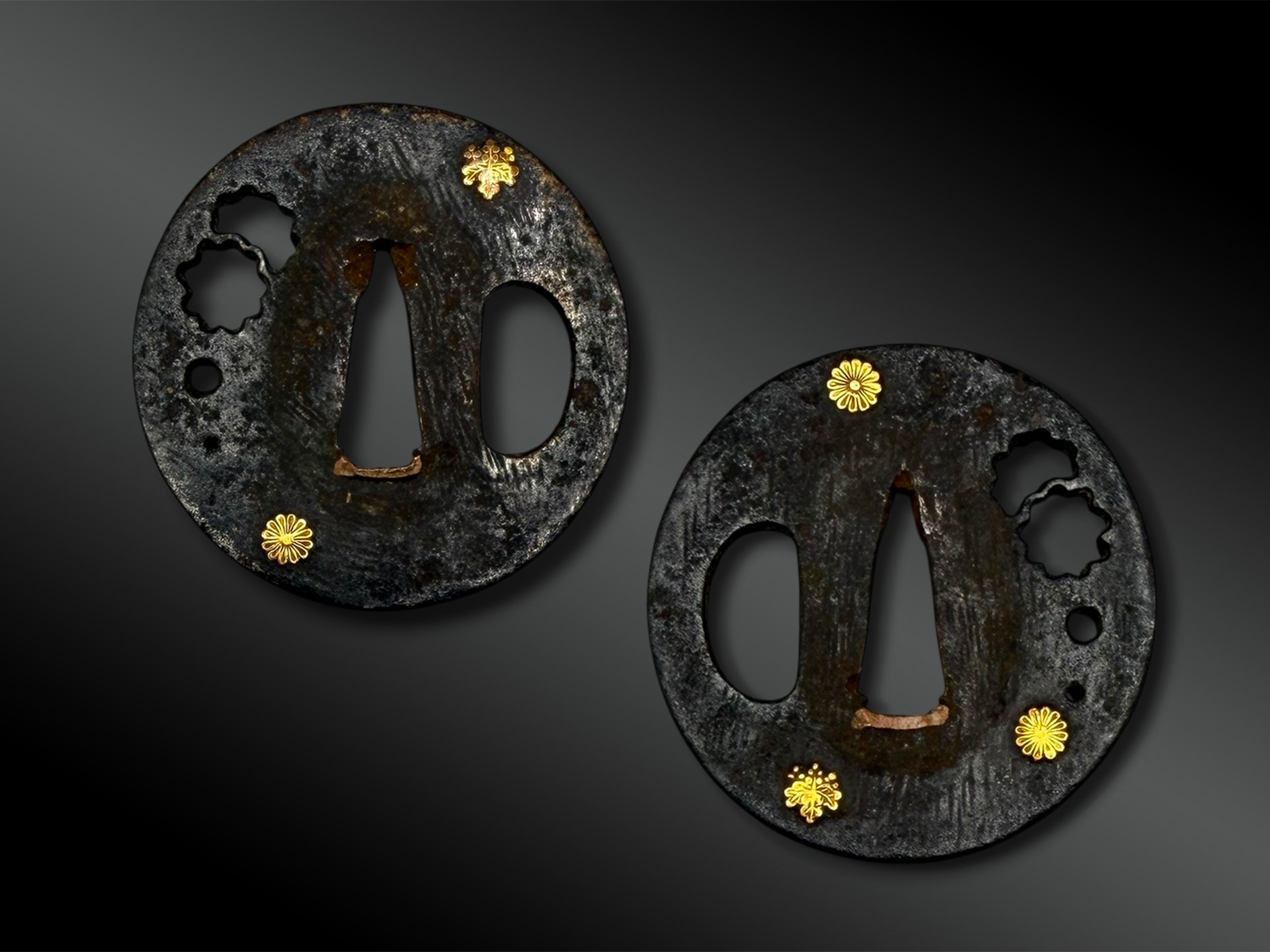
Shin no maru-gata tsuba made of iron, openworked with geometric motifs and engraved with two “go-san no kiri” (see “kiri-mon”) in gold; “kaye-mon” (secondary crest) of the Kuchi-ki, Ku-ki of San-da, Matsu-daira of Ito-i-gawa, and Mo-ri (see “Matsu-daira”), Mori of A-kô and Mi-ka-zuki, O-gasa-wara of Kara-tsu, O-ta of Kashiwa-bara, Séki, Sen-goku, Tani, and Waki-zaka; and engraved with three jû-roku kiku (kiku mon), kaye-mon (secondary crest) of the Ashi-kaga; the whole accented with gold.
Sekigane copper.
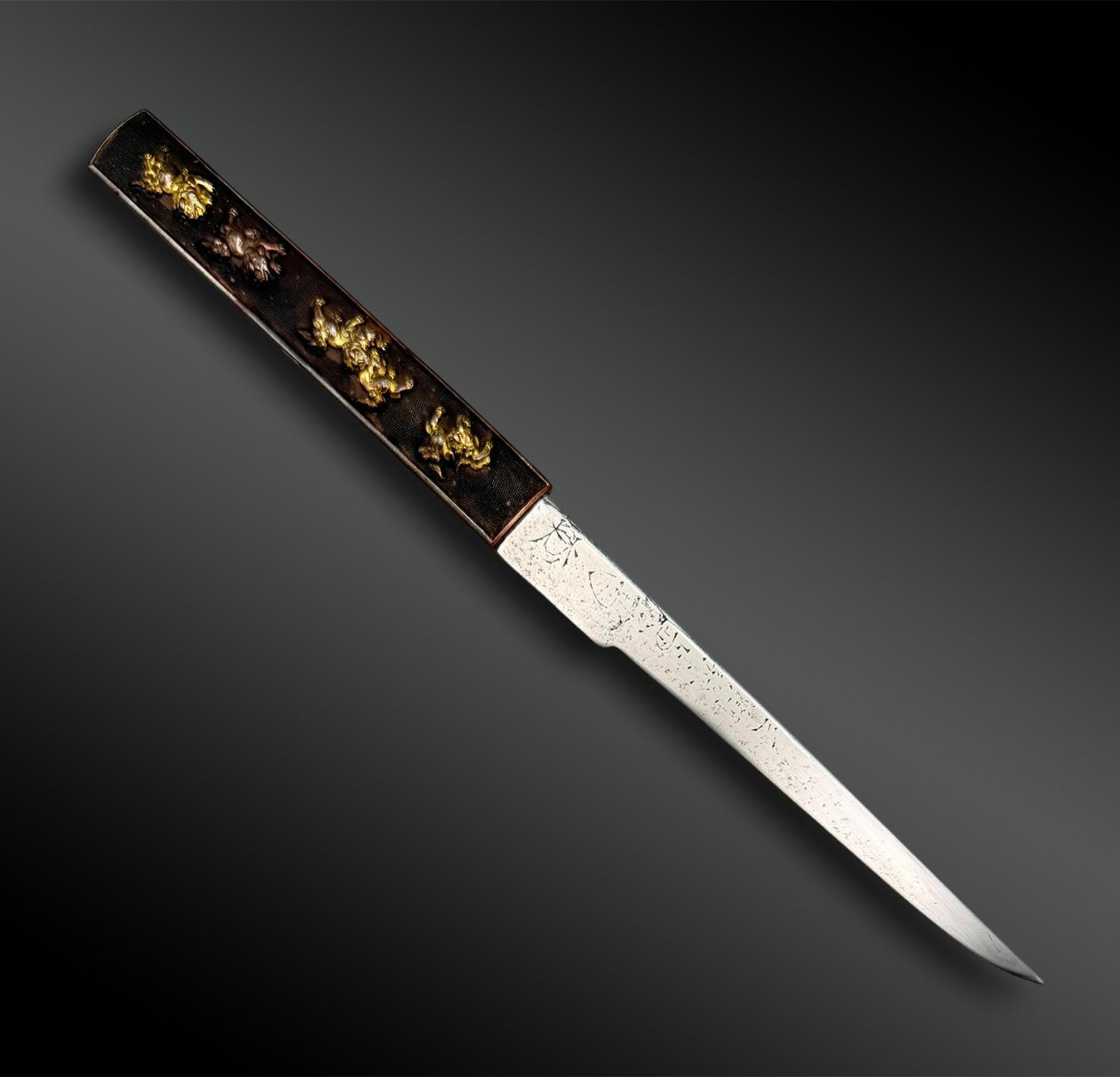
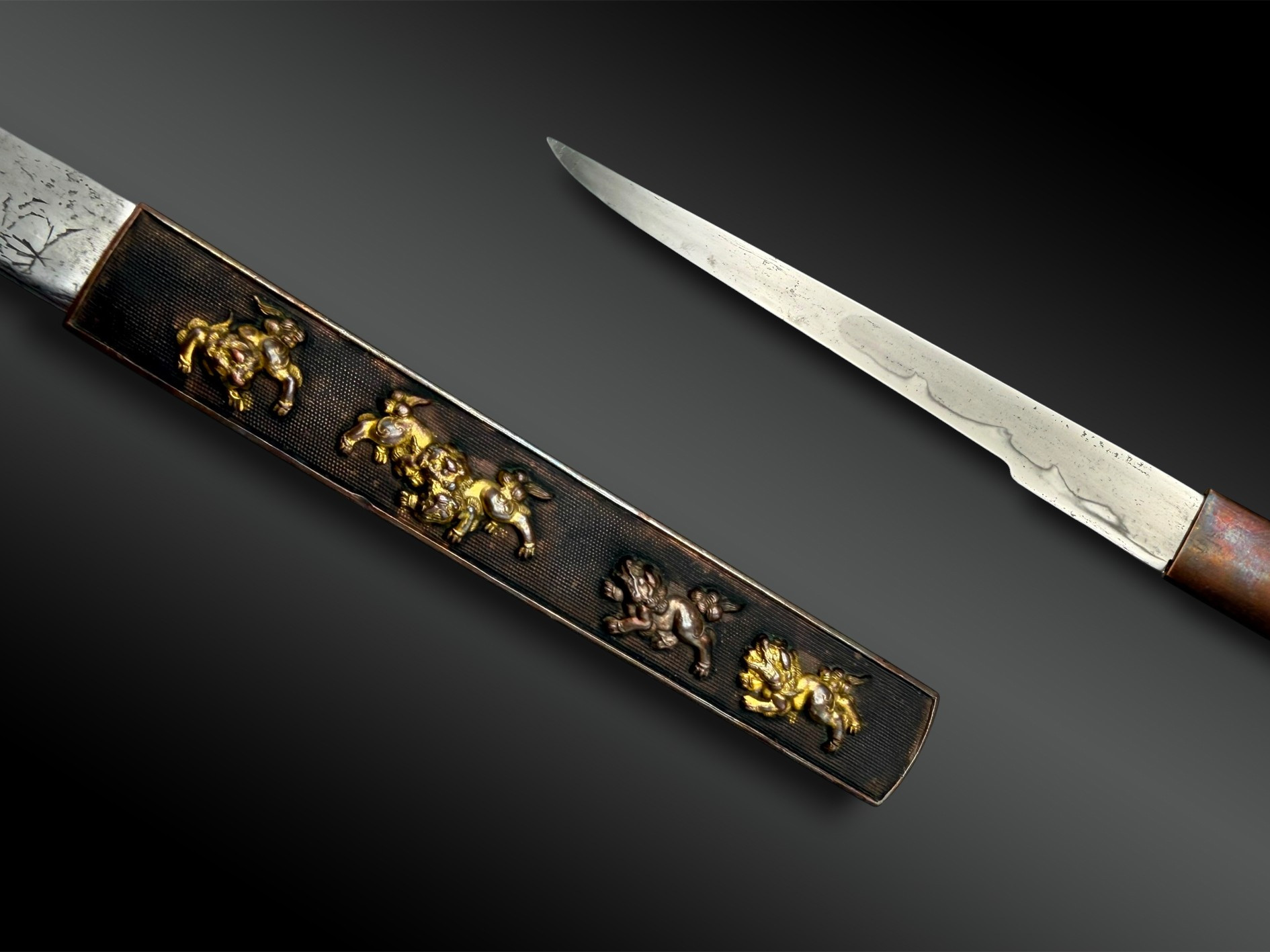
Kogatana with a signed blade and amon, copper kotsuka-hitsu, overlaid with shakudo, chiseled with five gilded shi-shi.
Gilded and chiseled copper seppa.
Ref.: 7416
Text and photos © FCP CORIDON
Ref: UUNXV016JG