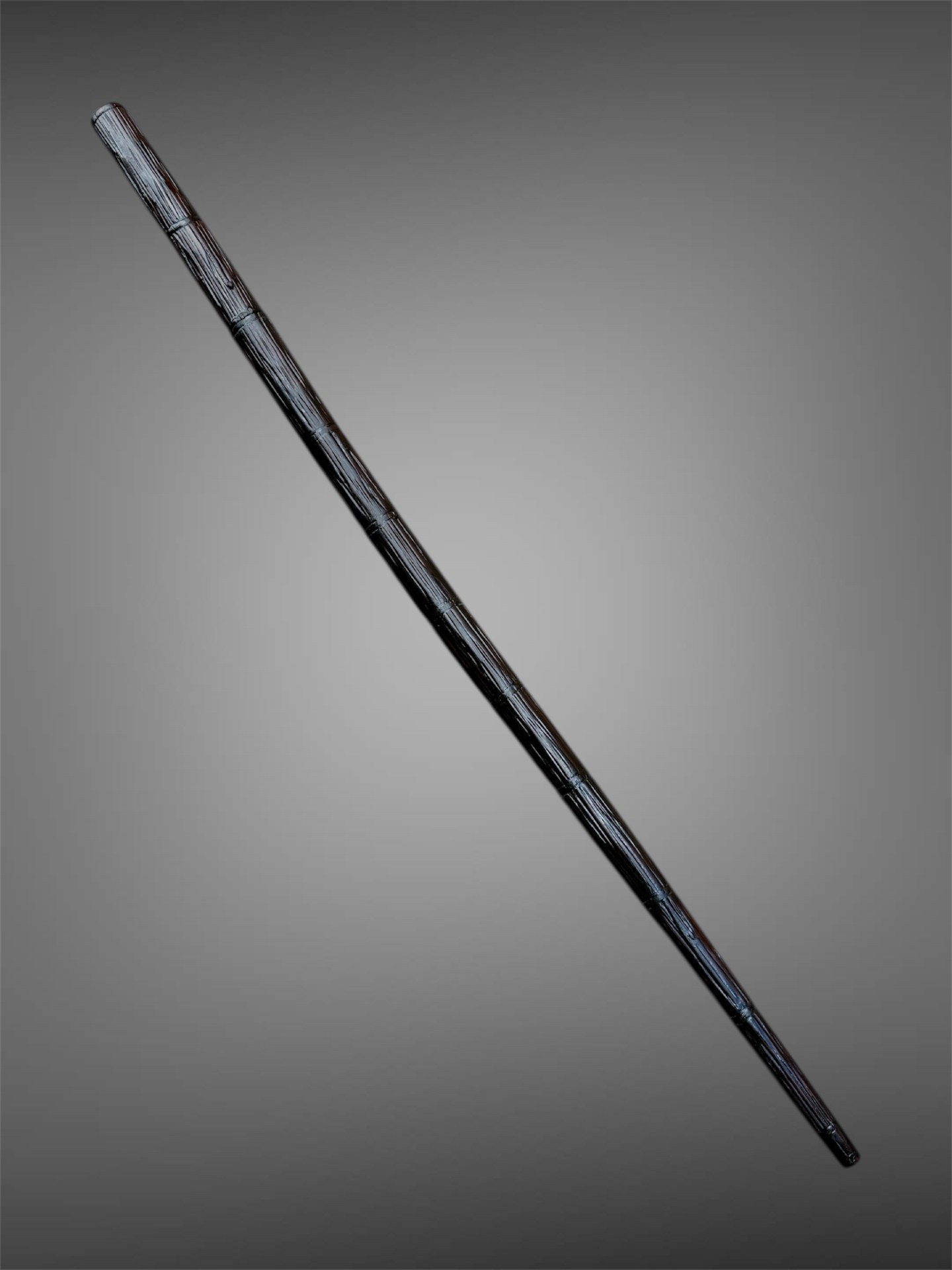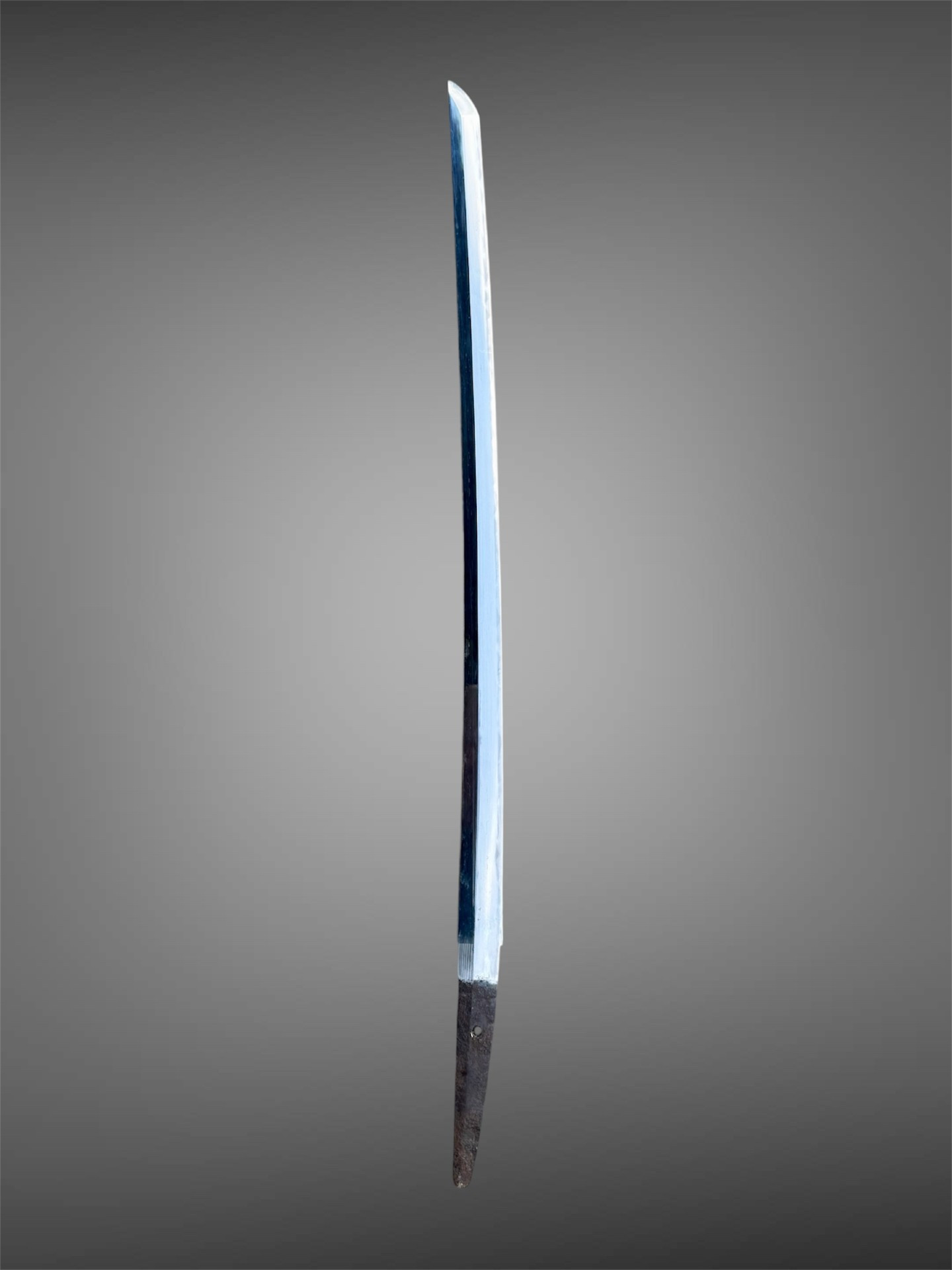
“Shikomi-zue” - wakizashi concealed in a cane, mounted in shirasaya - Kabun era (17th century).
slider-bg
more images

Would you like more images?

“Shikomi-zue” - wakizashi concealed in a cane, mounted in shirasaya - Kabun era (17th century).

4.500
17th century
Asian Arts
DELIVERY
From: 93400, saint ouen , France

Change your address to get an accurate estimate of shipping costs.

    Item offered for sale by

    See the gallery
    This description has been translated and may not be completely accurate. Click here to see the original

    JAPAN - Edo Period (1603-1868), Kabun Era (c. 1661-1673).
    Wakizashi mounted as a shikoku-zue, imitating a simple carved and lacquered wooden walking stick with a concealed assembly system.
    The blade is mounted in a shirasaya style.
    Simple copper habaki decorated with oblique grooves.
    Straight blade, regular, straight, and well-defined hamon, tang with one hole, unsigned.

    Dimensions: 4 x 104 x 3 cm.
    Blade length: 52.9 cm.
    Sori (curve): 0.7 cm.
    Weight: 425 g.

    Notes: After the Haitōrei (1876) banning the carrying of swords during the Meiji era, shikomi-zue became popular as concealed weapons. However, this blade is earlier (Edo period) and was probably later re-mounted in the shikomi-zue style.

    The overall characteristics (Kanbun shape, active hamon in nie-deki) suggest production in Seki (Mino period), early Edo period. Seki was a major production center during the Muromachi and Edo periods, producing blades that were often functional and robust.

    Ref: T8DH5AD5W6

    Condition Good
    Style Asian Arts (Swords, Bladed weapons of Asian Arts Style)
    Period 17th century (Swords, Bladed weapons 17th century)
    Country of origin Japan
    Shipping Time Ready to ship in 2-3 Business Days
    Location 93400, saint ouen , France
    Shipping Information Careful and insured shipping, fast shipping
    Antikeo Buyer Guarantee

    4 commitments to buy with confidence