



Would you like more images?
JAPAN - Edo Period (1603-1868).
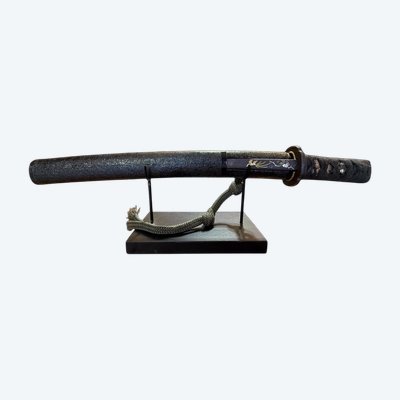
Samurai Tanto.
The set dates from the Shinshinto period (1781-1876).
THE BLADE and its Geometry:
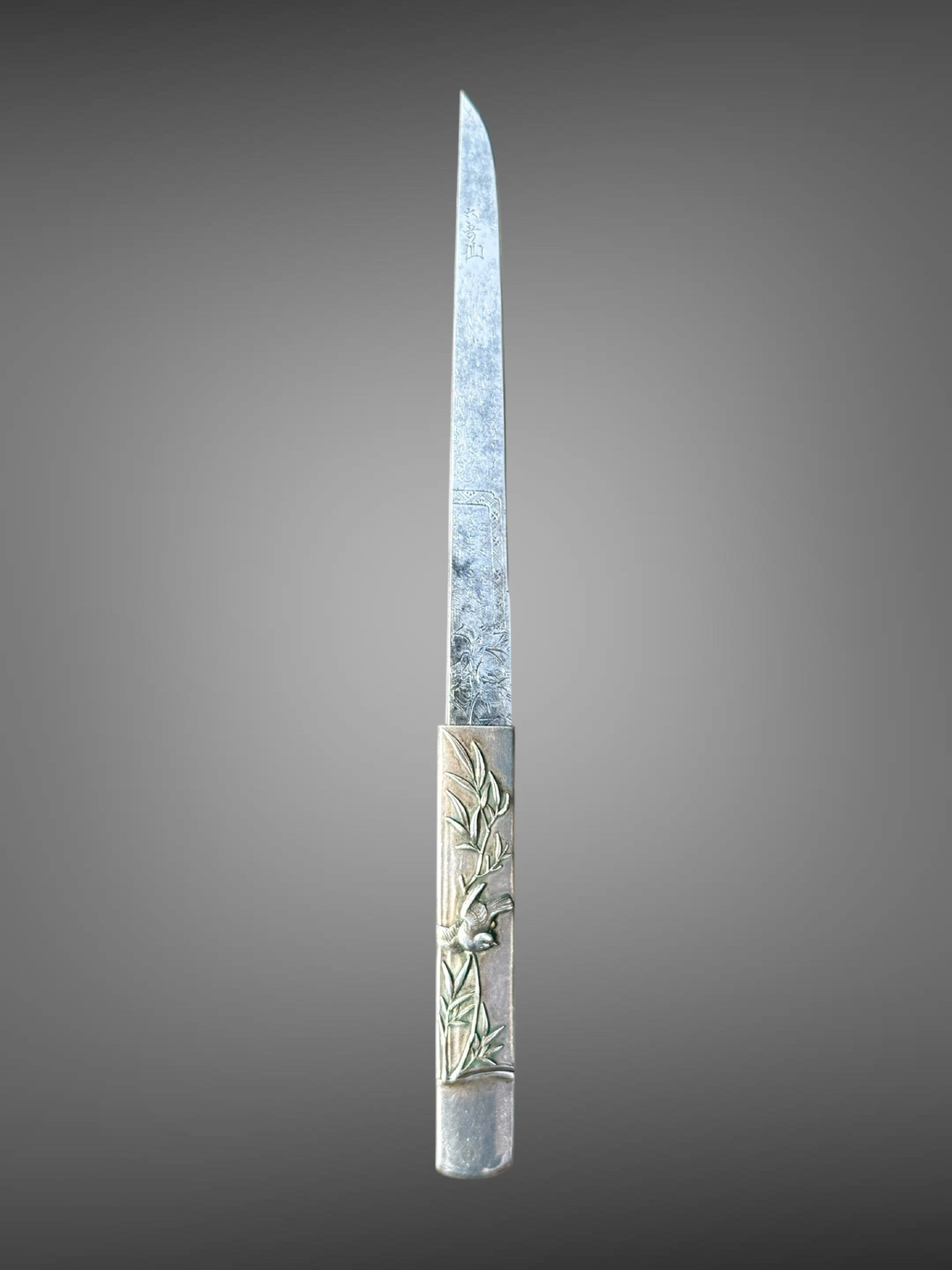
The blade features a modified Shinogi-zukuri shape with a double fuller (bo-hi). A very well-executed fuller (hi) runs up the length of the blade. This fuller is not merely aesthetic; it serves to balance the piece and reduce its weight.
The point is of the chū-kissaki type (relatively short and rounded).
THE HAMON (Tempering Line):
The Hamon is either of the Suguha type (straight) or slightly wavy. The line is clean and regular, demonstrating the swordsmith's considerable technical skill.
The signature (Mei) is that of Minamoto Masayuki (源正義).
The silk (nakago) is well-preserved with a natural patina. The file marks (yasurime) are of the Kiri type (horizontal), a simple style that corresponds well to the signature.
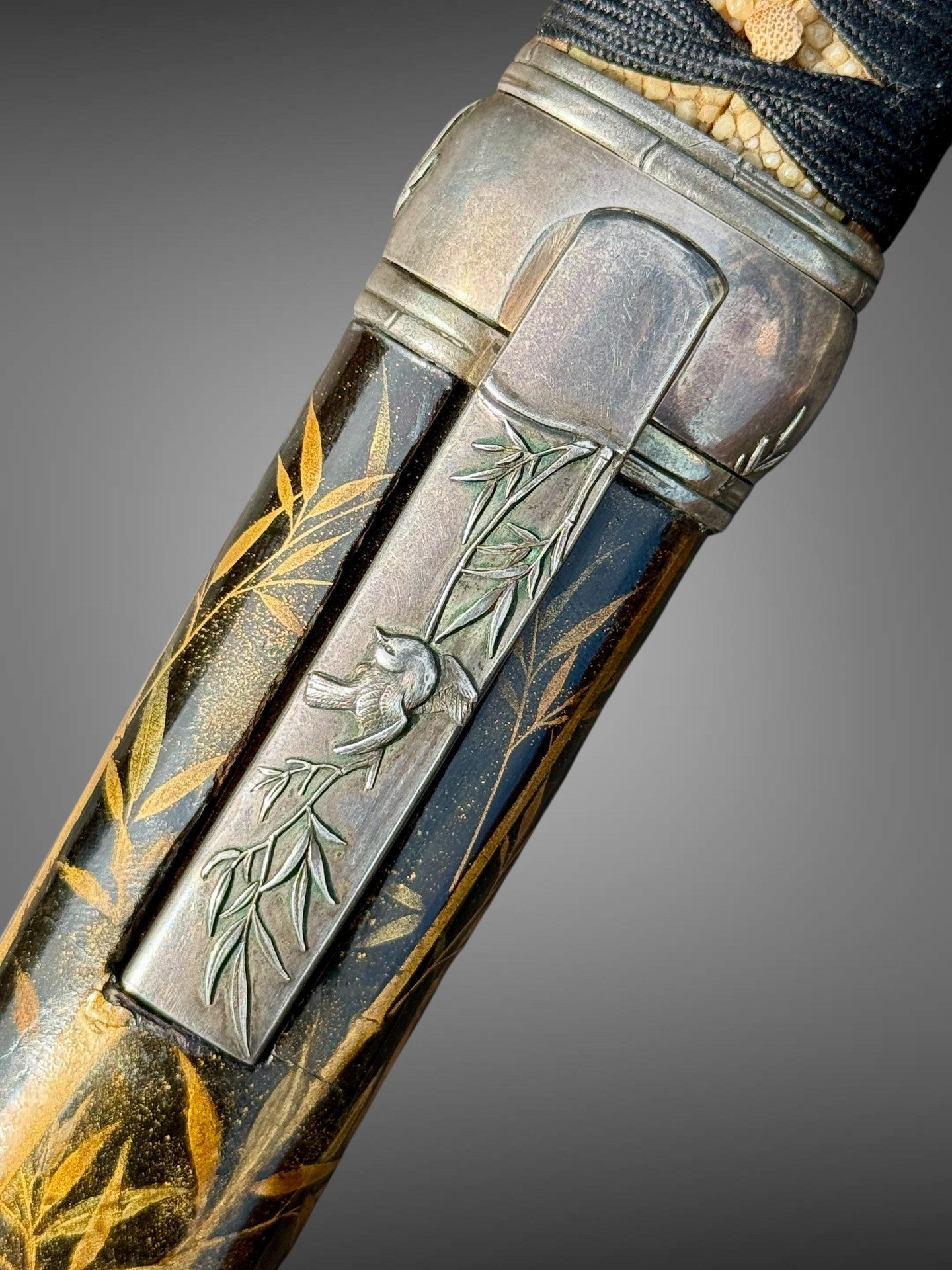
FUSHI and KASHIRA in a finely chased silver set depicting sparrows in flight among bamboo.
TSUKA in wood covered with ray skin and a black silk braid.
MENUKI in chased and silvered copper depicting snakes.
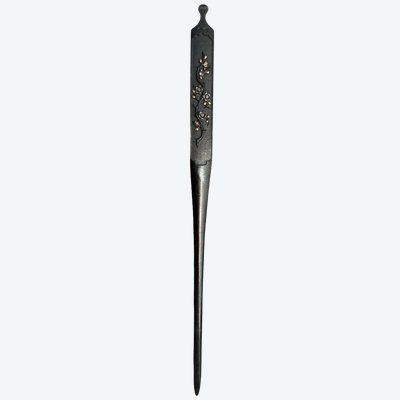
KOZUKA in a chased silver set decorated with a sparrow on a bamboo stalk, the blade engraved with figures and Chinese characters, signed.
SAYA in finely lacquered wood with a hira-makie bamboo design, KOJIRI in chased silver decorated with a sparrow in flight between two bamboo stalks.
Simple gilt silver habaki (wear) decorated with oblique striations.
Straight blade, regular, straight, and well-defined hamon, tang with one hole, signed.
Sold with stand.
Dimensions: 38 x 4 x 2.5 cm.
Blade length including tang: 32.1 cm.
Blade length: 23.8 cm.
Curve (sori): 0.1 cm.
Thickness (kasane): 0.61 cm.
Weight: 149 g.
Ref: PKCVH1ZLUU
| Condition | Good |
| Style | Asian Arts (Swords, Bladed weapons of Asian Arts Style) |
| Period | 18th century (Swords, Bladed weapons 18th century) |
| Country of origin | Japan |
| Shipping Time | Ready to ship in 2-3 Business Days |
| Location | 93400, saint ouen , France |
| Shipping Information | Careful and insured shipping, fast shipping |
4 commitments to buy with confidence

 English
 Français
  Italiano
  Deutsch