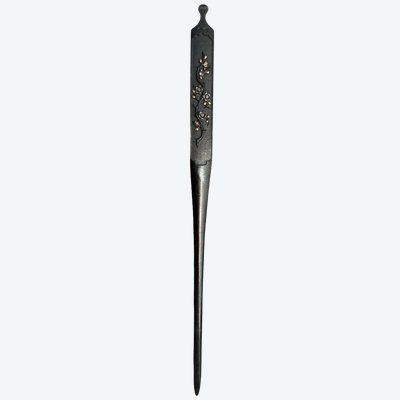
Lacquered wood and eggshell katanakake - Edo period (1603–1868)
slider-bg
more images

Would you like more images?

Lacquered wood and eggshell katanakake - Edo period (1603–1868)

1.450
18th century
Asian Arts
DELIVERY
From: 93400, saint ouen , France

Change your address to get an accurate estimate of shipping costs.

    Item offered for sale by

    See the gallery
    This description has been translated and may not be completely accurate. Click here to see the original

    JAPAN - Edo Period (1603–1868).
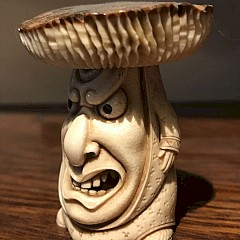
    Lacquered wooden KATANAKAKE; the four-lobed base resembles the shape of a mokko-gatta tsuba and is decorated with hira-makie foliage scrolls (very slight discoloration of the lacquer on the back). It supports a sinuous shaft, also lacquered and decorated with foliage scrolls, which in turn supports a stylized ruyi mushroom covered with eggshells. The ensemble takes the form of a ruyi scepter.
    This katanakake is designed to display a sword vertically.
    The wakizashi shown for illustrative purposes in the photographs is not included with the katanakake.
    Dimensions: 53 x 27 x 34.5 cm.
    Notes: The ruyi mushroom, associated with the Asian mushroom of immortality, is known in Japan as Reishi. Inherited from Chinese traditions, it symbolizes longevity, prosperity, and spiritual harmony. In Japanese decorative art, its distinctive shape has inspired numerous ornamental motifs, often found on lacquerware, textiles, and prestigious objects. The term “ruyi” (“as one wishes”) is also linked to the Nyoi ceremonial scepter, the tip of which sometimes takes the shape of the mushroom. This association has made it a symbol of happiness, success, and the fulfillment of wishes in the Japanese imagination.

    Ref: GRUUJMNZUV

    Condition Very good
    Style Asian Arts (Swords, Bladed weapons of Asian Arts Style)
    Period 18th century (Swords, Bladed weapons 18th century)
    Country of origin Japan
    Shipping Time Ready to ship in 2-3 Business Days
    Location 93400, saint ouen , France
    Shipping Information Careful and insured shipping, fast shipping
    Antikeo Buyer Guarantee

    4 commitments to buy with confidence