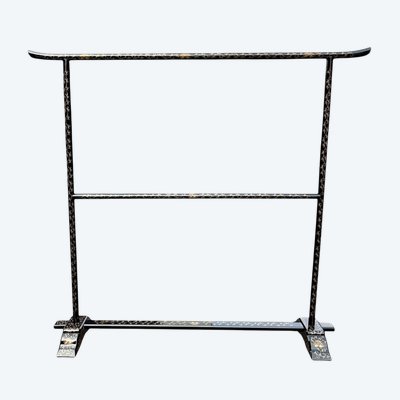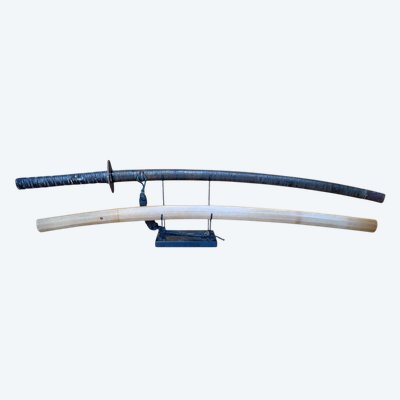
Lacquered wood and mother-of-pearl katanakake - Meiji period (1868–1912).
slider-bg
more images

Would you like more images?

Lacquered wood and mother-of-pearl katanakake - Meiji period (1868–1912).

650
20th century
Asian Arts
DELIVERY
From: 93400, saint ouen , France

Change your address to get an accurate estimate of shipping costs.

    Item offered for sale by

    See the gallery
    This description has been translated and may not be completely accurate. Click here to see the original

    JAPAN - Edo period (1603–1868).
    KATANAKAKE made of black lacquered wood inlaid with mother-of-pearl, featuring the Tokugawa crest centered on the crossbar.
    Wear on the lacquer where the swords rest, and very slight dent on the front right leg.
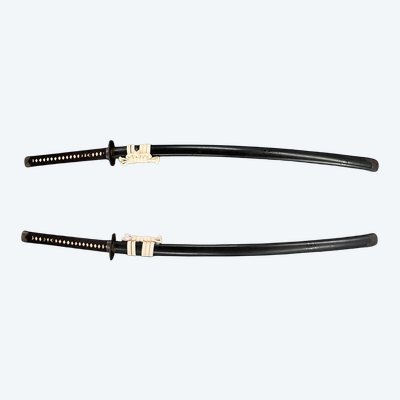
    This katanakake can be used to display two swords or a set mounted in shirasaya.
    The wakizashis shown as examples in the photographs are not included with the katanakake.
    Dimensions: 36.5 x 44.5 x 17 cm.
    Notes: The Tokugawa crest, known as Mitsuba Aoi (“three wild mallow leaves”), is one of Japan’s most famous heraldic emblems. It consists of three stylized leaves arranged in a circle and symbolizes authority, stability, and the continuity of the lineage. Used by the Tokugawa clan, which ruled Japan during the Edo period (1603–1868), this mon adorned castles, armor, official garments, and numerous everyday objects. Even today, it remains a powerful symbol of Japanese history and serves as a reminder of the Tokugawa shogunate’s enduring influence on the country’s culture and political structure.

    Ref: L1E56VT5IG

    Condition Good
    Style Asian Arts (Asian Tribal Art of Asian Arts Style)
    Period 20th century (Asian Tribal Art 20th century)
    Country of origin Japan
    Shipping Time Ready to ship in 2-3 Business Days
    Location 93400, saint ouen , France
    Shipping Information Careful and insured shipping, fast shipping
    Antikeo Buyer Guarantee

    4 commitments to buy with confidence