

Would you like more images?
JAPAN - Edo Period (1603–1868).
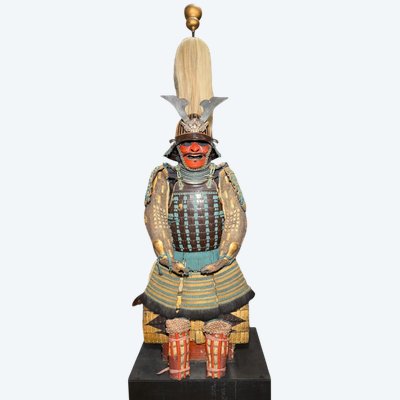
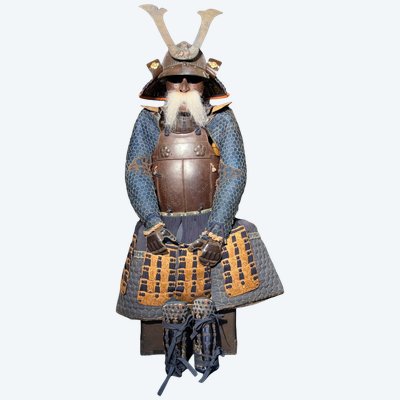
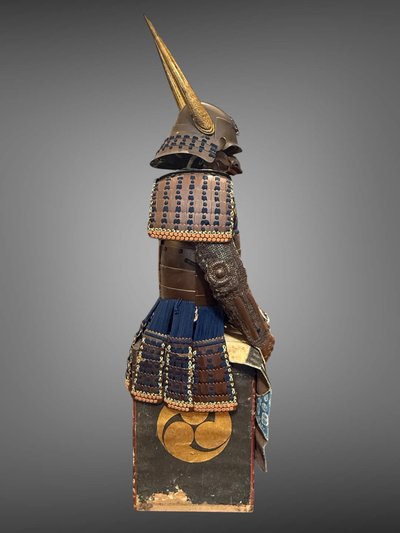
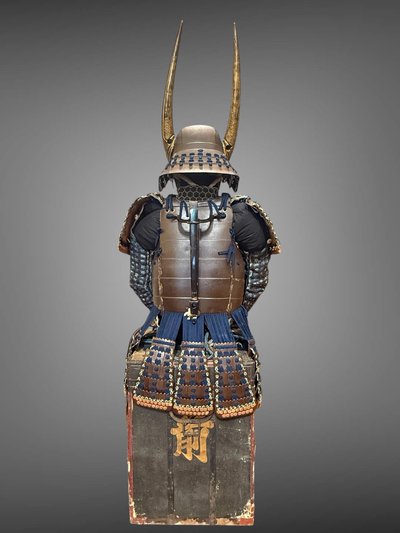
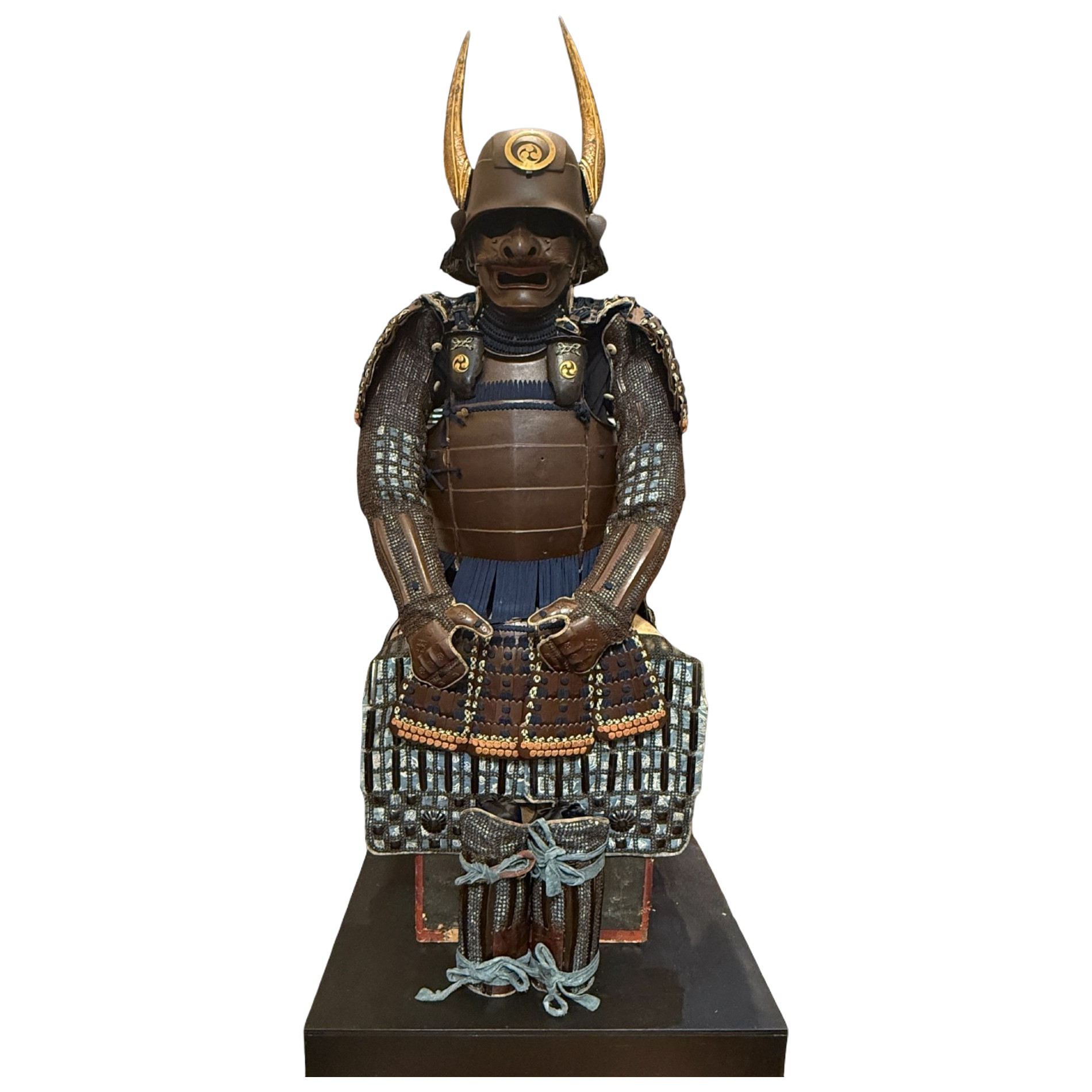
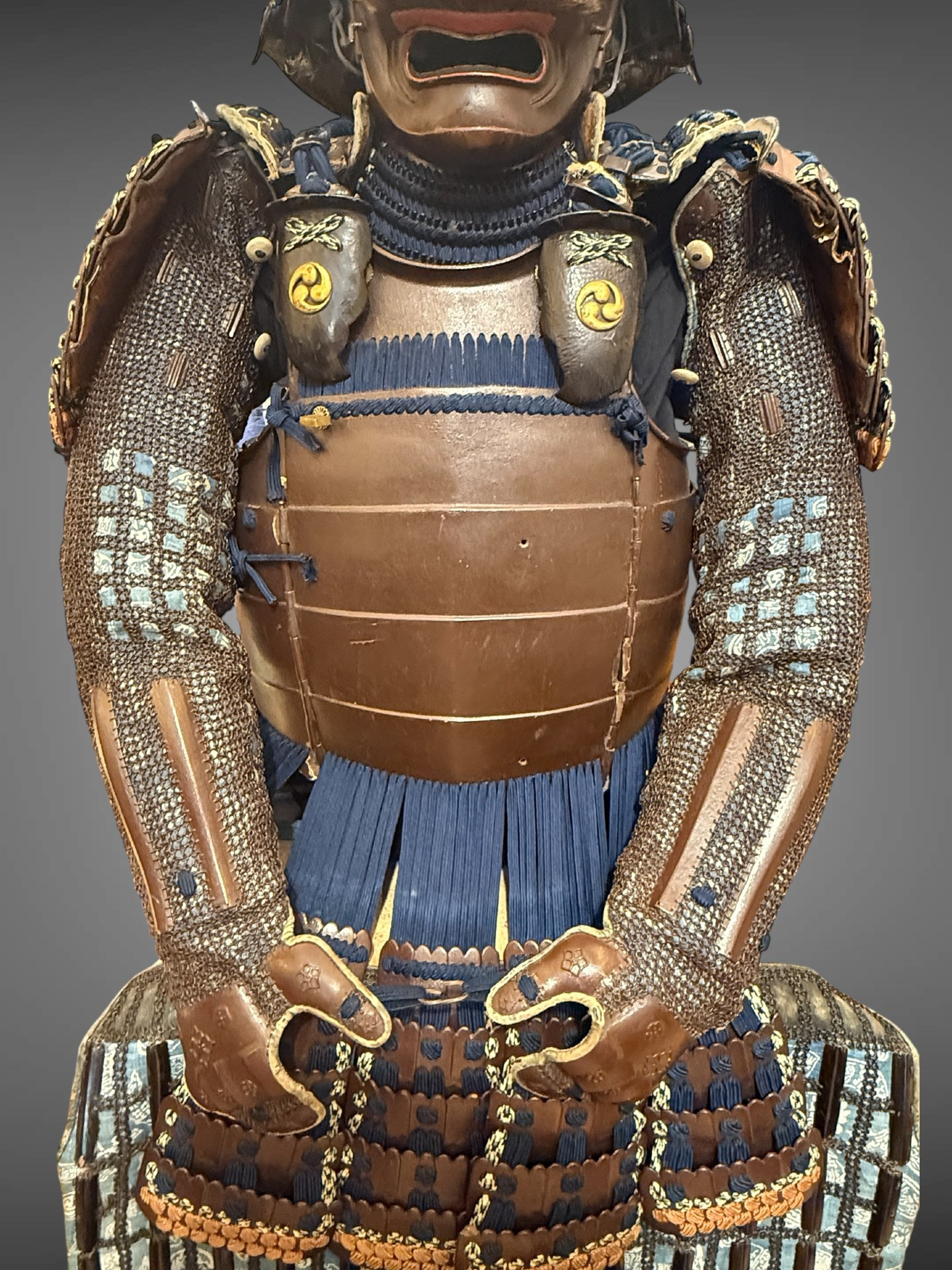
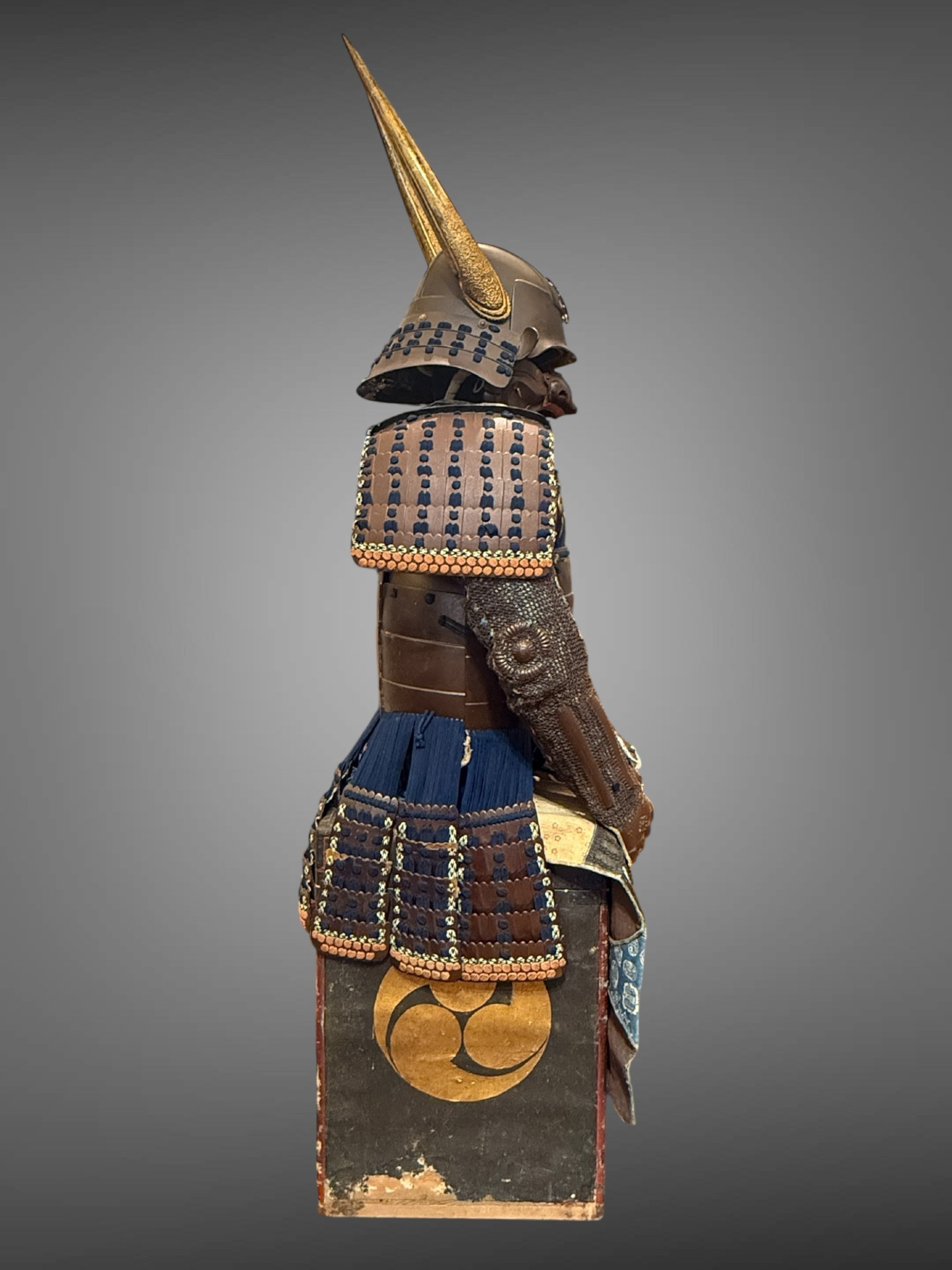
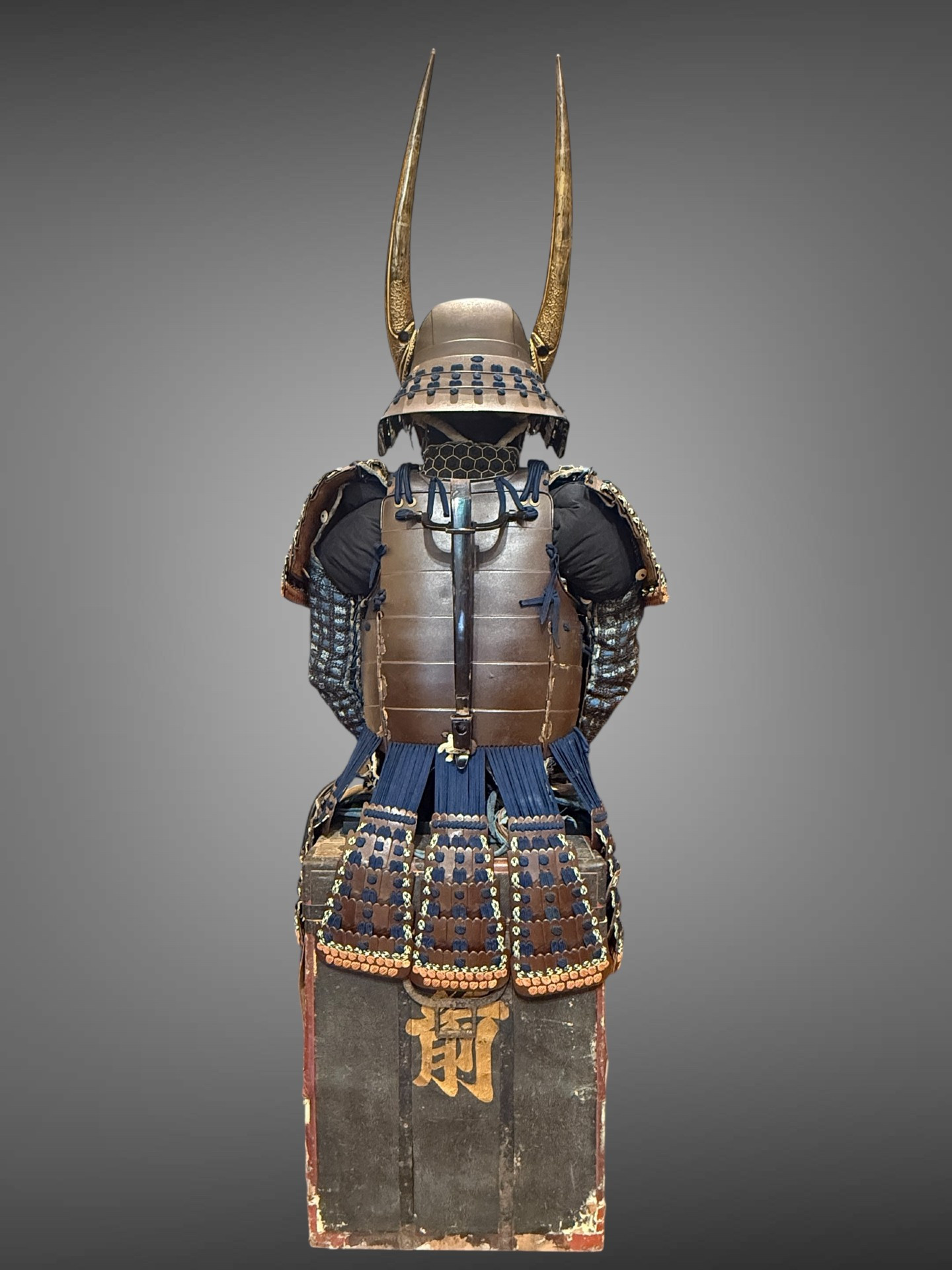
Complete Owari Gusoku-style samurai armor set
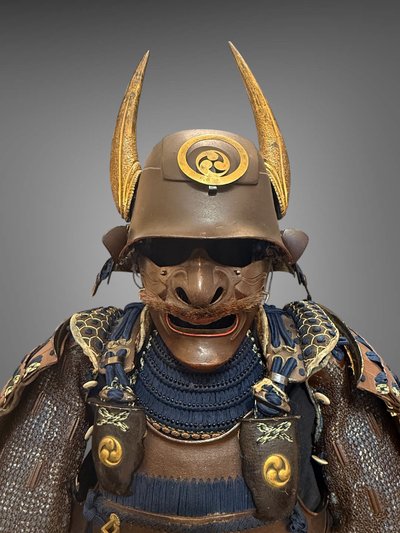
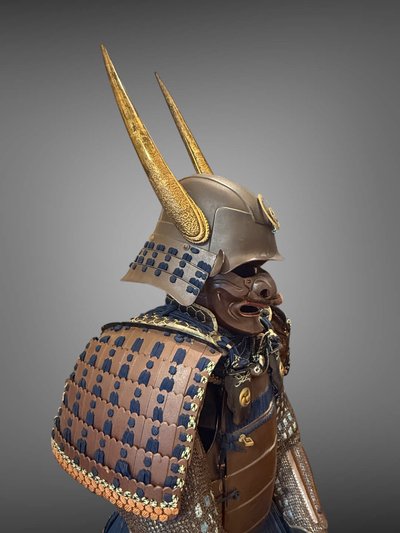
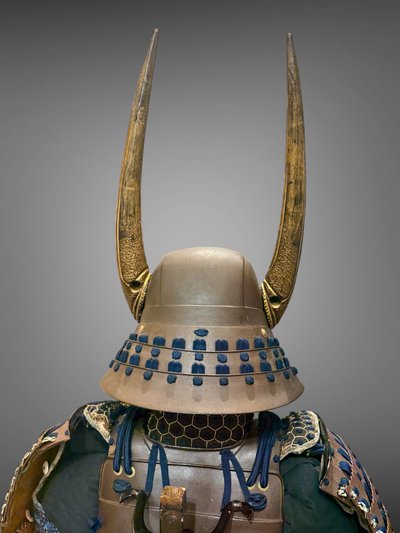
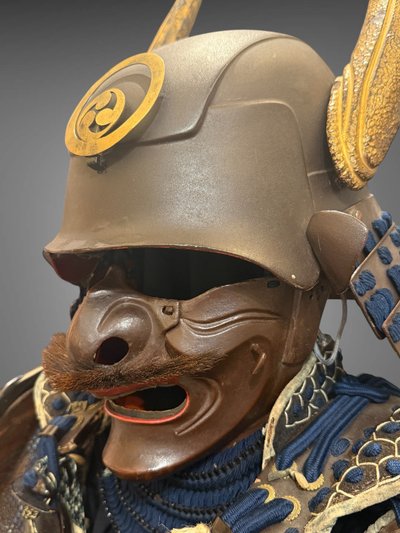
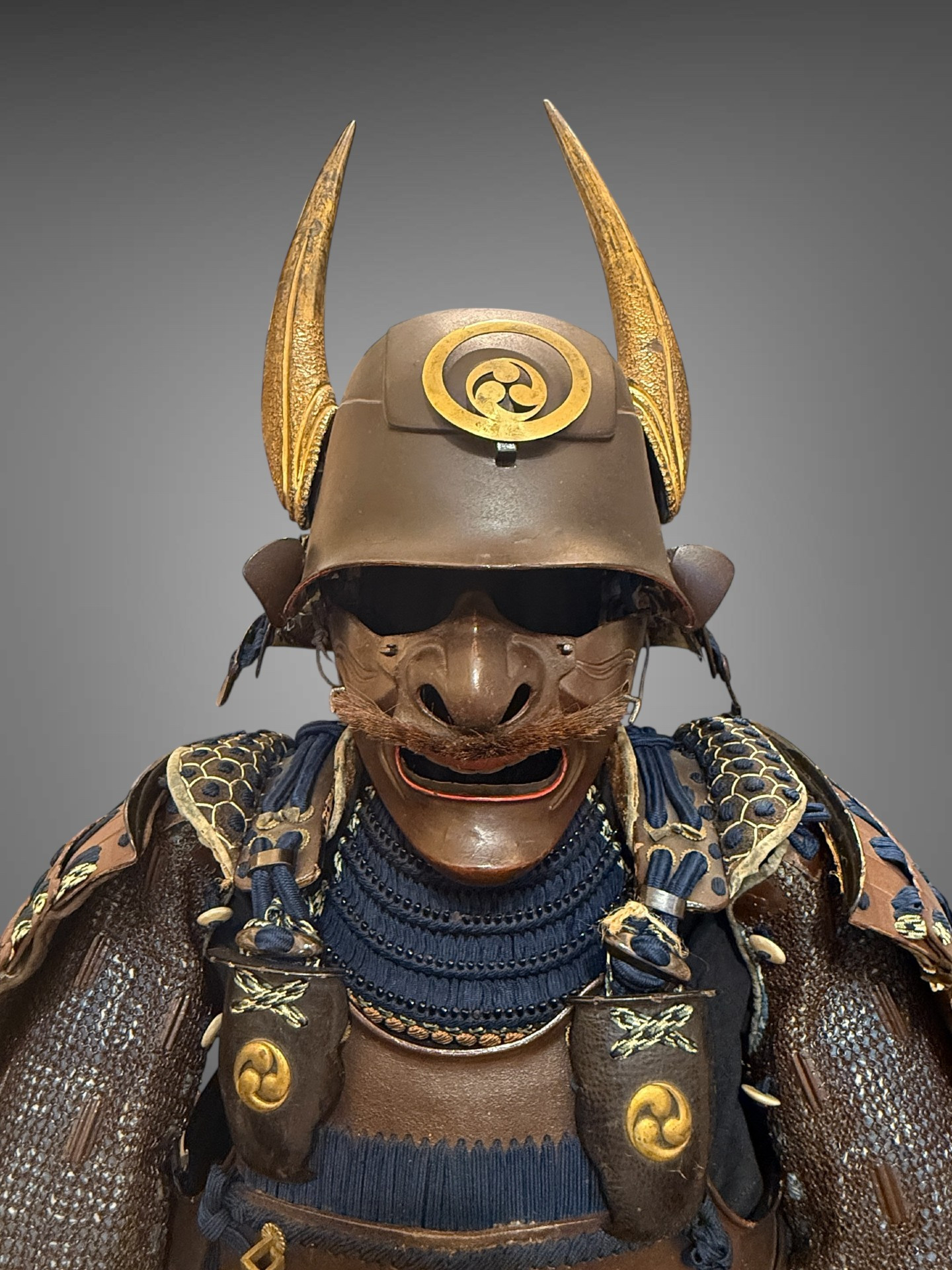
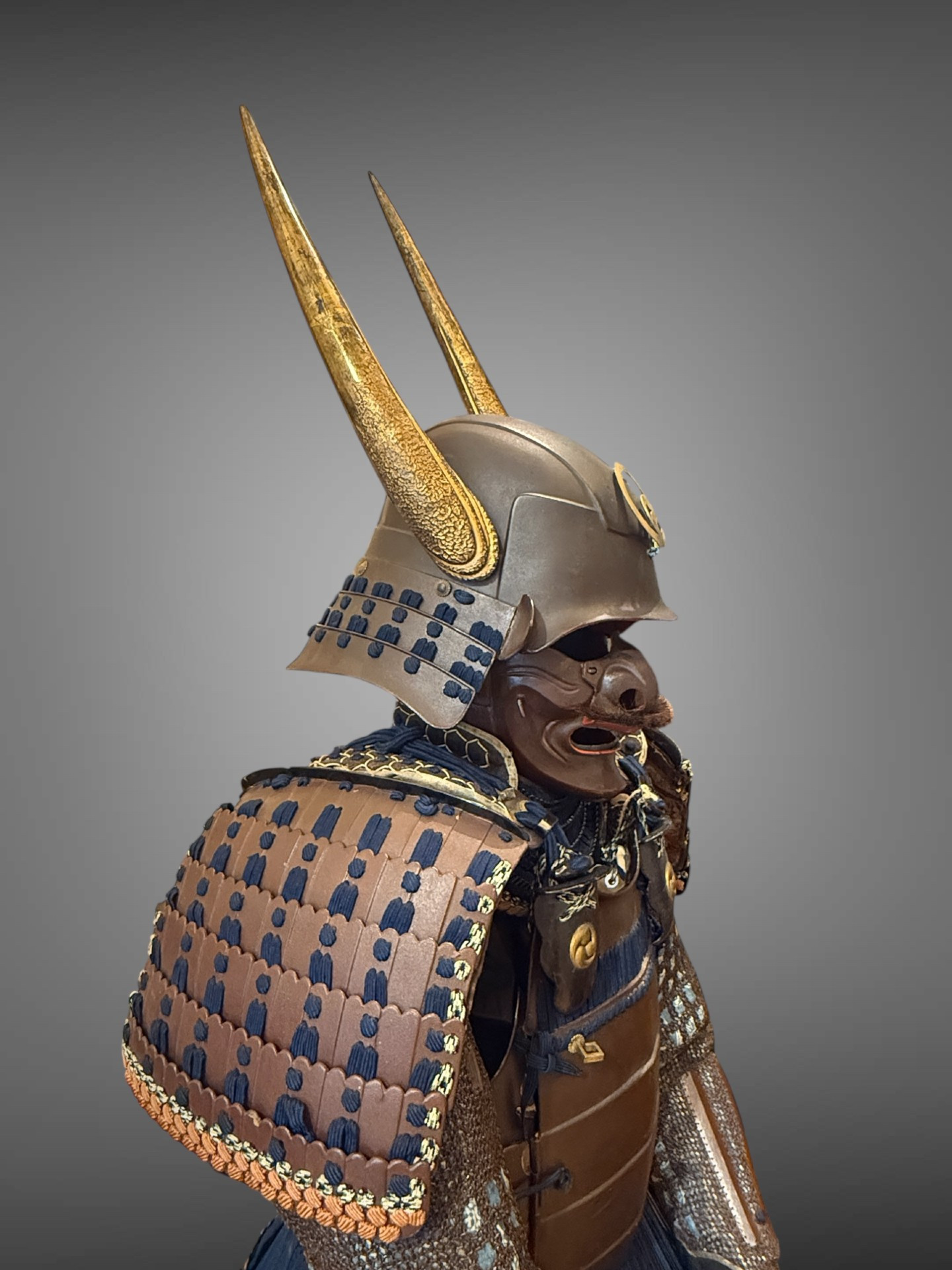
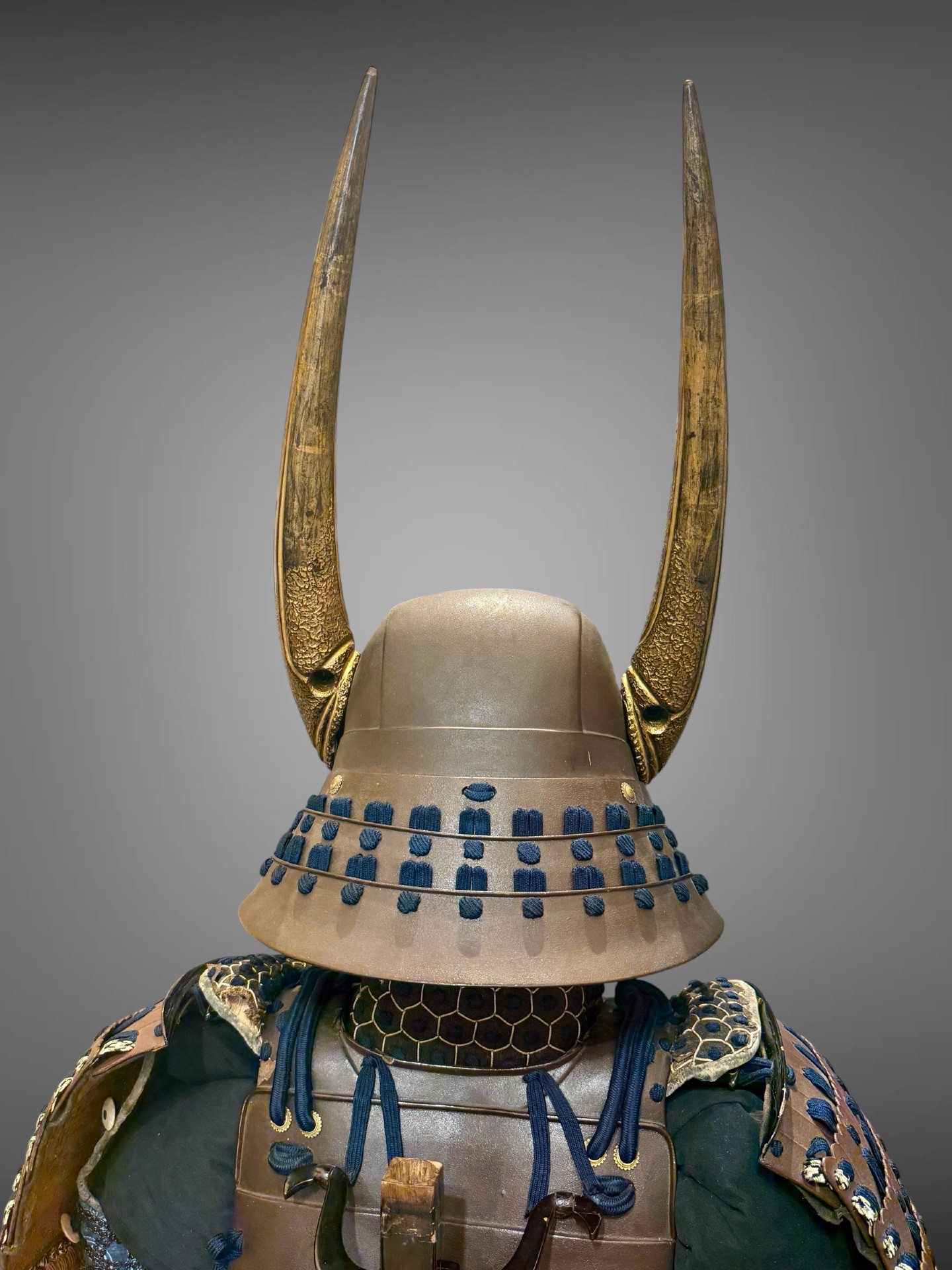
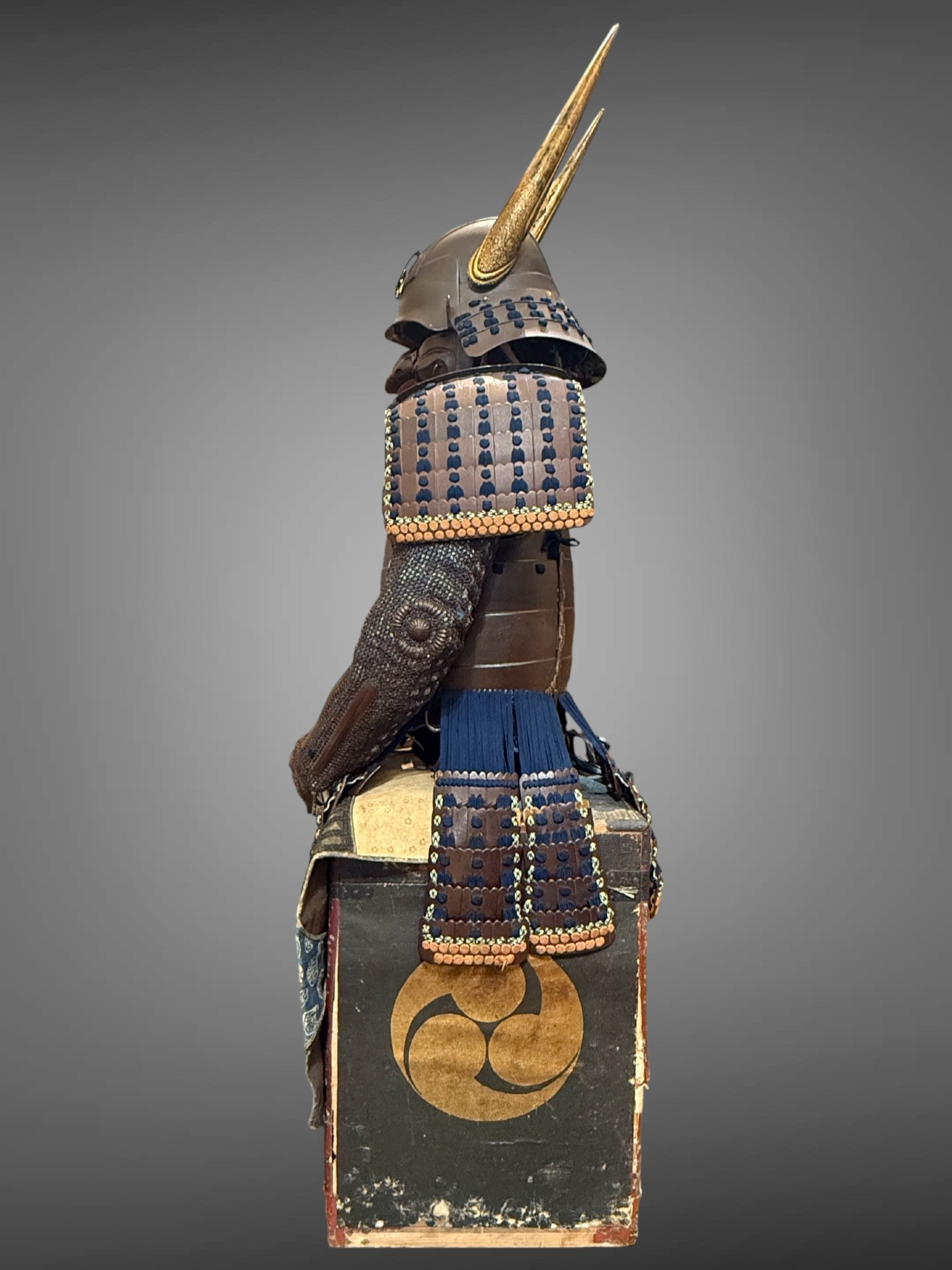
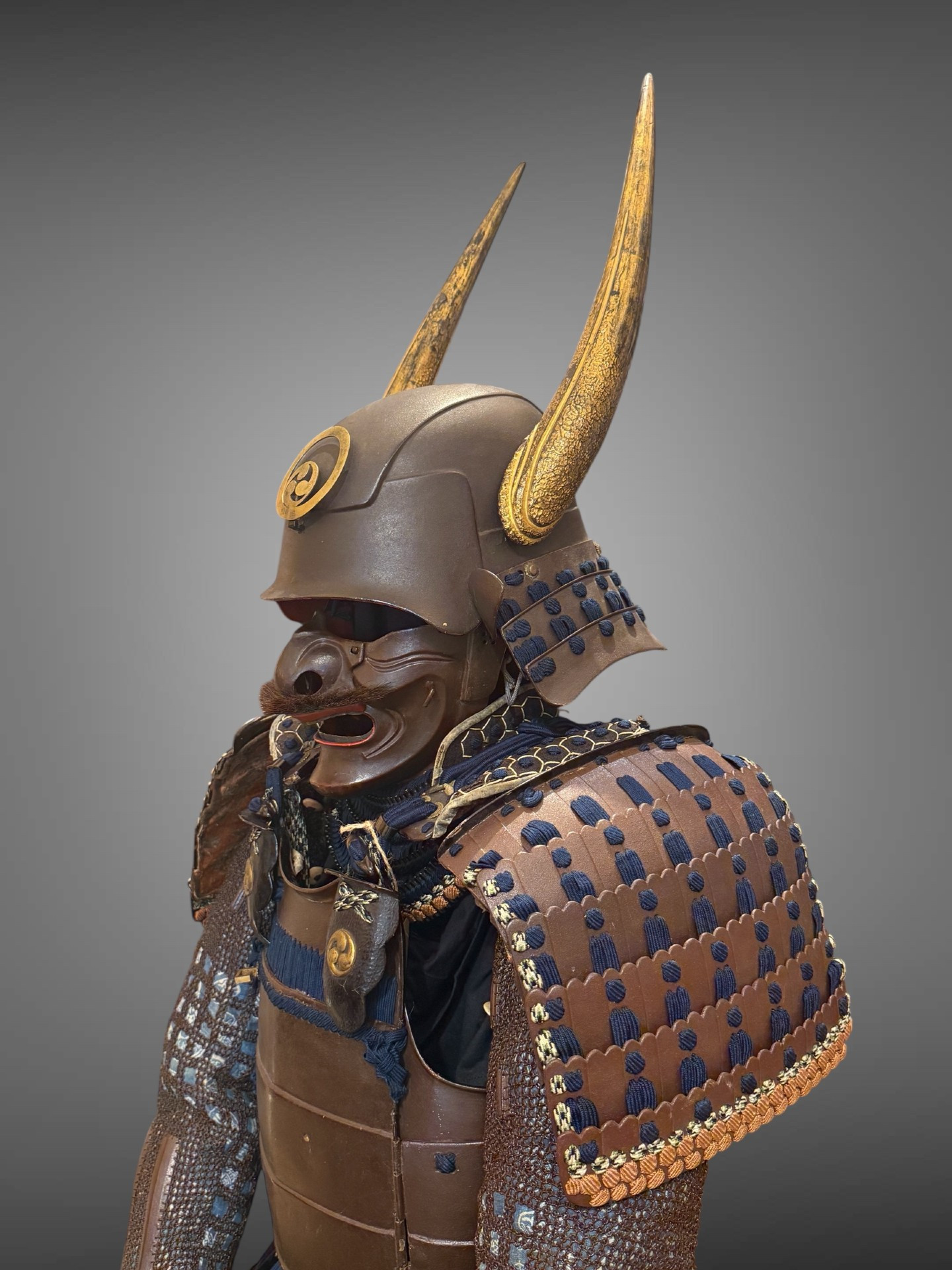
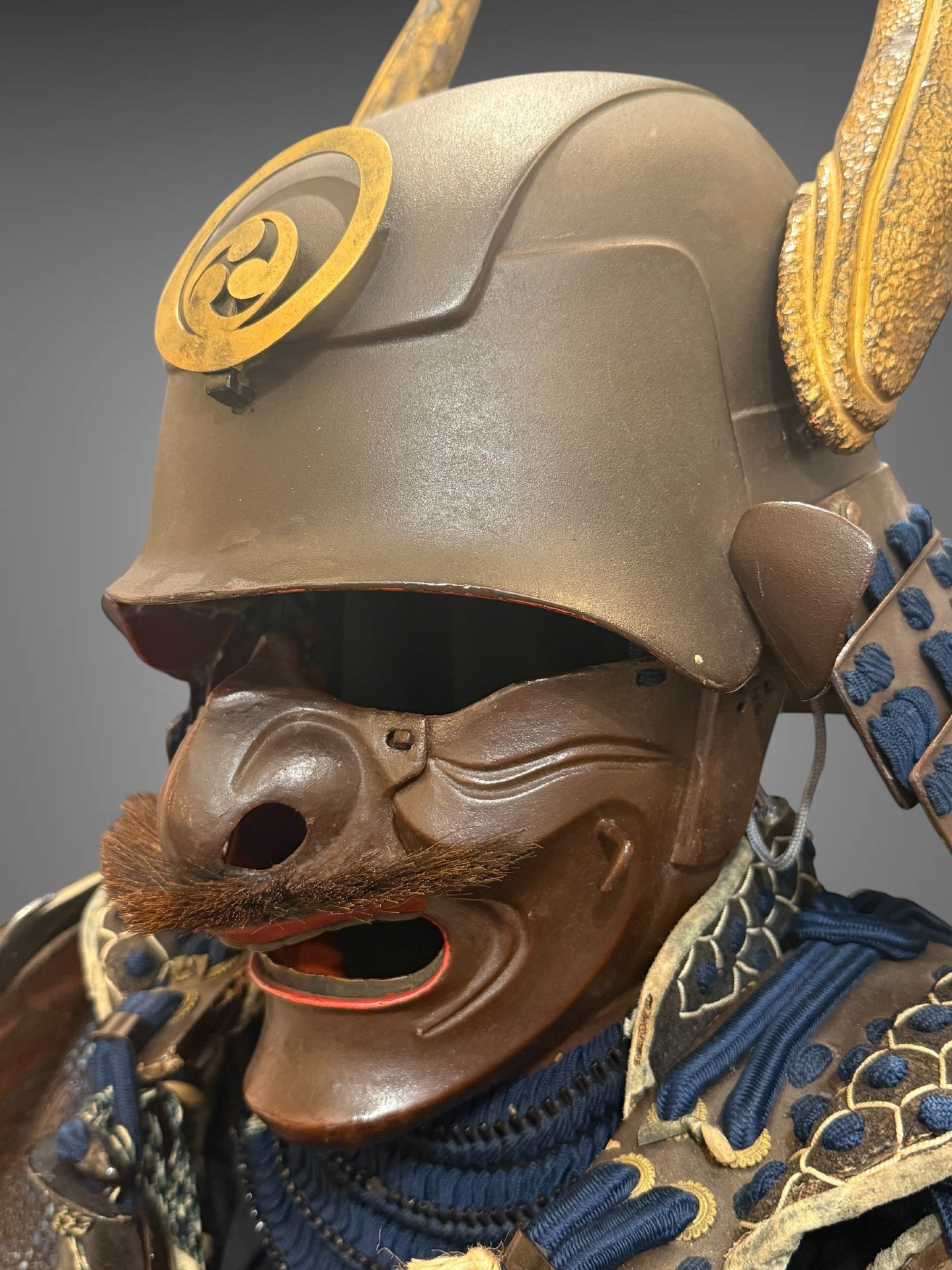
A simple and sturdy KABUTO (helmet) made of wrought iron with four brown-lacquered plates.This is a Zunari kabuto (head-shaped helmet), a streamlined, sturdy design that was very popular from the Azuchi-Momoyama period through the Edo period due to its high level of protection.
SHIKORO (neck guard) with three tiers, made of brown-lacquered iron and blue silk braiding.
MABI SA SHI (visor) consisting of a single plate of brown-lacquered wrought iron, integrated with the rest of the kabuto.
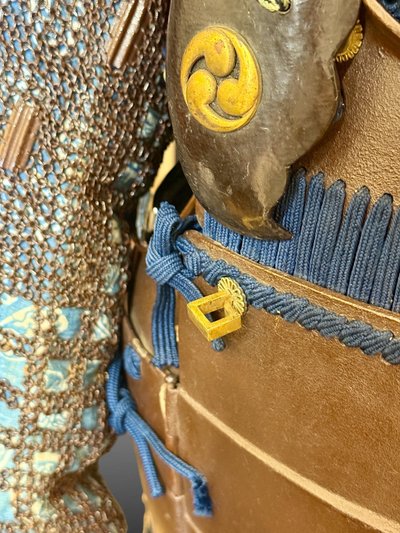
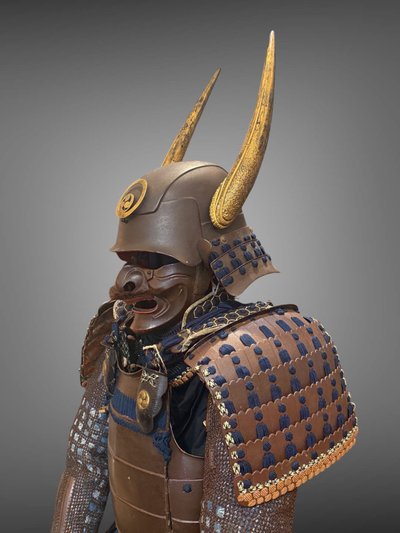
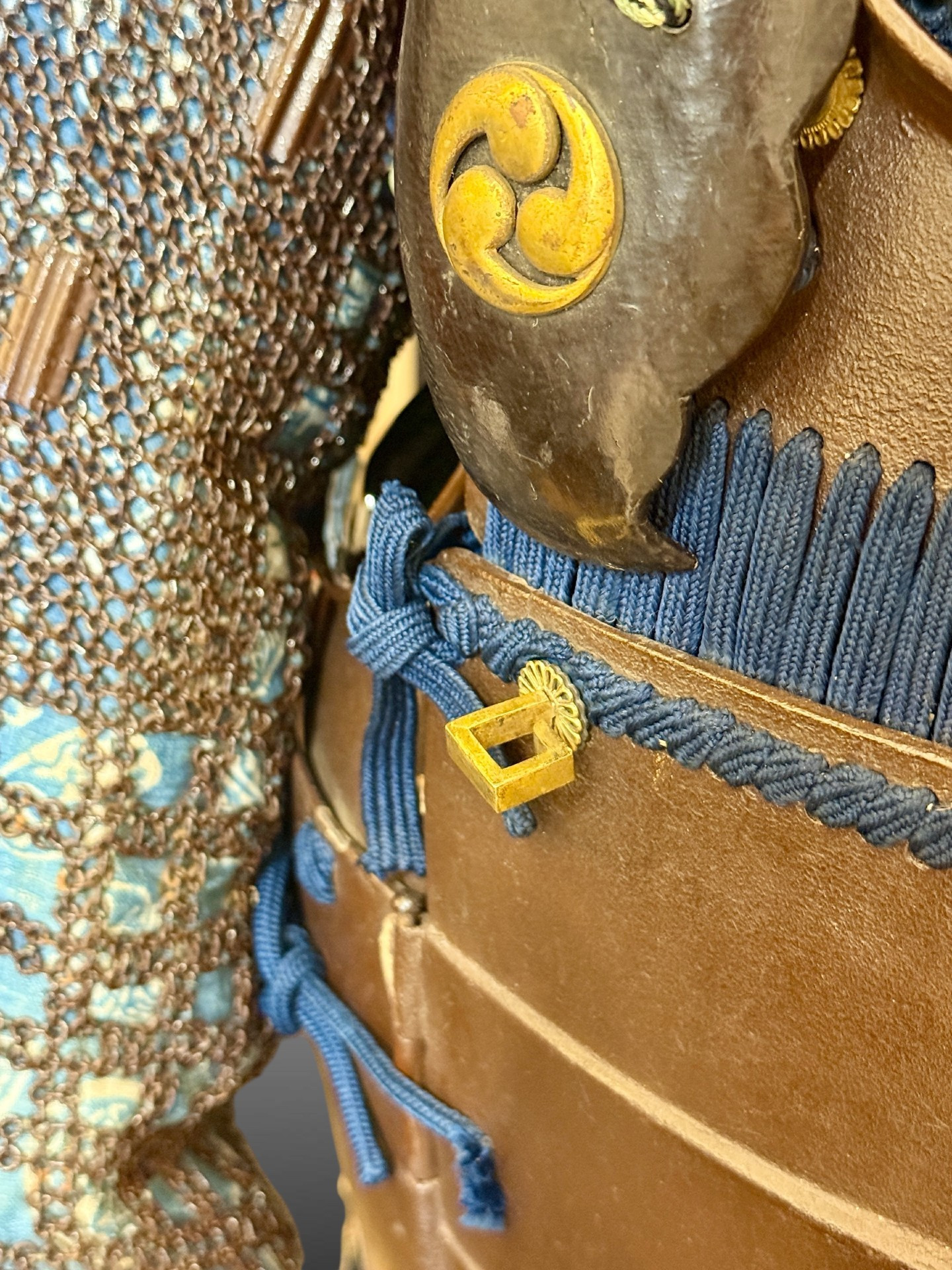
MAEDATE made of cut and gilded copper depicting a mitsudomoe (three swirling commas); it represents a Tomoe motif (more specifically, a Hidari Mitsu-tomoe with three swirls) inscribed within a circle.
WAKIDATE, carved from wood, lacquered, and gilded, featuring two long side horns.
MEMPO (half-mask) made of matte brown-lacquered wrought iron, with a pronounced chin, a movable nose, whiskers made of natural brown horsehair, visible gilded teeth, lips lacquered in cinnabar red, pierced nostrils, and sweat holes under the chin.
YODARE-KAKE (chinstrap) with four tiers, glossy black lacquered and featuring blue silk braiding.
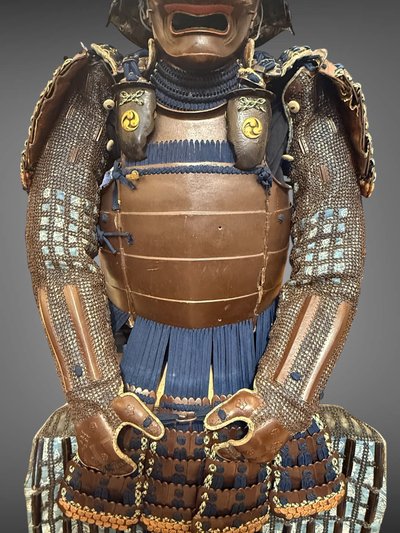
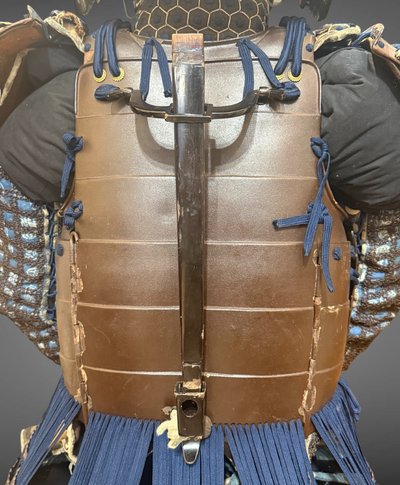
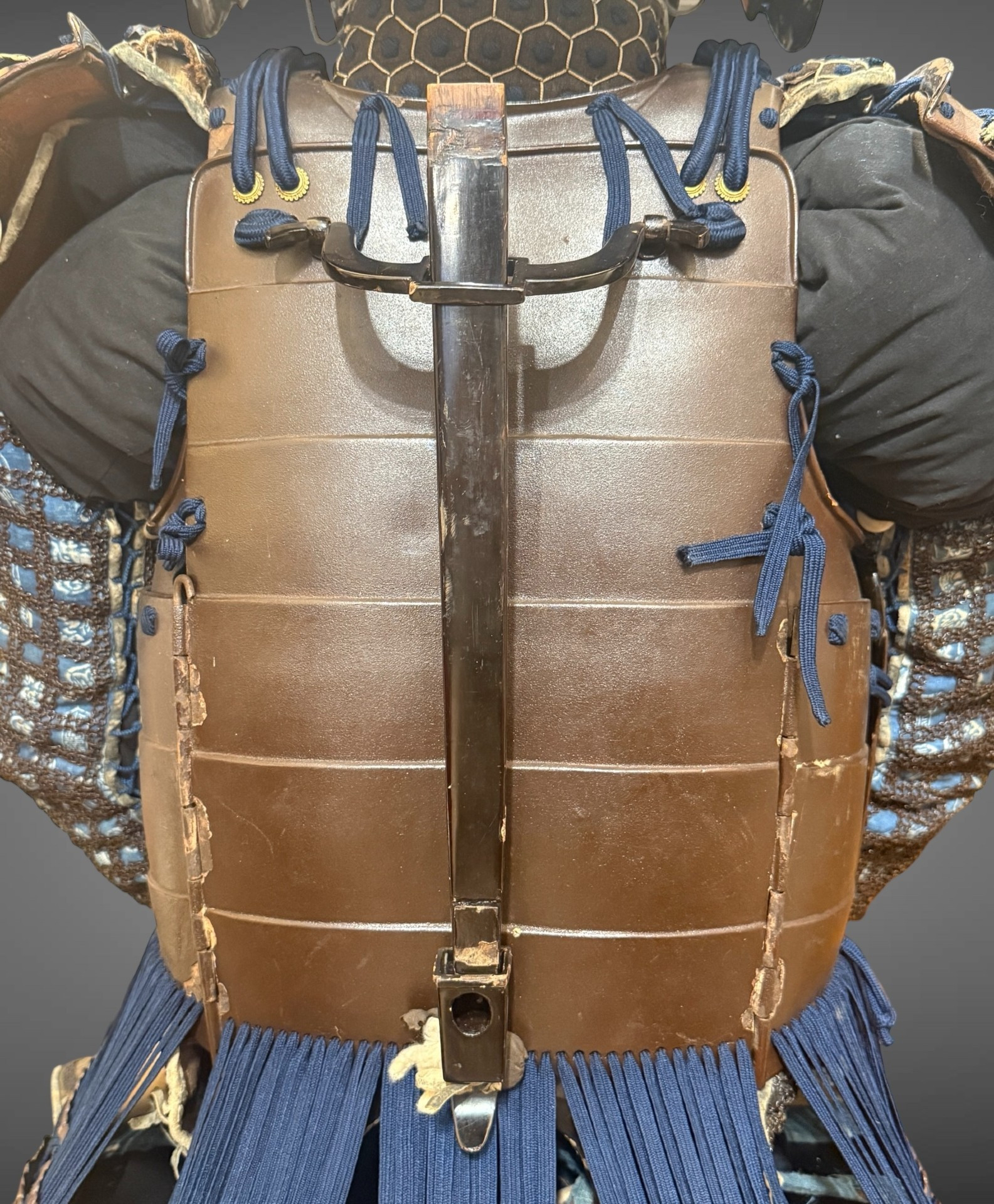
DO (chest plate) made of brown-lacquered wrought iron, modern style (tosei gusoku), with blue silk braiding.This is an Okegawa-do, a breastplate formed of riveted horizontal iron plates (here of the Yokohagi-do type, as the plates are horizontal). The matte brown lacquer (tetsu-sabi-nari or imitation rust) gives it a very classic, understated, and martial appearance.
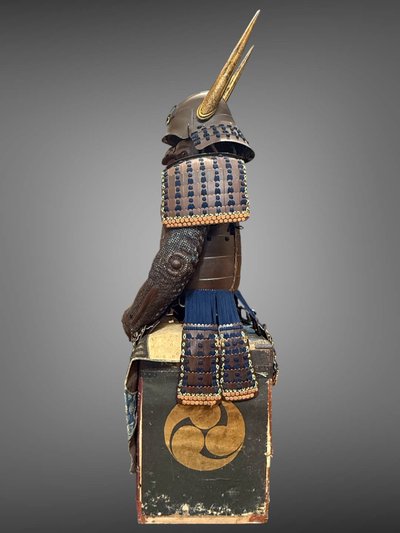
SODE (shoulder guards) with six sections lacquered in matte brown and blue, white, and orange silk braiding.
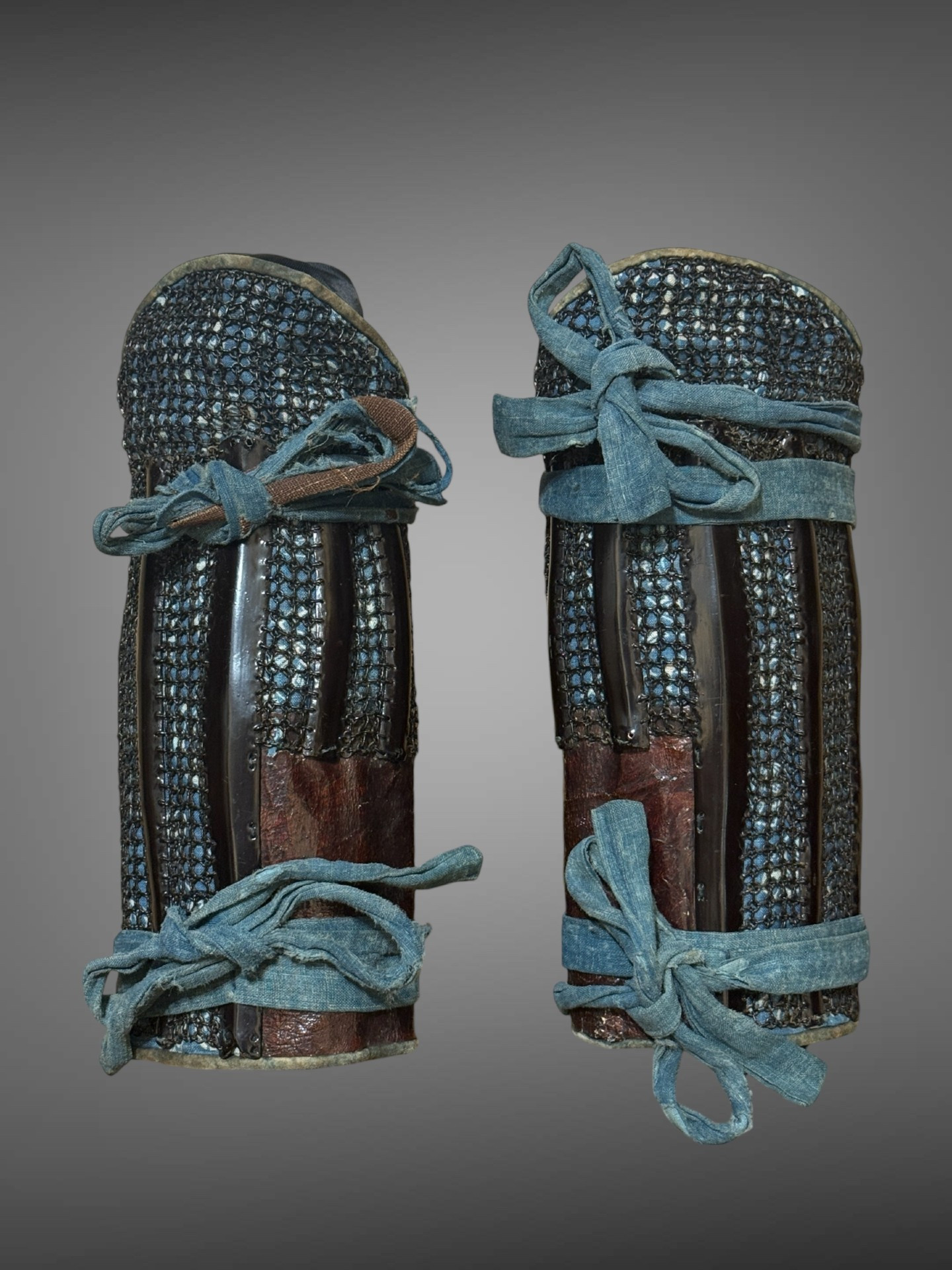
KOTE (arm guards) made of kusari (chain mail) and matte brown lacquered iron plates, characteristic of armor designed to maintain good mobility.
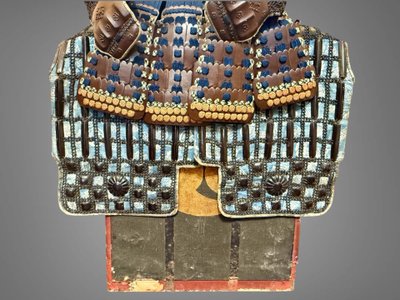
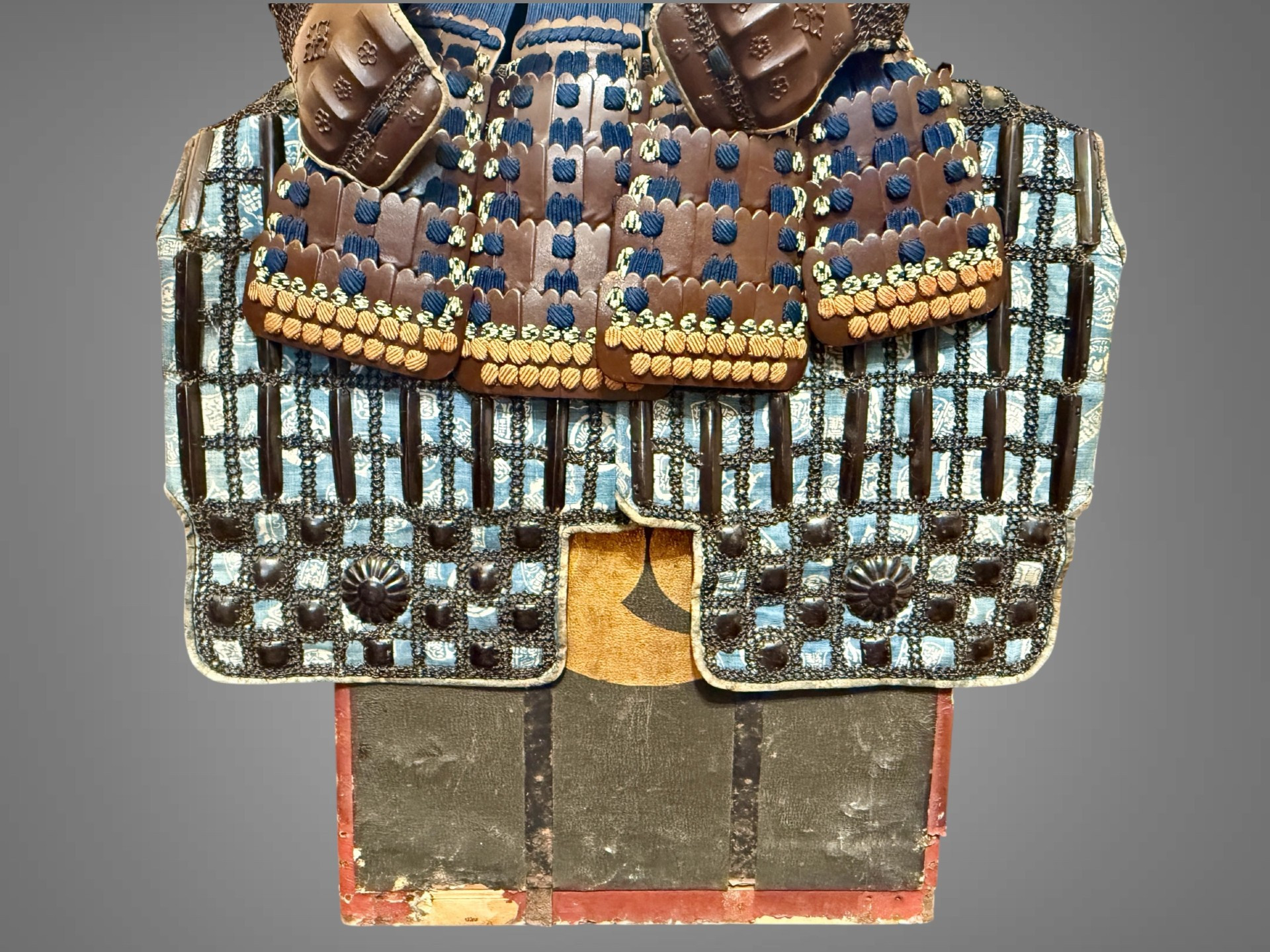
KUSAZURI (skirt) with five rows of matte brown lacquer and blue, white, and orange silk braiding.
HAIDATE (underskirt) made of light blue quilted fabric, chain mail, and lacquered iron plates.
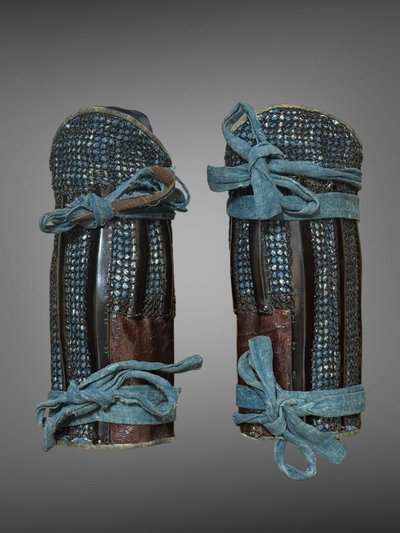
SUNEATE (leg guards) made of kusari chain mail, glossy black lacquered iron plates, blue quilted fabric, and leather.
In the province of Owari (the historic fief of Oda Nobunaga), Owari-style armor often features unique technical characteristics (such as very distinctive rivet patterns or specific Owari-zunari helmets)
. Dimensions of the armor in a seated position: 153 x 54 x 52 cm.
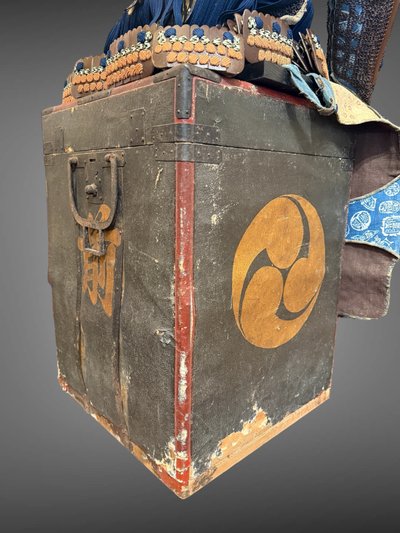
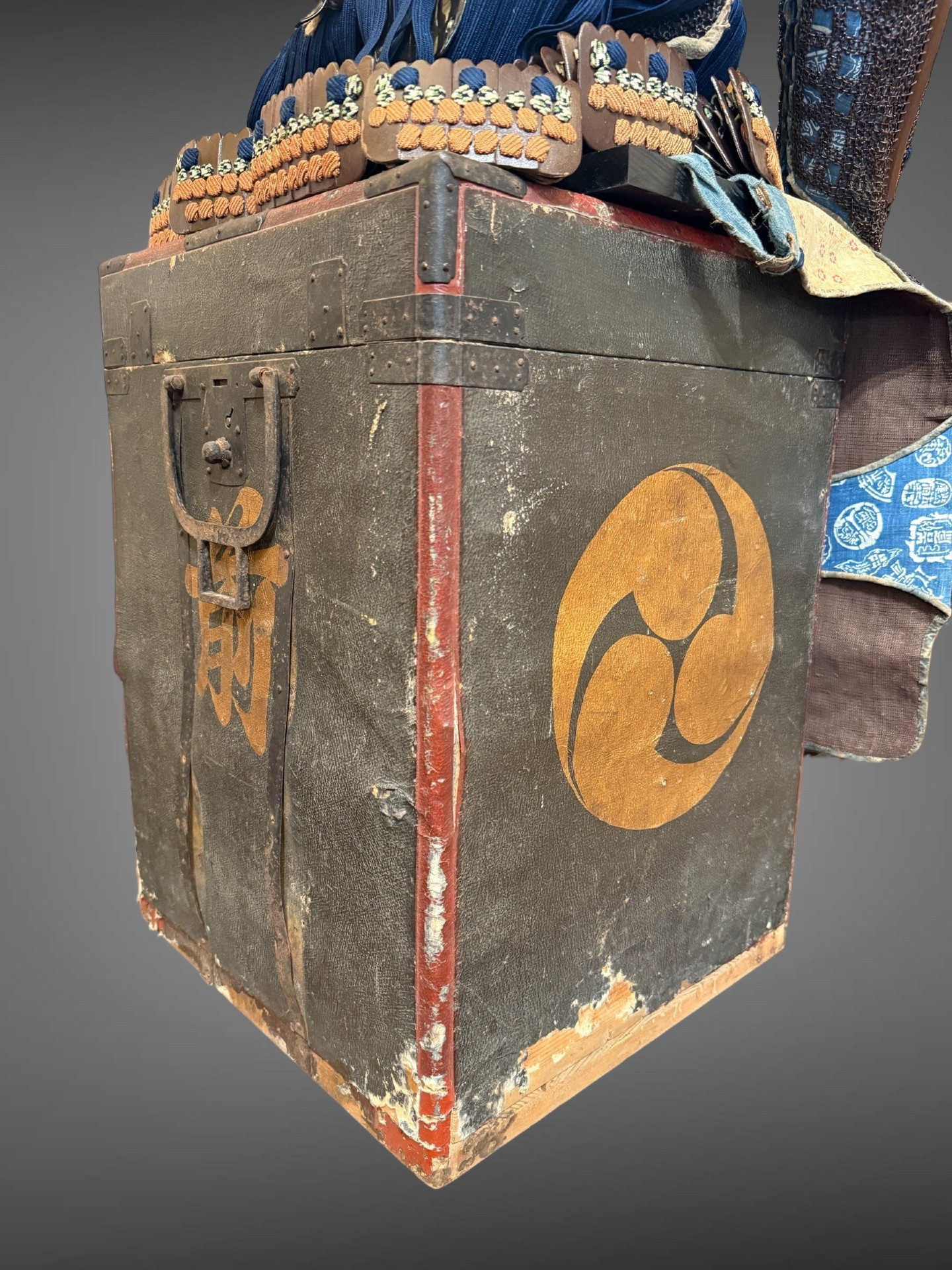
Sold with its display stand and GUSOKU BITSU (transport chests) made of wood covered in leather and reinforced with metal; it is adorned with the mitsudomoe motif.
Additional photos and details available upon request.
Notes: The term “Owari” here refers to the former Owari Province, the Tokugawa domain. The armor associated with this region is still functional and designed for combat. It remains heavily influenced by armor from the late 17th and early 18th centuries. Its martial appearance features simple forms that are more functional than decorative, along with a very sturdy helmet.
In the Owari province (the historic fief of Oda Nobunaga), Owari-style armor often has its own distinctive technical features (such as very specific rivet patterns or unique Owari-zunari helmets).
Ref: YQ8KY4OBT7
| Condition | Good |
| Style | Asian Arts (Uniforms, armor of Asian Arts Style) |
| Period | 18th century (Uniforms, armor 18th century) |
| Country of origin | Japan |
| Shipping Time | Ready to ship in 2-3 Business Days |
| Location | 93400, saint ouen , France |
| Shipping Information | Careful and insured shipping, fast shipping |
4 commitments to buy with confidence

 English
 Français
 Italiano
 Deutsch