This description has been translated and may not be completely accurate. Click here to see the original
Jean Bertholle (1909-1996)
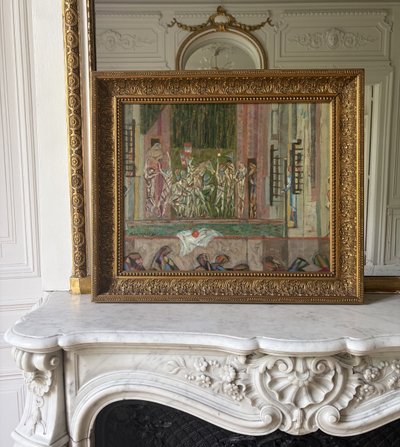
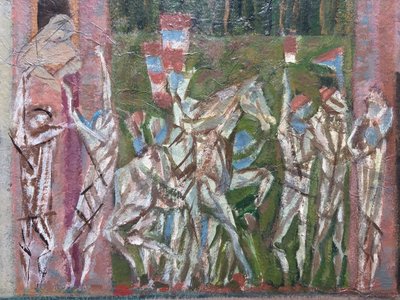
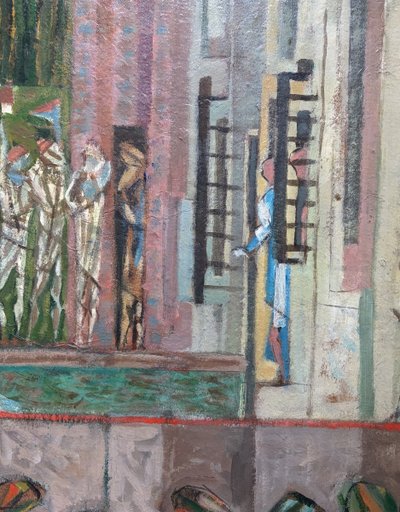
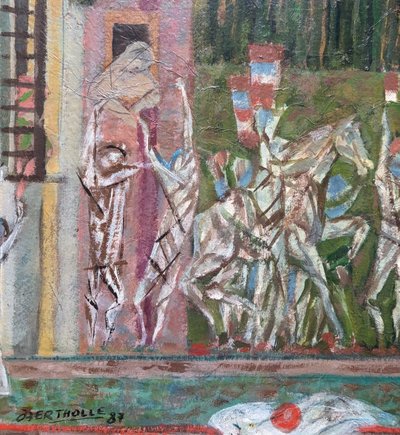
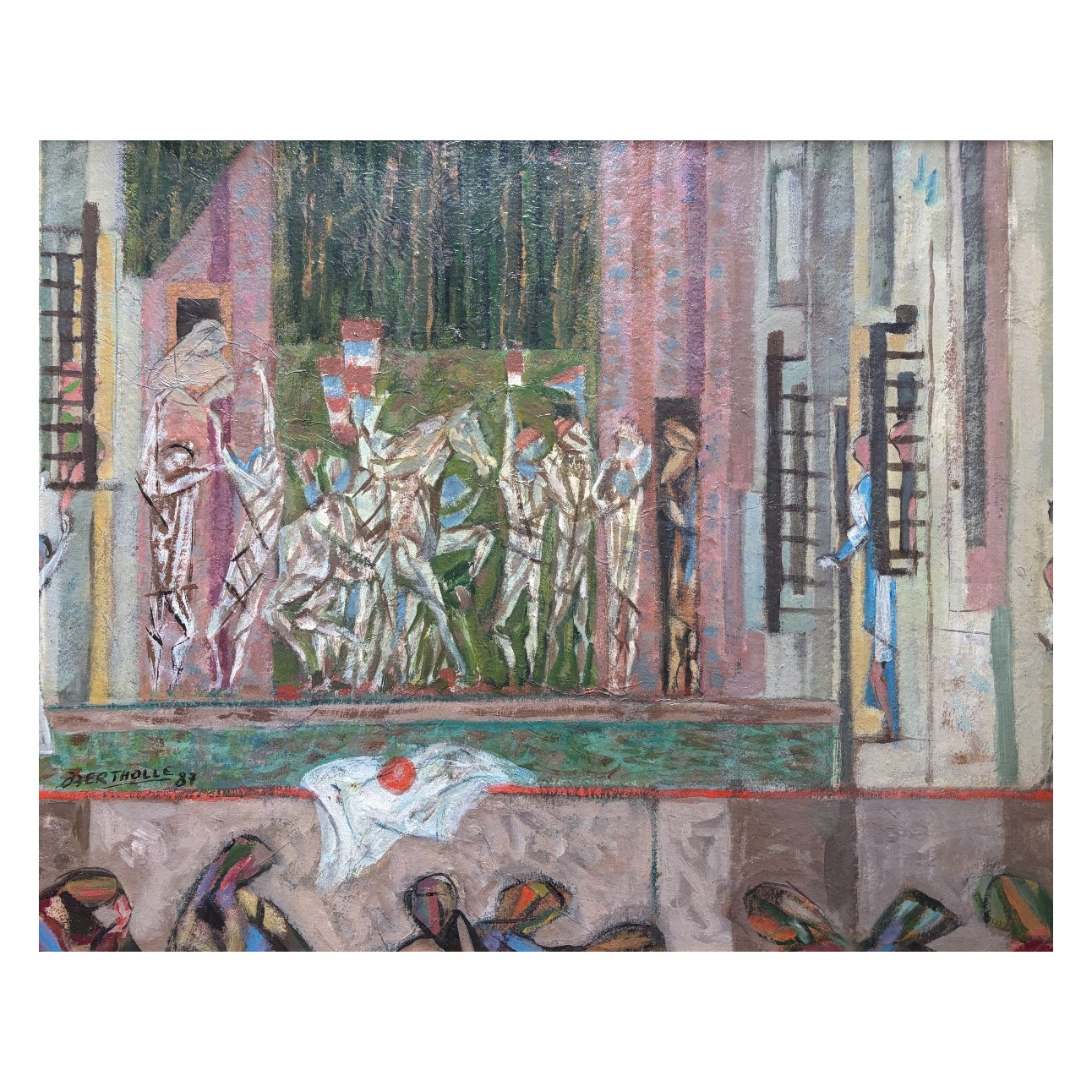
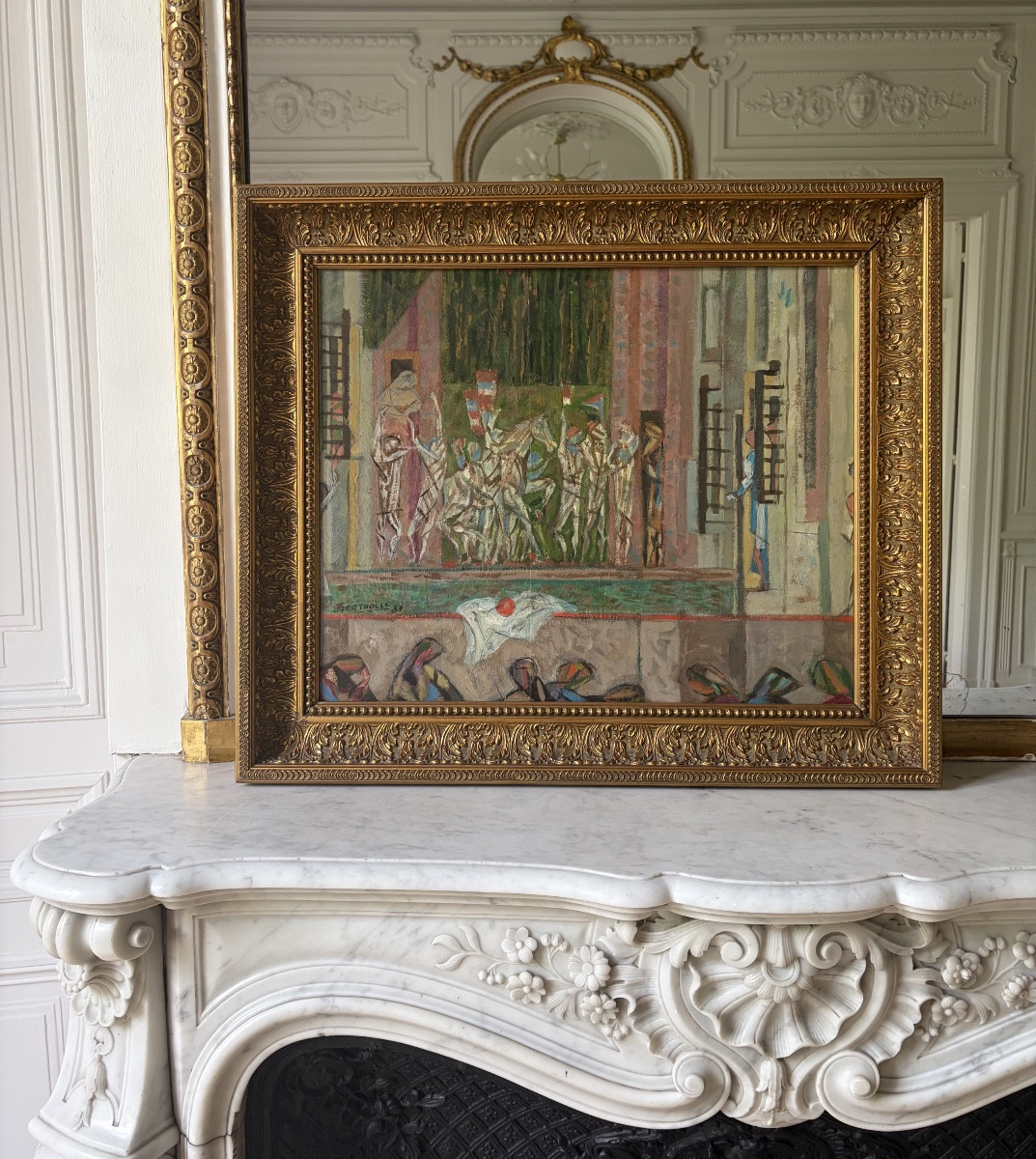
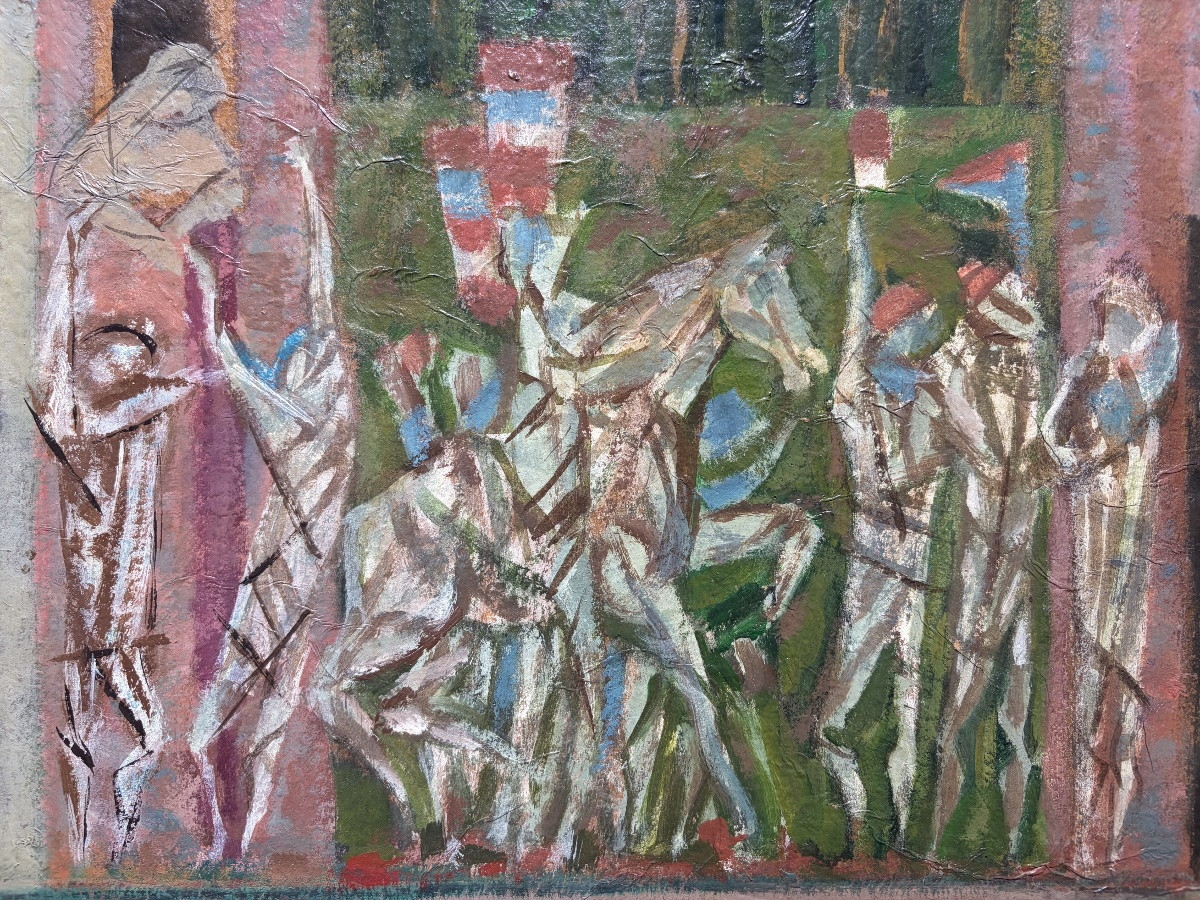
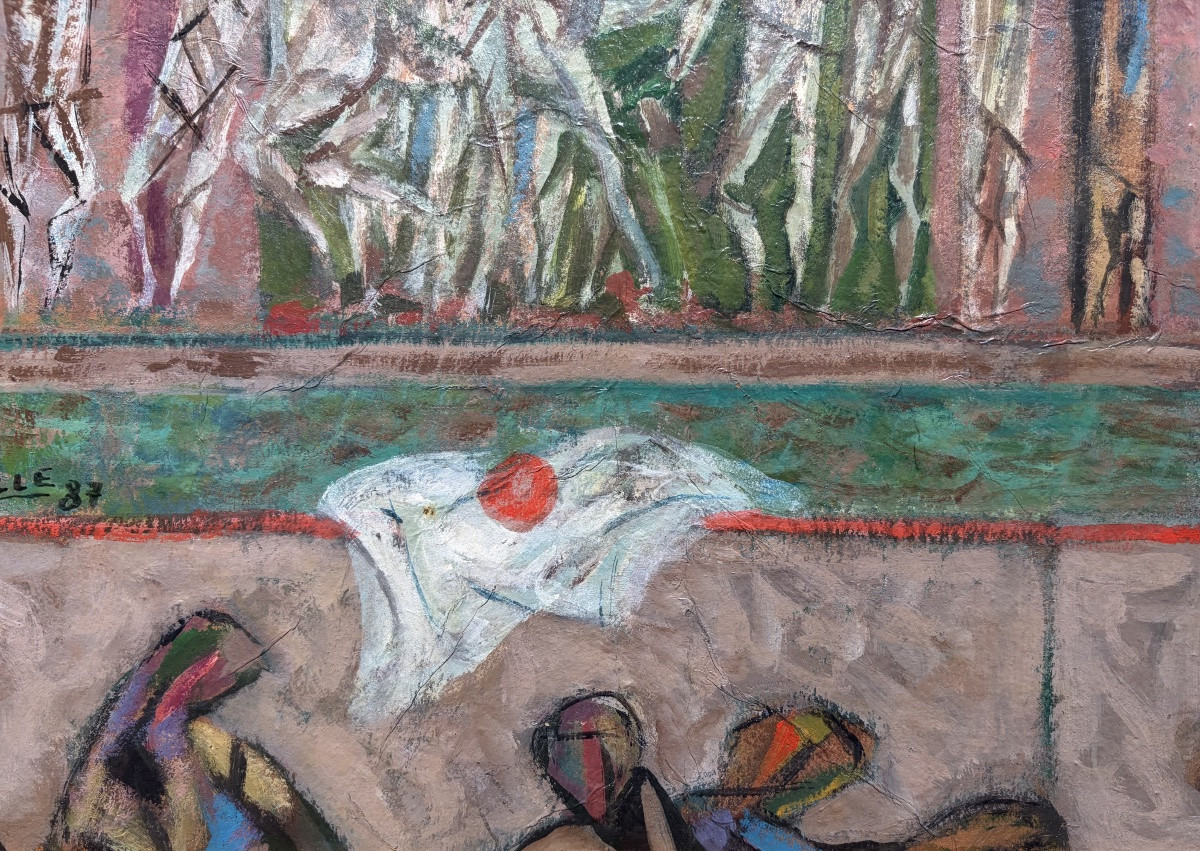
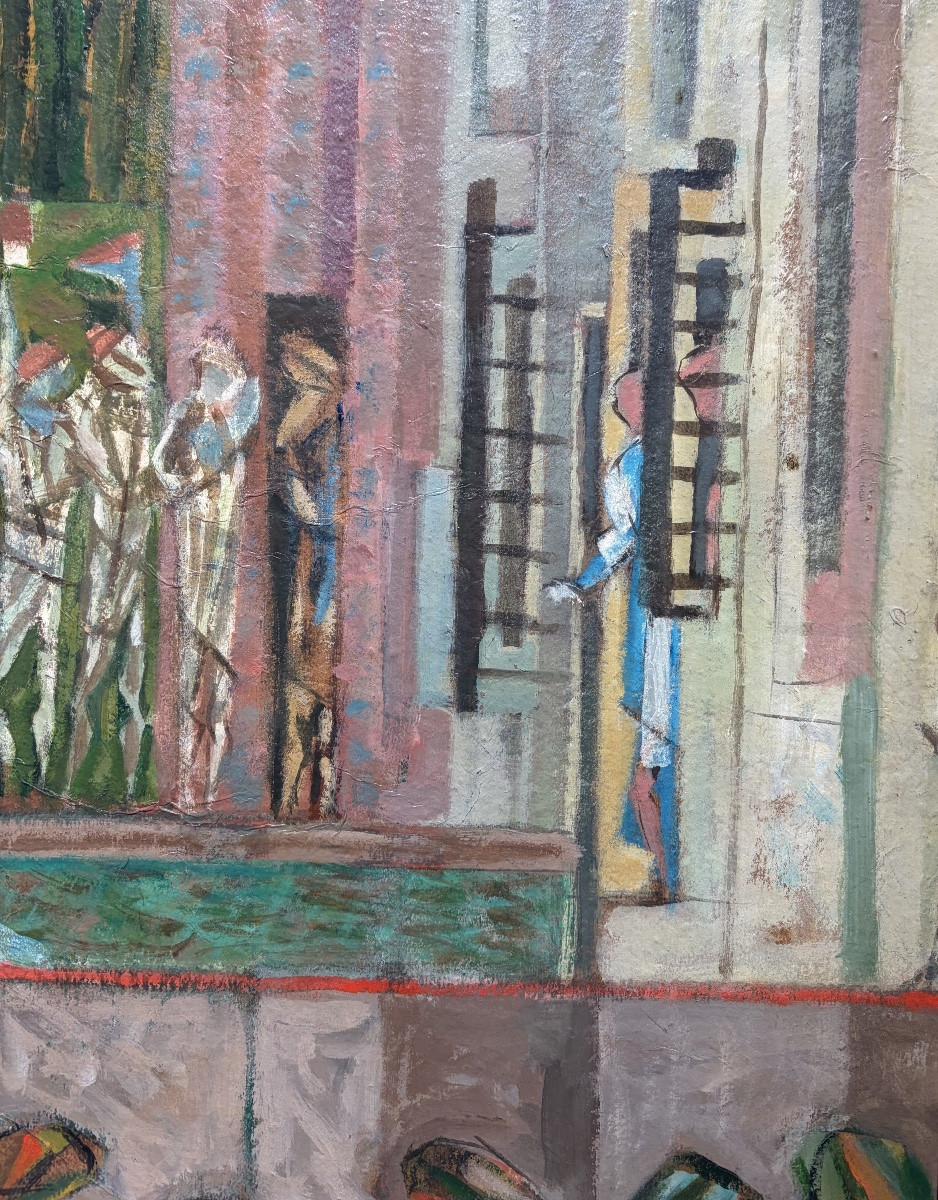
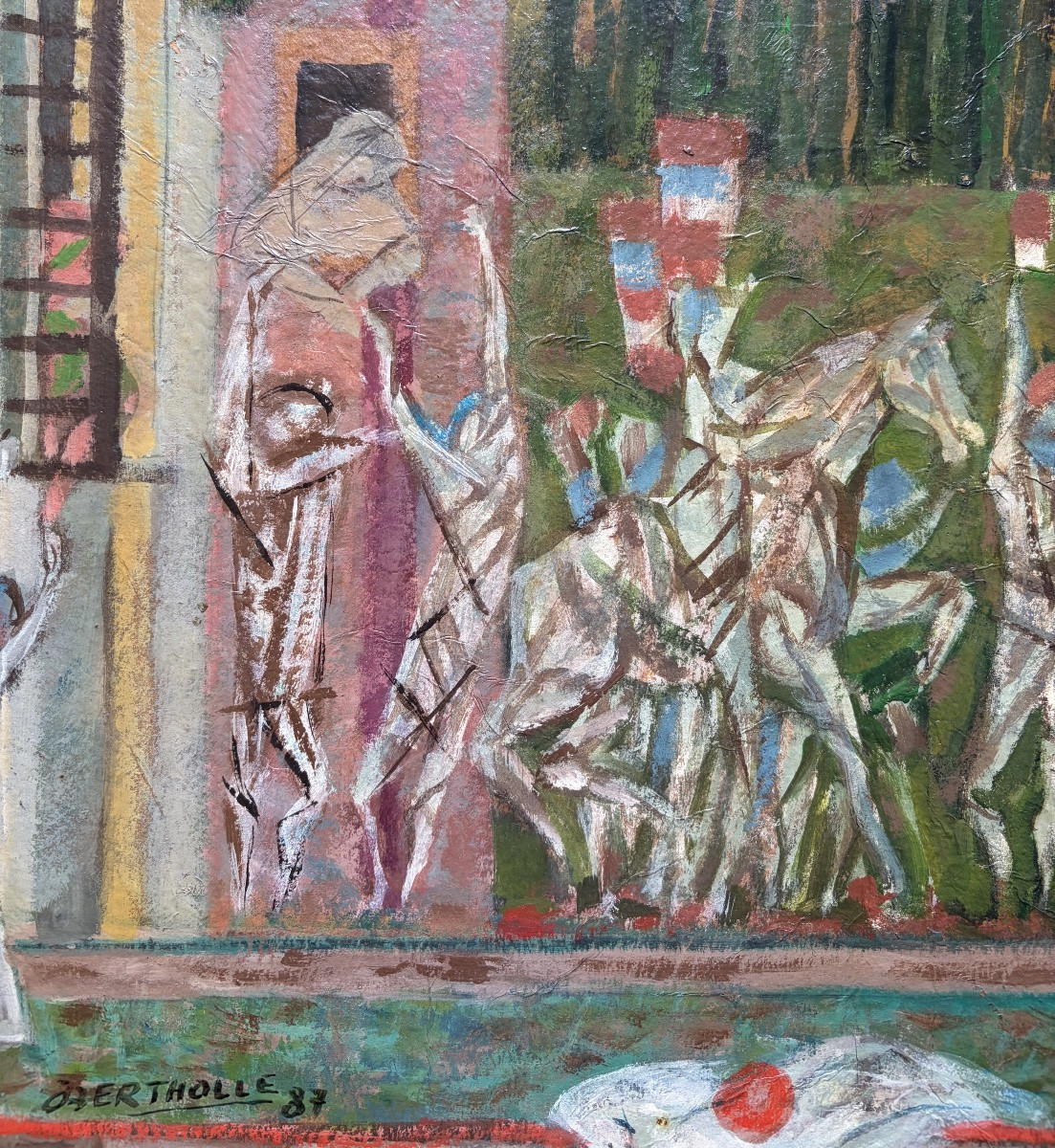
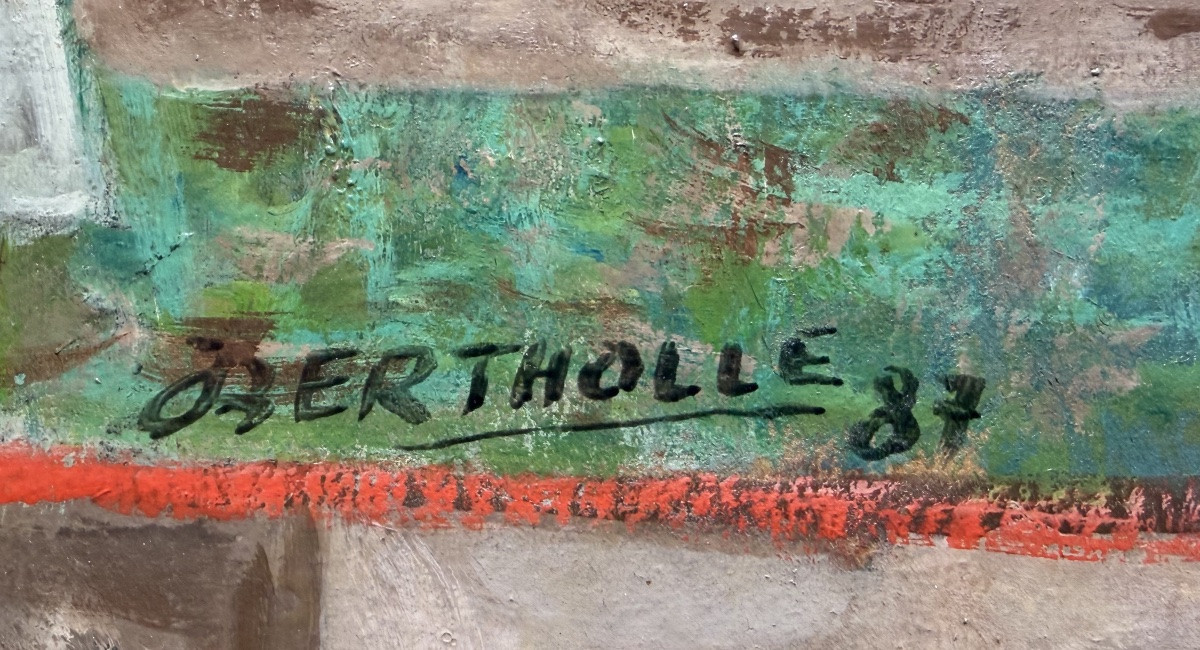
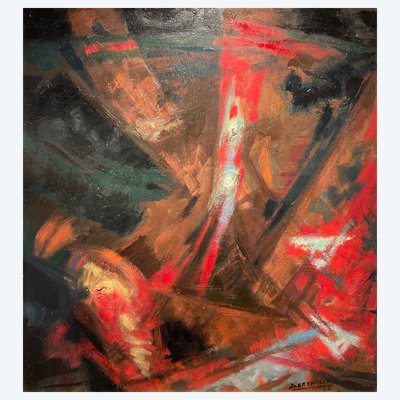
Figures and Horsemen, 1987
Oil on panel
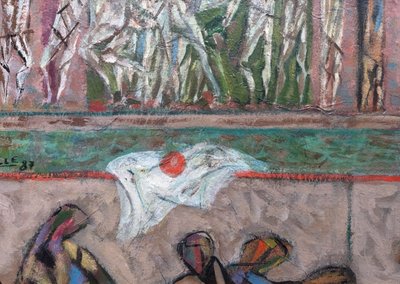
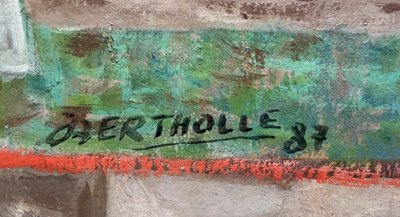
Signed and dated lower left
50 x 62 cm
Jean Bertholle (1909-1996)
Born in Dijon in 1909, Jean Bertholle began painting in 1924 and entered the École des Beaux-Arts in Saint-Étienne in 1928. The Manet exhibition at the Orangerie in 1932 left him astonished. He attended the École des Beaux-Arts in Lyon and produced a few "imitative and academic" canvases, which he later destroyed. In 1933, he continued his studies at the École des Beaux-Arts in Paris in the studio of Paul Albert Laurens, where he met Roger Bissière, Jean Le Moal, and Alfred Manessier. He participated in the founding of the Témoignage group, which brought together painters, sculptors, writers, and musicians. During this period, Bertholle was fascinated by Symbolism, Bruegel's irony, and Bosch's strangeness.
In 1941, his painting took a new direction. Having paid close attention to the work of the Primitives, Bertholle returned to a "very meticulous figurative style." He participated in the exhibition "Twenty Young Painters of the French Tradition," the first exhibition of avant-garde painting during the Occupation. Forced by financial constraints, he became the artistic director of the Gien pottery factory in 1943, a position he found difficult to maintain, as he could no longer devote enough time to painting. However, in 1944 he participated in a group exhibition at the Galerie de France with Bissière, Le Moal, Manessier, Singier, and Étienne-Martin, as well as in the first Salon de Mai, of which he was a founding member. In the 1950s, Bertholle exhibited at the Galerie Jeanne Bucher and then, in 1957, secured a contract with Roque, allowing him to leave his position at the Gien pottery factory and devote himself entirely to painting. He gradually moved towards non-figurative painting, seeking to "erase references and move away from the object to reach the essential."
Bertholle was selected for the Venice Biennale in 1949 and 1960, as well as for the São Paulo Biennial, and participated in the 1959 exhibition at the Carnegie Institute in Pittsburgh. The first retrospective exhibitions of his work were presented in 1964 in Metz, Luxembourg, and Caen. From 1965 to 1980, Bertholle taught as head of the mural art workshop at the École des Beaux-Arts in Paris. Further retrospectives were held in 1972 in Dijon, then in Besançon and Saint-Germain-en-Laye.
In the late 1960s, while Bertholle was recognized alongside his peers as one of the leading artists of the new School of Paris, he was one of the first to abandon non-figurative art. “Non-figurative forms no longer satisfied me. One day, the process was triggered: the figurative once again emerged from beneath the material,” he would say.
After another retrospective at the École des Beaux-Arts in Paris, he was elected a member of the Institut de France in 1983. There, he delivered a notable acceptance speech, in which he expressed his incomprehension of conceptual art, which he felt was often reduced to mere installations, before which “a snobbish public pretends to be amazed.” Passionate about teaching, he founded his own painting academy that same year. After his death in 1996, a first retrospective was presented in La Ciotat in 1997, followed by a second in Dijon in 2011.
His works are held in the collections of the Museum of Fine Arts and the Museum of Sacred Art in Dijon, the Centre Pompidou, the Museum of Fine Arts in Caen, the Greuze Museum in Tournus, and the Unterlinden Museum in Colmar.
Ref: OQ59AZPOE2

 English
 Français
 Italiano
 Deutsch
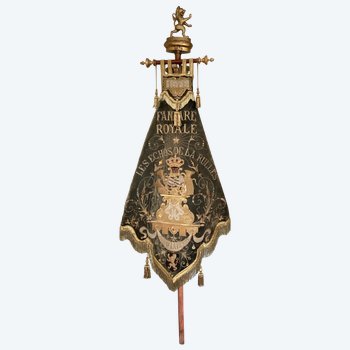
 Royal Banner
1.500 € EUR