This description has been translated and may not be completely accurate. Click here to see the original
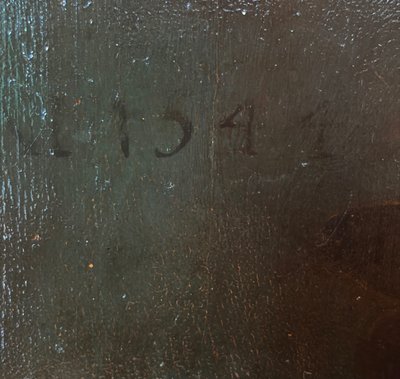
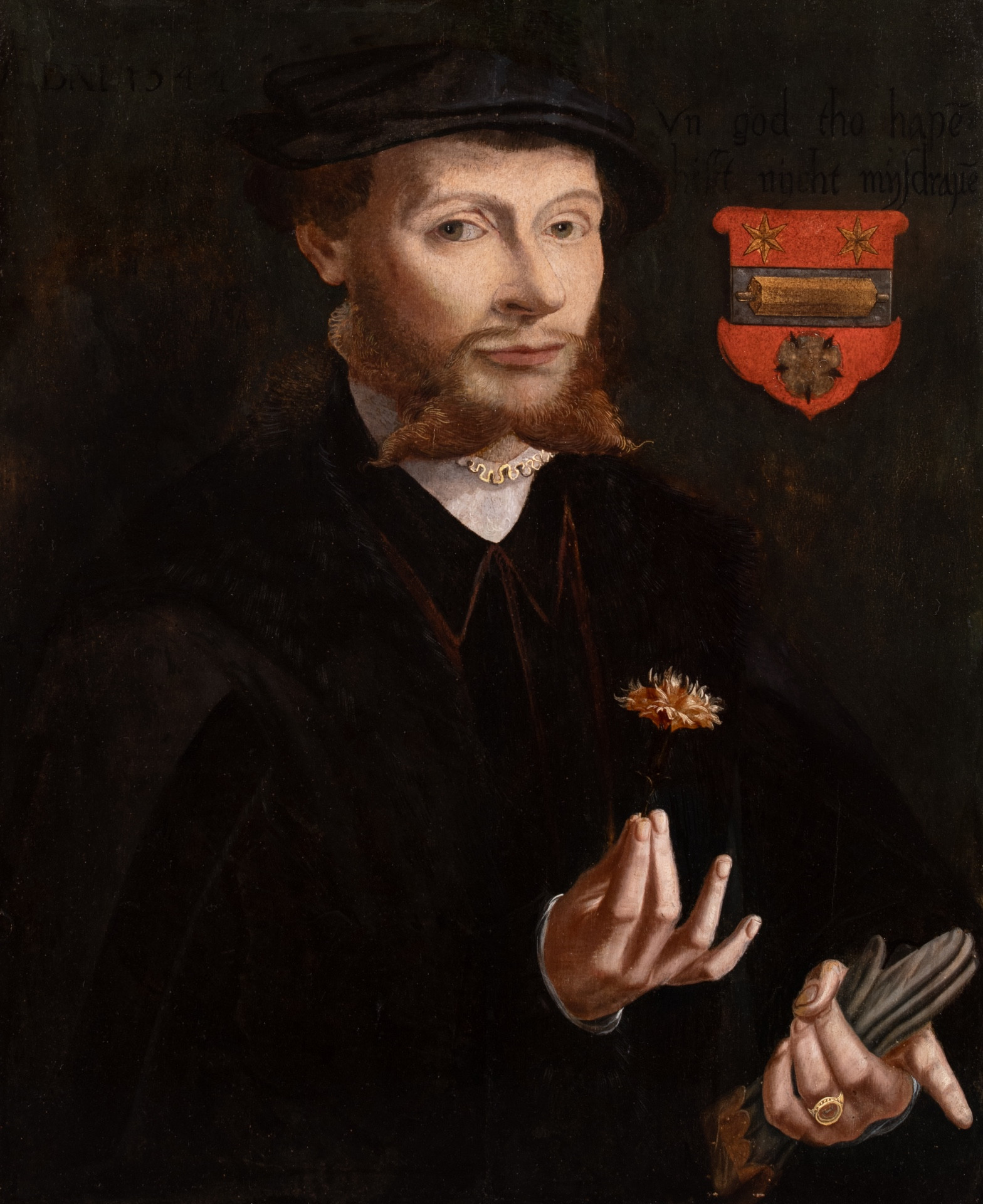
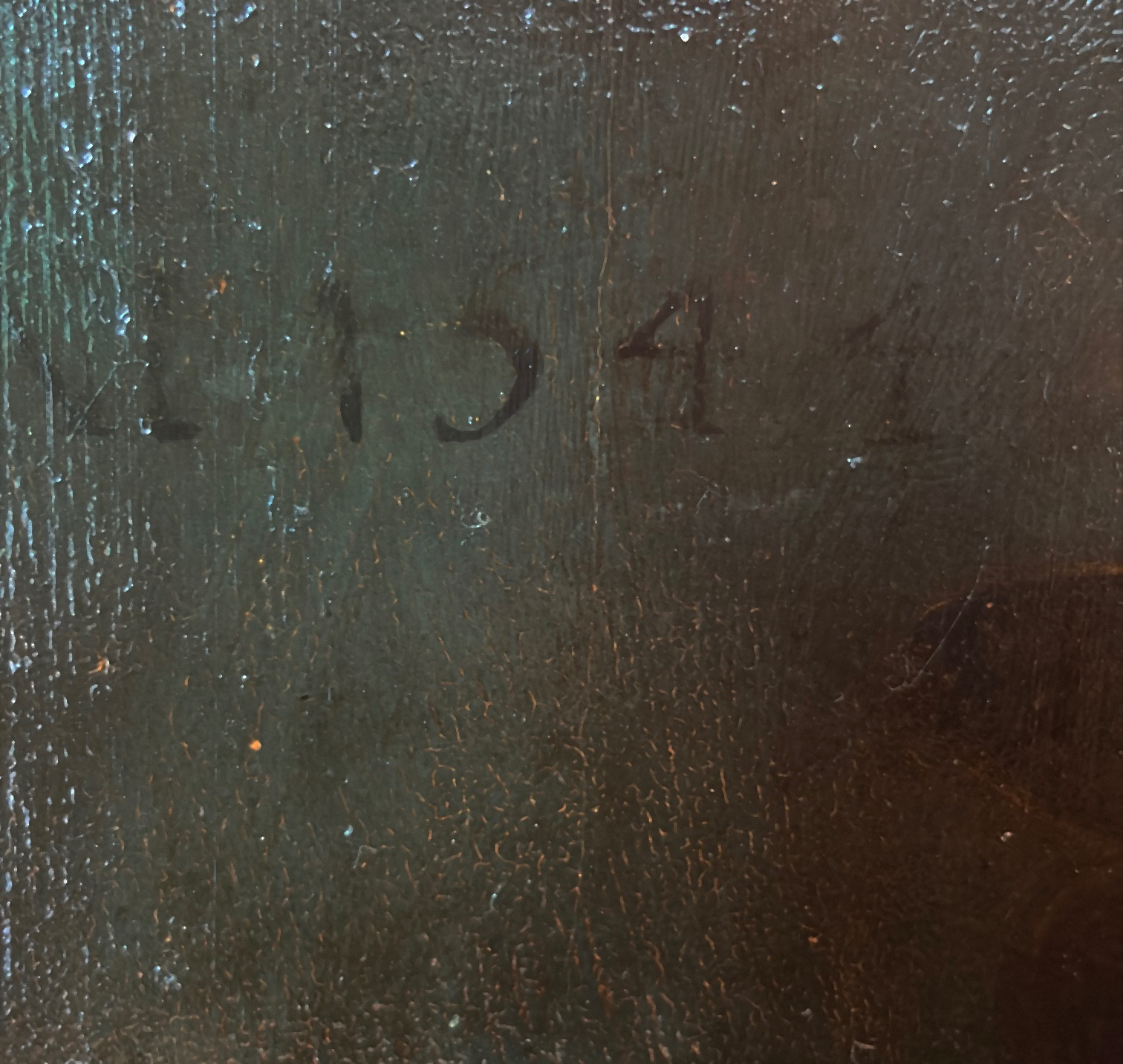
Dated 1544
Oil on wood, backed on another panel
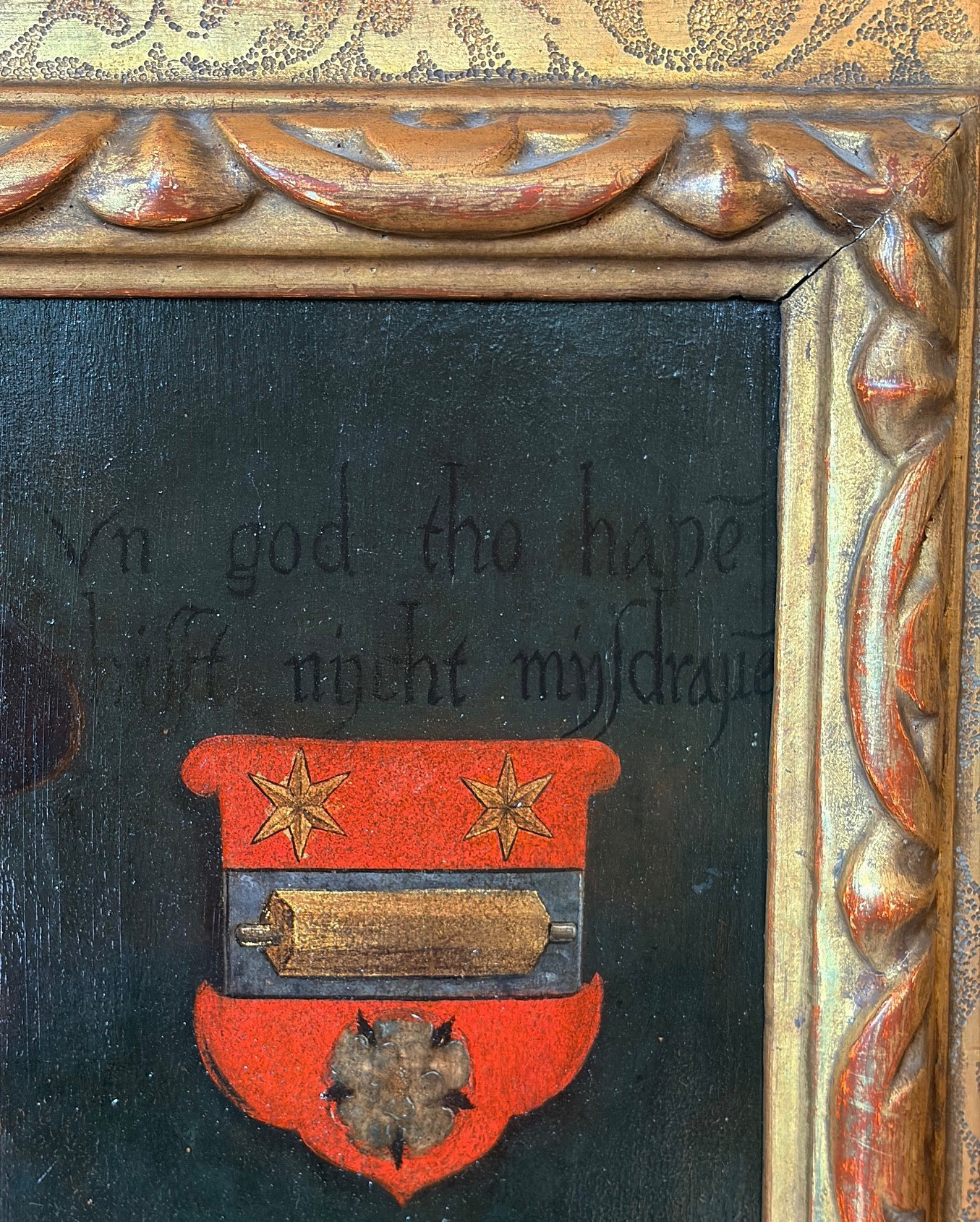
Presented in a giltwood frame, Cassetta style
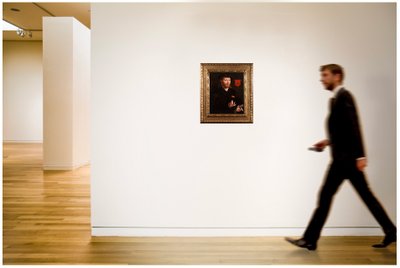
Overall dimensions with frame: 80 x 68 cm. Panel alone: 55 x 45 cm
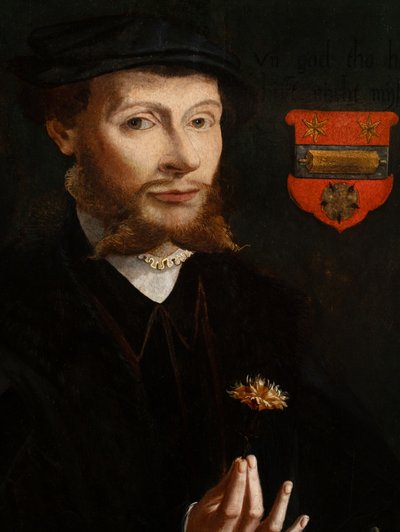
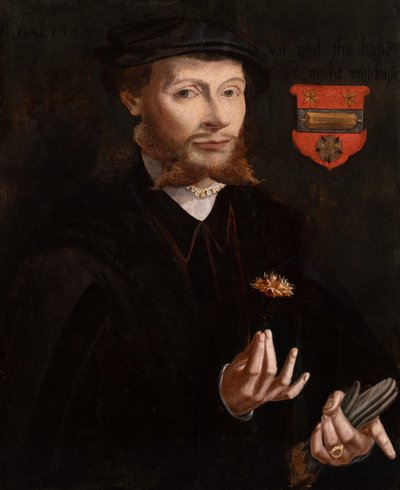
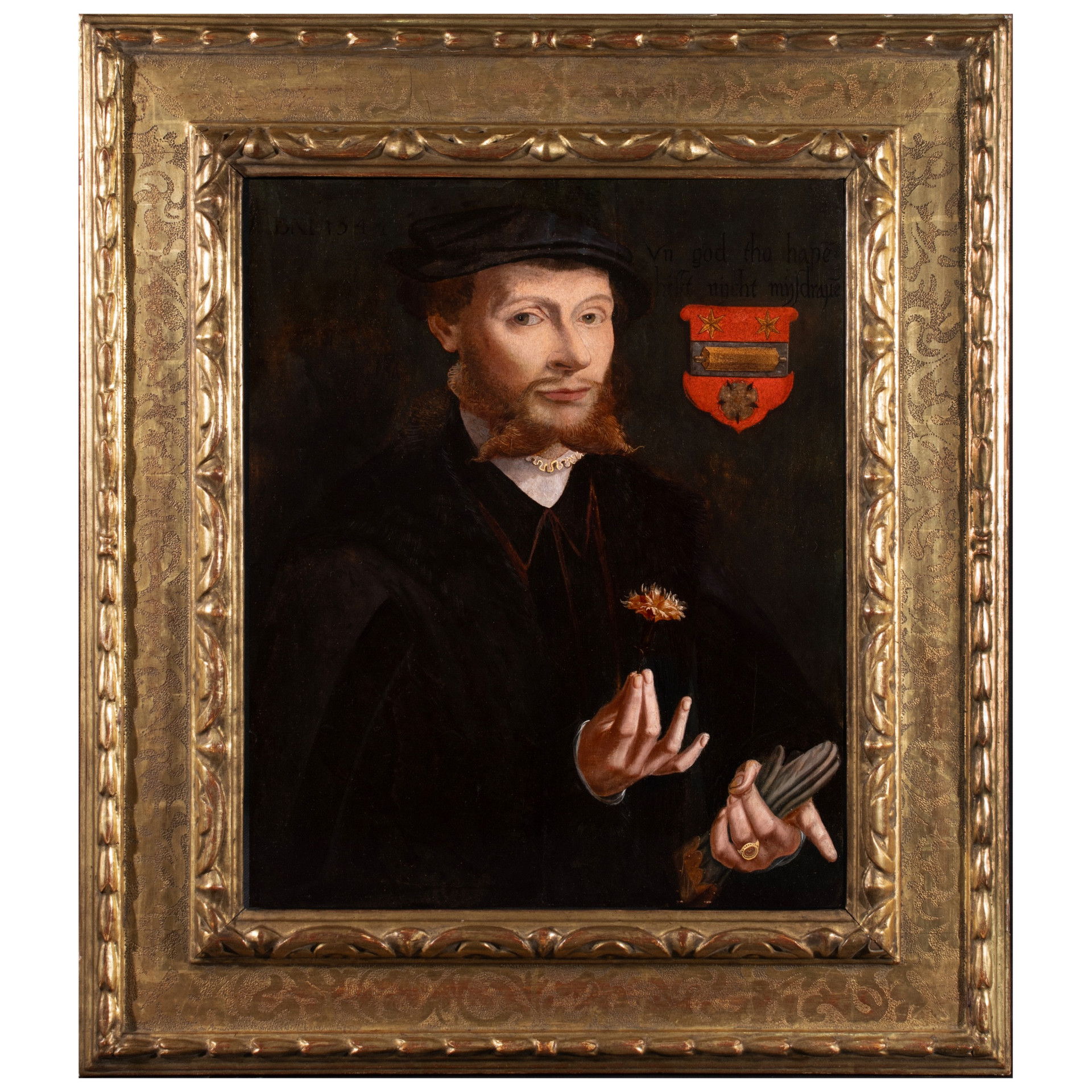
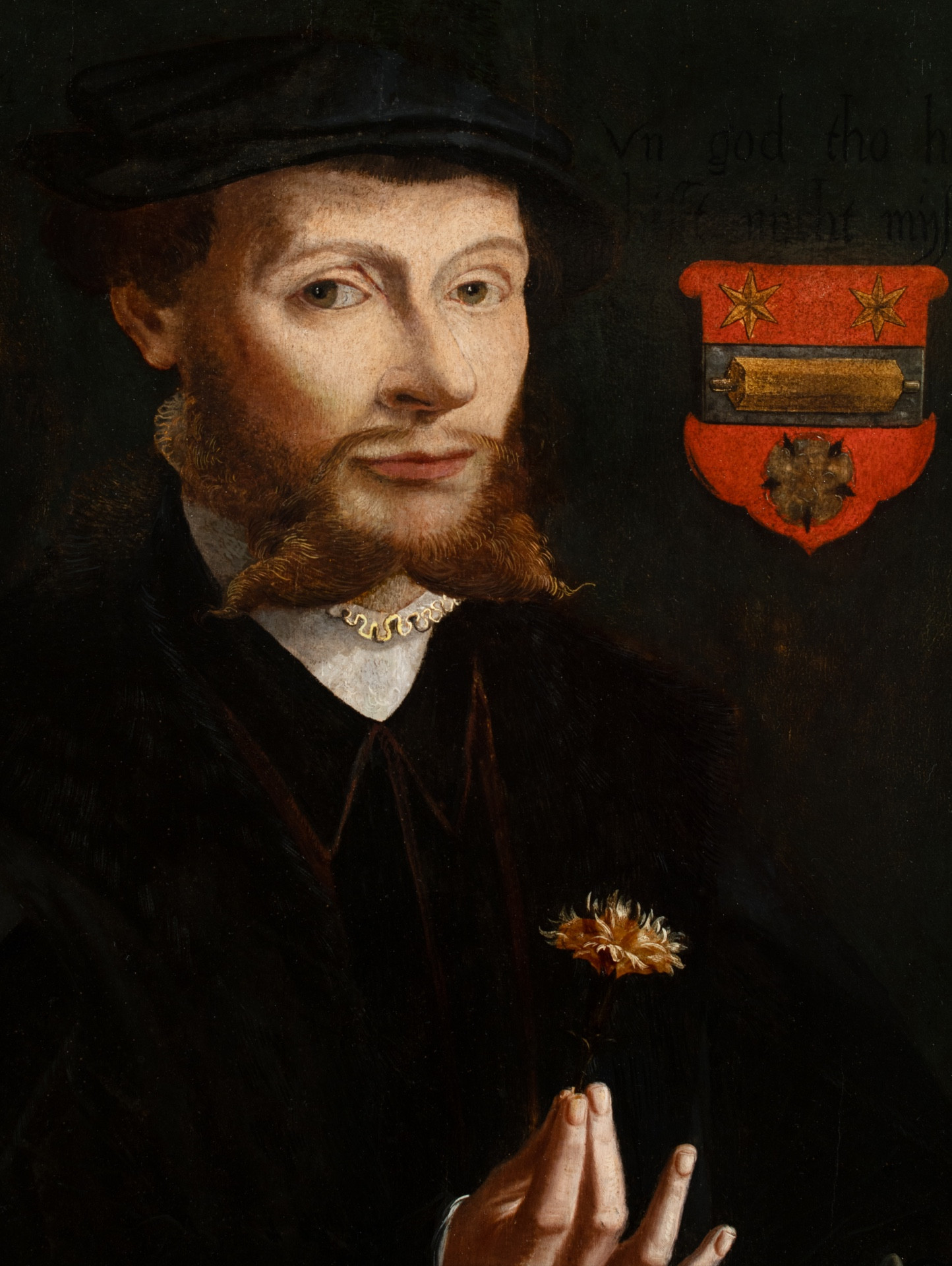
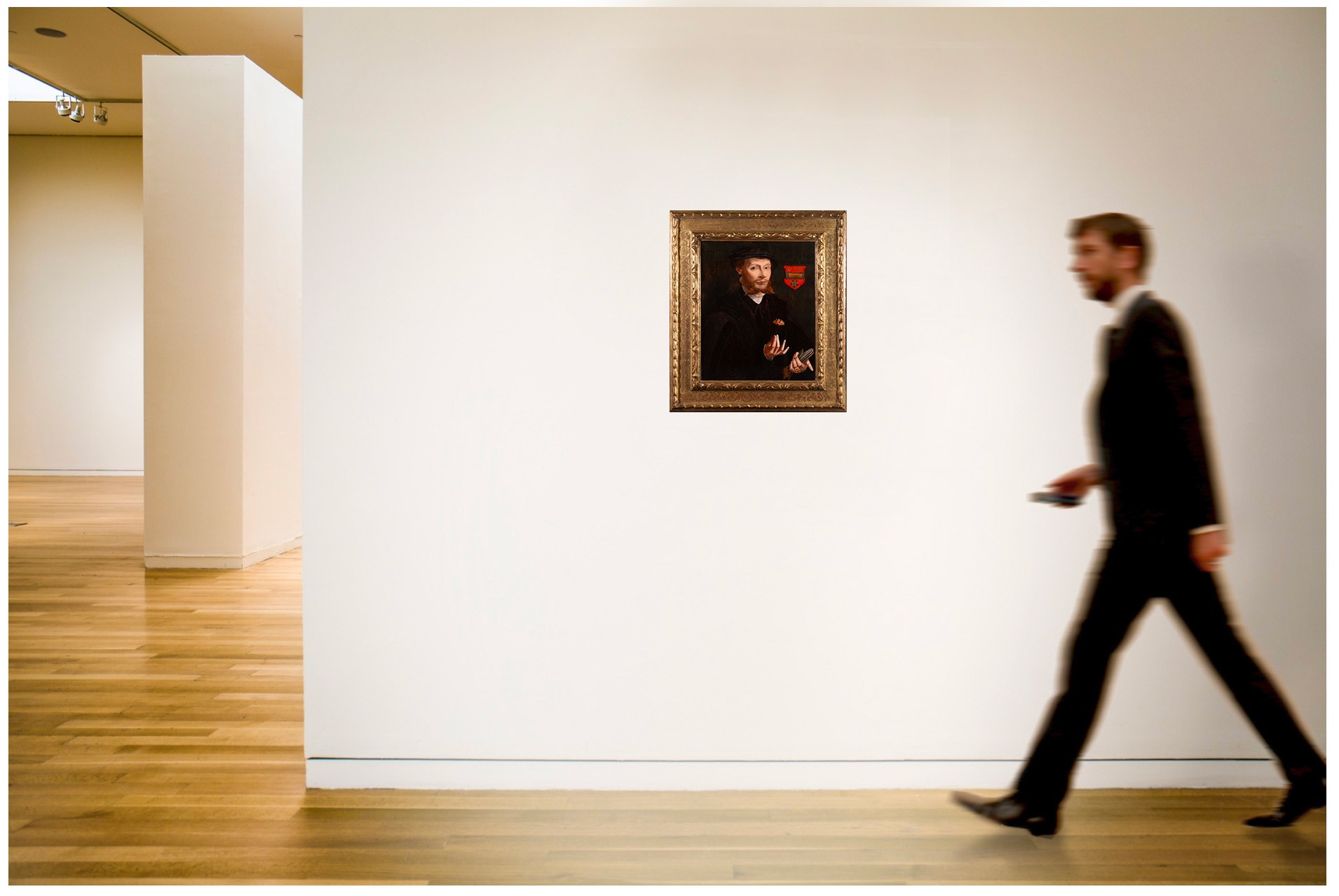
This elegant portrait belongs to the tradition of 16th-century Rhenish portraiture, as masterfully embodied by Bartholomaeus I. Bruyn, a major Cologne painter, whose work is distinguished by its precise drawing and psychological insight. The artist depicts a young man with a calm and confident expression, dressed in a black velvet coat with a fur collar and a starched white shirt with a fine pleated collar: sobriety and distinction typical of mid-century humanist fashion.
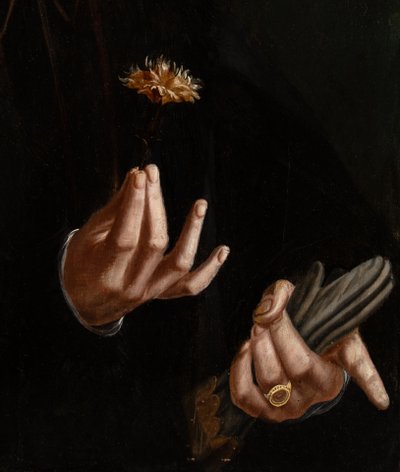
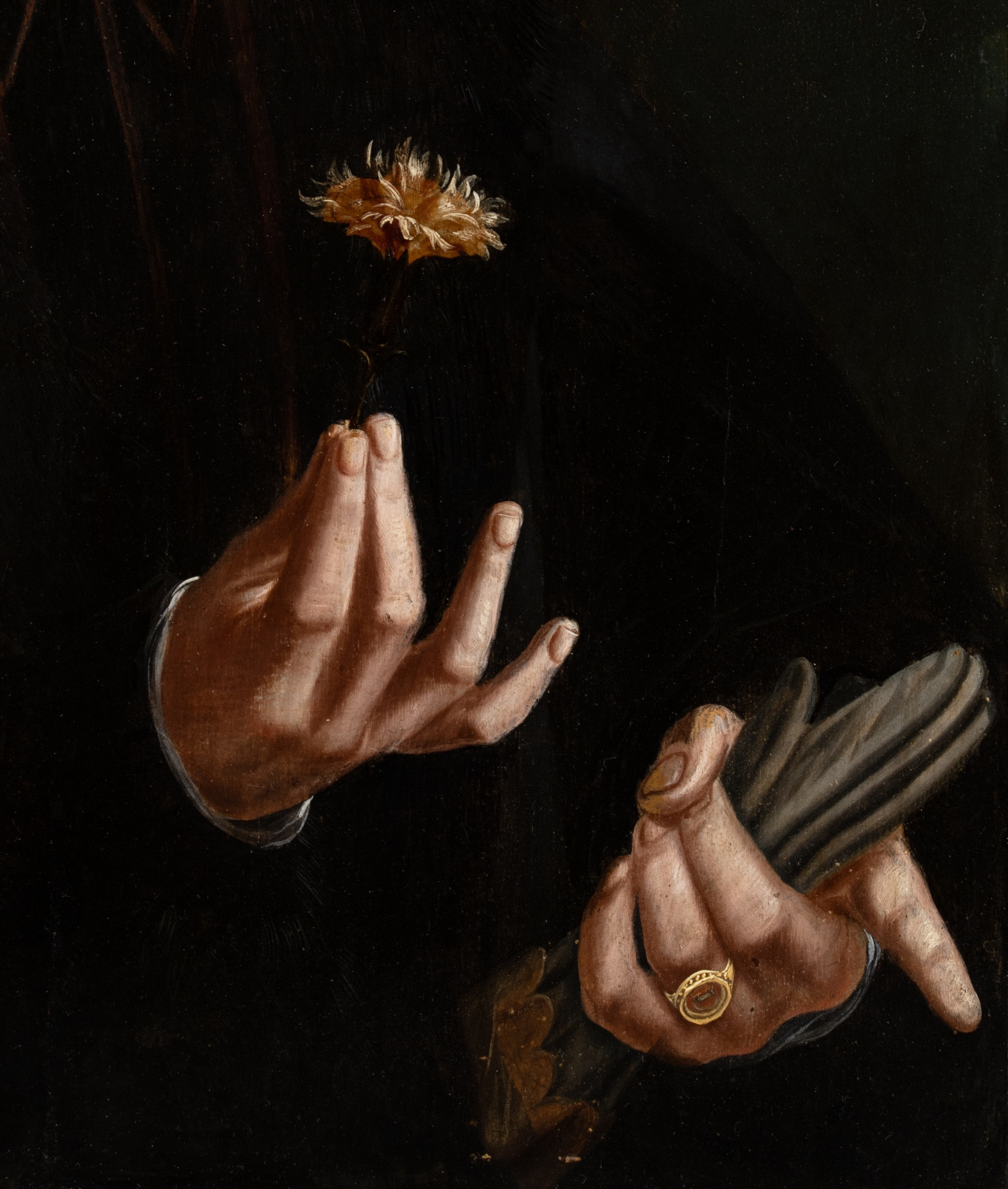
The soft-edged black cap and the circular signet ring adorned with an engraved stone attest to refined taste and a high social standing. In her right hand, the sitter holds a delicately painted carnation, a symbol of fidelity and courtly love, frequently found in Bruyn's portraits. The artist renders its texture with remarkable precision: ruffled petals, fragile stem, suspended gesture—all details that convey the painter's sensitivity to amorous and moral symbolism.
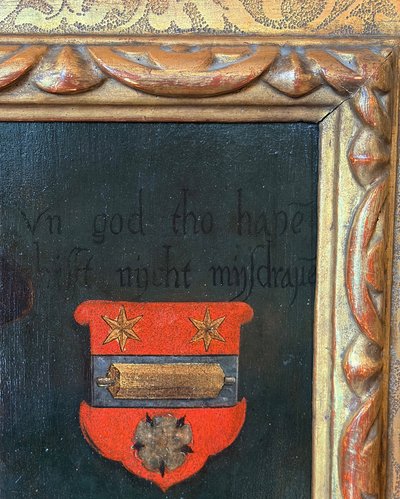
The left hand, clutching a pair of gloves, reinforces this impression of restraint and distinction: the glove, an accessory of civility, becomes a sign of refinement and self-control. Against the dark background, the coat of arms painted in red and gold adds a precious heraldic touch: two golden stars on a red field, a central fess, and a stylized animal head at the bottom. It likely identifies a patrician family from Cologne or the Rhineland. Above, a Gothic inscription – “vngod, thuhapehestnichtmisdraye” – can be translated as a moral maxim: “In God, your hope will not be disappointed,” recalling the piety and spiritual confidence of the sitter.
The whole, executed with finesse and balance, perfectly illustrates Bruyn’s style: soft modeling, clear light, and restrained psychology. This portrait, dated 1544, is a valuable example of Rhenish bourgeois portraiture during the Renaissance, where rigorous drawing is combined with intimate sensitivity.
Biography of Bartholomaeus Bruyn (c. 1493–1555)
Bartholomaeus Bruyn, known as Bruyn the Elder, is one of the major painters of the Rhenish Renaissance. Born in Cologne around 1493, he established himself by the 1520s as the most sought-after portraitist of the city’s bourgeoisie and patricians. His style, marked by great precision of drawing, meticulous attention to clothing details, and a quest for psychological truth, falls within the lineage of Germanic masters such as Hans Holbein and Barthel Bruyn, while retaining its own distinct, gentler, and more introspective identity.
Bruyn also produced numerous religious works for Cologne churches, but it is his portraits that have secured his renown: serene faces, direct gazes, symbolic accessories (such as the carnation, often present), and a highly personal way of rendering fabrics and jewelry. His flourishing workshop trained several painters, including his son, Bartholomaeus II Bruyn, who perpetuated the family tradition.
Upon his death in 1555, Bruyn left behind a substantial body of work, now held in major European museums, bearing witness to the rise of bourgeois portraiture in 16th-century Cologne and the understated elegance of the Rhenish Renaissance.
Good condition. Sold with a certificate of authenticity.
Ref: HDIWNA8RUL

 English
 Français
  Italiano
  Deutsch
  Louis XIV Norman writing table
850 € EUR
Louis XIV Norman writing table
850 € EUR