

Would you like more images?


DULLAH (1919-1996)
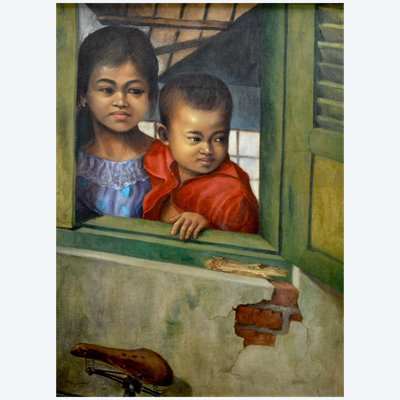
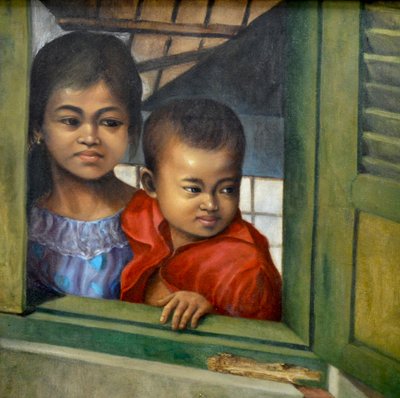
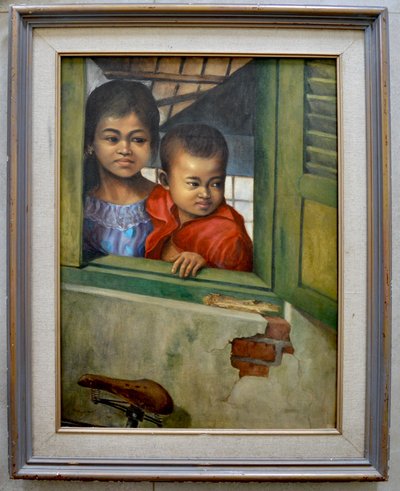
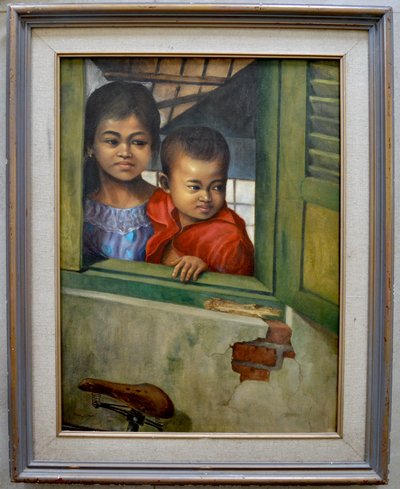
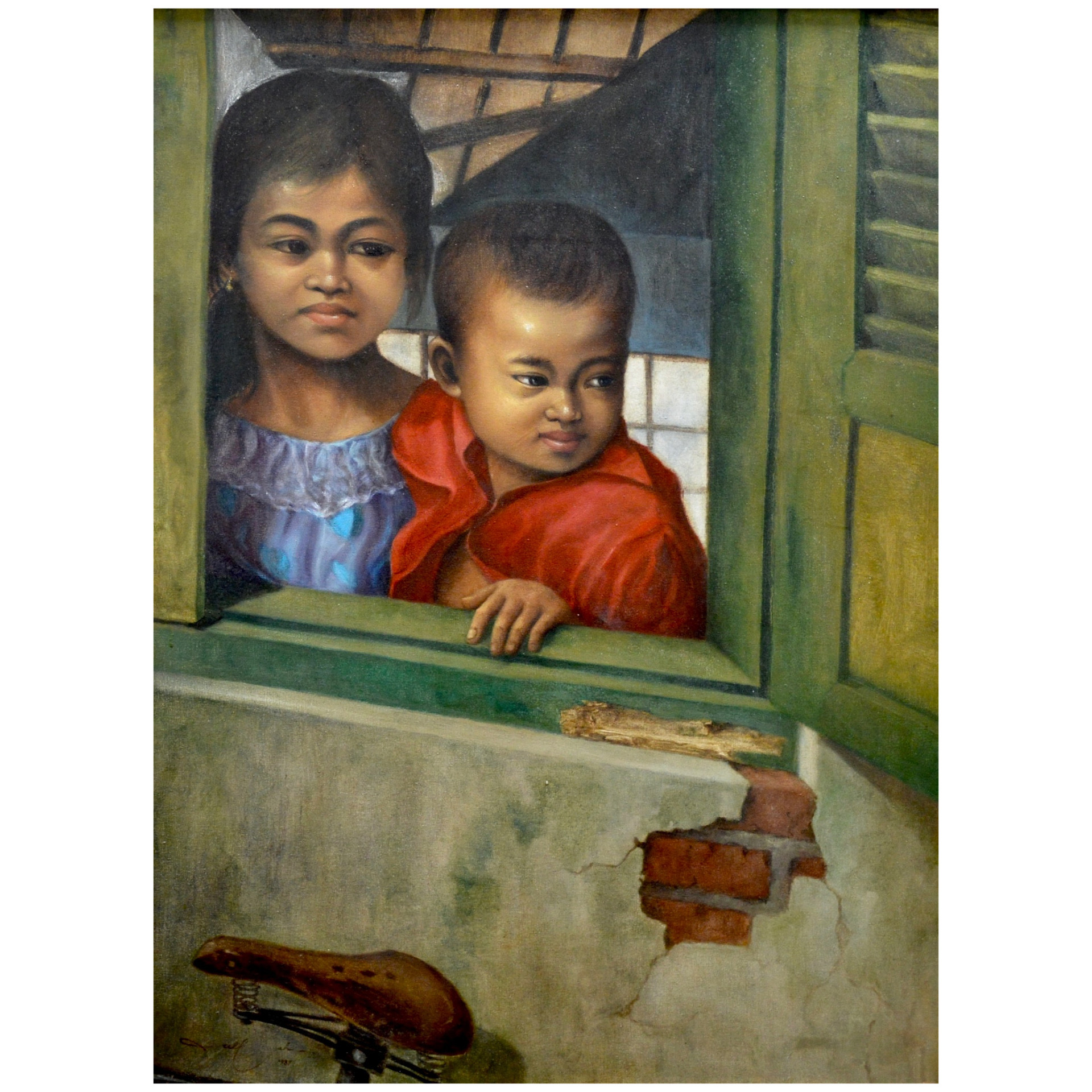
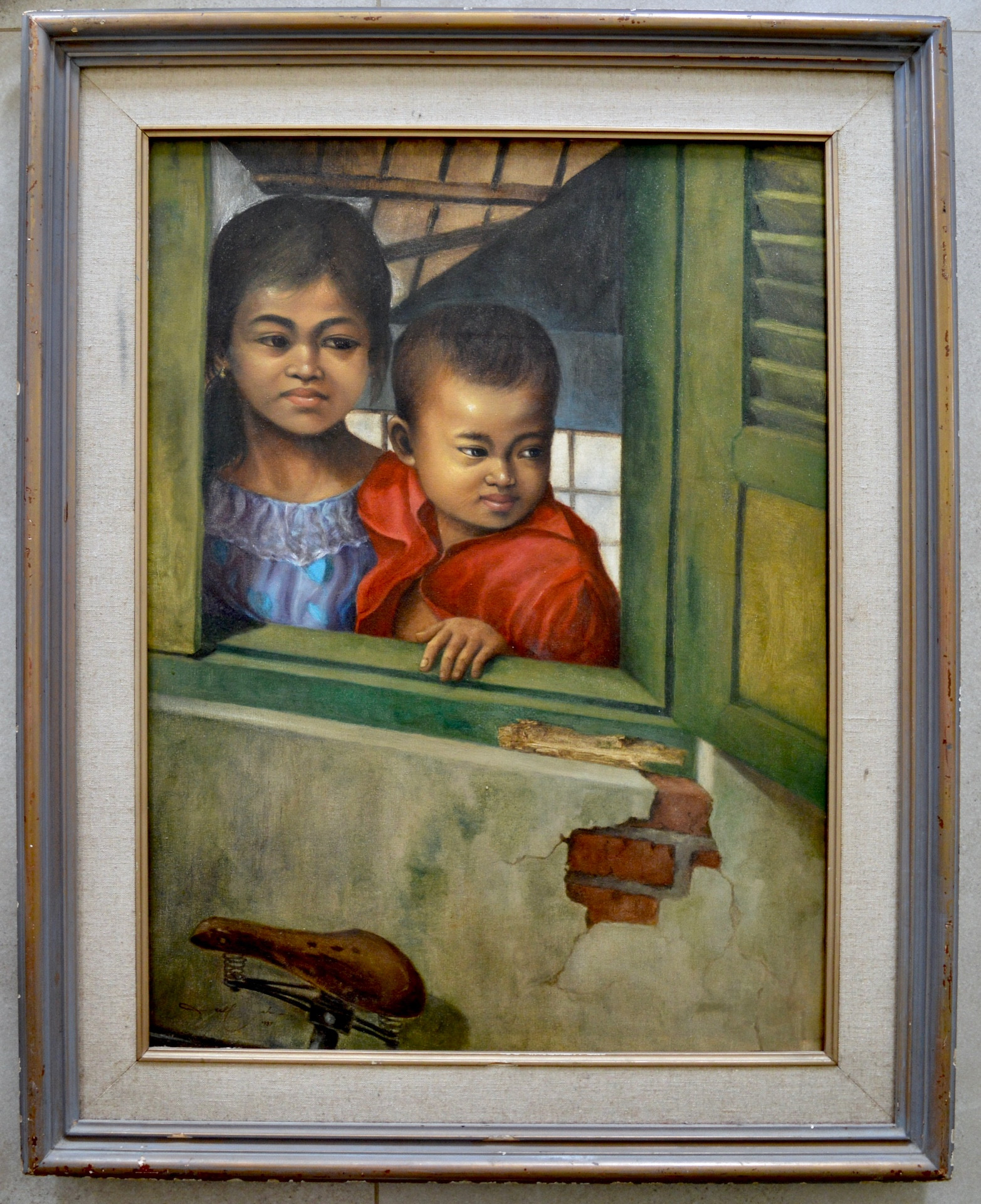
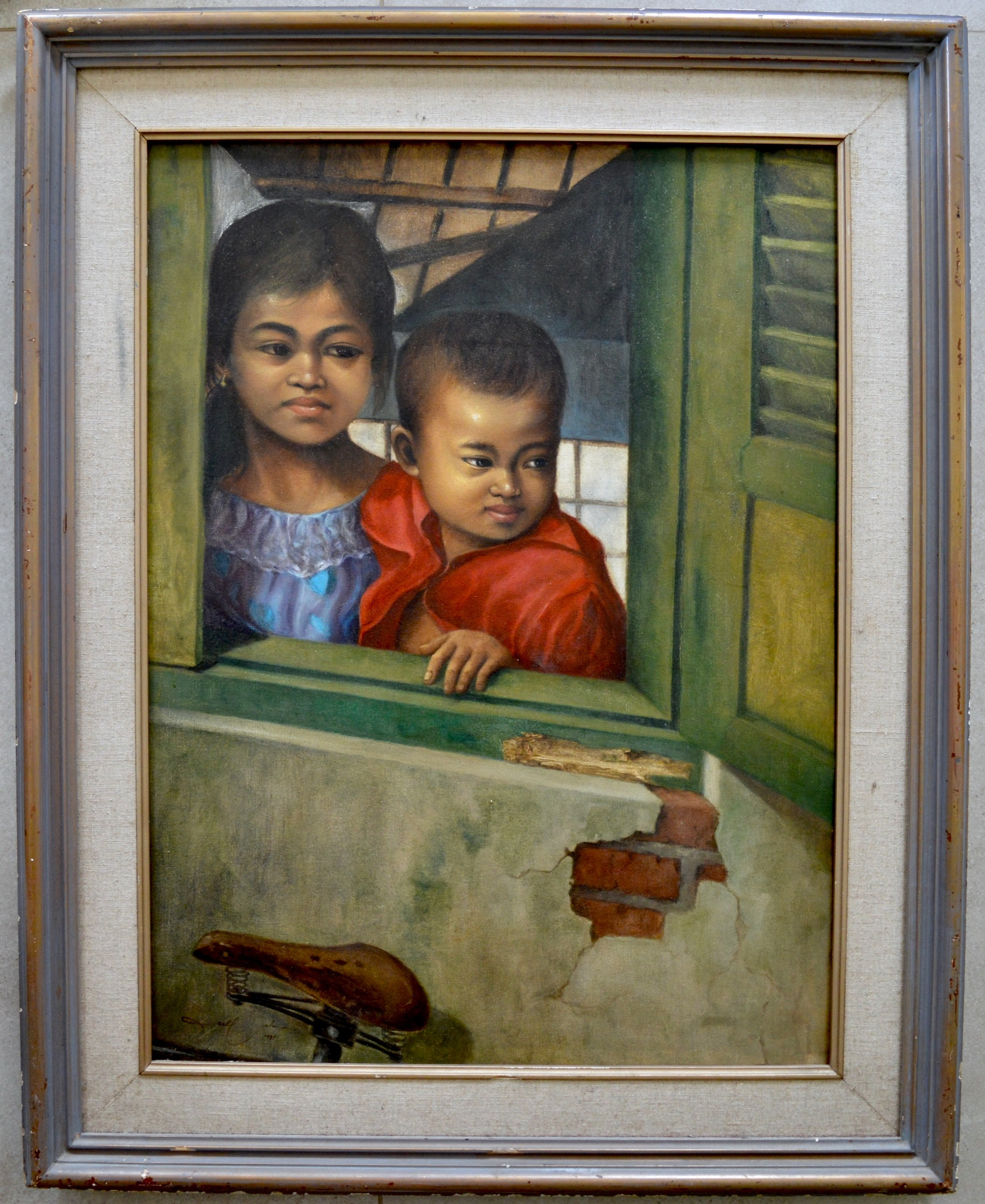
“Children at the Window”
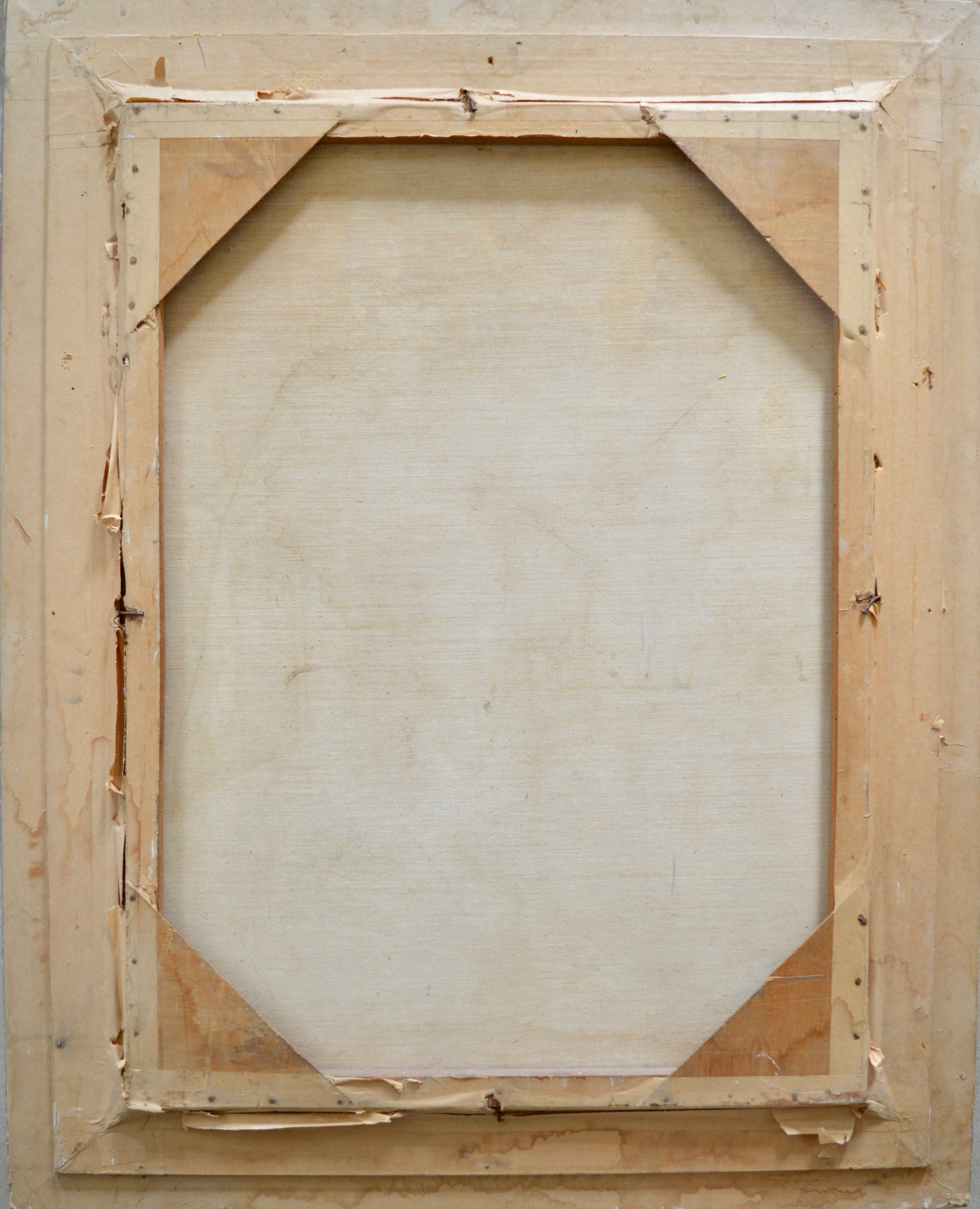
Oil on canvas,
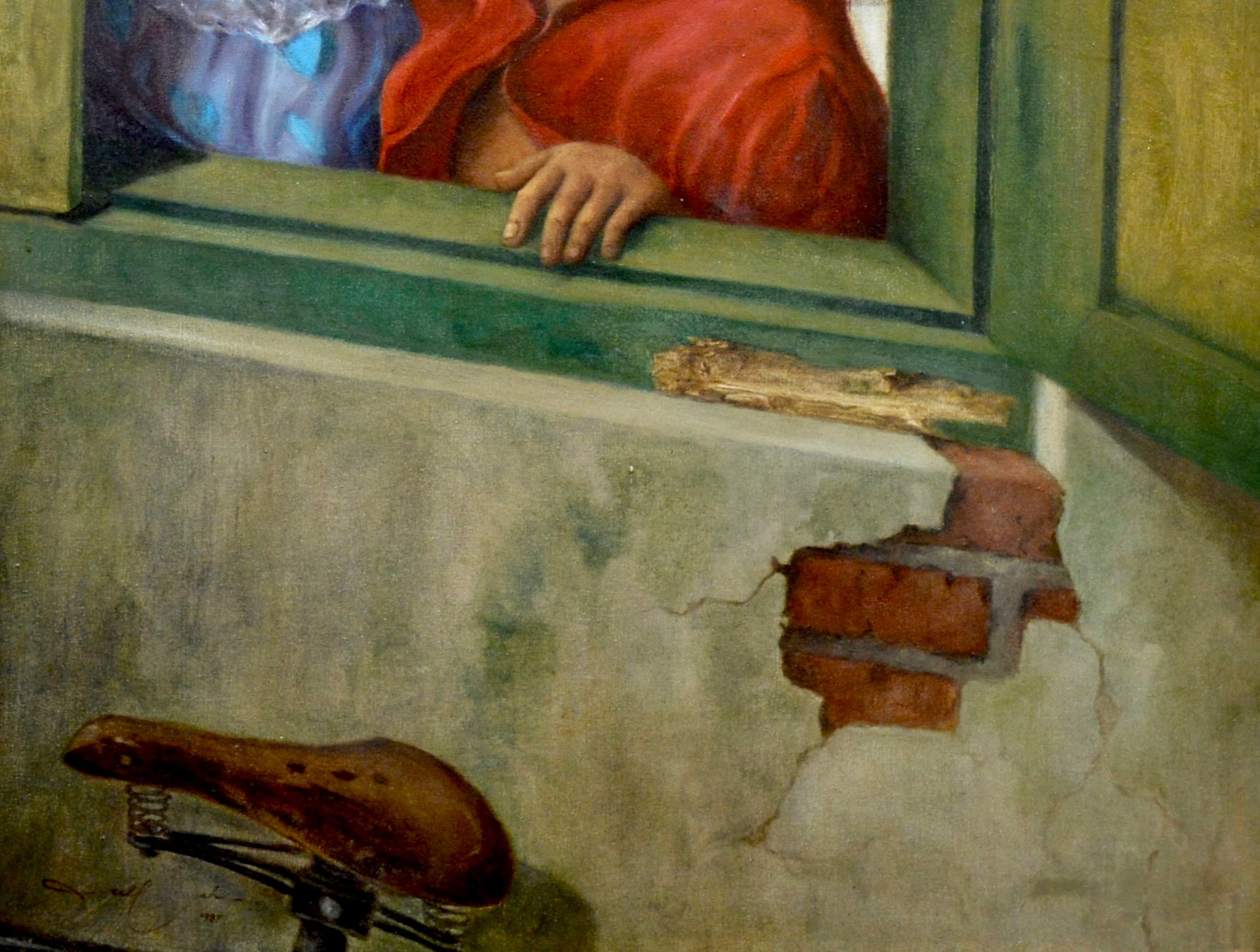
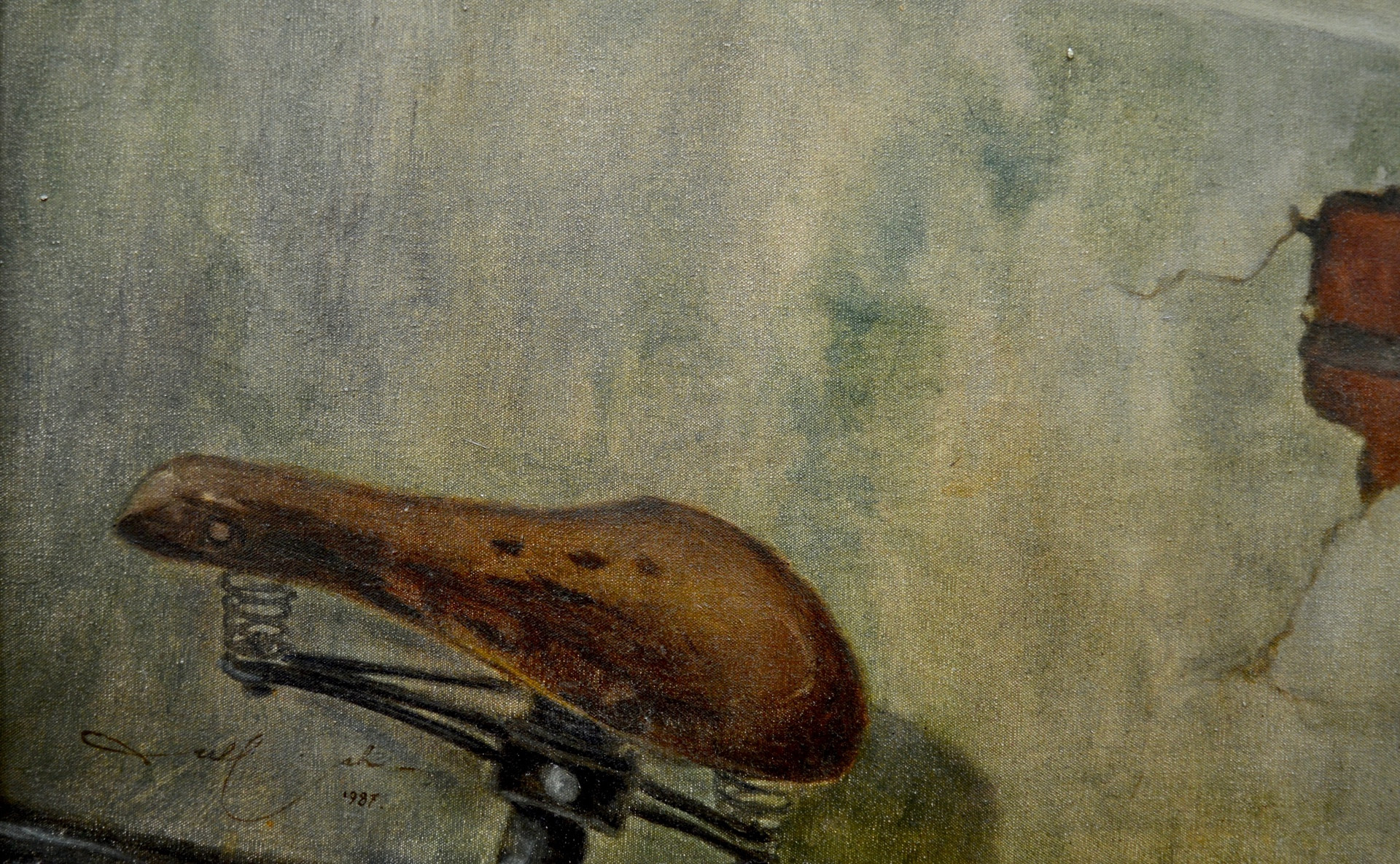
Signed and dated 1987 lower left,
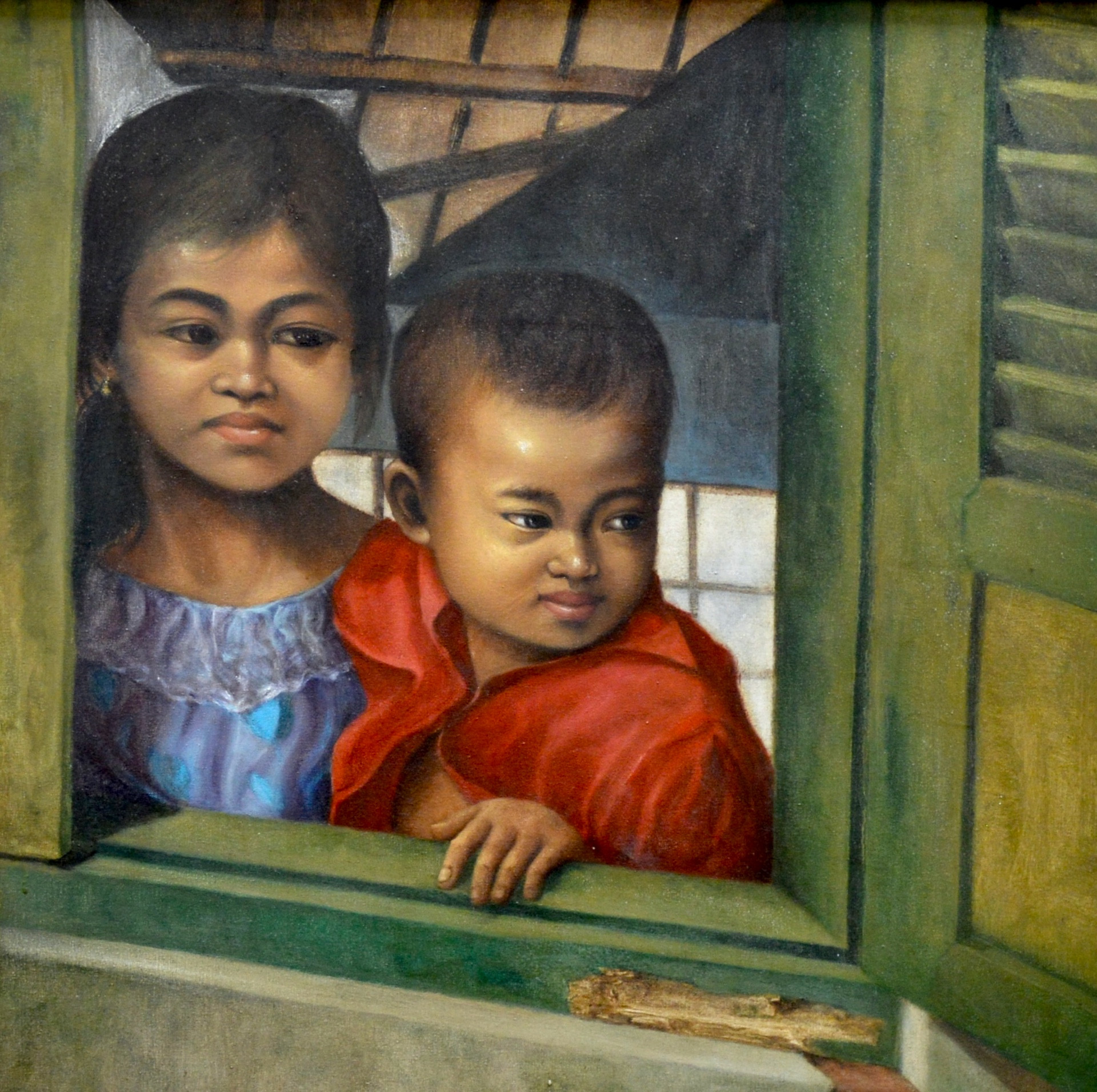
A fine work by the celebrated Indonesian realist painter (Raja Realisme Indonesia) Dullah, depicting a portrait of two children at a window, most probably in Surakarta (also called Solo), the artist's birthplace in Central Java.
It was in 1987 that the painter signed and dated several notable works, including his celebrated oil on canvas entitled Neighbor's Guava (Jambu Tetangga).
At this particular point in his life, he was actively devoting himself to the final preparations for his major personal project: the creation of the Museum Dullah, which he inaugurated on 1 August 1988.
The painter captures a tender moment between a sister and her little brother, their gazes captivated by a scene unfolding in the street.
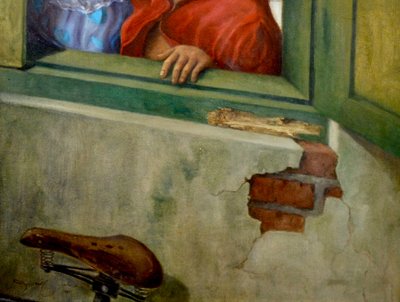
Unlike his contemporaries who moved towards expressionism, Dullah remained deeply committed to an honest, accurate and meticulous visual representation of reality. The delicacy of his brushwork and the accuracy of his textures define his distinctive academic style, particularly in his celebrated portraits.
Dullah ranks among the leading figures of realism and naturalism in the history of Indonesian art. Born in Surakarta in September 1919, he grew up in a family of batik artisans, where his mother encouraged his artistic development from an early age. A self-taught artist, he refined his sense of colour and composition through contact with leading masters of local modern art, such as Affandi and S. Sudjojono. His life took a decisive turn during the Indonesian War of Independence between 1945 and 1949. He joined youth resistance movements and captured first-hand the harshness of the fighting and the courage of the guerrillas, earning him a lasting reputation as a painter of the revolution.
His technical mastery and commitment soon attracted the attention of President Sukarno, who appointed him official painter and first curator of the presidential palace's art collection in the early 1950s. In this strategic role, he documented and oversaw the publication of state art catalogues, thereby consolidating the cultural heritage of the young nation. Beyond his official duties, Dullah devoted himself to painting Balinese landscapes and humanist portraits of great cultural sensitivity. Throughout his life, he passed on his knowledge by founding artists' collectives and opening his own art museum in Surakarta, before passing away in Yogyakarta in early 1996.
Dimensions: 80 x 60 cm unframed and 101 x 81 cm with its original wooden frame.
International shipping quotes, with or without the frame, available upon request.
For further information, please contact us.
Ref: SJ8B6TKG64
| Condition | Good |
| Style | Other style (Paintings Portraits of Other style Style) |
| Period | 20th century (Paintings Portraits 20th century) |
| Country of origin | Indonesia |
| Artist | DULLAH |
| Shipping Time | Ready to ship in 2-3 Business Days |
| Location | 13210, Saint-Rémy-de-Provence, France |
| Shipping Information | We ship within France and worldwide in secure packages via private carrier with insurance included. For France, shipping is free via private carrier with insurance. |
4 commitments to buy with confidence

 English
 Français
 Italiano
 Deutsch