This description has been translated and may not be completely accurate. Click here to see the original
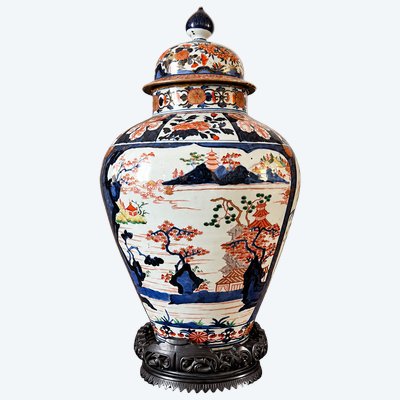
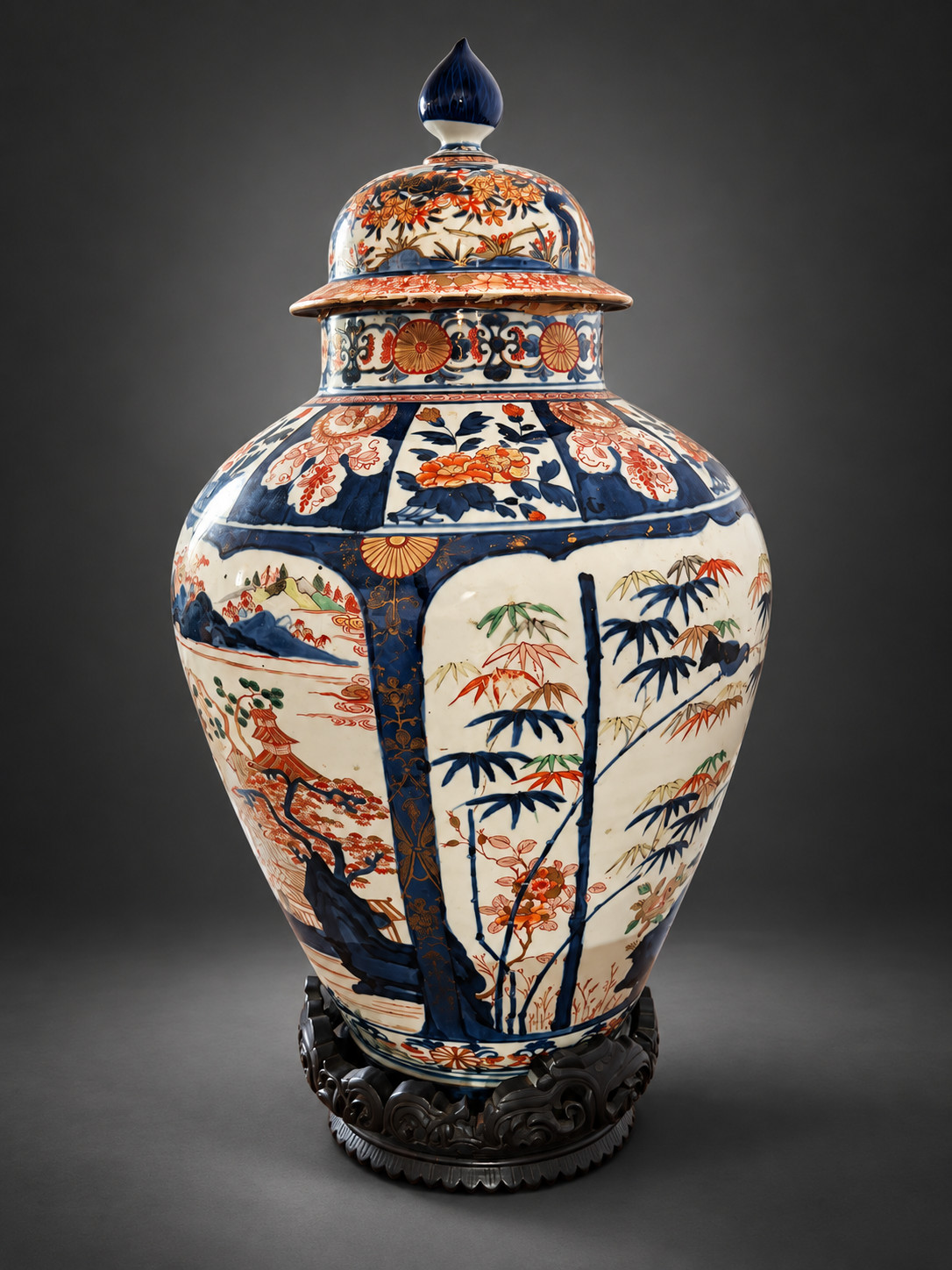
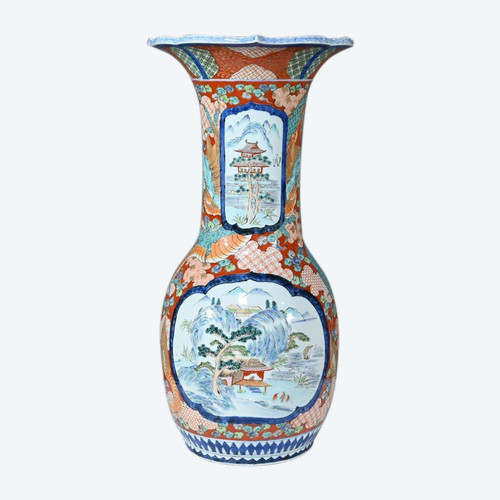
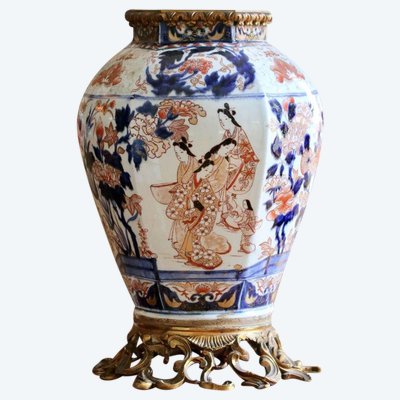
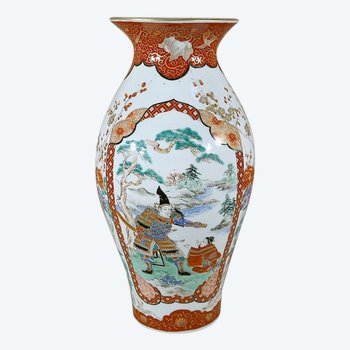
An exceptional and monumental Japanese lidded porcelain vase made of Arita porcelain with Imari decoration, from the Edo period, 18th century.
With its spectacular dimensions—approximately 75 cm high by 40 cm wide—this imposing vase belongs to the tradition of large Japanese ceremonial porcelain, the creation of which required considerable technical mastery.
Its baluster-shaped silhouette, powerful yet particularly elegant, is crowned by a large domed lid topped with a pear-shaped handle. The piece possesses a remarkable architectural presence and, on its own, serves as a true focal point in any interior.
A sumptuous hand-painted Imari design
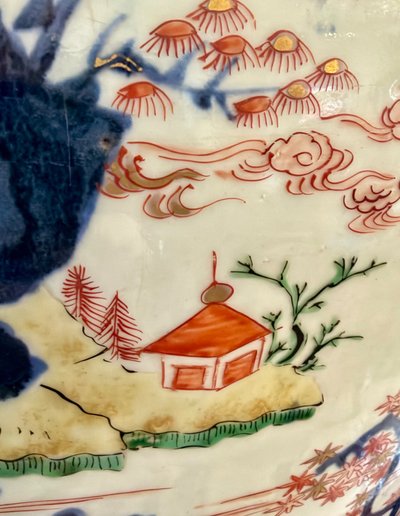
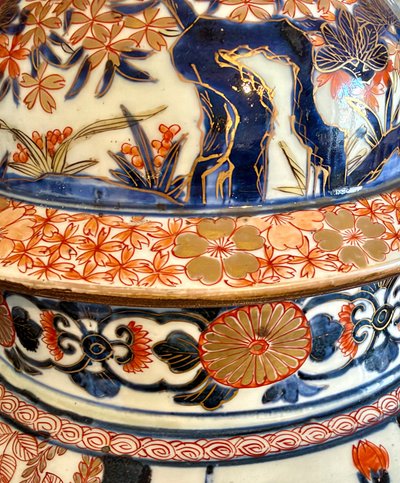
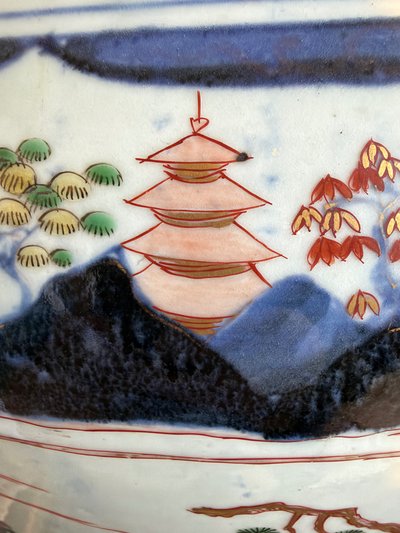
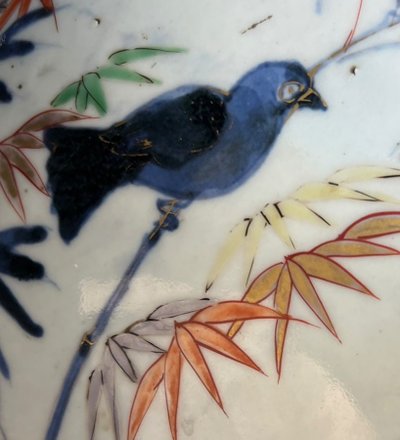
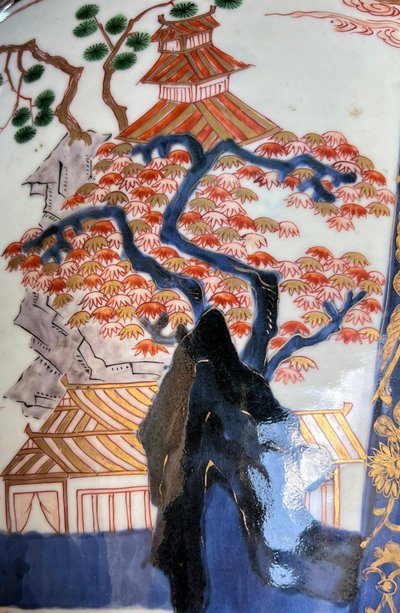
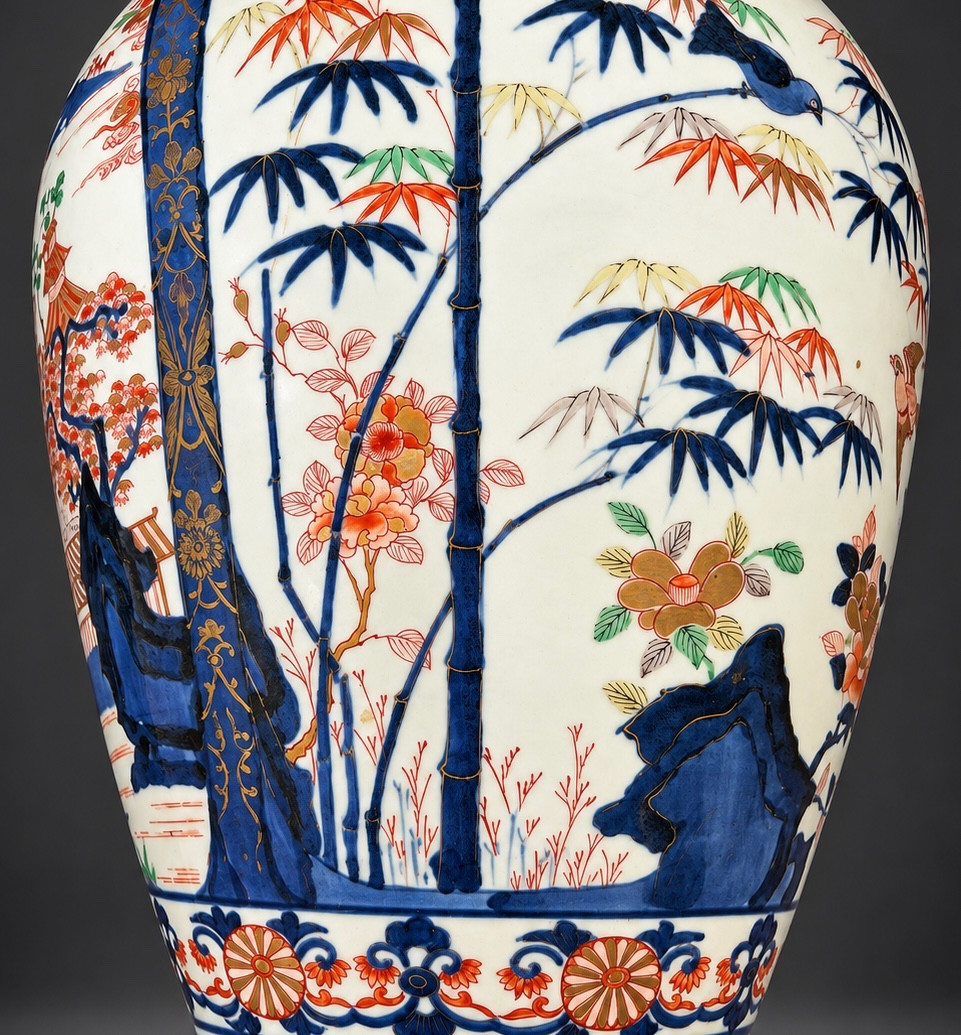
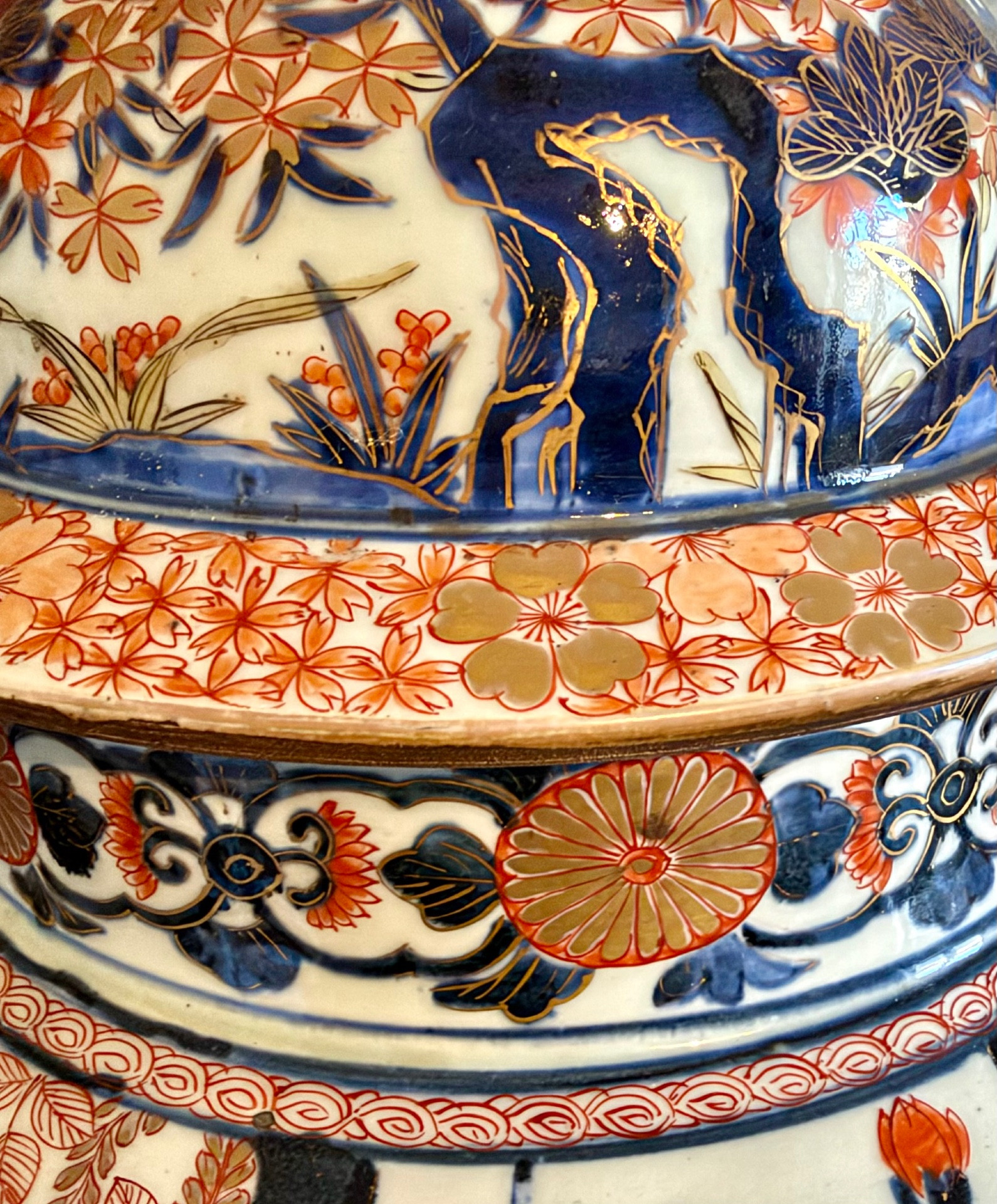
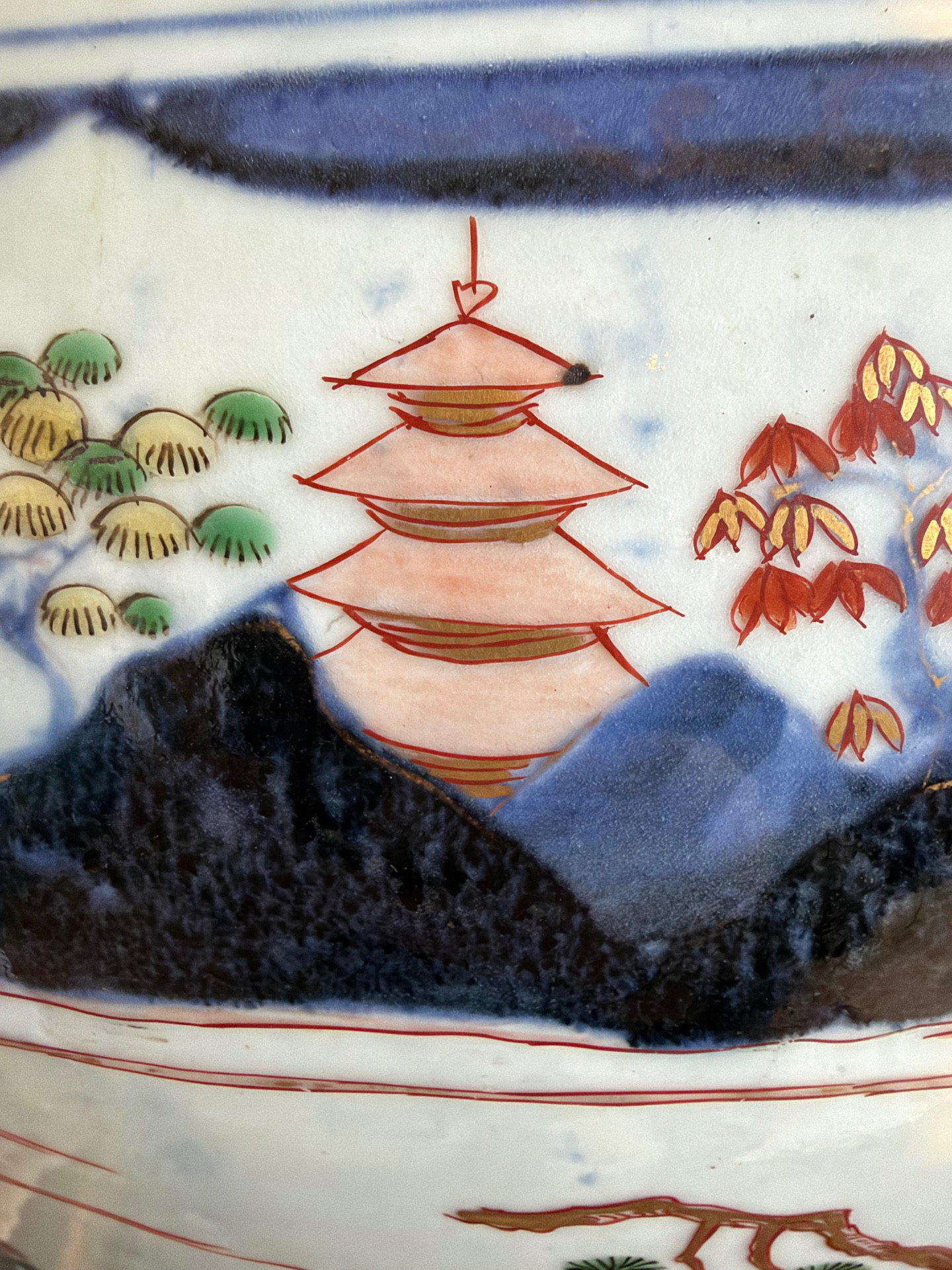
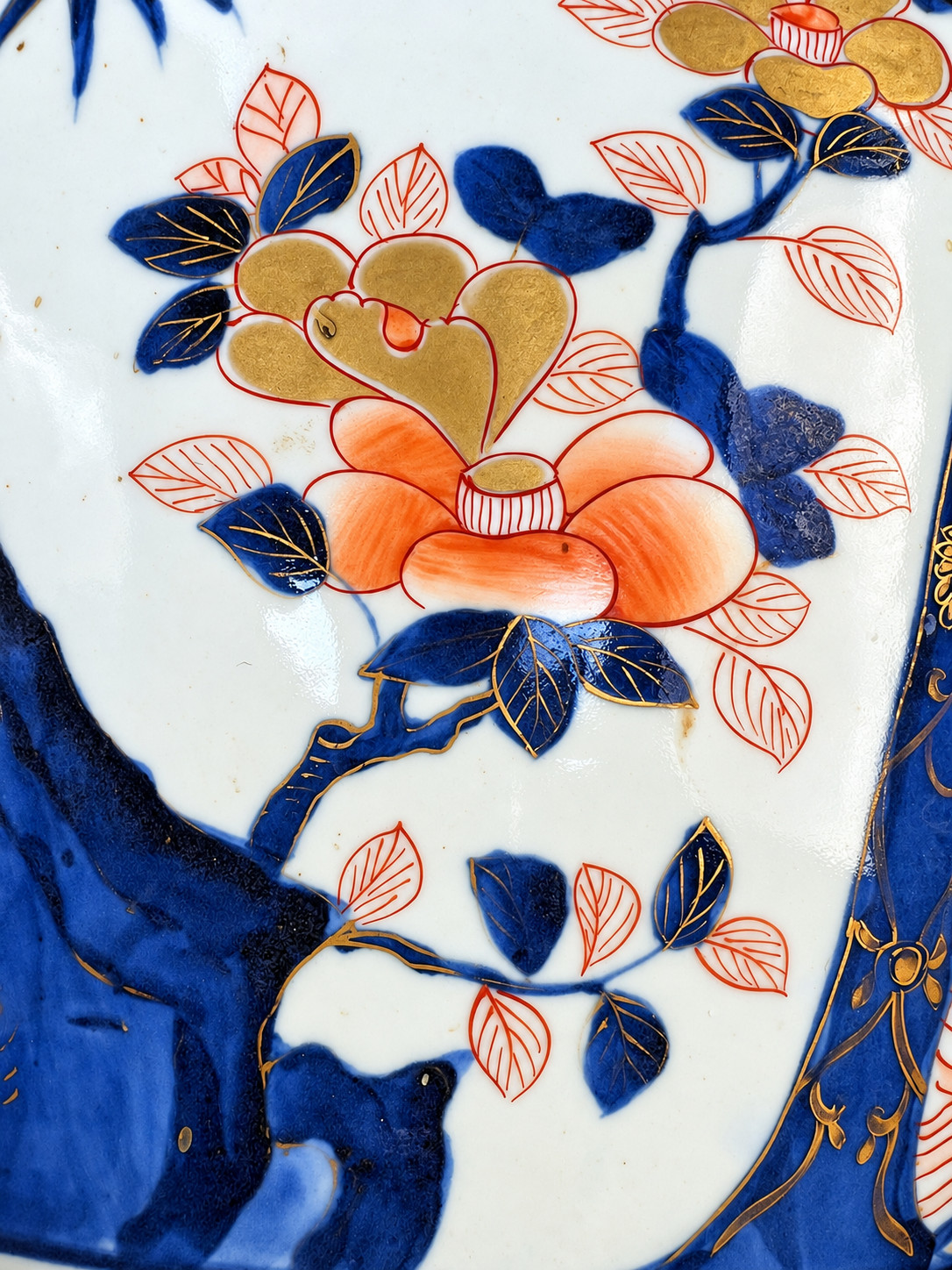
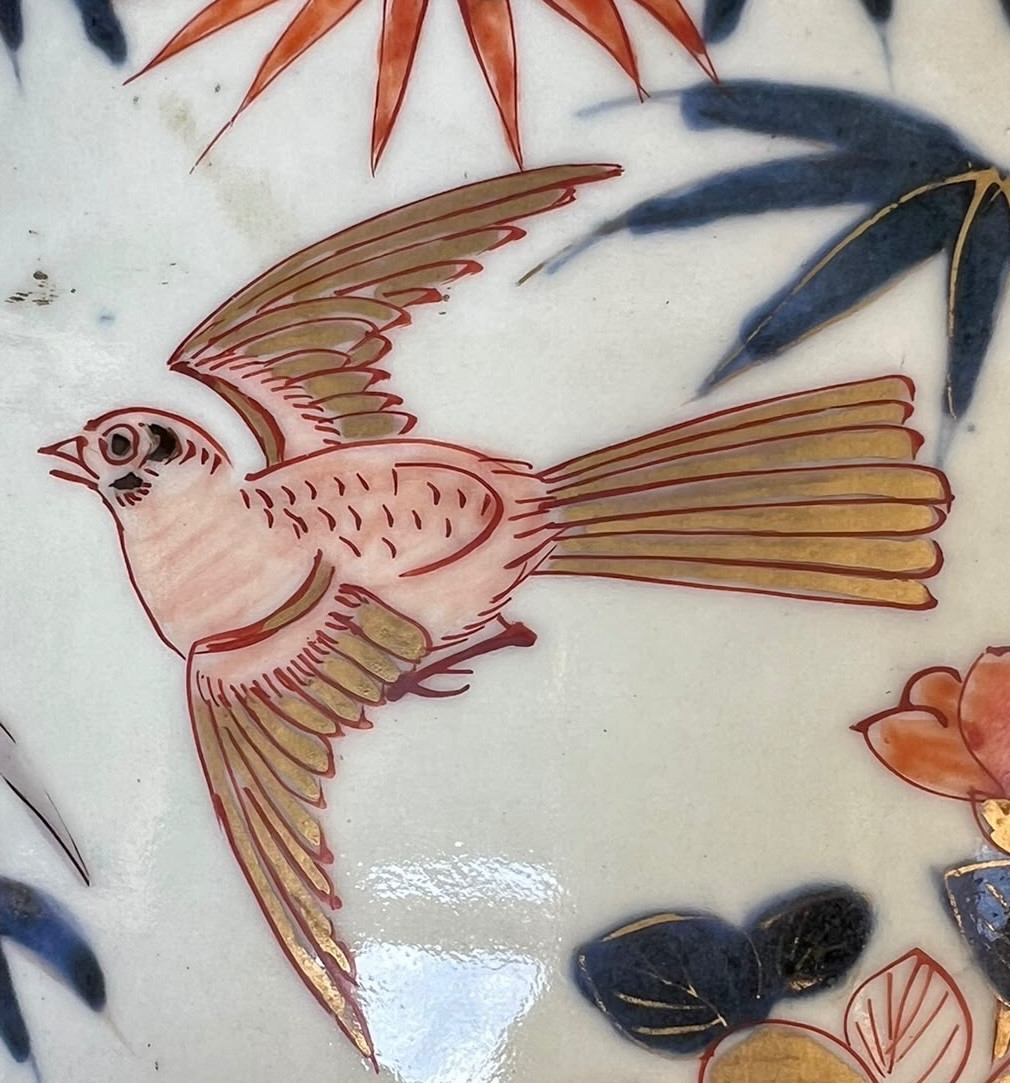
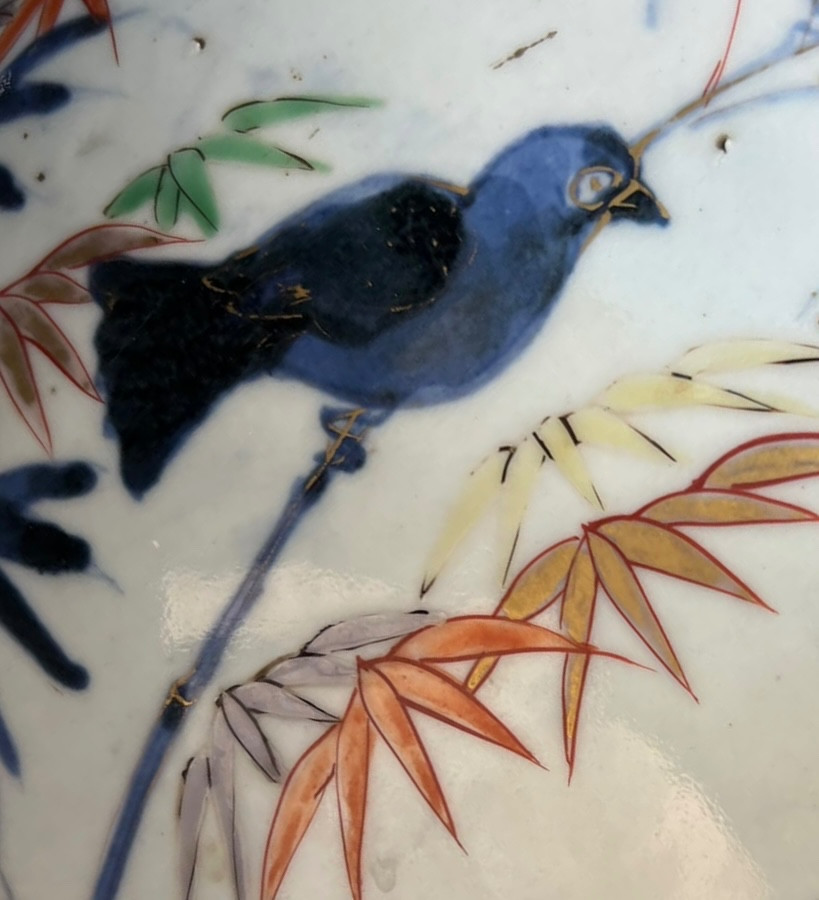
The porcelain displays the iconic color palette of Arita’s Imari wares: underglaze cobalt blue, iron red, polychrome glazes, and gold highlights.
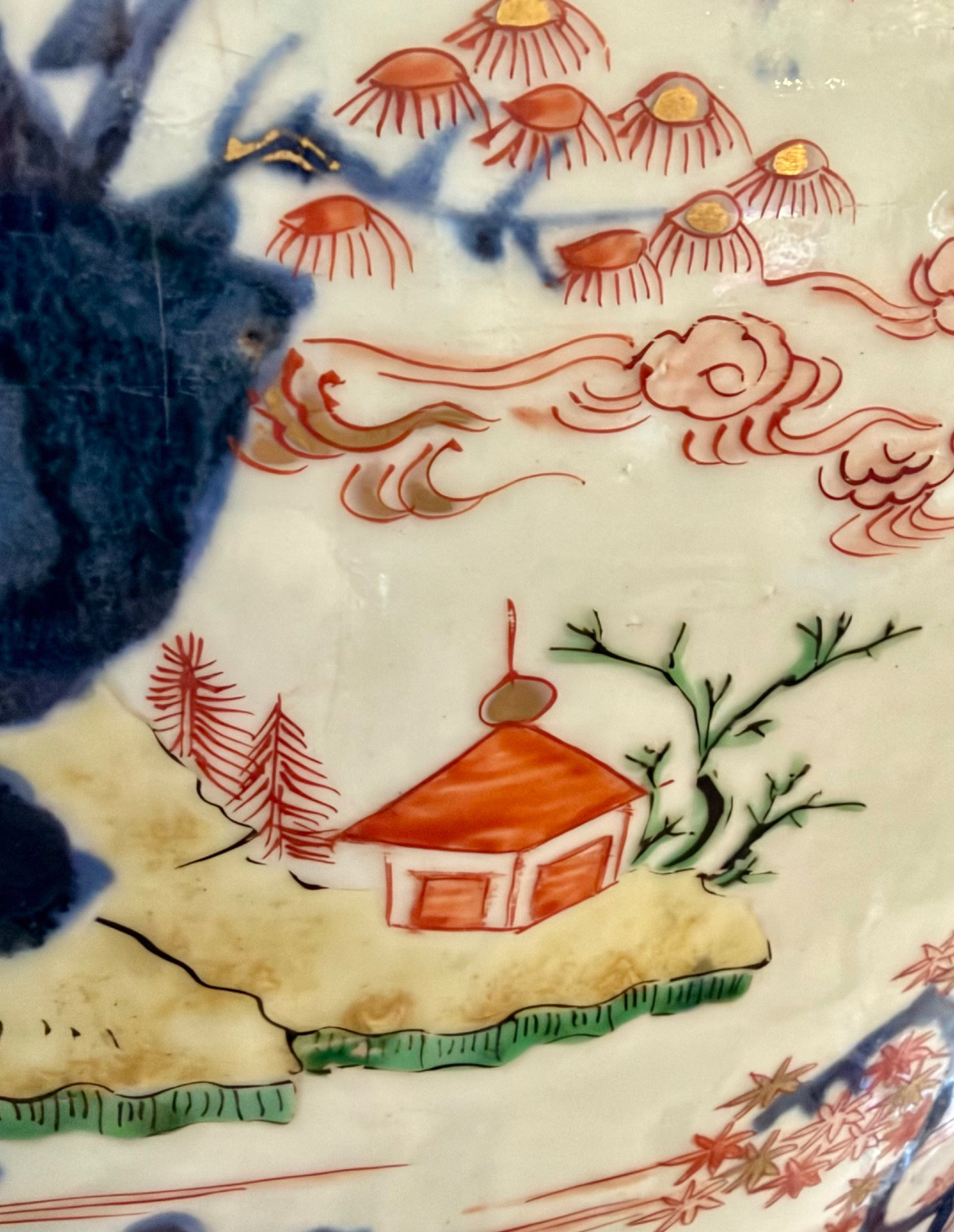
The broad body is enlivened by Japanese landscapes featuring pavilions, architectural elements, pine trees, maple trees, rocks, mountains, and stylized clouds.
As the eye moves up toward the shoulder, the design is enriched with lush floral compositions—notably chrysanthemums and foliage—which extend onto the neck and lid.
The hand-painted design retains all the spontaneity of the artist’s touch: variations in the brushstrokes, nuances of cobalt blue, and small irregularities give the decoration a depth and personality that mechanical production could never replicate.
A Monumental Achievement
The true uniqueness of this work becomes apparent when one examines its construction.
Due to its exceptional size, the vase was not thrown in a single piece. The body was constructed and assembled in several successive sections.
The interior still bears traces of this traditional technique. A seam is visible in the upper third of the body, about twenty centimeters below the shoulder. A second seam appears at the transition between the shoulder and the neck, with an interior surface that is intentionally rougher.
These traces of the manufacturing process are particularly fascinating: they literally allow us to follow the potter’s work and understand the skill required to create such a large piece of porcelain.
The exterior surface also features gentle, broad undulations, sometimes extending over 10 to 15 cm. These result from the shaping, drying, and the stresses of high-temperature firing of such a large mass of porcelain.
Far from being flaws, these irregularities give the piece that subtle character unique to large, entirely hand-formed ceramics.
Traces of the kiln and the potter’s touch
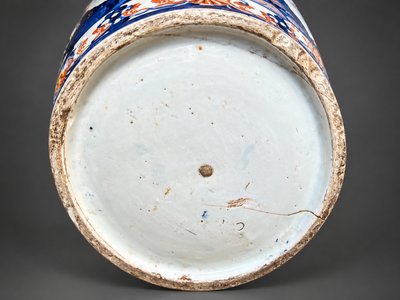
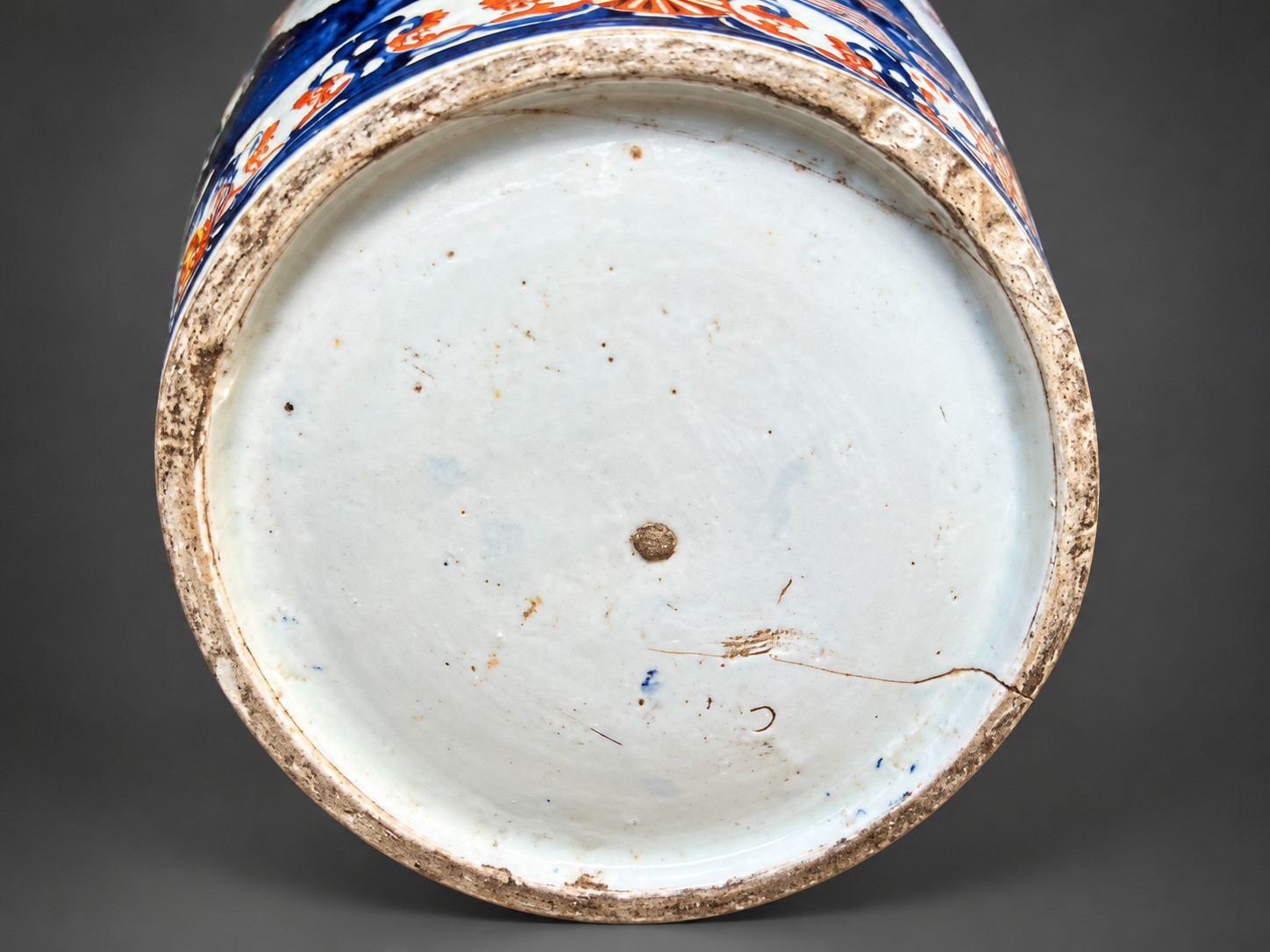
The interior and the unglazed parts retain numerous traces of their manufacture: concentric striations from the wheel-throwing process, a slightly bluish-white glaze, small inclusions, irregularities, and firing imperfections, as well as various marks left by the piece’s contact with the kiln.
The underside of the lid also bears very prominent concentric marks from the wheel-throwing process. Its glaze, decoration, and construction are perfectly consistent with the body of the vase.
Japan, Arita, Edo period
All of these observations—its monumental dimensions, shape, Imari color palette, multi-section construction, the workmanship of the base and lid, the glaze, and traces of production—allow us to classify this vase among the great Arita-Imari porcelain pieces produced in Japan during the Edo period.
Dated to: the 18th century.
The stylistic and technical characteristics also suggest a more precise date of creation between the late 17th century and the first third of the 18th century, likely around 1690–1730.
These large porcelain pieces were prestigious ceremonial objects. Their size, the complexity of their firing, and the richness of their decoration made them particularly sought-after objects, intended to impress as much through their technical virtuosity as through their decorative power.
Condition and Authenticity
The vase has a very fine overall appearance, given its age and dimensions.
It deliberately retains the traces of its long history: irregularities inherent to the shaping and firing processes, isolated signs of wear on the decoration and gilding, as well as a slight crack visible on the lower part and at the base.
These features are documented in the photographs and should be considered in the context of an antique, handcrafted monumental porcelain piece.
Characteristics
Origin: Japan
Production center: Arita, attributed
Decor: Imari
Period: Edo
Date: 18th century, probably early 18th century
Material: Porcelain, polychrome glazes, and gilding
Height: approximately 75 cm
Maximum width: approximately 40 cm
Lid: original
Ref: Y1Y77MKEC3

 English
 Français
  Italiano
  Deutsch
  Solid Mahogany And Inlaid Art Deco Tray
390 € EUR
Solid Mahogany And Inlaid Art Deco Tray
390 € EUR