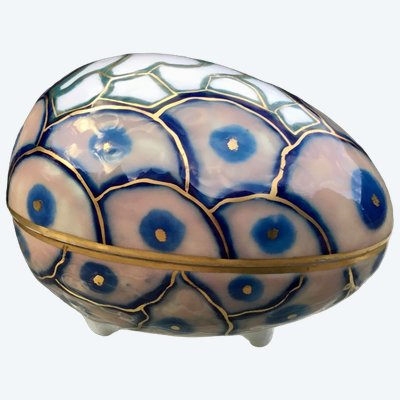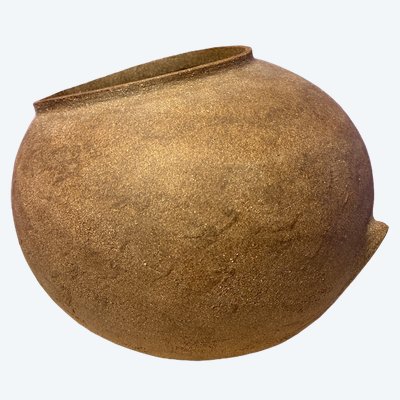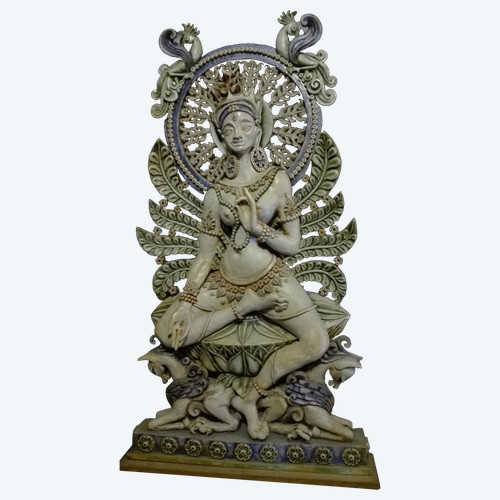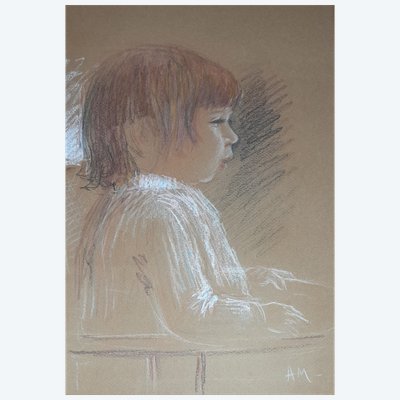
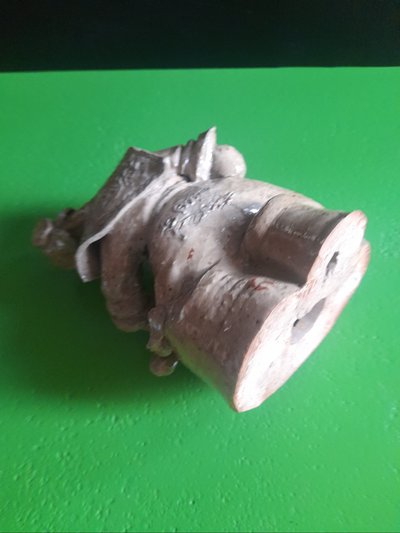
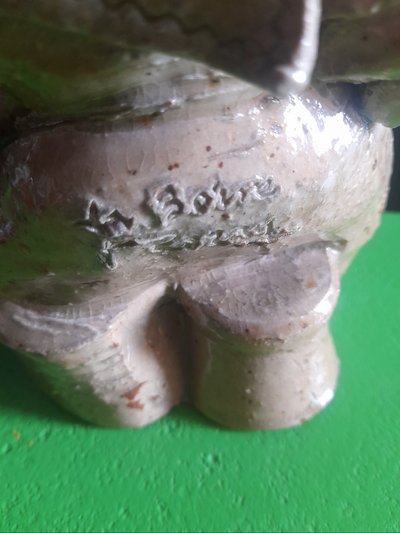
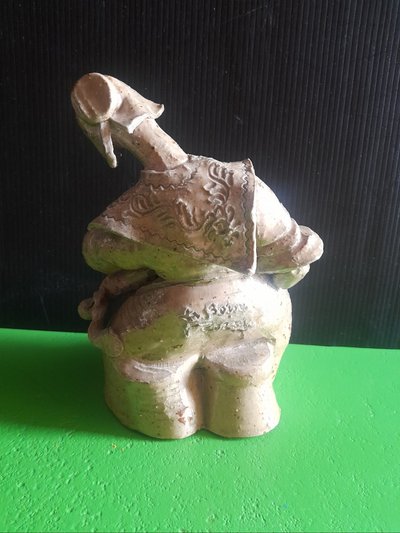
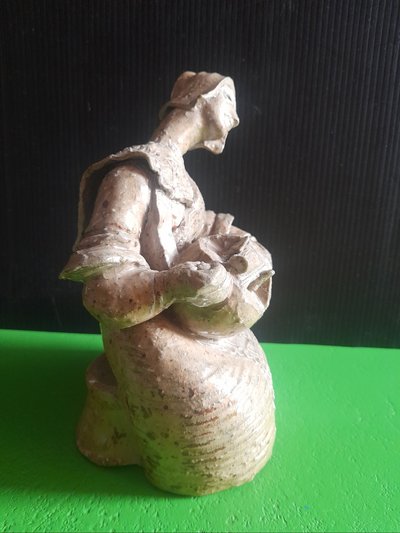
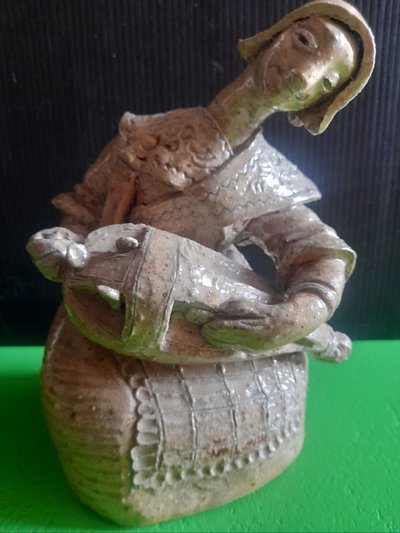
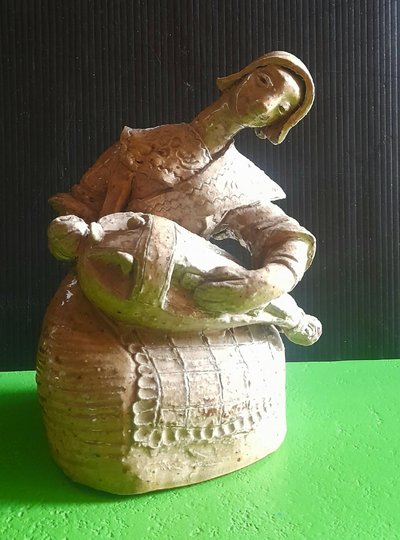
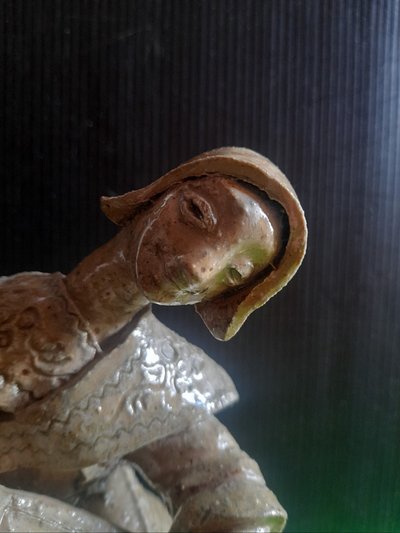

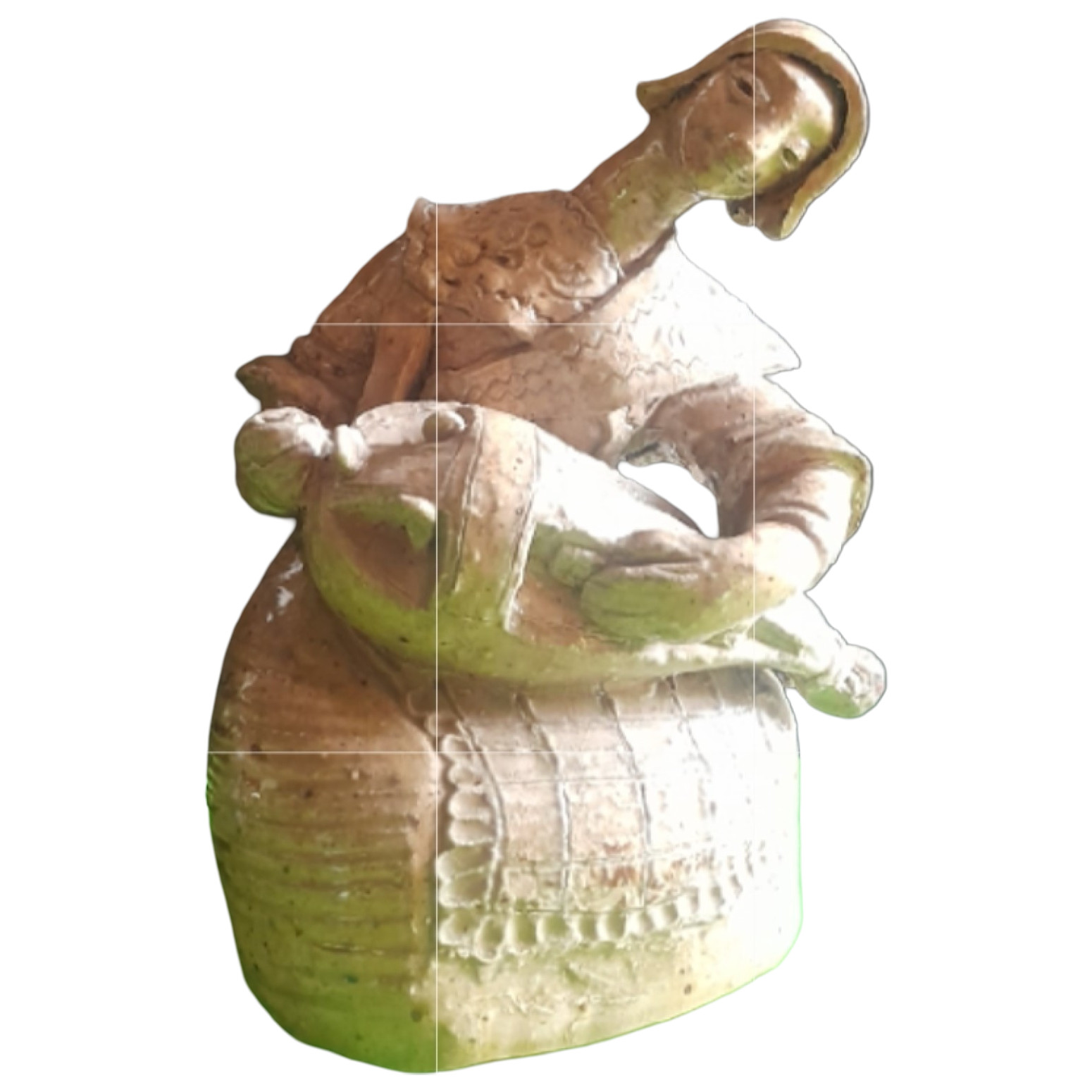
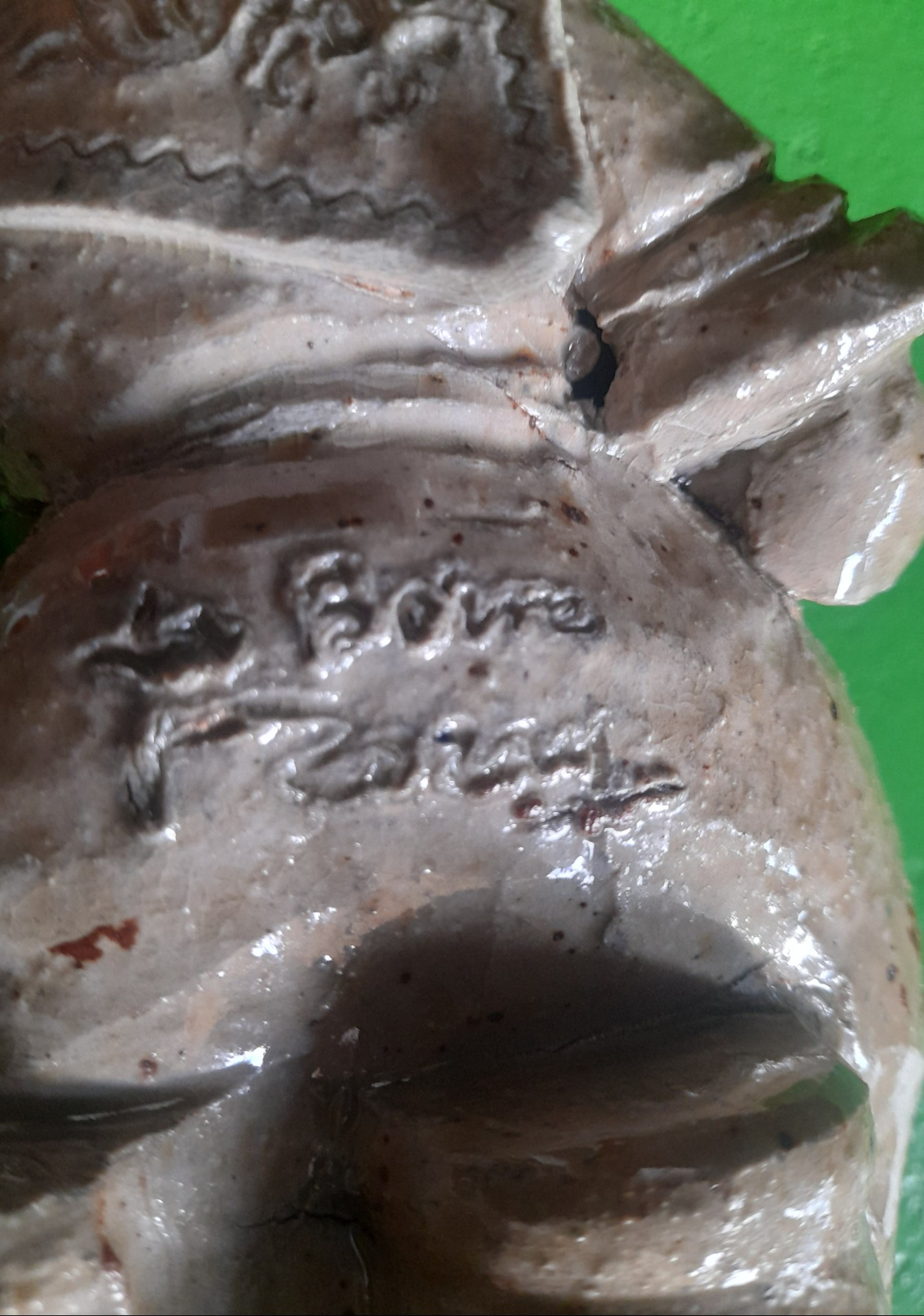
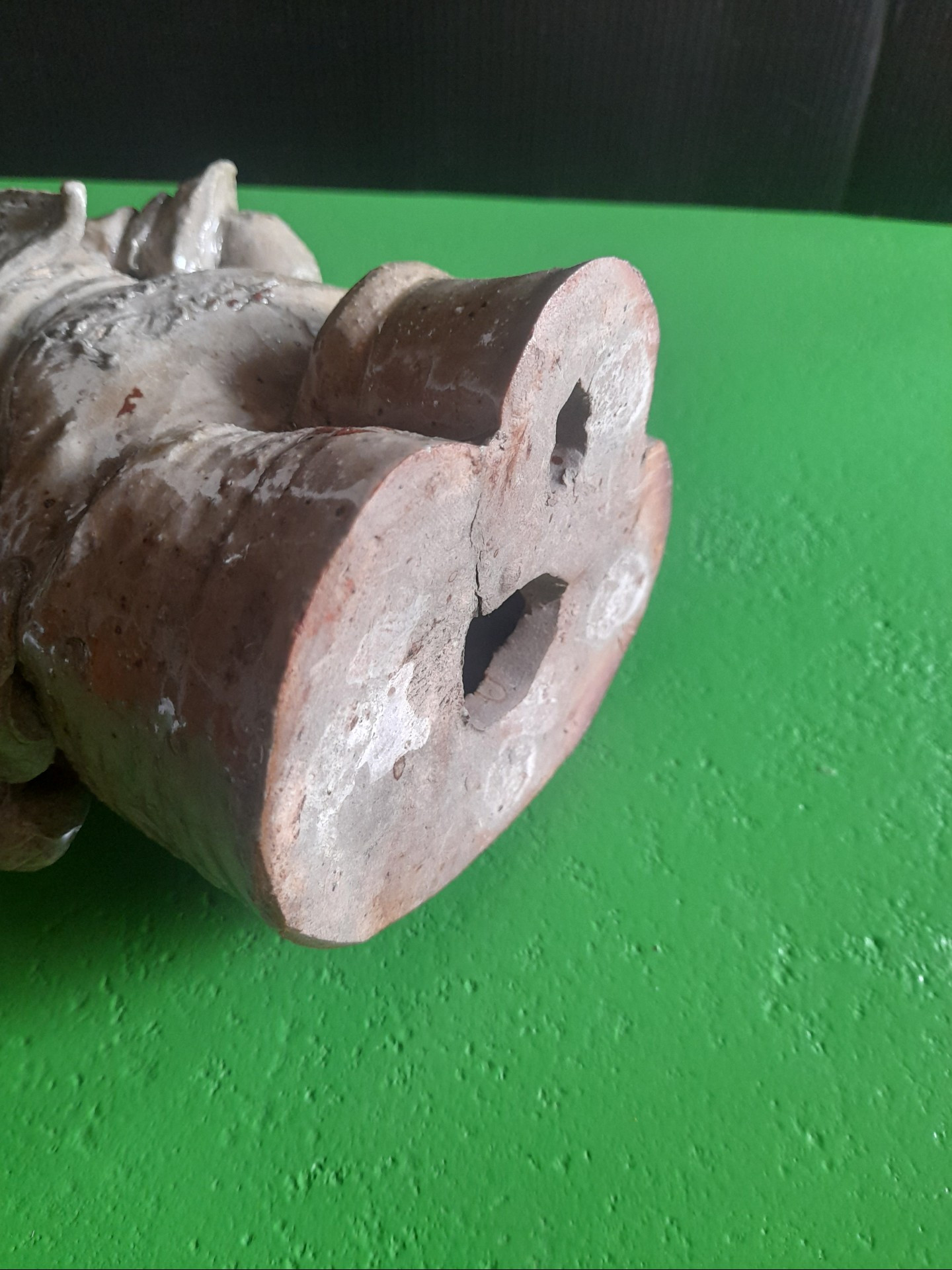
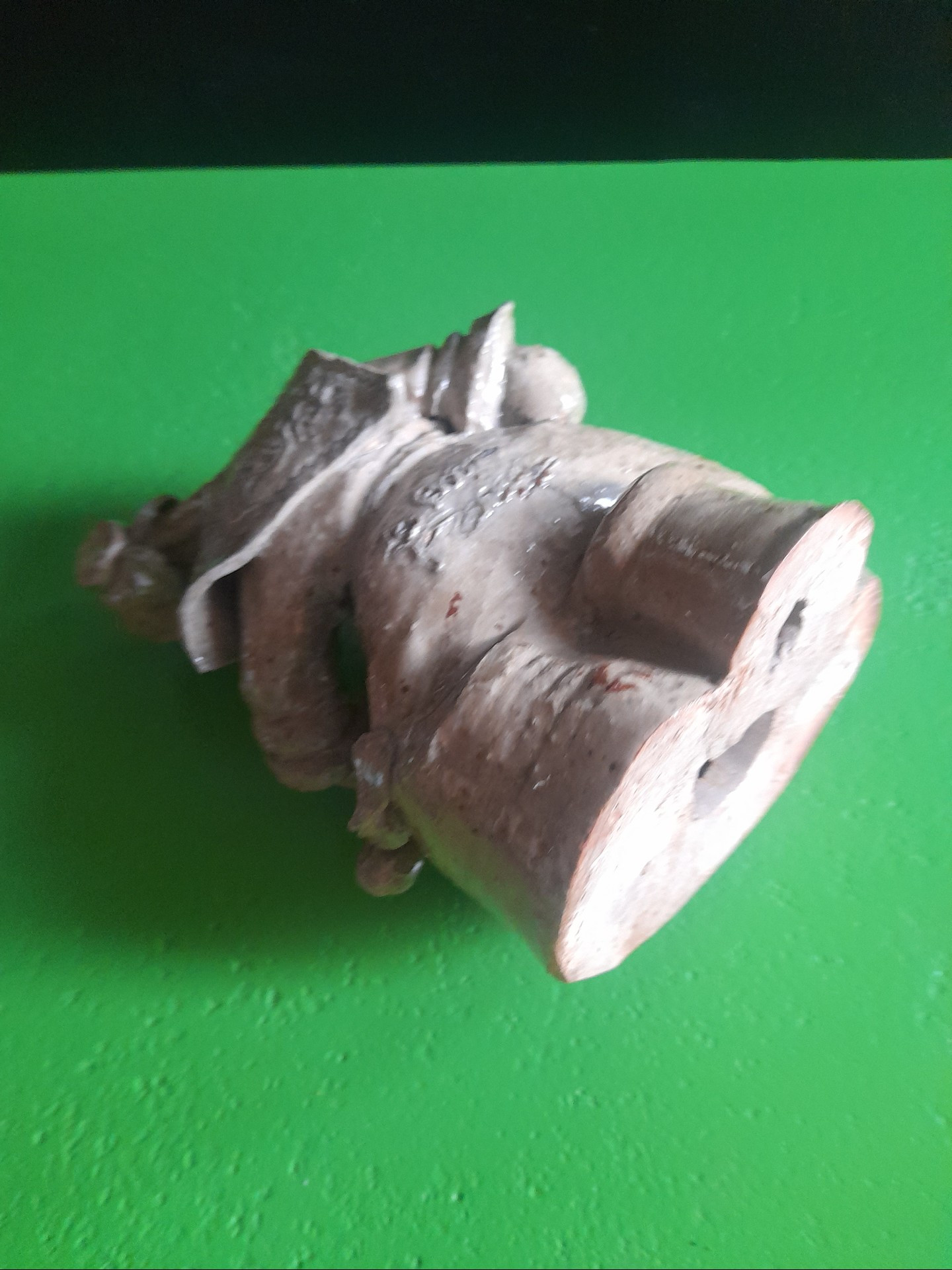
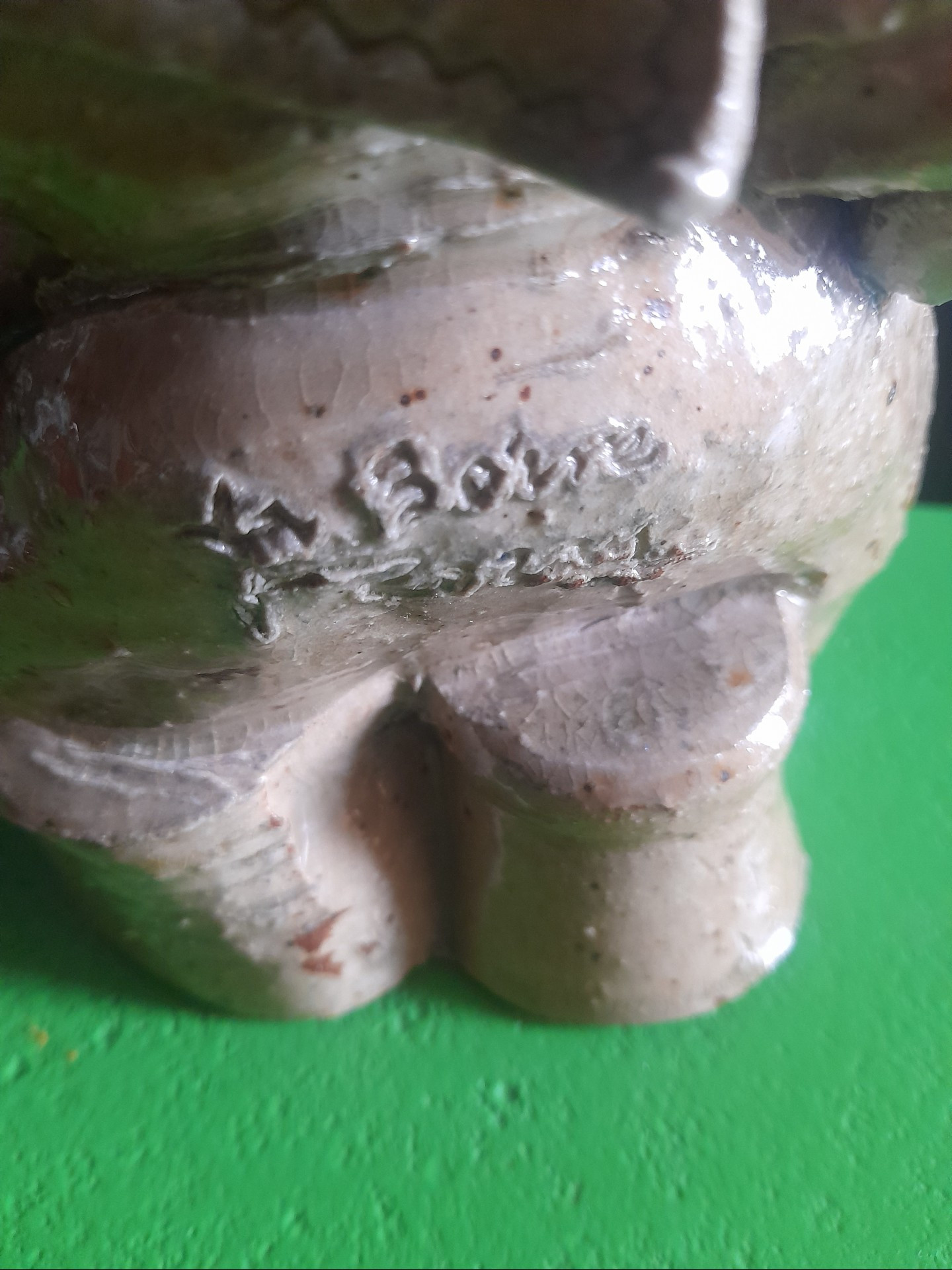
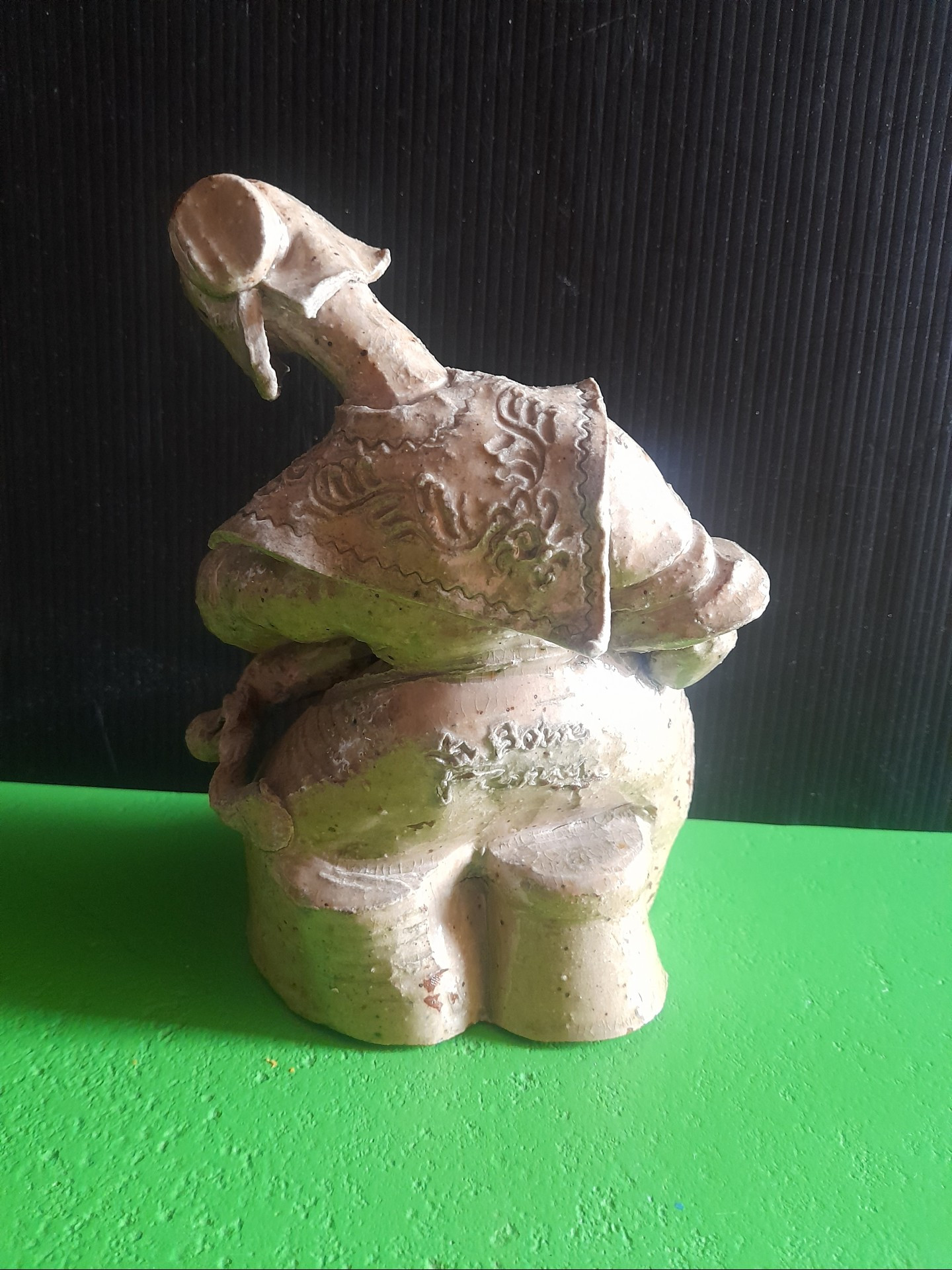
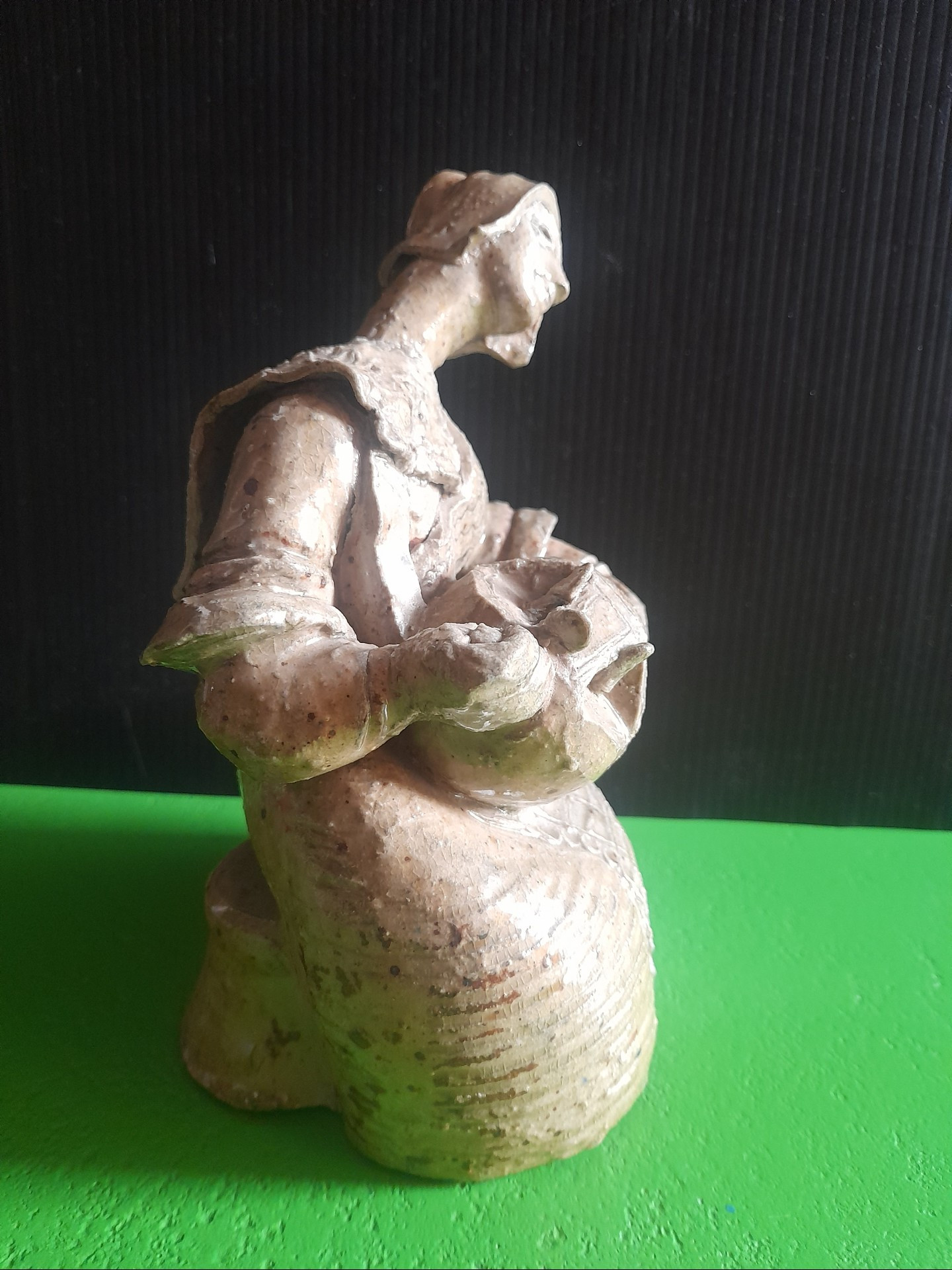
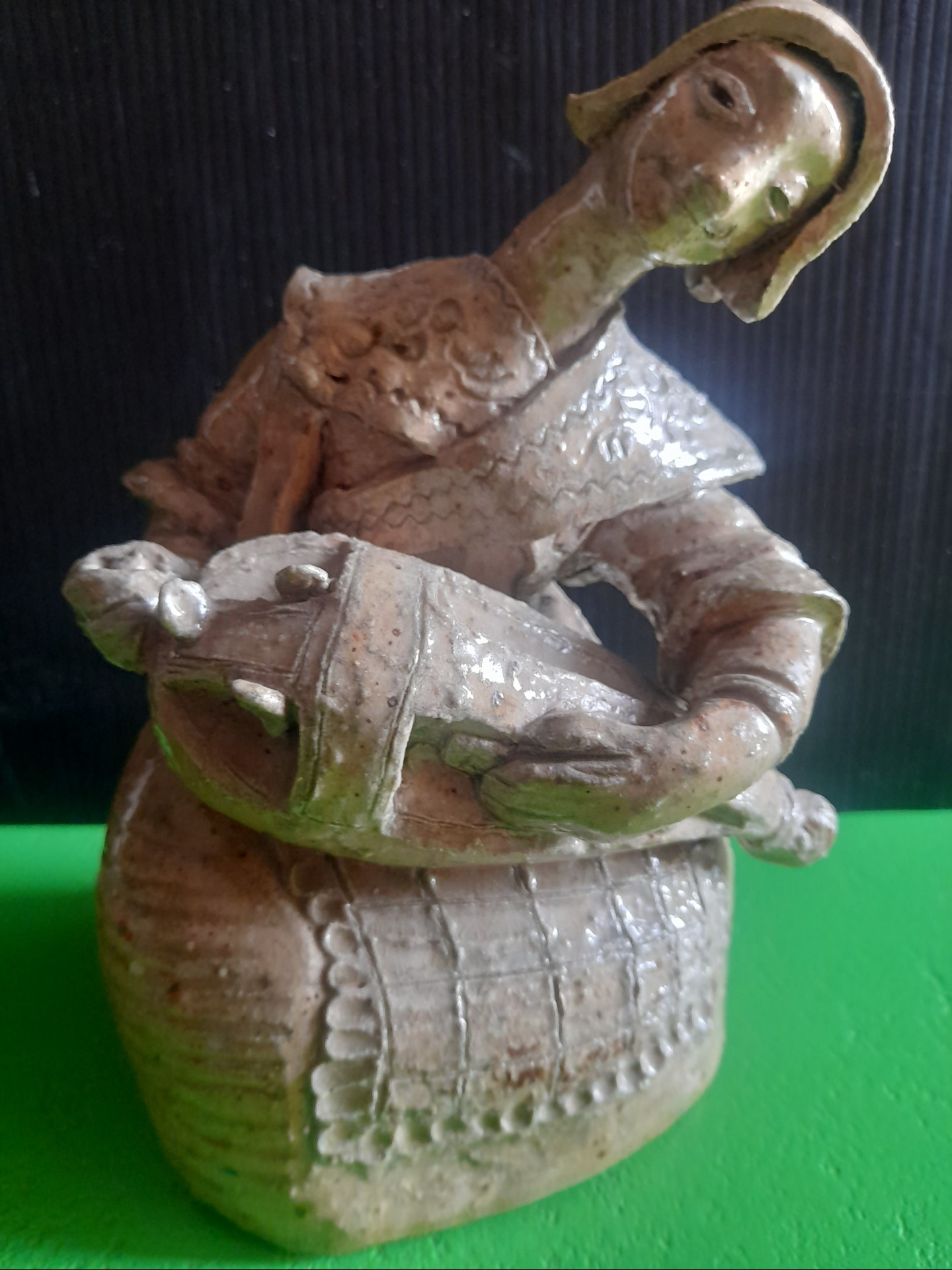
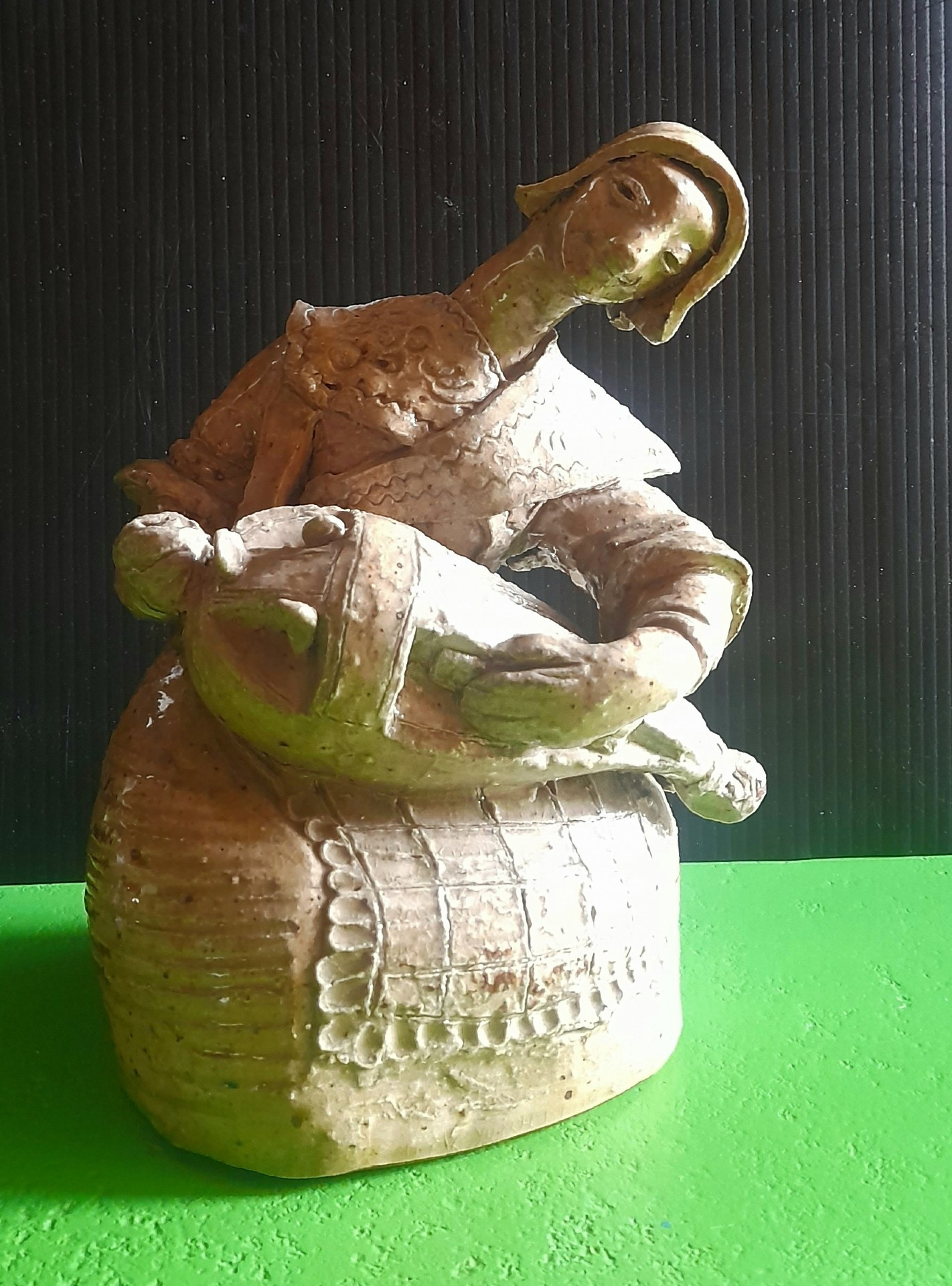
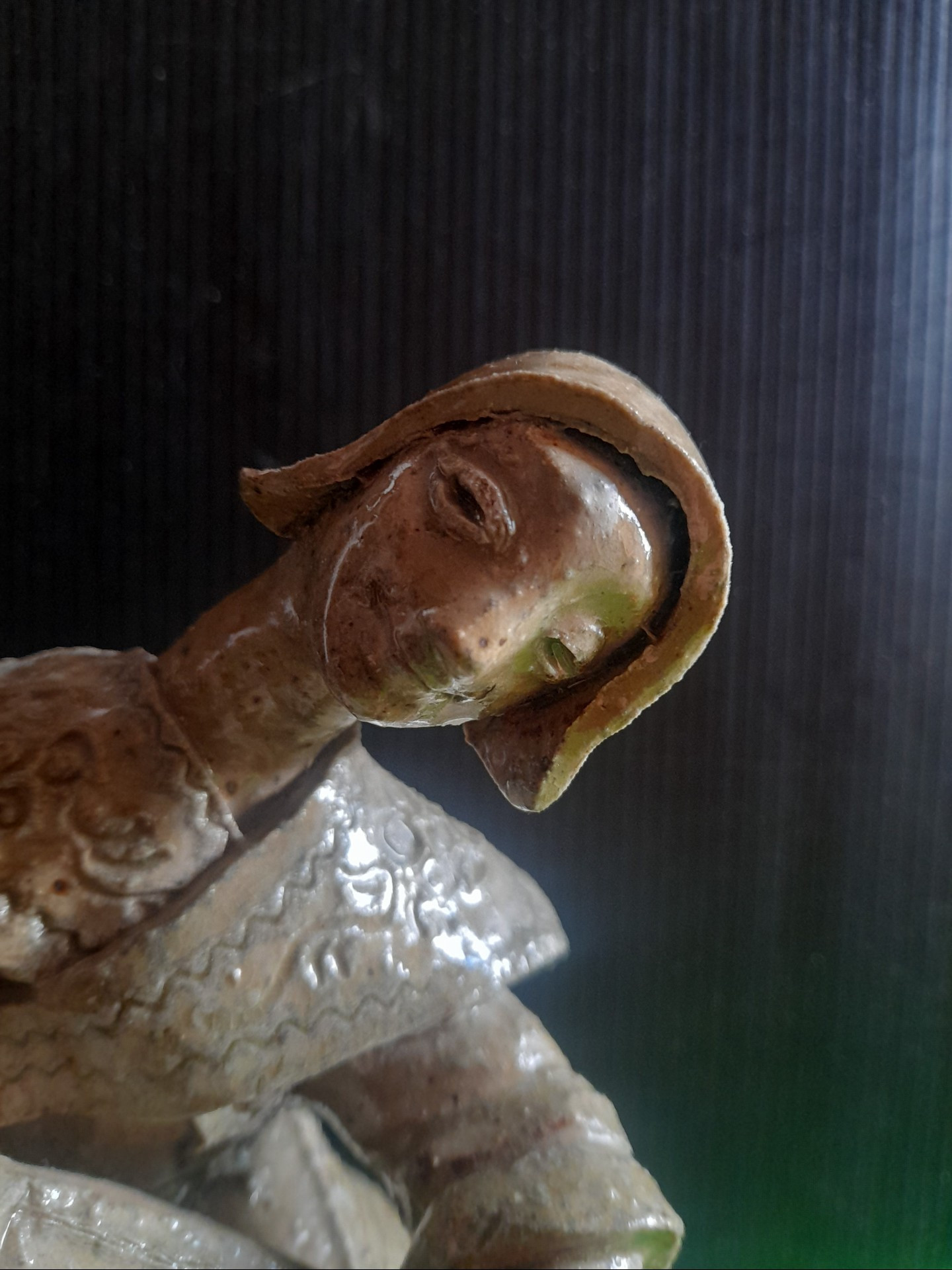

Would you like more images?

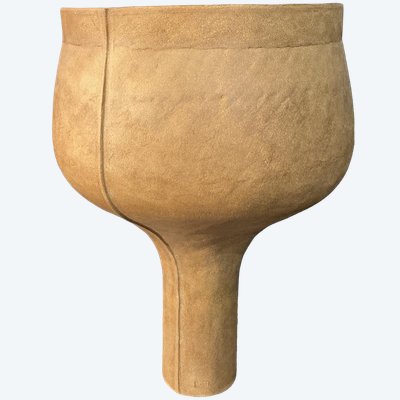
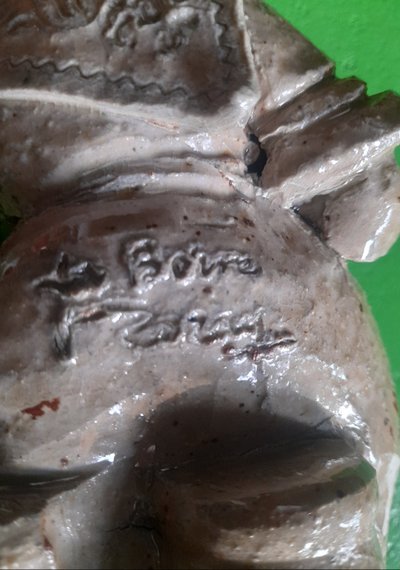
André Rozay (Foëcy, September 29, 1913 – La Borne, September 7, 1991) is one of the leading figures of La Borne. He was one of the first modern artists to settle there in 1943, the same year as Paul Beyer and Jacqueline Bouvet, and shortly after Jean Lerat. He thus escaped forced labor in Germany (STO) and lived clandestinely in La Borne. Like them, and a few others, he was one of the key figures in the revival of modern ceramics in France.
Before the war, he attended the Vierzon Vocational High School (ceramics) and acquired a solid classical training in drawing and painting at the École des Beaux-Arts in Bourges and Paris. A sign of his original talent, he made numerous studies of animals from life in clay at zoos. He then began creating designs for the Berlot-Mussier earthenware factory in Vierzon.
Potter, printmaker, sculptor, and animal sculptor (he was an admirer of Pompon), André Rozay was also an excellent draftsman and painter with a solid classical training. His creations extended, in an original way, an aesthetic that borrowed both from the stylization of the interwar period and from folk art (which can also be found in the ceramics that Paul Beyer produced in La Borne from 1941 onwards). After working alongside Jean Lerat to produce pieces for the art object publisher François Guillaume, he continued his training in the workshop of Alphonse Talbot, where he learned, among other things, how to use the throwing wheel. Throwing is an essential element of his work, including for modeling. It is a constant in his work and an element that gives his creations a style that is instantly recognizable.
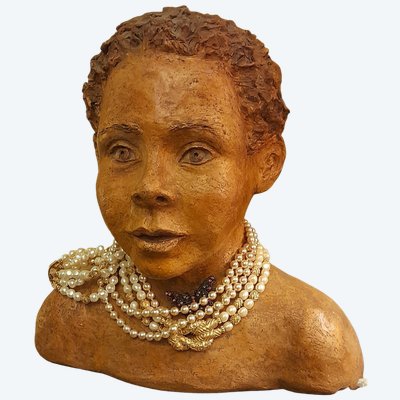
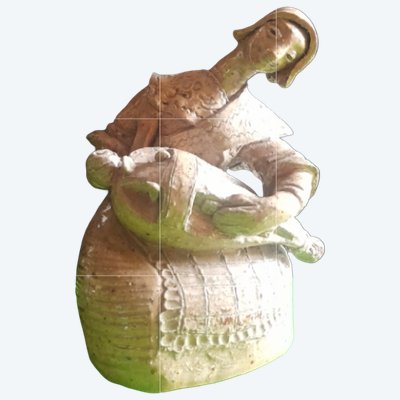
André Rozay's works are deeply rooted in local culture and heritage: figures illustrating pottery techniques and traditional rural crafts, ridge tiles, anthropomorphic pitchers inspired by the Borne tradition, and utilitarian pottery. He produced numerous religious subjects, including crosses, Virgins, saints, Stations of the Cross, and holy water fonts. He created a rich bestiary featuring familiar farm and forest animals, as well as those from the wilds of the globe. He also sculpted busts and portraits, confidently demonstrating his talent as a sculptor.
Becoming involved in community life as early as 1943, where he organized theatrical performances for prisoners of war, André Rozay was always a driving force in village life. Founder of the "Friends of La Borne" association, and an environmentalist before his time, he was committed to preserving and promoting the pottery and rural heritage of his village. He is one of the founders of the Association for the Preservation and Protection of the Pottery Heritage and Site of La Borne. With this association, he created the Museum of Traditional Pottery in 1987 in the village's former chapel (built in the 19th century by the inhabitants of La Borne).
In 1962, with Yves Mohy, Pierre Mestre, and Claudine Monchaussé, André Rozay organized the first exhibition of La Borne's ceramic artists in the workshop of wheelwright Émile Foucher. The exhibition, which has been renewed annually, was held there every year since. Following this foundational event, in 1971 he created the La Borne Potters' Association, a precursor to the current Association of Ceramic Artists, and the La Borne Center for Contemporary Ceramics.
André Rozay was a professor of decorative arts at the Saint Amand Montrond School of Fine Arts from 1953 to 1979.
In 1977, he illustrated Robert Chaton and Henri Talbot's book "La borne et ses potiers" (The Boundary Stone and its Potters) with drawings on the theme of traditional pottery. Numerous works by regional authors have been enhanced by his illustrations.
With his cap on his head and a cigarette in his mouth, "forever young, always gruff, always warm," he made Alphonse Talbot's former "shop" his home and workshop in 1969. It was there that he breathed his last in 1991, surrounded by his wife (who had consistently assisted him with his work and firings ever since).
Text adapted from a blog by La Borne.
Please do not hesitate to contact us before ANY VISIT. Payment by bank transfer only; we do not accept credit cards, checks, or PayPal. Shipping extra.
All requests will be handled by email via ANTIKÉO. Thank you for your understanding.
Ref: OL5RHKC0FR
| Condition | As new |
| Style | Art Deco (Sandstone shape pieces of Art Deco Style) |
| Period | 20th century (Sandstone shape pieces 20th century) |
| Country of origin | France |
| Artist | André Rozay |
| Materials | Stoneware |
| Shipping Time | Ready to ship in 15-30 Business Days |
| Location | 41000 , Blois, France |
4 commitments to buy with confidence

 English
 Français
 Italiano
 Deutsch