This description has been translated and may not be completely accurate. Click here to see the original
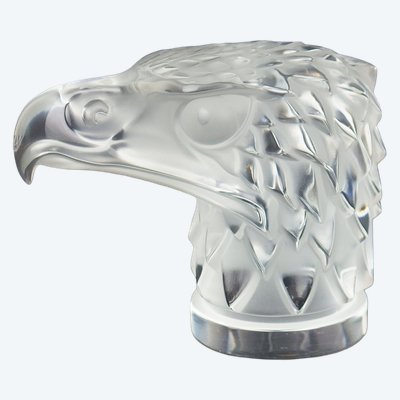
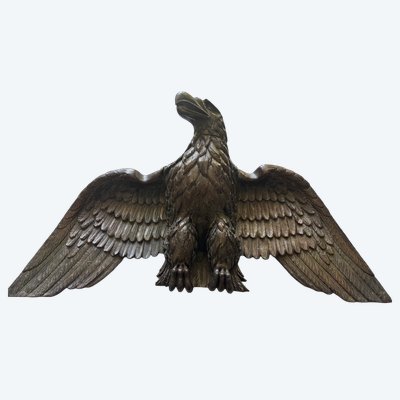
Bronze radiator cap, formerly nickel-plated, depicting a so-called "mascot" of an eagle in flight, sculpted by Pierre de Soete (1886-1948) for Ford automobiles.
Marked on the left side:
SCULPTED BY P. de Soete
Marked on the right side:
Published by the newspaper ....FORDISTES
Mounted on an antique base, marked on one side.
The eagle has lost its nickel plating, and its beak is bent, which explains the lower price compared to some models in poor condition that sell for over €1000.
A similar model appears in the book "La folie des bouchons de radiateurs" (The Radiator Cap Craze) by Dominique Pascal, published by Flammarion, on page 265.
Shipping available via Chronopost:
France €30
Europe €60
Other countries €90
*Pierre Jean Desoete was born on July 30, 1886, in Molenbeek-Saint-Jean. In 1900, he was hired at the polishing and chasing workshop of the Compagnie des Bronzes in Brussels. He then moved to the assembly workshop. This brought him into contact with renowned sculptors such as Julien Dillens, Constantin Meunier, Prince Paul Troubetzkoy, and Jef Lambeaux. A skilled and observant self-taught artist, he drew inspiration from these experiences to become a sculptor himself. He simultaneously studied at the Evening School and then briefly studied drawing at the Molenbeek Academy and modeling. He then enrolled for a short course at the Royal Academy of Fine Arts in Brussels.
In 1911, a bronze foundry in Anderlecht entrusted him with the management of one of its departments. From 1924 onward, he devoted himself entirely to sculpture and received numerous commissions: monuments, portraits, mural decorations, and medals. He initially devoted his sculptural talents to sporting subjects and war memorials. He excelled in themes such as motherhood and sports (The Victor's Effort, The Tennis Player, The Olympic Oath, The Shot Putter, The Boxer, the second Gordon Bennett Cup, etc.). Several of his works have been acquired by museums in Europe and the United States.
His sculptures and medals are held, among others, at the Royal Museums of Art and History, the Royal Museum of the Armed Forces, the Cabinet of Medals in Brussels, the Diocesan Museum of Mechelen, the Riga Museum in Latvia, and the Metropolitan Museum of Art in New York. Artistically, he did not subscribe to any particular school, but in his small-scale private creations, he adopted a classical style. He died on August 16, 1948.
Ref: U466ZEXQ04