This description has been translated and may not be completely accurate. Click here to see the original
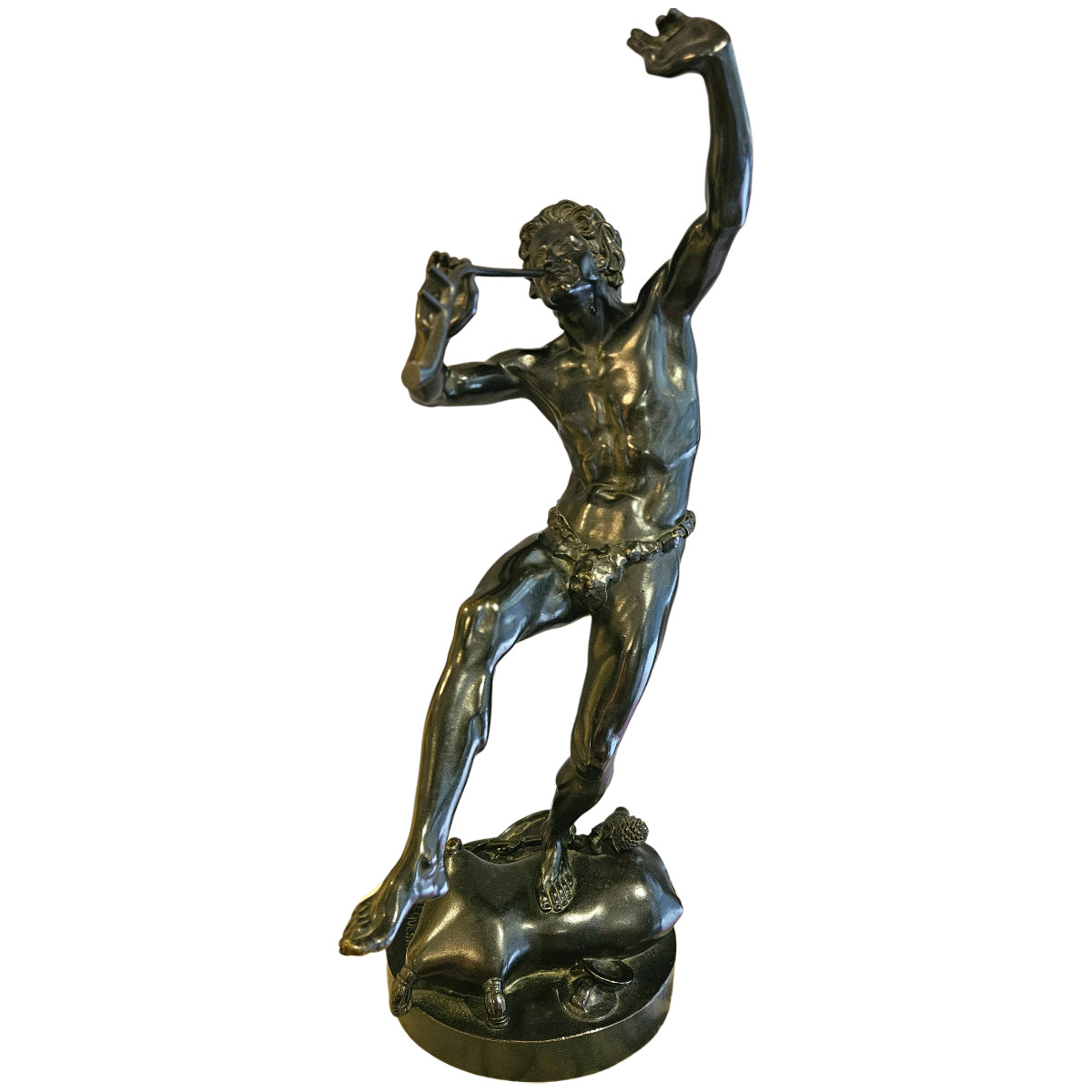
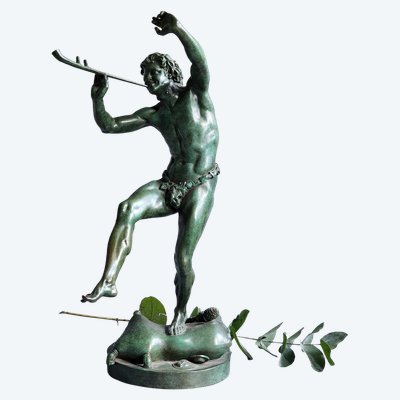
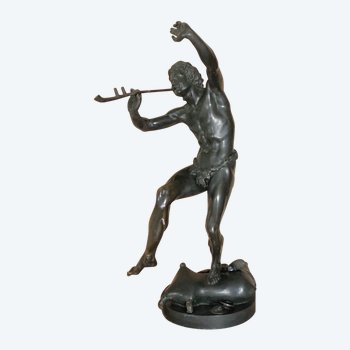
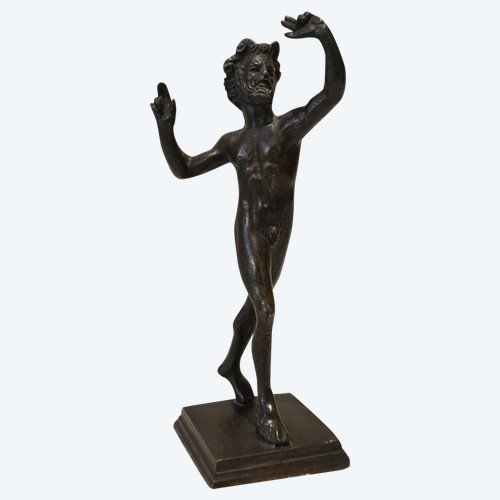
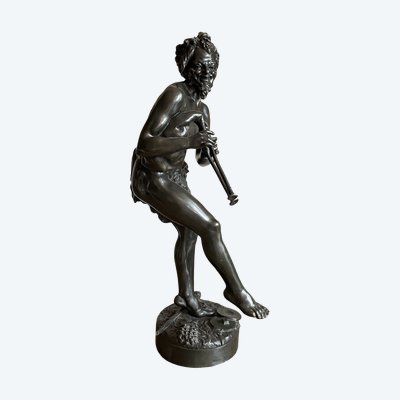
The patinated bronze sculpture depicts a nude faun dancing and playing the flute. He dances while balancing on a wineskin filled with air, in keeping with ancient custom, to convey the character’s instability. At his feet lie other attributes of the Bacchanalia: a tambourine, cymbals, a thyrsus, and a bunch of grapes.
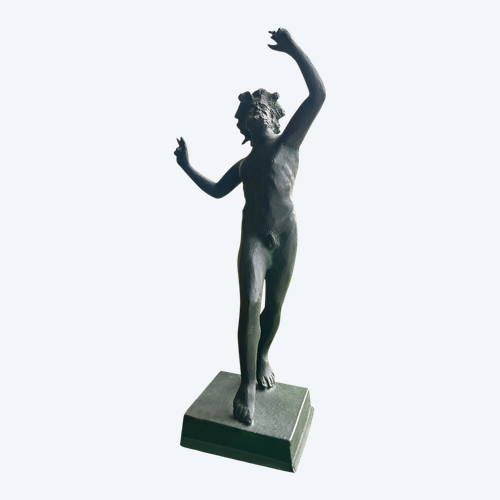
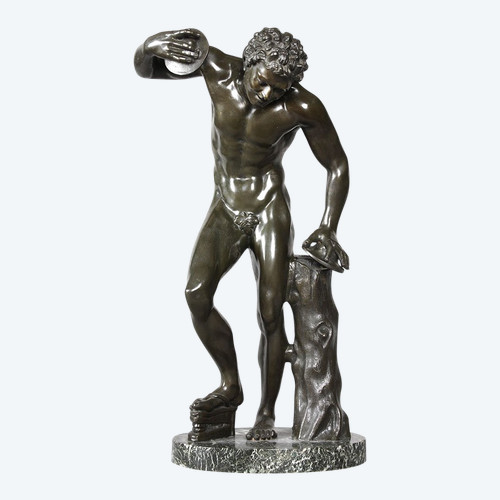
Eugène-Louis Lequesne, a resident of the Villa Medici in Rome, took advantage of his stay in Italy to copy the Barberini Faun. Drawing on this experience, he took inspiration from the ancient Dancing Faun, discovered in Pompeii and which he had seen at the Archaeological Museum of Naples, to sculpt his own Faun. He presented the plaster cast of the Dancing Faun at the 1850–51 Salon and received the first medal for sculpture for this work. It was at the 1852 Salon that he exhibited the bronze version. The government acquired it, and the sculpture was displayed at the 1855 World’s Fair, during which Lequesne received the Grand Prize for Sculpture and the Legion of Honor. It was subsequently exhibited at the Musée du Luxembourg.
The statue bears the stamp and signature “Susse frères” on its base.
Founded in 1758, the Susse brothers’ company became a foundry and art publisher by the early 19th century;
the sculptures produced by the Susse brothers are distinguished by their remarkable casting quality. The firm primarily used the lost-wax or sand-casting techniques, two processes that ensure great precision in the details. As a result, the reliefs are sharp, the textures well-defined, and the patinas often deep and uniform. Furthermore, Susse bronzes feature a meticulous finish. The chiseling is precise, and the joints between the different parts of a work are invisible.
These elements reflect a high standard of craftsmanship, typical of works produced in the 19th and early 20th centuries.
Ref: YJ604KKRKH

 English
 Français
 Italiano
 Deutsch
 Louis XVI secretary
5.800 € EUR