This description has been translated and may not be completely accurate. Click here to see the original
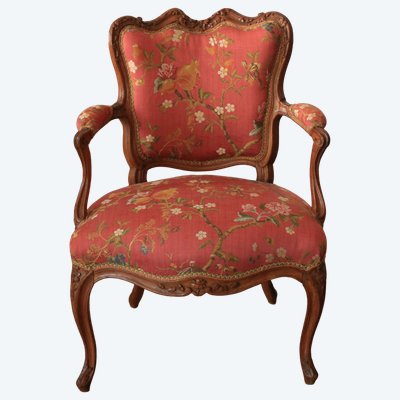
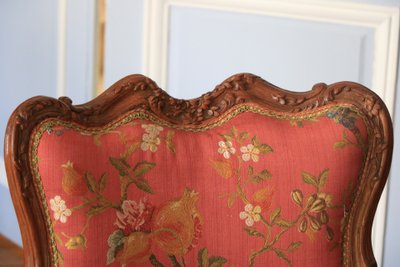
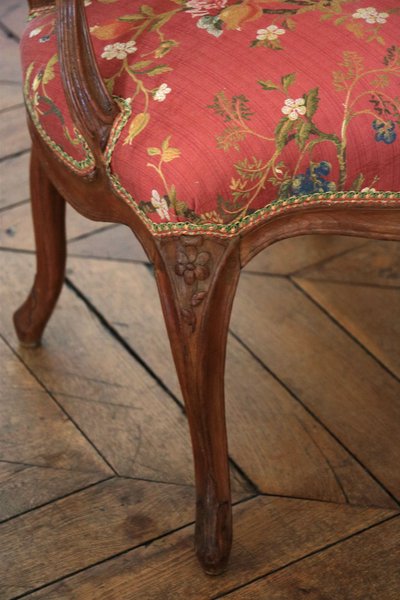
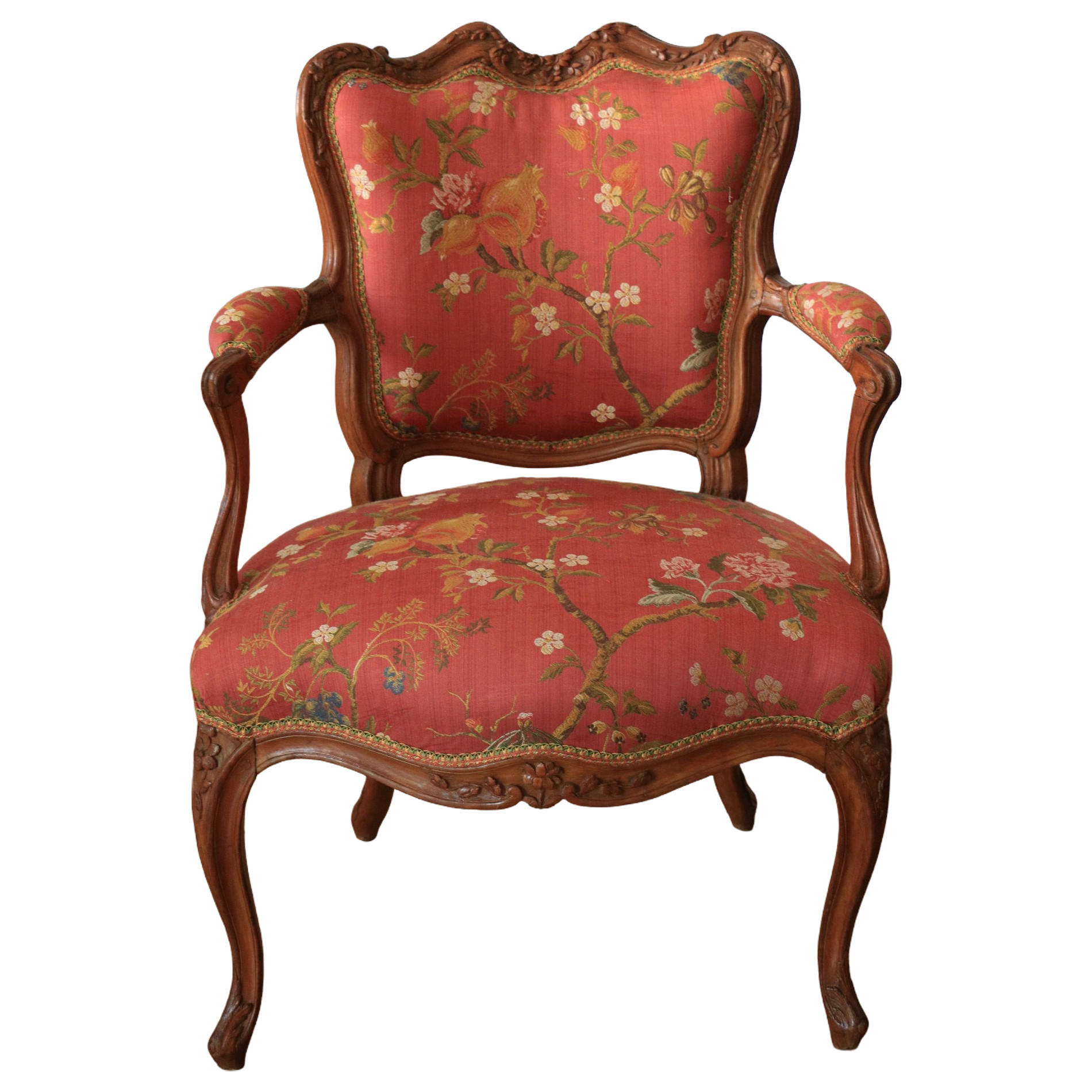
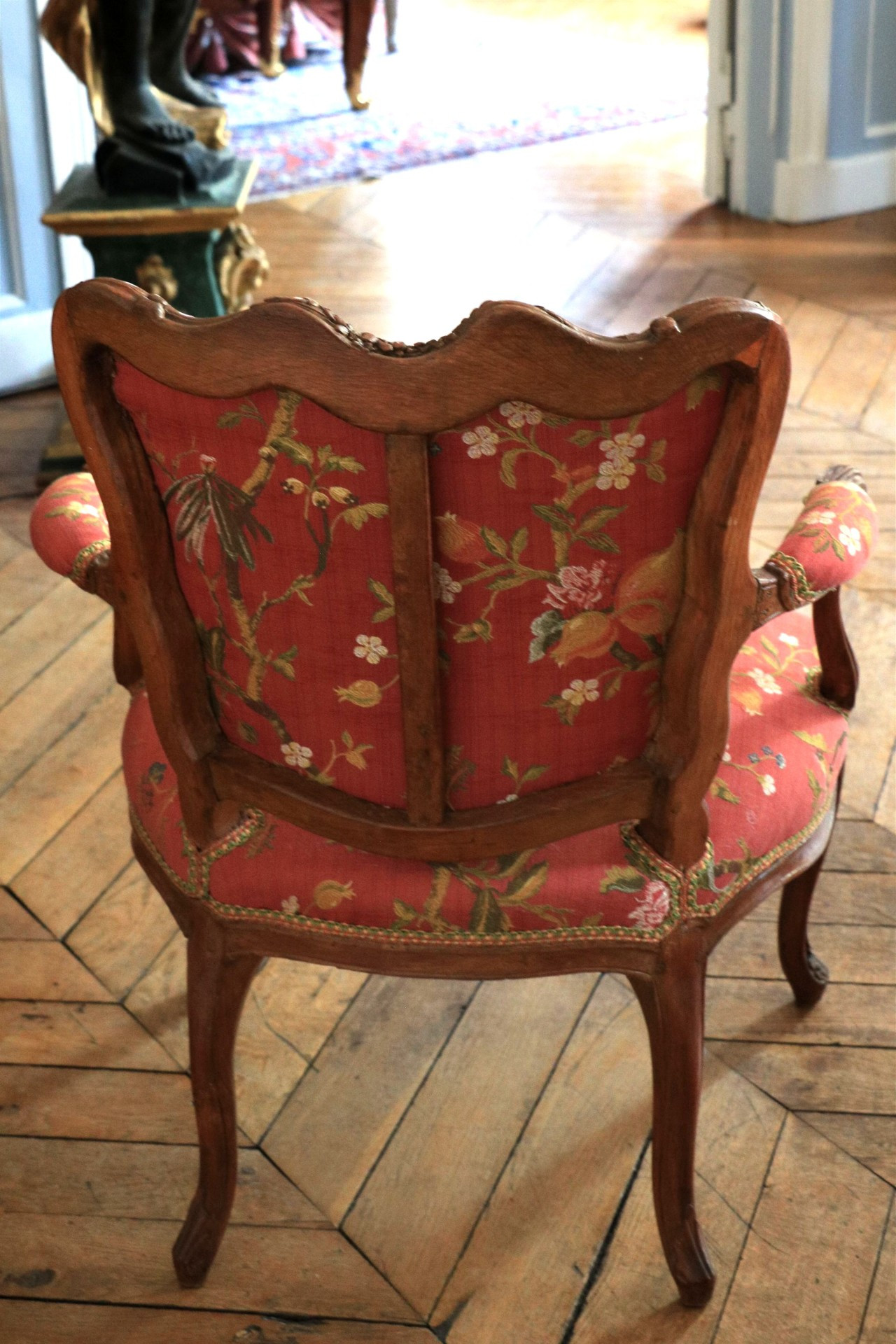
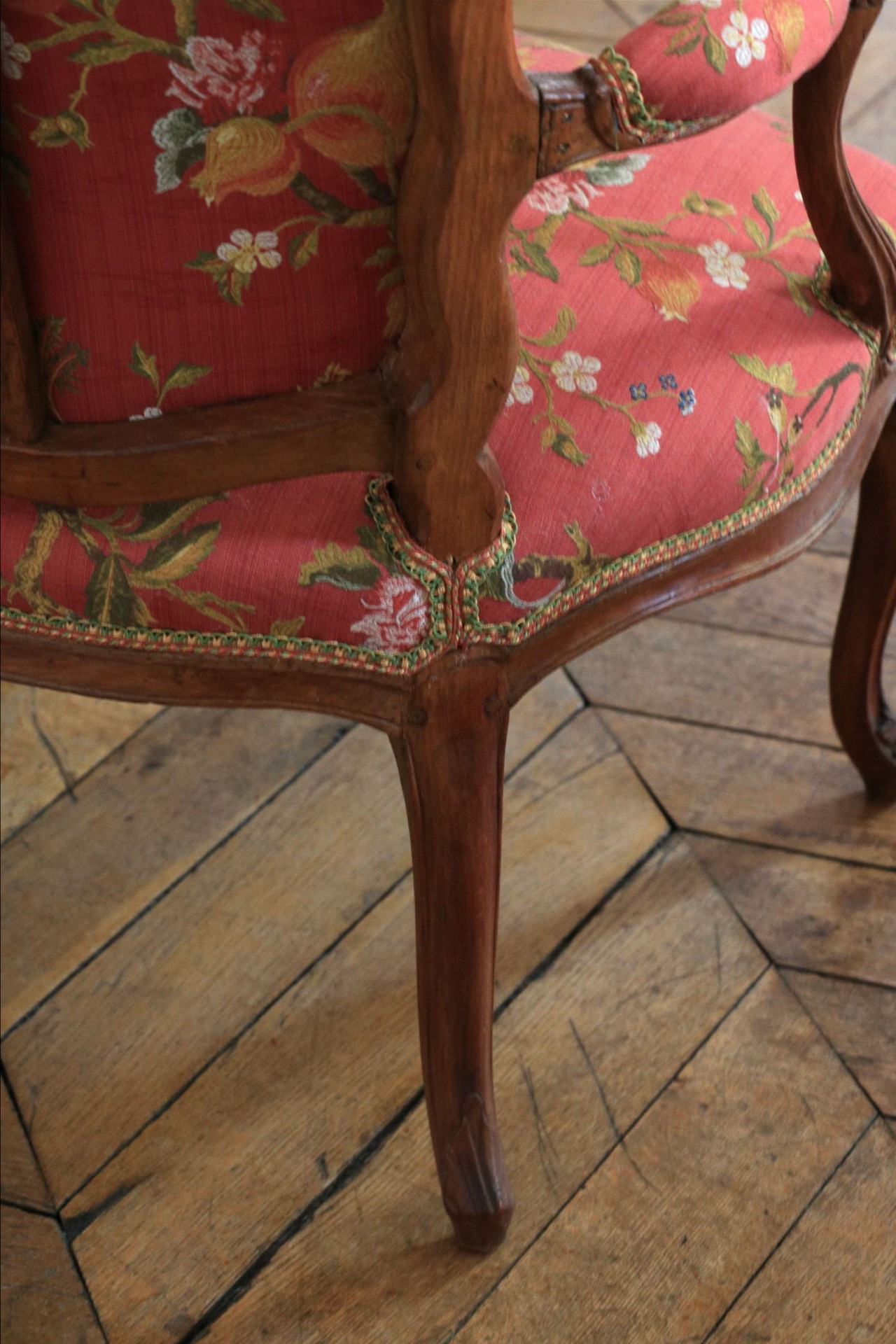
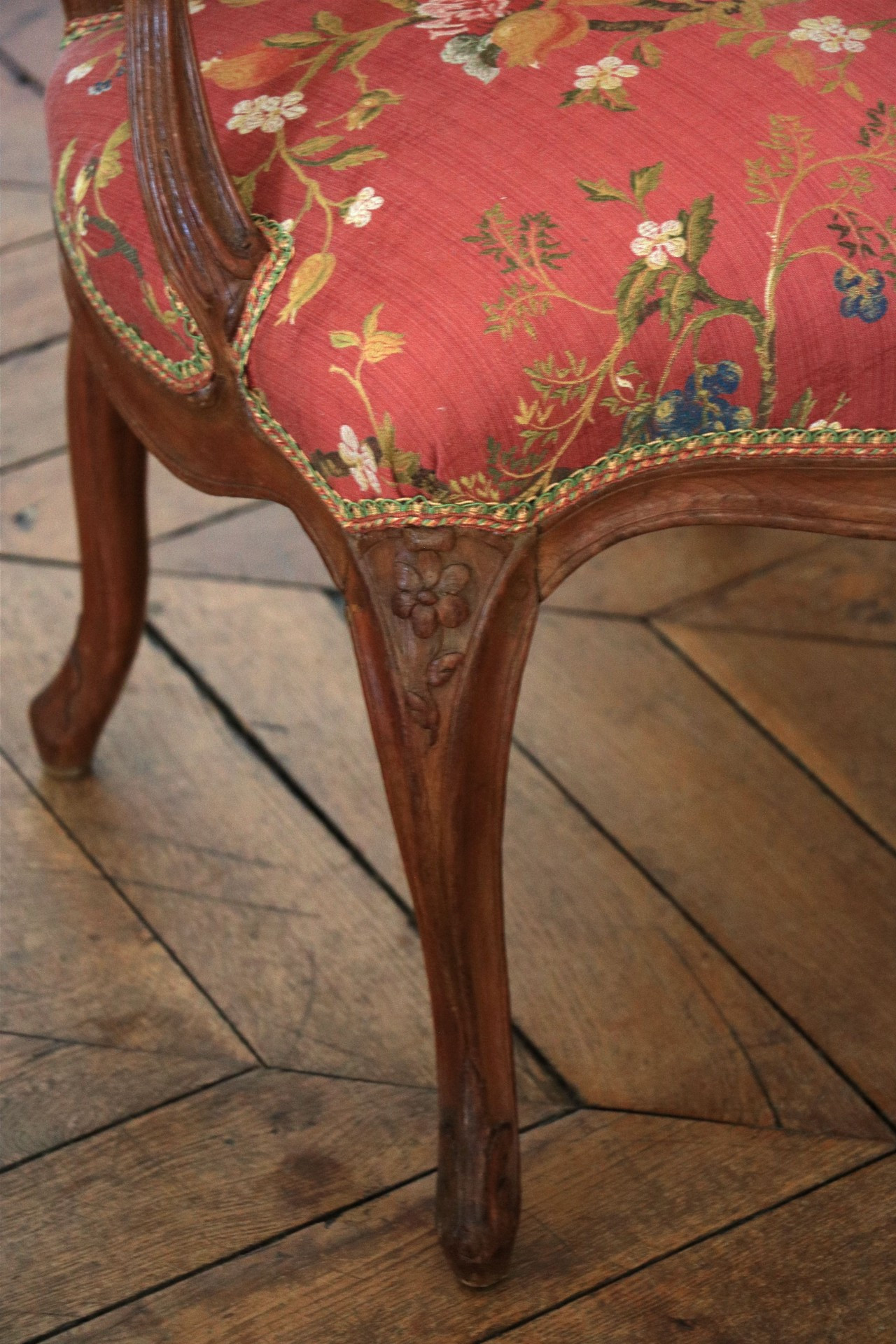
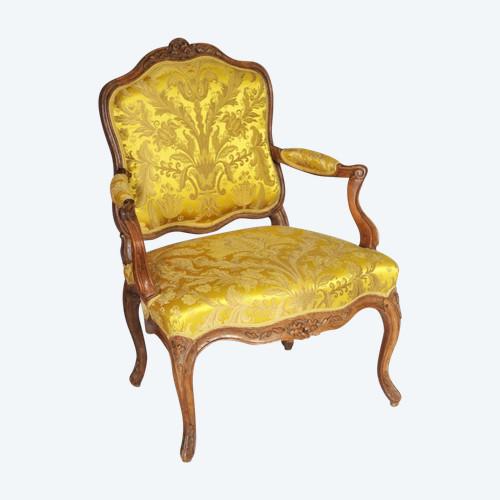
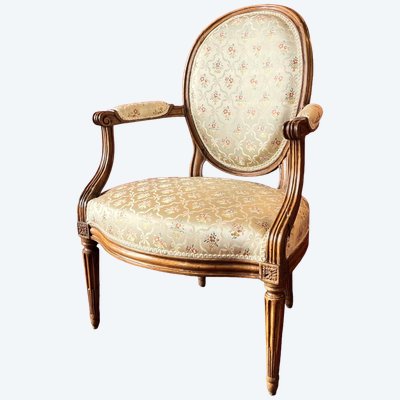
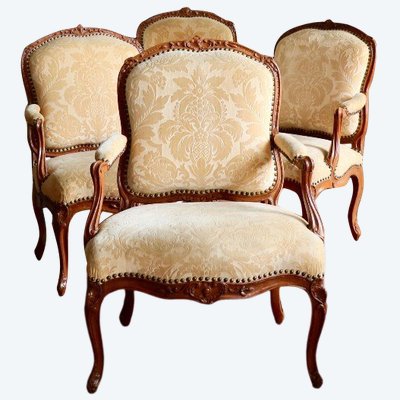
A Louis XV period walnut dressing chair, finely carved with a naturalistic design. The cabriolet back, with its scalloped shape, features a central recess to accommodate the head of the person having their hair styled. The armrests are set back, and the legs terminate in foliate sabots that accentuate the rocaille style already present on the seat rail and the upper part of the back.
Louis XV period
Used condition
H. 83 x W. 63.5 x D. 55 cm
The dressing chair emerged within a very specific context: the transformation of aristocratic living spaces in France, where private areas took on new importance from the late 17th century and especially the 18th century.
From the end of Louis XIV's reign, dressing became a structured social ritual, often a public affair at the court of Versailles. Hairdressing was initially done standing or on unspecialized seats, and the first adapted chairs appeared in private dressing rooms, though they were not yet intended solely for hairdressing. The true development of the hairdressing chair occurred under Louis XV (1715–1774), a period when interiors became more intimate and feminine. Grooming now took place away from public spaces of representation, and comfort and practicality were increasingly sought after.
The hairdressing chair then became a specific type of seat with a lower seat to facilitate the hairdresser's work, a wraparound back like a cabriolet chair, and a lighter structure for easy movement in front of mirrors. Under Louis XV, garden chairs served the same purpose but were adapted to contemporary tastes with Rococo motifs: carved wood, decoration of flowers, shells, and foliage, and an impression of lightness and movement. The use of this chair gradually disappeared after the Revolution, when grooming became simpler and less codified.
Pierre Bara received his master craftsman's certificate on June 28, 1758. His workshop continued to thrive until 1768. He signed his work with large, irregular letters on high-quality Louis XV chairs, some with moldings or adorned with small flowers. Some of his cabriolet armchairs feature original, slightly jerky lines on both the back and seat rail, composed of interrupted curves. This cabinetmaker is also known for chairs with elaborate decoration, sometimes reminiscent of the Regency style, such as the low, caned armchair with a high back in the Jacquemart-André Museum in Ermenonville.
Ref: O9N33G90RX

 English
 Français
  Italiano
  Deutsch
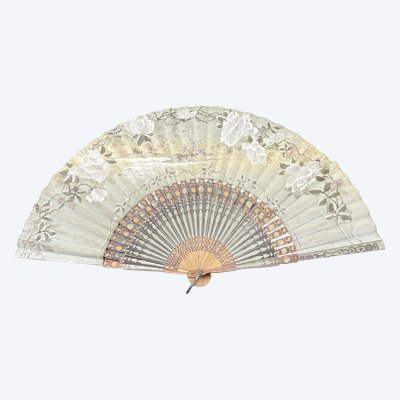
  JAPANESE fan...
230 € EUR
JAPANESE fan...
230 € EUR