This description has been translated and may not be completely accurate. Click here to see the original
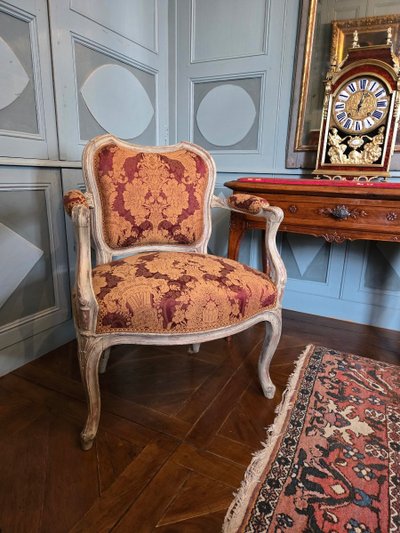
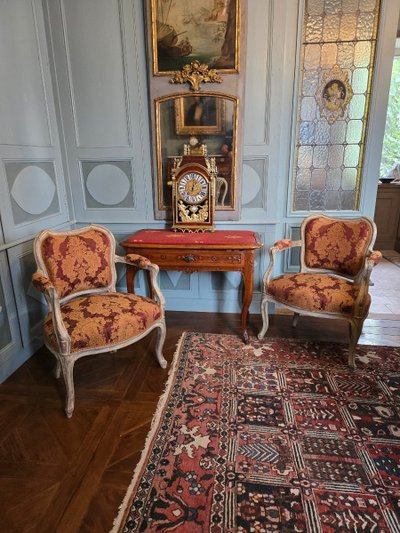
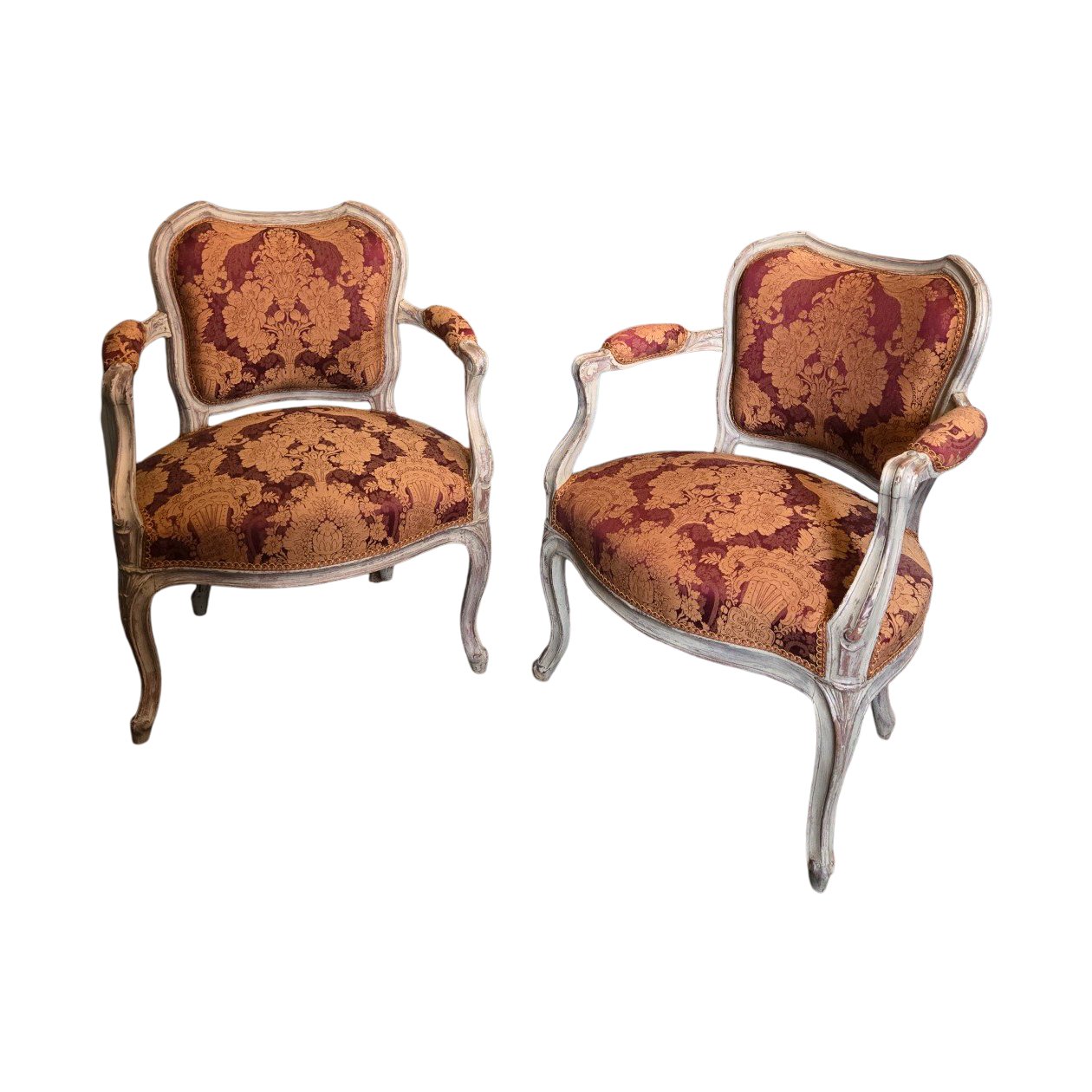
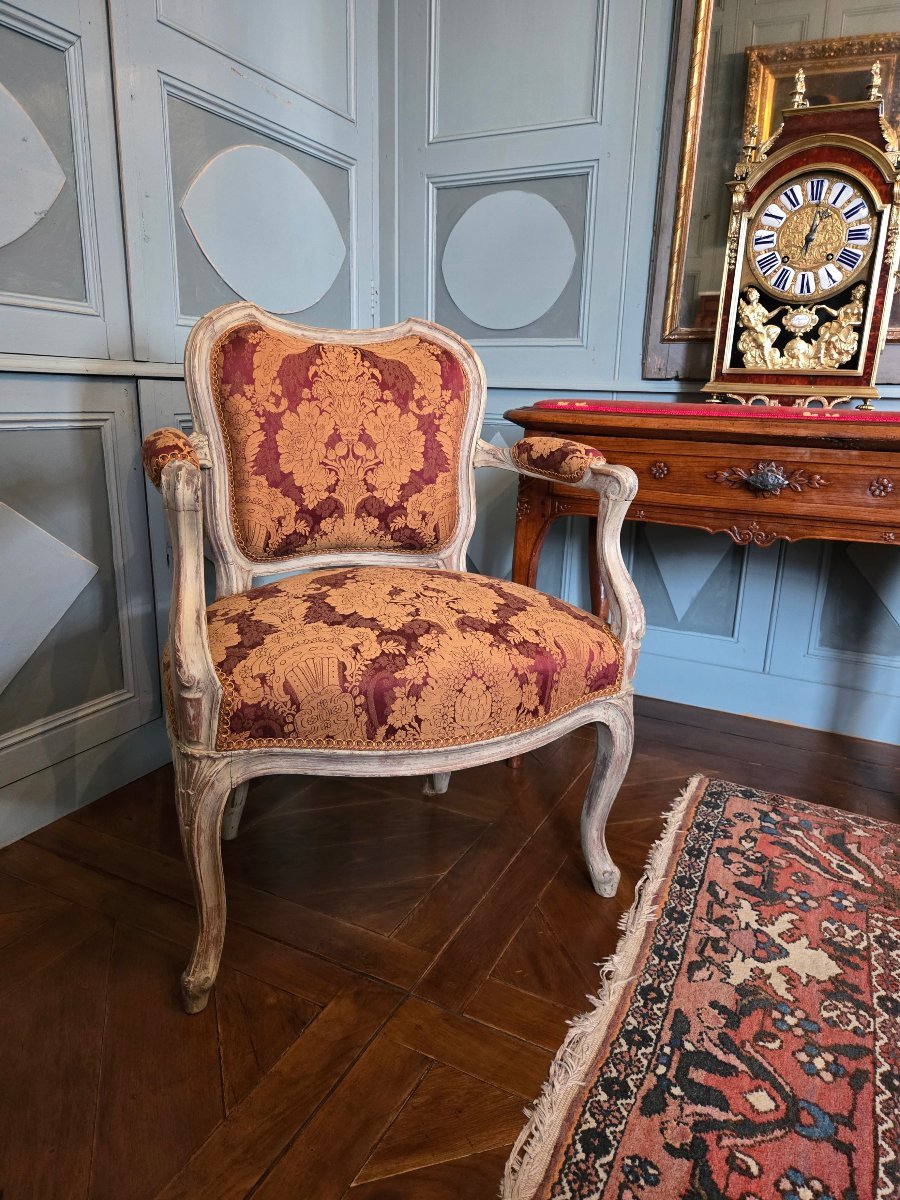
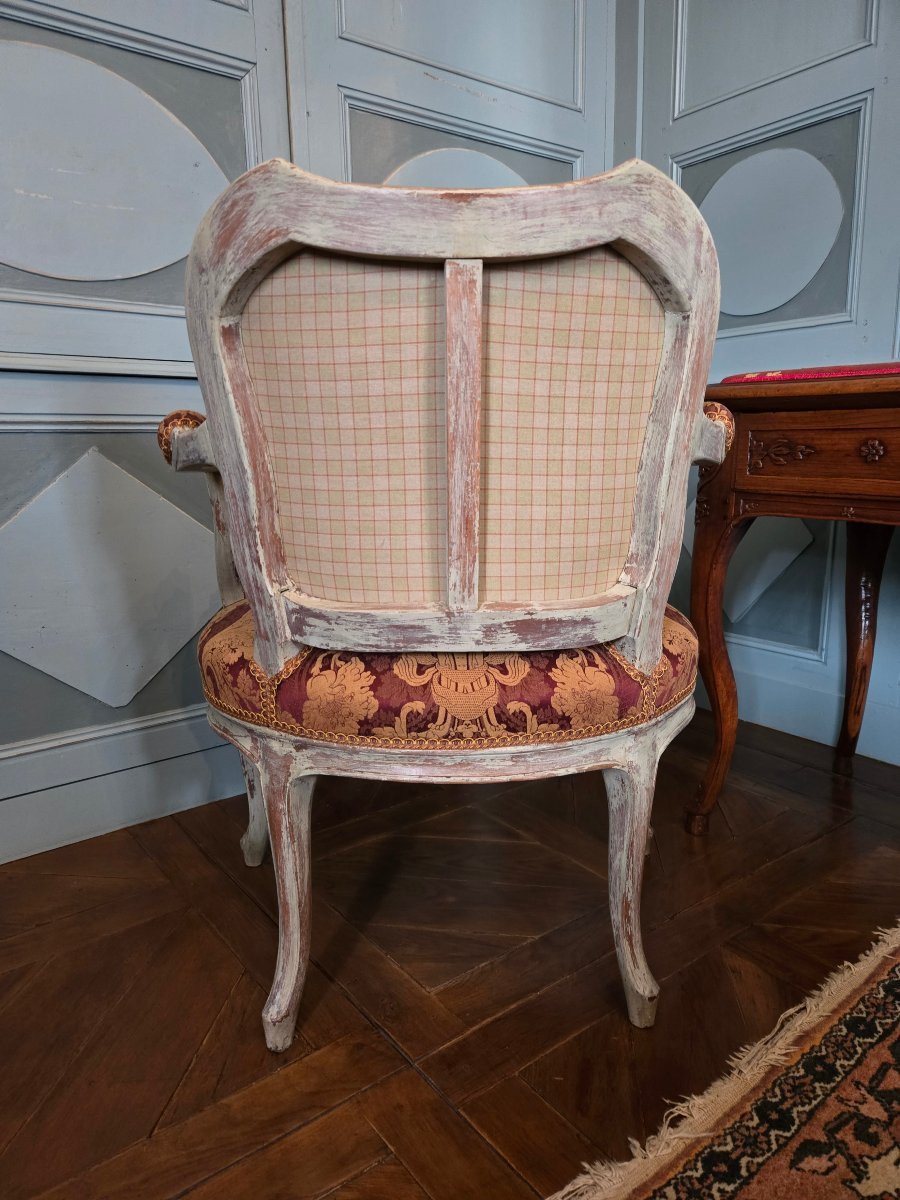
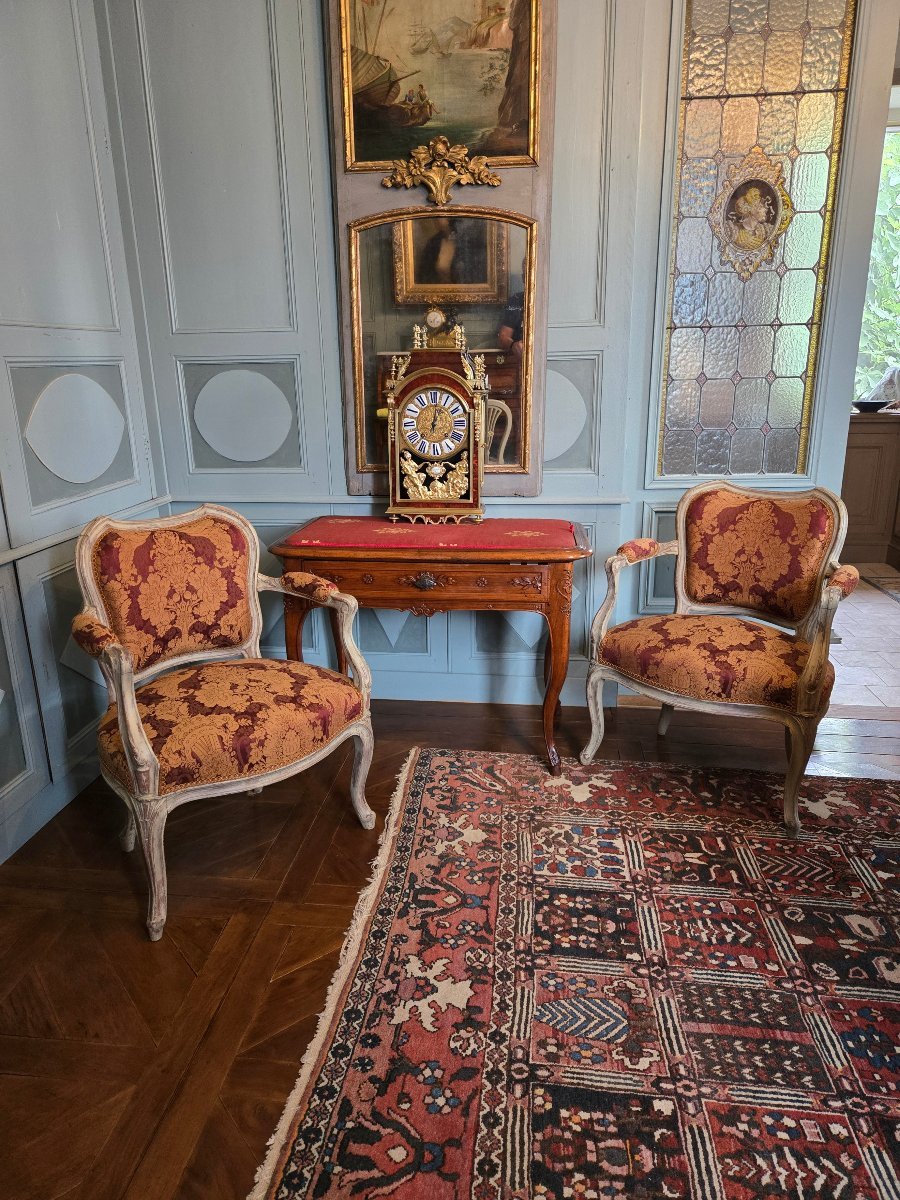
An interesting and rare pair of dressing chairs, also known as "hairdressing chairs," dating from the reign of Louis XV, circa 1760–1770. Their shape, construction, and certain carved details link them to a well-defined typology of furniture for intimate use in the 18th century, particularly intended for dressing rooms or boudoirs.
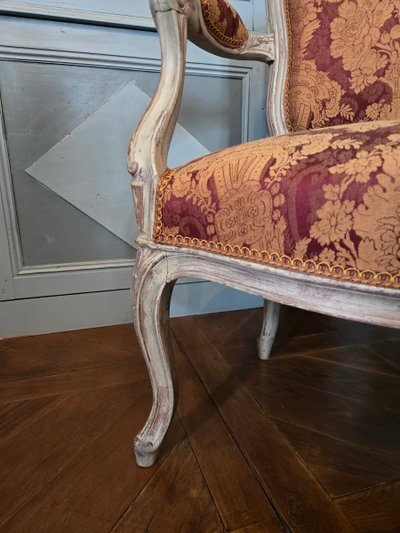
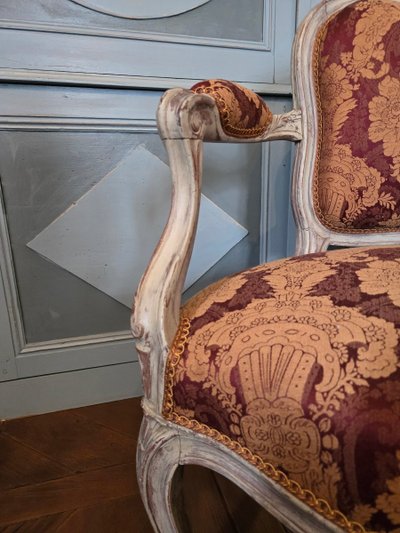
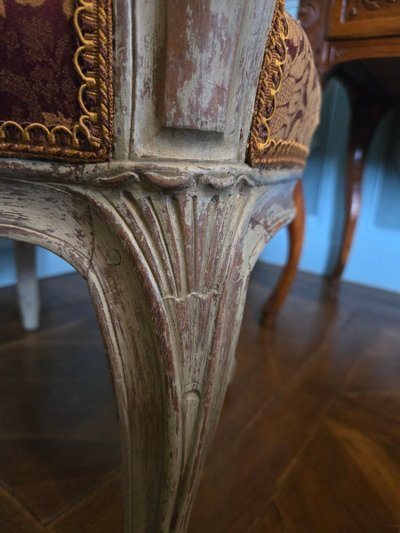
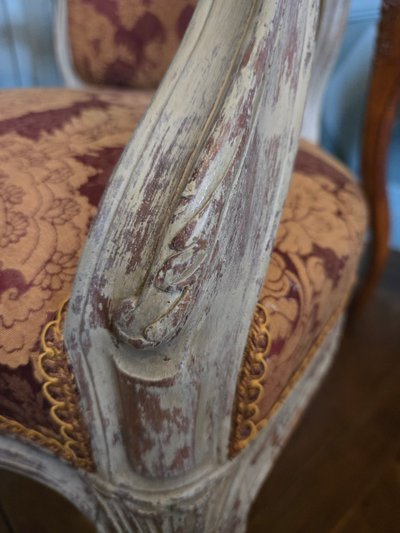
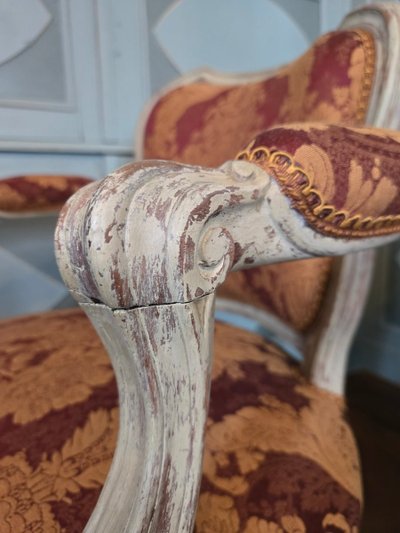
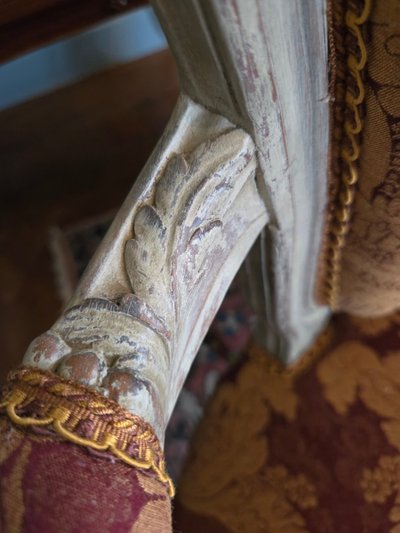
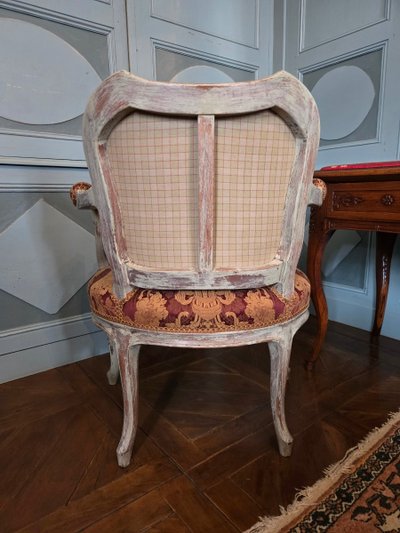
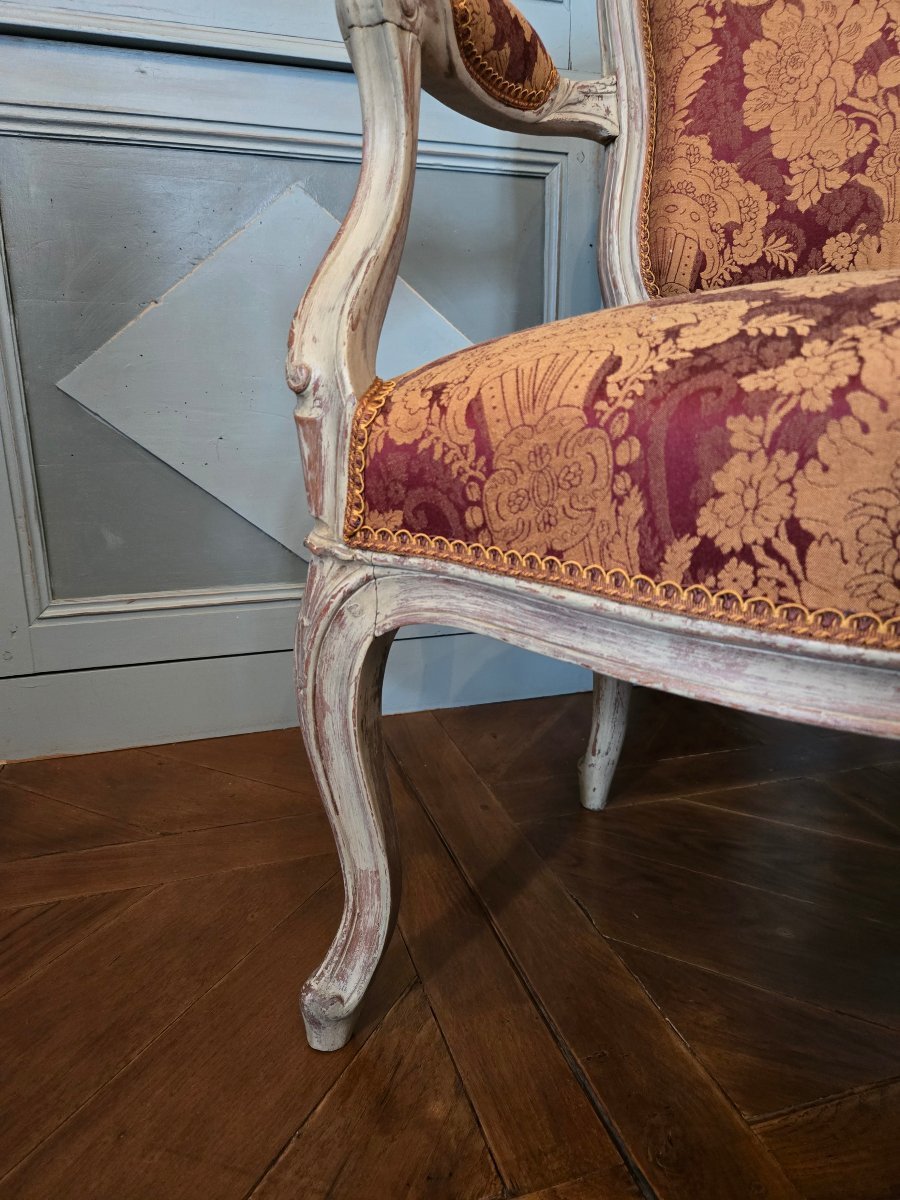
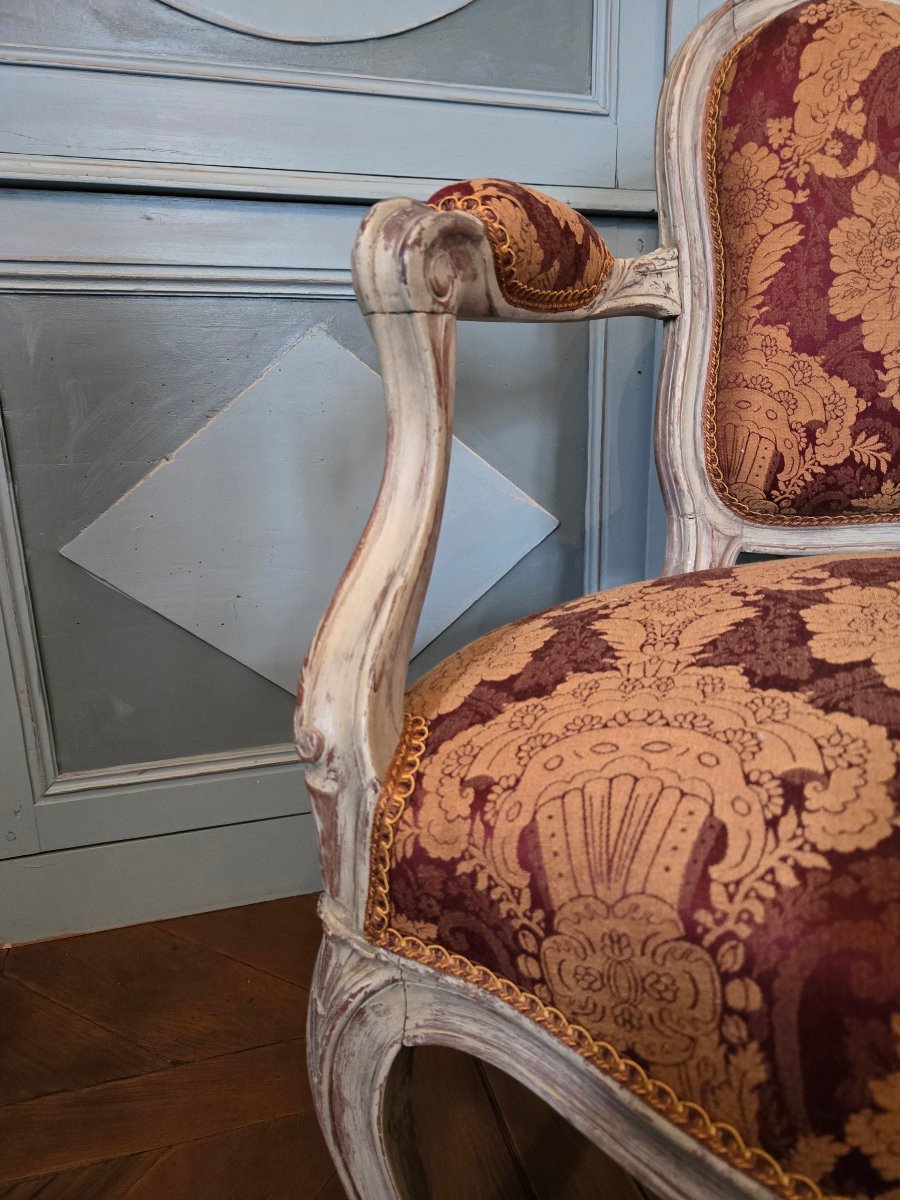
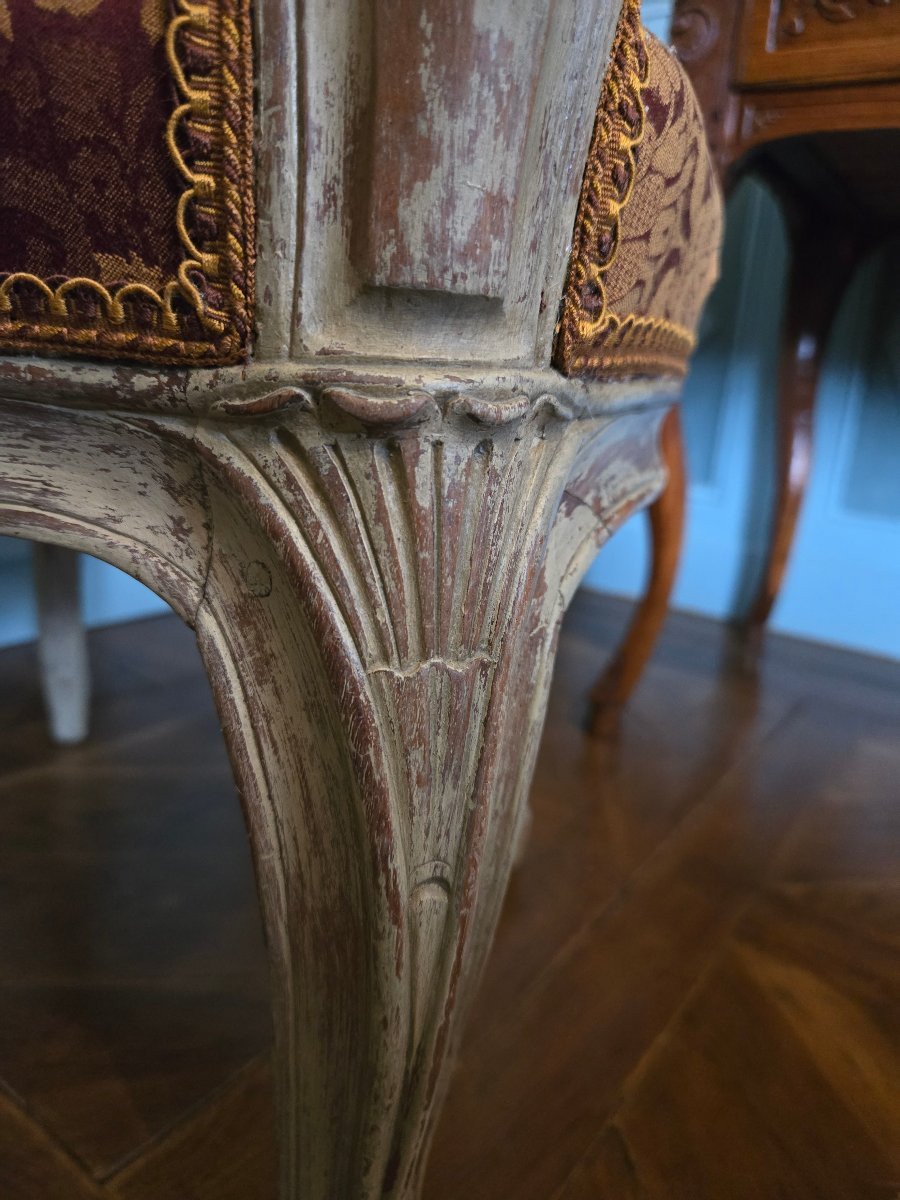
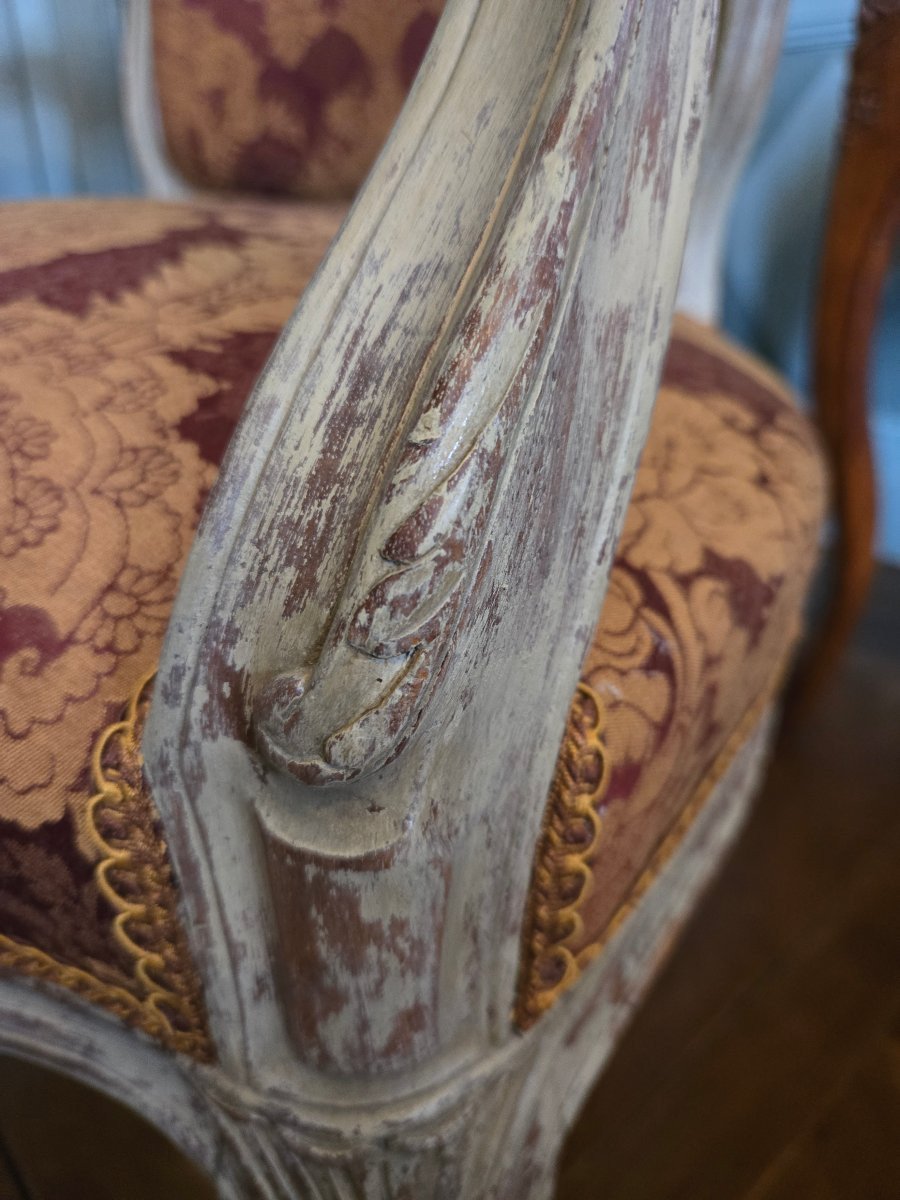
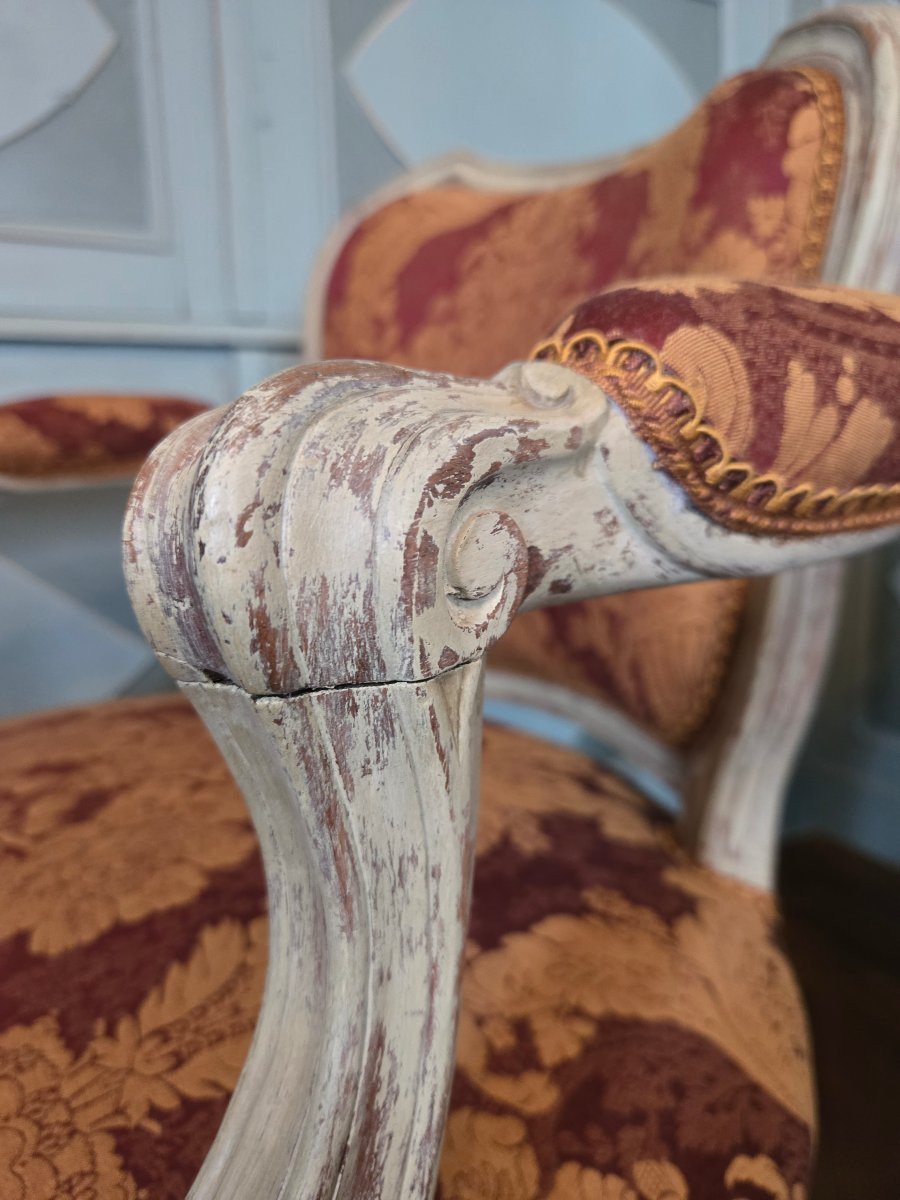
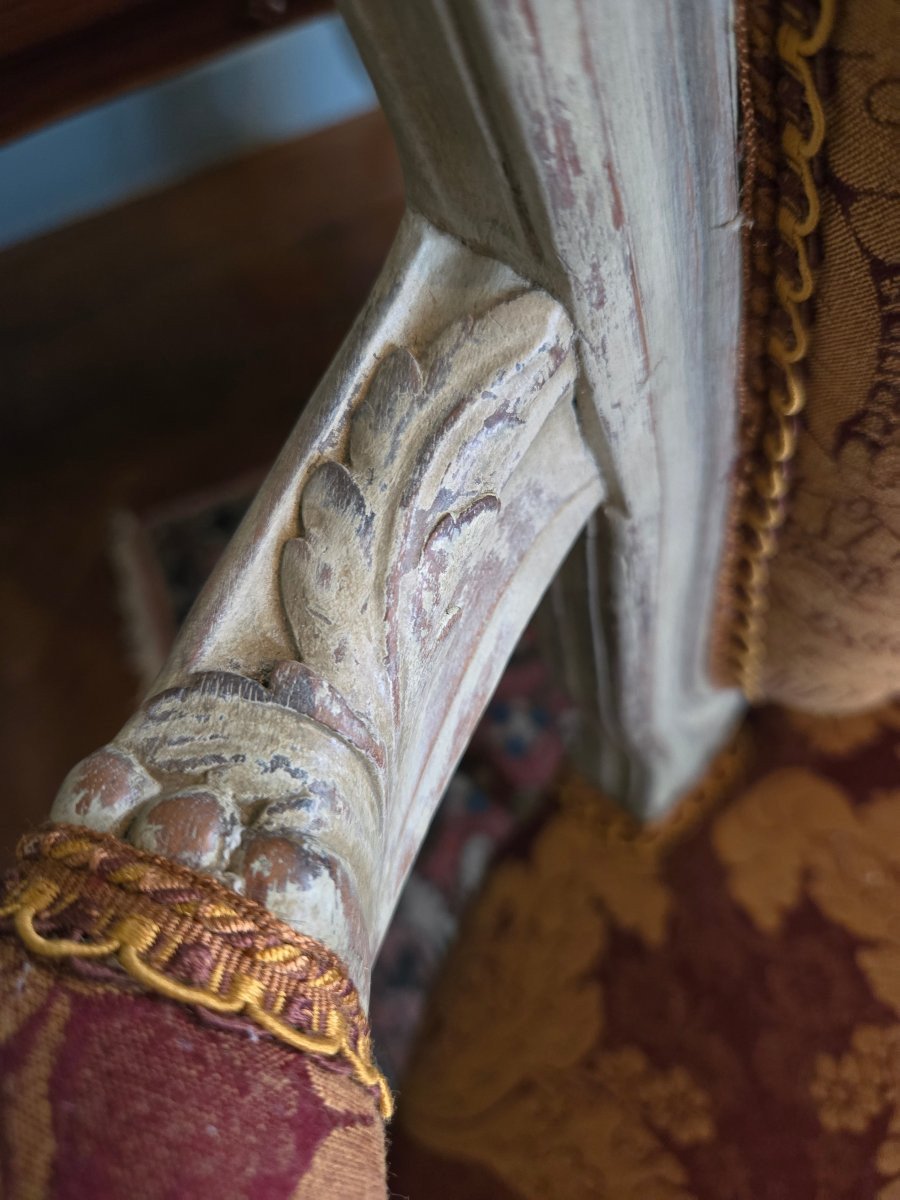
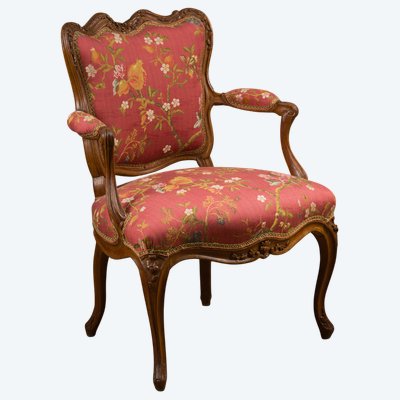
The chairs are made of walnut, formerly painted, with a beautiful natural patina. The decoration is both discreet and refined, punctuated by carved details including stylized fan-shaped palmettes carved on the front connecting blocks, as well as high-relief acanthus leaves adorning the junction between the back and the armrests.
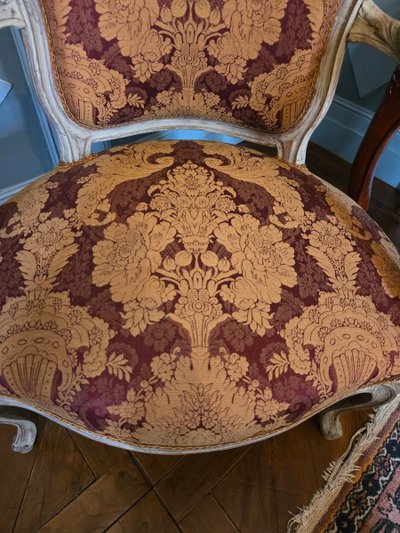
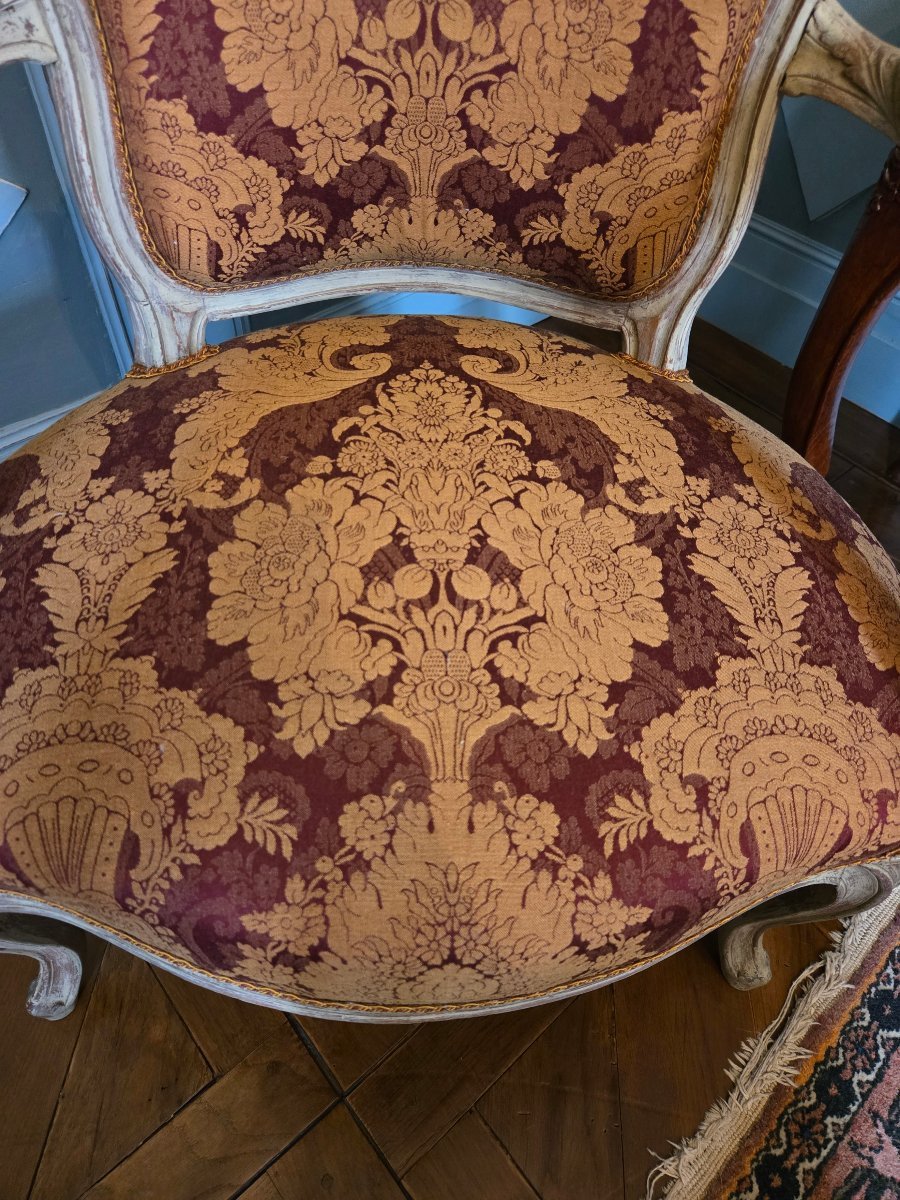
The seats have just been carefully reupholstered in a rich antique lampas in the 18th-century style, with gilt floral scrollwork on a garnet ground, highlighted with gold braid, and are in perfect condition.
The hairdressing chair is a functional seat designed to facilitate access to hair during washing or styling. This function is reflected in several specific features found on our chairs:
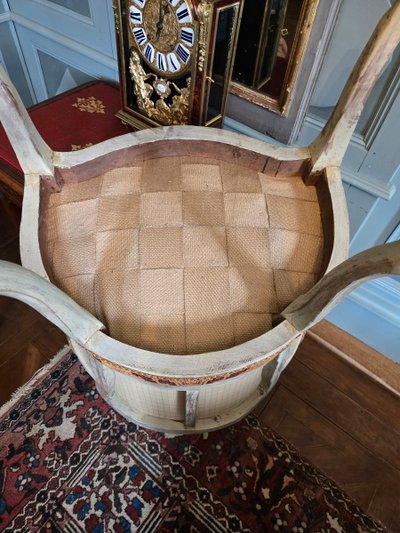
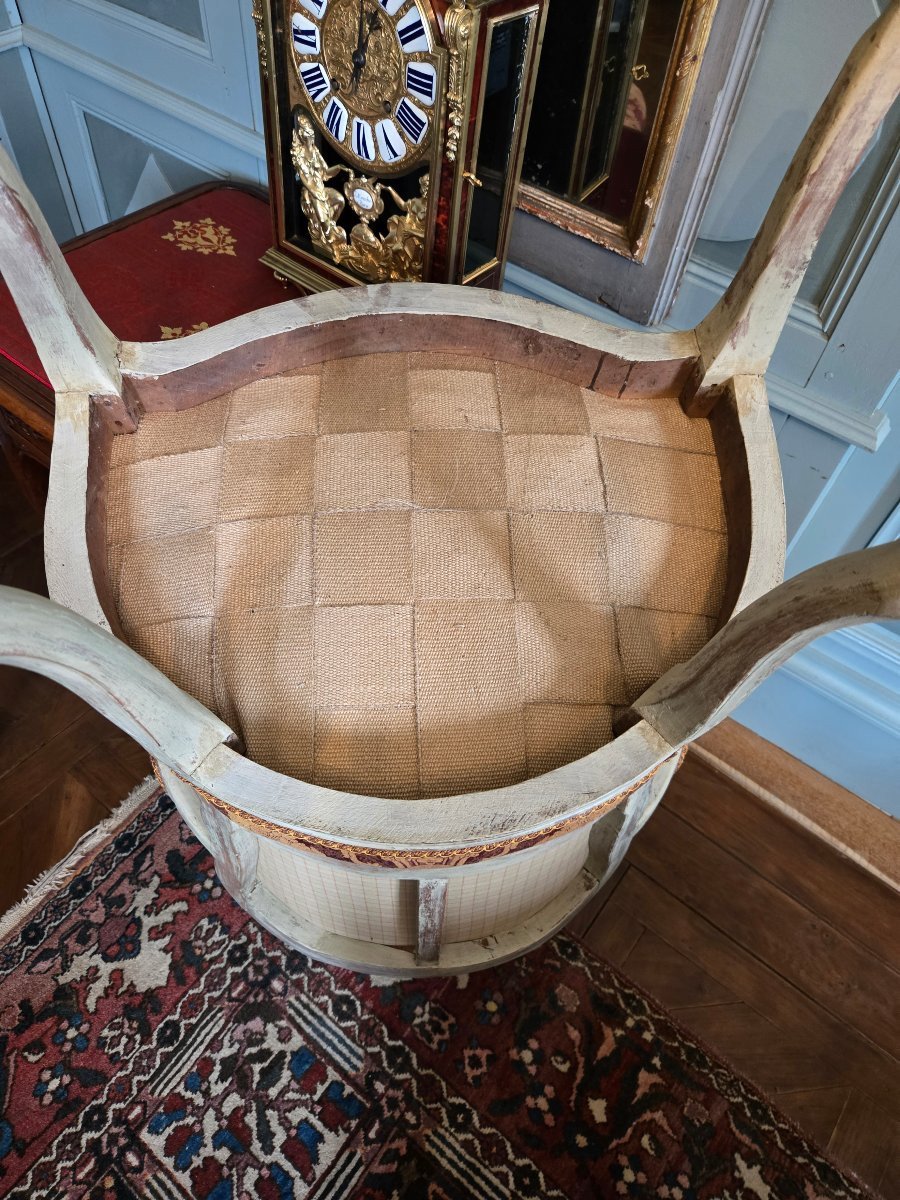
- A low, open backrest, in a cabriolet shape, allowing the hairdresser to easily reach behind the head.
- A high backrest crossbar cut into a notch, providing better clearance for the nape of the neck—a key element in identifying this type of chair, mentioned in specialized works and observable on several preserved models (Louvre Museum, Mobilier National).
- A wide, curved seat at the front, ensuring great comfort and good stability.
This type of chair is notably listed in Nicole de Reyniès's Typological Vocabulary of Domestic Furniture and illustrated in public collections:
– Louvre Museum, caned hairdressing chair, inv. OA 11330 (1715–1774)
– Azay-le-Ferron Castle Museum, Louis XVI dressing chair
– Mobilier National (similar chairs are listed in the collections)
Notable examples can also be found at auction: – Christie’s, Louis XV or Louis XVI dressing chairs, attributed to Louis Michel Lefèvre or Antoine-Nicolas Delaporte, between 1730 and 1775.
Dimensions:
Back height: 85.5 cm
Seat height: 43 cm
Width: 64 cm
Depth: 56 cm
Ref: 2GG9EFNCNW

 English
 Français
 Italiano
 Deutsch
 Louis XIV Norman writing table
850 € EUR