This description has been translated and may not be completely accurate. Click here to see the original
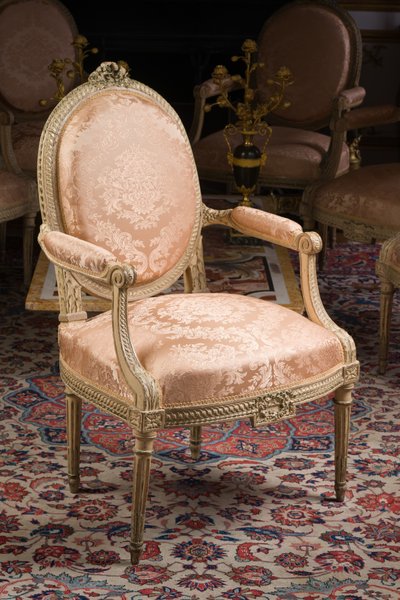
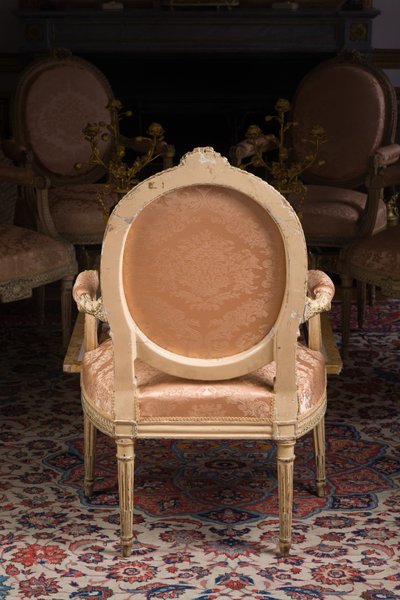
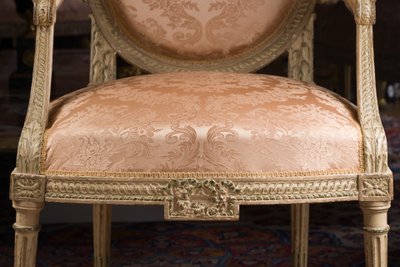
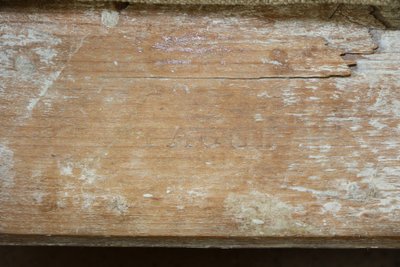
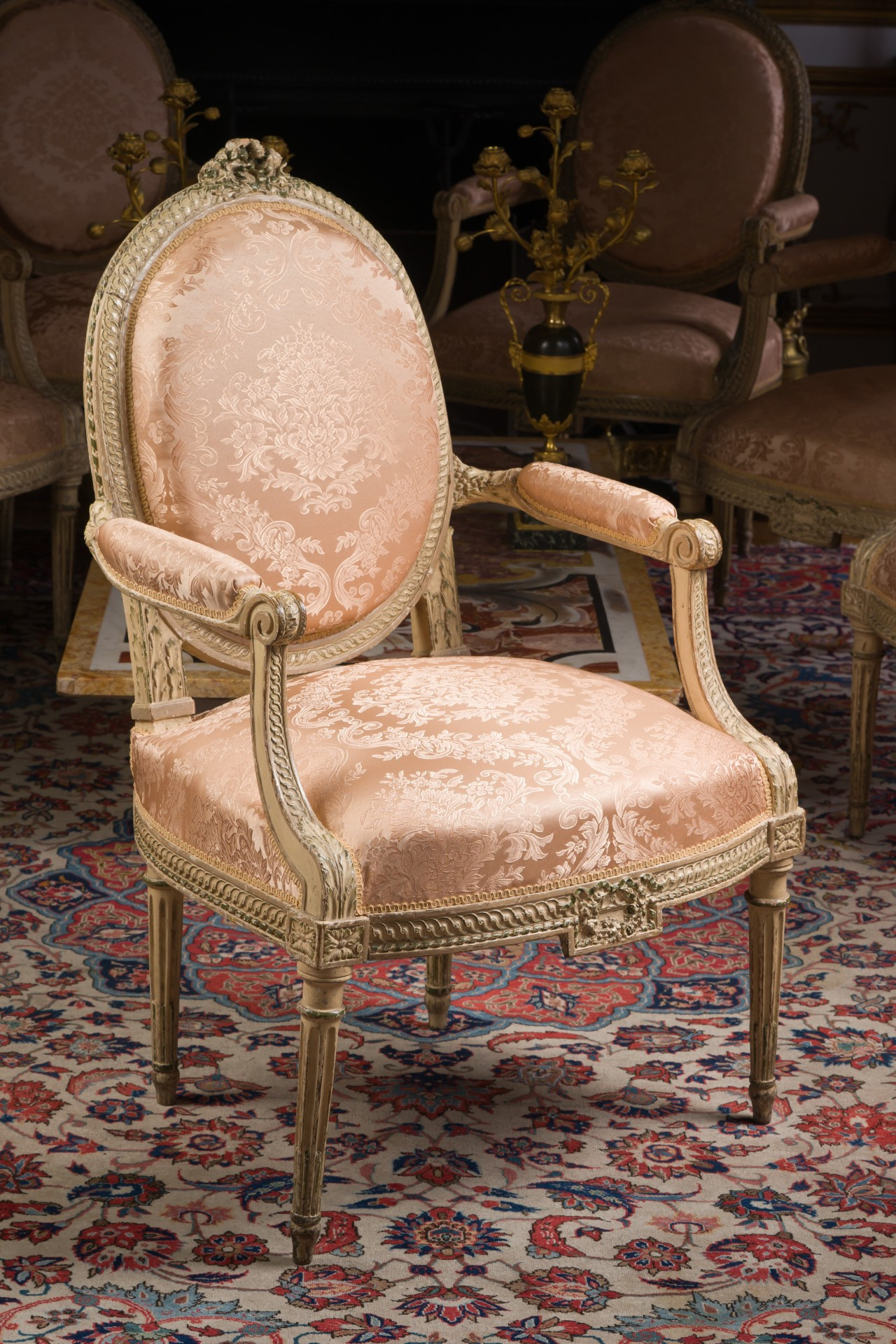
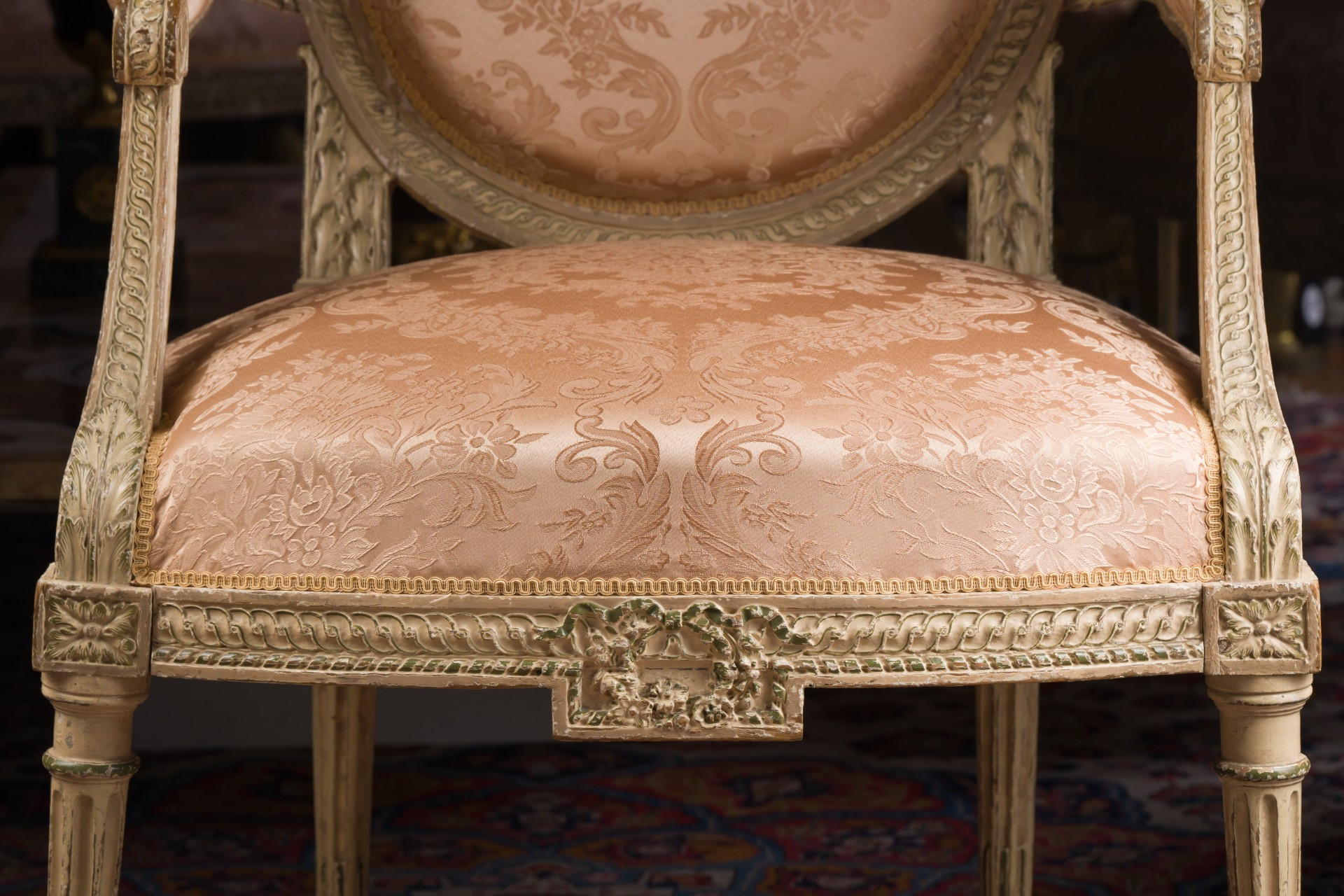
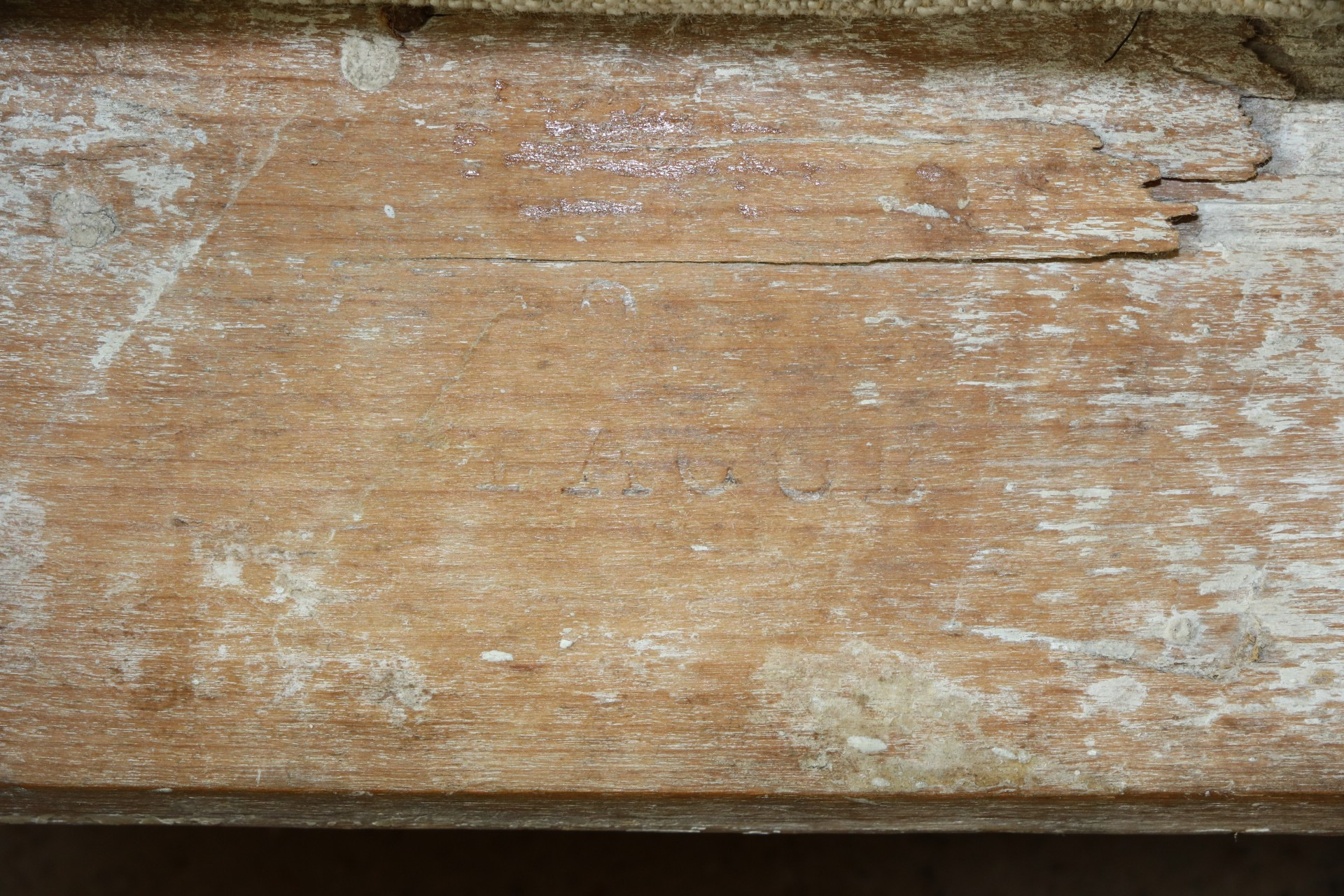
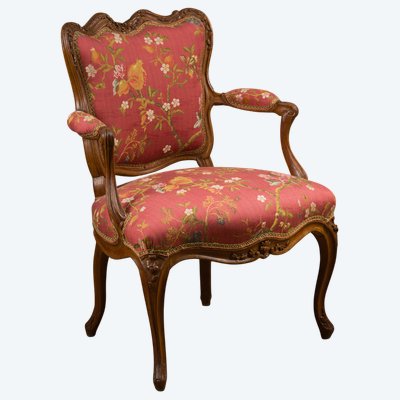
A set of six armchairs in molded and carved beechwood, stamped George Jacob.
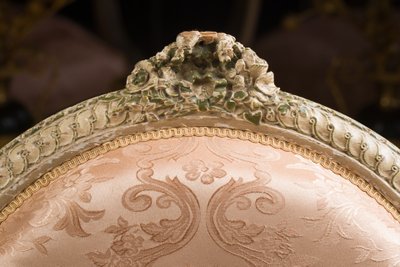
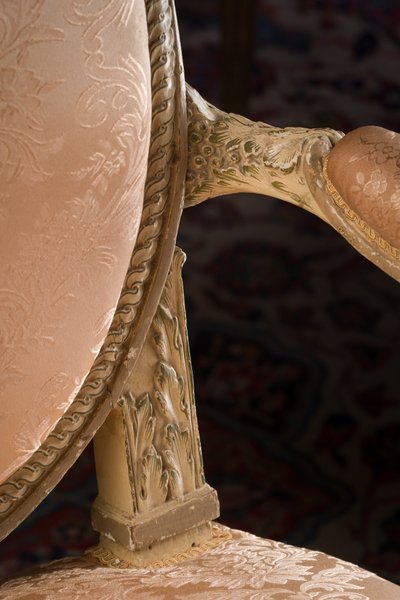
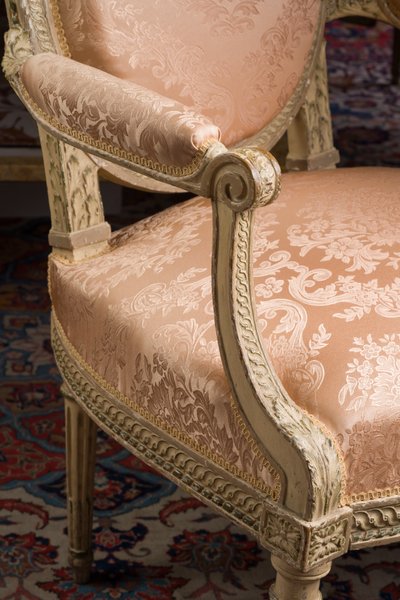
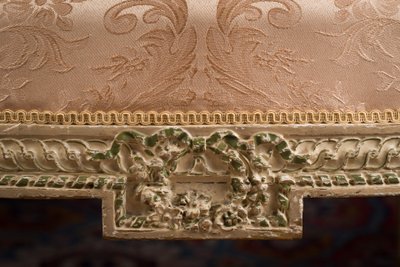
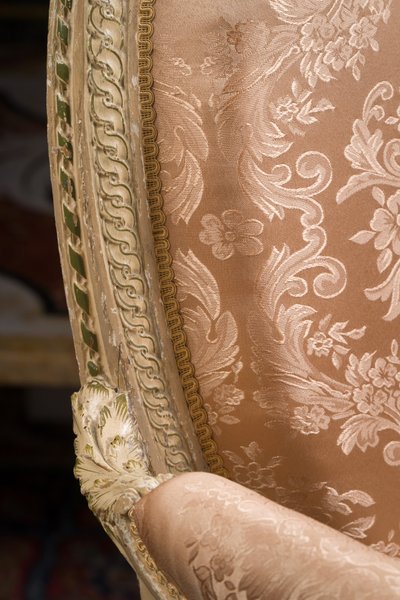
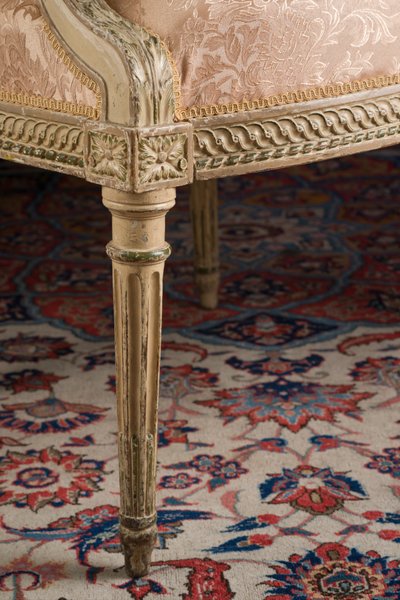
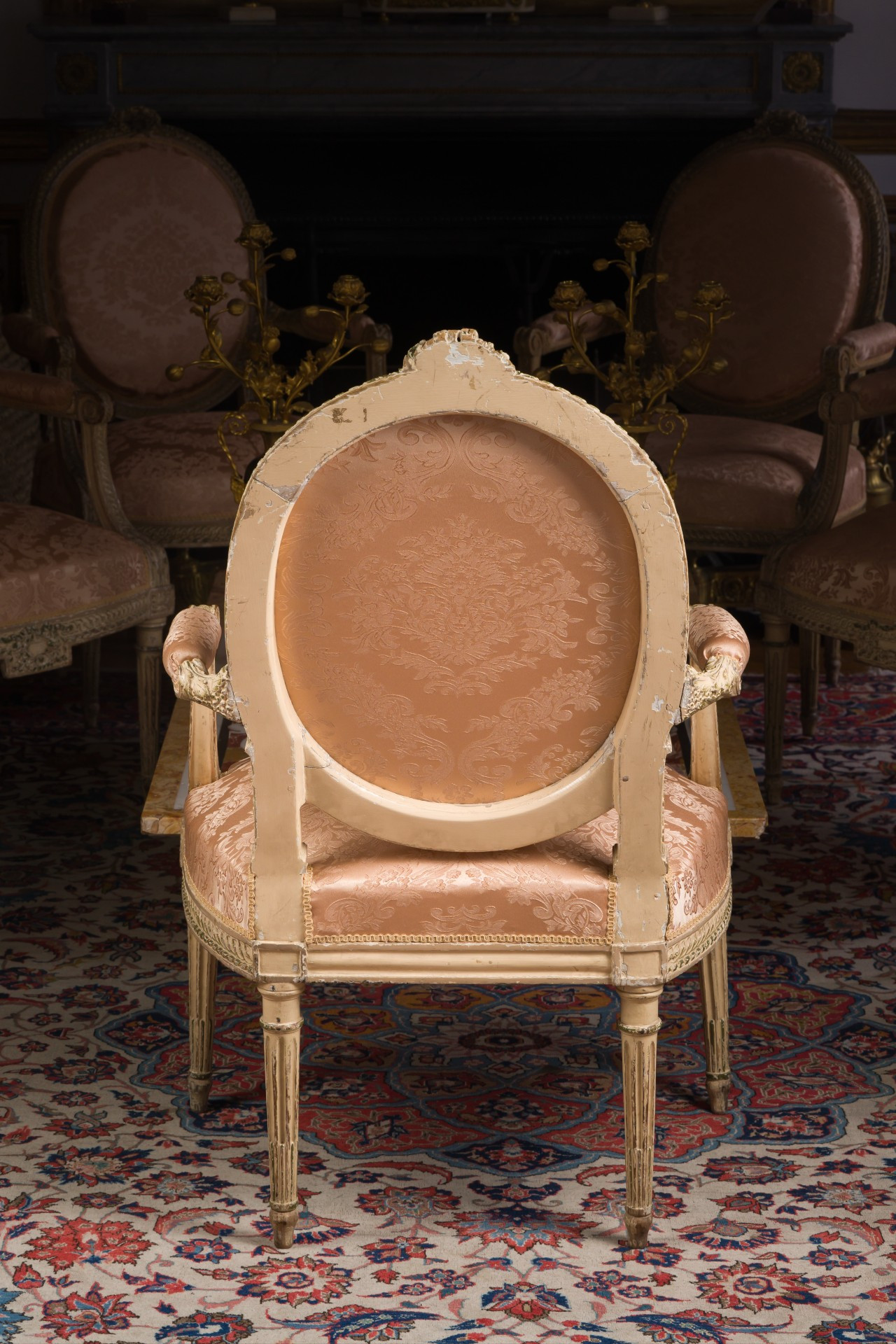
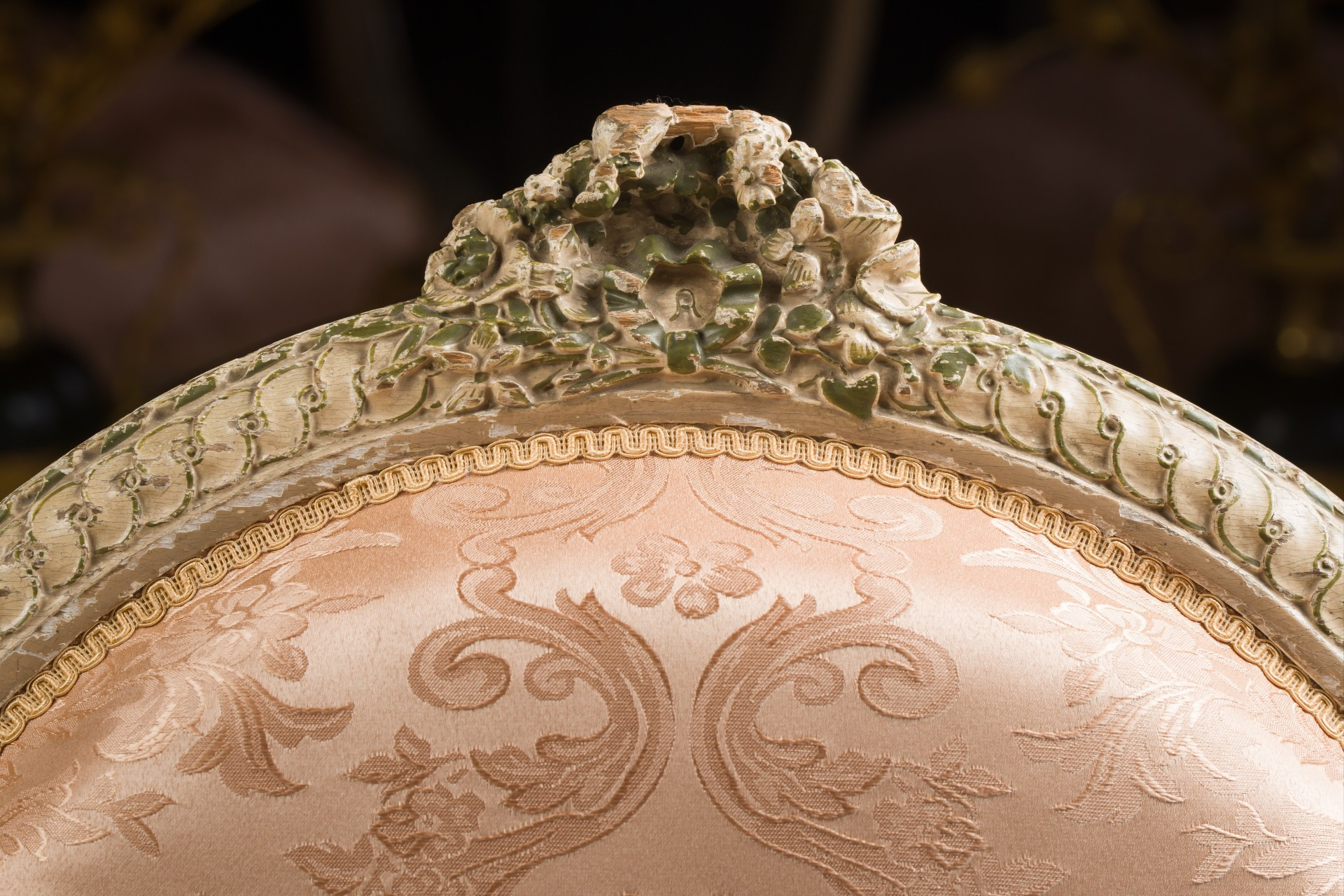
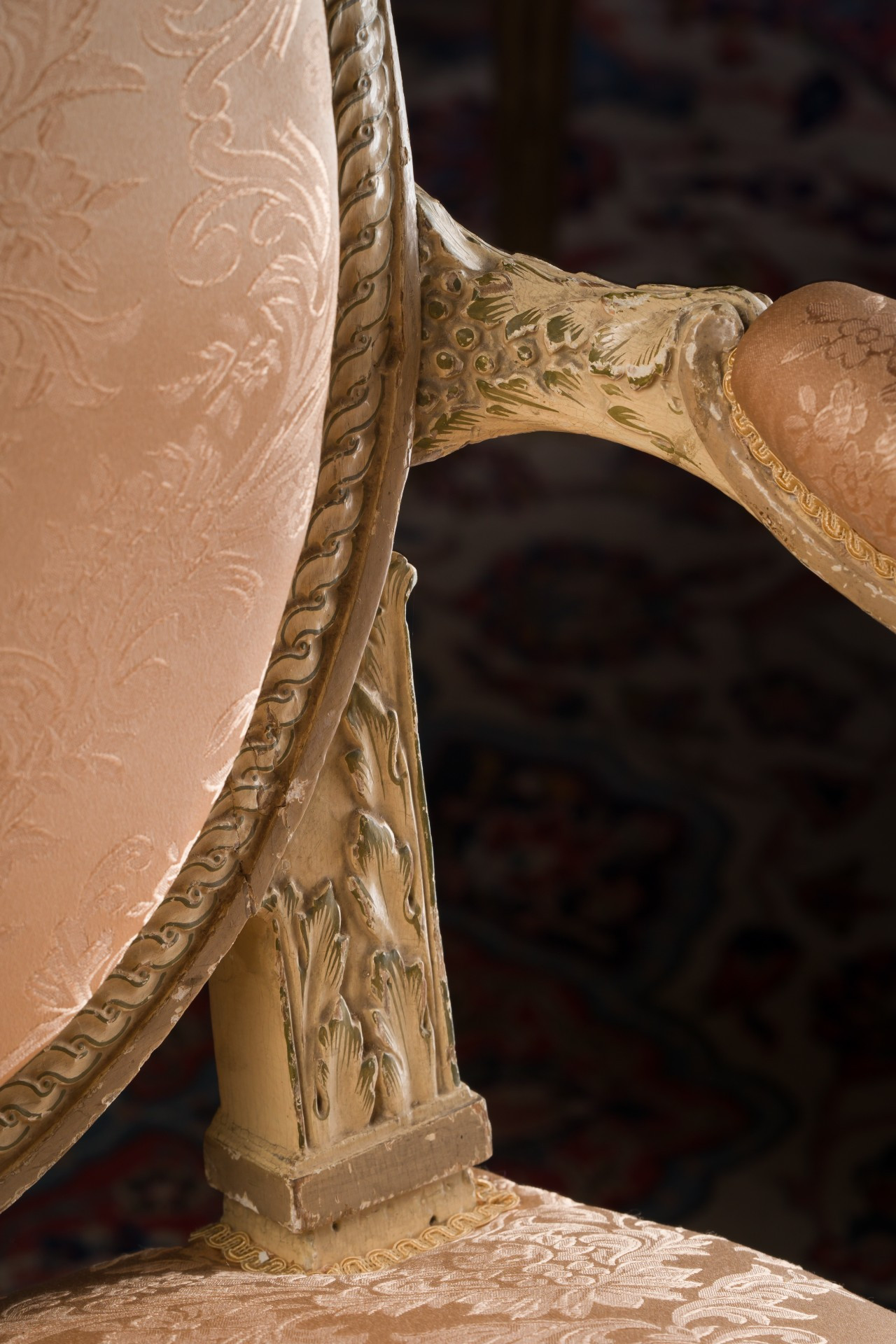
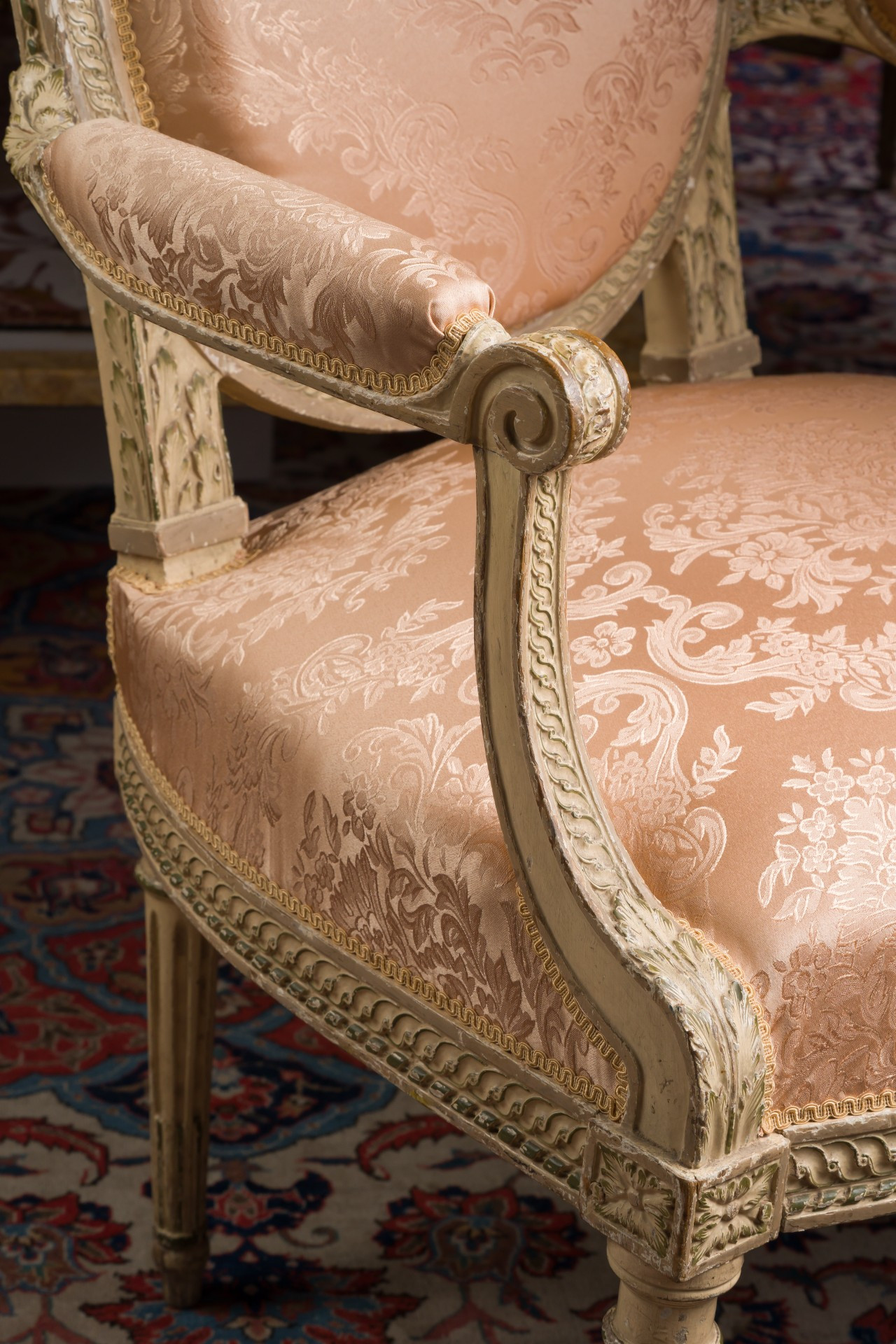
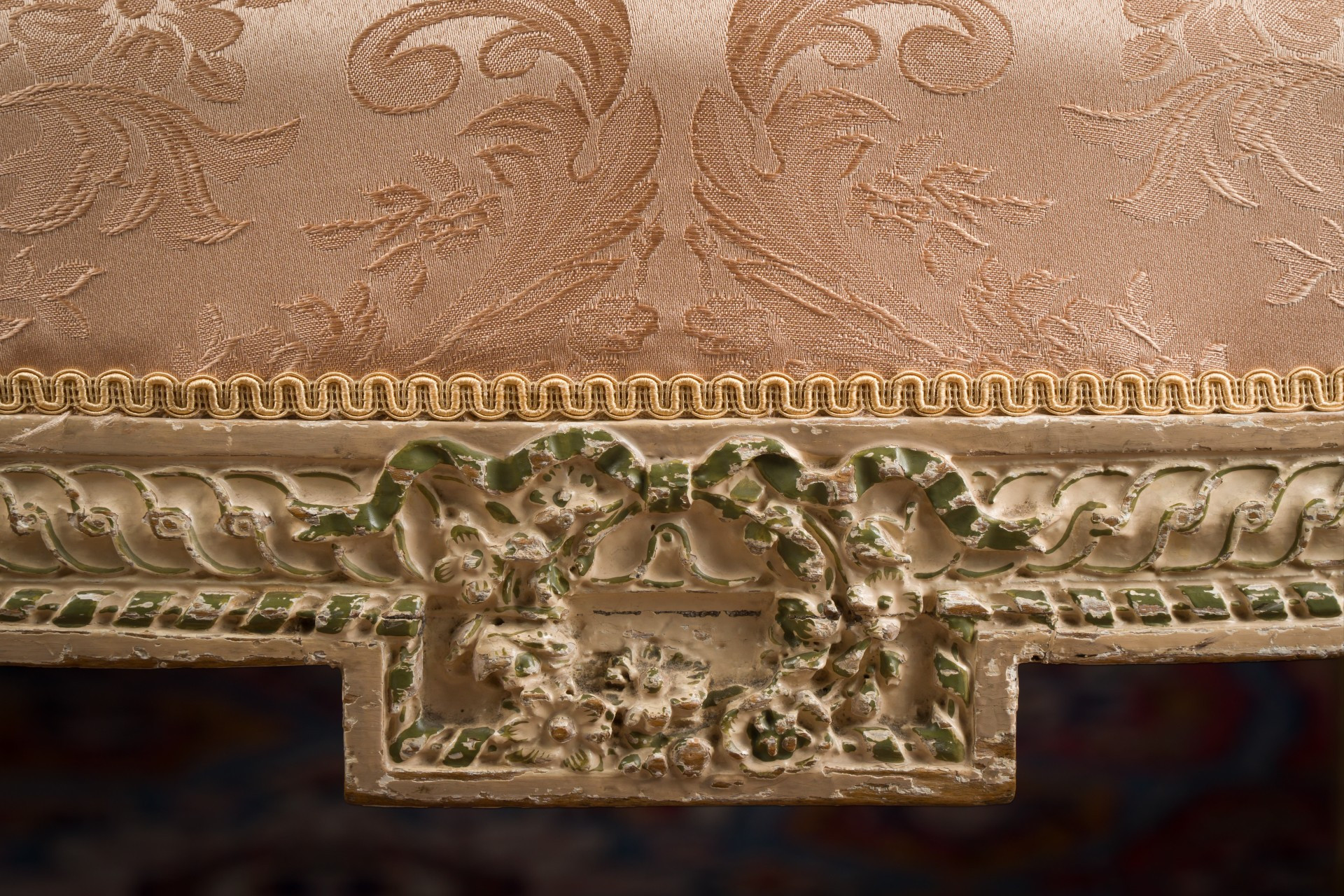
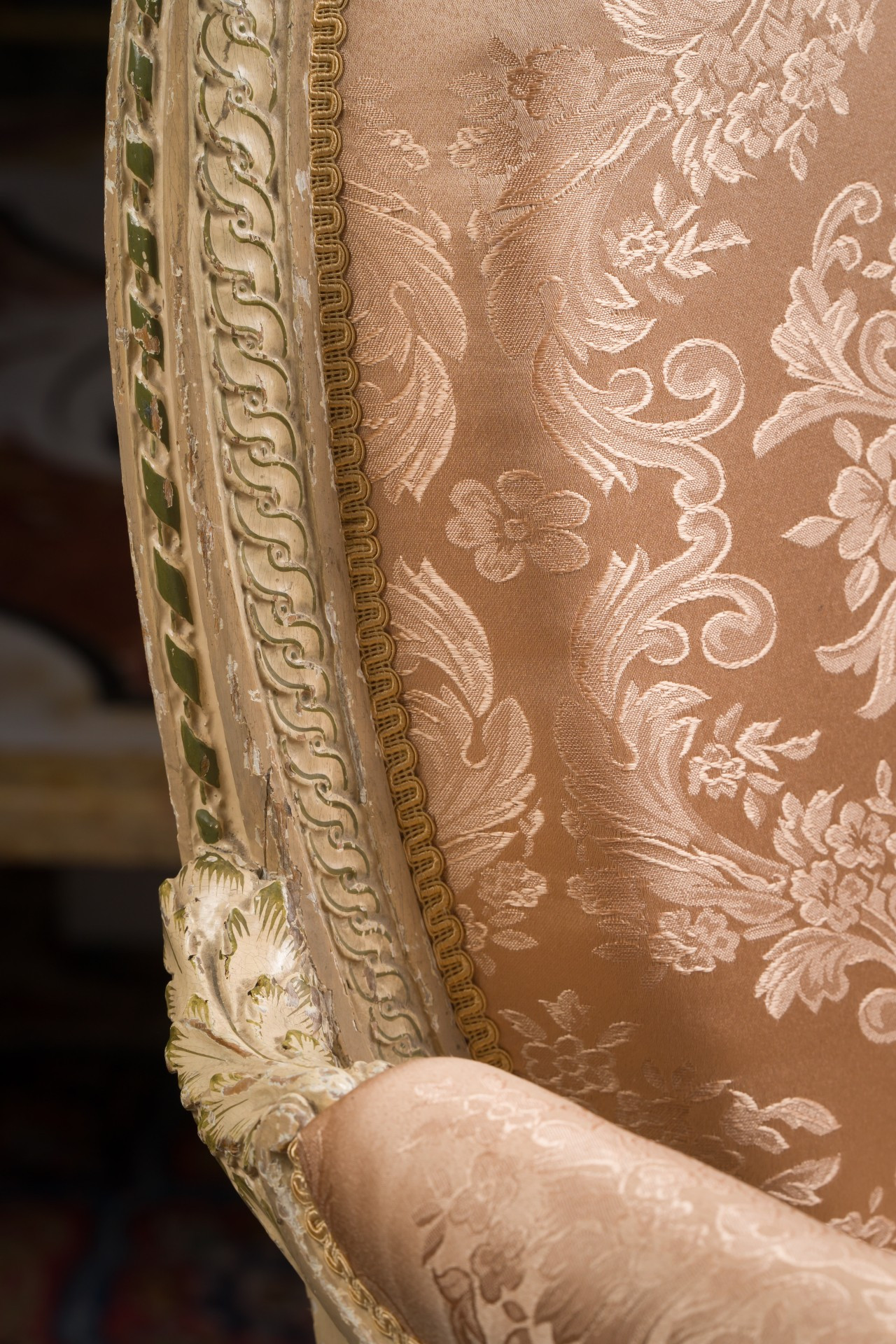
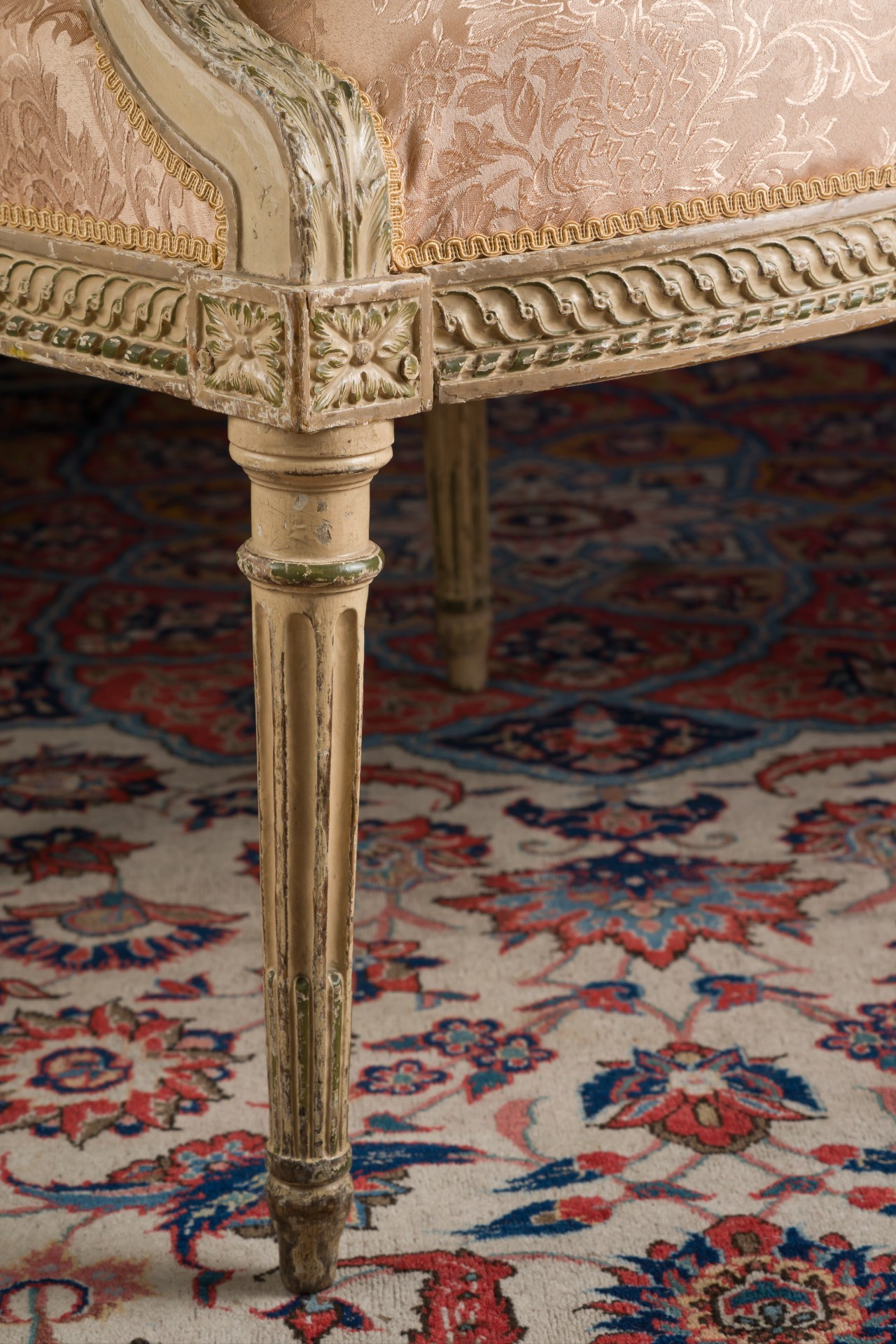
The backrest is a medallion encircled by a frieze surmounted by a knot. The armrests terminate in volutes. The joinery at the top of the backrest and the elegant apron are all details that express Georges Jacob's pursuit of excellence. The acanthus leaves on the armrest supports continue in finely carved interlacing patterns. The apron features two registers: a row of coins and a row of ribbon tori around the perimeter of the apron, which meet in a central knot. On the two front legs, the connecting block into which the molded stretchers are joined features a rosette with an indefinite number of petals. The fluted, reeded legs terminate in a constriction.
Used condition
Louis XVI
H. 104 cm W. 65 cm D. 55 cm
The medallion-shaped back was particularly common during the reign of Louis XVI, appearing on both very simple chairs and luxurious pieces like these armchairs with their noble proportions and richly sculpted decoration.
In the Jacob family of cabinetmakers, there was first the father: Georges Jacob, known as the Great Jacob. The son of winegrowers from the Yonne region, he settled in Paris in 1755. Jacob trained alongside Louis Delanois, supplier to the Countess du Barry, then opened his own workshop, first on Rue de Cléry and later on Rue Meslée. There, he crafted Louis XVI style furniture for the royal family, notably for Louis XVI's brothers (the Count of Provence and Artois) and Marie Antoinette. During the Revolution, finding himself ruined, he opted for the Greco-Roman style, known as the Directoire style. In 1796, Jacob passed the business on to his two sons: George II Jacob (the elder) and François Honoré Georges Jacob.
Today, George Jacob is considered the most famous and prolific of all 18th-century French chair makers. From 1773 until the Revolution, he worked continuously for the Crown Furniture Repository.
Georges Jacob was an innovator: it is also in the design and decoration of the legs and arms of his chairs that we find formulas launched, if not invented, by him. Many of his chairs rest on tapered legs with fluted and reeded edges. These legs connect to the seat rail with a block or finial, adorned with a rosette. In the most luxurious models, ribbons, garlands, or foliage sometimes wrap around the legs, where the fluting is replaced by bundles of arrows. Sculpture plays a prominent role in the majority of Jacob's chairs, joinery, screens, and consoles, often appearing quite abundant. It features friezes of twisted ribbons, more or less embellished with foliage or pearls, friezes of interlacing patterns, scrolling foliage, or rows of coins—particularly on the curved sections of the armrests—rows of pearls, heart-shaped motifs, stylized acanthus leaves, and finally, straight or twisted fluting.
The Revolution, however, placed him in a difficult position. Many of his clients emigrated and failed to pay their debts. In 1796, he finally went bankrupt and passed his workshop on to his two sons, Georges Jacob Fils and François-Honoré, who established the firm Jacob Frères on Rue Meslée, which remained active during the Directory and the Consulate.
Ref: YA0PB18WYU

 English
 Français
 Italiano
 Deutsch
 19th century mahogany burr veneer box
160 € EUR