


Would you like more images?


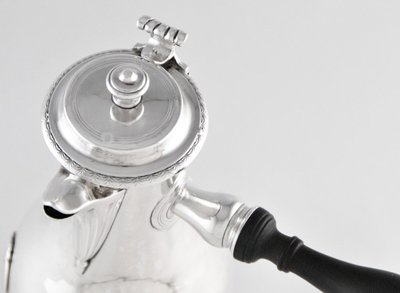
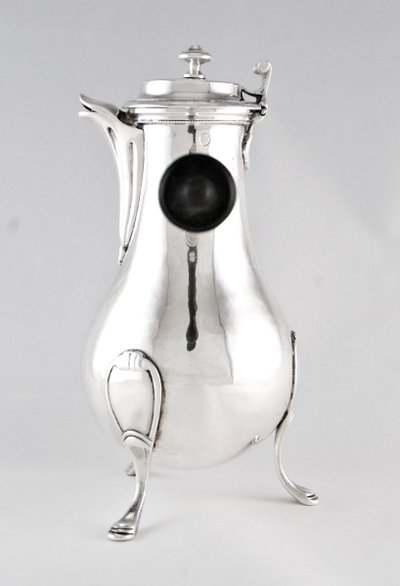
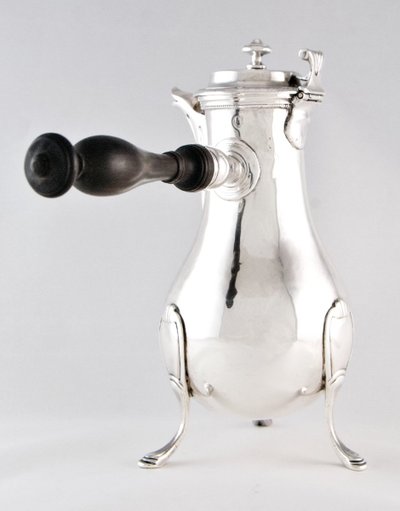
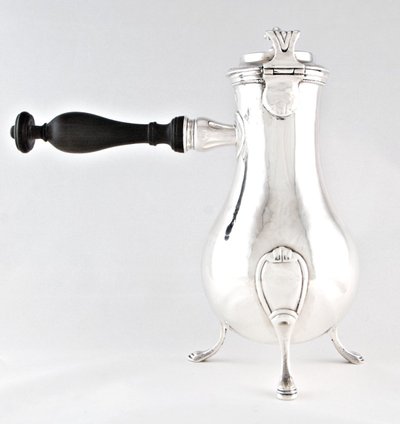
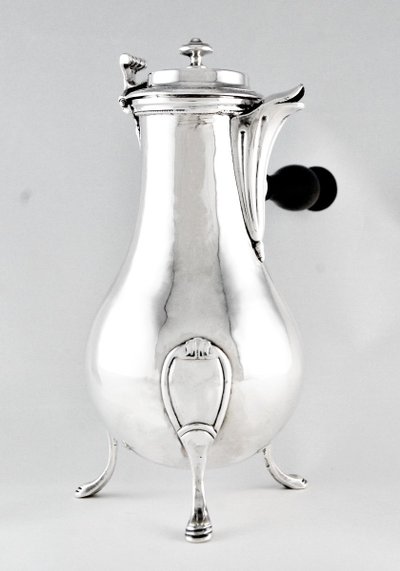
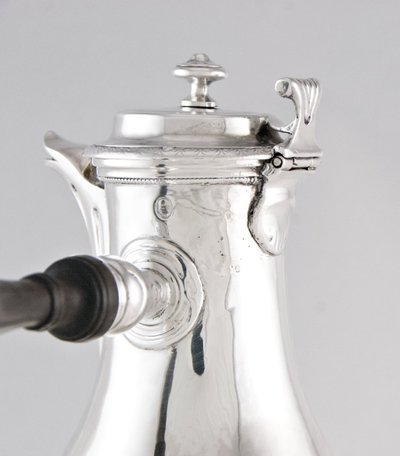
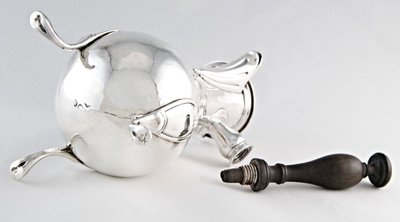
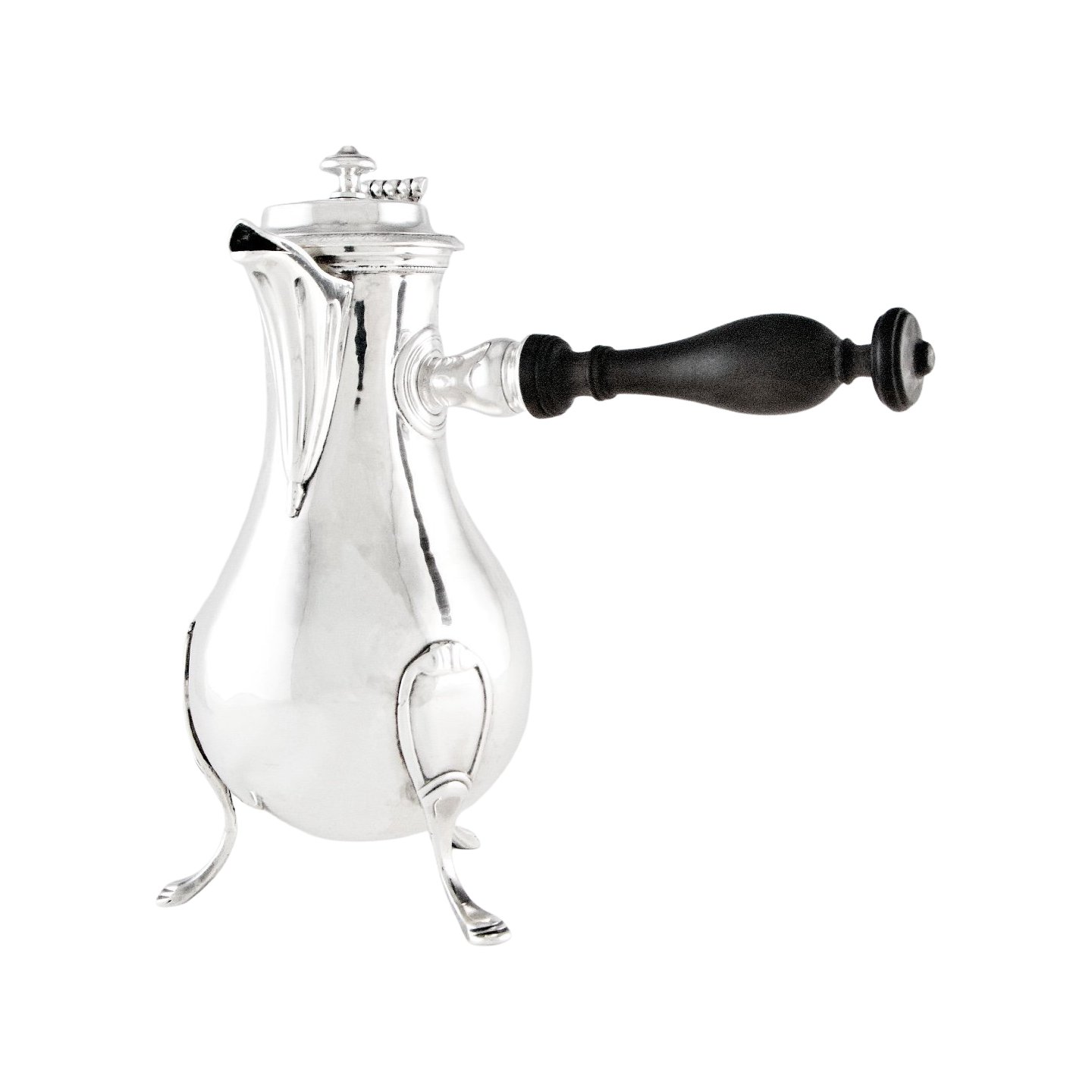
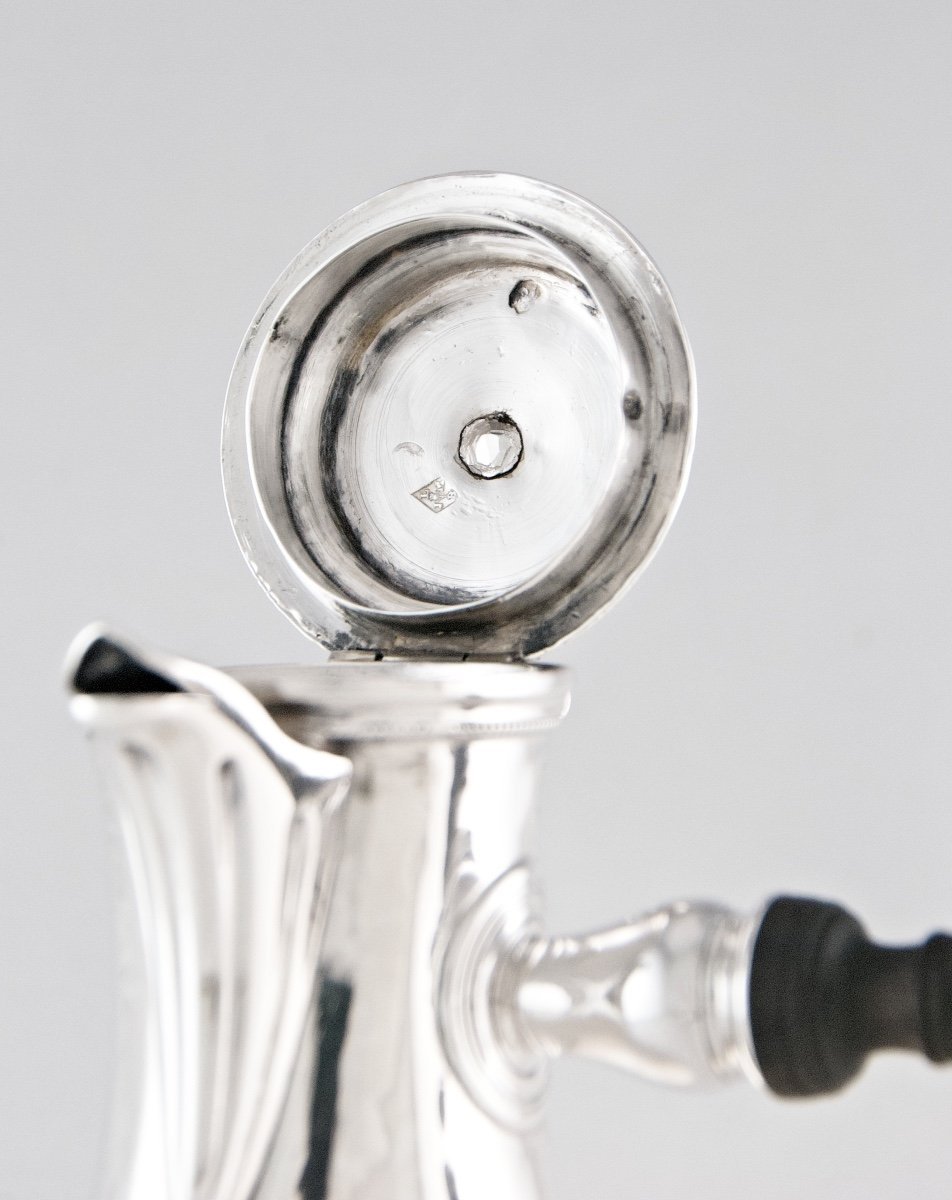
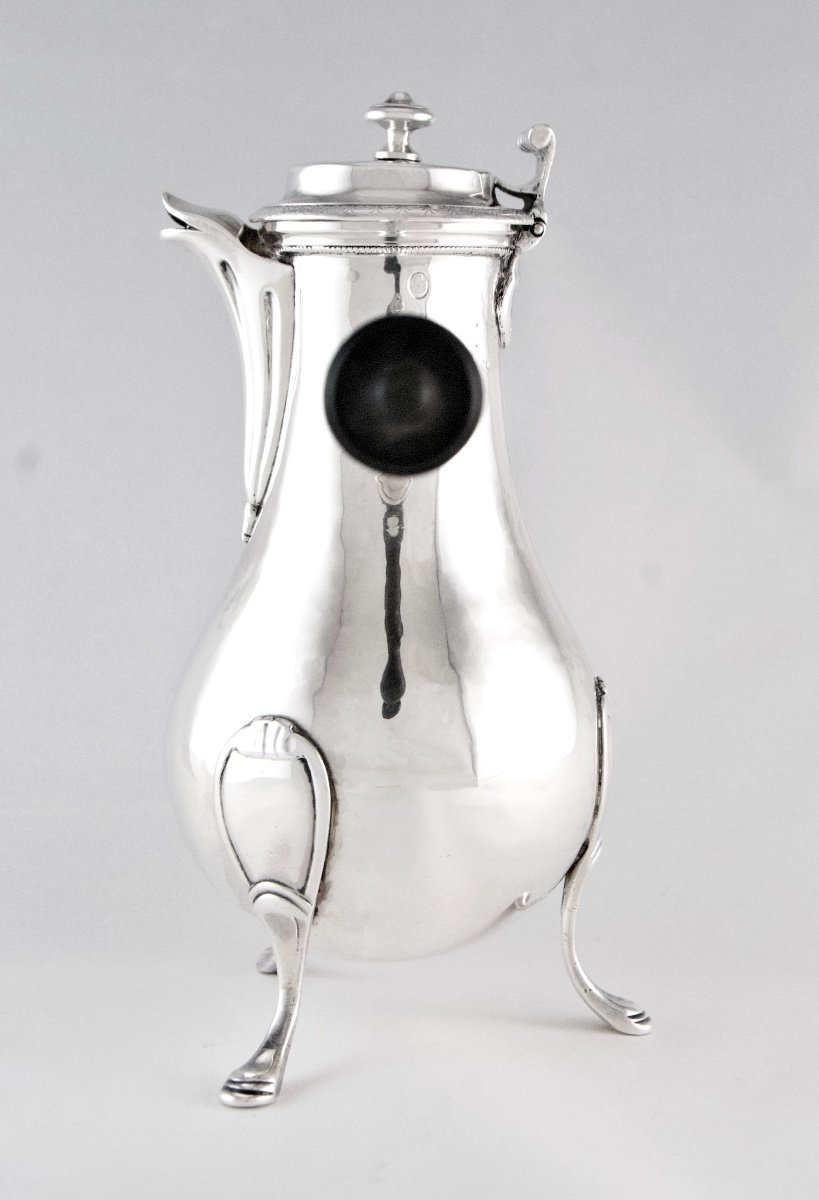
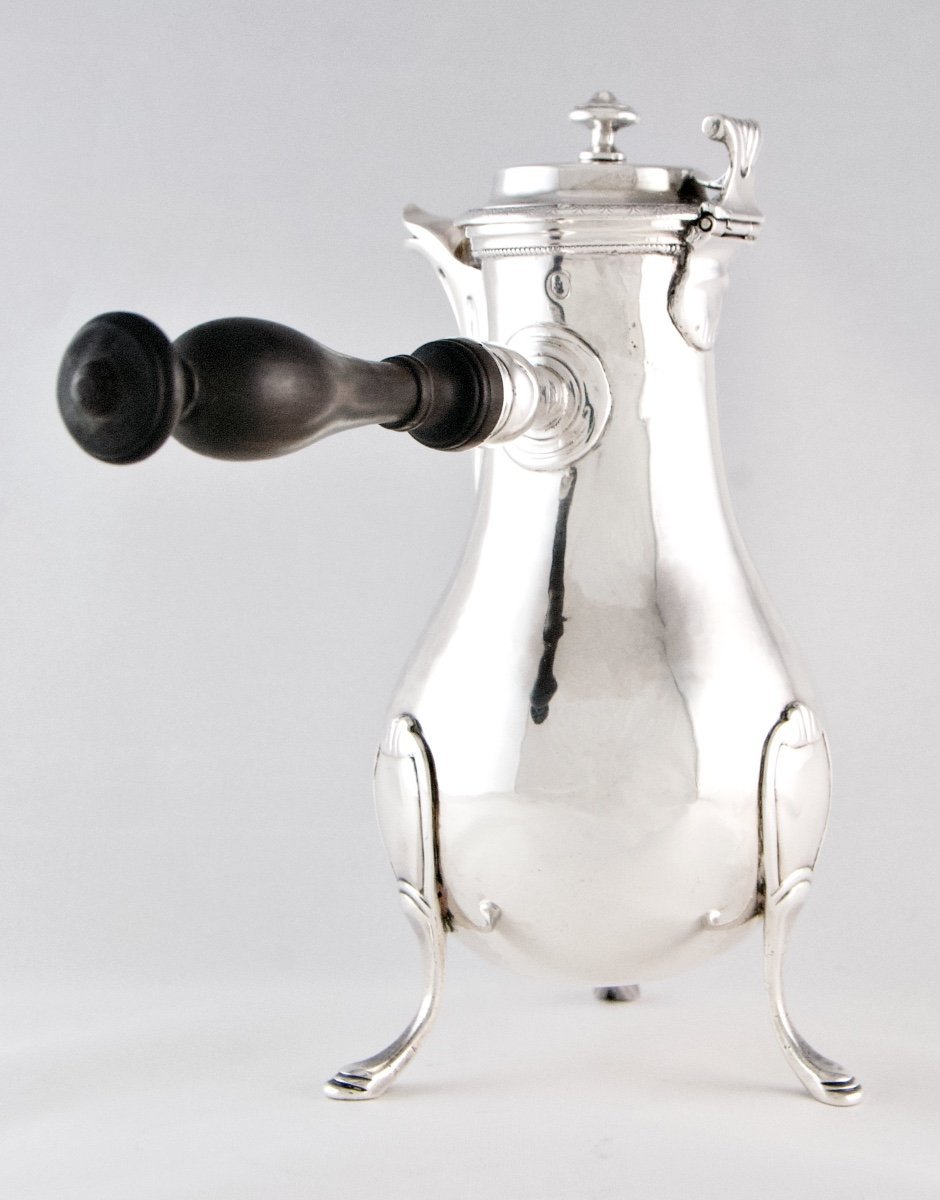
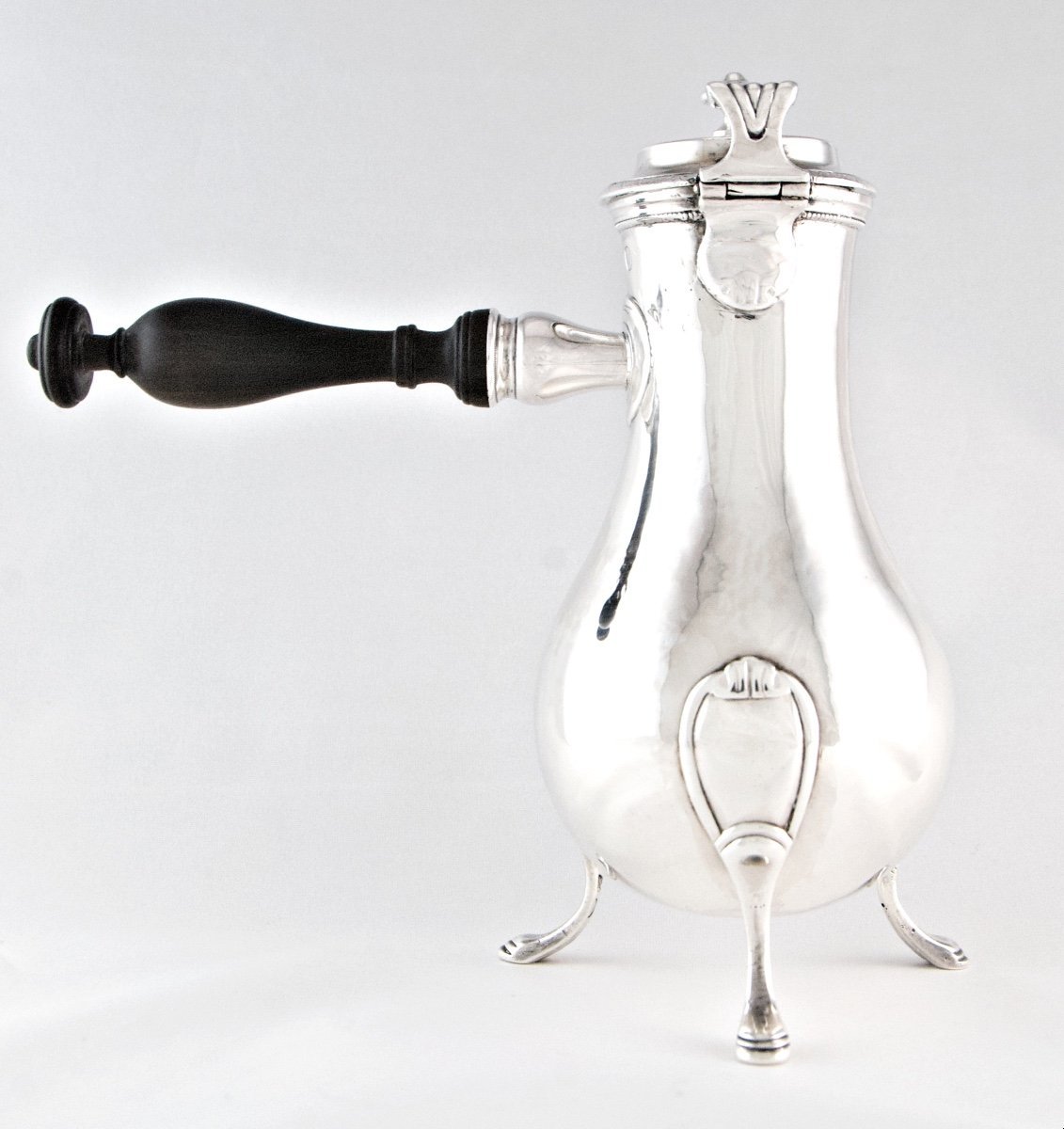
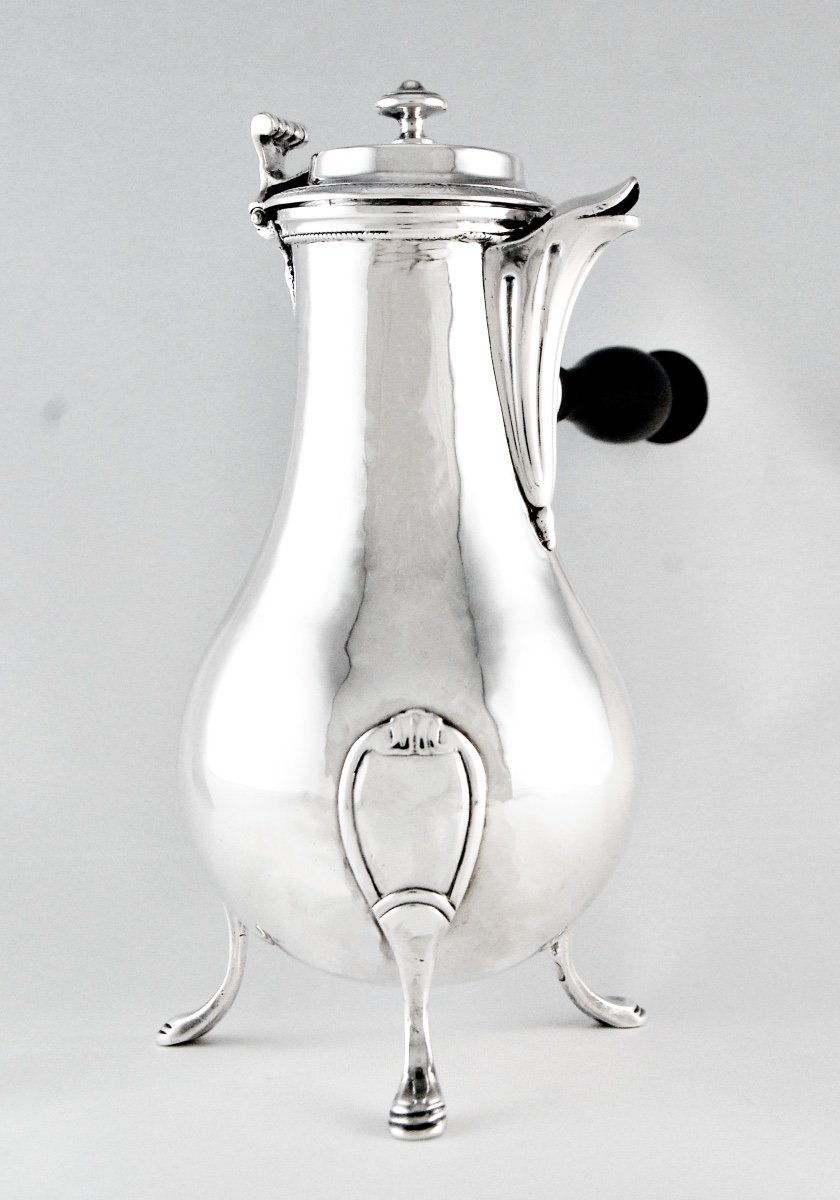
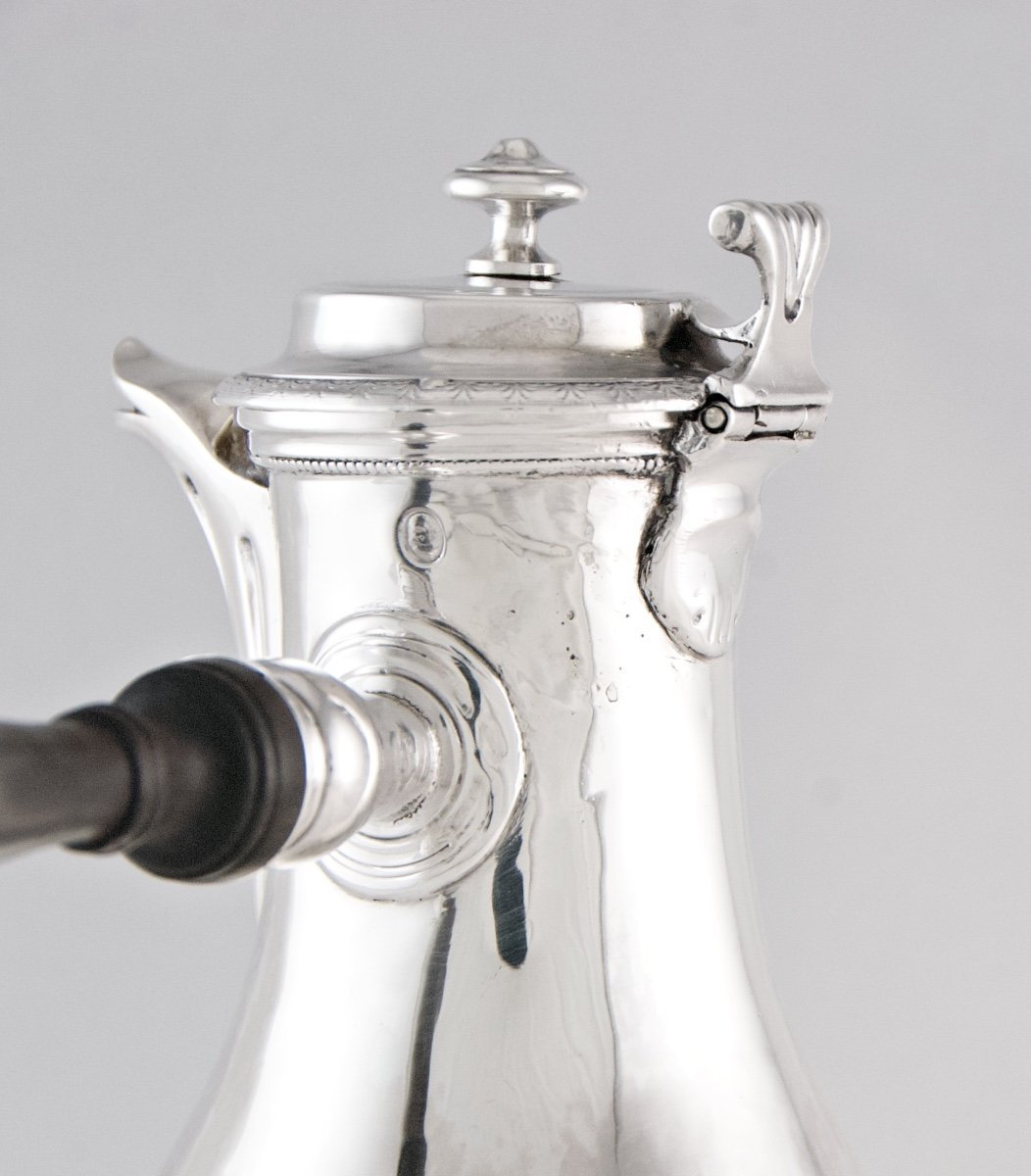
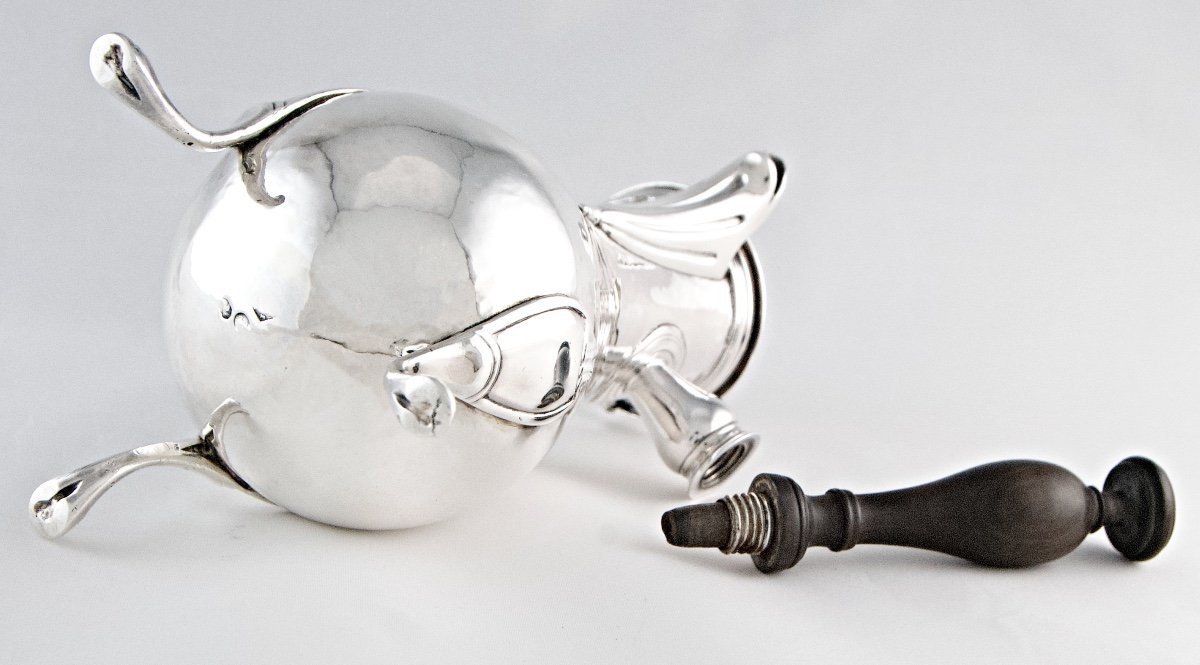
A first-standard silver tripod ewer in a baluster shape with escutcheon-shaped brackets. The lid, with a thumb rest, is molded and decorated with a frieze of palmettes and fillets on the base, surmounted by a finial. The rim is adorned with a fine cornice delicately highlighted by a frieze of finely chased pearls. The spout, with its undulating shape, is embellished with fluting and an asparagus tip at the base, while a substantial circular bracket joins the body to the very fine turned wooden handle with gadroons and fillets, complete with its silver screw thread. The three feet are decorated with moldings and foliate clasps.
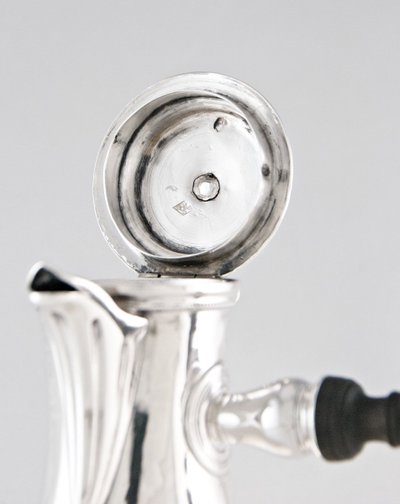
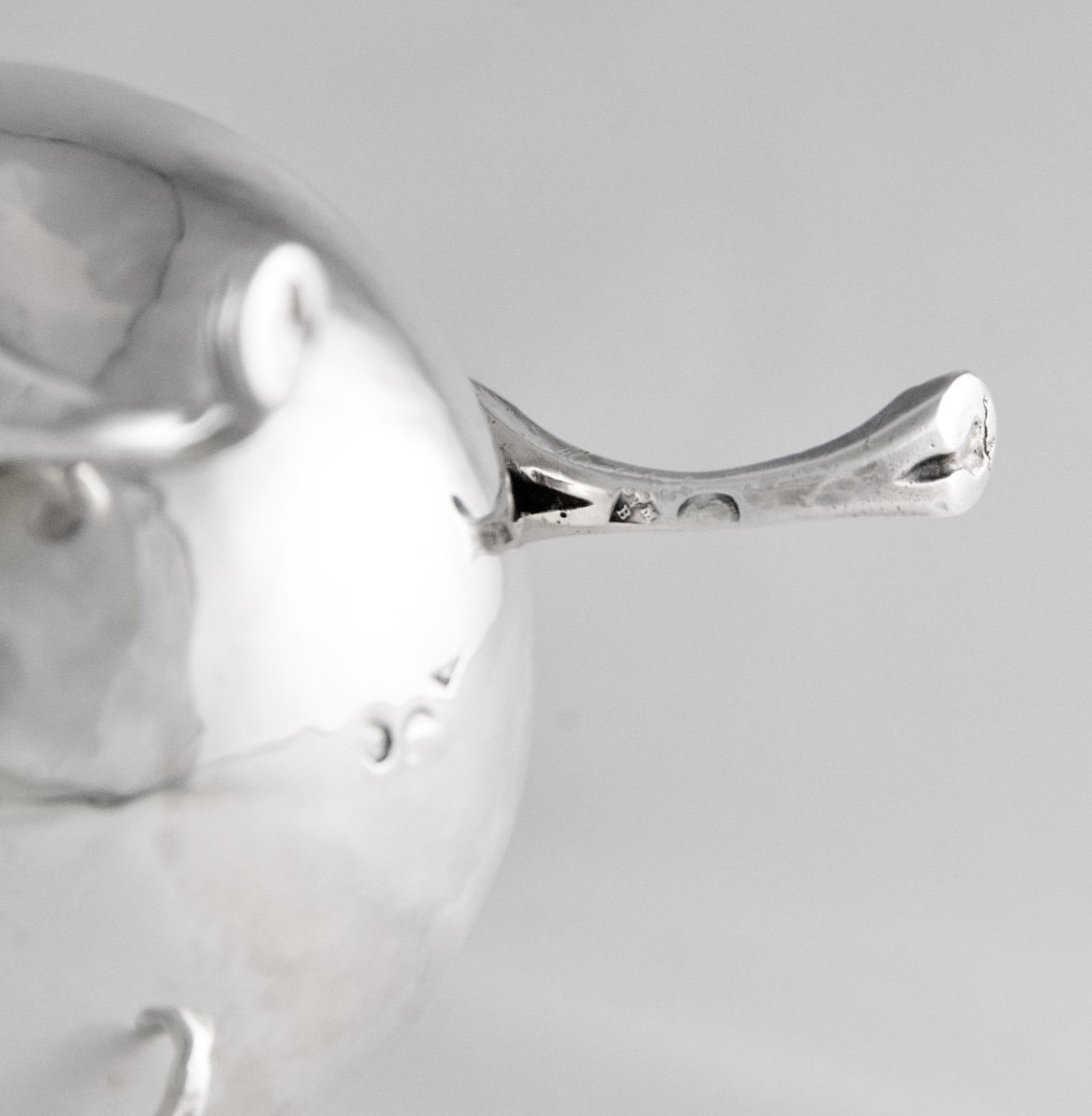
Hallmarks (body, lid, and feet):
• First standard silver rooster.
• Goldsmiths' association with the number 1.
• Paris guarantee.
• Master silversmith: LJMB, a lily of the valley flower for Louis-Joseph MILLERAUD-BOUTY.
Gross weight: 300 grams; net weight: 280 grams.
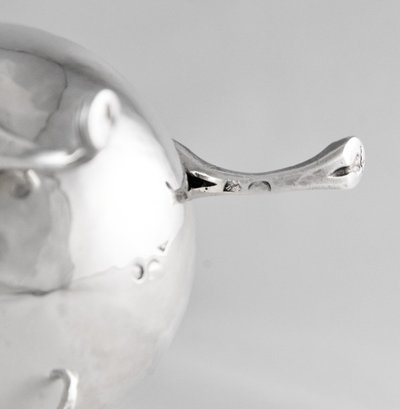
Condition report: wear consistent with age to the chasing, an old restoration to the thumb rest attachment at the back (visible in the detail photographs), an integral part of the object's history but taken into account in the pricing.
An identical coffee pot by Louis-Joseph BOUTY is held at the Philadelphia Museum of Art[1].
[1] PHILADELPHIA MUSEUM OF ART, Philadelphia, Coffee pot, silver, 1st rooster, Paris c.1798. Inv. 1946-33-7.
MILLERAUD-BOUTY
Louis-Joseph BOUTY, known as MILLERAUD-BOUTY, was a Parisian goldsmith born in 1733. He became a master in Paris on January 23, 1779, sponsored by the goldsmith Nicolas CHEVALLIER. On January 30, 1779, he registered his hallmark: a crowned fleur-de-lis, two grains, LJMB, and a star. Louis-Joseph BOUTY initially established his workshop on Rue Saint-Eloi, then on Rue de la Juiverie between 1788 and 1791, and finally at 47 Quai de l’Horloge.
Louis-Joseph BOUTY Traces of his work can be found until 1810; he is mentioned in the 1812 Almanach Azur.
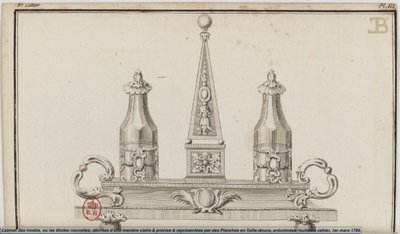
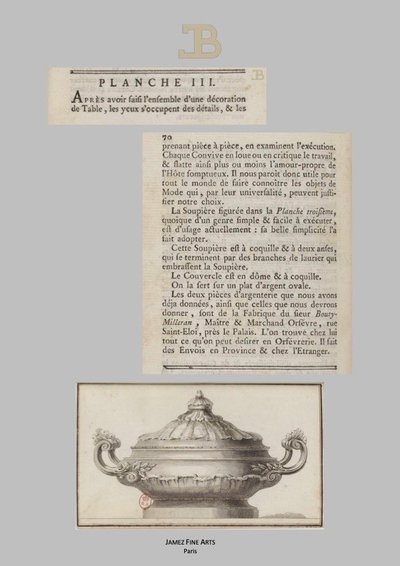
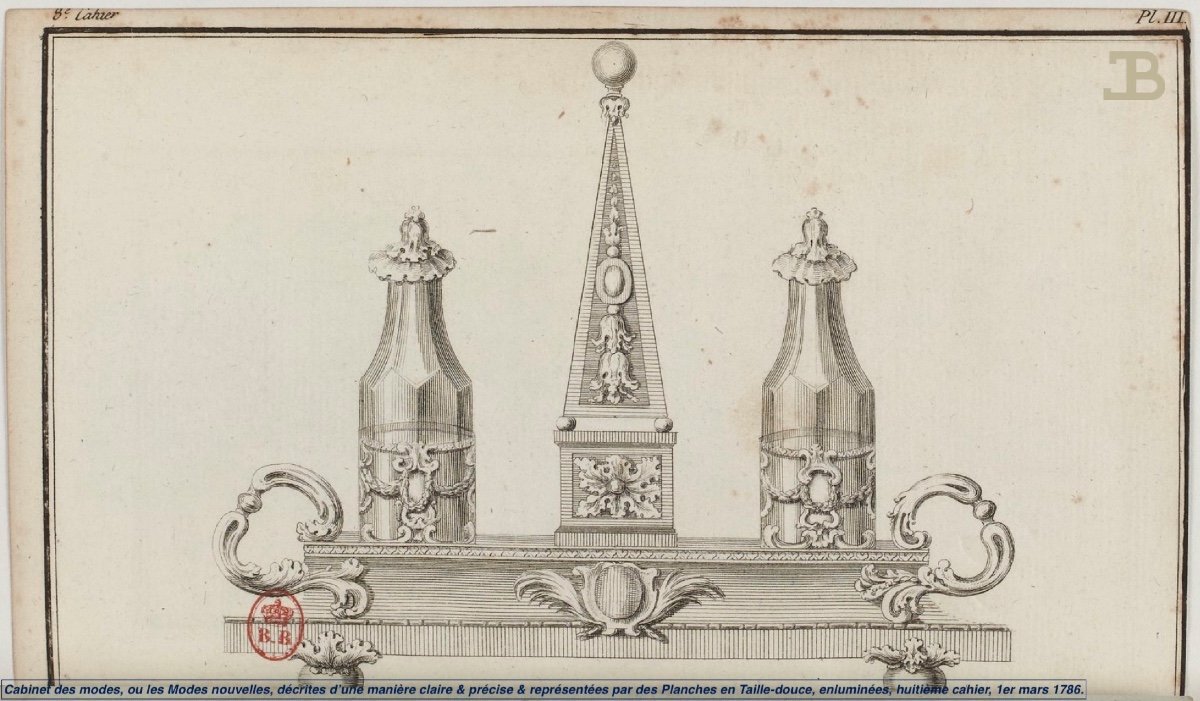
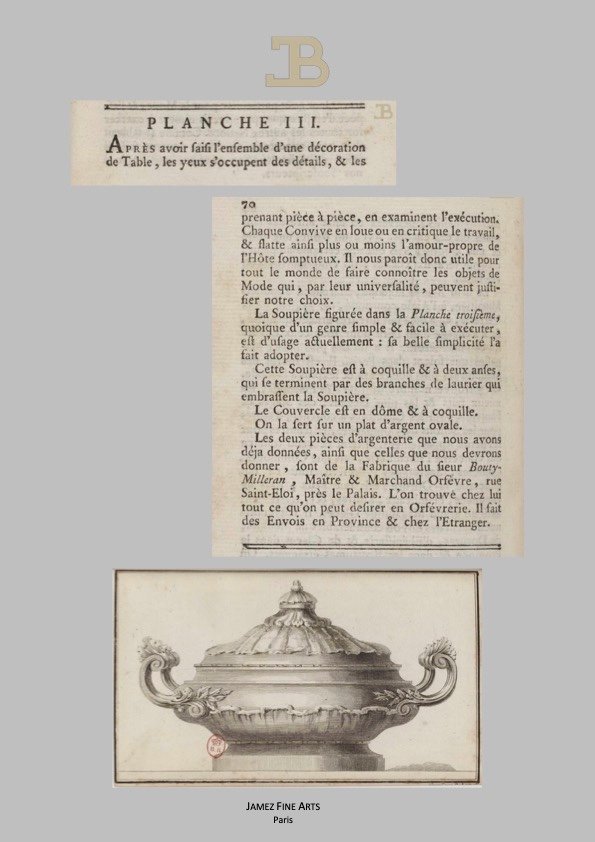
Some of Louis-Joseph Bouty's designs are reproduced in the Cabinet des Modes ou les Modes Nouvelles, editions of March 1st and 15th, 1786.
MUSEUMS AND PUBLIC INSTITUTIONS:
• Petit Palais, Musée des Beaux-Arts de la Ville de Paris, Paris, Tray, silver, Paris, 1781-1782, inv. ODUT1467(C).
• Petit Palais, Musée des Beaux-Arts de la Ville de Paris, Paris, Sugar bowl and its lid, silver, Paris, 1785-1786, inv. ODUT1467(A-B).
• CHURCH, Candé, Cruet tray, silver, Paris, 1787, listed as a Historical Monument on January 25, 1977.
• METROPOLITAN MUSEUM OF ART, New York, Sugar bowl with cover, silver, Paris, 1785-1787, inv. 48.187.71a, b.
• PHILADELPHIA MUSEUM OF ART, Philadelphia, Coffee pot, silver, 1st rooster, Paris c. 1798. Inv. 1946-33-7.
BIBLIOGRAPHY
• BOIVIN J., The Old French Goldsmiths and Their Hallmarks, Paris, 1925.
• DOUËT S. P., Table of Symbols of Parisian Goldsmithing, 1809.
• NOCQ H., The Goldsmiths of Paris, 1926.
• PERON A., Table of Manufacturers of Gold, Silver, etc., 1804.
• Almanach Azur, 1811 and 1812.
• Almanach du Commerce, 1806.
• Archives of the Guarantee, Paris, plate of indictment no. 2.
• Archives of the Guarantee, Paris, register of indictments. 1820 to 1840.
• Cabinet of Fashions, or New Fashions..., eighth issue, March 1, 1786 and ninth issue, March 15, 1786.
Ref: FEPGD5X8HL
| Condition | Good |
| Style | Louis XVI (Silver Shaped Pieces of Louis XVI Style) |
| Period | 18th century (Silver Shaped Pieces 18th century) |
| Goldsmith / Silversmith | Louis-Joseph Bouty, dit Milleraud-Bouty |
| Country of origin | France |
| Artist | Louis-Joseph Bouty, dit Milleraud-Bouty |
| Length (cm) | 18 |
| Width (cm) | 9 |
| Height (cm) | 17 |
| Weight (Kg) | 0.300 |
| Materials | Solid silver |
| Shipping Time | Ready to ship in 4-7 Business Days |
| Location | 75016, Paris, France |
| Shipping Information | Shipping: We take special care when shipping all orders to ensure their safety during transit. Each item is carefully packaged with high-quality protective materials to prevent damage. We use reliable, trackable delivery services to guarantee fast and secure shipping. Delivery Times: Shipping Costs: International Shipping: Checking Upon Receipt: Insurance and Liability: |
4 commitments to buy with confidence

 English
 Français
 Italiano
 Deutsch