This description has been translated and may not be completely accurate. Click here to see the original
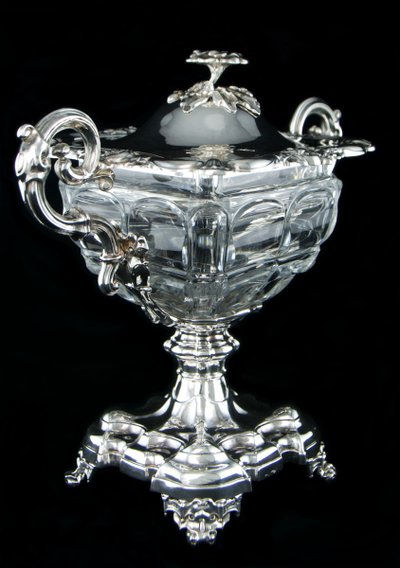
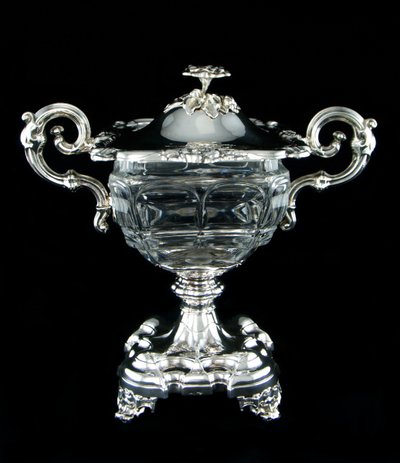
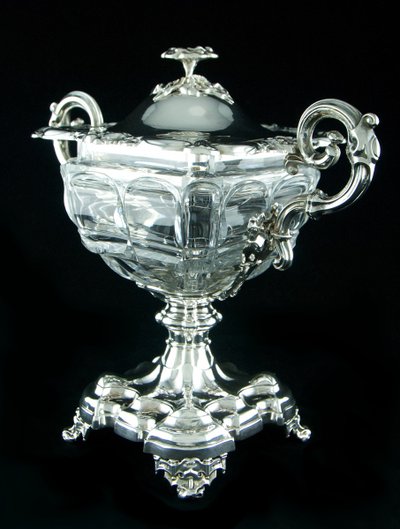
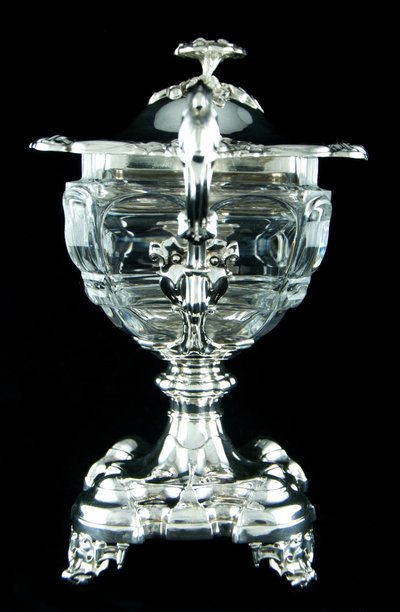
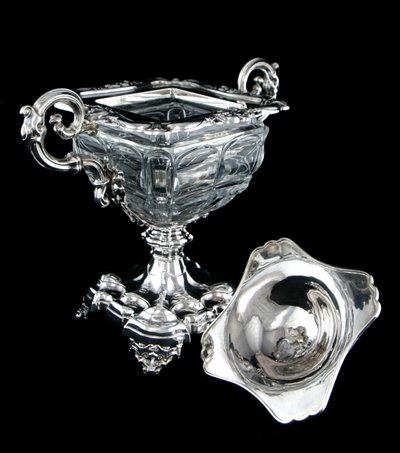
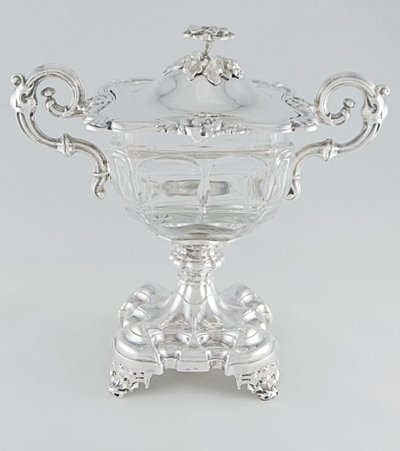
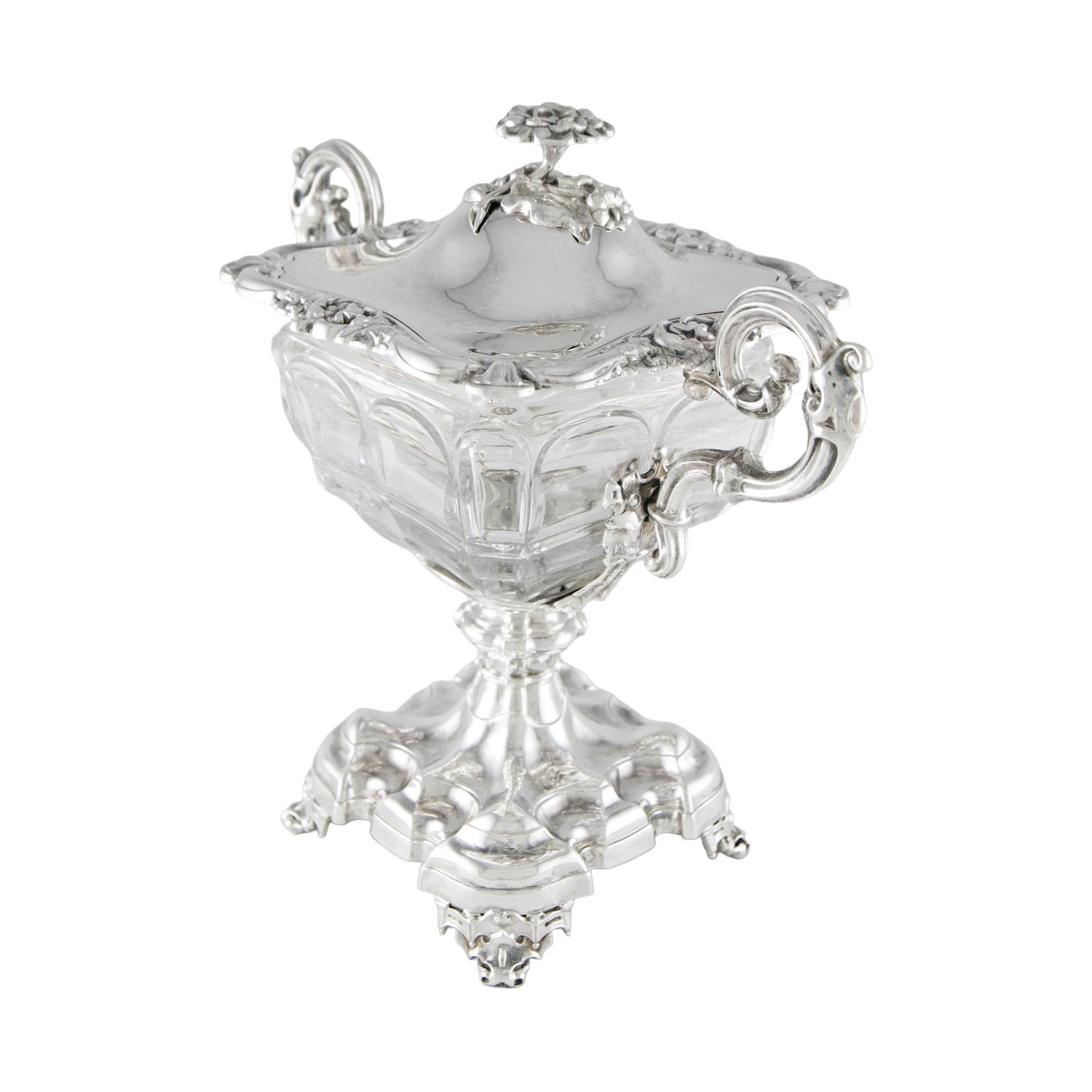
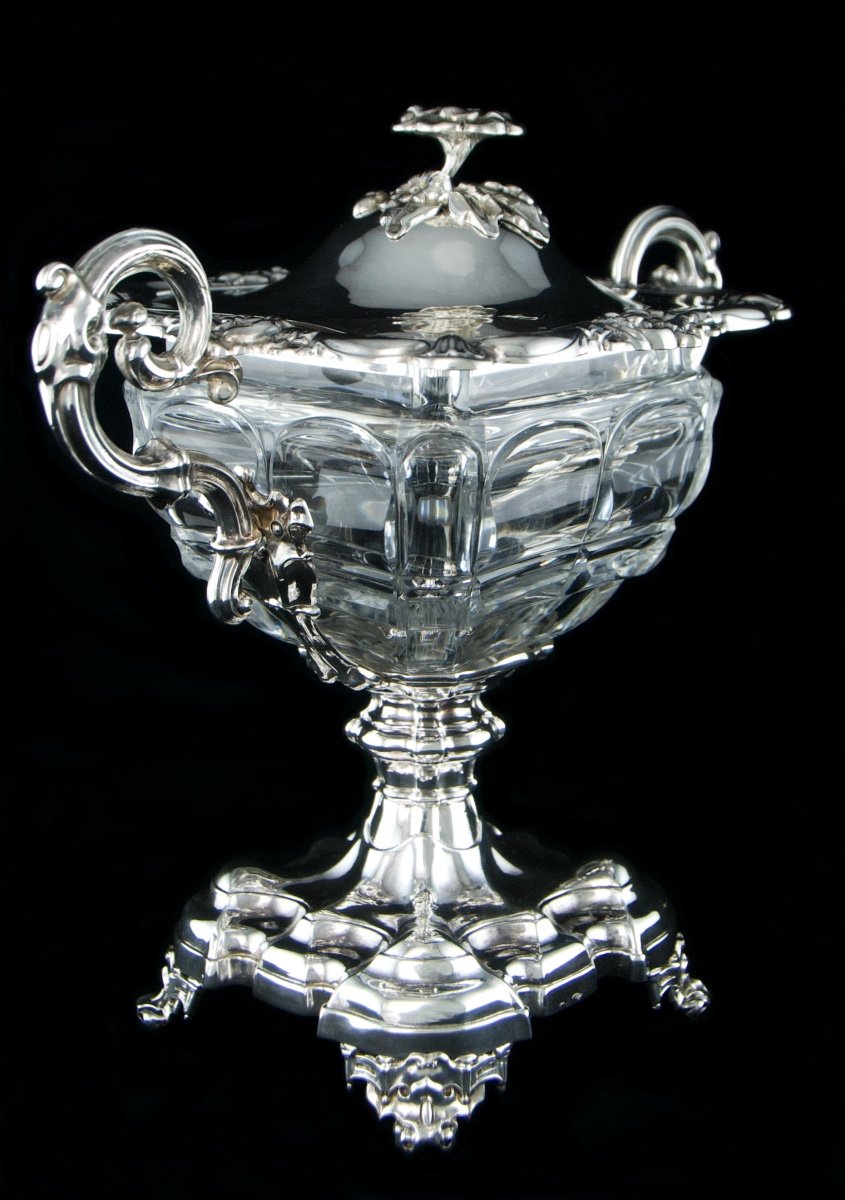
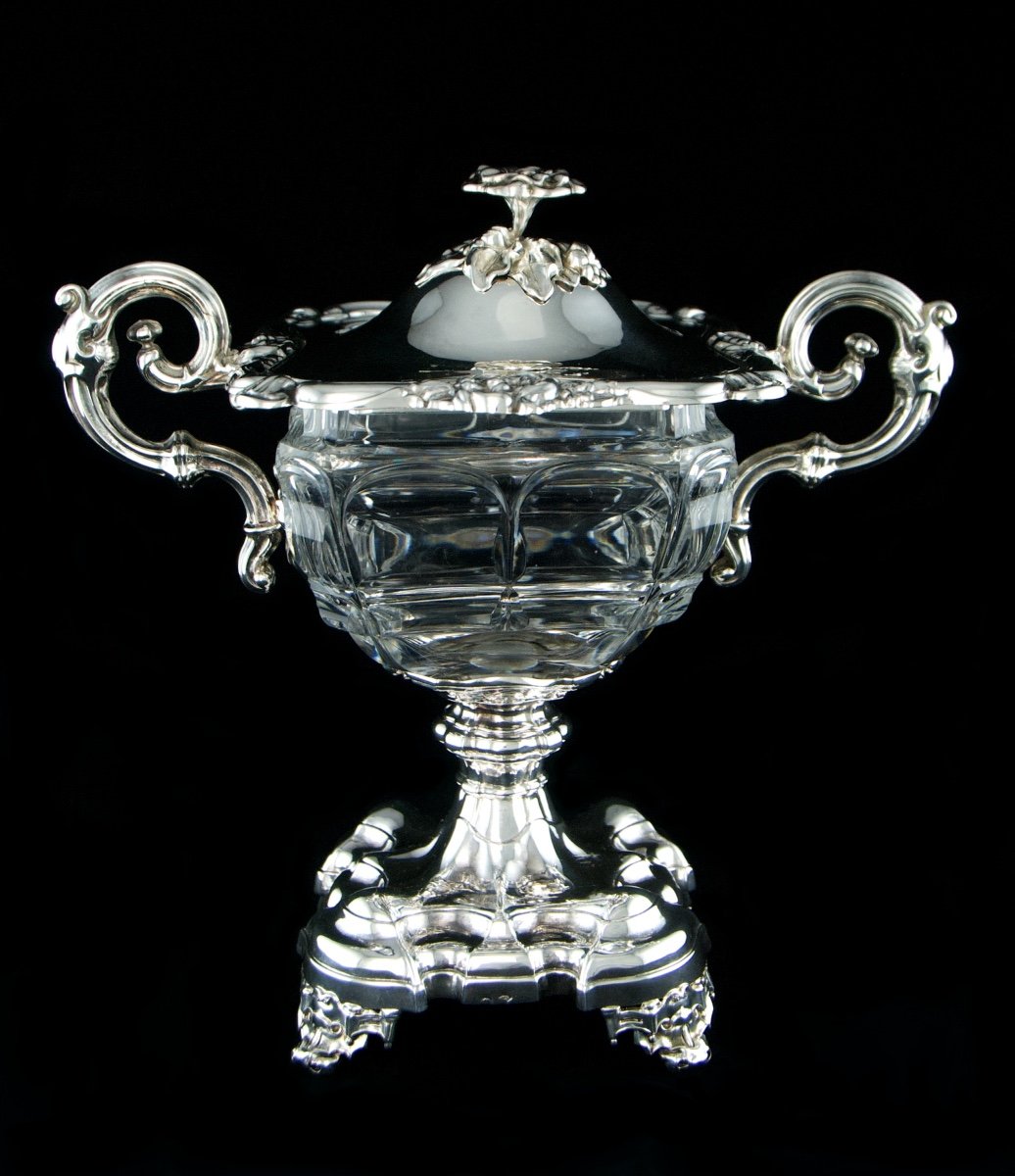
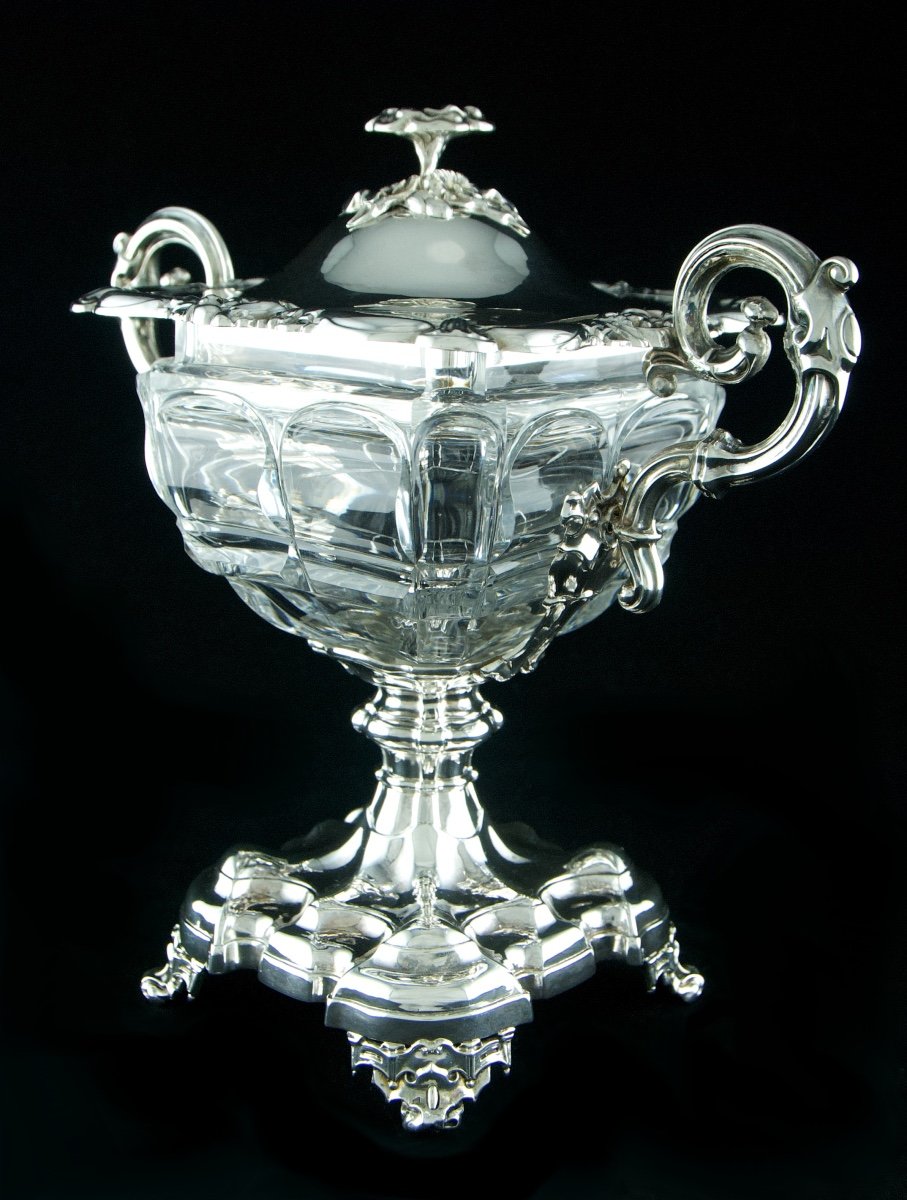
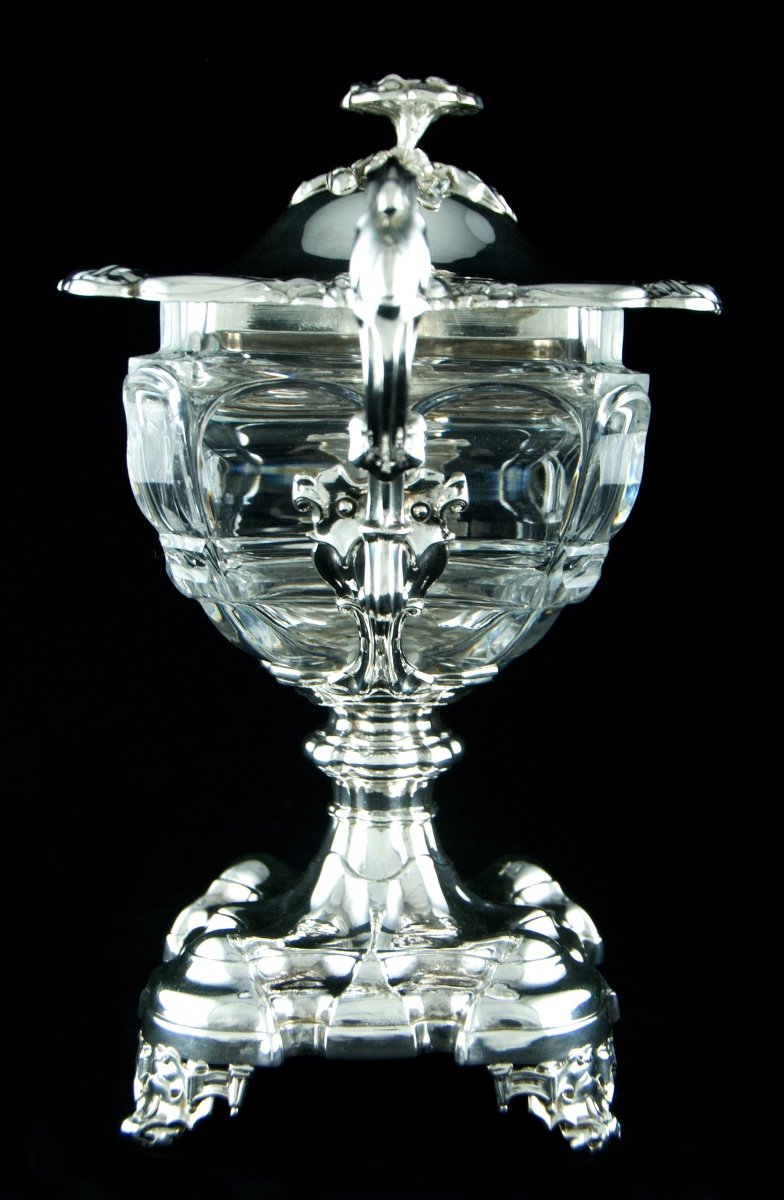
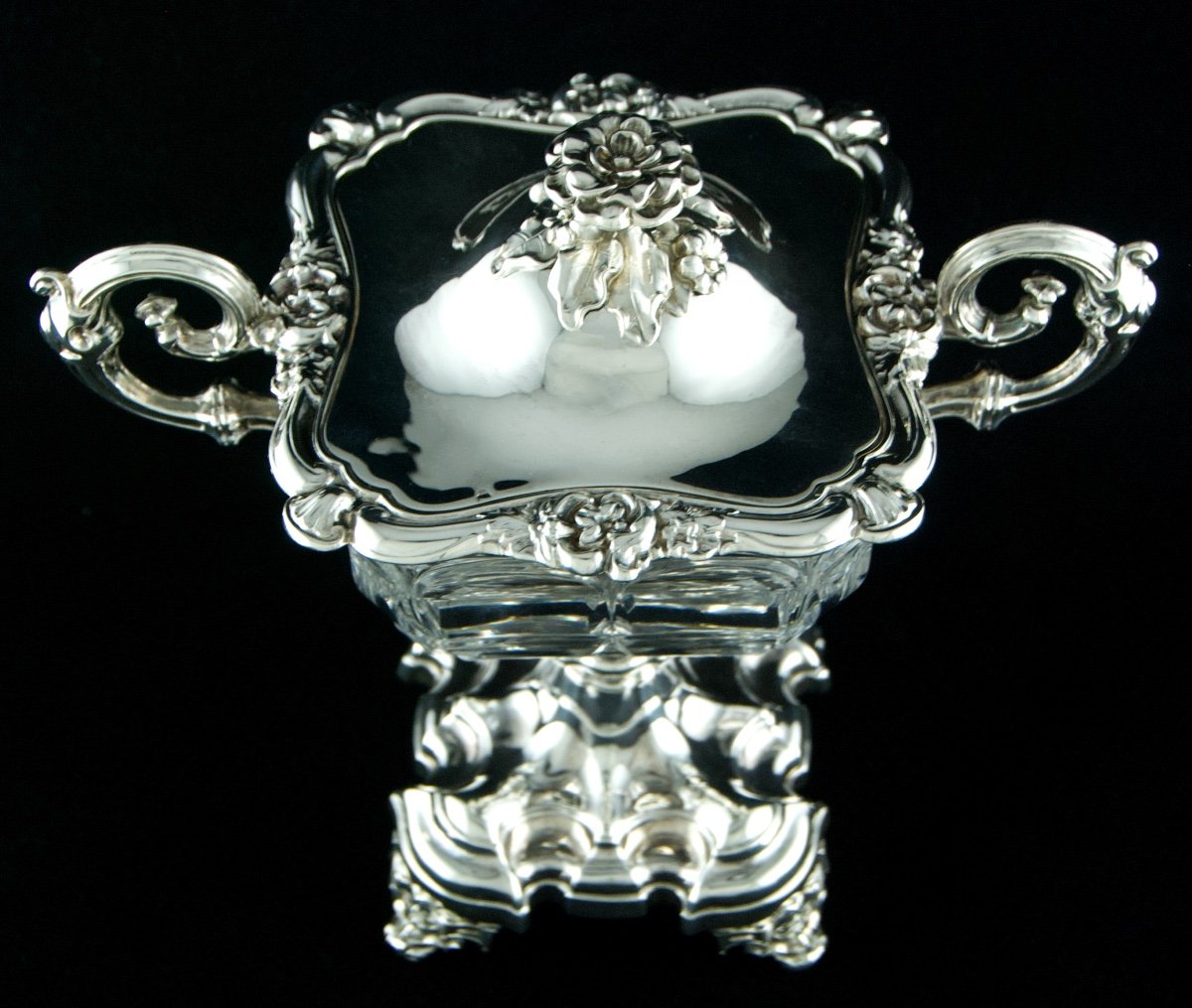
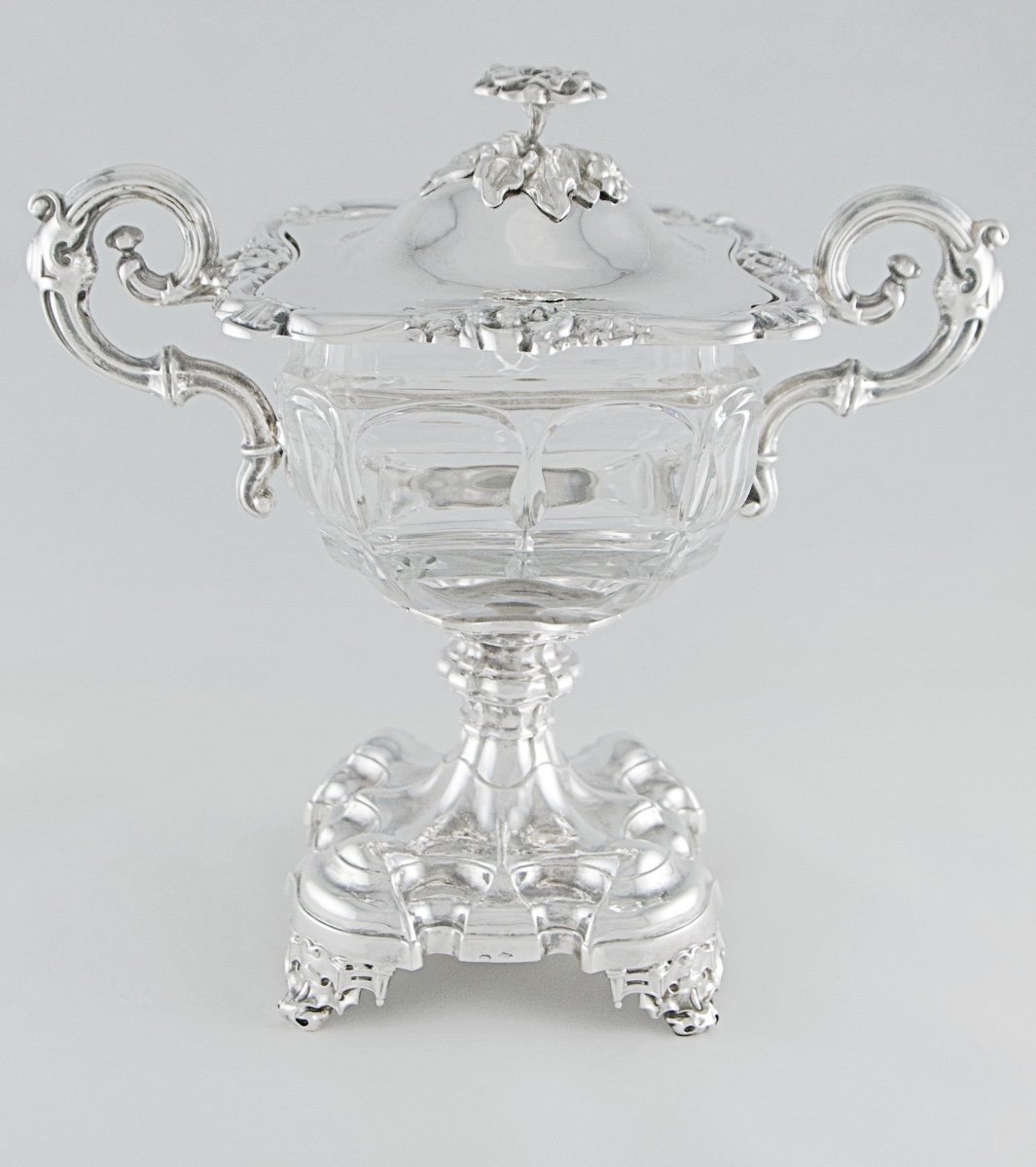
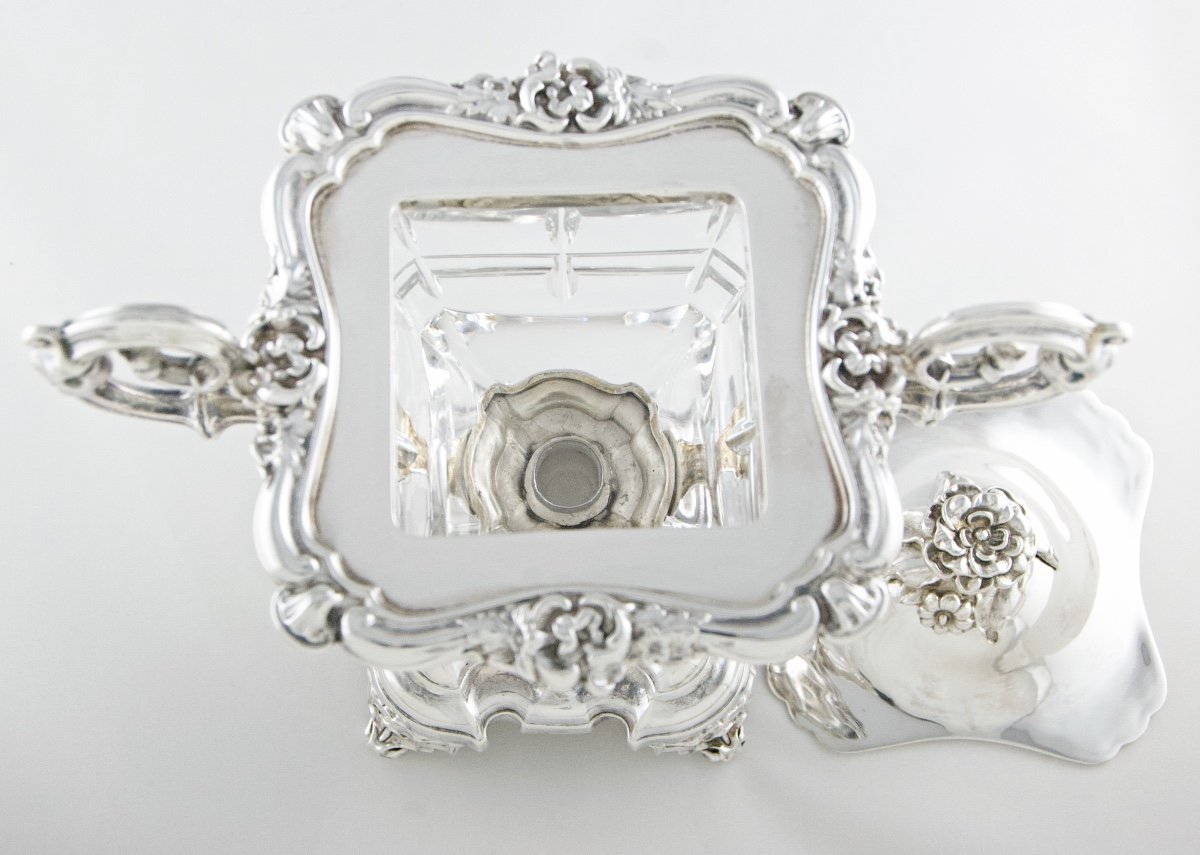
A superb covered bonbonnière in sterling silver (950/1000) and molded and cut crystal.
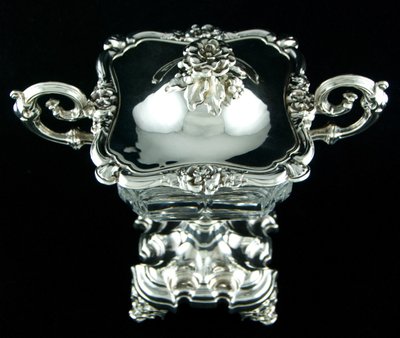
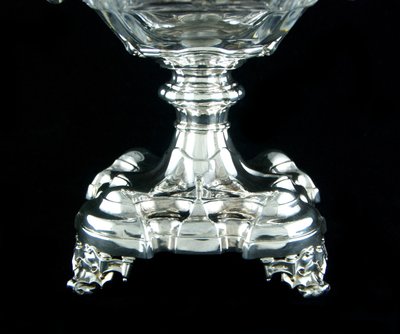
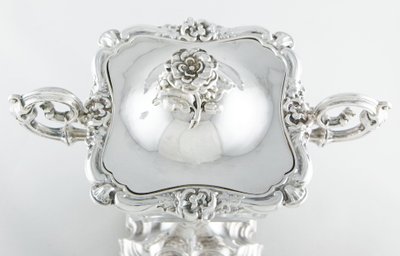
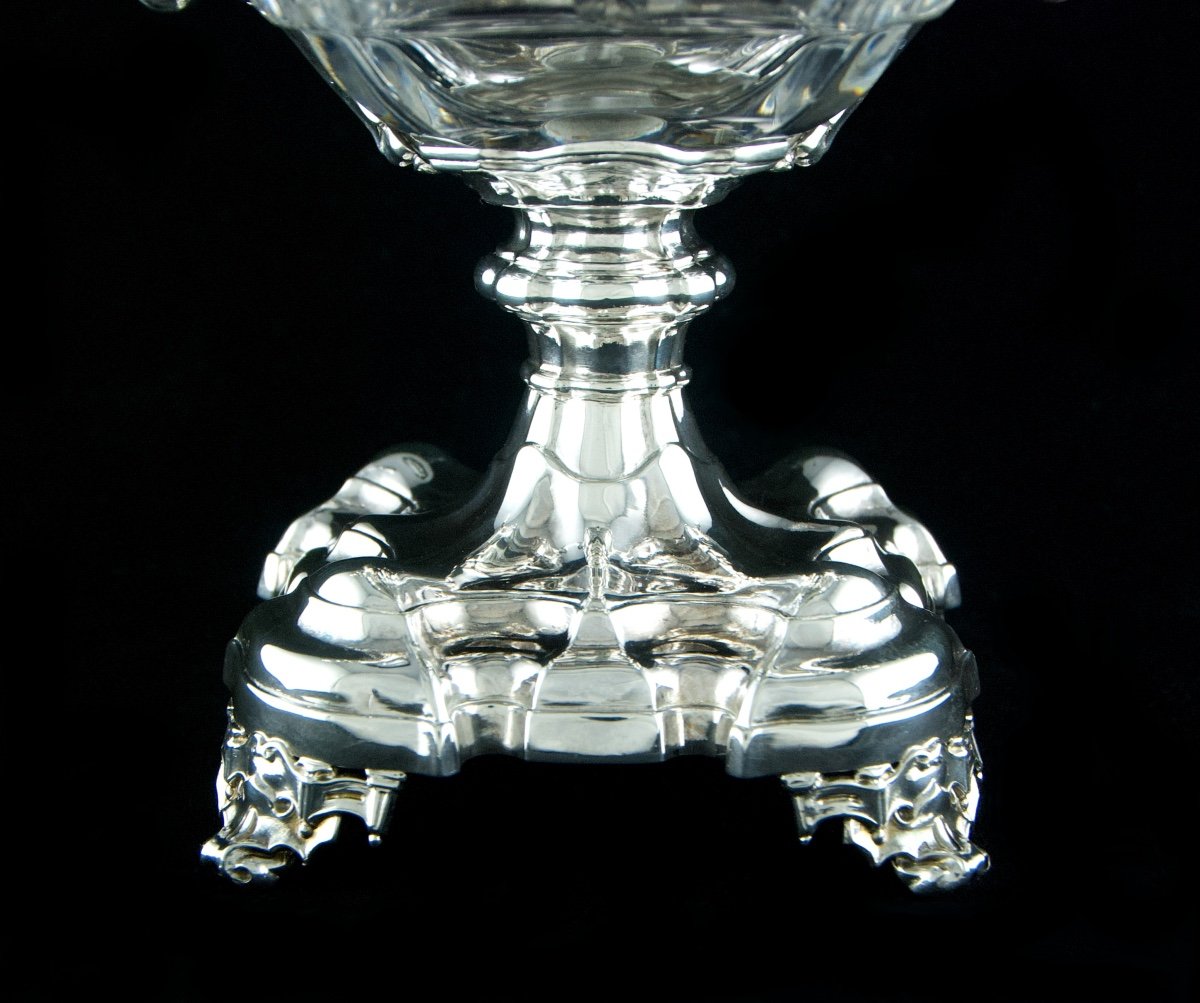
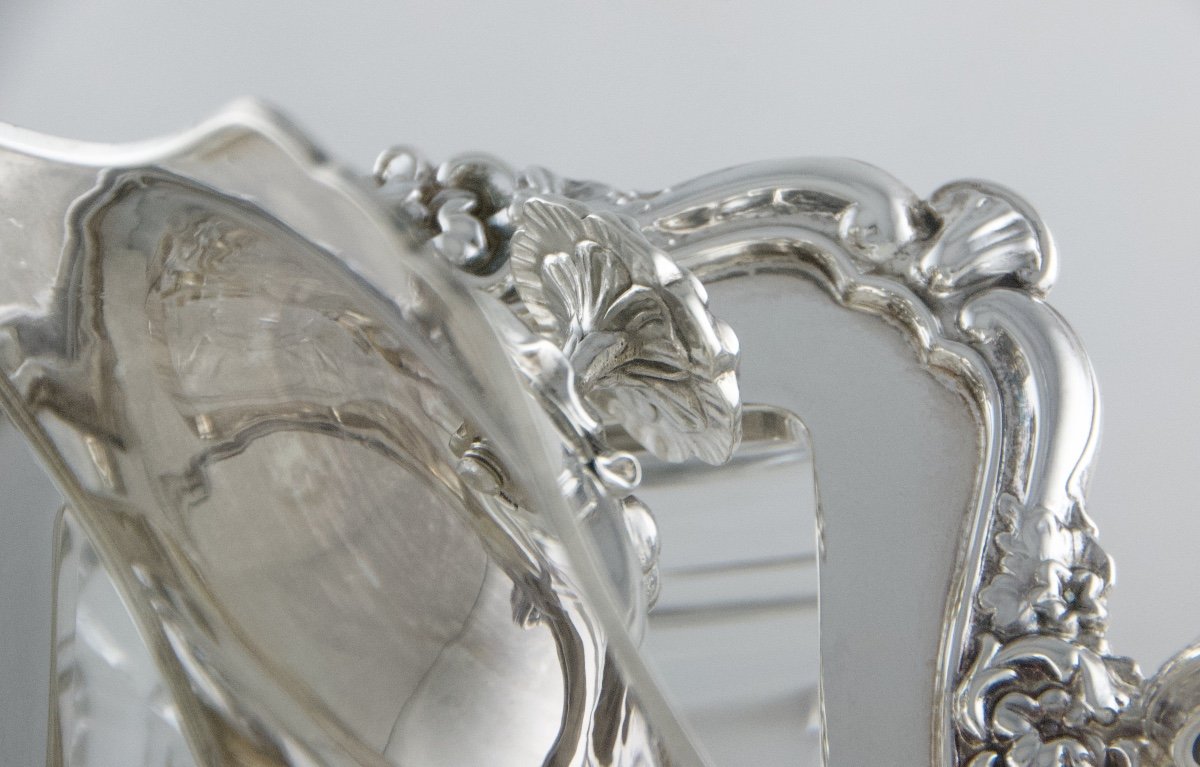
The mount features a rich, historicist, troubadour-style ornamental repertoire, composed of scrolling foliage, cut leatherwork, and finely chiseled flowers and leaves. The base, enlivened by moldings and striking recesses, masterfully illustrates this refined decorative vocabulary characteristic of the Louis-Philippe period.
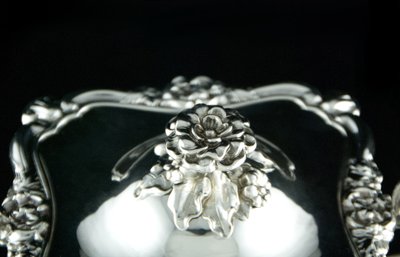
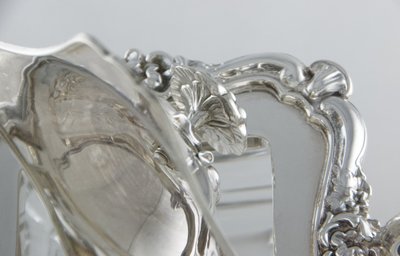
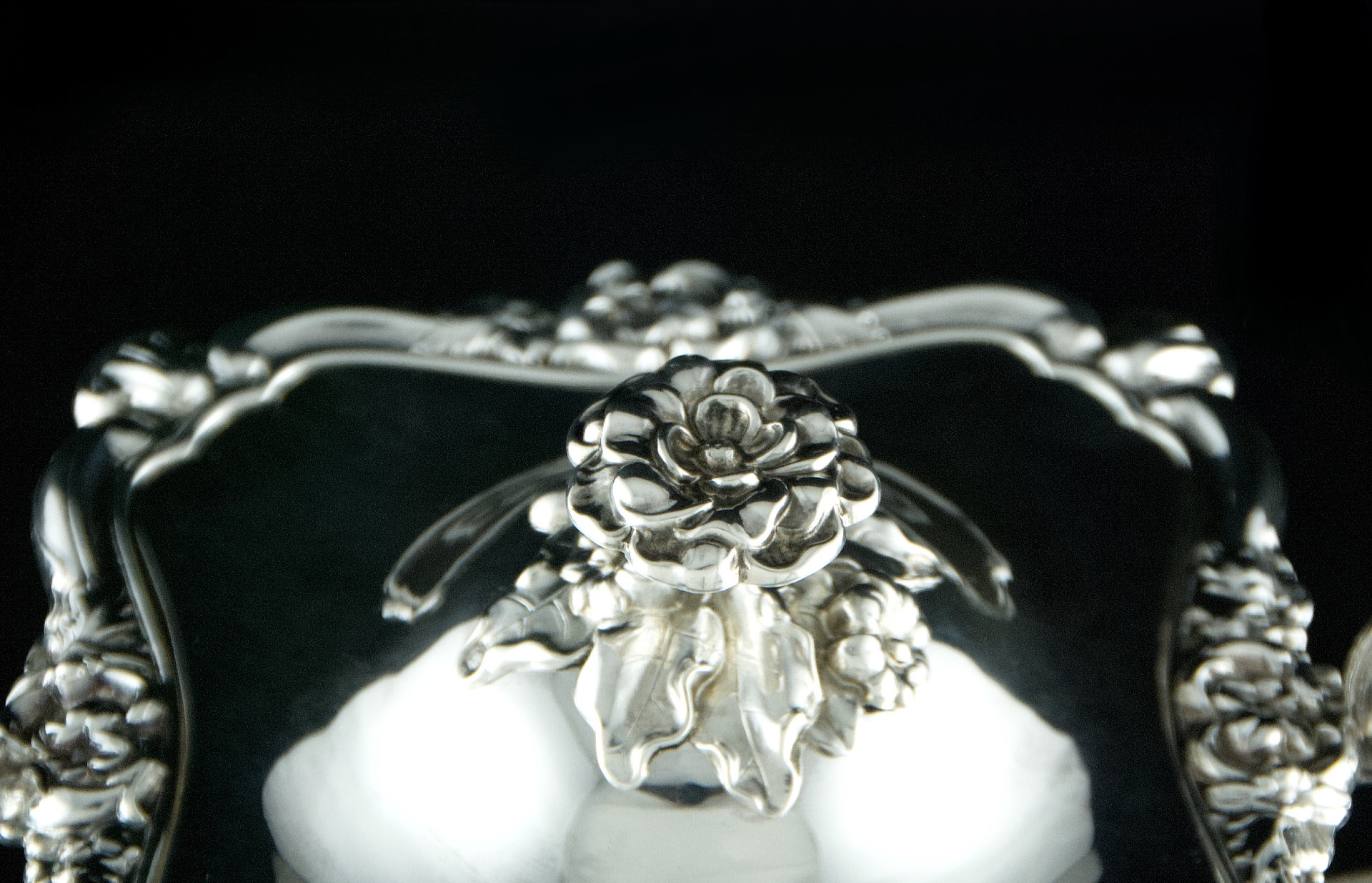
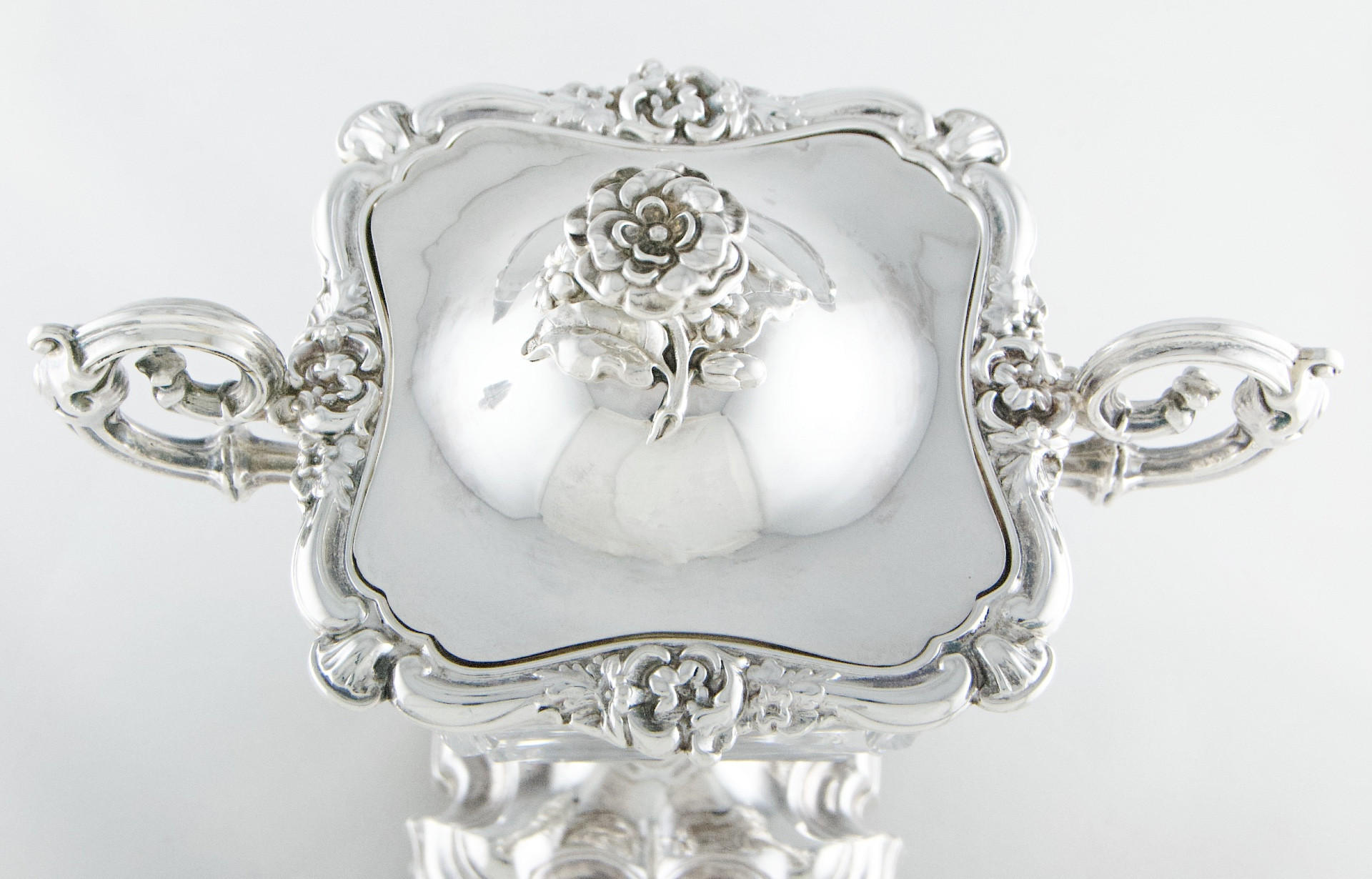
The whole is surmounted by a lid with a curved profile and a grooved inner lip, fitting perfectly into the mount. It is topped by a remarkable finial depicting a naturalistic camellia, rising on its stem and partially resting on a flowery and leafy mound, executed with exquisite delicacy.
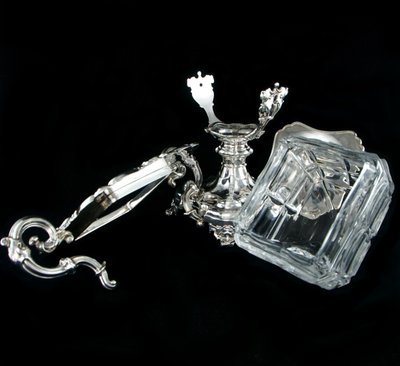
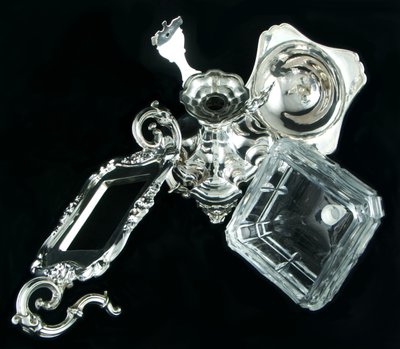
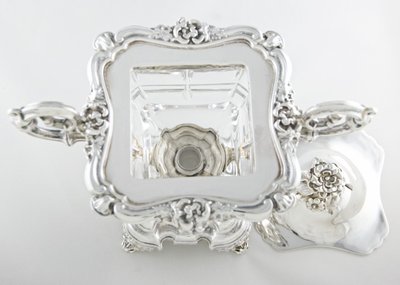
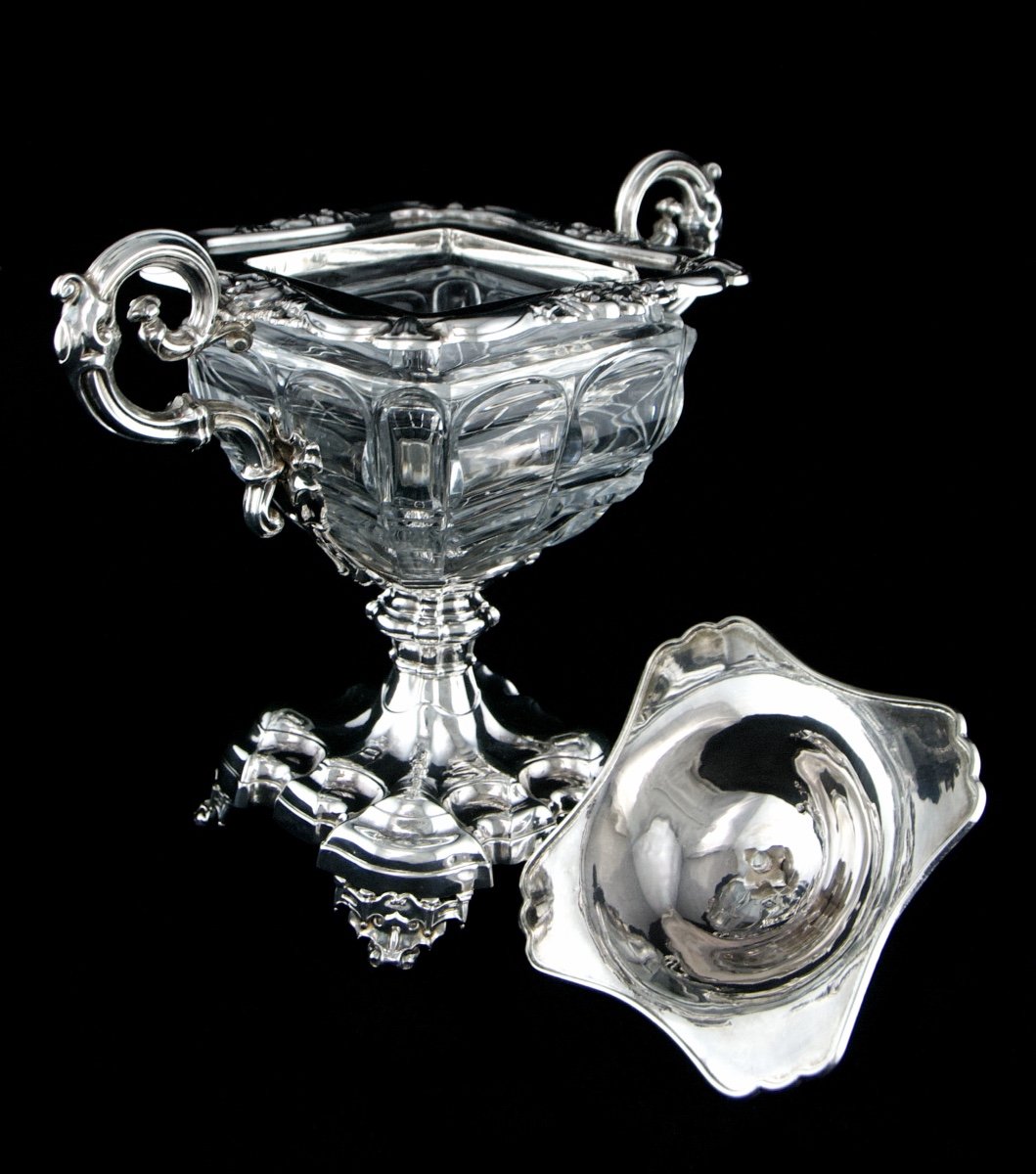
The lining is made of molded and cut crystal with leaf motifs, probably by the Baccarat or Saint-Louis firm.
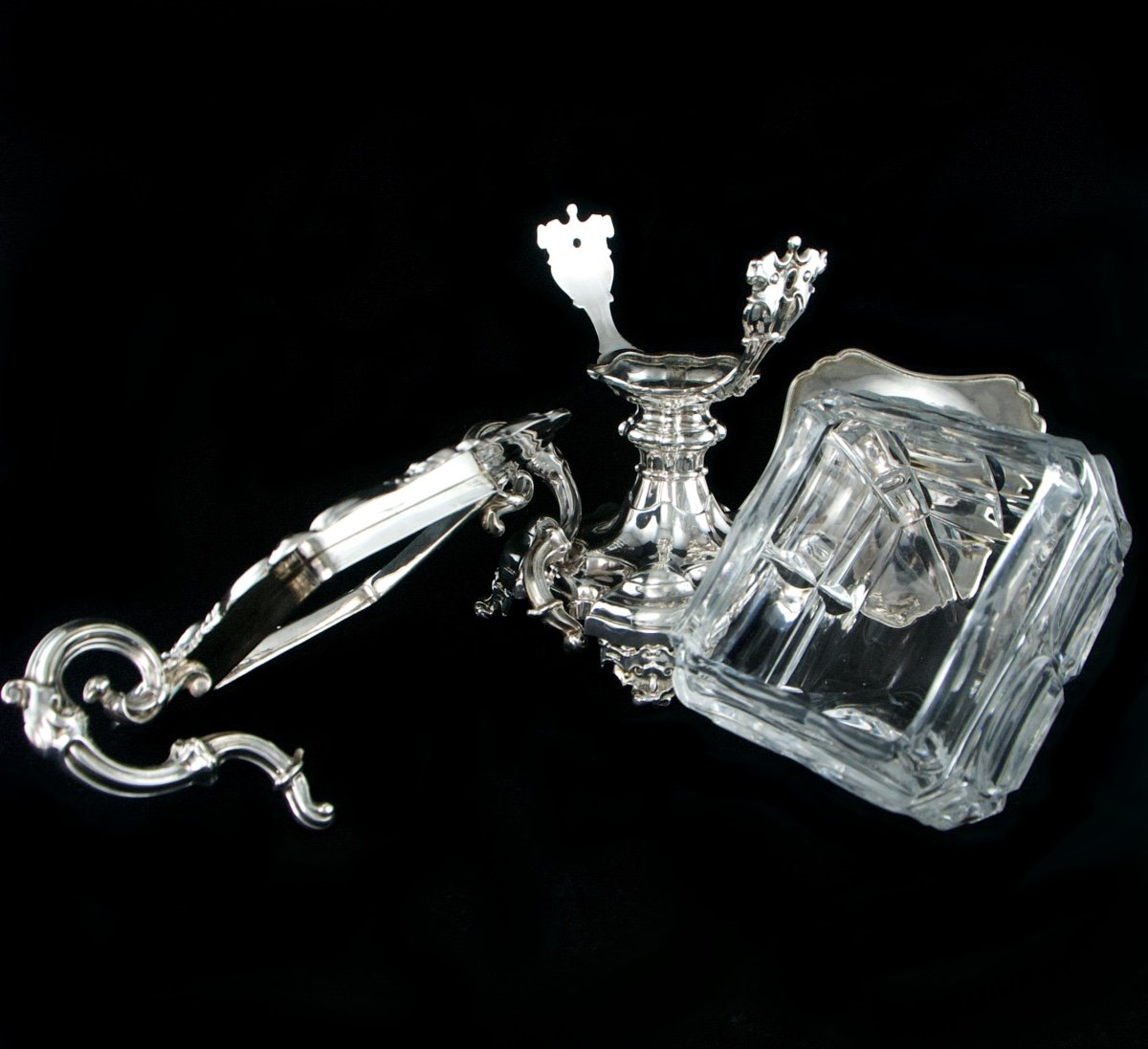
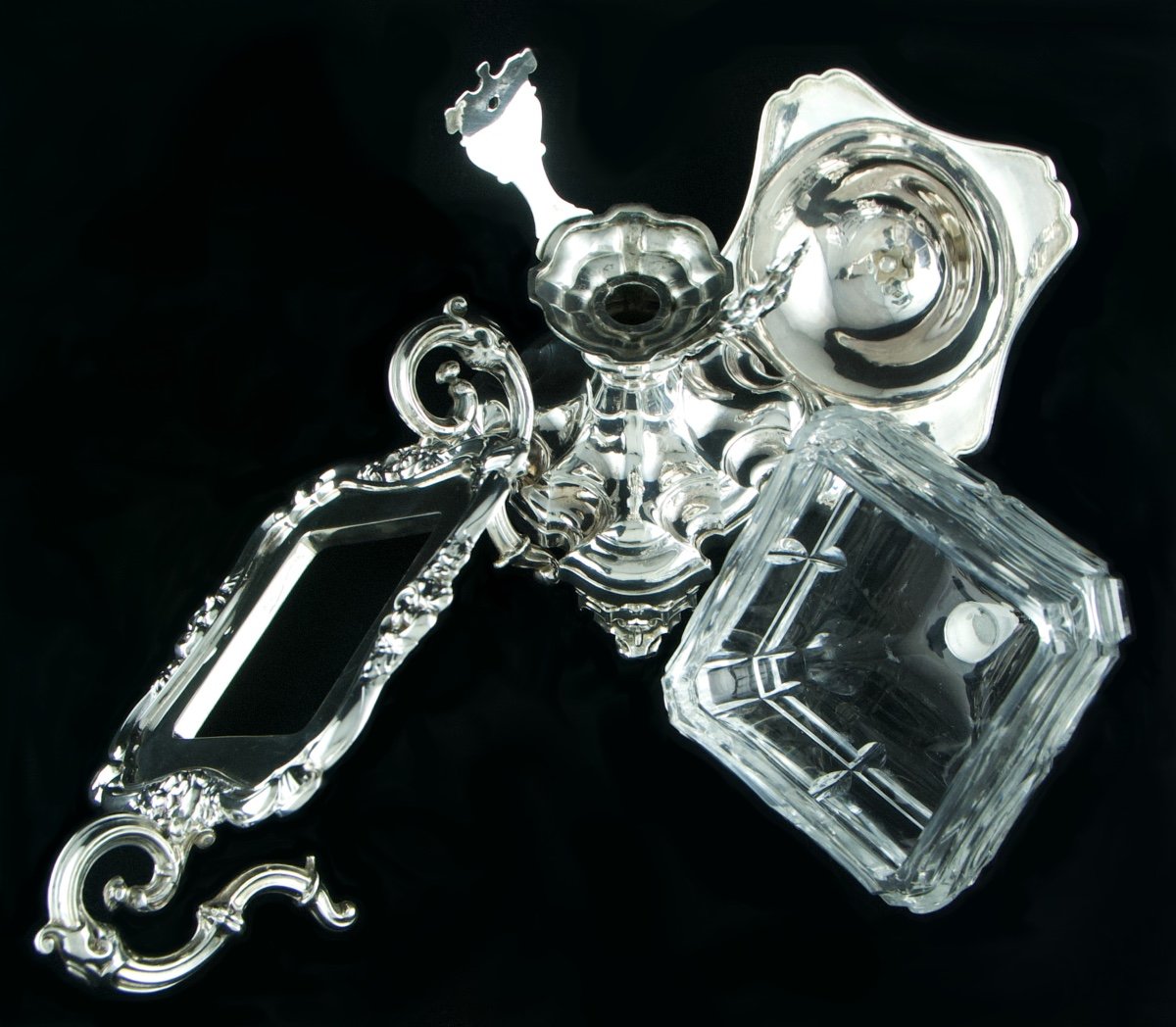
This bonbonnière features the rare distinction of an ingenious mechanism that allows for easy separation of the silver mount from the crystal lining, thus facilitating its maintenance. This technical solution reflects the attention to detail and mechanical expertise characteristic of 19th-century Parisian silversmithing, perfectly reflecting the style of François-Alphonse Debain.
Hallmarks (lid and mount):
Minerva 1st standard (950/1000 sterling silver)
Silversmith: Debain in full, a cradle, and two small figures.
Dimensions:
Height: 21 cm;
Length: 21 cm;
Depth: 13.5 cm.
Gross weight: 887 g.
Silver weight: 352 g.
Through the quality of its design, the richness of its decorative repertoire, the finesse of its chasing, and the rarity of its mechanism, this bonbonnière is a particularly representative work of the expertise of Parisian goldsmiths during the July Monarchy.
DEBAIN
François-Alphonse DEBAIN established his business at 140 rue du Temple and registered his hallmark, a boat and two small figures, on January 15, 1847, and renewed it on July 19, 1851. The hallmark was cancelled on May 27, 1864.
His son, Alphonse-Édouard DEBAIN, succeeded him, adopted the same symbol, and partnered with Louis-Frédéric FLAMANT, working under the name Debain & Flamant.
In 1883, Alphonse-Édouard DEBAIN's son, Alphonse DEBAIN, succeeded the goldsmith Philippe BERTHIER. He adopted the woodcock symbol from his hallmark for his own, which became "AD and a woodcock," registered on March 19, 1883. He moved to 79 rue du Temple when Louis-Frédéric FLAMANT took over the business at 140 rue du Temple.
Date of cancellation: March 8, 1911.
MUSEUMS AND PUBLIC INSTITUTIONS
HÉBERT MUSEUM, Paris – Table service (part) – silver, crystal, porcelain – Paris, 1789-1914, inv. OAP433; OAP437; OAP432; MNEH1992.5.2.5; MNEH1992.5.2.4; OAP389
Notre-Dame de l'Assomption Cathedral, Ajaccio – Pair of candlesticks – silver, Paris, 1883-1911.
Ref: TUVH4P8I7N

 English
 Français
 Italiano
 Deutsch
 Oak sideboard, 1950
1.100 € EUR