This description has been translated and may not be completely accurate. Click here to see the original
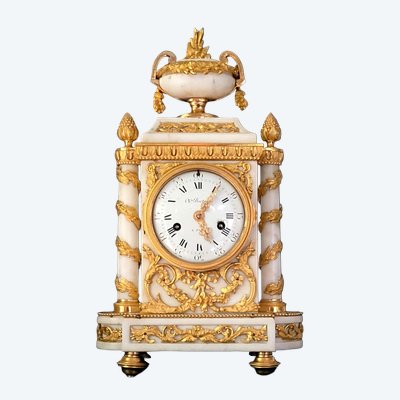
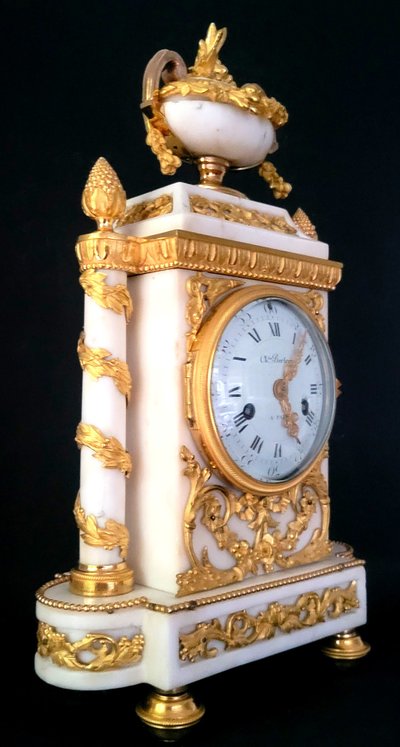
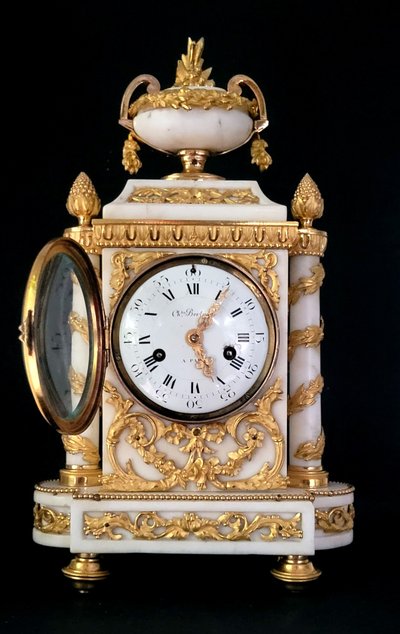
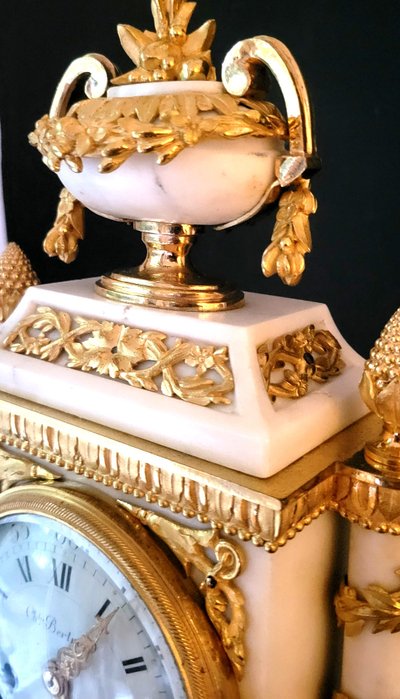
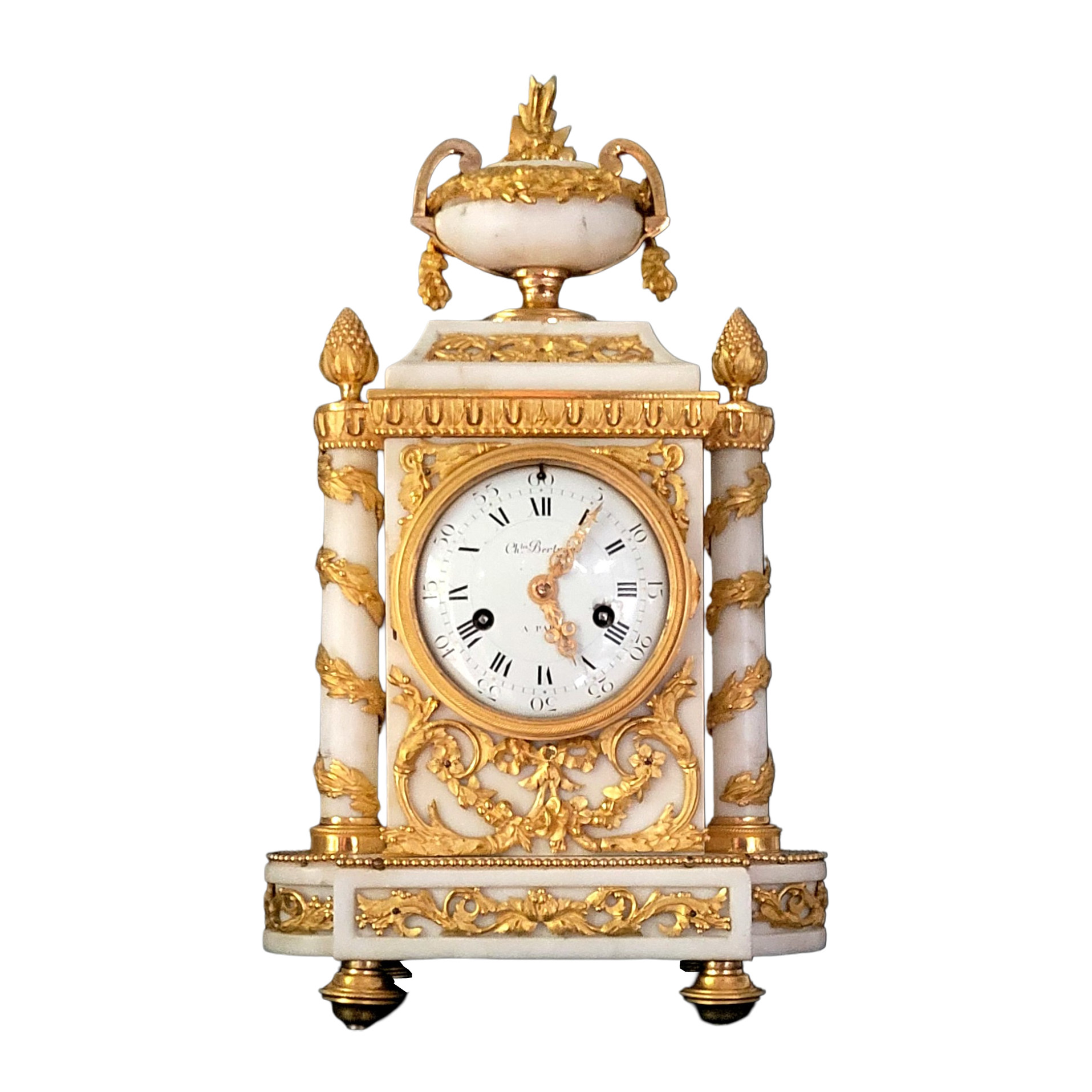
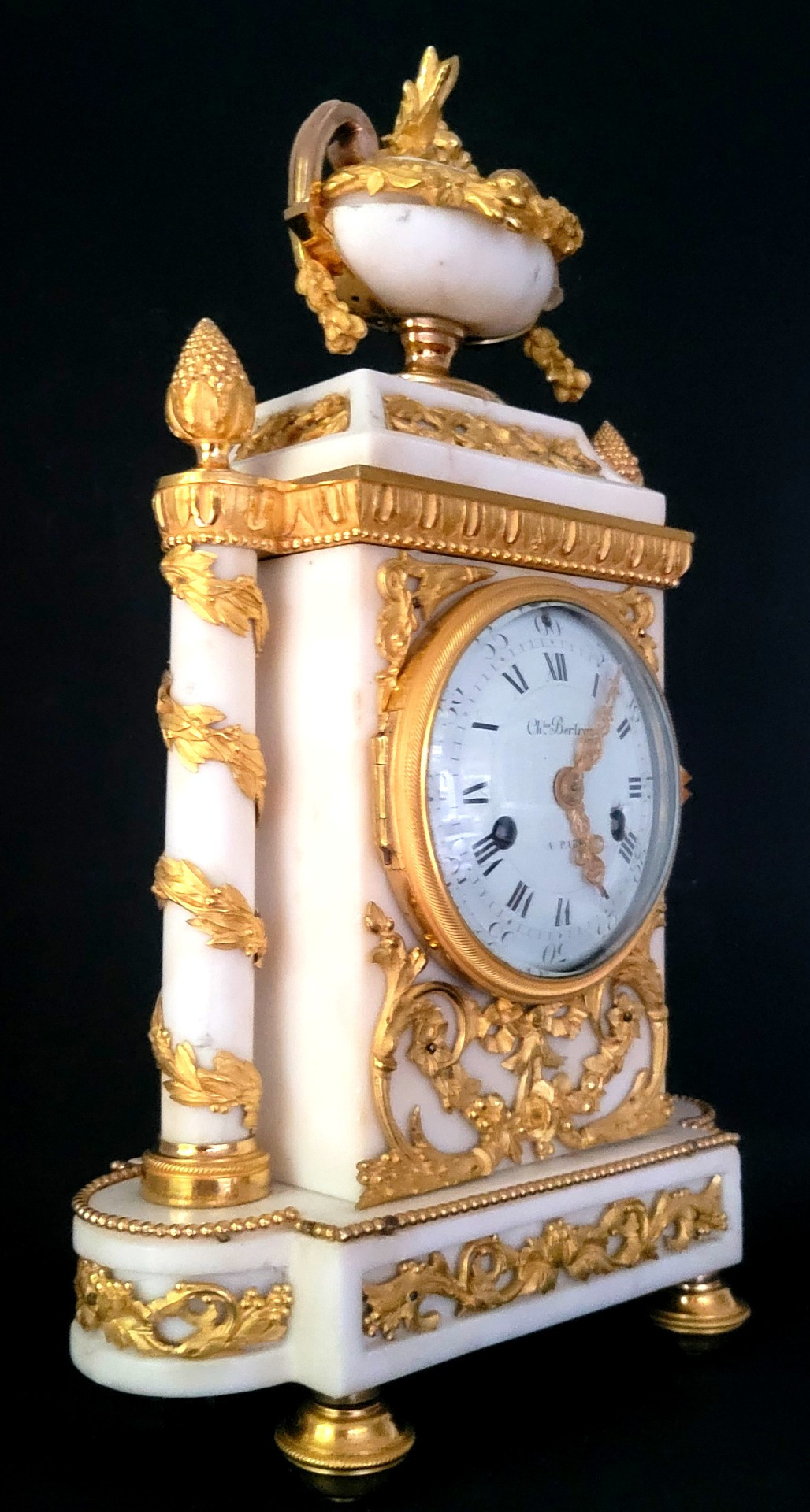
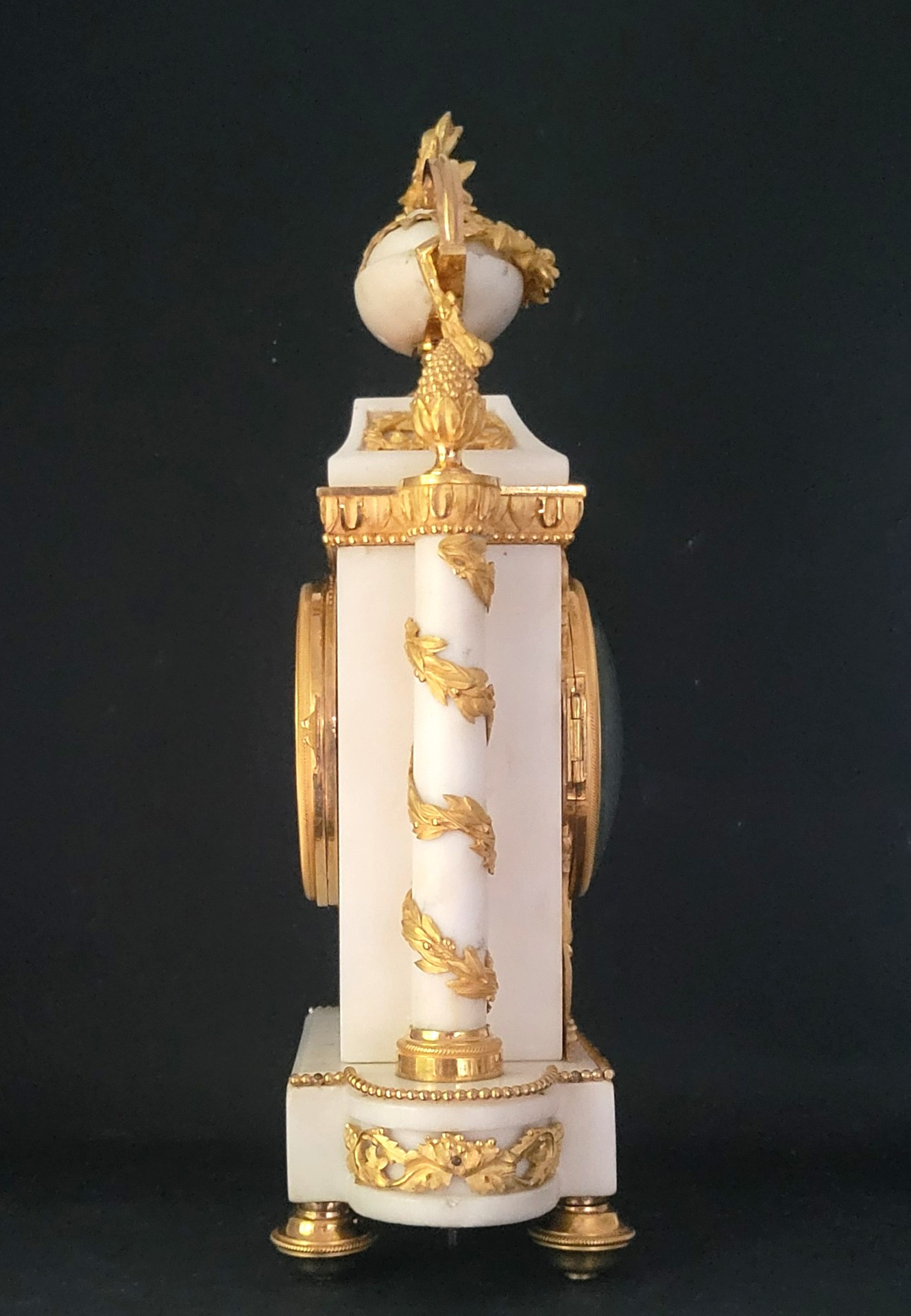
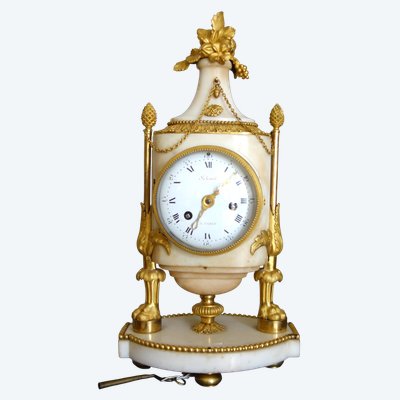
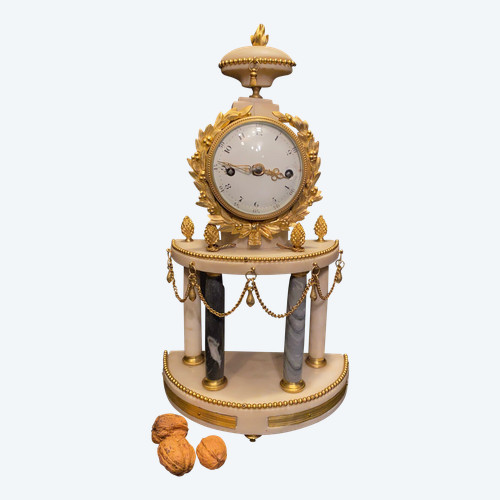
A *pendule borne* (pillar-style mantel clock) in white Carrara marble and mercury-gilded bronze, based on a design by Bécourt.
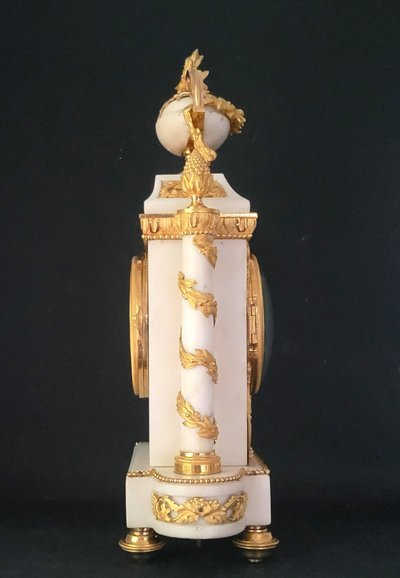
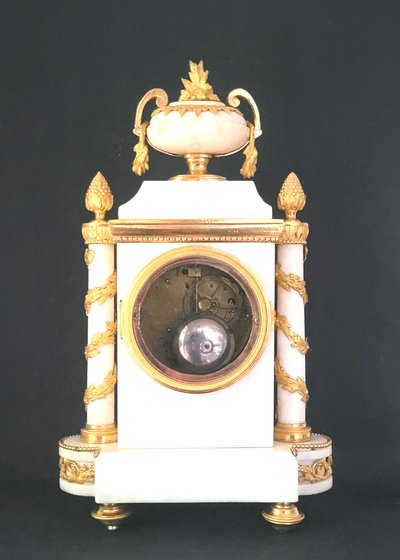
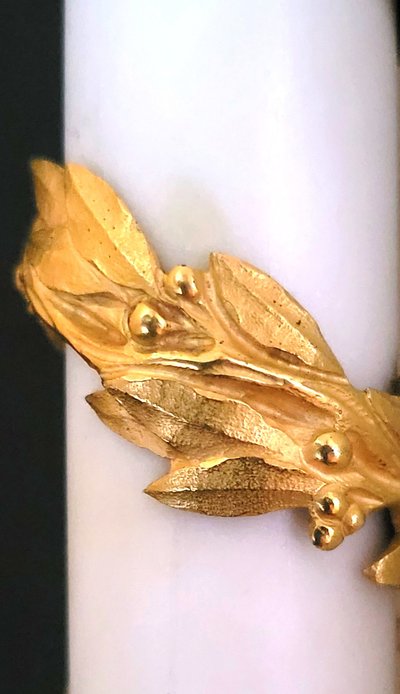
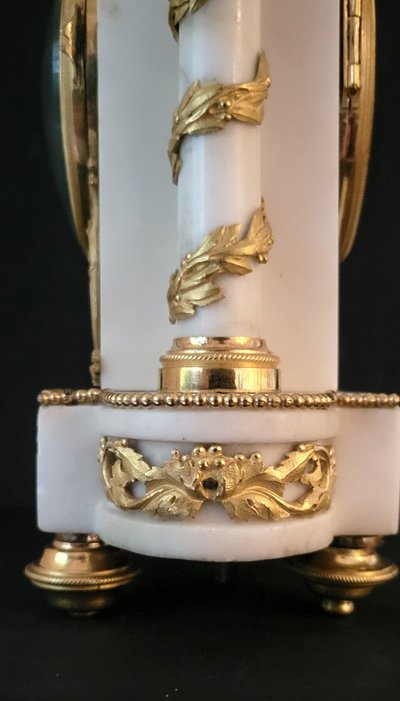
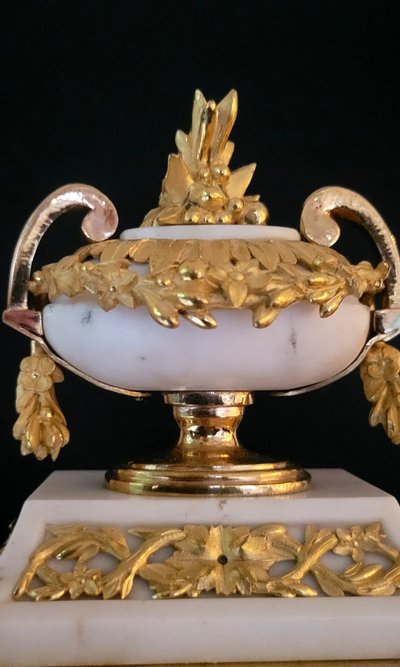
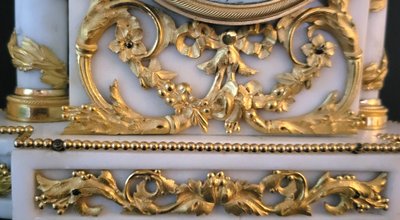
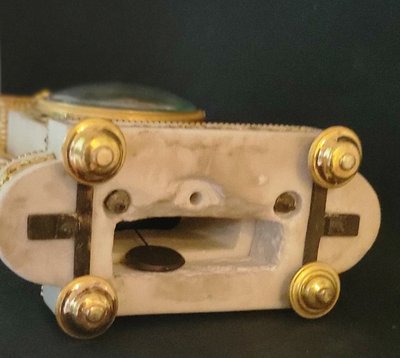
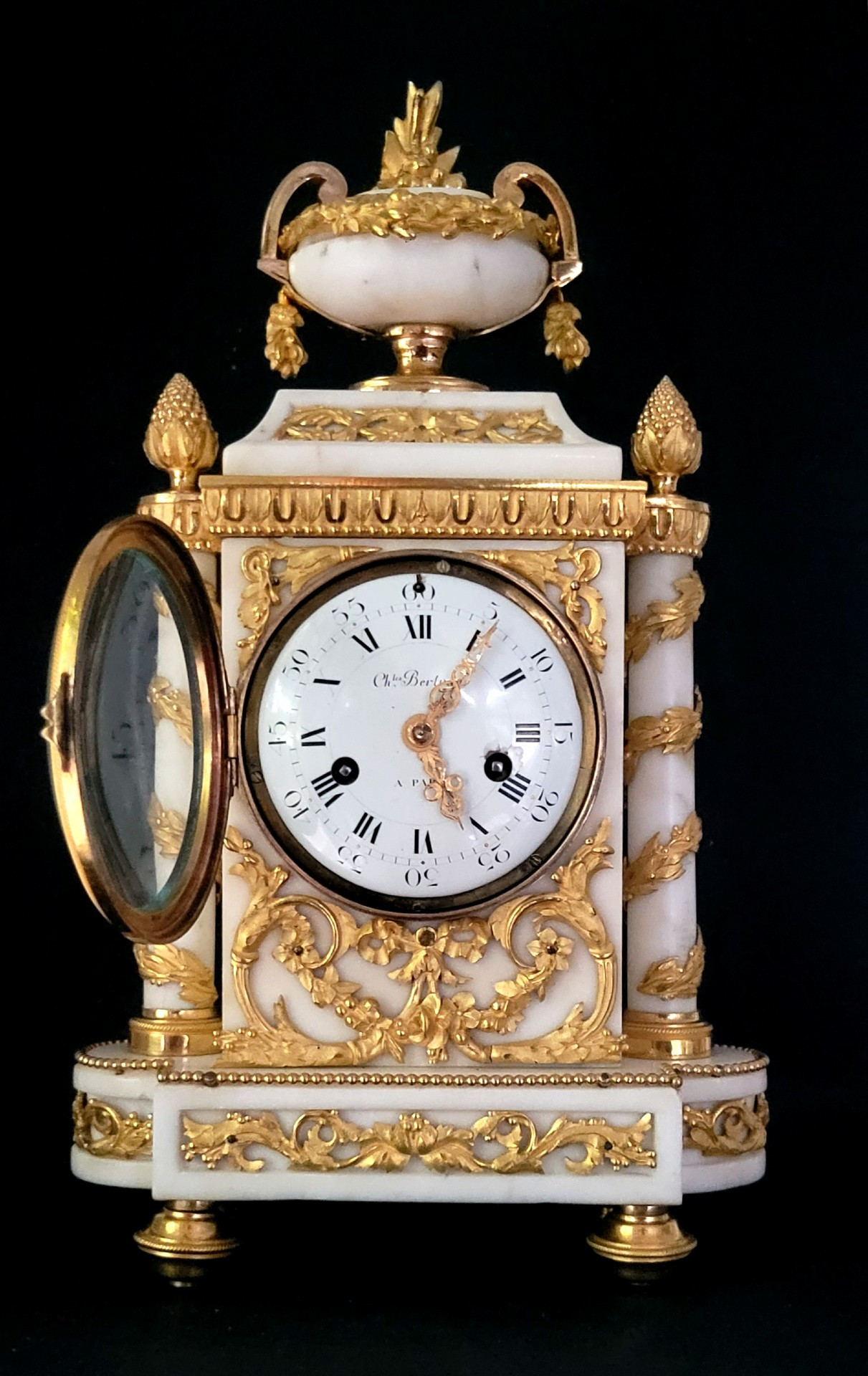
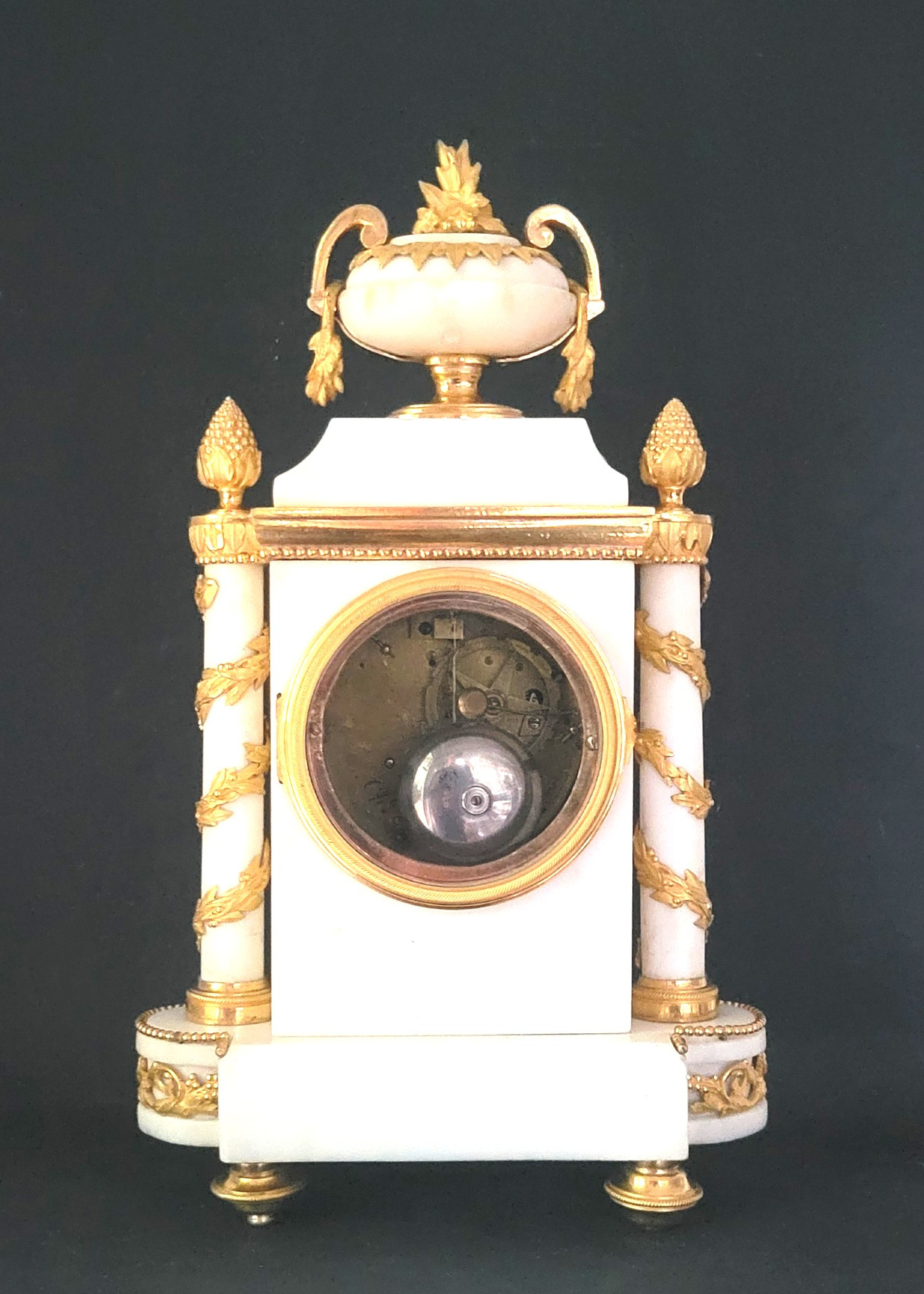
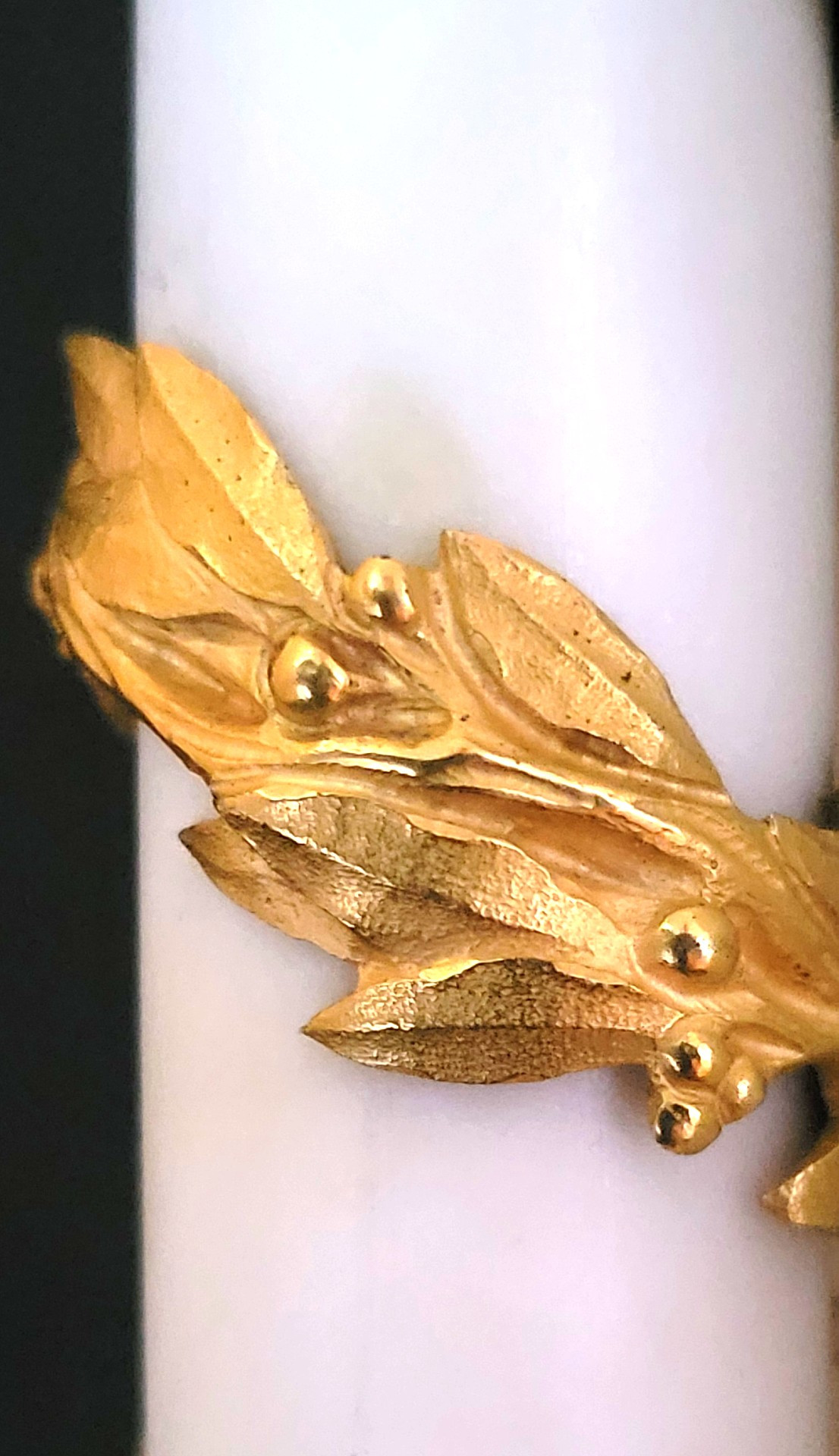
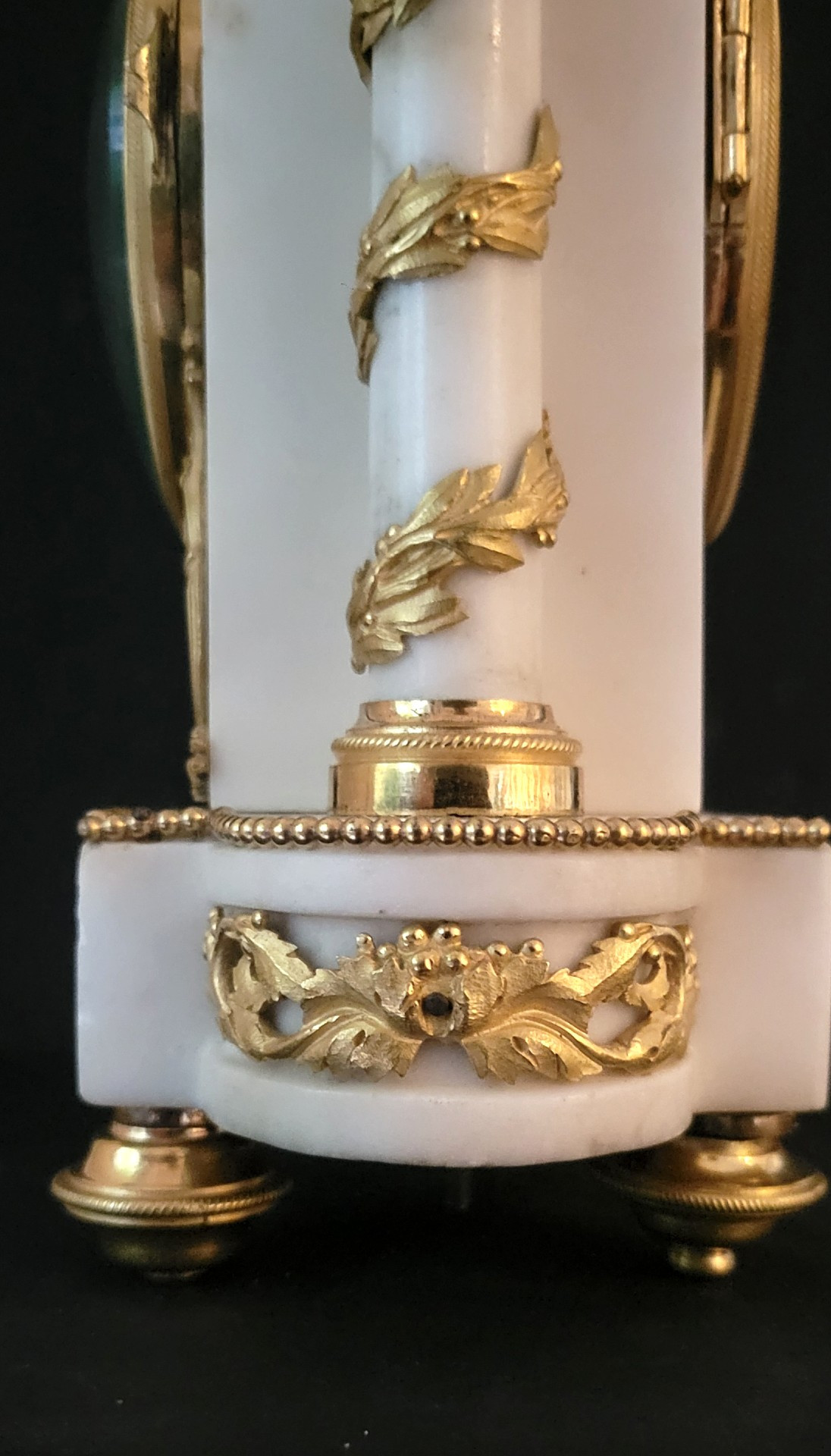
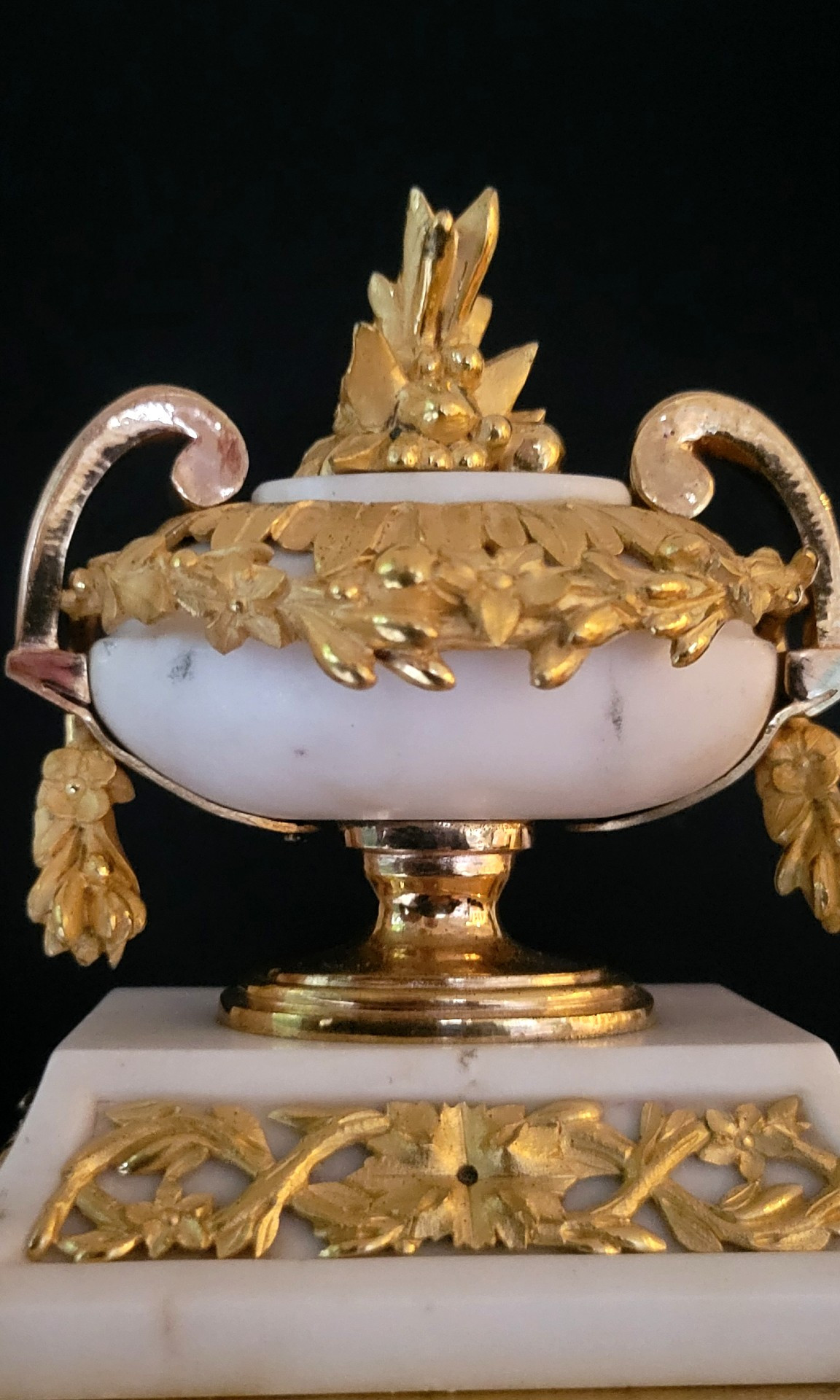
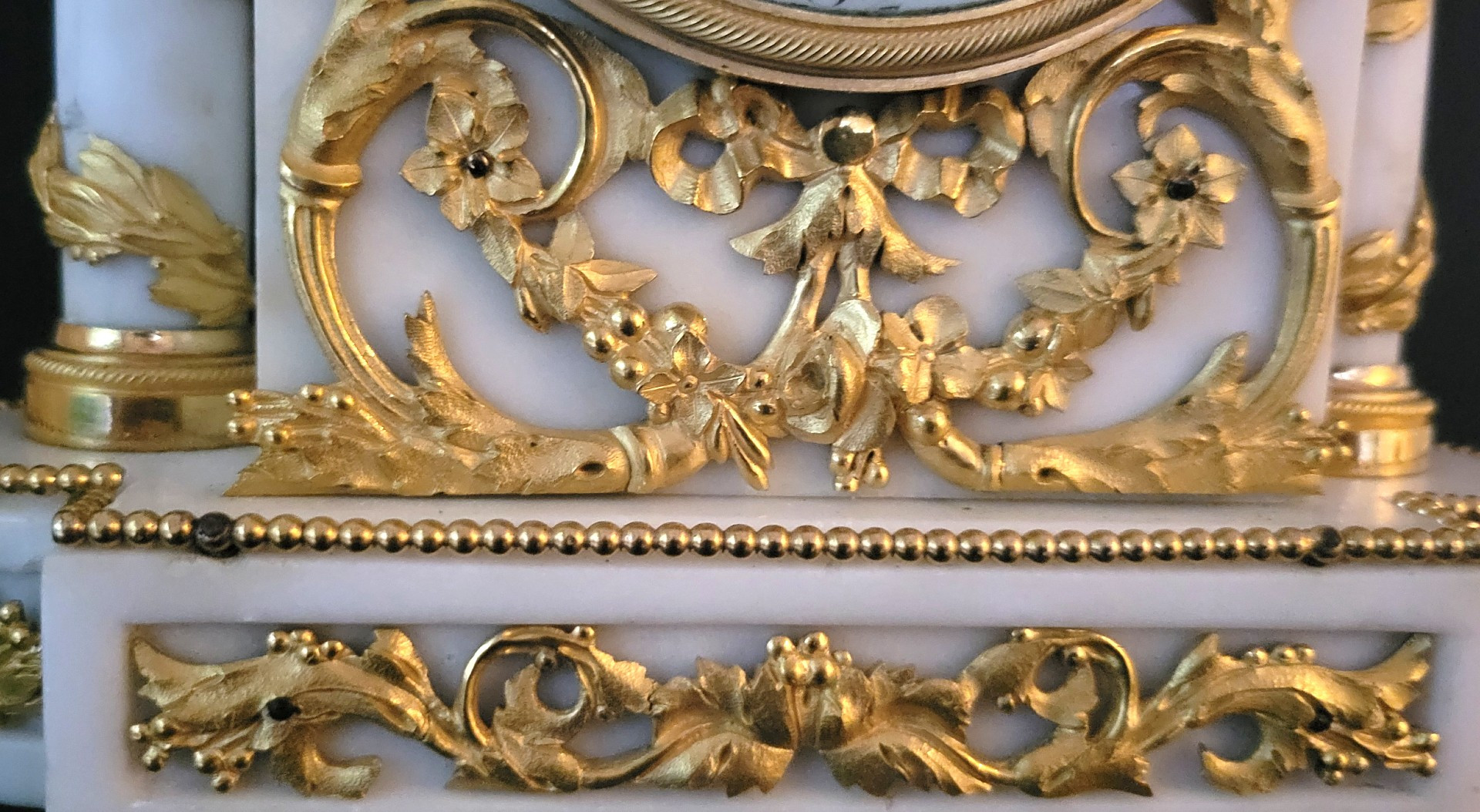
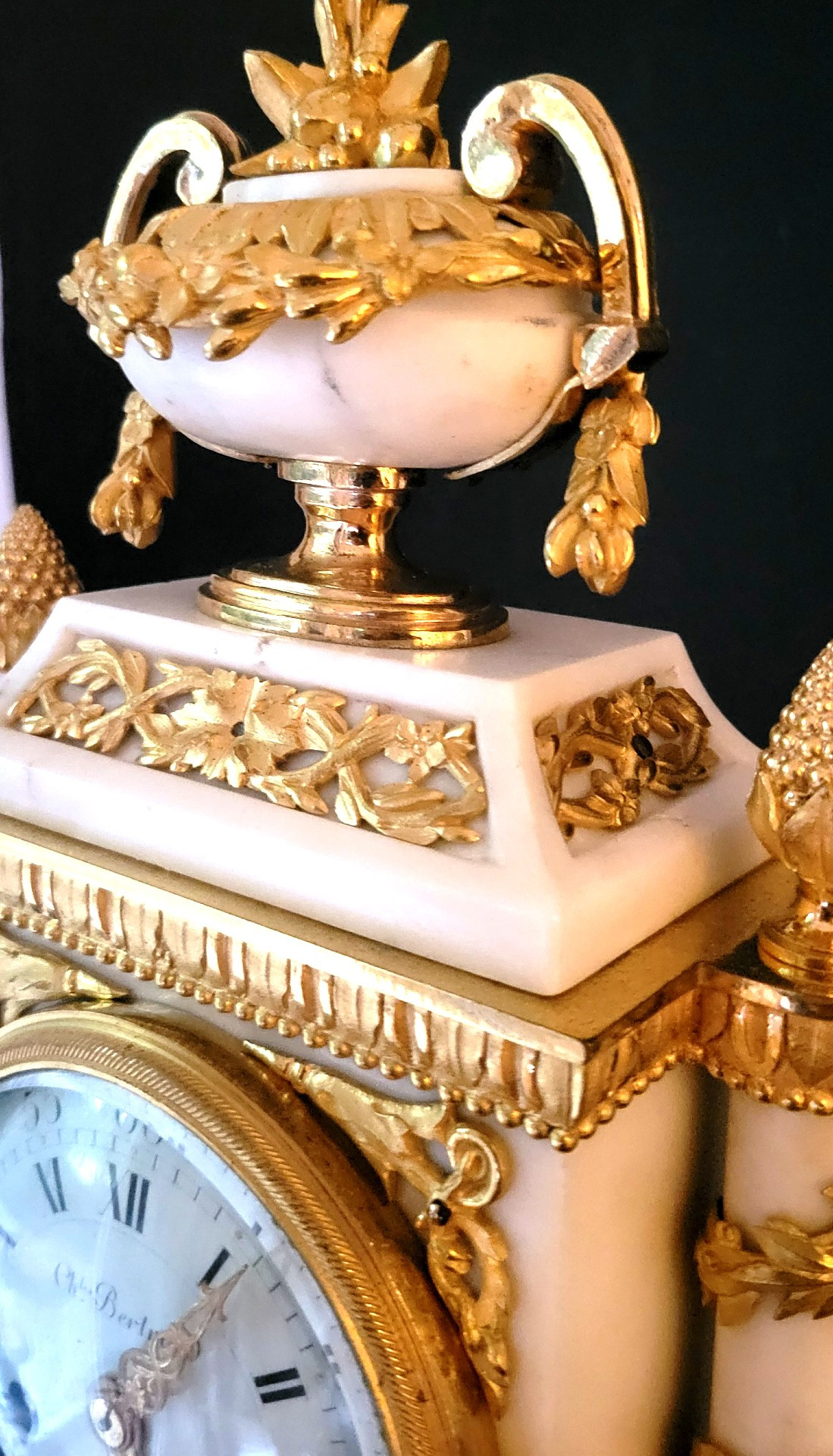
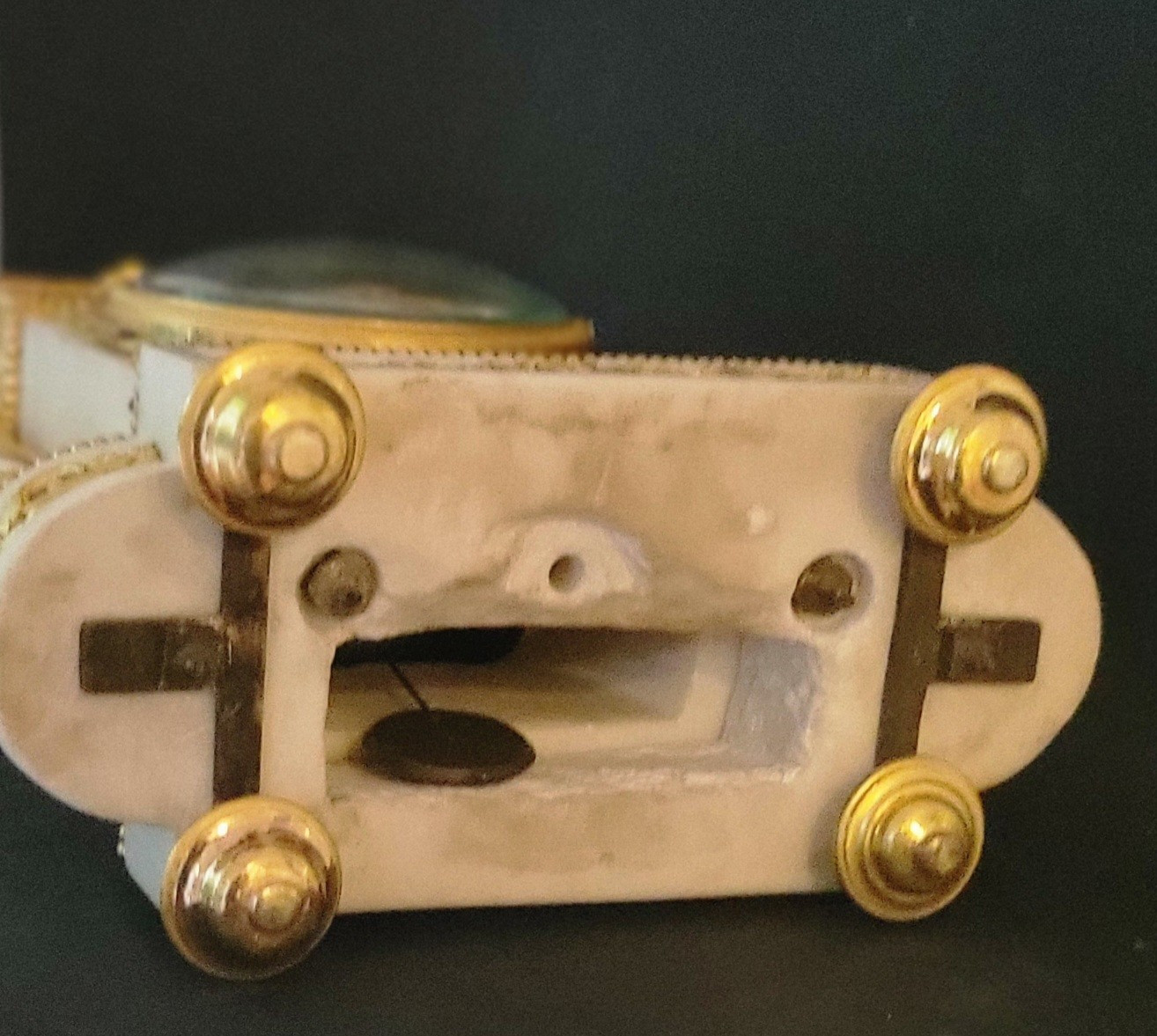
The clock rests on an oval, stepped base supported by four feet, accented by a beaded border and adorned with foliate friezes. It features a central pillar flanked by two columns, which are decorated with scrolling gilt-bronze foliage and topped with pinecones. The piece is crowned by a two-handled urn filled with flowers. The front is embellished with applied gilt-bronze motifs of leaves and blossoms, in accordance with the original design.
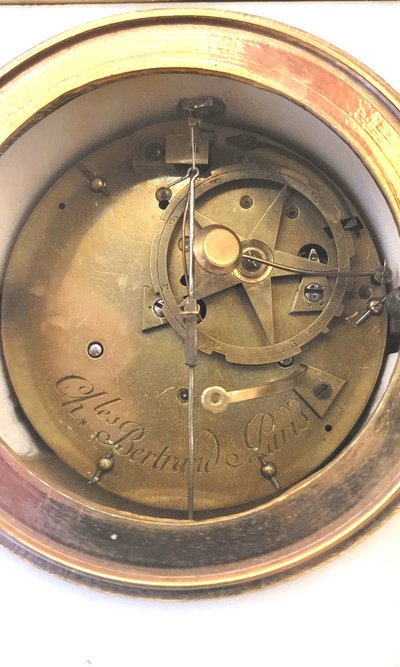
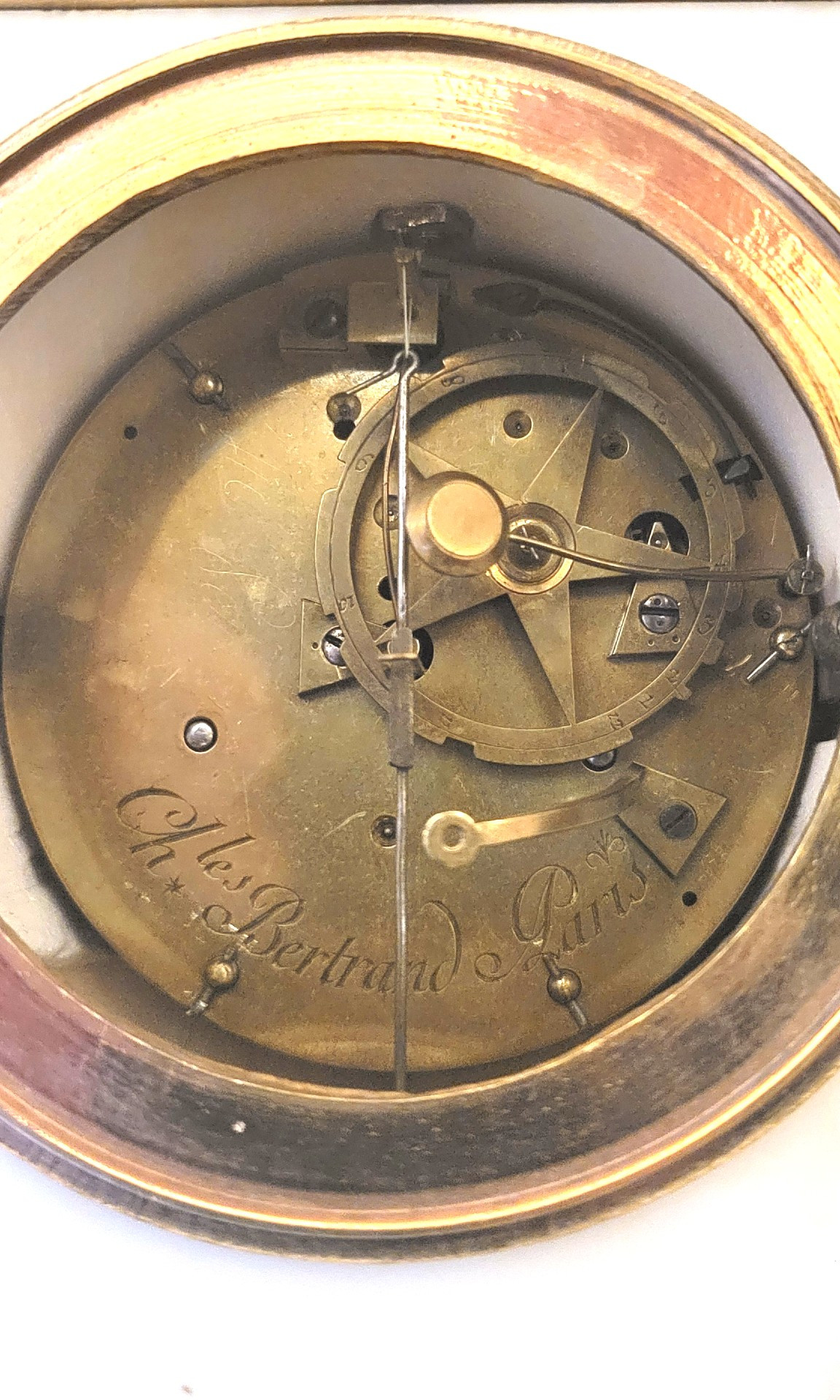
The 8-day movement strikes the hours and half-hours and utilizes a silk-thread suspension. The backplate is signed by Charles Bertrand.
The white enamel dial bears the signature "Chles Bertrand à Paris" and features black Arabic numerals for the minutes and Roman numerals for the hours. The openwork, finely chased hands are of the *fleur-de-lys* style.
Height: 33 cm.
Louis XVI period, circa 1775–1780.
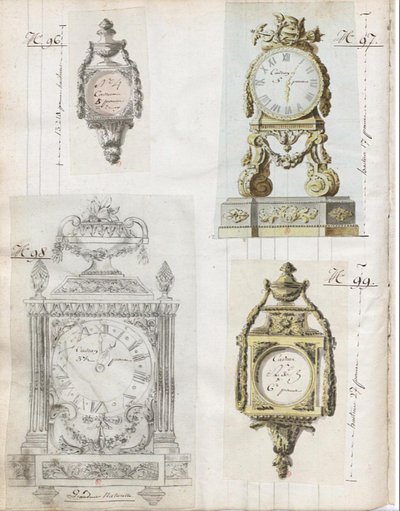
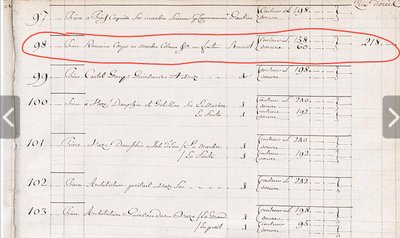
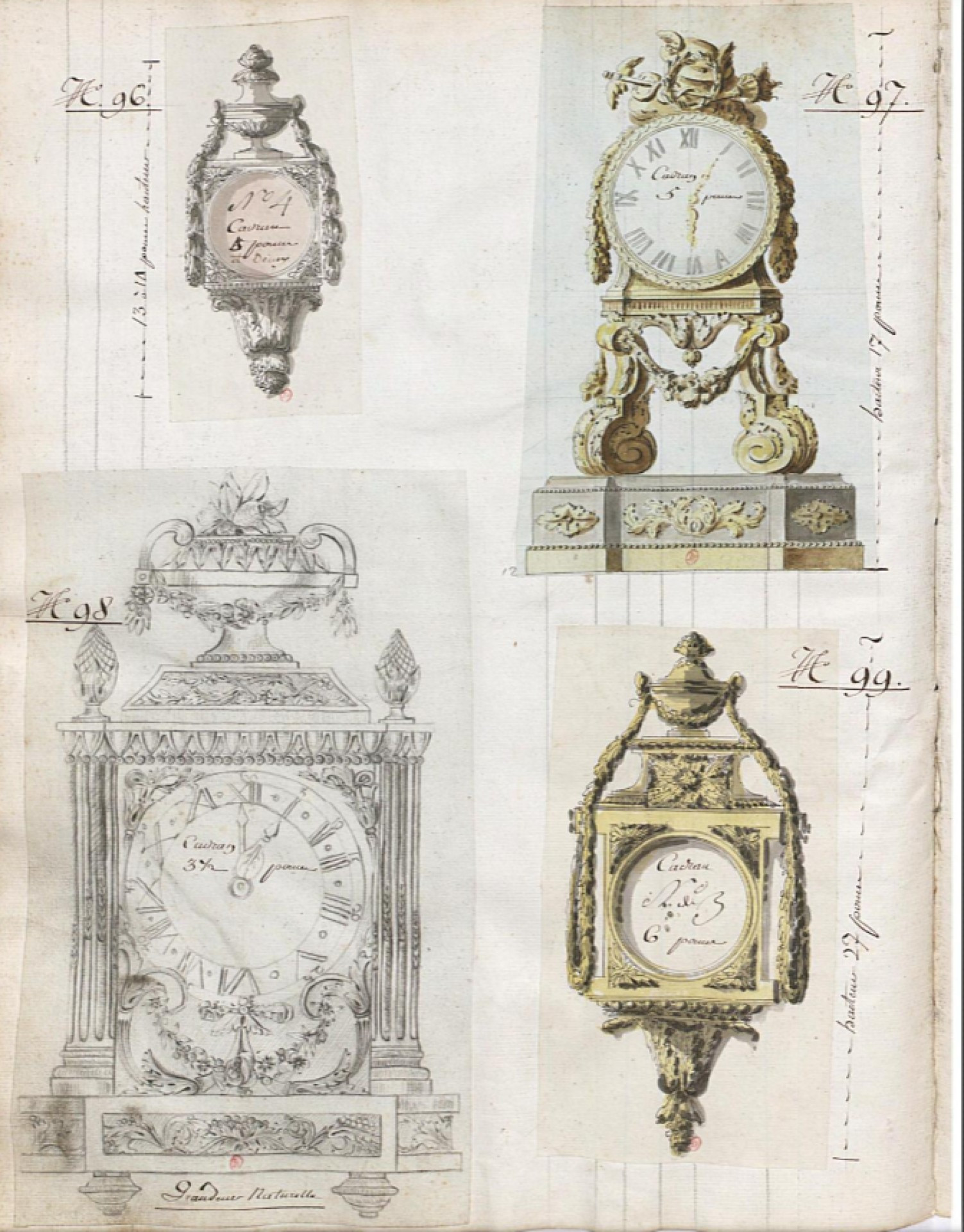
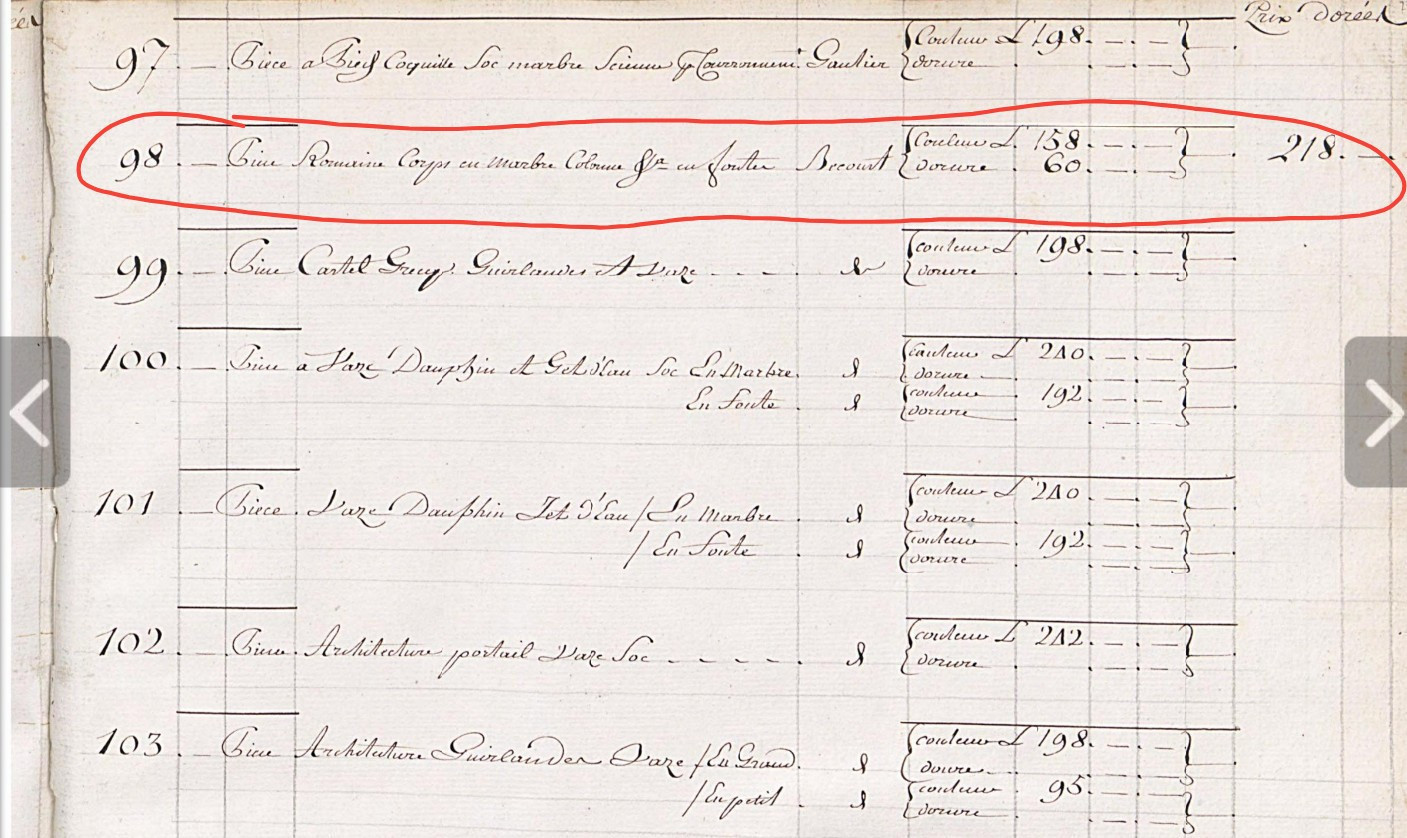
Assessment and reference: An elegant, well-proportioned model. The chasing and gilding are of exceptional quality. The design for this clock is by Bécourt; it is reproduced on plate 98 of a *Recueil de dessins de modèles de pendules* (Collection of Clock Design Models) from 1775–1780, where it is described as: "Roman-style piece, marble body, cast [bronze] columns," by Bécourt, priced at 218 (see photos). It is highly probable that the bronze elements were also executed by Bécourt, given his collaboration with Charles Bertrand. Condition report: The clock is in a very good state of preservation, retaining its original gilding and pendulum. It should be noted that there is a tiny loss of enamel on the dial, and one foot—dating from the Louis XVI period and also gilded—differs slightly from the others. The movement has been serviced (as of October 28, 2026) and is in working order. The warranty excludes any damage resulting from accidents or improper use.
Charles Bertrand: This refers to Joseph-Charles-Paul, known as Charles Bertrand. He was born in Nettancourt on May 24, 1746, and passed away in 1789, following the filing for bankruptcy of his business on November 23, 1789. In 1772, he became the clockmaker to the Royal Academy of Sciences. Charles Bertrand utilized clock cases from makers such as Saint-Germain, Vion, Bécourt, and Poisson. He also incorporated marble cases created by the sculptor F. Cornière. He signed his work "Chles Bertrand."
Shipping: Quotes available upon request; please specify the destination city and country
Ref: HP20FRBO4W

 English
 Français
 Italiano
 Deutsch
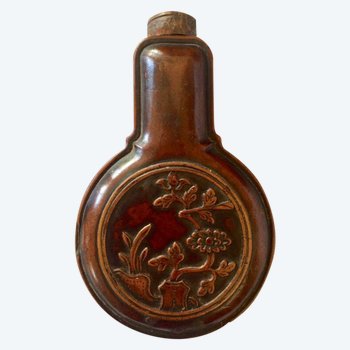
 Powder or tobacco pear in Boxwood. XIXth Asia.
150 € EUR