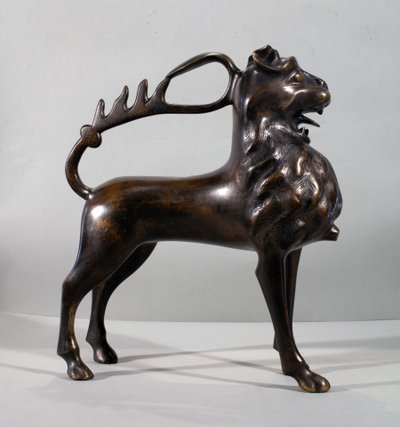
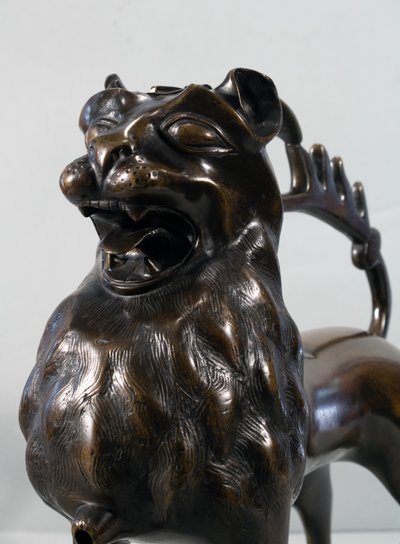
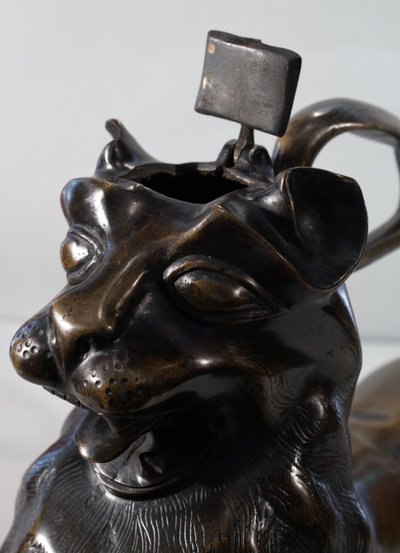
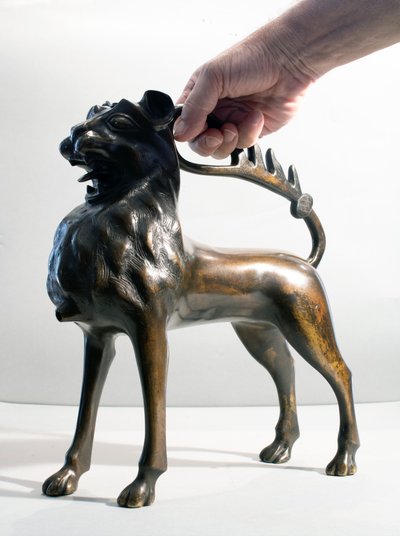
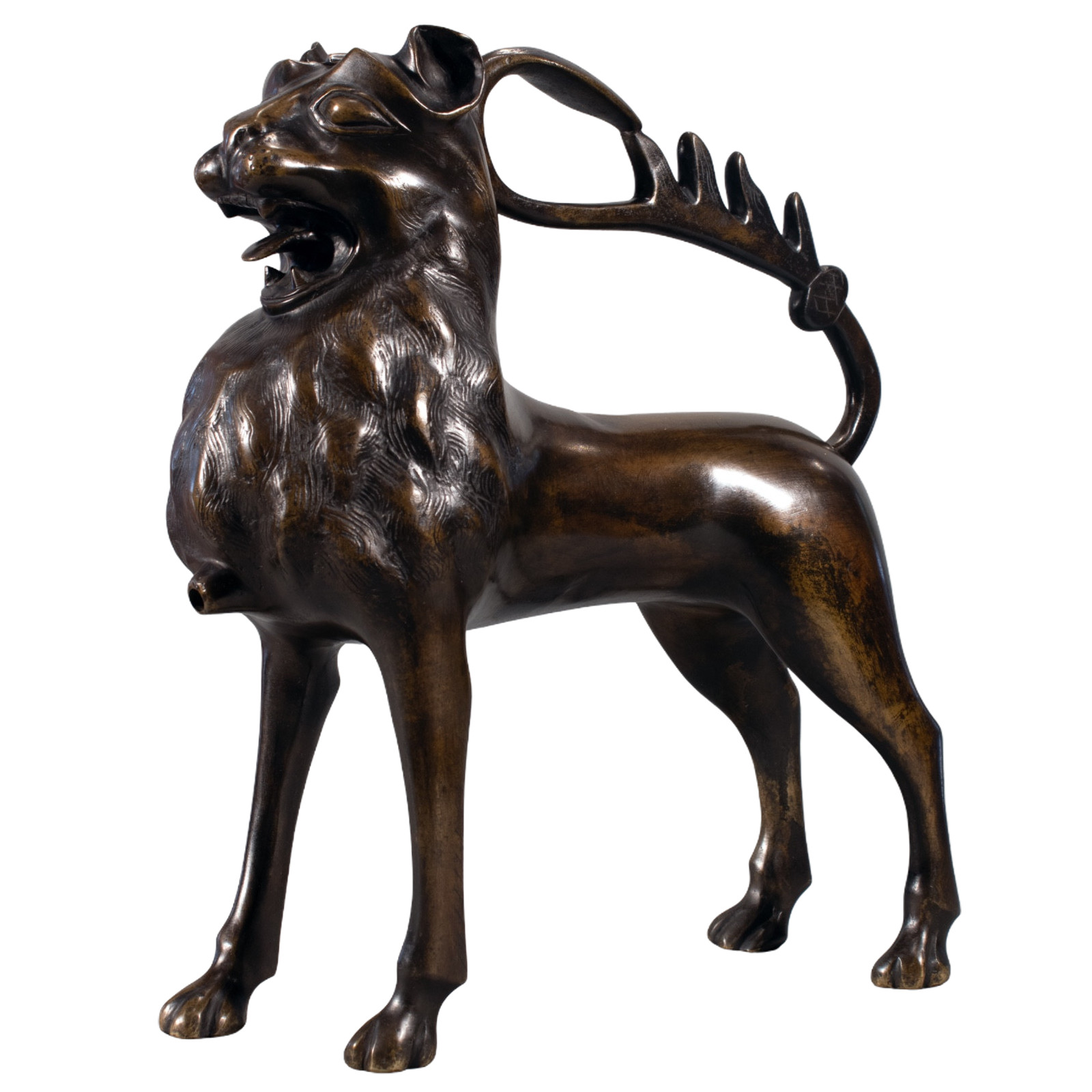
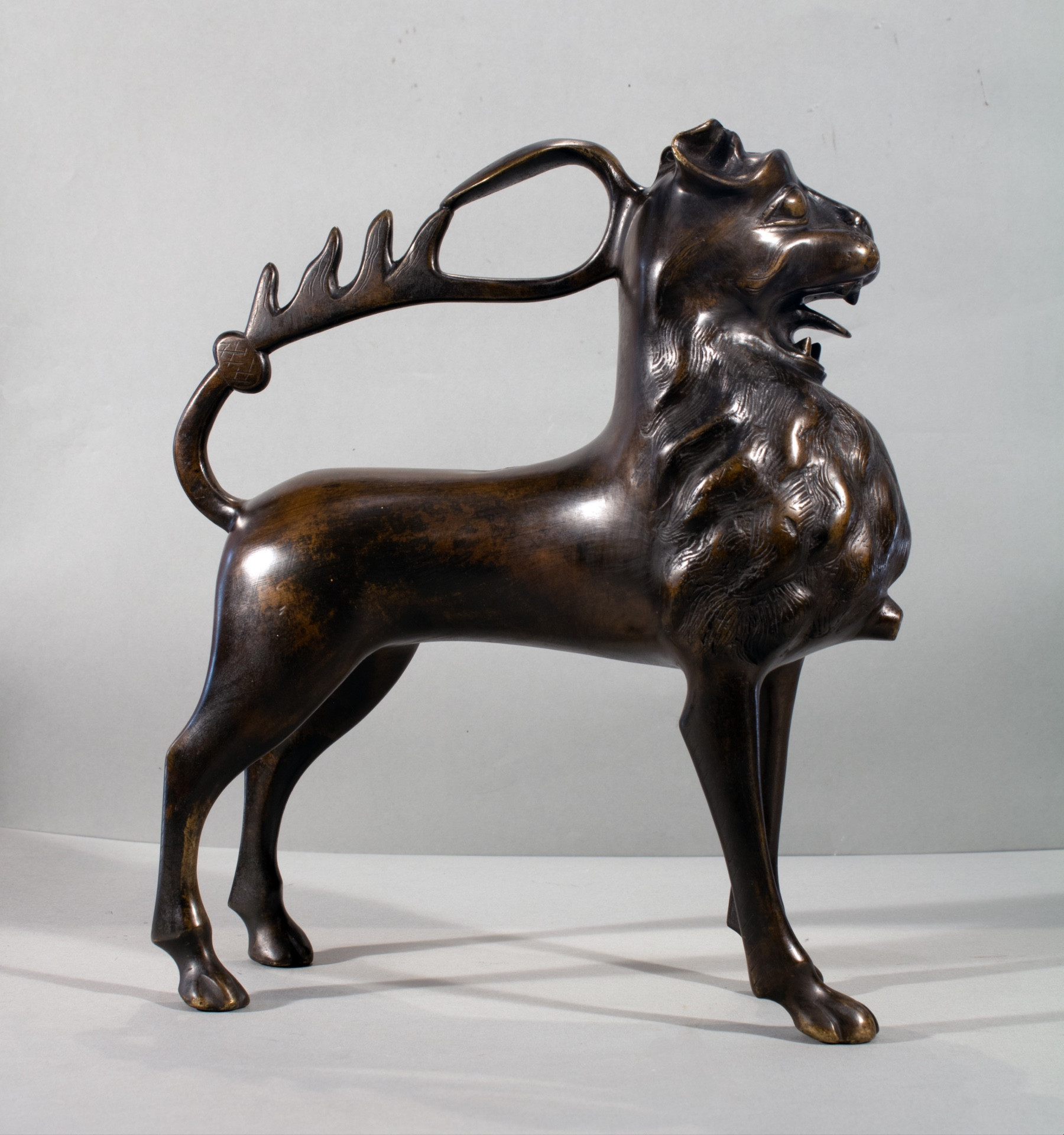
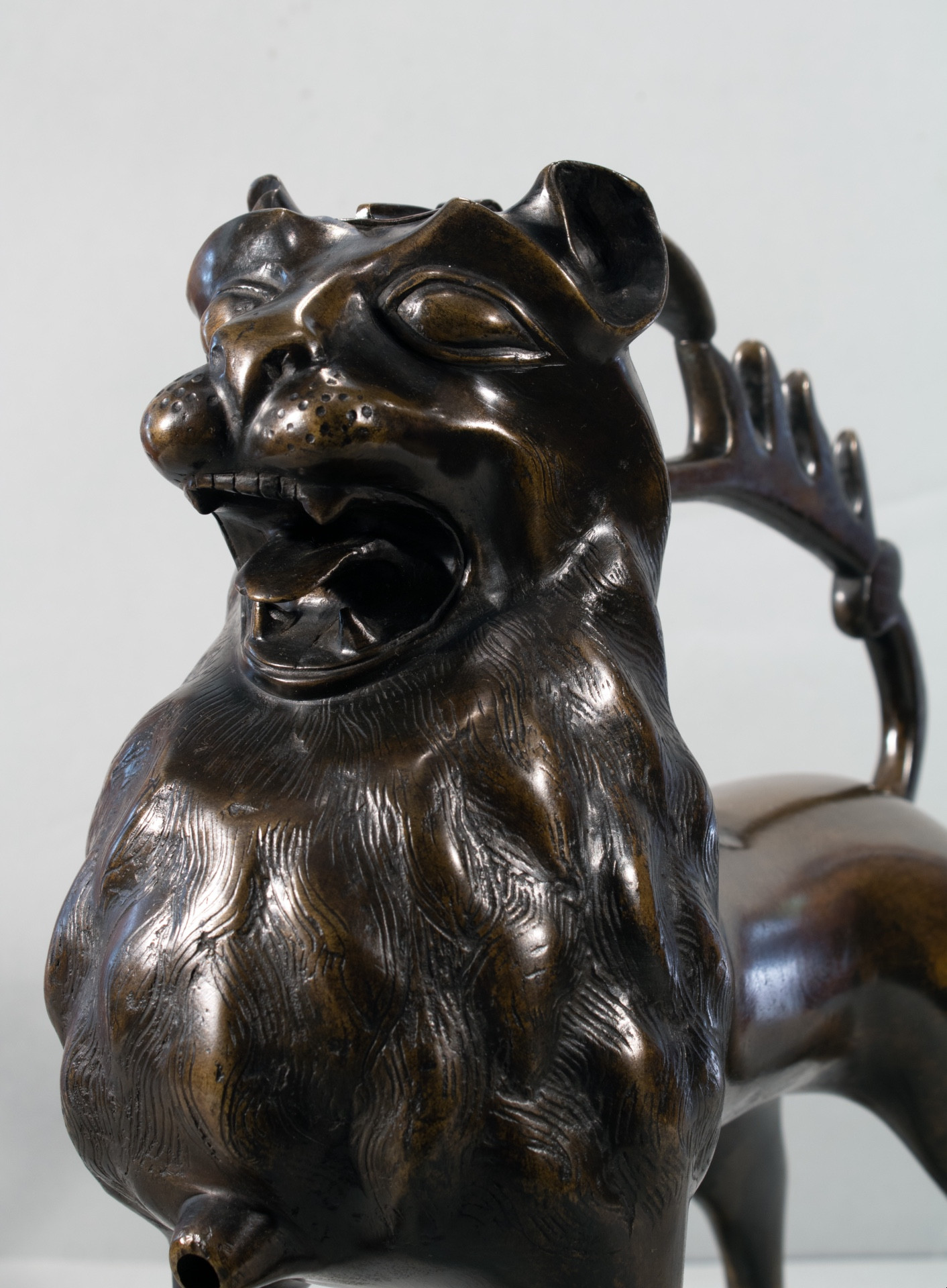
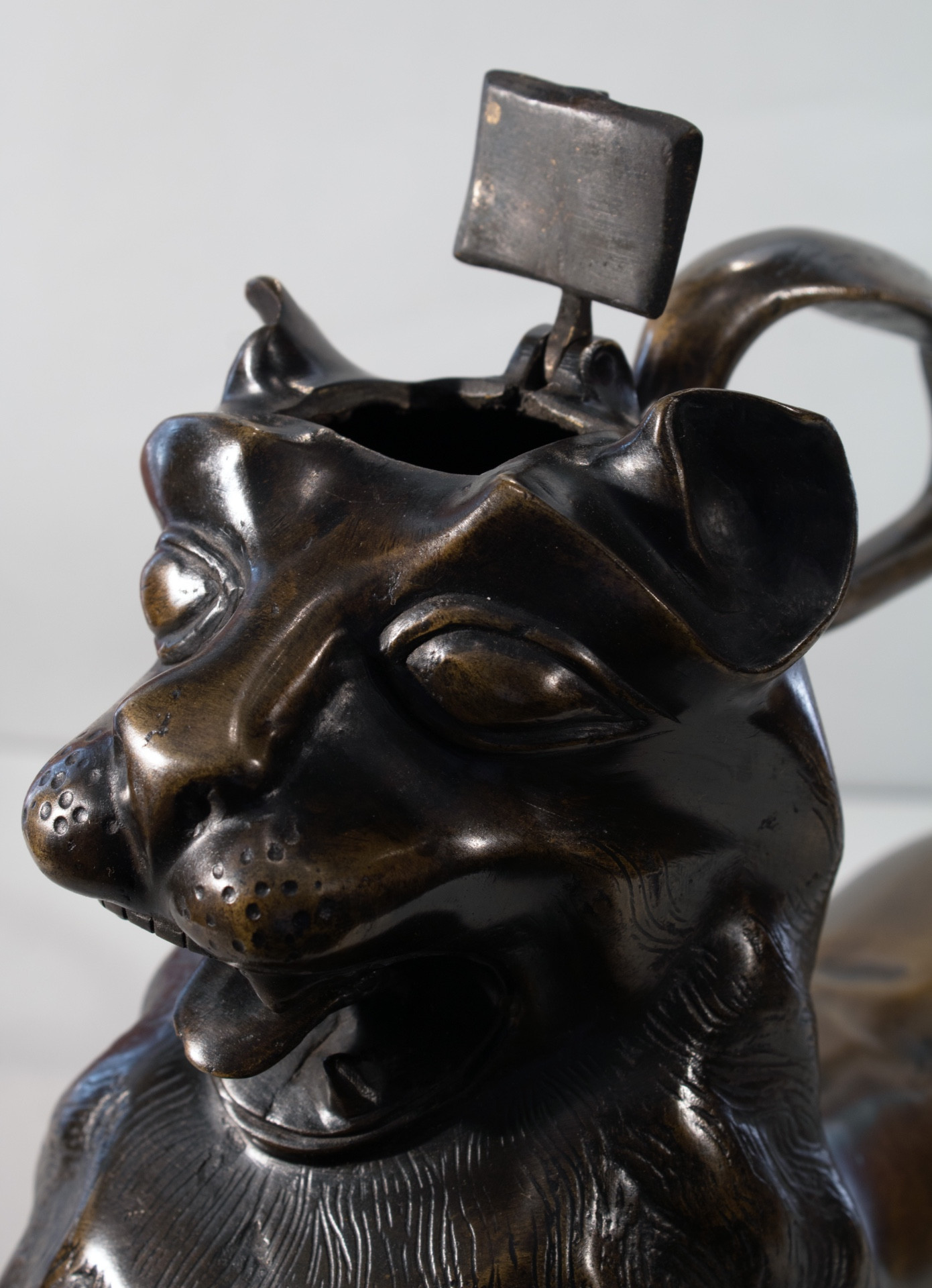
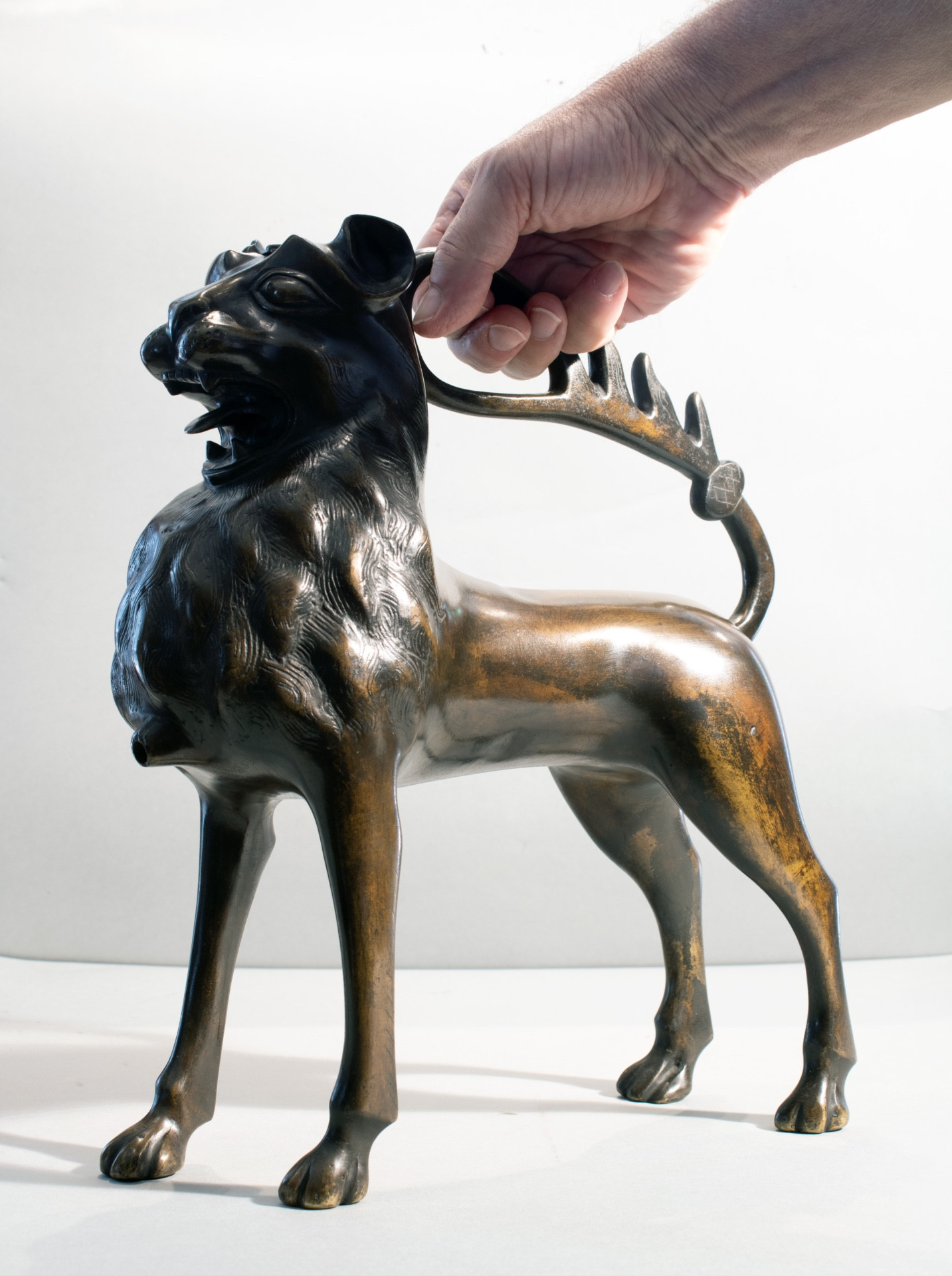
Bronze lion-shaped aquamanile (large model). 19th century
slider-bg
more images

Would you like more images?

Bronze lion-shaped aquamanile (large model). 19th century

By Gallery GALERIE FC PARIS
Member of the Authenticity-Quality label
6.800 €
19th century
The Middle Ages style
DELIVERY
From: 75015, Paris, France

Change your address to get an accurate estimate of shipping costs.

    Item offered for sale by

    See the gallery
    This description has been translated and may not be completely accurate. Click here to see the original

    Height: 35 cm. Width: 30 cm

    Produced primarily in Northern Europe, aquamaniles were used for handwashing, whether for secular or liturgical purposes.

    This unusual object, called an aquamanile (from the Latin aqua, “water,” and manus, “hand”), was originally intended for ablutions and was found in sacristies. Priests used them to wash their hands before and after the service. Artists gave this liturgical object fantastical forms inspired by the religious symbolic repertoire disseminated by the Catholic Church. The vast majority of aquamaniles are fantastical creations, featuring imaginary beings with one or more animal heads—lion, dog, horse—or a mermaid with bird wings, sometimes combined with human faces. The lion motif was particularly popular, accounting for two-thirds of all works. These hybrid and fantastical creatures reflected the whimsical spirit of medieval man. They appear on various types of media: textiles (tapestries, alms bags), illuminated manuscripts, sculpture, and stained glass.

    On our example, the animal’s tail curves to form the handle of the water jug. At the top of the head is an opening with a movable lid into which water was poured.
    Beneath the chest, the water outlet was fitted with a small spout (now missing).

    Most such works originate from northern countries, specifically Germany, the Meuse region, and the Netherlands. The heyday of aquamanile production occurred in the 12th and 13th centuries and came to an end at the dawn of the 15th century. Although the aquamanile was originally a liturgical object, it was also used in private homes.

    Bibliography. Von Falke and E. Meyer, *Bronzegeräte des Mittelalters*, vol. I. Romanesque Candlesticks and Vessels; Cast Vessels of the Gothic Period, Berlin, 1935, pp. 115, 191, no. 508, fig. 464.

    19th century. In excellent condition! Sold with certificate

    Ref: UTHJP0HDHA

    Condition Very good
    Style The Middle Ages style (Curiosities of The Middle Ages style Style)
    Period 19th century (Curiosities 19th century)
    Country of origin France
    Width (cm) 30
    Height (cm) 35
    Materials Patinated Bronze
    Shipping Time Ready to ship in 4-7 Business Days
    Location 75015, Paris, France
    Shipping Information **Shipping costs are free for France and Europe
    Antikeo Buyer Guarantee

    4 commitments to buy with confidence