This description has been translated and may not be completely accurate. Click here to see the original
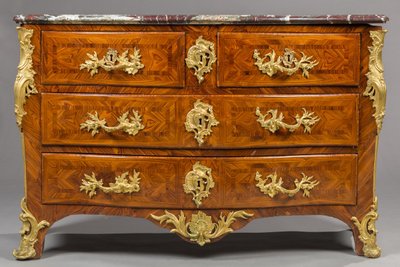
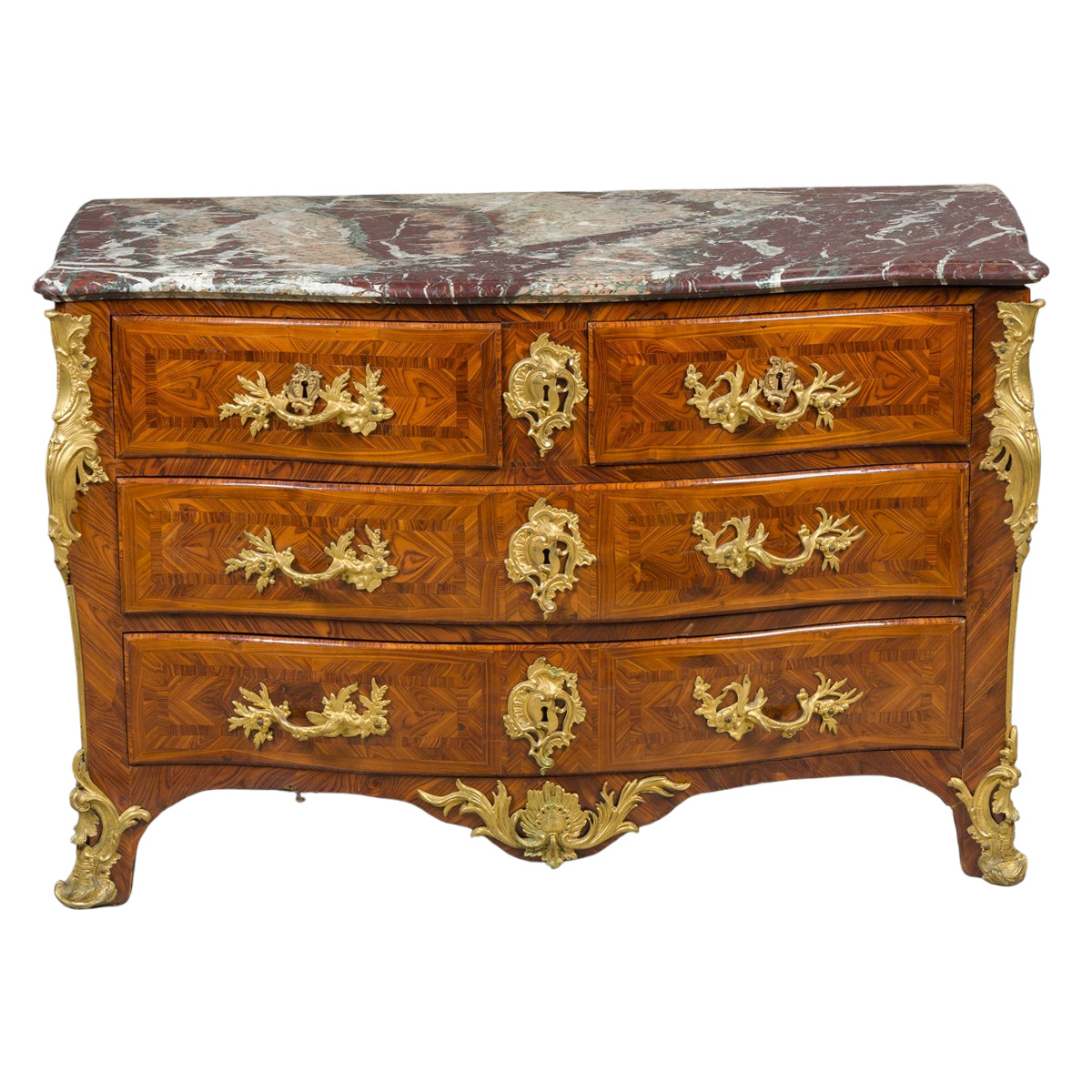
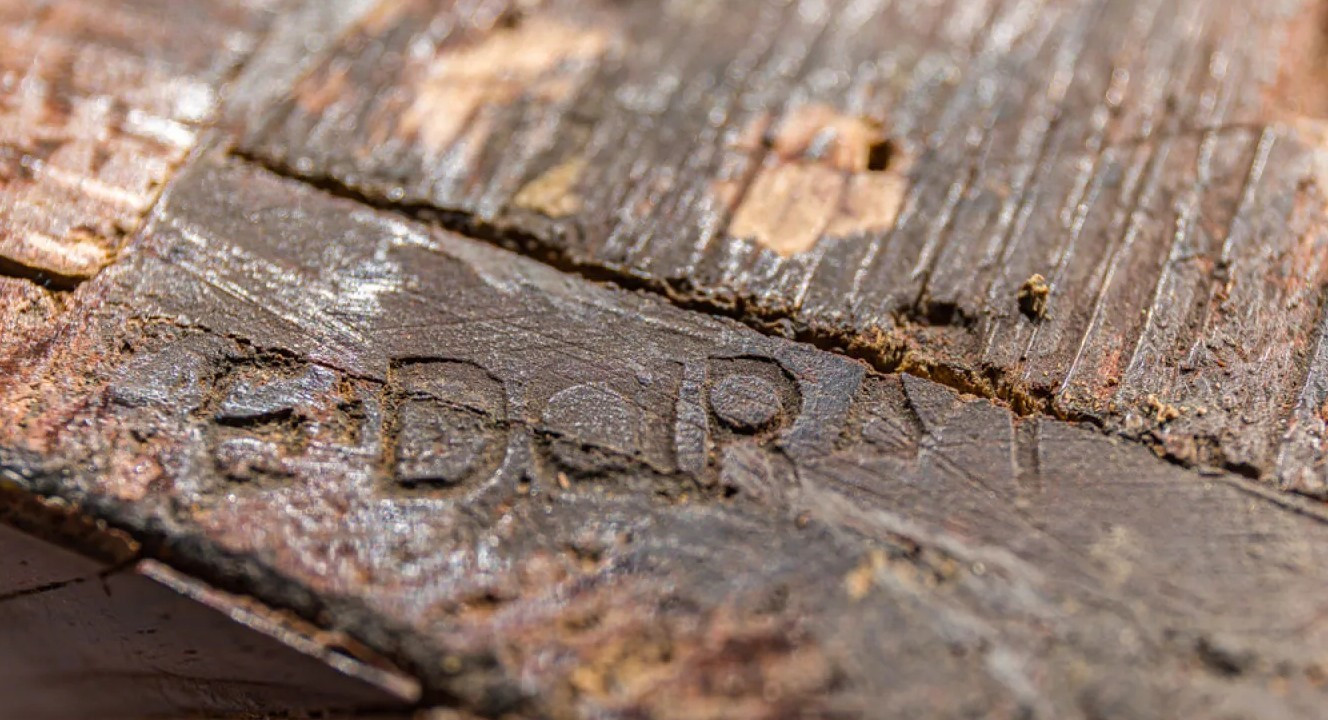
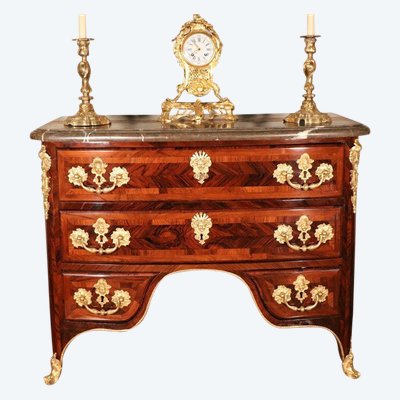
Stamped "Etienne DOIRAT" - Regency Commode with Central Projection - Regency Period
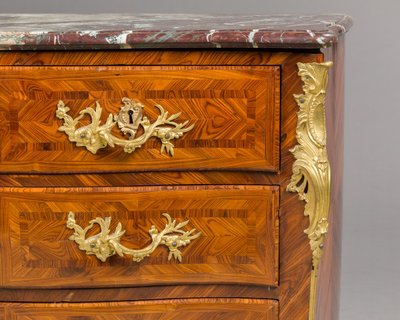
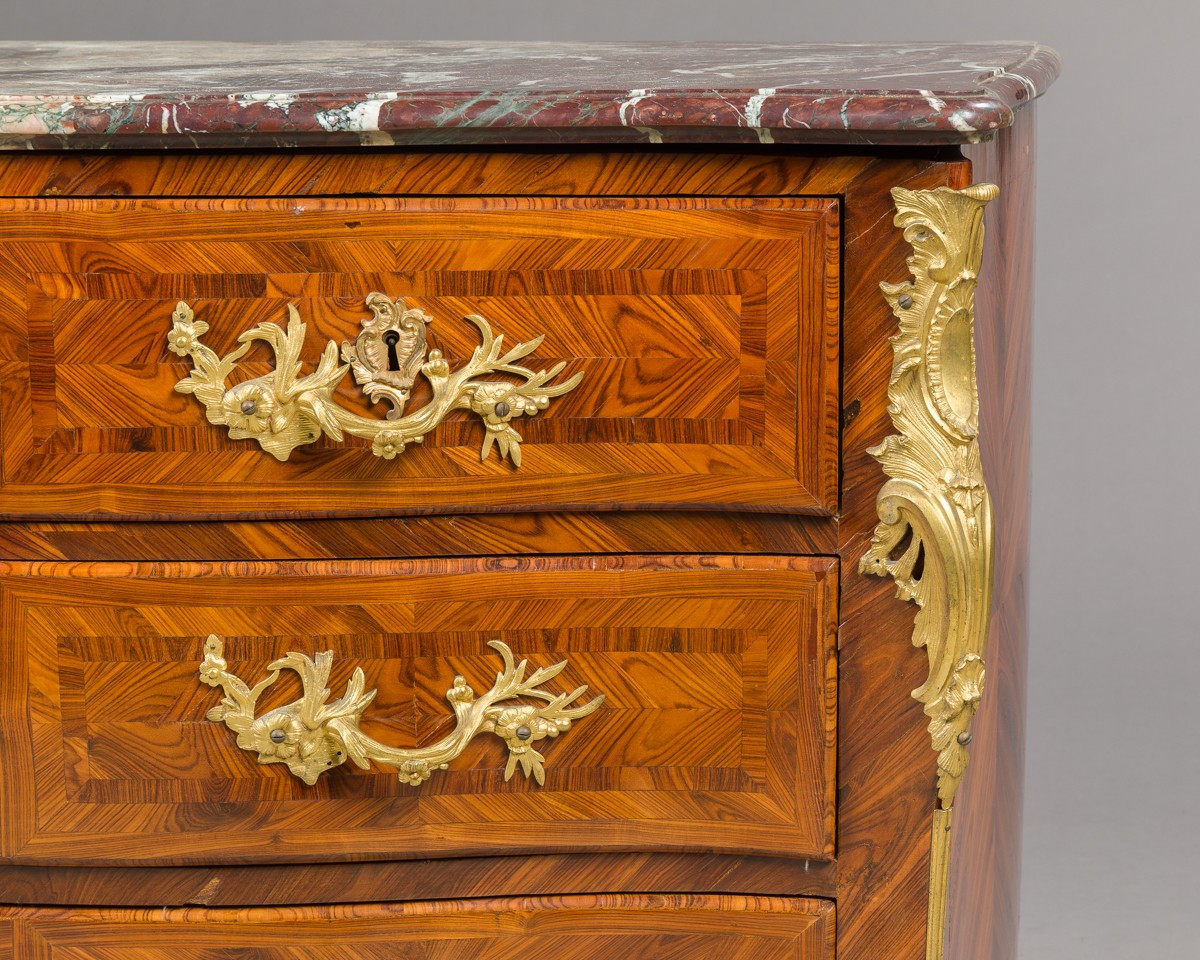
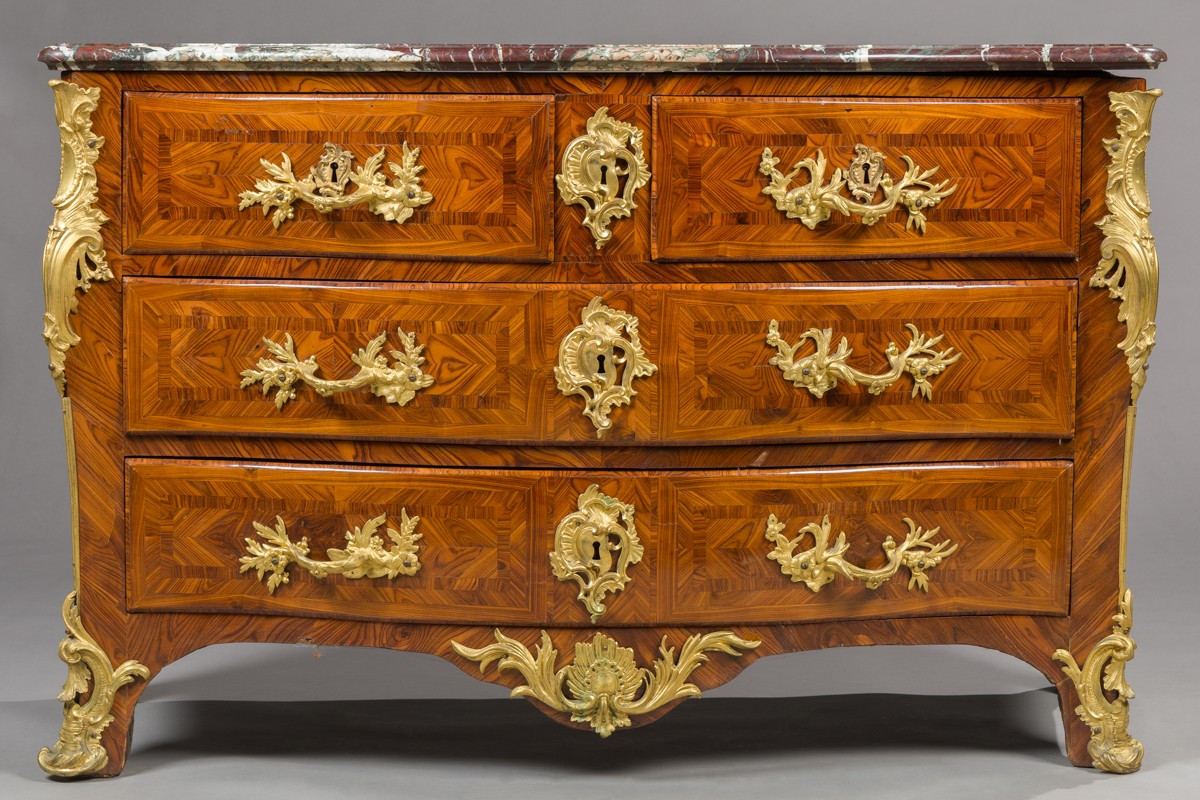
Beautiful marquetry commode in quatrefoil, with frieze or wide crossbars of kingwood,
Slightly sinuous in shape,
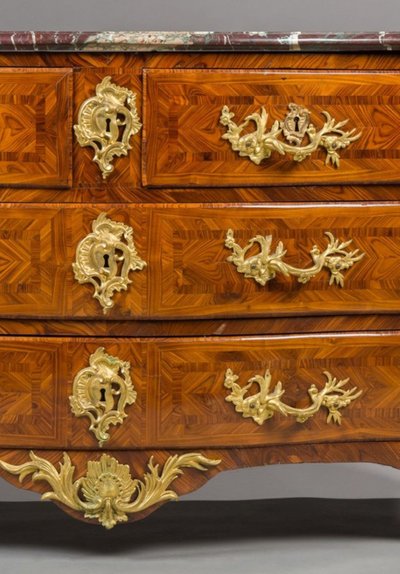
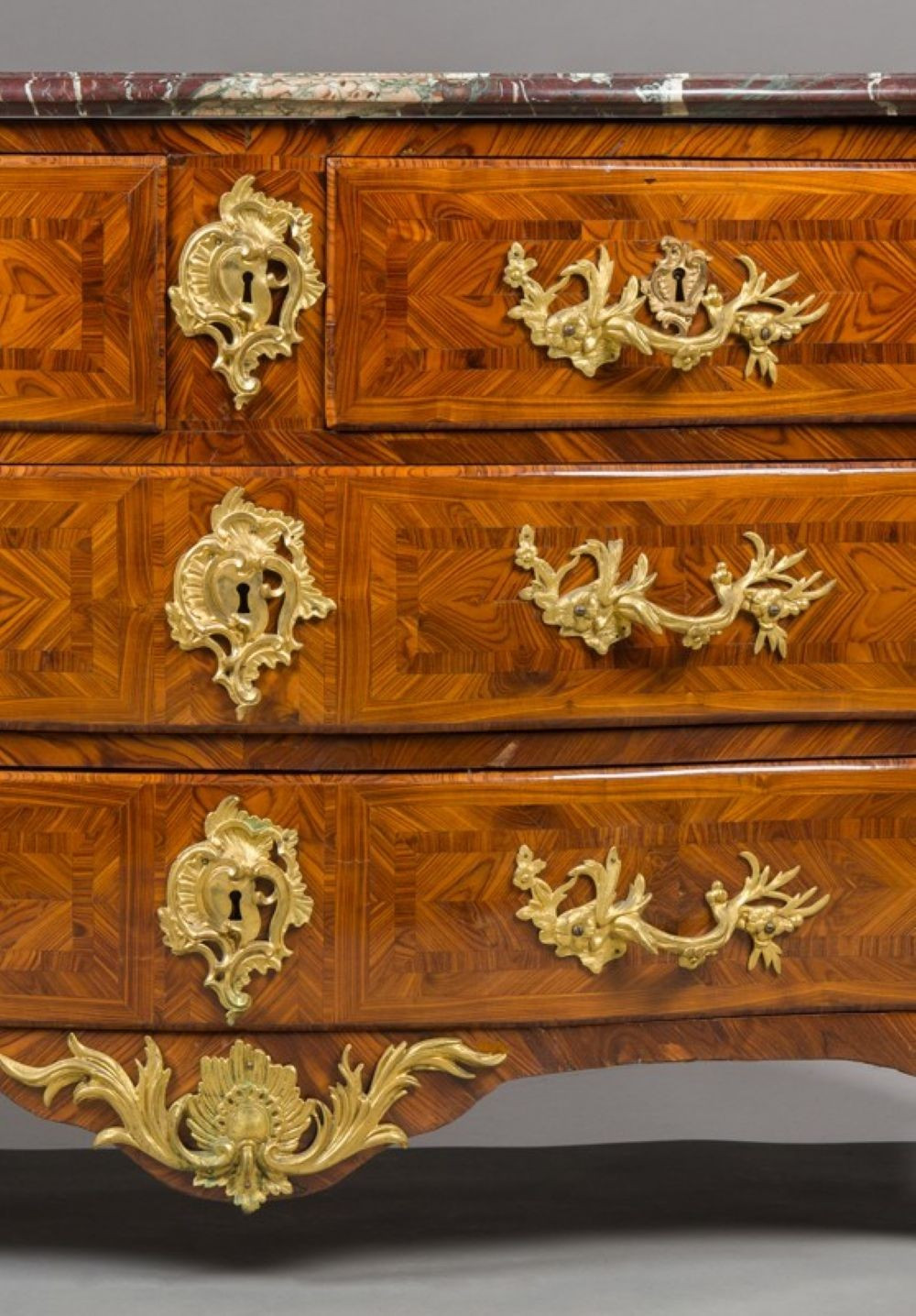
The front opens with four drawers in three rows with crossbars.
Beautiful ornamentation of chased and gilded bronze mounts such as corner mounts, feet, drawer pulls, plaque, and apron.
Thick molded Campan marble top.
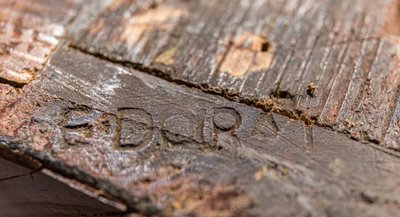
Stamped by Etienne DOIRAT (relatively rare)
Regency Period
H: 84 cm W: 132 cm D: 60 cm
This piece is currently with my cabinetmaker for restoration and 18th-century varnishing.
Serge CHAILLOU, MOF (Meilleur Ouvrier de France - Best Craftsman of France) and accredited by the Museums of France
Etienne Doirat (1675-1732) - cabinetmaker.
One of the few great cabinetmakers of the Regency period.
His furniture is frequently made of amaranth or violet wood, veneered with leaves or inlaid with grid patterns.
Born into a family of artisans—earthenware makers and carpenters—established in the Faubourg Saint-Antoine since the early 17th century, Etienne Doirat was the son of mason Joseph Doirat and Michelle Ferlu, sister of Pierre-Isaac Ferlu, a master merchant and cabinetmaker.
His younger brother, Pierre-Michel, would follow in his footsteps as a master cabinetmaker.
It was in the early 18th century that he earned his master's certificate.
He worked throughout his life on the rue du Faubourg Saint-Antoine for a wealthy clientele, both French and foreign.
Often possessing a sublime character, his furniture is predominantly in the Regency style. Chests of drawers constitute the bulk of his production. An inventory drawn up on July 14, 1732, mentions a large number of pieces, described as "tomb-like" or "Regency-style," but also includes several large bookcases, wardrobes, secretaries, regulators, and various models of game tables or parlor tables.
These pieces of furniture are frequently made of amaranth or violet wood, veneered with leaves or inlaid with grid patterns.
Doirat made extensive use of high-quality bronzes—crafted by collaborators who were founders and chasers—where traditional elements such as the mascarons from the time of Louis XIV are juxtaposed with Regency-style busts of women or "espagnolettes," or with various motifs in a typically Rococo style.
He sometimes adorned the front of his commodes with drawers without crossbars with a large bronze cartouche, a motif widely adopted by his successors. In this field, Doirat emerged as one of the great creators of decorative styles and techniques—glories of Parisian cabinetmaking during the reign of Louis XV.
MUSEUMS
• Commode - Petit Palais
• Commode - J. Paul Getty Museum
• Commode - Cleveland Museum of Art
• BIBLIOGRAPHY
• French Furniture of the 18th Century - Pierre Kjellberg
- Les Editions de l'Amateur - 1989
• Cabinetmakers of the 18th Century - Count François de Salverte - Les éditions d'Art et d'Histoire - 1934
Ref: UN5QSSZMSS

 English
 Français
 Italiano
 Deutsch
 Light stand, 17th century.
1.200 € EUR