This description has been translated and may not be completely accurate. Click here to see the original
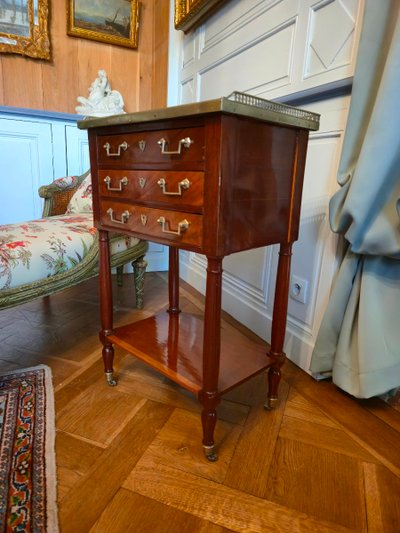
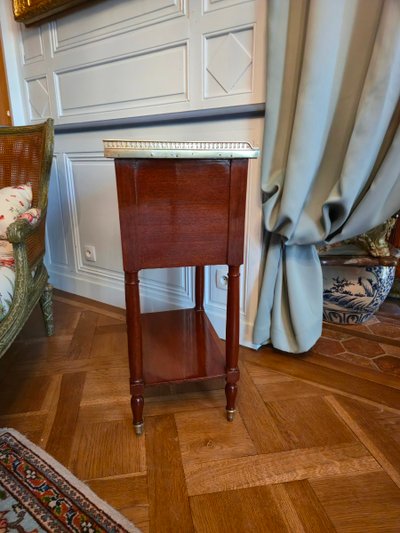
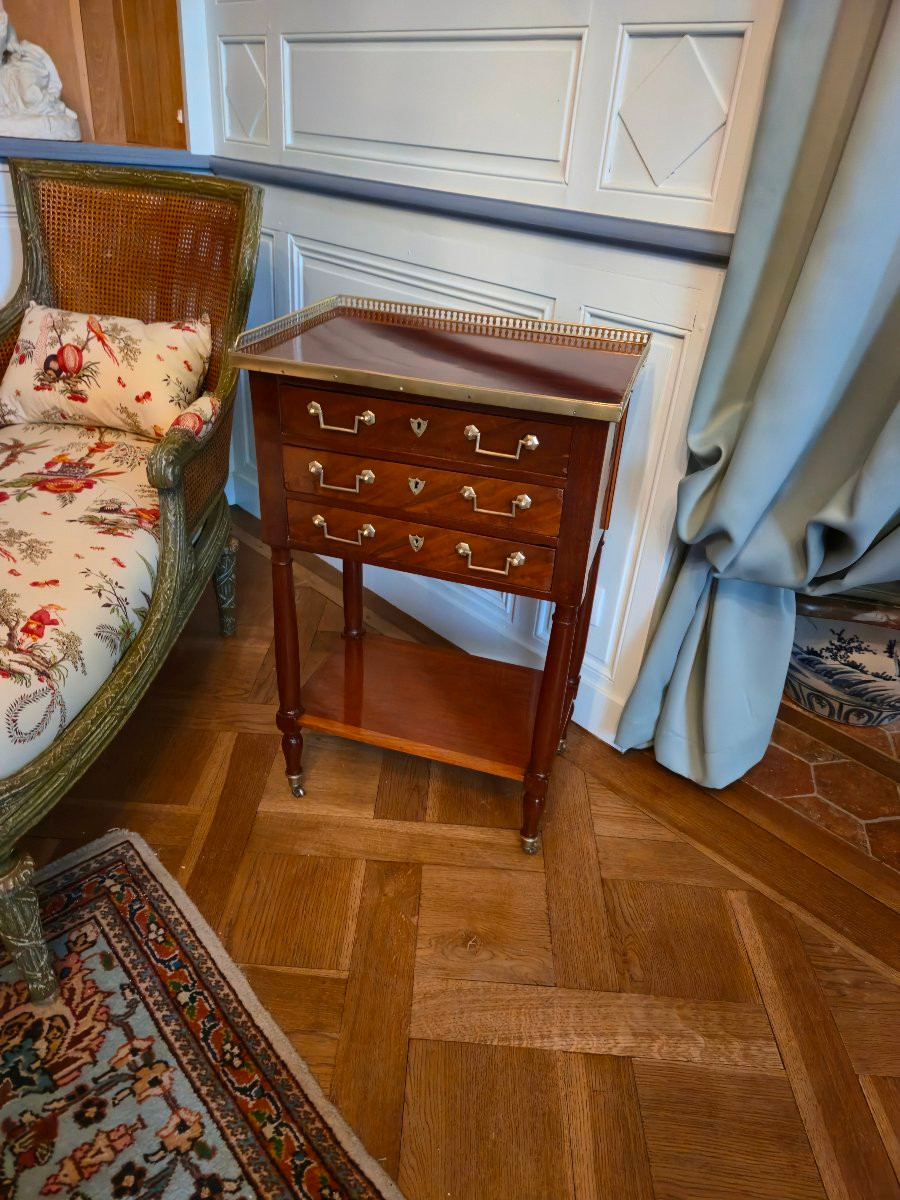
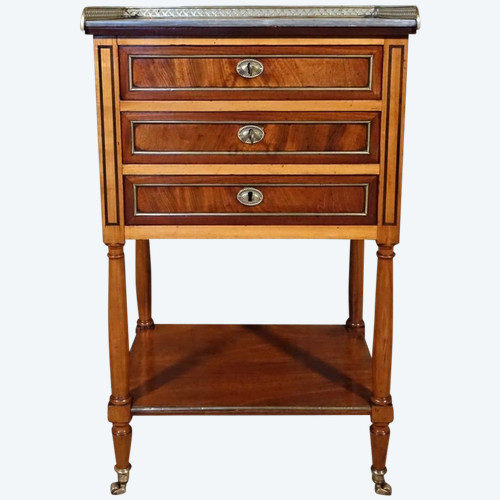
This elegant chiffonier-style side table opens at the front with three superimposed drawers, their fronts veneered in burr mahogany. The panels and uprights of the frame are veneered in straight-grain mahogany, while the four antique-style turned columns are made of solid mahogany. The cabinetmaker reserved the burr mahogany for the drawer fronts, where its more dynamic grain accentuates the composition of the piece, while the other visible parts are finished in straight-grain mahogany with a more regular pattern.
The drawers retain their original locks, escutcheons, and faceted drop handles, characteristic of late 18th-century French furniture.
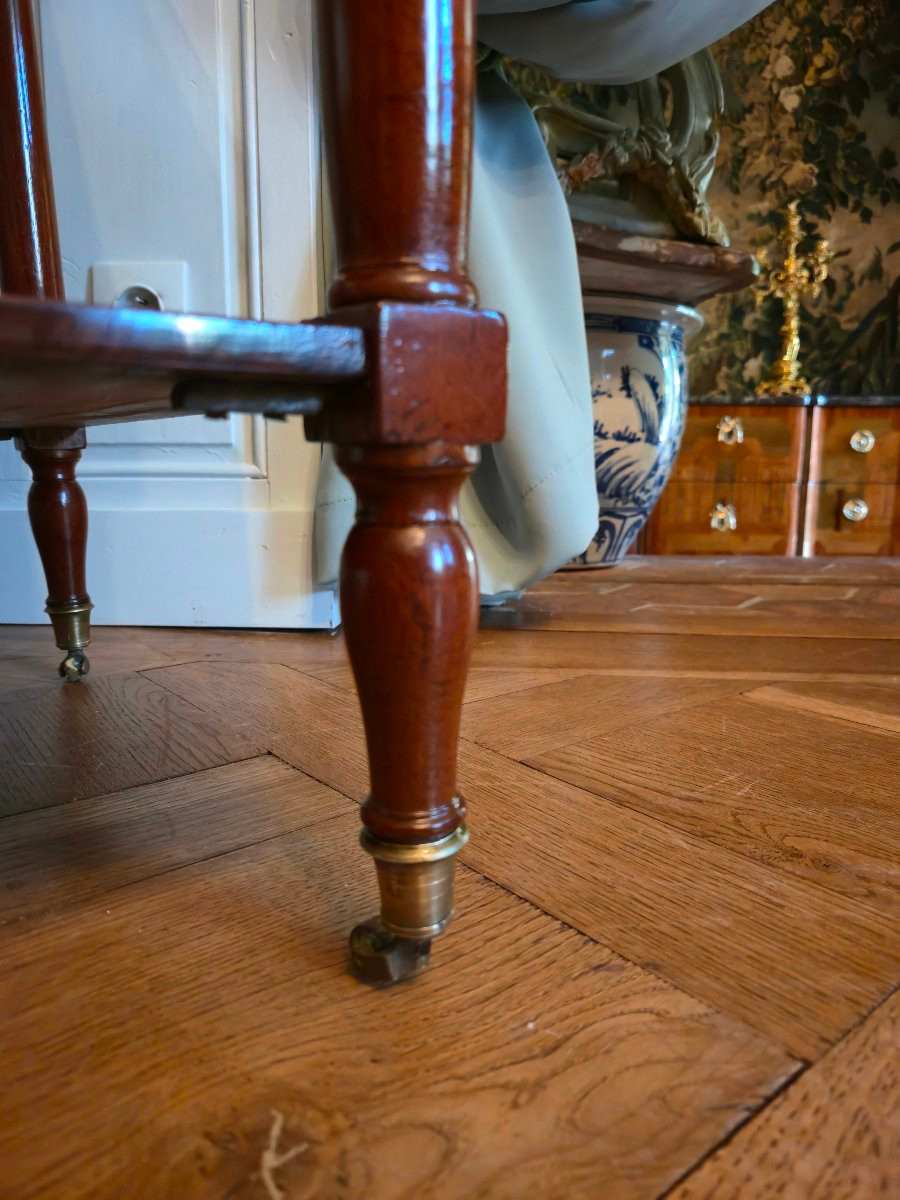
The apron rests on four antique-style turned columns joined by a stretcher. Inspired by classical architecture, these supports frequently appear in French furniture from the 1790s, on tables, consoles, and certain chairs from the Directoire period. This design vocabulary is particularly evident in the work of Georges Jacob and his son René Jacob, where armrest consoles often take the form of antique columns.
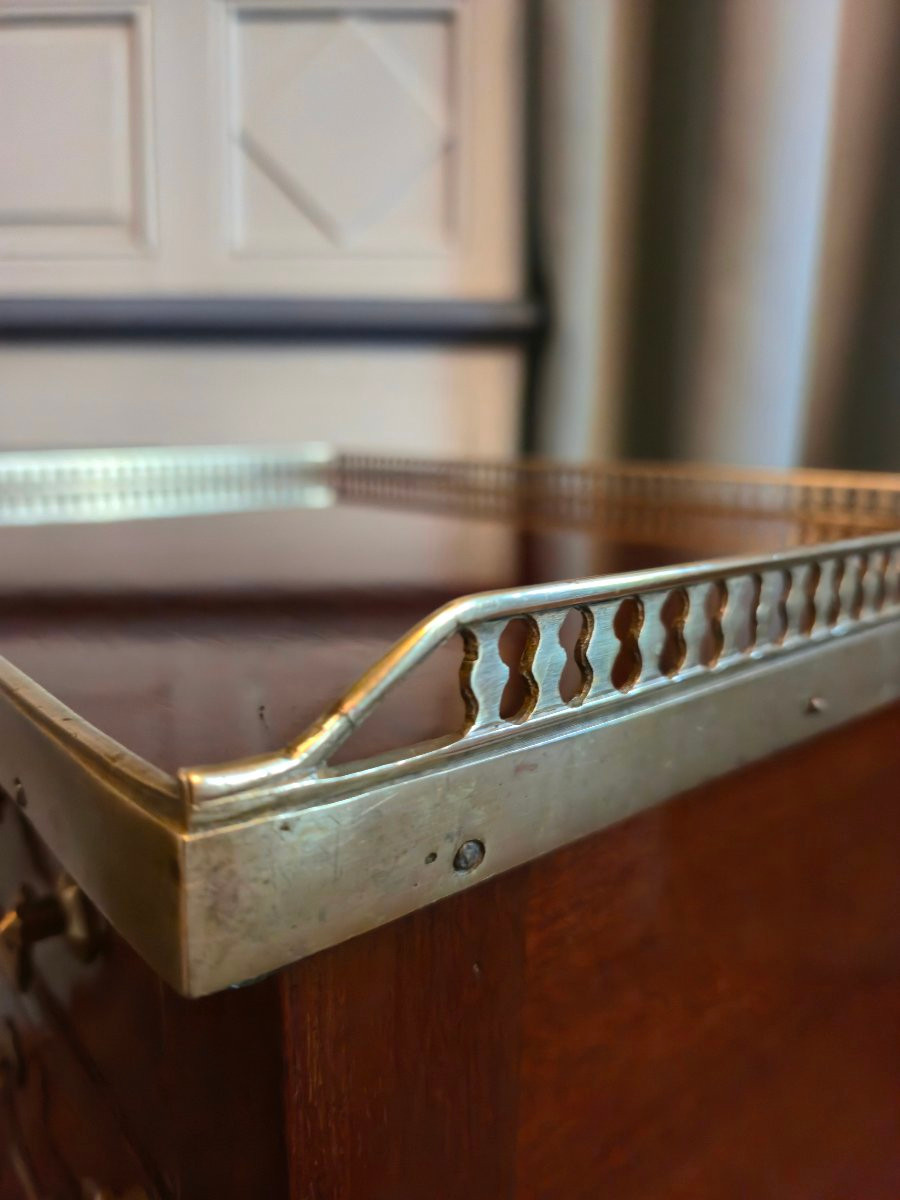
The tabletop is surrounded by its original openwork brass gallery. While the gallery undoubtedly belongs to the piece, it is possible that the current mahogany top replaced a marble top, more common on this type of furniture at the end of the 18th century. This potential modification is old and perfectly consistent with the overall design.
The four legs terminate in original bronze sabots mounted on casters.
The drawers are dovetailed. Their sides, backs, bottoms, and fronts are made of oak.
The chiffonier table is a type of furniture that remained popular throughout much of the 18th and early 19th centuries, adapting to evolving tastes. Our example perfectly illustrates the Neoclassical trends of the late 18th century. The antique-style turned columns inspired by the Tuscan order, the clean lines, and the use of mahogany all reflect this renewed interest in classical architecture that characterized the final years of Louis XVI's reign and the Directoire period.
The piece has been restored in our workshops and is now in excellent condition.
Dimensions:
Height: 78.5 cm
Width: 50 cm
Depth: 34 cm
Ref: DFF3ILLJBH

 English
 Français
  Italiano
  Deutsch
  Crow pouch
800 € EUR
Crow pouch
800 € EUR