This description has been translated and may not be completely accurate. Click here to see the original
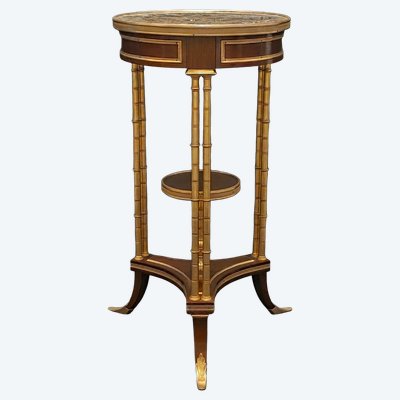
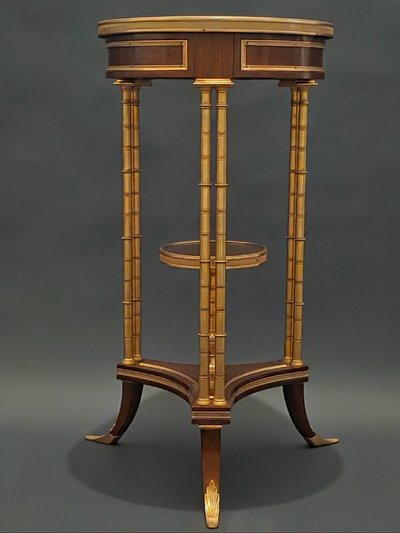
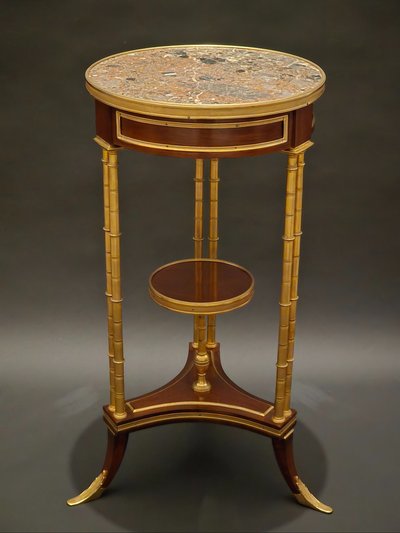
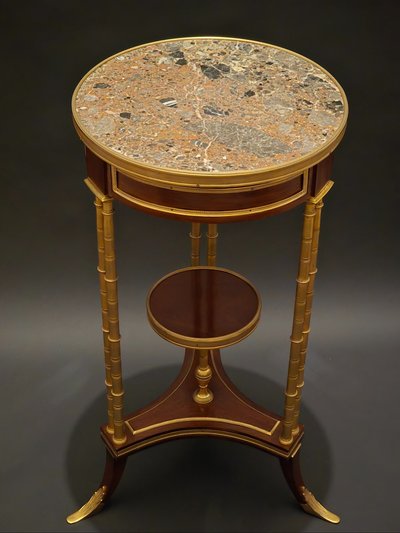
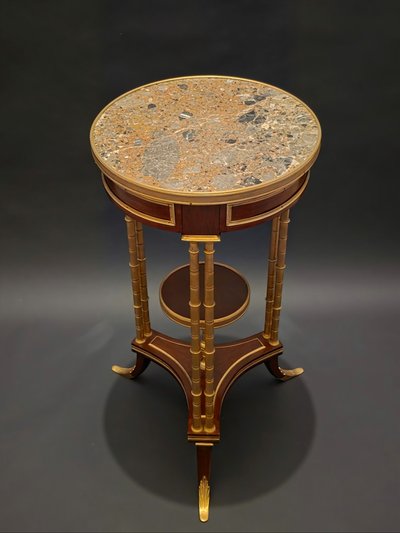
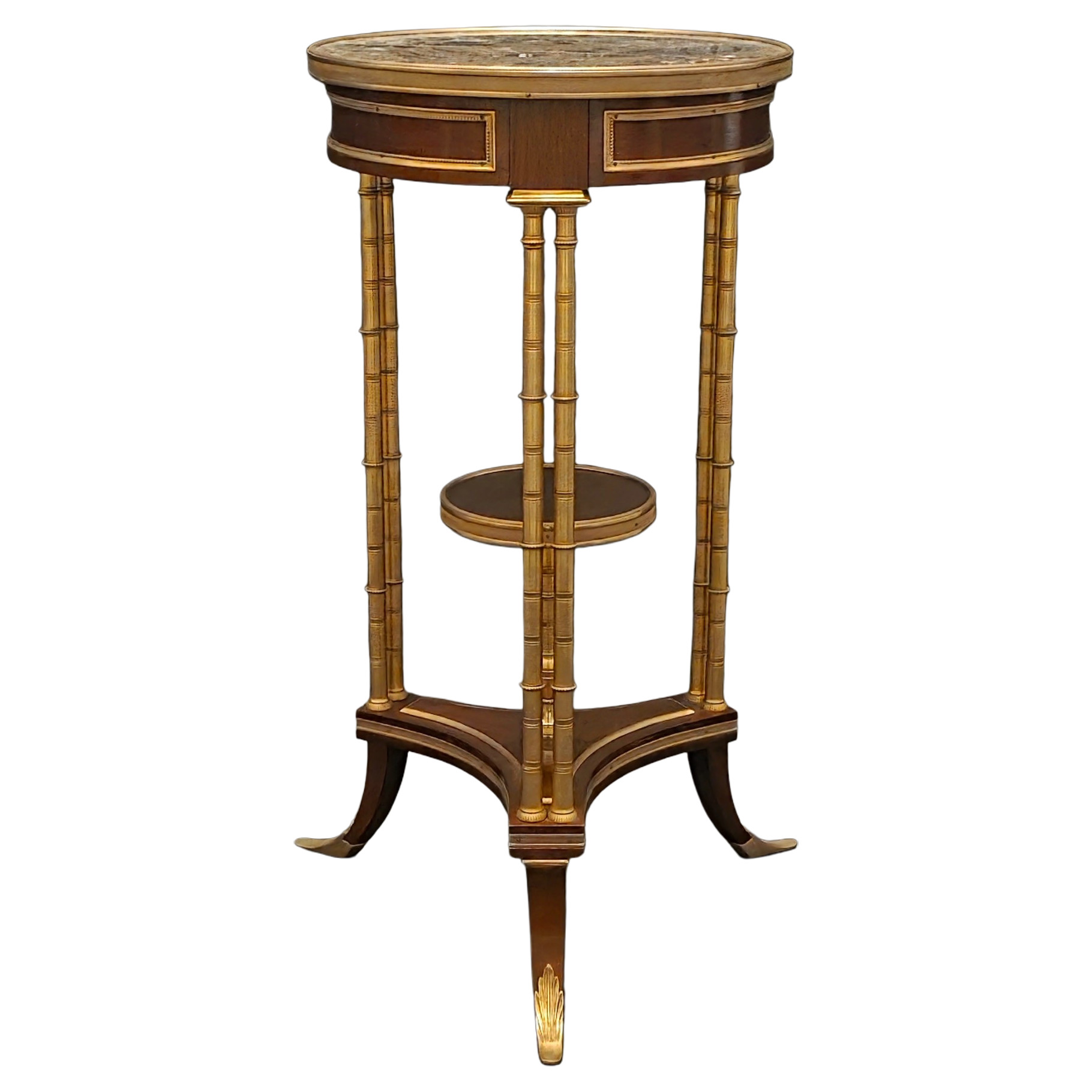
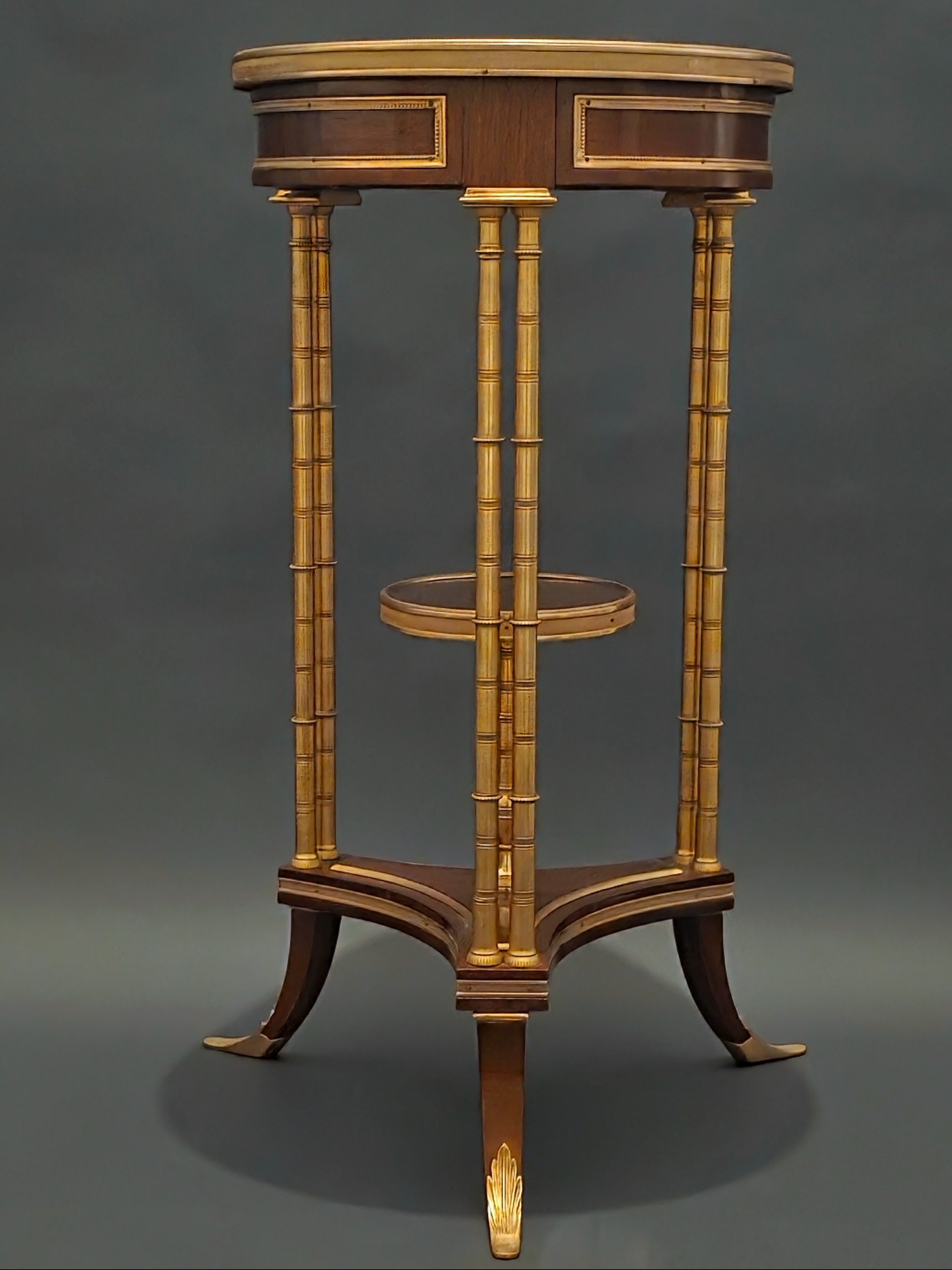
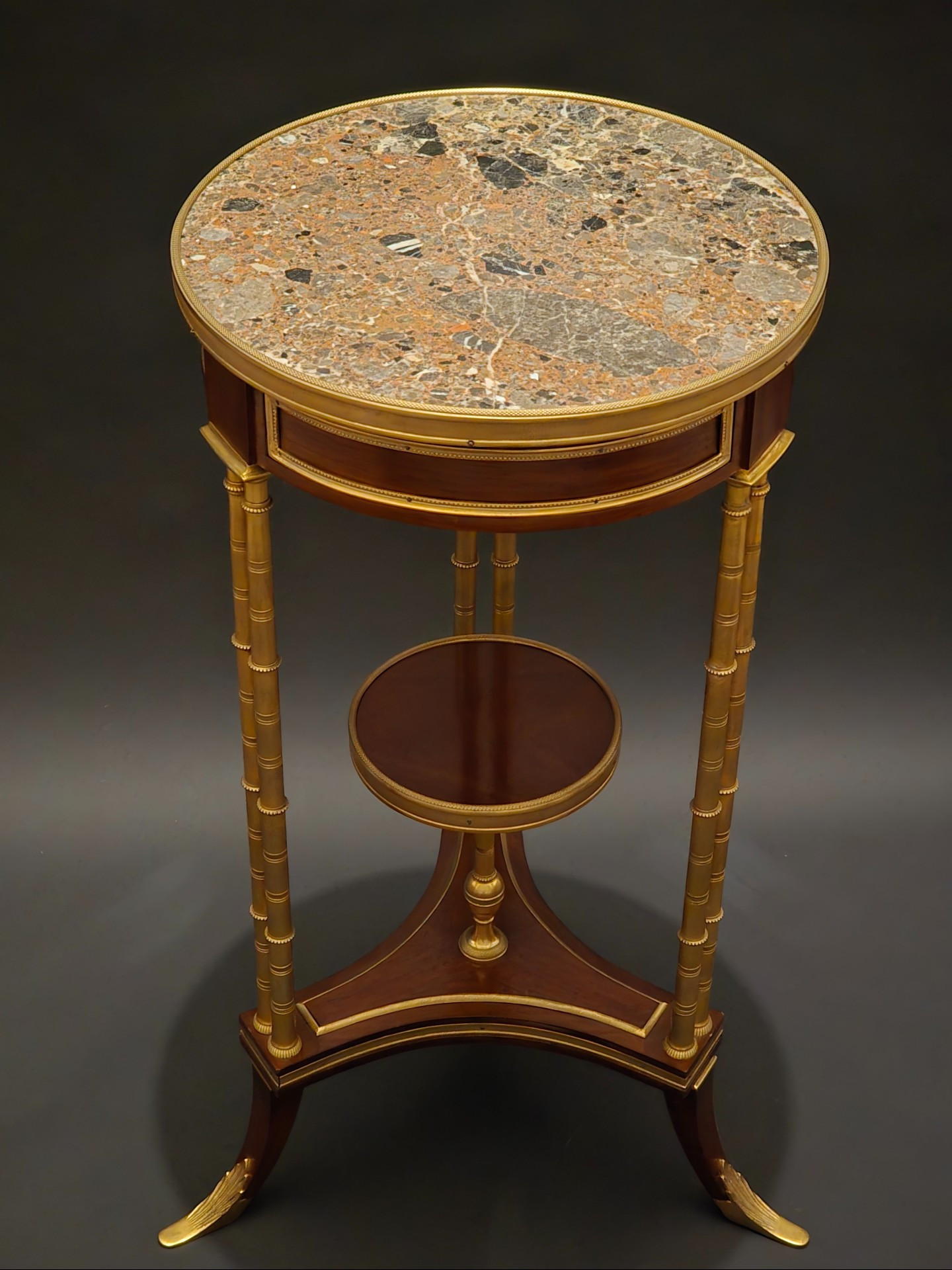
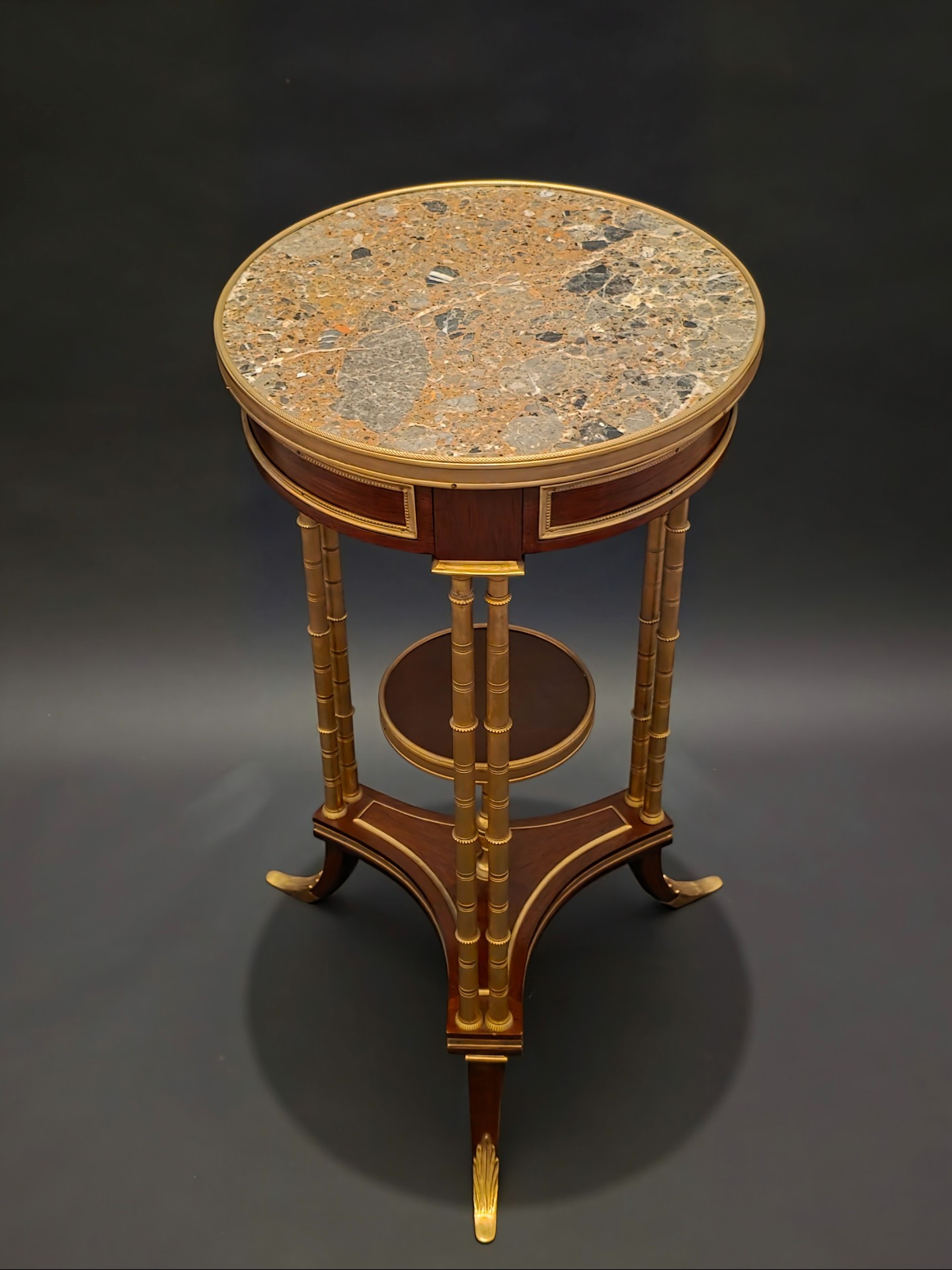
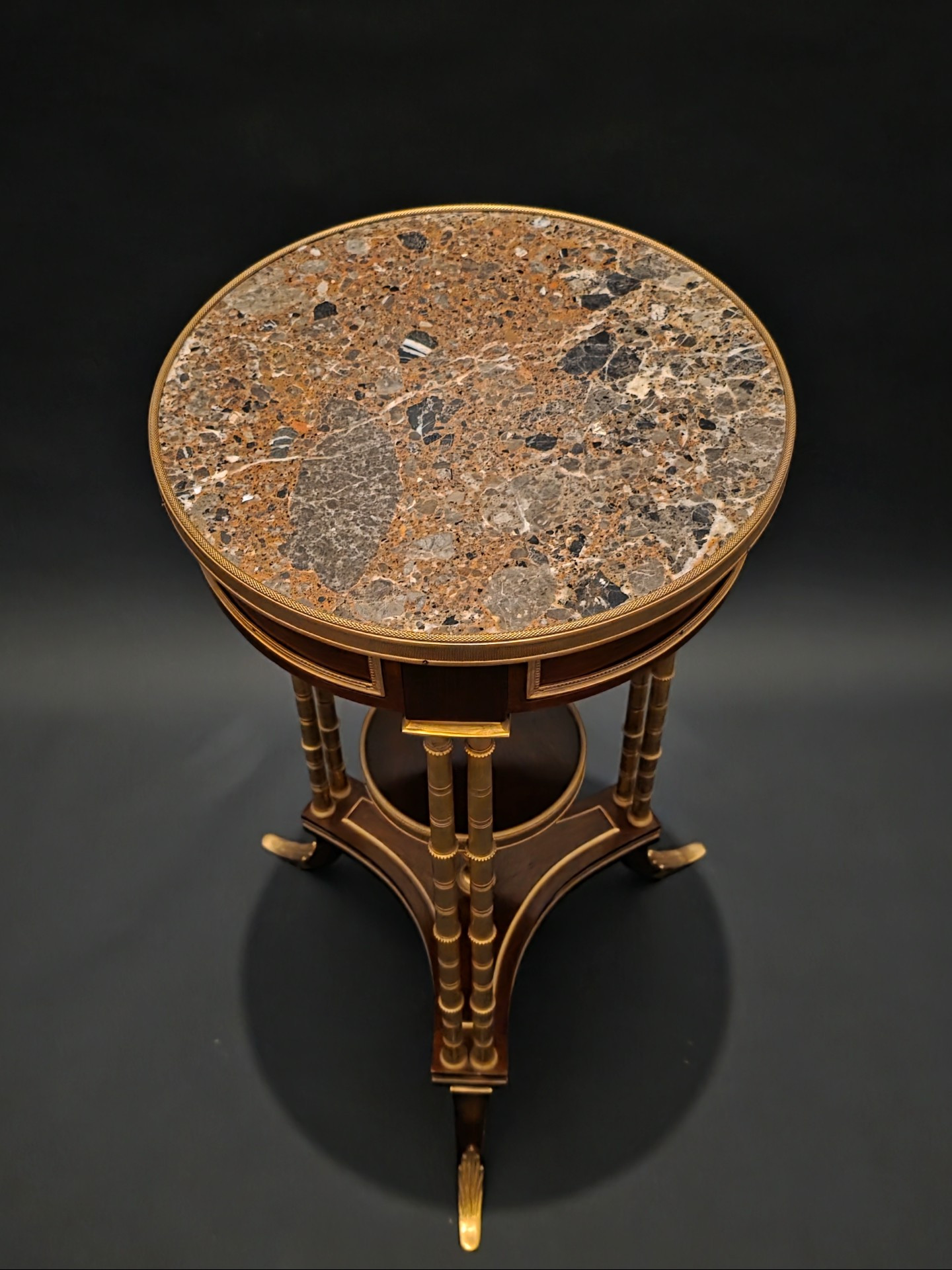
A superb tripod pedestal table with a stretcher shelf, dating from the late 18th century and attributed to Adam Weisweiler (1744-1820).
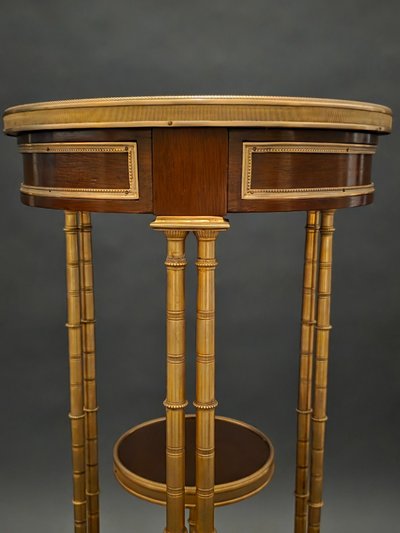
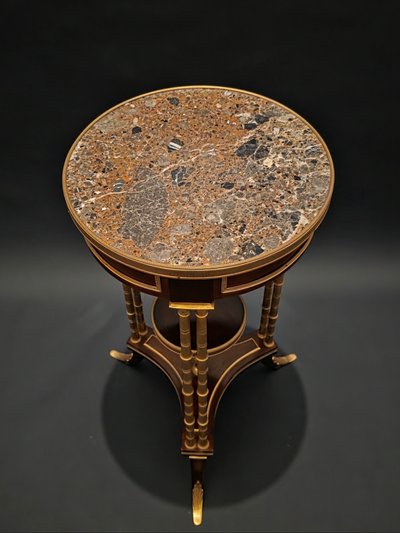
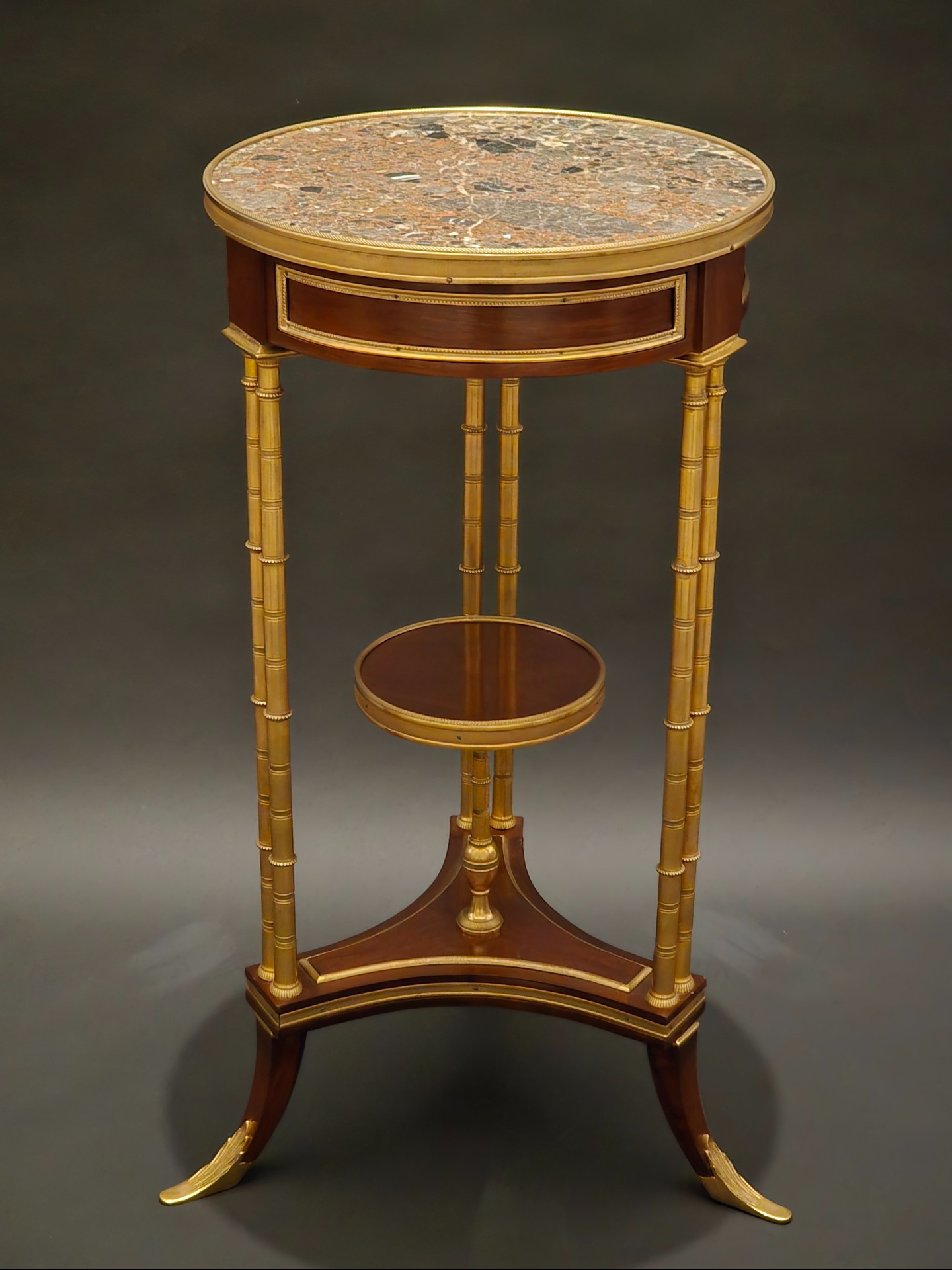
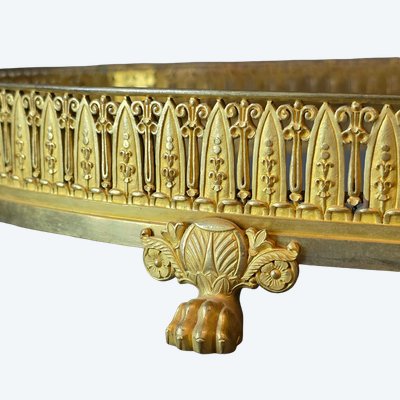
Made of mahogany and mahogany veneer on an oak frame, the circular top is encircled by a gallery with fluted moldings and a chased border, simulating a gilt-bronze snakeskin, enclosing a magnificent Aleppo breccia marble top.
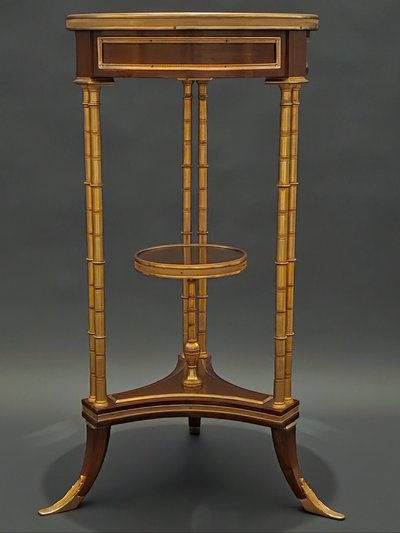
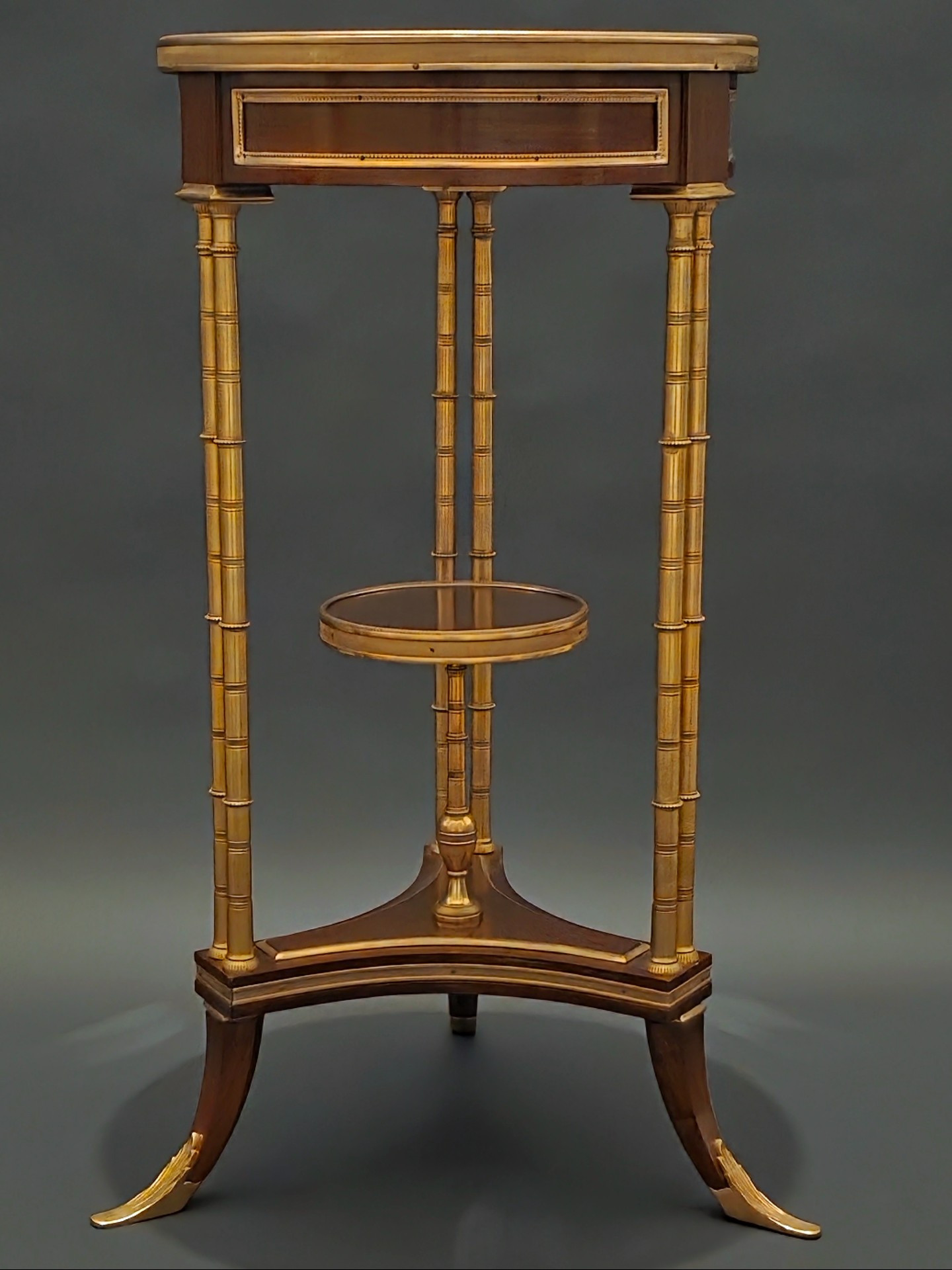
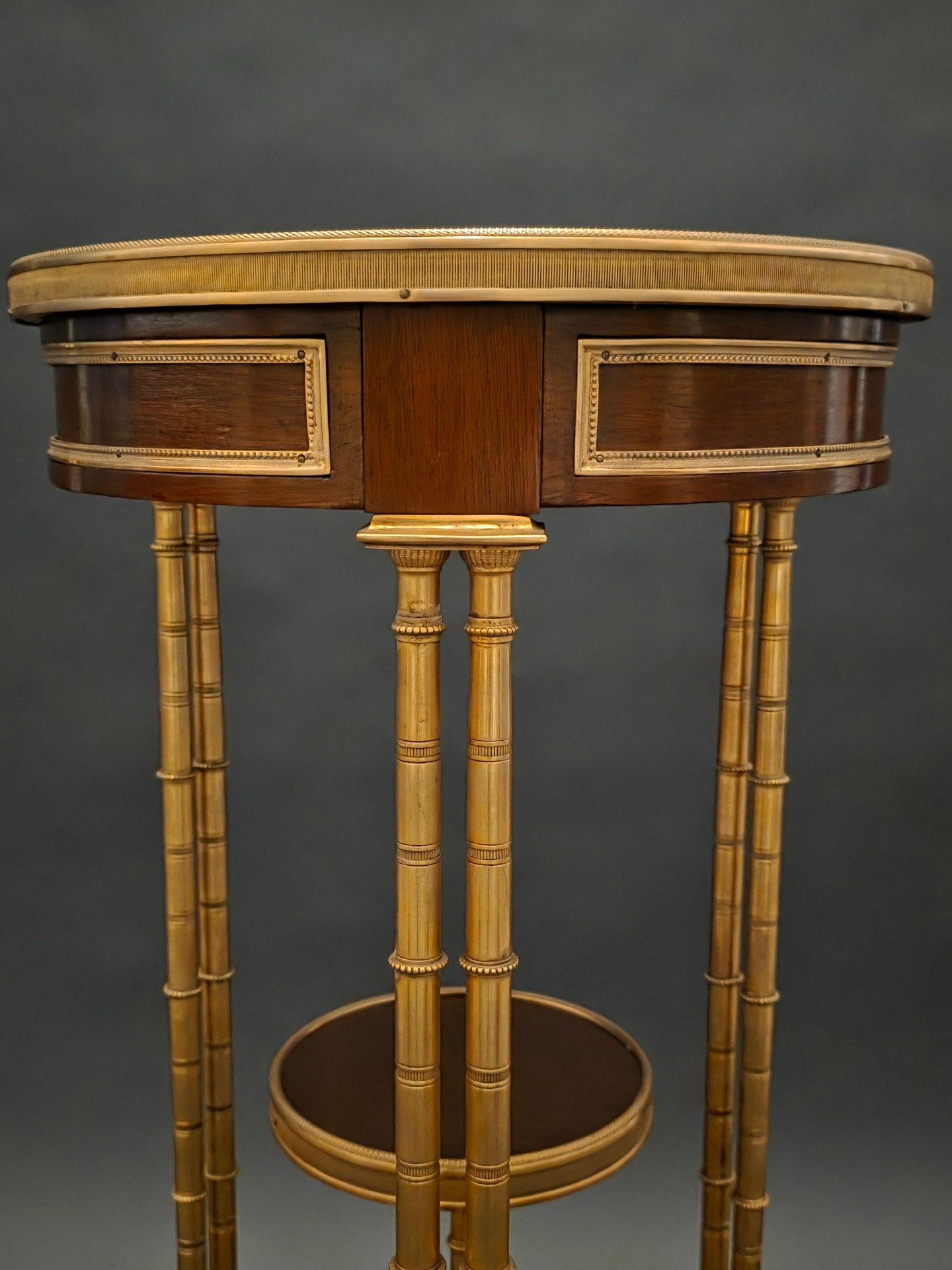
The slightly projecting apron is highlighted by inset frames with rows of gilt-bronze beads.
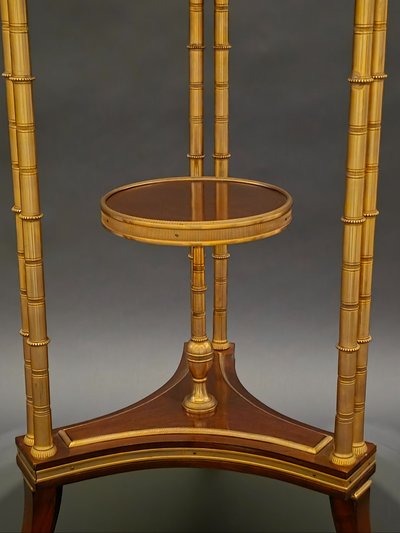
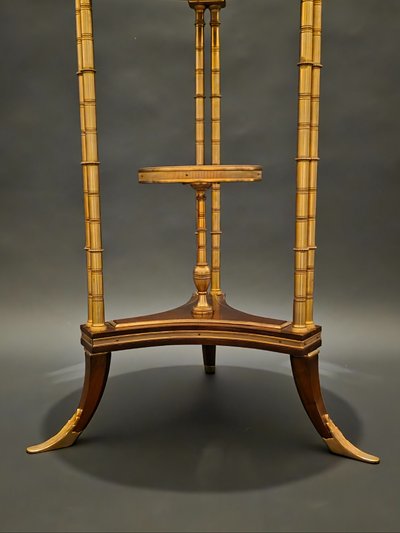
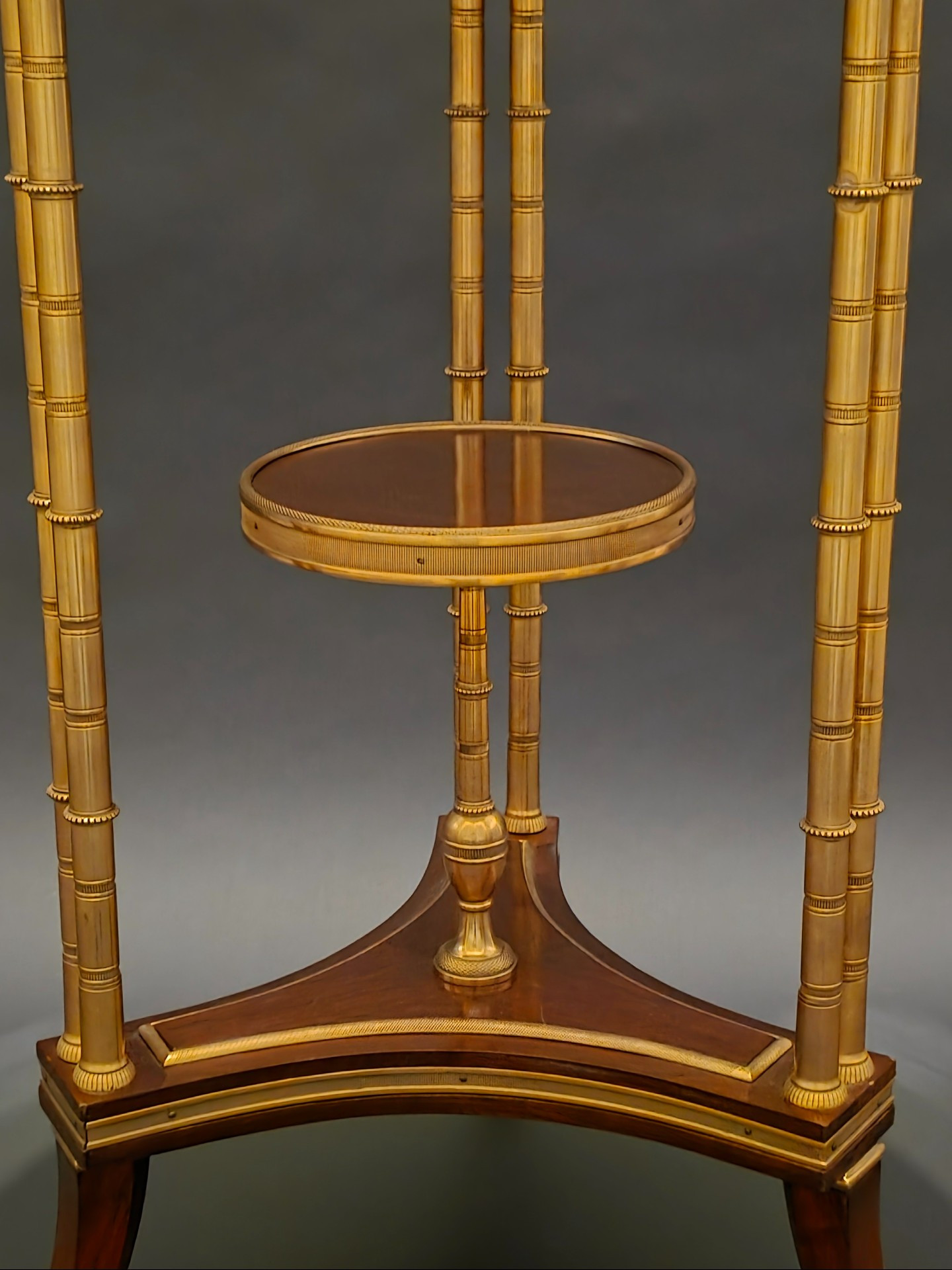
Three double vertical supports, in the form of small columns inspired by antiquity, simulate bamboo.
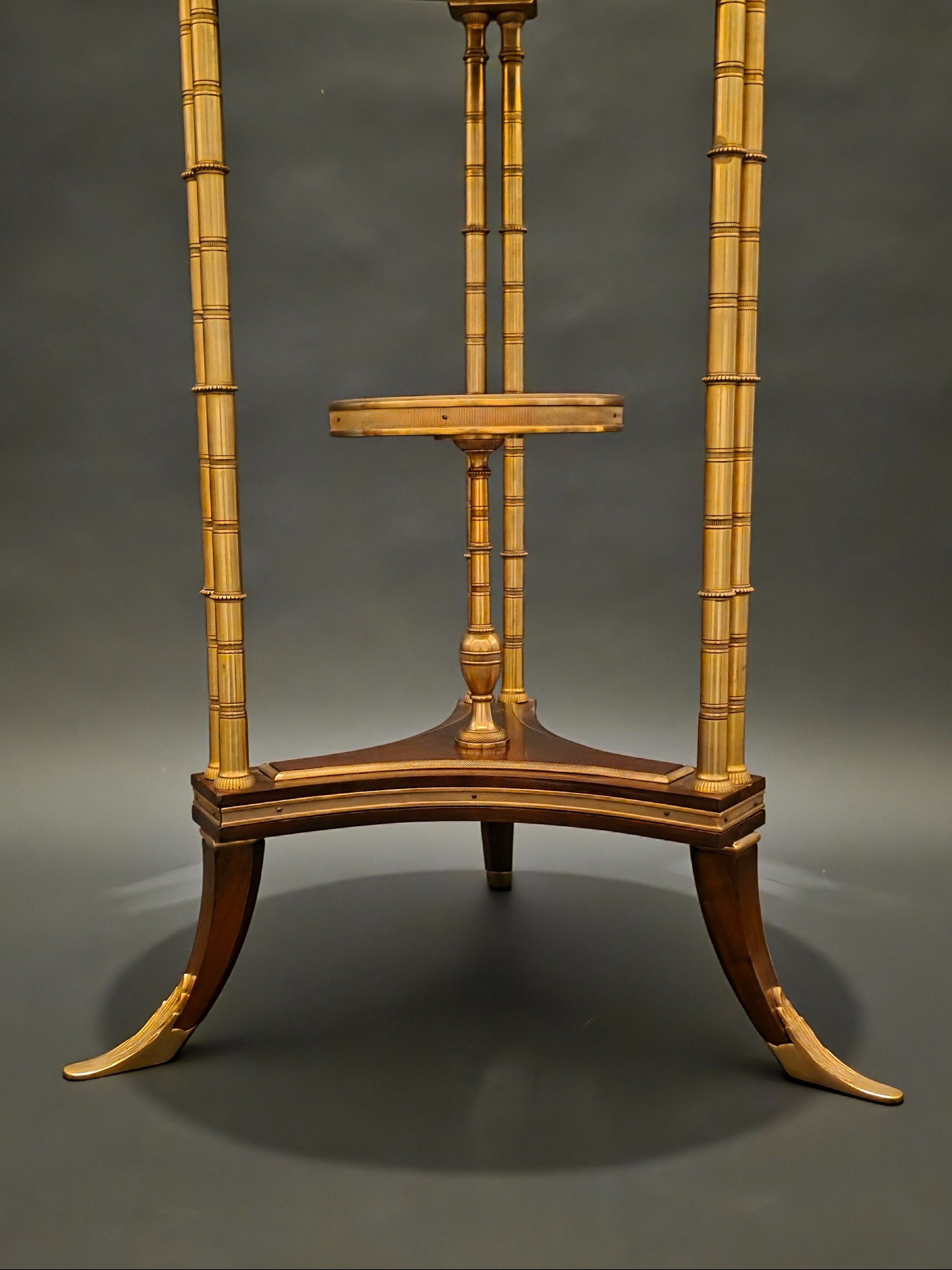
At the center of the supports, a small circular mahogany shelf, edged with a gilt-bronze band, echoes the motifs of the main tabletop. A concave tripod base, highlighted with gilt bronze fillets, extends into highly curved feet and sabots adorned with elongated acanthus leaves, reminiscent of the curves of the klismos.
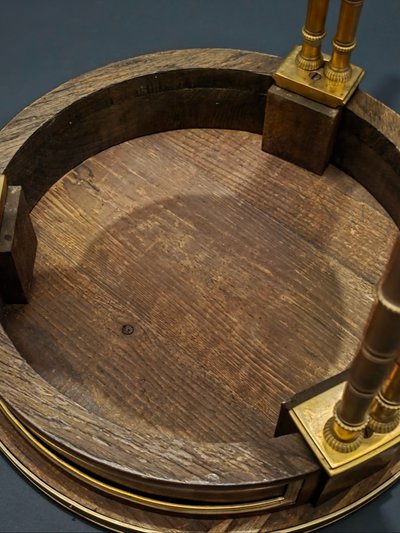
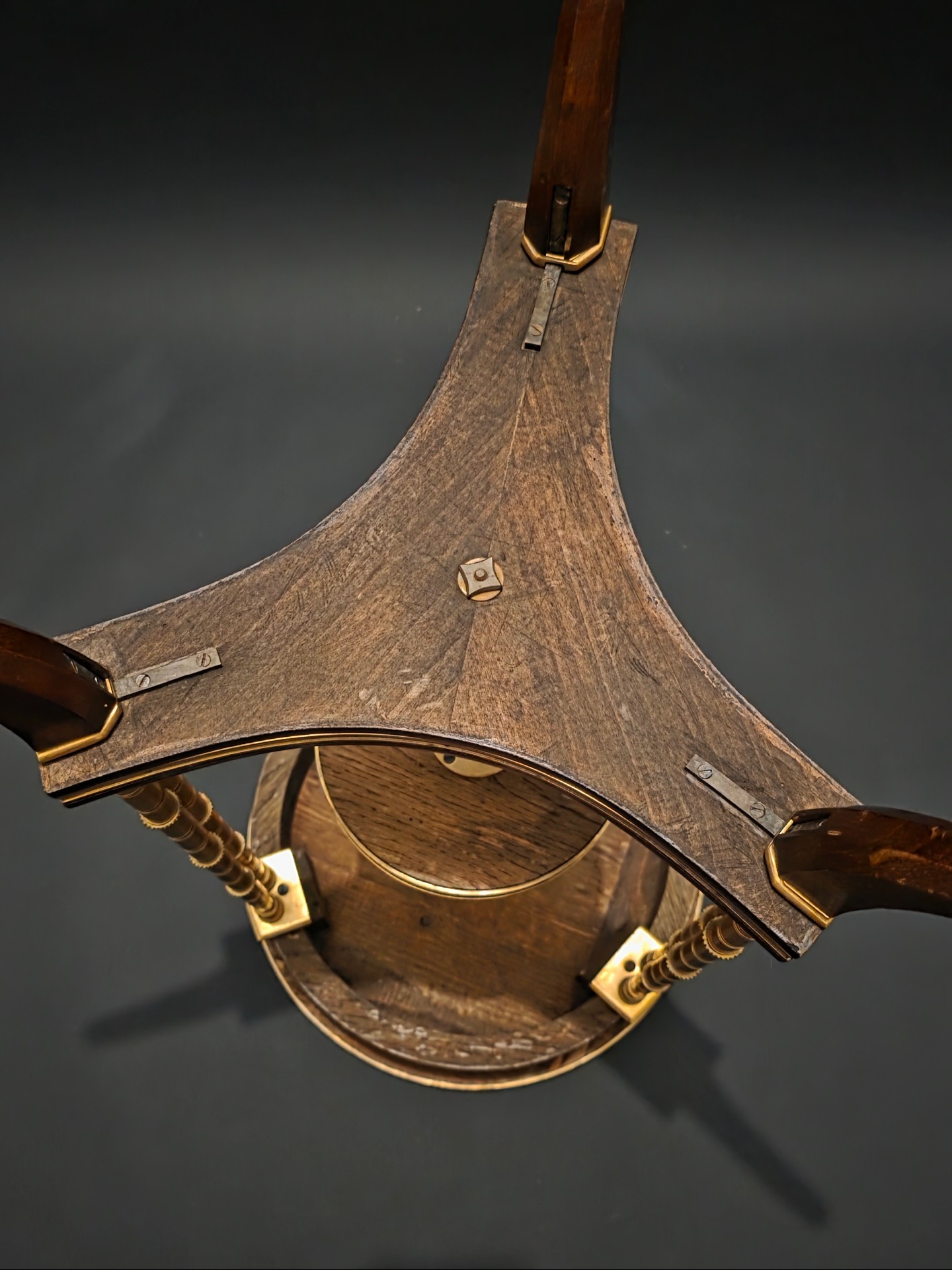
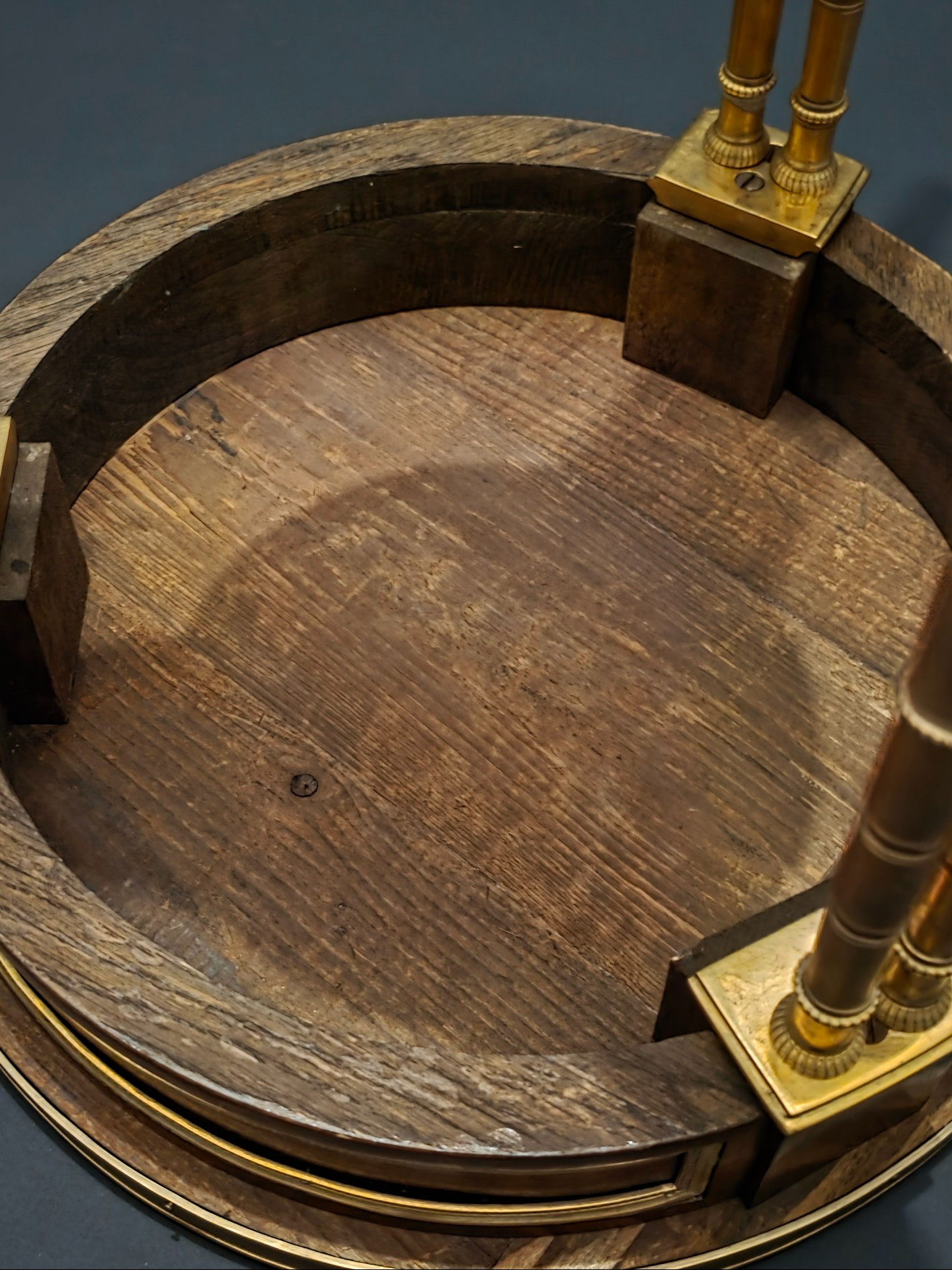
The underside of the upper surface shows traces of two-handed sawing and 18th-century hand planing (traces of a honing knife and hand tools). It also features a four-section oak joint, hand-fitted. This cabinetmaking technique is typical of the great Parisian workshops of the 18th century, designed to prevent the wood from warping beneath the marble top.
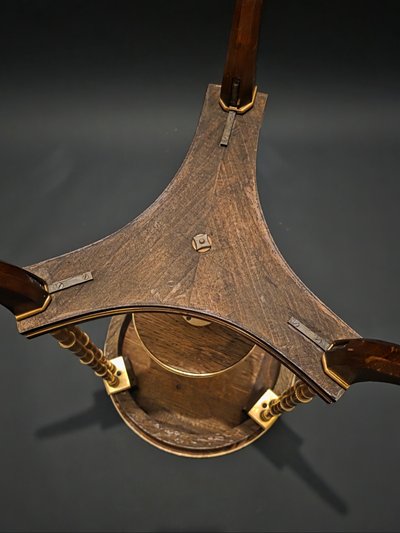
The angle plates beneath the tripod base are hand-hammered, with a custom shape for each leg.
The screws securing the bronze finials and plates have slightly irregular, file-slotted heads, typical of late 18th-century bronze art.
The bamboo-like uprights of this pedestal table are entirely representative of the exotic taste popularized by trendsetters such as Madame du Barry. She presented the Duke of Brissac with a similar pedestal table delivered by the merchants Lignereux and Daguerre in 1791. Daguerre's post-mortem inventory mentions: "A small round pedestal-style table in polished mahogany root on three double gilt-bronze legs in the style of bamboo, with a stretcher with shelves..." (Patricia Lemonnier, Weisweiler, Editions d'art Monelle Hayot, Paris, 1983, p. 162).
A preparatory drawing of this model is held at the Musée des Arts Décoratifs (illustrated in P. Lemonnier, op. cit., p. 90) and could be by Daguerre. Engaged in close collaboration, Daguerre supplied Weisweiler with many of the most important clients of the French and foreign nobility, as well as the royal families of France, Russia, Naples, and the future King George IV. Weisweiler remained active late in life, and his ties with Daguerre... This allowed him to continue working and exporting his production, thus avoiding the bankruptcy that befell many of his colleagues during the Revolution.
Comparative Bibliography:
-Patricia Lemonnier, Weisweiler, Editions d'art Monelle Hayot, Paris, 1983.
-Philippe Jullian, Le style Louis XVI, Baschet et Cie, Paris, n.d., p. 88.
-Nicole de Reyniès, Le mobilier domestique. Vocabulaire Typologique, Imprimerie Nationale, Paris, 1987, ill. 4269.
-Souren Melikian et al., La Décoration. Vol. I, Hachette, Paris, 1963, p. 264.
In very good condition, previously restored according to established practices.
Louis XVI-Directoire period, late 18th century.
Dimensions:
Height 80 cm
Diameter 40.5 cm
We We manage delivery for you in France and internationally. Shipping methods depend on your location. Contact us to find out the cost and arrange your delivery.
We ensure that your purchases are packaged and protected with the utmost care.
Only a selection of our Furniture and Works of Art is visible on Proantic. We invite you to follow our Instagram account where you can see all our new arrivals in context: @monantiquaire
All our Furniture and Works of Art
On our Website:
MON ANTIQUAIRE
We look forward to your visit,
Géraldine Buisson & Manuel Keepfer
Ref: HF5B5AYISH

 English
 Français
 Italiano
 Deutsch
 Cup carrier, Fon, Benin
650 € EUR